
Thinking about using your bird’s regular home cage for that quick trip to the vet? While it might seem easier, it’s a gamble you don’t want to take. A proper travel cage for birds isn't just another purchase; it's a non-negotiable piece of safety gear for any responsible Aussie bird owner.
Why a Dedicated Travel Cage Is an Essential Investment
Let's be honest for a moment. Your bird's everyday cage is their castle—a spacious home with room to stretch, play, and live. A travel cage, on the other hand, is their car seat. Its job isn't long-term comfort; its purpose is to keep them safe and secure for the short haul.
In a moving vehicle, a large cage gives a bird far too much room to be tossed about during a sudden brake or sharp turn, which can lead to broken bones or worse. A correctly sized travel carrier keeps them snug and stable, preventing injury and turning a potentially terrifying ride into a manageable one.
Creating a Mobile Safe Space
Travel is stressful for birds. Full stop. The new sights, strange sounds, and constant motion can be completely overwhelming. A dedicated travel cage, used consistently for every outing, quickly becomes a familiar, predictable space. It’s their mobile safe zone.
This consistency helps slash their anxiety because your bird learns to associate the carrier with temporary, safe journeys, not just scary vet visits.
This is especially crucial here in Australia, where an estimated 9% of households own pet birds. Research shows that around 33% of pet birds in Victoria never go outdoors, making a purpose-built carrier essential for those necessary trips. A sturdy, secure travel cage helps manage the stress that can seriously affect anxious birds. You can dig deeper into these numbers in the Pets in Australia survey.
By investing in a proper travel carrier, you’re putting your bird's physical safety and mental wellbeing first. You're transforming what could be a frightening ordeal into a secure experience, ensuring your feathered mate feels safe no matter where the road takes you. It's a fundamental part of providing the best care possible.
Choosing the Right Material and Design for Safety
Picking out the right travel cage for your bird is a bit like choosing a car seat for a child. It’s not about looks; it’s about safety, durability, and making sure the design is right for the passenger. The materials and build quality are everything. Let's break down the most common options you'll find in Australia to help you make a solid choice for your feathered mate.
What’s It Made Of? A Look at Common Materials
Think of stainless steel as the tough, reliable 4WD of the bird cage world. It’s the top-tier choice, especially for birds with powerful beaks like Macaws or Cockatoos. It's incredibly strong, won't rust, and is non-porous, which makes it an absolute dream to clean and properly disinfect. It’s definitely an investment, but its safety and how long it lasts are second to none.
Powder-coated metal cages are more like a dependable family sedan – practical, popular, and a great all-rounder. The key here is quality. You have to be certain the powder coating is non-toxic and free from nasties like zinc and lead. Cheaper cages sometimes have coatings that can chip or flake off, and a curious bird might ingest them. A well-made powder-coated cage is a fantastic option for many parrots, from Galahs to Conures.
Then you have acrylic or high-quality plastic carriers, which are the zippy little city cars of the travel cage world. They're perfect for smaller birds like Budgies, Finches, and Cockatiels. They are super lightweight and offer great visibility, which can actually help some birds feel less anxious. The trade-off is that they often don't have the same level of ventilation as a wire cage and won't stand up to a really determined chewer.
To make things a little easier, here’s a quick rundown of how these materials stack up.
Bird Travel Cage Material Comparison
| Material Type | Best For | Pros | Cons |
|---|---|---|---|
| Stainless Steel | Strong-beaked parrots (Macaws, Cockatoos) and long-term use. | Extremely durable, rust-proof, non-toxic, easy to deep clean. | Highest price point, can be heavier. |
| Powder-Coated Metal | Most small to large parrots (Conures, Galahs, Amazons). | Widely available, good durability, more affordable. | Must be certified non-toxic; low-quality coatings can chip. |
| Acrylic/Plastic | Small birds (Budgies, Finches, Cockatiels) and short trips. | Lightweight, excellent visibility, easy to carry. | Less ventilation, can crack, not suitable for strong chewers. |
Ultimately, the best material depends on your bird's species and your travel plans. For a tough chewer on a long road trip, stainless steel is king. For a quick vet visit with your Budgie, a quality plastic carrier might be all you need.
Non-Negotiable Safety Features
No matter what material you go with, some design features are absolutely essential. These aren't just "nice-to-haves" – they are critical for keeping your bird safe and secure on the move.
- Escape-Proof Locks: Parrots are incredibly clever and can make short work of a simple latch. Look for locks that need a bit more thought, like ones that require a twist-and-slide action or have a proper safety clasp.
- Appropriate Bar Spacing: This is one of the most important safety checks. The bars must be close enough together that your bird can't squeeze its head through. Getting stuck could lead to serious injury or even strangulation. Always double-check the manufacturer's guidelines for your bird's species.
- Solid Construction: Before you buy, give the cage a good wiggle. It should feel solid, with no rattling parts or wobbly joints. Check that the welds are smooth and strong, so you know it won’t fall to bits if it gets bumped in the car.
Sometimes it’s hard to tell if the cage you already have is up to the task. This little flowchart can help you decide.
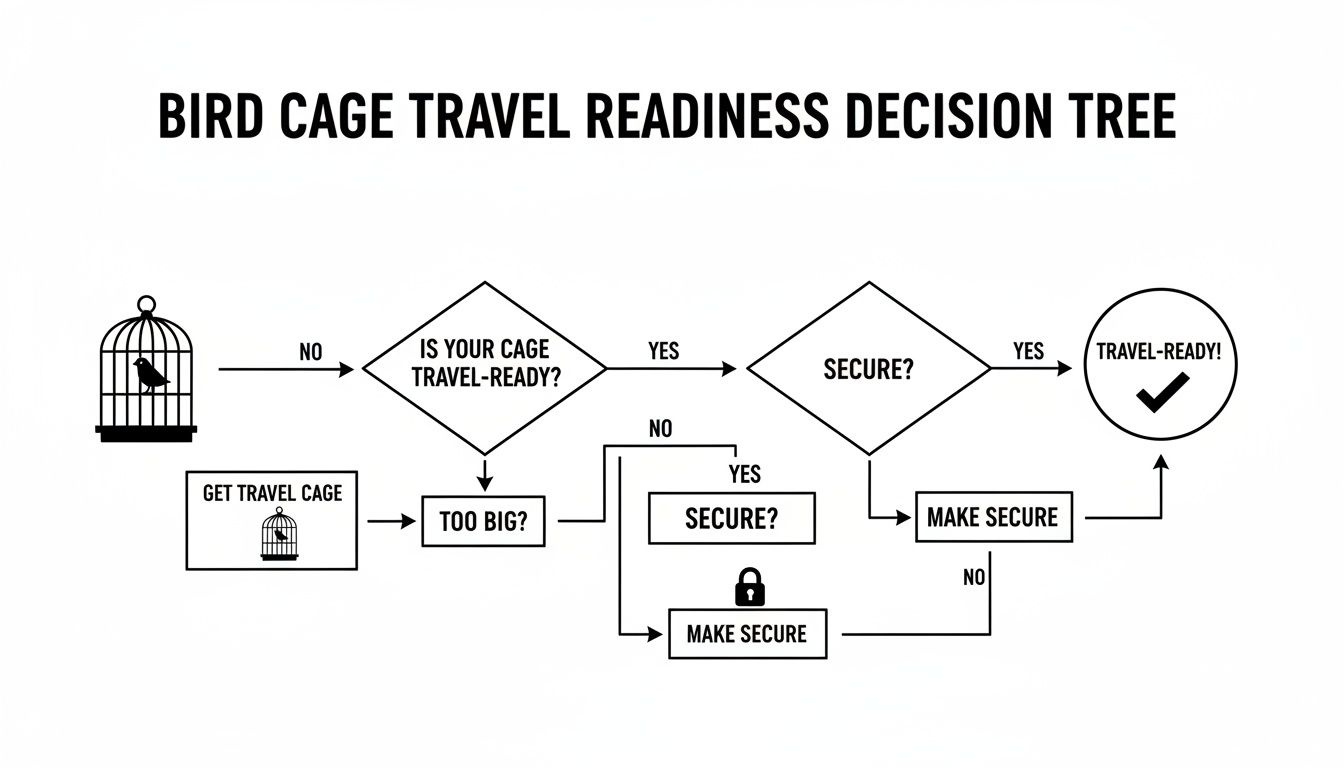
As the chart shows, if your everyday cage is too big or lacks travel-specific security, a purpose-built travel cage is the safest bet.
Design for Durability and Convenience
Beyond the absolute basics, a few smart design choices can make your life a whole lot easier and your bird's journey much smoother. A strong, comfortable handle that lets you carry the cage without it tipping is a must. A cage that’s a pain to carry is more likely to get knocked about.
Expert Advice: A removable tray or grate at the bottom of the cage is a game-changer. It makes cleaning up on the go so much simpler and, more importantly, keeps your bird from standing in their droppings, which is vital for good hygiene.
Speaking of hygiene, it’s a huge deal when you're travelling. Research from Animal Welfare Victoria found that 56% of owners don't clean their cage floor daily, and even more concerning, 11% never dismantle their cages for a proper deep clean. You can read more in their research summary.
A well-designed travel cage with features like quick-release parts makes staying clean on the road so much more achievable. You should also think about how you'll set it up inside. For some great ideas, check out our guide on essential parrot cage accessories.
Getting the Size Right for Your Bird's Comfort and Safety
Picking the right size travel cage feels a bit like finding the 'Goldilocks' zone for your bird. It can't be so big that a sudden stop sends them tumbling, but it can’t be so tiny they can't stand up straight, turn around, or give their wings a little stretch. Nailing this balance is everything when it comes to a safe, low-stress trip.
The whole point of a travel cage is security, not spacious living. If the cage is too large, you’re actually increasing the risk of injury, as your bird could be thrown against the sides during a sharp turn or brake. The ideal travel cage for birds is a snug fit, giving them just enough room to be comfortable without any extra space that could become a hazard on the road.
Measuring Up for Success
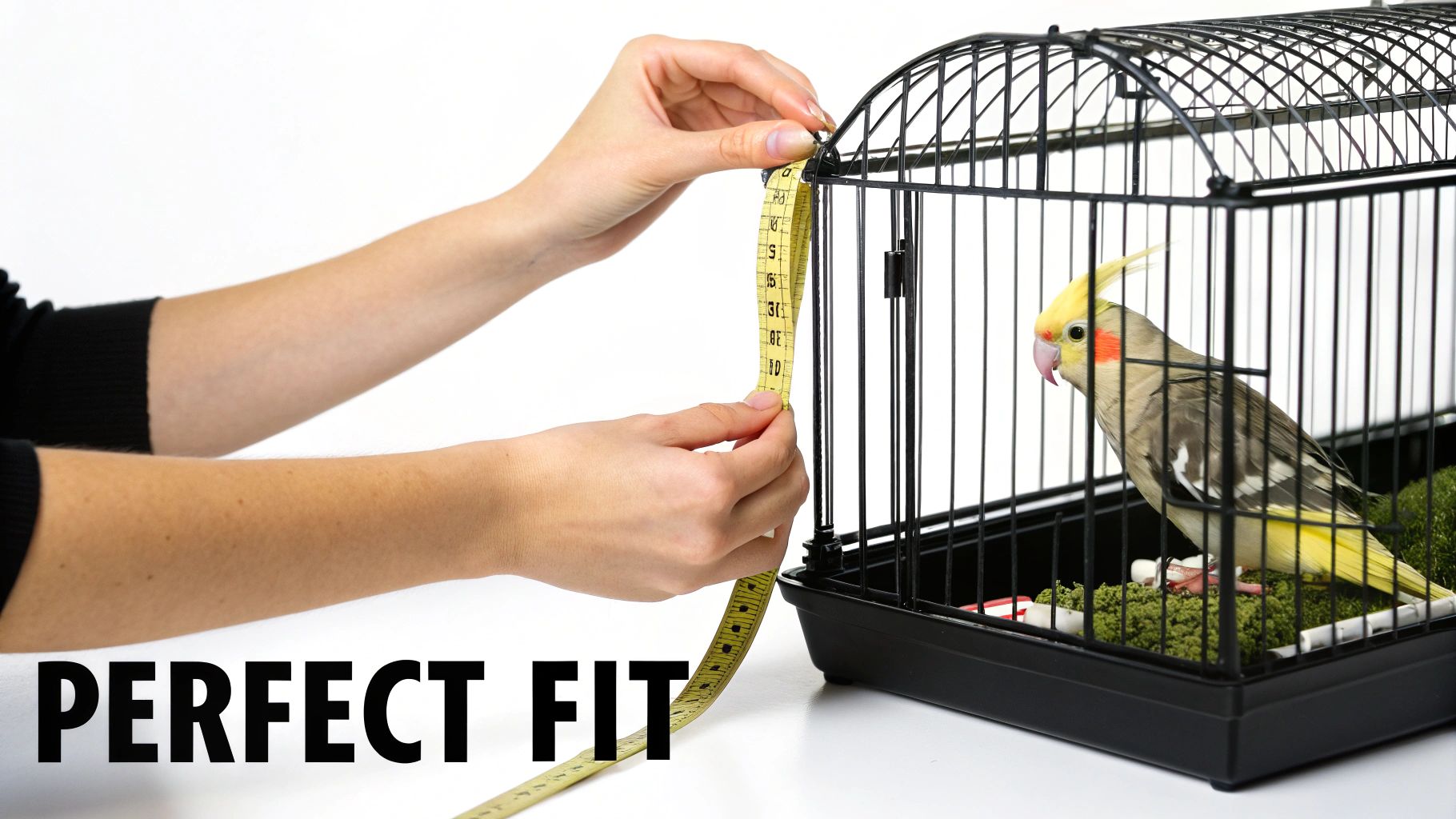
So, how do you find that perfect fit? It starts with your bird’s own measurements. A good rule of thumb is to measure your bird from the top of their head right down to the tip of their tail. The cage’s interior height needs to let them stand fully upright on a perch without their head or tail feathers scraping the top or bottom.
At the same time, the cage must be wide and deep enough for them to turn around comfortably without their wings brushing against the bars. A cage that’s too restrictive is a recipe for damaged feathers and a whole lot of stress over the course of a journey.
Recommended Travel Cage Size by Bird Type
Every bird is different, so it helps to have a starting point. This table offers some general guidelines for selecting a safe and comfortable travel cage for some of our most common Aussie companions.
| Bird Species | Minimum Recommended Dimensions (L x W x H) | Key Considerations |
|---|---|---|
| Budgies & Finches | 30cm x 20cm x 25cm | Small and lightweight. Focus on secure locks as they can be clever escape artists. |
| Cockatiels & Lovebirds | 35cm x 25cm x 30cm | Need enough height to accommodate their crests and tail feathers comfortably. |
| Conures & Lorikeets | 40cm x 30cm x 35cm | Active and playful; ensure the cage is sturdy with appropriate bar spacing. |
| Galahs & Corellas | 45cm x 35cm x 40cm | Require a robust cage with strong bars and a very secure locking mechanism. |
| Eclectus & Amazons | 50cm x 40cm x 45cm | Need a well-ventilated, sturdy cage with room for a strong perch. |
Think of these dimensions as a baseline; your individual bird's comfort and safety should always come first. It can also be useful to compare a snug travel cage with their spacious home setup. Seeing the difference really drives home the need for purpose-built gear, which you can read more about in our article on choosing a bird flight cage.
The Inside Setup Perches and Toys
Once you’ve got the right cage, what goes inside is just as important. The interior isn’t about recreating their home aviary; it’s all about stability and simple comfort.
Expert Advice: Perch placement is critical for stability in a moving vehicle. Position a single, secure perch low down in the cage. This lowers your bird's centre of gravity, helping them stay balanced and feel more secure during turns and stops.
You want to avoid clutter at all costs. While a familiar toy can be comforting, there should only be enough room for one or two small, securely attached items. Overcrowding the cage with accessories creates hazards and leaves your bird with no safe space to brace themselves.
- Choose a secure perch: Opt for a natural wood or textured perch that offers a good grip. Make sure it’s fastened tightly so it can't spin or come loose.
- Add a simple toy: A small, shreddable toy is perfect. It gives them a quiet distraction without swinging around and becoming a potential danger.
- Secure food and water bowls: Any bowls should be firmly attached to the cage sides to stop them from tipping over and making a mess.
By carefully picking the right size cage and thoughtfully arranging the inside, you create a travel environment that isn’t just a box—it’s a proper safe haven for your bird on the move.
Getting Your Bird Ready for the Road
The secret to a peaceful trip is all in the prep work. This isn't just about packing your own bags; it's about making sure your feathered mate is comfortable and confident for the journey ahead. Just grabbing a carrier on the day of travel and expecting your bird to hop in is a recipe for a very stressed-out parrot.
What we want is for your bird to see their travel cage as a safe space, a little mobile home—not a scary box. This takes a bit of time and patience, so it's best to start this process weeks before you plan to leave. It’s all about creating good vibes and positive connections with the carrier. Rushing it will only create a fear that's hard to undo, so let your bird lead the way.
The First Introduction
To start, pop the travel cage somewhere neutral and familiar, like in the corner of the room where your bird hangs out. Leave the door wide open and just let it be part of the scenery for a few days. Don't push them to go near it; just let them get used to its presence.
After a few days, it's time to make the cage a bit more appealing. Casually place a high-value treat—something they absolutely love, like a sunflower seed or a bit of millet—right at the entrance. Once they're brave enough to grab it, start moving the treat a little further inside each time. This simple trick teaches them that good things happen when they check out the carrier.
Building a Positive Vibe
Once your bird is happy to wander into the cage for a snack, you can start making it feel more like their own space. Add a small, fun toy inside, like one of our shreddable toys they can easily play with. This encourages them to spend a bit of voluntary time in there, linking the carrier with playtime and fun.
Now you can start working on closing the door.
- Tiny Steps: While your bird is inside enjoying a treat, gently close the door for just a second or two. Then, open it straight away and give them lots of praise.
- A Little Longer: Slowly increase the time the door is closed, always following up with a treat and praise the moment you open it. Keep it positive!
- Practice 'Walks': When they’re calm with the door closed for a minute or so, pick up the cage and just walk around the room before putting it down and letting them out.
- Short Trips: You can then move on to short "practice trips," maybe just to the car and back. The goal is to keep these experiences short, sweet, and positive, ending them well before any stress kicks in.
A Quick Tip: Keep a close eye on your bird's body language. If you see pinned eyes, heavy breathing, or frantic fluttering, you're going too fast. Just take a step back to the previous stage and stay there until they're comfortable again.
Your Pre-Travel Checklist
A bit of organisation before you head off can make a huge difference to how smoothly the journey goes. For us bird owners here in Australia, having a checklist means you won't forget the essentials for a safe and happy trip.
- Familiar Food: Pack enough of their usual pellets, seed mix, or chop to last the whole trip, plus a bit extra just in case. A sudden change in diet can cause stress and an upset tummy.
- Water from Home: Bring along some bottled or filtered water from home. A change in the taste of water can sometimes be enough to put a sensitive bird off drinking.
- Cage Cover: A light, breathable cover is a must-have for reducing visual stress and helping your bird settle down for a rest.
- Simple First-Aid Kit: Pack essentials like styptic powder, sterile gauze, and your avian vet's phone number. You hope you won't need it, but you'll be glad you have it if you do.
- Travel-Safe Toys: Pop in one or two familiar, securely attached toys. Small foot toys can be a brilliant distraction.
- Cleaning Supplies: Paper towels and a bird-safe cleaner will be your best friends for quick clean-ups on the go.
If you're planning to use a harness at your destination, make sure your bird is already well-practised and comfortable wearing one. You can read more about getting that right in our guide to the Aviator Bird Harness.
Keeping Your Bird Calm and Engaged on the Go
Let’s be honest, a bored and anxious bird can turn a smooth car ride into a very stressful experience. When they're in the confined space of a travel cage, enrichment isn't just a nice-to-have; it's a critical tool for keeping your feathered mate calm, mentally busy, and feeling secure while you're on the move. The right toys can be the difference between a frightening ordeal and a manageable one.
The trick is to pick items that are safe, quiet, and a good fit for a small space. Think of it like packing your own carry-on bag—you only want the essentials that offer maximum comfort without creating a mess or getting in the way. Your goal is to provide a positive distraction, helping your bird associate their travel carrier with something pleasant, not just the stress of motion.
Safe Toys for a Small Space
In a moving car, the last thing you want are toys that can swing around wildly and potentially hurt your bird. Safety is always number one, so every toy needs to be chosen with motion in mind.
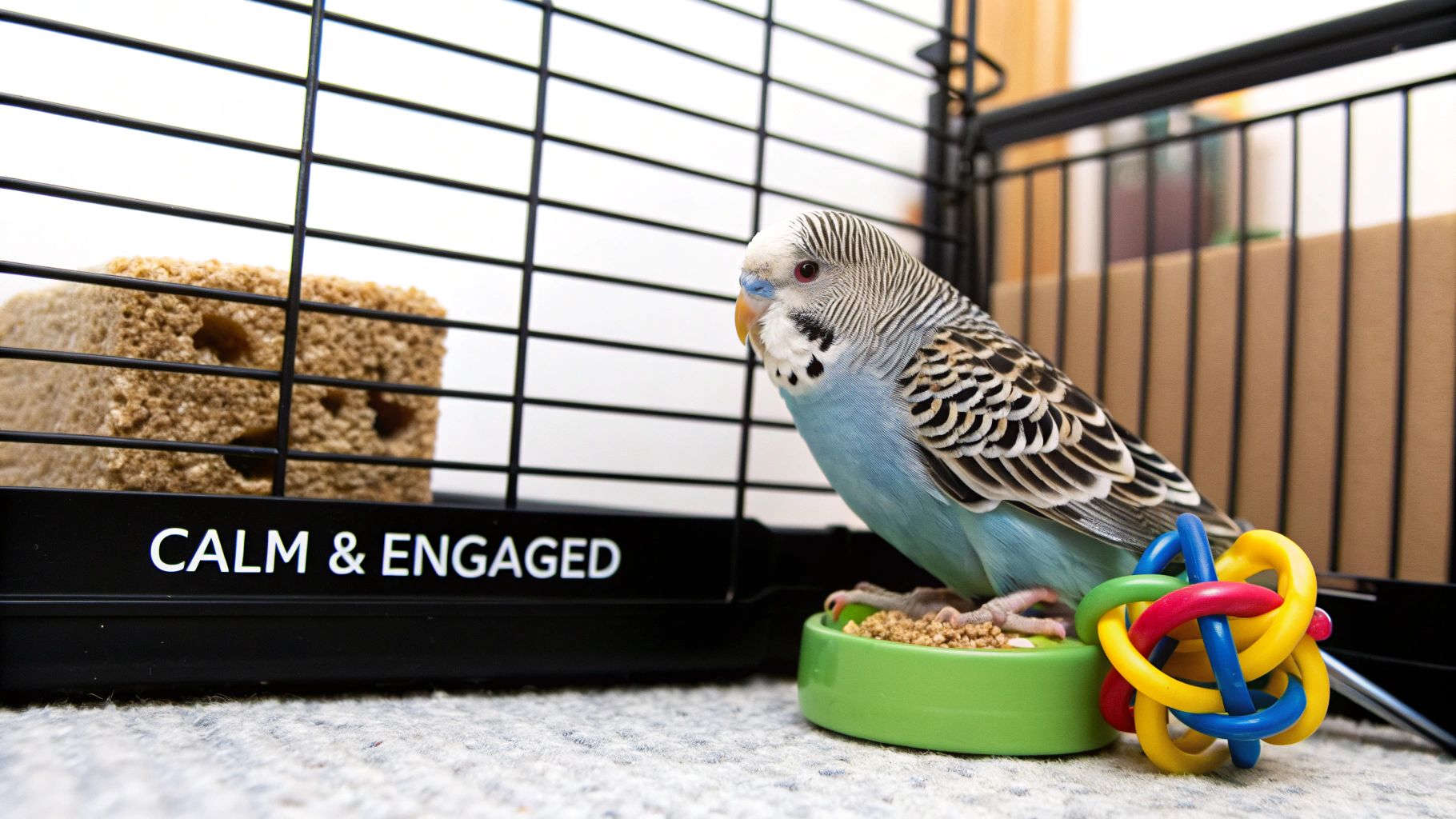
- Shreddable Toys: These are pretty much the perfect travel companions. Items made from cardboard, paper, or soft wood give your bird a quiet and comforting activity. Chewing and shredding is a natural, stress-busting behaviour for parrots, so these toys are an ideal way to channel any anxious energy.
- Small Foot Toys: For birds that love to hold and fiddle with things, small and lightweight foot toys are brilliant. They can be held and chewed without taking up precious space or becoming a swinging hazard. Just one or two can provide hours of quiet fun.
- Foraging Opportunities: Even simple foraging activities can keep a bird's mind occupied. Try weaving a piece of millet spray through the cage bars or wrapping a few favourite treats in a bit of paper for them to shred open. It engages their brain and makes the journey far more interesting.
Expert Advice: Always make sure any toy you put in a travel cage can be attached securely. It should be fixed tightly against the bars to stop it from swinging or falling during sudden stops or turns. A loose, heavy toy can become a dangerous projectile.
What to Avoid in a Travel Cage
Just as important as what you pack is what you decide to leave out. A travel cage is simply not the place for certain types of toys that are perfectly safe in their main home cage.
Steer clear of any toys with long chains, ropes, or loops that could become a strangulation risk in a confined, moving space. Large, heavy toys made of hardwood or acrylic should also be left at home. Same goes for noisy toys with bells or chimes—they can just add to the sensory overload of travel. The aim is to create a calm, not chaotic, atmosphere.
Comforting Additions
Beyond toys, a few simple additions can make the cage feel a lot more secure. Attaching a small, sturdy perch is essential for stability. Consider a natural wood perch, as it offers a varied surface for a more secure grip. You can explore some good options in our collection of natural perches.
Partially covering the cage with a light, breathable cloth can also make a huge difference, reducing stress by limiting overwhelming visual stimuli. This creates a cosy, den-like feeling that helps many birds relax and even sleep during a long drive. By carefully picking just a few safe and engaging items, you can help your bird feel much more at ease, turning travel time into a quiet, positive experience for everyone.
Navigating Australian Travel and Biosecurity Rules
Thinking of a road trip with your feathered friend? In Australia, it’s not always as simple as packing the car and hitting the highway. Our country has some pretty serious rules, especially when you cross state lines, and a little bit of prep work is your ticket to a smooth, legal, and stress-free trip for everyone.
Before you even think about an interstate adventure, remember that Australia's biosecurity laws are there for a reason—to protect our incredible native wildlife and agriculture. States like Western Australia and Tasmania are famously strict. You can't just rock up to the border with your bird and expect to be waved through.
Understanding Interstate Regulations
Crossing into some states means you’ll need official paperwork, like a health certificate from your vet issued just before you leave. You might also need an entry permit from that state’s biosecurity or primary industries department. These rules can and do change, so your first port of call should always be the official government websites.
- Check Government Websites: Always look up the Department of Primary Industries or Agriculture for the state you're headed to. A quick search for something like "bringing pet birds into Western Australia" will give you the most current info.
- Plan Ahead: Getting all the documents sorted can take a while, so get the ball rolling several weeks before you plan to leave.
Expert Advice: Never assume the rules are the same as your last trip. A biosecurity alert, like one for Avian Influenza, can change entry conditions overnight. A quick phone call or website check is a small hassle that can save you from a massive headache.
If you don't follow the rules, you risk your bird being turned away at the border or put into quarantine—and you’ll be footing the bill.
Safe Car Travel Tips
For most of us, travelling with a bird means a road trip. Making sure the travel cage is secure inside the car isn't just a good idea; it's a critical safety step. In a sudden stop, an unsecured cage can become a dangerous projectile.
The best spot for a travel cage is on the back seat, buckled in tight. Loop the seatbelt through the cage handle or bars and pull it snug against the seatback so it can’t slide around or tip over. For smaller carriers, another great option is to wedge them securely on the floor behind one of the front seats. Never put a cage in the front passenger seat where an airbag could go off.
Managing the Car Environment
What’s happening inside the car is just as important as securing the cage. Birds are incredibly sensitive to temperature changes, and a car can become an oven in no time, even on a cooler day.
- Ensure Good Airflow: Keep the air circulating, but don't point an air-con vent directly at the cage. A constant draft can make your bird sick.
- Use Sunshades: Pop a window shade on the window next to the cage. Direct sunlight can cause overheating shockingly fast.
- Never Leave Your Bird Unattended: A car’s internal temperature can climb to deadly levels within minutes. Every single time you get out of the car, your bird comes with you.
By getting a handle on the rules and prepping your car properly, you’re setting yourself up for a safe and compliant journey across Australia. For more tips on getting the right gear for your trip, check out our guide on finding quality parrot supplies in Australia.
Common Questions About Travelling with Birds
Alright, let's wrap up with some of the most common questions our team gets from bird owners across Australia. These are the practical, on-the-ground concerns that come up time and again. Hopefully, these quick answers will clear up any lingering worries and help you feel ready for your next adventure.
How Do I Secure a Travel Cage Safely in My Car?
The best and safest spot is the back seat. Your goal is to make the cage completely stable. Loop the seatbelt through the cage's handle or bars and pull it tight, pressing the cage firmly against the seatback so it can't shift or wobble.
Whatever you do, never put the cage in the front passenger seat. Airbags are a serious risk to our feathered friends.
For smaller carriers, you can also wedge them securely on the floor behind one of the front seats. The main thing is to eliminate any movement so the cage won’t slide, tip, or jolt your bird during the drive.
Should I Cover My Bird's Cage During a Car Trip?
For most birds, absolutely. Covering the cage helps dial down the stress by a huge amount. It creates a calmer, den-like vibe, shielding them from the visual chaos of passing cars and changing scenery. It’s a simple trick that can make a world of difference to their anxiety levels.
Just be sure to use a light, breathable fabric and check that there's still plenty of ventilation, especially on warmer days. You could even leave one side partially uncovered to guarantee good airflow. While most birds travel better covered, every bird is an individual, so keep an eye on how yours is reacting.
Can I Use My Bird's Regular Cage for Travel?
I really wouldn't recommend it. A standard home cage is almost always too big and wasn't built to withstand the bumps and turns of a moving car. It actually poses a pretty big injury risk—a sudden stop could send your bird flying against the bars.
A dedicated travel cage for birds is smaller, tougher, and designed to keep your bird snug and secure. There's also a psychological bonus: using a separate cage for travel means your bird doesn't start associating their happy home base with the potential stress of a car trip.
How Should I Offer Food and Water on a Long Road Trip?
The best approach for trips longer than a couple of hours is to offer food and water during your rest stops, not while the car is moving. Water bowls in a moving vehicle are a recipe for spills, leaving your bird with a wet mess and nothing to drink.
Here are a few tips that make feeding on the road a breeze:
- Hydrating Snacks: To keep them hydrated between stops, offer juicy fruits and veggies like little pieces of apple, grapes, or cucumber.
- Rest Stop Routine: When you pull over for a break, offer them a small dish of water. It's always a good idea to bring water from home so it tastes familiar.
- Secure Food Bowls: Use a deep food bowl that's clamped firmly to the cage. This will help minimise spills when you offer their regular food. Just give them small amounts at a time to avoid waste.
This strategy keeps your bird fed and watered without the mess and hassle. It turns what could be a tricky part of the journey into a simple, calm routine.
Keep Reading
- The Ultimate Guide to Choosing a Bird Flight Cage
- Choosing the Right Parrot Cage Accessories
- A Guide to Using the Aviator Bird Harness
Disclaimer Summary:
The information in this article is general in nature and may include external links or resources not created by Lou Lou Bells Bird Toys. Every bird is unique, so we encourage you to seek personalised advice from your own veterinarian or avian specialist. For full details, please read our complete disclaimer here.