
When you think about travelling with your bird, what’s the first thing that comes to mind? For many of us, it’s the logistics—the destination, the car ride, the packing. But the most crucial piece of the puzzle is a proper bird travel cage. It’s not just a smaller version of their home cage; it's a dedicated piece of safety equipment, designed from the ground up to protect your feathered companion on the move.
Think of it as a car seat for your bird. It’s an absolute necessity, not just an accessory you can do without.
An Essential Investment in Your Bird's Safety
Let’s be honest. Staring at a map of Australia, the distance between a quick vet visit in Sydney and a family holiday up in Perth can feel huge. For a bird owner, that journey is often measured in stress levels—both yours and your bird's. Too many people see a travel cage as just another box, but it's time to reframe that thinking. This isn’t an optional extra; it’s a non-negotiable for their safety.
Imagine hitting the brakes suddenly in traffic. In a large, standard cage, your bird can be thrown hard against the bars, risking serious injury. A purpose-built bird travel cage is different. It’s designed to be snug, giving them enough room to turn around comfortably but not enough to build up momentum and get hurt in a jolt. It’s the difference between a minor shuffle and a potential tragedy.
Beyond Physical Safety
The risks go well beyond a sudden stop. An Australian road trip throws unique challenges your way, like the temperature inside a car soaring as you drive through the Queensland sun. A well-ventilated travel cage is vital for regulating airflow and preventing your bird from overheating.
But it’s not just about the physical stuff. The psychological toll of unsafe travel is huge. A stressed bird is far more likely to develop issues like feather plucking, anxiety, and other behavioural problems that can last long after the trip is over.
Peace of Mind for Every Journey
At the end of the day, a proper travel cage gives you peace of mind. And that’s priceless.
Knowing your companion is secure means you can actually focus on the road ahead. Whether it’s a five-minute drive to the vet or a cross-country adventure, this small investment pays you back tenfold in safety and well-being. It’s a clear signal that you’re a responsible owner who puts your bird’s welfare first. A secure, comfortable space isn't a luxury—it's the foundation of every safe journey you'll ever share together.
How to Select the Right Bird Travel Cage for Your Feathered Friend
Picking out a travel cage for your bird can feel like a massive decision, but it really doesn’t need to be overwhelming. When you boil it all down, a safe and comfy choice rests on three key pillars: what it’s made of, its size, and the essential safety features. Get these right, and you can be sure your feathered mate is secure on every trip, whether it’s a quick dash to the vet or a long holiday drive.
This simple decision guide can help you figure out if a dedicated travel cage is the right move for you.
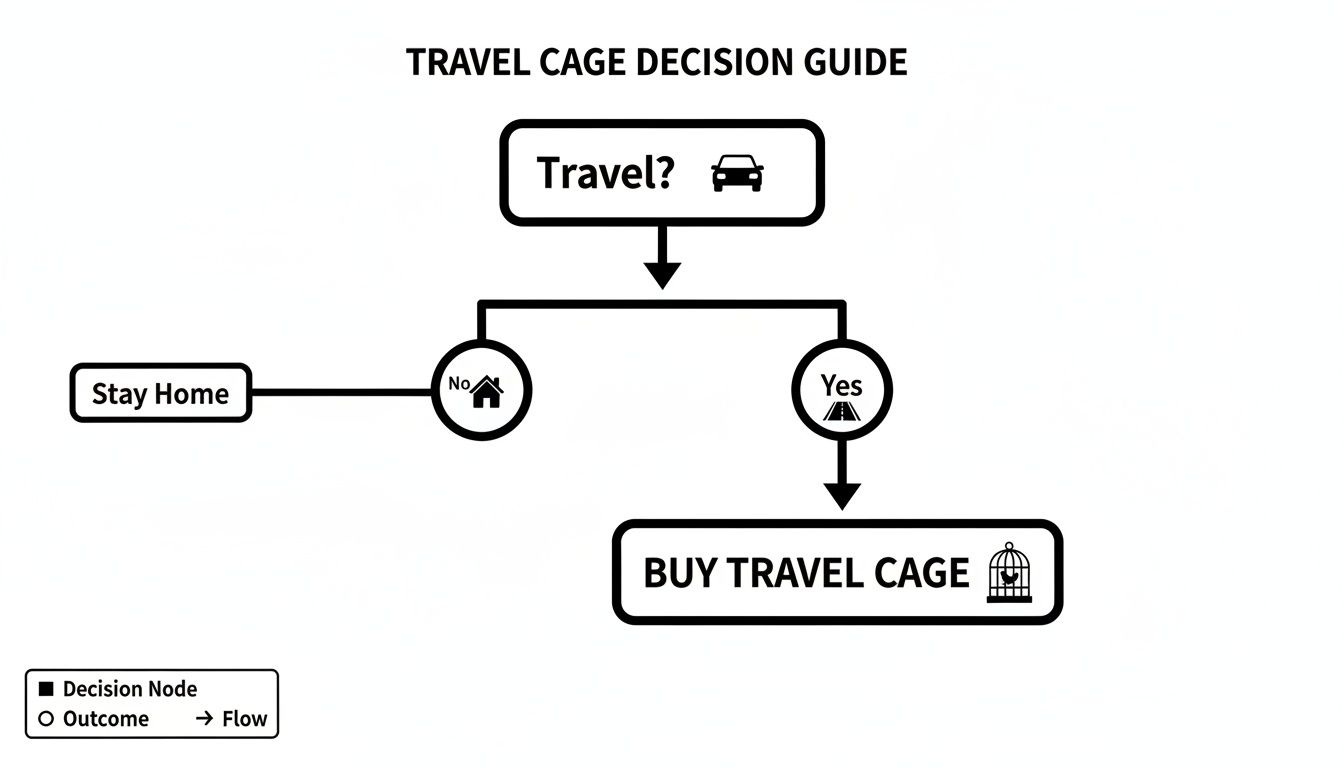
As the chart makes clear, if you’re planning any sort of travel with your bird, investing in a purpose-built travel cage is a must for their safety and your peace of mind.
Choosing the Right Material
The material of your bird’s travel cage is the first line of defence against both escapes and general wear and tear. Different birds have vastly different beak strengths, so what works for a tiny finch won’t stand a chance against a Galah with a mission.
- Stainless Steel: This is the gold standard for being tough and safe. It’s non-toxic, won't rust, and can handle even the strongest beaks, making it perfect for big parrots. While it's the priciest option, its sheer longevity makes it a smart investment for a powerful chewer.
- Powder-Coated Metal: A really common and practical choice, these cages are pretty durable. The crucial thing is to make sure the powder coating is non-toxic and zinc-free. This material is great for small to medium birds like Cockatiels and Conures, but you should always check it for any chips that could be nibbled off and swallowed.
- High-Impact Plastic: Lightweight and a breeze to clean, plastic carriers are fantastic for very small birds like Finches and Budgies on short trips. However, they are absolutely not suitable for any bird with real chewing power—a strong beak can make short work of plastic.
Getting the Size Just Right
Sizing a travel cage isn't about giving your bird a palace on wheels; it's about providing snug security. A cage that's too big is actually a danger. A sudden stop can turn all that extra room into a hazard zone, letting your bird get thrown against the bars.
Expert Advice: The perfect travel cage is big enough for your bird to stand up straight and turn around comfortably, but not so big they can fully stretch out and flap their wings. This stops them from getting injured during sudden jolts while still giving them enough room to be comfortable.
Think of it as creating a cosy, secure little nook rather than a mobile home. This controlled space actually helps your bird feel more grounded and less anxious while you’re on the move.
Here's a quick guide to help you find the right fit for some of our common feathered friends here in Australia. Remember, these are minimums—always factor in your own bird's build and personality.
Bird Travel Cage Sizing Guide for Common Australian Companion Birds
| Bird Species | Minimum Internal Dimensions (L x W x H) | Key Features to Look For |
|---|---|---|
| Budgerigar, Finch, Canary | 25 cm x 20 cm x 20 cm | Secure, small bar spacing; lightweight plastic or fine wire construction. |
| Cockatiel, Lovebird, Lorikeet | 35 cm x 25 cm x 30 cm | Powder-coated metal, solid perch, good ventilation. |
| Conure, Quaker Parrot | 40 cm x 30 cm x 35 cm | Strong powder-coated cage with a secure, parrot-proof lock. |
| Galah, Corella, Small Cockatoo | 50 cm x 35 cm x 40 cm | Stainless steel or very heavy-duty powder-coated metal, strong latch. |
| Large Cockatoo, Macaw | 60 cm x 45 cm x 50 cm | Stainless steel is essential, escape-proof locks, bolt-on bowls. |
Finding the right size ensures your bird isn't just contained, but is genuinely safe and feels secure throughout the journey.
Non-Negotiable Safety Features
Beyond the material and size, a few key features are absolutely essential for any bird travel cage. These are the little details that make all the difference between a stressful trip and a safe one.
First and foremost, the locks. You need escape-proof locks that can't be fiddled with by a clever beak or rattled open by road vibrations. A simple little latch is almost never enough for an intelligent parrot.
Next, check for adequate ventilation. The cage must have good airflow from multiple sides to stop it from getting stuffy and hot, which is especially important during our Aussie summers. At the same time, the bar spacing must be right for your bird's size to stop them from sticking their head through and getting stuck.
Finally, think about the perch. A textured, non-slip perch is vital for foot health and keeping stable. A smooth, slippery dowel can cause foot cramps and makes it hard for your bird to grip properly when the car is moving. Natural wood perches are always a fantastic choice. Taking the time to check for these features will help you sort through the huge range of parrot supplies in Australia and find the perfect travel setup.
Navigating Australian Travel Rules With Your Bird
Taking your bird on a trip around Australia means getting to grips with more than just the right bird travel cage. You also need to know the rules of the road and the sky. Whether you're planning a scenic drive along the Great Ocean Road or catching a flight from Melbourne to Brisbane, a little prep work is the key to a smooth, stress-free journey for you both.
Road Tripping With Your Feathered Mate
For many, hitting the road is the simplest way to travel with a bird in Australia. It puts you in complete control of the environment, but that means safety is squarely in your hands.
First things first: secure the travel cage. It needs to sit on a flat, stable surface where it won’t slide around or tip over. Using a seatbelt to hold it firmly in place is a great idea to stop it from moving during sudden stops or sharp turns. Just be sure to keep the cage well away from any airbags.
Keeping the car at a comfortable temperature is also vital. Never, ever leave your bird alone in a vehicle. Temperatures can skyrocket to dangerous levels in just a few minutes, especially during an Australian summer. Pop some sunshades on the windows to block direct sunlight and make sure there's good airflow, but avoid blasting the air-con directly onto the cage.
Expert Tip: Plan for regular pit stops every two to three hours. This gives your bird a chance to have a drink and a snack in a calm, stationary environment, which can make a huge difference in reducing travel stress.
Taking to the Skies: Australian Airline Rules
Flying with a bird within Australia is definitely possible, but it comes with a strict set of rules that can differ between airlines. Big carriers like Qantas and Virgin Australia have their own pet transport policies, so it's absolutely essential you check their latest requirements well ahead of your travel date.
In most cases, your bird won't be allowed to fly in the cabin with you. They are usually required to travel in the pressurised, temperature-controlled cargo hold. It might sound a bit daunting, but airlines that accept pets are well-practised in handling them safely and with care.
Your bird’s travel cage must be IATA (International Air Transport Association) compliant. This is a non-negotiable standard that covers specific requirements for size, strength, ventilation, and security. Not all travel cages meet these criteria, so you have to confirm this before buying one for air travel.
Your Pre-Flight Checklist
A bit of organisation before you head to the airport can save you a world of pain. Most airlines will ask for a health certificate from a vet, issued close to your departure date, confirming your bird is fit to fly.
To make sure you've got all your bases covered, make a checklist of questions to ask your airline directly:
- What are the exact size and material requirements for the travel cage?
- Is a specific type of food and water dish needed for the flight?
- What is the booking process for a pet? (It's often a separate booking from your own ticket).
- What documents do I need to bring on the day of travel? (e.g., health certificate, your ID, booking confirmation).
- Where are the specific drop-off and pick-up points for animals at the airport?
Getting clear answers will help you walk into the airport feeling prepared and confident. This proactive approach ensures your bird’s journey is as safe and seamless as possible, letting you focus on the adventure ahead. Travelling with your feathered friend should be an enjoyable experience, and with the right planning, it absolutely can be.
Preparing Your Bird for a Stress-Free Journey
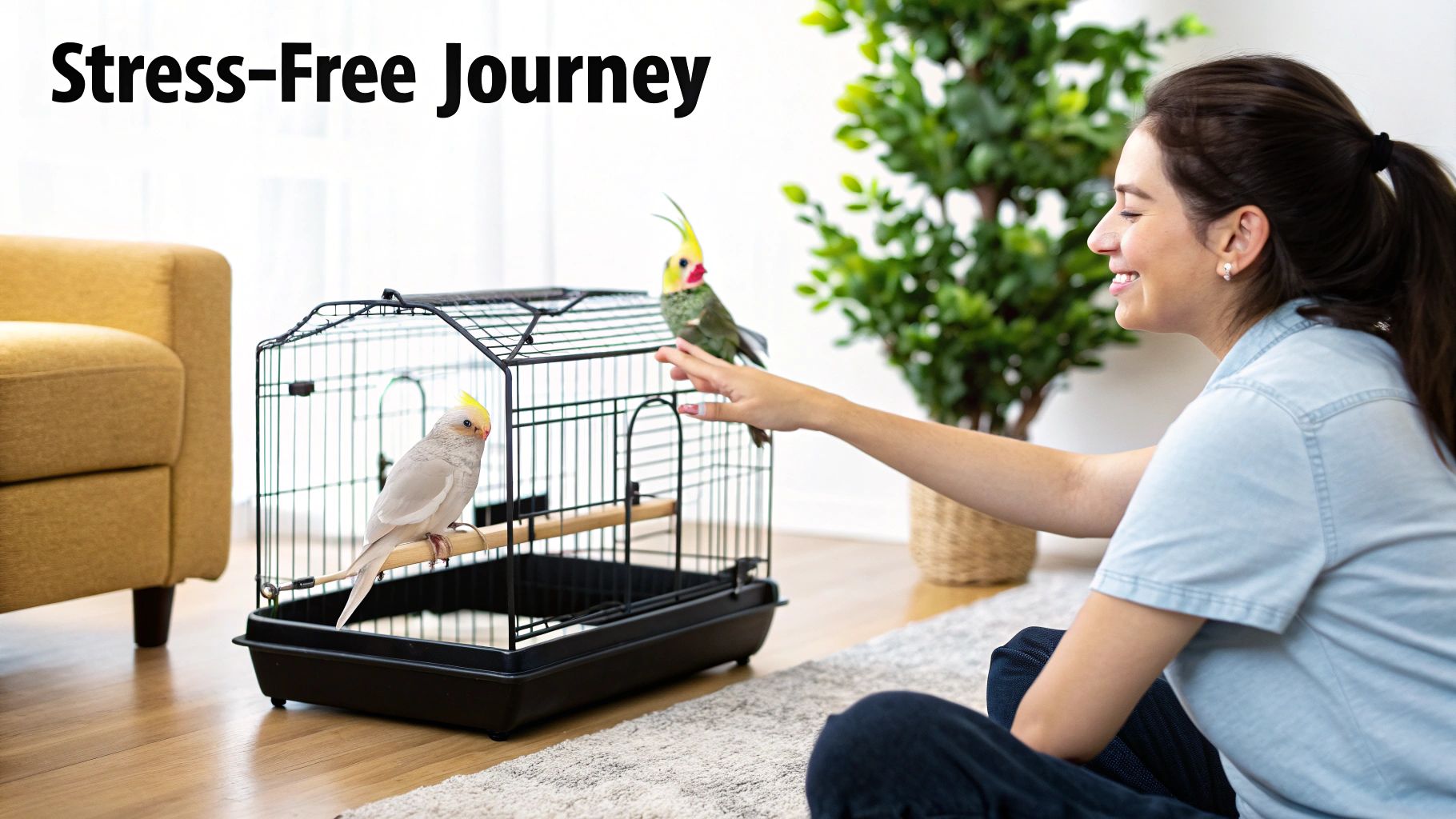
A successful, calm journey doesn't kick off the morning you leave. It starts weeks ahead, with a good dose of patience and thoughtful preparation. The whole idea is to turn the bird travel cage from a strange, scary box into a familiar, safe spot for your companion. This conditioning process, built on trust and positive reinforcement, is without a doubt the most important step you can take.
Building a Positive Association
It's simple, really: you want your bird to see the travel cage as a good place, not a punishment. The best way to do this is by creating positive experiences around it, long before you ever need to latch the door. Whatever you do, don't use the travel cage for a stressful event, like a vet visit, until your bird is completely comfortable with it.
Start by just placing the open travel cage in the same room as your bird's main cage. Let them see it every day, almost like it's another piece of furniture. Don't push them towards it; just let their natural curiosity do the work.
After a few days, start putting high-value treats—think a sliver of their favourite fruit or a special nut—right outside the cage door. Once they're happily snatching those, move the treats just inside the entrance. The goal is to reward them for getting closer and closer, building their confidence at their own pace.
A Step-by-Step Training Plan
Once your bird is comfortable getting near the cage, you can start a more structured training routine. Keep your sessions short and sweet, just five to ten minutes a day, and always, always end on a high note.
- Voluntary Entry: Pop a favourite treat or a small, enticing toy at the very back of the cage. Then, wait for your bird to wander inside to get it. When they do, offer some quiet praise. Don’t even think about closing the door yet; let them come and go as they please.
- Closing the Door Briefly: After they’re confidently going in and out, start closing the door for just a second or two. Immediately open it again and give them a treat. Slowly increase the time the door stays closed, always rewarding them for staying calm.
- Short Stays: Next, work up to having them stay inside for a few minutes with the door shut. Giving them a small foraging toy can keep them busy and helps them connect the cage with fun stimulation.
- Practice Lifts and Moves: When they seem relaxed inside, gently lift the cage and carry it a few steps across the room. Put it down, open the door, and offer a reward. This gets them used to the feeling of being moved around.
Avian Behaviourist Insight: Pay close attention to subtle signs of stress. A bird holding its feathers tight to its body, leaning away, or showing a "pinned" (constricted) pupil is telling you they're uncomfortable. If you see this, you’re moving too fast. Just go back a step and rebuild their confidence.
Practice Makes Perfect
The final step is to take a few short, "fun" practice trips. A five-minute drive around the block that ends with praise and a treat back home teaches your bird that not every car trip is a scary one. This proactive approach is the foundation of stress-free travel.
In the same way, harness training can be a fantastic way to build your bird's confidence outside its cage. For a deeper dive, you might find our guide to the Aviator Bird Harness useful. Think of these positive experiences as an investment in your bird's long-term wellbeing.
Enrichment on the Go to Keep Your Bird Engaged
A bored parrot is a stressed parrot, and let's face it, travel can be a long, dull experience for our feathered mates. An empty, sterile bird travel cage just makes things worse, often leading to anxiety and behaviours you'd rather not see. The trick is to turn that small space into an engaging little world without getting in the way of safety.
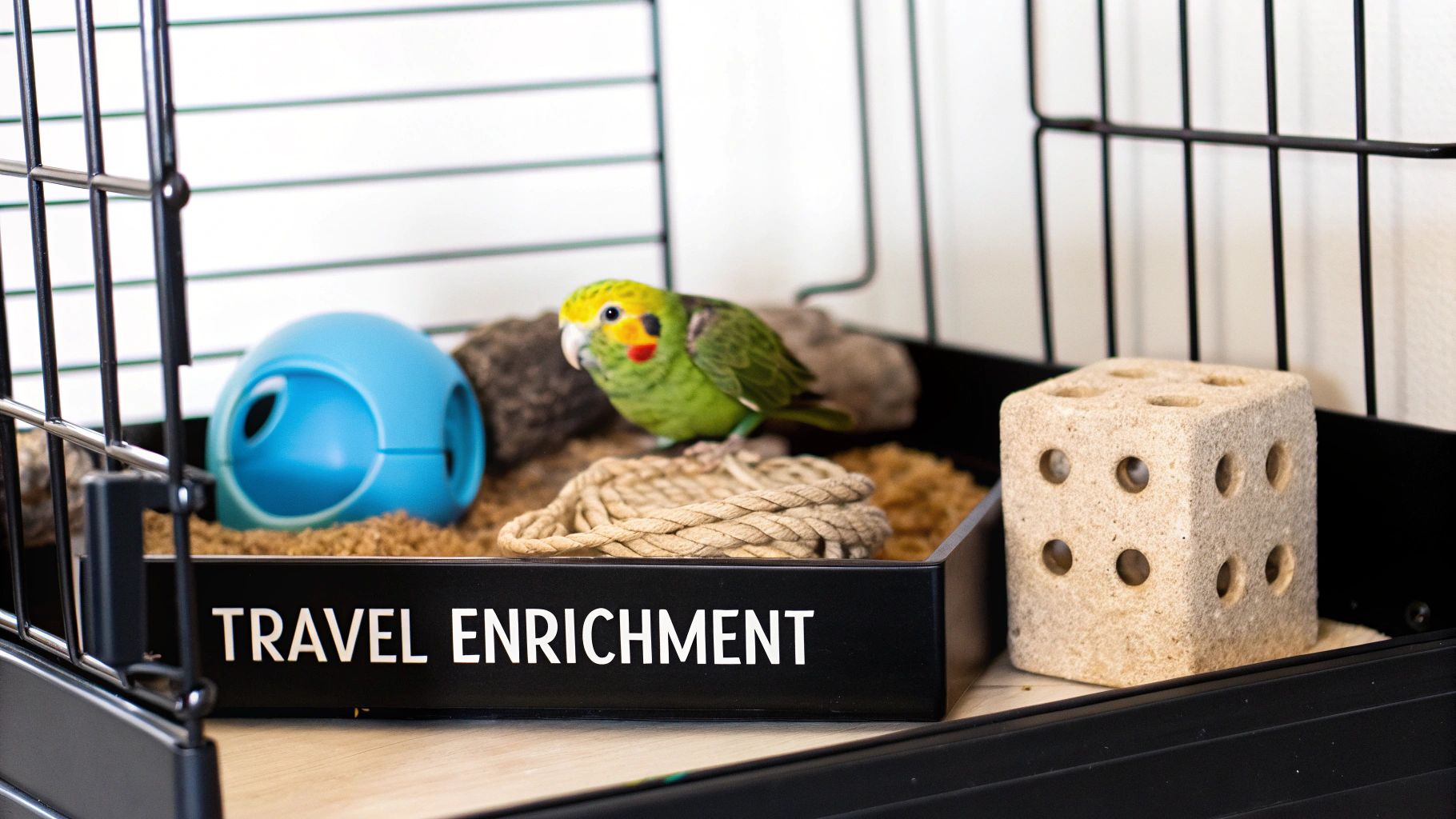
It can be tempting to just throw in all their favourite toys from home, but this can be a real hazard. Big, swinging toys can cause serious injury if the car stops suddenly or takes a sharp corner. We're not trying to replicate their entire home setup here—the goal is to offer safe, focused activities that keep their clever minds busy while on the road.
Choosing Travel-Safe Toys
The best toys for a travel cage are the ones you can attach securely to the bars, and that don't take up a heap of room. You want things that encourage quiet, focused activities like chewing and foraging, as these are fantastic natural stress-relievers for birds.
Here are a few great travel-safe ideas:
- Small Shredding Toys: Anything made from bird-safe materials like yucca, balsa wood, or mahogany pods is perfect for a trip. A compact toy like the Shred-a-Pillar can be easily tied to the side of the cage, giving them hours of beak-busting fun without swinging around.
- Sturdy Foot Toys: If your bird loves to hold and manipulate things with their feet, a couple of durable foot toys on the cage floor can be a brilliant distraction. Just be sure they’re big enough that they can't be accidentally swallowed and have no small bits that could break off.
- Secure Foraging Blocks: Foraging is a fantastic way to keep your bird's brain ticking over. Small, attachable foraging toys, like a compact Balsa Foraging Block, get them to work for their treats, turning snack time into a stimulating puzzle.
Expert Advice: Always introduce new toys to your bird well before you travel. A journey is not the time for scary surprises! Familiarity brings comfort and makes the whole experience much smoother.
Simple and Effective In-Cage Activities
Beyond shop-bought toys, you can create simple little boredom busters yourself. Weaving a piece of bird-safe leather or paper rope through the cage bars can provide a great shredding activity. For the more advanced foragers, a durable toy like the Foraging Frenzy can be filled with goodies and fastened securely to keep them busy for ages.
If you’re hunting for more ways to keep your bird’s mind sharp, we've got a heap of information in our complete guide to foraging toys for birds. By picking out a few safe and engaging items, you can stop travel boredom in its tracks and make sure your bird arrives at your destination happy and calm. A little bit of planning really does go a long way.
Essential Cleaning and Maintenance for Your Travel Cage
Keeping your bird’s travel cage clean isn’t just a nice-to-do, it’s non-negotiable for their health. A small, enclosed space can become a hotspot for bacteria if you’re not on top of it. Think of a spotless cage as the foundation of good bird care, especially when you’re both away from the comforts and routine of home.
Before you even begin packing, the travel cage needs a proper deep clean. This is more than just a quick wipe-down. It means taking the whole thing apart—perches, toys, food bowls, and the bottom tray or grate all need to come out.
Every single piece should be scrubbed with a bird-safe disinfectant. It's so important to steer clear of harsh chemicals like bleach or ammonia, as their fumes can be toxic to a bird's delicate respiratory system. Once everything is sparkling, rinse it all meticulously to get rid of any residue, then let it dry completely, preferably in the sun.
A Solid Pre-Trip Cleaning Protocol
A step-by-step approach makes sure nothing gets missed. Following these steps will set you up for a healthy, stress-free trip.
- Disassemble Everything: Take the cage apart as much as you can. This is the only way to get into all those little nooks and crannies where germs love to hide.
- Scrub with a Bird-Safe Cleaner: Use a proper veterinary-grade disinfectant or even a simple mix of white vinegar and water. A dedicated scrubbing brush really helps with any stubborn, dried-on messes.
- Rinse Thoroughly: A lot of people rush this step, but it’s vital. Any leftover cleaning solution can irritate your bird’s feet or skin, so keep rinsing until the water runs completely clear.
- Air Dry Completely: Let all the parts air dry outside if you can. Sunlight is a brilliant natural sanitiser and ensures there’s no moisture left for mould or mildew to grow.
Keeping It Clean on the Road
Spot-cleaning during your journey is just as crucial as that initial deep clean. A little bit of daily maintenance stops mess from piling up and keeps the environment healthy and comfortable for your bird.
Expert Advice: Pack a small "cleaning kit" just for the trip. Pop in some bird-safe disinfectant wipes, a roll of paper towels, and a few spare cage liners. It makes quick clean-ups at rest stops so much easier.
Thankfully, modern travel cages are often designed with easy cleaning in mind. Look for features like a slide-out tray, which lets you swap the liner without disturbing your bird too much. Cages made from non-porous materials like stainless steel or a quality powder-coated metal are also far easier to wipe down and keep sanitary.
Regular cleaning isn't just about appearances; it’s a critical part of preventative health care. A clean cage minimises the risk of bacterial and fungal infections, parasites, and a whole host of other health problems. When you learn how to handle things like using an effective mite spray for birds, you really start to see how hygiene is at the centre of their wellbeing. By making cleaning a top priority, you ensure the travel cage remains a safe and healthy sanctuary for your feathered friend on every single adventure.
Your Bird Travel Questions Answered
Even the most organised bird owner runs into questions when planning a trip. It’s completely normal. To help you feel confident before you head out, we’ve put together answers to some of the most common queries we hear from Aussie bird owners. Think of it as a final check-in for a stress-free journey.
Can I Use My Bird's Regular Cage for Travel?
It’s a tempting thought—why buy another cage when you have a perfectly good one at home? But using your bird’s regular cage for travel is highly discouraged and genuinely unsafe.
Home cages are just too big. In a sudden stop or a sharp turn, that extra space becomes a real hazard, allowing your bird to be thrown against the bars, which can cause serious injury. They also rarely have the strong, escape-proof locks needed for secure transport. A proper bird travel cage is designed to be a snug, secure space that minimises risk and helps your bird feel much more grounded and safe on the move.
What Should I Pack in My Bird's Travel Kit?
A well-stocked travel kit is your best mate on the road. Having everything your bird needs close at hand makes the whole experience smoother for everyone.
Here’s what your essential kit should contain:
- Familiar Food and Water: Pack enough of their usual food for the whole trip, plus a little extra just in case. Bring their regular water bottle or dish so it feels familiar.
- Safe Toys and Treats: A couple of travel-safe toys are perfect for busting boredom. Our Shred-a-Pillar is a great lightweight option, and a compact Balsa Foraging Block keeps beaks busy without taking up too much space.
- Cleaning Supplies: Bird-safe wipes and paper towels are non-negotiable for quick clean-ups.
- First-Aid Basics: Always have styptic powder on hand. You never know when you might need it for a broken blood feather.
- Important Information: Keep your avian vet’s contact details and any necessary medications easily accessible.
How Do I Manage Food and Water on a Long Road Trip?
Keeping food and water steady in a moving car is tricky. The secret is to prevent spills while making sure your bird stays hydrated. Instead of leaving a full water dish sloshing around, it’s much safer to offer water during planned rest stops every two to three hours.
This gives your bird a chance to drink from a stable bowl. For a bit of hydration between stops, juicy fruits like melon or apple slices work wonders. You can also provide small amounts of their regular food in a secure, spill-resistant bowl during these breaks, which helps prevent motion sickness too.
Are Plastic Travel Carriers Safe for Strong Parrots?
Whether a plastic carrier is safe really depends on the bird. For smaller birds like Budgies or Finches, a good quality, well-ventilated plastic carrier can be a perfectly fine choice for short trips.
However, for any parrot with a powerful beak—we’re talking Galahs, Cockatoos, or Macaws—a standard plastic carrier is a massive escape risk. These birds can chew through plastic like it’s nothing. For them, a stainless steel or heavy-duty powder-coated metal travel cage is the only truly safe and reliable option. A tough foraging toy like the Foraging Frenzy gives them a much better (and safer) target for all that chewing power.
Keep Reading
- How to Transition Your Bird to a Pellet Diet
- A Guide to Understanding Bird Body Language
- What is Bird Enrichment and Why is it Important
Disclaimer Summary: The information in this article is general in nature and may include external links or resources not created by Lou Lou Bells Bird Toys. Every bird is unique, so we encourage you to seek personalised advice from your own veterinarian or avian specialist. For full details, please read our complete disclaimer here.