
So, what exactly is freeze-drying? It's a clever food preservation method where you take fresh fruit, freeze it solid, and then place it in a strong vacuum. This process, known as sublimation, makes the ice turn straight into vapour, gently removing up to 99% of the moisture.
What you're left with is incredibly light and crunchy fruit that keeps its structure, vibrant colour, and—most importantly—nearly all of its nutritional value. It's a perfect, high-value treat for your feathered friends.
Why Freeze-Dried Fruit Is a Game Changer for Aussie Birds
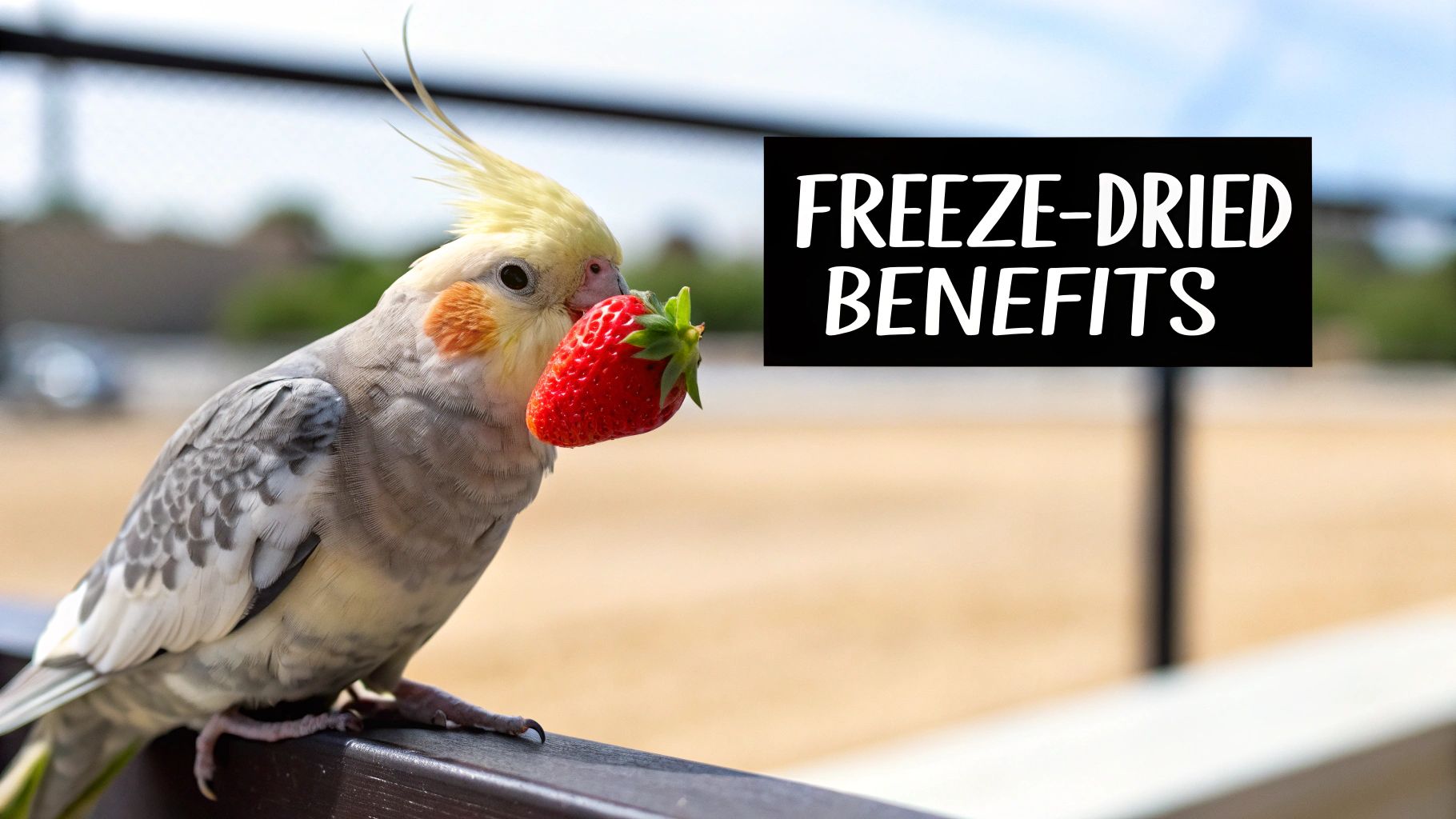
As conscientious bird owners, we're always looking for ways to provide a varied, nutritious diet. Fresh fruit is fantastic for vitamins and enrichment, but let's be real—it spoils fast, gets messy, and isn't always available year-round. This is where the magic of freeze-dried fruit comes in, offering a brilliant solution for both you and your flock.
Unlike traditional dehydrating, which uses heat that can destroy sensitive vitamins and change the flavour, freeze-drying is a cold process. Think of it as hitting a "pause" button on nature, locking in all that original goodness without compromising the fruit's nutritional profile.
This method has become so popular that the demand for these healthy snacks is growing fast. The Australian freeze-dried fruits market is set to be valued at USD 46.5 million in 2025 and is projected to climb to an impressive USD 104.4 million by 2035. You can dig into more data on Australia's growing appetite for these nutritious snacks if you're curious.
To give you a clearer picture, here’s a quick comparison of the options available.
Fresh vs Dehydrated vs Freeze-Dried Fruit for Birds
| Attribute | Fresh Fruit | Dehydrated Fruit | Freeze-Dried Fruit |
|---|---|---|---|
| Moisture Content | High (80-95%) | Low (15-25%) | Very Low (<5%) |
| Nutrient Retention | Highest | Good, but heat-sensitive vitamins (like C) are reduced | Excellent (retains up to 97% of original nutrients) |
| Texture | Soft, juicy | Chewy, dense | Light, crispy, crunchy |
| Shelf Life | Very short (days) | Long (months) | Very long (years if stored properly) |
| Sugar Concentration | Natural levels | Concentrated | Concentrated, but structure remains intact |
| Best for Foraging | Messy, can spoil quickly in toys | Can be sticky, less crunchy | Excellent, clean, and adds a satisfying crunch |
As you can see, while fresh is great, freeze-dried fruit delivers the best balance of nutrition, convenience, and enrichment potential.
The Perfect Crunch for Foraging Fun
One of the biggest wins for our birds is the unique texture. Freeze-dried fruit has an airy, satisfying crunch that birds from tiny budgies to large macaws find irresistible. This isn't just for enjoyment; it actively encourages their natural foraging instincts.
Expert Tip: The crispiness makes freeze-dried fruit an ideal high-value reward for hiding inside enrichment toys. It provides a mental challenge and a great auditory stimulus when your bird finally crunches into it, making playtime so much more engaging.
You can easily break up larger pieces or use whole berries and tuck them into foraging puzzles, like our Wicker Foraging Box. This simple trick turns a quick snack into a mentally stimulating activity, helping to keep boredom and related behavioural issues at bay.
Unbeatable Convenience and Reduced Waste
Life gets busy. Preparing fresh fruit every day can be a chore, and it's always disheartening to throw away uneaten, spoiled portions. Freeze-dried fruit solves this problem beautifully.
- Long Shelf Life: When stored correctly in an airtight container, it can last for months or even years. No more waste.
- No Prep Needed: Forget washing, peeling, or chopping. It’s ready to serve straight from the package.
- Lightweight and Clean: It’s incredibly light and far less messy than juicy fresh fruit, which helps keep cages cleaner.
- Year-Round Availability: You can offer your bird out-of-season favourites like mangoes in winter or berries in autumn, ensuring their diet stays diverse and interesting.
This convenience makes it a must-have in any bird owner’s pantry. You'll always have a healthy, high-value treat on hand for training, enrichment with toys like the Foraging Blocks, or just as a special reward. It’s a smart, practical way to provide top-tier nutrition with minimal fuss.
Choosing the Best Fruits to Freeze Dry for Your Bird
Getting this first step right is probably the most important part of the whole process. While loads of fruits are tasty and packed with nutrients, not all of them are safe for our feathered friends. Making the right choices from the get-go ensures every crunchy bite is not just a treat, but genuinely good for them.
Your aim should be to start with high-quality, ripe produce. I always try to source Australian-grown fruit where possible, both for freshness and to support local growers. Remember, the freeze-drying process essentially locks in the fruit's current state—so if you start with the best, you'll end up with the best.
Bird-Safe Fruits Perfect for Freeze-Drying
When you’re ready to get started, begin with fruits that are generally loved by parrots and are packed with goodness. These options are not only safe but also hold up beautifully during freeze-drying, giving you that perfect crisp, flavourful result.
Here are some excellent, bird-safe fruits to start with:
- Berries: Things like strawberries, blueberries, raspberries, and blackberries are fantastic. They're relatively low in sugar, high in antioxidants, and their small size makes them perfect for any bird, from a tiny budgie to a big macaw. Just give them a good wash and dry before you start.
- Apples and Pears: These are classic favourites for a reason. The crucial step here is to thoroughly core them to remove every single seed, as the pips contain traces of cyanide. I find slicing them thinly gives you a delicate, crispy chip that birds just adore.
- Mangoes and Papayas: These tropical delights are rich in vitamins A and C. Peel them, get rid of the large seed, and slice the flesh into thin strips or small cubes. This makes portioning them out later so much easier.
- Bananas: A great source of potassium and another brilliant choice. Simply peel and slice them into rounds. They turn into a light, sweet wafer that's easy to crumble over other foods or stuff into foraging toys.
- Melons: Watermelon, rockmelon, and honeydew can also be freeze-dried. Just be sure to remove the rind and seeds, then chop the flesh into small, manageable pieces.
Good preparation is honestly the key to success. For instance, slicing a mango thinly rather than in thick chunks will ensure it dries evenly and gets that perfect, satisfying crunch. Always wash and thoroughly dry all fruit before you process it to remove any surface contaminants. If you want to do a deeper dive into parrot-safe foods, you can explore our detailed guide on what to feed your parrot for a more well-rounded look at their diet.
Expert Advice: Consistency is your best friend here. Try to cut all the pieces of one type of fruit to a uniform thickness. This helps them all finish the freeze-drying cycle at the same time, so you don't end up with some chewy bits while others are perfectly crisp.
Fruits to Strictly Avoid
Just as important as knowing what to use is knowing what to leave out. Some fruits are flat-out toxic to birds and must never be offered, whether they're fresh or freeze-dried. It's vital to understand that the freeze-drying process only removes water—it does not remove toxins.
This list is non-negotiable for the safety of your flock:
- Avocado: This is at the top of the list for a very good reason. Every single part of the avocado plant, including the fruit, contains a toxin called persin, which is highly toxic and often fatal to birds.
- Rhubarb: The leaves of the rhubarb plant are poisonous because of high levels of oxalic acid, which can cause severe kidney problems. While humans might eat the stalks, it's safest to avoid rhubarb entirely for your birds.
- Fruit Pits and Seeds: As I mentioned with apples, the seeds or pips of many common fruits contain compounds that release cyanide when chewed. This includes the pits from cherries, apricots, peaches, plums, and nectarines.
If you're ever unsure about a new food, always double-check with a trusted avian source or your vet before offering it. Your bird's safety is everything, and a little bit of caution goes a very long way. By sticking to the safe list and steering clear of the toxic ones, you can confidently freeze dry a stash of healthy, engaging treats your bird will go wild for.
How to Freeze Dry Fruit at Home
Deciding to freeze-dry fruit at home might feel like a big leap, but it’s an incredible way to create top-quality, long-lasting treats for your flock. It does require a special bit of kit—a home freeze-dryer—but the process itself is surprisingly hands-off. Think of it less like cooking and more like an automated preservation trick.
The real magic happens inside the machine. First, it flash-freezes the fruit solid. Then, it creates a powerful vacuum, causing the frozen water in the fruit to turn directly into vapour—a process called sublimation—which is gently drawn away. This is how you achieve that perfect, light crunch while keeping nearly all the original nutrients and flavour locked in.
Preparing Your Fruit for the Freeze-Dryer
The quality of your final product hinges entirely on what you start with, so good prep is non-negotiable. Always kick things off with fresh, ripe fruit that’s been washed thoroughly. Once it’s clean, pat it completely dry to get rid of as much surface moisture as you can before it even sees the machine.
Next up, it’s time to slice and dice. Your main goal here is uniformity. Whether you're cutting apples into thin slices, dicing mango into small cubes, or halving strawberries, try to keep the pieces a similar size and thickness. This ensures everything dries at the same rate, leaving you with a consistently crispy batch instead of chewy, under-done surprises.
This simple infographic breaks down the essential prep steps for making bird-safe treats.
It highlights the crucial flow: selecting safe fruits, prepping them correctly, and strictly avoiding dangerous items like certain seeds and toxic plants.
Loading the Trays and Starting the Cycle
With your fruit prepped, arrange it in a single layer on the freeze-dryer trays. One of the most common slip-ups is overcrowding the trays. You need to leave a bit of space between each piece for air to circulate and pull the moisture out properly. If the fruit is piled up, it just won't dry evenly.
Expert Tip: For your very first go, I'd suggest running a small test batch with only one or two types of fruit. It’s a great way to get a feel for your machine's settings and timings without committing a huge amount of produce.
Slide the loaded trays into the machine, seal the door, and follow the manufacturer's instructions to get the cycle started. A typical batch can take anywhere from 20 to 40 hours to finish, depending on the fruit's water content and the size of your machine. The process is almost entirely automated, so you can pretty much set it and forget it.
The good news is that this tech is becoming more accessible and is having a huge impact on reducing food waste here in Australia. For example, Freeze Dry Industries in Queensland is using world-first technology to preserve local produce like mangoes and pineapples, tackling the national food waste issue head-on. As the market for freeze-dried food expands, with a projected value of USD 83.1 million by 2034, these innovations are becoming even more important. You can read more about this Aussie initiative and its positive impact.
Checking for Dryness and Final Conditioning
When the machine signals the cycle is done, it’s time for the final, crucial check. Pull out a tray and test a few of the largest pieces. They should be completely dry, feather-light, and snap easily. If a piece feels cold, bends instead of breaks, or seems even slightly moist in the centre, it’s not ready.
If you find any damp spots, just pop the trays back in for a few more hours of drying time.
Once you’re confident they’re done, the last step is conditioning. This just means packing the fruit into an airtight glass jar or Mylar bag straight away. Seal it up and leave it on your counter for a day or two, giving it a shake now and then. This allows any tiny bit of leftover moisture to distribute evenly through the batch, making sure you have a stable, long-lasting product ready for storage.
What If You Don’t Have a Freeze-Dryer?
While a dedicated machine is the only way to truly freeze dry fruit, you can get a different kind of dried treat using gear you might already own.
- Dehydrator: This is the next best thing. It uses low heat and a fan to remove moisture, creating a chewy, leathery texture. You lose some heat-sensitive nutrients, but it’s still a great way to preserve fruit for your birds.
- Oven: You can use your oven on its lowest possible temperature with the door cracked open to let moisture escape. The result is similar to dehydrating, but it’s much harder to control the temperature, and the fruit can easily end up cooked or even burnt rather than properly dried.
Just keep in mind that these methods produce dehydrated fruit, not freeze-dried. The final texture, nutritional profile, and shelf life are different. That said, they’re still a fantastic way to create healthy, homemade treats for your flock. You can even stuff these chewier morsels into one of our Coconut Foragers for a different kind of enrichment challenge.
Storing and Serving for Maximum Freshness and Fun
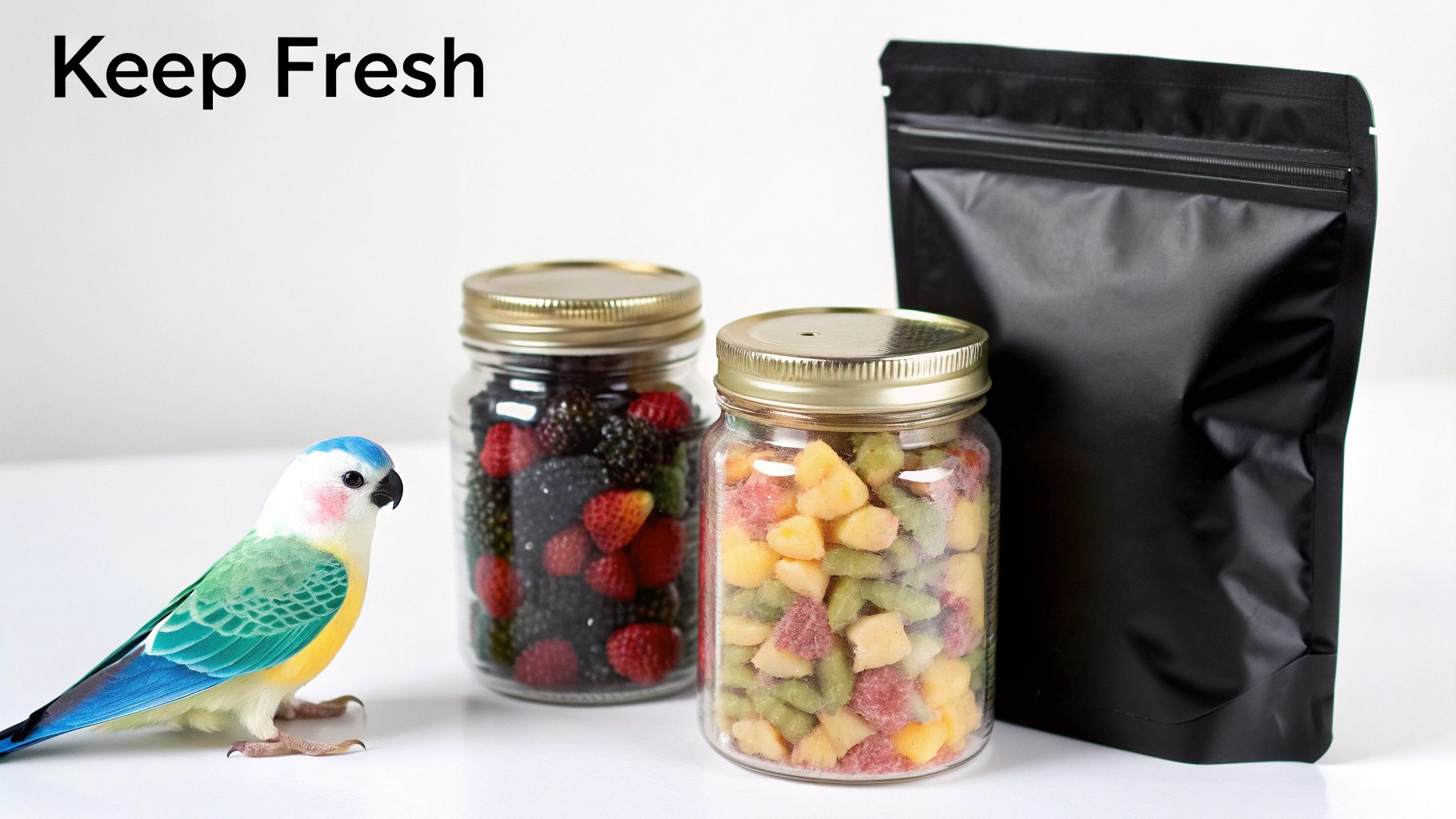
You’ve gone to all the effort of creating these crunchy, flavour-packed treats for your flock. Now for the crucial next step: making sure they stay that way. The biggest enemy of your beautiful freeze dry fruit is moisture, and here in Australia, humidity can turn your hard work soggy in no time.
Because the freeze-drying process zaps almost every drop of water, the fruit acts like a tiny sponge, ready to soak up any moisture from the air. Even a few hours left out can turn that satisfying crunch into a sad, chewy texture. Proper storage isn't just a suggestion—it's essential.
Keeping Your Treats Perfectly Crisp
To protect your fruit (and your time!), you need a storage solution that's completely airtight. This isn't a job for a standard biscuit tin or a bag with a clip. You have to create a serious barrier against the Aussie air to keep that crispness locked in for months, or even years.
Your best bets for long-term storage are:
- Mylar Bags with Oxygen Absorbers: This is the gold standard. Mylar is brilliant at blocking out light, air, and moisture. Tossing an oxygen absorber in before sealing the bag removes what little air is left, creating the perfect environment for preservation.
- Sealed Glass Jars: For smaller batches that you want to access regularly, a high-quality glass jar with a proper airtight seal is fantastic. Think canning jars with rubber gaskets. They also look great on the shelf!
Expert Tip: To minimise air exposure, I strongly recommend portioning out your stash. Keep the bulk of your freeze-dried fruit in a large, sealed Mylar bag. Then, transfer just a week's worth at a time into a smaller glass jar for daily use. This stops you from opening the main batch over and over again.
Turning Snack Time into Fun Time
Now for the best part—serving these delicious goodies! You could just pop them in a treat bowl, but the real magic happens when you weave them into your bird's enrichment routine. The intense flavour and unique texture make freeze-dried fruit a high-value reward, perfect for encouraging natural foraging behaviours.
Instead of just handing a treat over, make your bird work for it. This mental workout is just as important as a healthy diet for preventing boredom and keeping them happy and active. If you’re new to this idea, our guide on foraging toys for birds is a great place to start.
Creative Serving Ideas for Enrichment
Ready to get creative? The light, non-sticky nature of freeze-dried fruit makes it perfect for stuffing into all sorts of toys without making a mess. Here are a couple of our flock's favourites to get you started.
A brilliant way to get them foraging is by hiding pieces inside a shreddable toy like our Rainbow Piñata. Your bird will have an absolute blast tearing through the colourful layers to find the tasty treasure hidden inside, combining the joy of shredding with the reward of a treat.
For a different kind of challenge, try packing the fruit into a puzzle toy. The Foraging Fun Box is ideal for this, as your bird needs to figure out how to pull open drawers to get to the goodies. You can even mix and match different fruits with safe woods and nuts to create your own custom foraging blends. The possibilities are endless, and you can browse our full range of Natural Bird Toys for more inspiration.
A Smart Guide to Buying Pre-Made Freeze Dried Fruit
Making your own freeze-dried fruit is incredibly rewarding, but let’s be honest—it’s a big commitment of time and money. For busy Aussie bird owners, buying high-quality, pre-made freeze-dried fruit is a fantastic and convenient alternative.
The secret is knowing exactly what to look for. Your mission is to find products that are as close to nature as possible, ensuring you're getting a safe, healthy treat for your flock. When you're browsing the aisles or shopping online, the ingredients list should be your first stop. Ideally, it should be incredibly short: just the fruit itself.
Reading the Label Like a Pro
To make a safe choice, you need to become a bit of a label detective. So many products marketed for humans contain additives that are completely unsuitable, and sometimes even dangerous, for our birds.
Keep this checklist handy when you're comparing brands to make sure you’re only bringing home the good stuff.
A top-quality product for your bird will always meet these criteria:
- 100% Fruit: The ingredient list should simply read "Strawberries" or "Mango". Nothing else.
- No Added Sugars or Sweeteners: Birds don't need extra sugar. Steer clear of products with cane sugar, corn syrup, fruit juice concentrate, or artificial sweeteners like xylitol, which is highly toxic to many animals.
- No Sulphites or Preservatives: Sulphur dioxide (preservative 220) is often used to maintain colour in dried fruits for people, but it can be harmful to birds. Always stick to preservative-free options.
When in doubt, the simplest product is always the safest. If the label has long, chemical-sounding names or anything you don't recognise as a whole food, it's best to just leave it on the shelf.
Why Sourcing Australian Matters
Choosing Australian-made and sourced freeze-dried fruit is often the best move you can make. It’s not just about supporting our local growers and producers; it often means you're getting a fresher, higher-quality product thanks to shorter supply chains.
Plus, you’re contributing to a more sustainable food system. For instance, a groundbreaking plant in Carnarvon, Western Australia, is now transforming cosmetically imperfect bananas into valuable freeze-dried products, which massively cuts down on food waste in our horticulture industry.
By opting for local, you're investing in products that haven't travelled halfway around the world and supporting clever solutions to food waste right here at home. For a deeper dive, check out our comprehensive article on sourcing freeze dried fruit in Australia.
By making smart, informed choices, you can give your feathered companion all the crunchy, nutritious benefits of this amazing treat without any of the worry.
Frequently Asked Questions
As freeze-dried fruit starts popping up more in Aussie aviaries, it's only natural for questions to come with it. Getting the facts straight is the best way to keep our birds happy and healthy, so let's clear the air on a few common queries about these crunchy treats.
We’ll cover everything from how much is too much to how it stacks up against dehydrated fruit, giving you the confidence to add these morsels to your bird’s enrichment routine.
How Much Freeze Dried Fruit Should I Give My Bird?
This is the big one, and the answer is refreshingly simple: always in moderation. Freeze-dried fruit is a high-value treat, not a meal. By removing the water, all the natural sugars become super concentrated.
Think of it this way: a bird might nibble on one or two fresh raspberries before feeling full. But because the freeze-dried versions are so light and crunchy, they could easily polish off five or six, taking in a massive sugar hit they wouldn't normally get.
A great rule to live by is the 5-10% rule, which you'll hear from many avian vets. It means treats—including freeze-dried fruit—should never make up more than 5-10% of your bird's total daily food intake.
For a little bird like a budgie or cockatiel, that’s just a tiny pinch of crumbled berry or one paper-thin slice of banana. For a big macaw, you could offer a couple of strawberry halves or a few mango cubes. The best way to use them is with purpose—as a reward for training or to make playtime more exciting inside a Foraging Tower, rather than just tipping them into the food bowl.
Freeze Dried vs. Dehydrated Fruit: What’s the Real Difference?
It’s easy to mix these two up, but they’re worlds apart in how they're made and what they offer nutritionally. The main difference comes down to one thing: heat.
- Dehydrating relies on low, steady heat over many hours to slowly evaporate the water. The trouble is, this heat also degrades sensitive nutrients like Vitamin C and some B vitamins, leaving you with a chewy, leathery product that’s lost some of its goodness.
- Freeze-drying, on the other hand, is a cold process. The fruit is frozen solid and then placed in a vacuum, causing the ice to turn directly into vapour. This gentle process preserves the fruit’s shape, colour, flavour, and most importantly, retains up to 97% of its original nutrients.
Because there’s no heat to damage the good stuff, freeze-drying is the clear winner nutritionally. You're giving your bird something that's as close to fresh as you can get, just without the water. The light, airy crunch is also far more engaging for most birds than the dense texture of dehydrated fruit.
Can I Rehydrate Freeze Dried Fruit Before Serving It?
You sure can, and it’s incredibly simple. Just pop the pieces in a little bit of clean water for a few minutes. They’ll plump right back up, regaining a soft, fleshy texture that’s almost identical to fresh fruit.
But the real question is, should you? That all depends on your bird and what you're trying to achieve.
Here’s when rehydrating is a great idea:
- For Older Birds or Those with Beak Issues: If your bird has a sensitive beak, is unwell, or finds hard foods tricky, rehydrated fruit is much gentler and easier to eat.
- For the Fussy Eaters: Some parrots are just particular and will always prefer the texture of fresh fruit. Rehydrating is a fantastic way to offer them that experience year-round.
- To Introduce New Foods: A soft, juicy texture can be more inviting for a bird that’s hesitant to try something new.
- For a Little Extra Hydration: Soaking the fruit is also a sneaky way to get more water into a bird that isn’t a big drinker.
For most healthy birds, though, the irresistible crunch is the main attraction. That crisp texture provides brilliant mental stimulation and taps into their natural foraging instincts, especially when you hide the pieces inside a fun puzzle like the Wicker Foraging Box.
If you do decide to rehydrate, just remember that the fruit will spoil as quickly as fresh fruit once it's wet. Only offer what your bird will eat in one sitting and be sure to clear out any leftovers promptly to keep bacteria at bay.
Keep Reading
- Foraging for Beginners A Guide to Enrichment for Your Pet Bird
- A Guide to Sprouting for Your Feathered Friends in Australia
- A Guide to Making Chop for Your Feathered Friends in Australia
Disclaimer Summary: The information in this article is general in nature and may include external links or resources not created by Lou Lou Bells Bird Toys. Every bird is unique, so we encourage you to seek personalised advice from your own veterinarian or avian specialist. For full details, please read our complete disclaimer here.