
Ever wondered what you get when you press a "pause" button on a fresh berry, pulling out all the water but leaving the good stuff behind? That's pretty much what freeze dried fruit is. It’s a light, crunchy, and incredibly flavourful treat that’s quickly becoming a favourite for pet birds all across Australia. Best of all, it’s a super convenient way to offer natural fruit goodness without any nasty preservatives.
What Is Freeze Dried Fruit and Why Do Birds Love It?
Freeze-drying, known scientifically as lyophilisation, is a clever way to preserve food. First, the fruit is frozen solid. Then, it's placed into a vacuum where a neat trick of physics happens: the frozen water turns directly into vapour and gets sucked away. This is a far cry from simple dehydration, which uses heat that can often destroy delicate vitamins.
The result is a feather-light morsel that keeps its original shape, colour, and most importantly, its nutritional punch. It’s a premium process that creates a fantastic product for enriching the lives of our feathered mates.
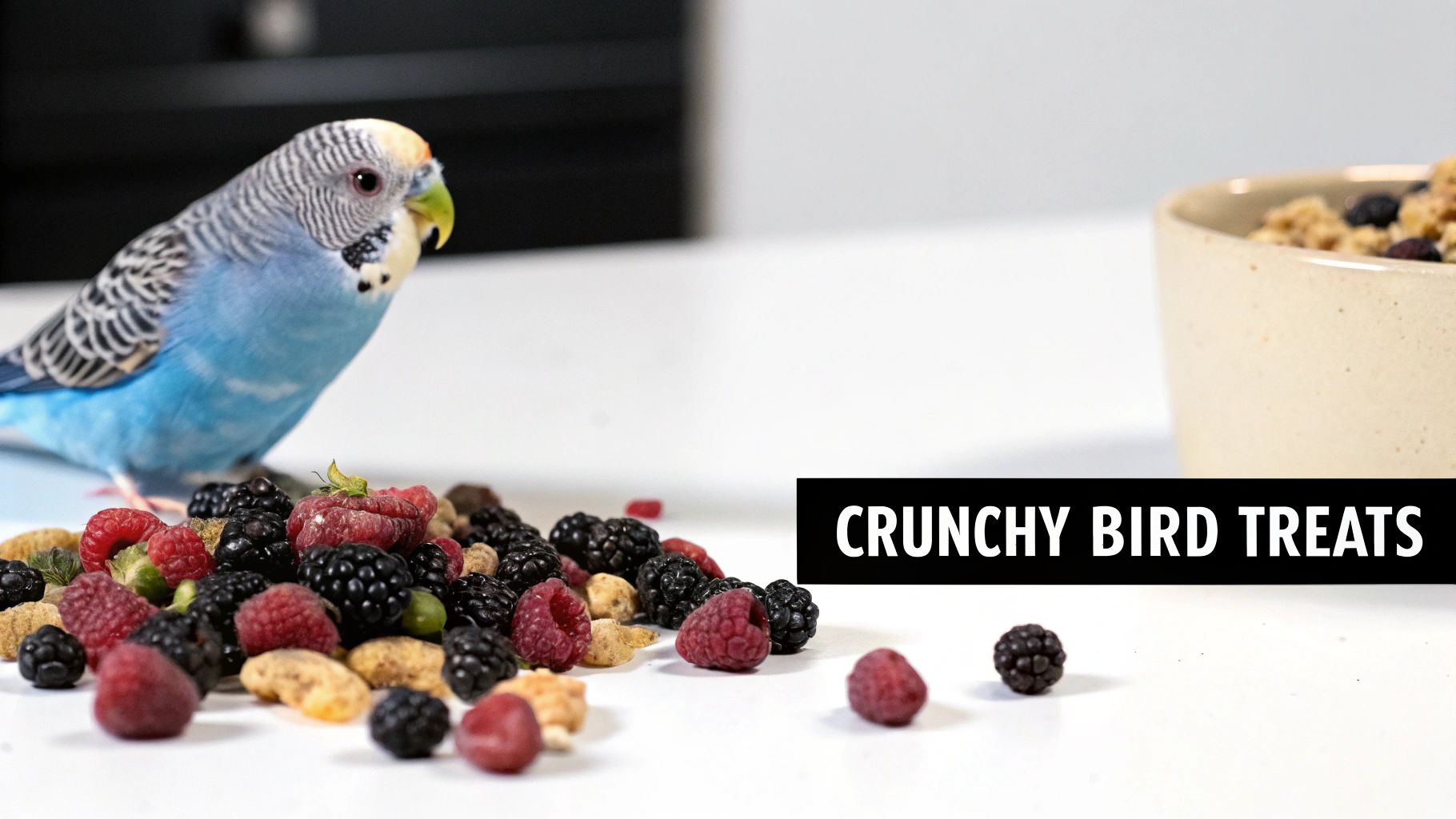
This method isn’t just for human snacks anymore; it’s making huge waves in pet nutrition. The market for freeze dried fruit in Australia is absolutely booming, showing a real shift towards healthier, more convenient options for our pets. This trend is great news for bird owners, who can now use these nutritious fruits in enrichment toys for everyone from budgies to big macaws.
The Irresistible Appeal for Birds
So, why do our birds go so crazy for these crunchy treats? It really boils down to a few things that hit all the right notes for a bird's natural instincts.
- Intense Flavour: When you take the water out, the fruit's natural sugars and flavours get super concentrated. For a bird, a piece of freeze-dried strawberry is a flavour explosion that fresh fruit sometimes can't compete with.
- Engaging Texture: Birds explore their world with their beaks. The crisp, airy crunch of freeze-dried fruit offers a stimulating texture that they find incredibly satisfying to break apart. It's fun!
- Vibrant Colours: The process locks in the fruit’s bright, natural colours. These are visually exciting for birds and can spark their curiosity, encouraging them to try something new.
Expert Advice: Freeze-dried fruit is a fantastic "gateway" food for picky eaters. Its concentrated flavour and crunchy texture can encourage birds who are hesitant to try fresh fruits to finally give them a go.
More Than Just a Tasty Snack
Beyond the fun factor, freeze-dried fruit packs some serious benefits that make it a smart addition to your bird’s diet. It’s a brilliant way to introduce variety and essential nutrients. When you’re thinking about what parrots eat, offering a diverse range of safe foods is key to their overall health.
The long shelf life is another huge plus for Aussie bird owners. As long as you store it correctly in an airtight container away from humidity, it stays fresh for months. This cuts down on waste and means you’ve always got a healthy, high-value treat on hand for training, foraging, or just a bit of everyday enrichment.
Freeze Dried vs Fresh vs Dehydrated Fruit
When you're looking for treats for your bird, the choices can feel a bit overwhelming. You’ve got fresh, dehydrated, and freeze-dried options all vying for your attention. They all have a place, but understanding how they’re made and what they offer is key to picking the best one for your feathered mate’s health and enrichment.
Fresh fruit is, without a doubt, fantastic. It’s packed with water, vitamins, and fibre—a healthy, hydrating snack that should definitely be part of your bird’s regular diet. But its biggest strength is also its greatest weakness when it comes to enrichment. Pop a piece of fresh fruit inside a foraging toy, and it’ll spoil fast, turning into a mushy, sticky mess that’s a breeding ground for bacteria.
Dehydrated fruit is probably what most people think of when it comes to dried fruit. It’s made by slowly removing water with heat, which gives you that chewy, dense, and super-sweet product. While it’s convenient, the heating process is a major drawback.
The Downside of Dehydration
Heat can seriously reduce a fruit’s nutritional value, hitting heat-sensitive vitamins like Vitamin C and some B vitamins especially hard. This means that while your bird is getting a sweet treat, they could be missing out on some of the key nutrients you were hoping to provide.
Worse still, a lot of the commercially available dehydrated fruit here in Australia has added sugars or preservatives like sulphur dioxide to keep its colour and make it last longer. These additives are unhealthy and can even be harmful to birds.
Expert Advice: Always, always check the ingredients list on dehydrated fruit. If you see "sulphur dioxide," "preservatives," or "added sugar," it’s best to give it a miss for your bird's safety. You want to see products that list just one thing: the fruit itself.
This is exactly where freeze-dried fruit comes into its own as a far better option for treats and enrichment toys. It really does offer the perfect blend of nutritional goodness and practicality.
Comparing Fruit Options for Your Bird
To make it easier, let's break down the key differences between these options. This table really helps show why so many avian experts now recommend freeze dried fruit in Australia for filling up foraging toys and using as high-value rewards.
| Attribute | Fresh Fruit | Dehydrated Fruit | Freeze Dried Fruit |
|---|---|---|---|
| Nutrient Retention | Highest, but degrades quickly after being cut. | Moderate to low due to heat exposure. | Excellent, preserving up to 97% of original nutrients. |
| Sugar Concentration | Natural levels balanced with high water content. | Highly concentrated, often with added sugars. | Concentrated natural sugars, but no additives. |
| Shelf Life | Very short; a few days at most. | Long, but can be affected by preservatives. | Extremely long; months to years if stored correctly. |
| Suitability for Toys | Poor; spoils rapidly and creates a mess. | Fair, but can become sticky and hard. | Perfect; it's dry, crunchy, and won't spoil quickly. |
| Preservatives | None. | Often contains sulphur dioxide or added sugar. | None; the process itself is the preservative. |
As you can see, freeze-drying manages to lock in all that nutritional goodness without needing heat or chemicals. The process gently removes the water while keeping the fruit's cellular structure, flavour, and bright colour intact. This makes it an incredibly nutrient-dense option that’s both safe and exciting for your bird.
The intense, natural flavour is a massive drawcard, too. Because all the water is gone, the fruit’s taste is highly concentrated, making it an irresistible reward for training or a powerful lure to get your bird working on a foraging puzzle.
If you're keen to learn more about the benefits of freeze-dried foods, you can explore the advantages of freeze-dried vegetables for parrots in our detailed guide. It's a fantastic way to add even more variety and nutrition to your bird’s diet.
How to Choose Safe Freeze Dried Fruit in Australia
Wandering through the supermarket aisles or scrolling online for bird-safe treats can feel like a bit of a minefield. But when it comes to picking the best freeze dried fruit in Australia, it’s actually pretty simple once you know the secret. Your best tool? The ingredients list. The goal is to find something as close to nature as possible.
Your bird’s health is everything, so that little label on the back of the pack is your first line of defence. When you pick up a package, flip it over and have a quick scan. The shorter the ingredients list, the better.
Reading the Label Like an Expert
When you're comparing brands of freeze dried fruit, keep an eye out for a few key phrases. They’re dead giveaways for a high-quality, bird-safe product.
- 100% Fruit: This is the gold standard. It means the only thing in that bag is the fruit itself—nothing else added, no funny business.
- No Added Sugar or Sweeteners: Birds just don't need extra sugar. Steer clear of products that list corn syrup, fructose, or especially artificial sweeteners like xylitol, which is highly toxic to many animals.
- Sulphur-Free or No Preservatives: A lot of dried fruits get a dose of sulphur dioxide (you might see it as preservative 220) to keep their bright colour. This chemical can be rough on a bird's sensitive respiratory system, so always go for sulphur-free options.
Expert Advice: If the ingredients list is a mile long and full of words you can't pronounce, just put it back on the shelf. The best freeze dried fruit for your bird will have just one ingredient—the fruit.
This handy little decision tree gives you a simple way to think about which type of treat is right for your needs, whether it's for a quick snack or for stuffing into a long-lasting enrichment toy.
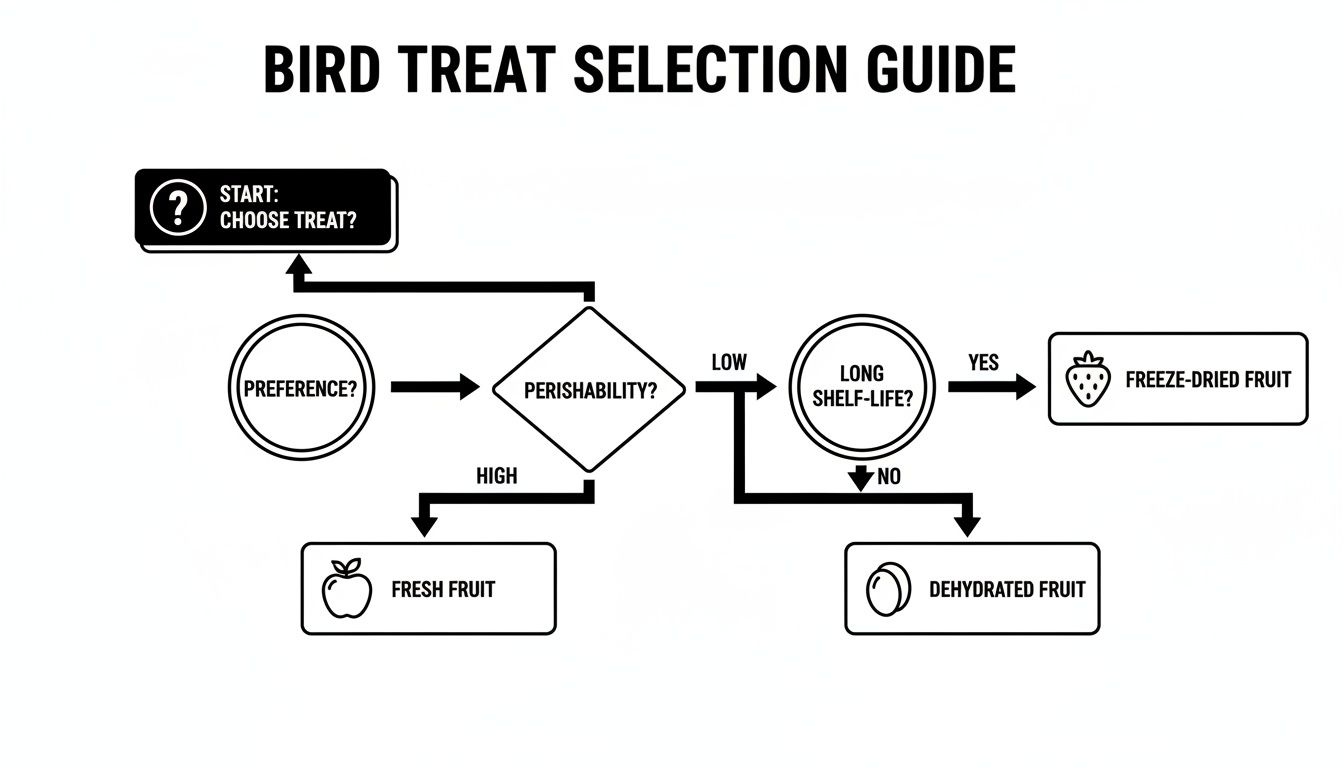
As the guide shows, while fresh fruit is fantastic for nutrition, freeze-dried options really hit the sweet spot, offering the perfect mix of a long shelf-life and suitability for foraging toys.
Australian Brands to Trust
Thankfully, the demand for natural, high-quality foods has created a fantastic local market right here in Australia. This growth means we have more top-notch local options than ever before. Companies like Aussie Freeze Dried and Forager Food Co. are leading the charge, often focusing on the single-ingredient products that are perfect for our feathered mates.
Safe Fruits and Dangerous Foods
When it comes to our birds, not all fruits are created equal. It's so important to know which ones are safe to offer and which ones need to be avoided at all costs. Having a good grasp of safe food for parrots is something every bird owner needs.
Bird-Safe Fruit Choices:
- Berries (strawberries, blueberries, raspberries)
- Mango and Papaya
- Apple (just make sure the seeds are removed before freeze-drying)
- Banana
- Pear
Strictly Avoid These Foods:
- Avocado: This is extremely toxic to birds and can be fatal.
- Rhubarb: Both the leaves and stems contain oxalic acid, which is poisonous.
- Fruit Pits and Seeds: Seeds from apples, cherries, peaches, and apricots contain cyanide compounds and should never be given.
- Onion and Garlic: These can cause serious health problems in birds.
By arming yourself with this knowledge, you can confidently pick out freeze dried fruit that isn't just a delicious and engaging treat, but one that's completely safe for your beloved companion. A little bit of care in choosing ensures that treat time is always a happy and healthy experience.
Serving Freeze Dried Fruit for Health and Fun
Bringing freeze dried fruit into your bird's life is a fantastic way to add some excitement and nutrition, but how you serve it is the real secret. Here’s the golden rule: freeze dried fruit is a high-value treat, not a meal replacement. Its intense flavour and concentrated goodness make it the perfect reward or foraging prize, but it should only ever be a tiny part of a balanced diet.
Think of it like putting a bit of spice in a recipe. A small dash adds a wonderful burst of flavour and makes things interesting, but too much will completely overwhelm the dish. When it comes to freeze dried fruit, moderation is everything.
Portion Control for Different Species
The right serving size really depends on the size of your bird. What’s a treat for a macaw is a full-blown meal for a budgie, so getting the portions right is vital for their health.
- For Small Birds (Budgies, Cockatiels, Lovebirds): A tiny pinch of crushed freeze-dried raspberry or a few slivers of strawberry is plenty. A good rule of thumb is a portion about the size of their eye.
- For Medium Birds (Conures, Galahs, Ringnecks): You can offer a small piece, like half a freeze-dried blueberry or a little slice of mango, just a few times a week.
- For Large Birds (Macaws, Eclectus, Amazons): A whole freeze-dried strawberry or a decent chunk of apple can be a wonderful, engaging treat, but it still shouldn't be an everyday thing.
Expert Advice: To make a small amount go further, crush larger pieces of freeze dried fruit into a powder. You can then sprinkle this "flavour dust" over their regular food or into foraging toys. It gives them all the taste and excitement with far fewer calories.
This way, you can use these brilliant treats for daily enrichment without throwing their core nutrition out of whack.
Creative Ways to Serve Freeze Dried Fruit
This is where the real magic happens. Stop thinking of freeze dried fruit as just food and start seeing it as a tool for getting their brain working. Its dry, crunchy texture is perfect for all sorts of enrichment that fresh fruit just can’t handle—it won't spoil quickly or make a sticky mess inside toys.
This is your chance to encourage your bird's natural foraging instincts, which is so important for their psychological wellbeing. A bird that has to work and problem-solve for its food is a much happier, more fulfilled bird.
Here are a few ideas to get you started:
- Stuff Shredding Toys: Gently push small bits of freeze dried fruit into the nooks and crannies of shreddable toys. Your bird will have to chew, rip, and tear through materials like yucca or palm leaf to get to the prize inside. It’s a fantastic outlet for those natural chewing behaviours.
- Create a Foraging Box: Grab a shallow tray and fill it with bird-safe materials like shredded paper, cardboard bits, and foot toys. Sprinkle a few pieces of freeze dried fruit throughout the box and let your bird dig, sift, and explore to find the hidden treasures. It’s a simple idea that can provide ages of entertainment.
- Use in Puzzle Toys: Lots of puzzle toys have little drawers or compartments perfect for hiding a high-value treat. Using freeze dried fruit as the reward gives your bird a powerful reason to figure out the puzzle, giving their brain a great workout. Items like the Creative Foraging Systems Feeder are perfect for this.
Storing Your Treats in Australian Climates
To keep your freeze dried fruit safe, crunchy, and delicious, proper storage is non-negotiable, especially with Australia's diverse and often humid climates. Moisture is the number one enemy here; it will quickly turn your treats soft, unappealing, and even mouldy.
Always store your freeze dried fruit in a completely airtight container. A glass jar with a good sealing lid or a high-quality plastic container will do the job perfectly. Just make sure you seal it up tight straight after you’ve taken a portion out.
Keep the container somewhere cool, dark, and dry—a pantry or cupboard away from the stove or sunny windows is ideal. If you live in a particularly humid spot like Queensland or the Northern Territory, you might want to pop a food-safe desiccant packet in the container to soak up any sneaky moisture. With the right care, your treats will stay fresh and crunchy for months, ready for the next foraging session.
Using Freeze Dried Fruit for Training and Enrichment
Freeze-dried fruit is more than just a tasty snack; it’s a seriously powerful tool for training your bird and enriching its daily life. The right treat can completely transform your interactions, helping you build a stronger bond and encourage those good behaviours you love to see.
The secret is its massive sensory appeal. That intense colour, concentrated flavour, and satisfying crunch are almost irresistible to a bird's senses. This makes it the perfect high-value reward for positive reinforcement training. When your bird masters a new trick or steps up nicely onto your hand, a tiny piece of freeze-dried strawberry is an instant, powerful reward that creates a strong positive connection.
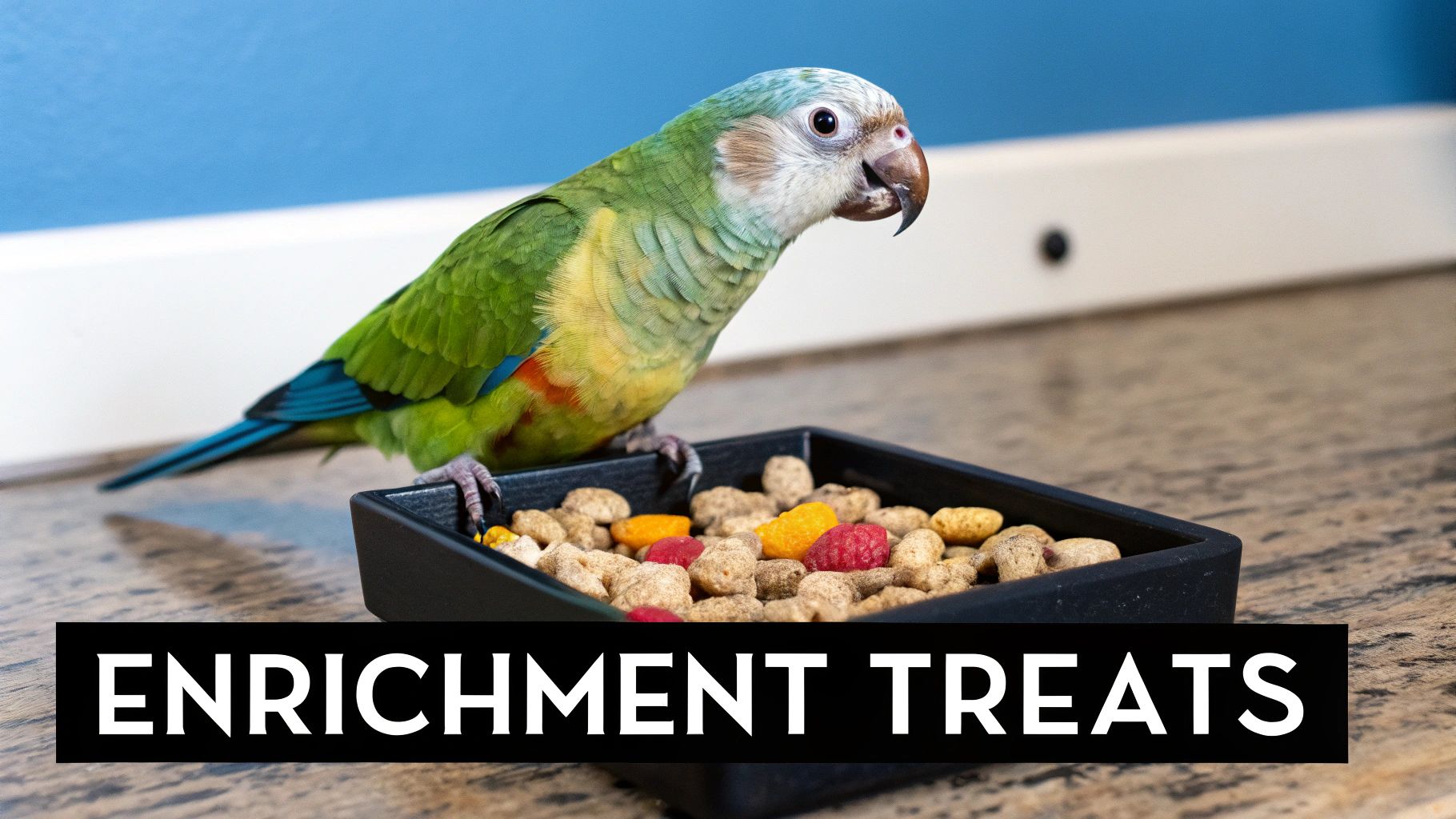
This taps directly into how birds think. A super-exciting reward is way more motivating than their usual daily food, making training sessions faster, more fun, and ultimately more successful for both of you.
Transforming Snack Time into Brain Time
One of the best things about using freeze-dried fruit is how it turns snack time into a stimulating puzzle for your bird’s mind. Out in the wild, parrots spend a huge chunk of their day foraging—searching, problem-solving, and figuring out how to get to their food. It’s an instinct that’s hardwired into them.
Expert Advice: A bored bird can quickly develop behavioural issues like feather plucking or excessive screaming. Providing daily foraging opportunities is one of the most effective ways to combat boredom and promote a calm, well-adjusted companion.
Just dropping food into a bowl robs them of this crucial mental workout. But when you add freeze-dried fruit to foraging toys, you instantly create a challenge that satisfies that natural drive. It makes them think, plan, and work for their reward, which is incredibly fulfilling for a parrot.
These lightweight, nutrient-dense morsels are perfect for handcrafted enrichment toys like the ones we design here at Lou Lou Bells Bird Toys in South Australia.
Practical Enrichment and Foraging Ideas
Getting started with foraging is easy, and you can tailor it to your bird’s skill level. Because freeze-dried fruit is dry and not sticky, it’s the ideal filler for a huge range of toys without creating a mess or going off quickly.
Here are a few simple but effective ways to work freeze dried fruit in Australia into your bird's routine:
- Beginner Foraging: Start simple. Mix a few small pieces into a foraging tray filled with safe, shreddable materials like crinkle paper or yucca chips. Your bird will quickly learn to dig and sift to find the hidden treasures.
- Intermediate Puzzles: Step it up with puzzle toys that require your bird to pull levers, open drawers, or slide pieces to get the treat. A piece of freeze-dried mango is a powerful motivator to get them thinking.
- Advanced Challenges: For the ultimate brain game, stuff small pieces into shreddable toys made from palm leaf or seagrass. Your bird will need to chew, rip, and destroy the toy to get to the reward inside—a fantastic outlet for their natural chewing instincts.
By weaving these treats into stimulating activities, you're doing so much more than just feeding your bird. You're giving them essential mental stimulation, encouraging their problem-solving skills, and strengthening your bond through fun, interactive experiences. If you need some ideas to get started, our guide on foraging toys for birds is a great source of inspiration.
Common Questions About Freeze Dried Fruit for Birds
It’s only natural to have a few questions when you’re thinking about adding something new to your bird's diet. We hear from fellow bird owners across Australia every day, so we’ve put together some of the most common queries to give you clear, practical answers.
Can I Rehydrate Freeze Dried Fruit for My Bird?
You certainly can, but for most birds, there’s really no need. A big part of the appeal of freeze-dried fruit is its dry, crunchy texture. It provides fantastic enrichment and a satisfying crunch that parrots love to get their beaks into.
When you rehydrate it, you’re basically just turning it back into a piece of fresh fruit. That means it will spoil much faster, which isn't ideal if you’re popping it inside a foraging toy for the day. The only time you might consider it is for a bird who is unwell, very old, or has beak problems that make chewing hard things a bit of a struggle. For healthy birds, serving it dry is the way to go.
How Long Do Opened Packs Last in a Humid Climate?
This is a great question, especially for those of us in places like Queensland or the Northern Territory where the air can feel like a sponge! The secret to making it last is simple: keep moisture out. An opened pack of freeze dried fruit in Australia can stay perfectly crisp for months if you store it properly.
As soon as you open the bag, tip the contents into a completely airtight container. A glass jar with a good rubber seal is perfect for the job. From there, just keep it in a cool, dark pantry away from any sunlight or heat.
Expert Advice: If you're in a really humid spot, you can add an extra layer of defence. Pop a food-grade desiccant or silica gel packet (like the ones you find in vitamin bottles) into your storage jar. It will actively soak up any sneaky moisture that gets in, keeping those treats perfectly crunchy.
Are All Freeze Dried Fruits Safe for Parrots?
Absolutely not. It's so important to remember that freeze-drying only removes the water—it doesn’t remove any natural toxins or compounds that are harmful to birds.
You must only offer fruits that you know are bird-safe. Always steer clear of these, whether they’re fresh or freeze-dried:
- Avocado: This is highly toxic to all birds and should never be offered.
- Fruit pits and seeds: The seeds inside apples, cherries, peaches, and apricots contain small amounts of cyanide and are dangerous.
- Rhubarb: The leaves and stalks are poisonous to parrots.
Stick to the tried-and-true safe options like berries, mango, papaya, and pear. If you’re ever unsure about a new food, the best thing to do is have a quick chat with your avian vet first.
Is Organic Freeze Dried Fruit a Better Choice?
Going organic is a personal choice, but it can definitely be a great one for your bird. The main advantage is the peace of mind that comes from knowing the fruit was grown without synthetic pesticides or fertilisers. Birds have very sensitive systems, so reducing their exposure to any chemical residue is always a good thing.
While it’s not essential, if it fits within your budget, choosing organic means you're offering the purest possible treat. It's great to see that many Australian producers are now offering fantastic organic ranges.
Keep Reading
- The Ultimate Guide to Parrot Chop
- Your Guide to Native Australian Flowers for Parrots
- A Guide to Natural Perches for Parrots
Disclaimer Summary:
The information in this article is general in nature and may include external links or resources not created by Lou Lou Bells Bird Toys. Every bird is unique, so we encourage you to seek personalised advice from your own veterinarian or avian specialist. For full details, please read our complete disclaimer here.