
That old saying, "you are what you eat," doesn't just apply to us—it's the absolute truth for our feathered companions, too. And contrary to what you might see in old cartoons, a healthy diet for a parrot is so much more than a simple bowl of seeds.
The reality is that the best diet for your parrot is a rich, varied plate. Think high-quality formulated pellets, a colourful mix of fresh vegetables, a little bit of fruit, and only a tiny amount of seeds or nuts as special treats. Getting this balance right is the secret to a happy, healthy bird.
What a Healthy Parrot Diet Actually Looks Like
It’s easy to get confused about what parrots should be eating, especially with so much conflicting advice out there. A lot of new bird owners here in Australia fall into the trap of thinking a seed-only diet is the way to go, but it's one of the most common—and dangerous—mistakes you can make.
Imagine trying to live on nothing but junk food. Sure, you'd survive for a bit, but you wouldn't feel great. That's what a seed-only diet is for a parrot: it’s high in fat but critically low in essential nutrients like Vitamin A and calcium.
Over time, this kind of poor nutrition can lead to serious health issues, from obesity and liver disease to a weak immune system that can't fight off illness. A truly balanced diet for a companion parrot should mirror the variety they'd find in the Aussie bush, giving them everything they need for a long and vibrant life. And it all starts with building the right foundation.
The Core Components of a Balanced Parrot Diet
A balanced diet is built on a few key food groups, and each one plays a crucial role in your bird’s overall health. Here's a quick look at the essentials and how they fit into the daily menu.
| Food Group | Recommended Percentage of Diet | Primary Benefits |
|---|---|---|
| Formulated Pellets | 60-70% | Provides complete and balanced nutrition in every bite, preventing picky eating. |
| Fresh Vegetables | 20-30% | Rich in essential vitamins and minerals; supports immune function and overall health. |
| Fruits & Nuts | 5-10% | A great source of natural sugars for energy and healthy fats, but should be given sparingly as treats. |
As you can see, the cornerstone of this diet should be a high-quality formulated pellet. These are cleverly designed by avian nutritionists to pack a complete and balanced punch of nutrients in every single bite. This is a game-changer because it stops your clever parrot from just picking out the tasty, high-fat seeds and leaving the healthy stuff behind.
From that solid base, you can get creative and add a colourful variety of fresh foods:
- Formulated Pellets (60-70%): This should be the main event, the bulk of their daily meals. It’s their nutritional safety net.
- Fresh Vegetables (20-30%): Think dark leafy greens like kale and bok choy, plus vibrant veggies like capsicum, carrots, and sweet potato. The more colours, the better!
- Fruits and Nuts (5-10%): These are best thought of as dessert. Because they're high in sugar and fat, they should only be occasional treats. A small piece of apple, a few berries, or a single almond is perfect.
Expert Advice: A great diet isn't just about nutrition—it's also about mental stimulation. Hiding food inside foraging toys is a fantastic way to encourage your bird's natural instincts and keep boredom at bay.
We only need to look at our own backyard here in Australia to see why variety is so important. Wild Australian King Parrots, for instance, have a diet that includes seeds, fruits, nuts, and even flowers. They are natural frugivores (fruit-eaters) and granivores (seed-eaters), which shows they're built to get their nutrition from a wide range of sources. This is exactly why a varied, balanced approach is so critical for the parrots we share our homes with.
How Diets Vary for Australian Parrot Species
When it comes to feeding parrots, not all birds are created equal. You wouldn't give a lorikeet a bowl of budgie mix any more than you'd offer a shark a salad—it's just not what their bodies are built for. The single most important step you can take for your bird's health is to understand what they’d be eating out in the wild.
Australia is home to a staggering variety of parrots, and each one has a diet perfectly tuned to its environment. This evolutionary blueprint is the key, telling you whether your bird is mainly a granivore (seed-eater), frugivore (fruit-eater), or nectivore (nectar-eater). Figuring out which group your bird belongs to is fundamental for their long-term health.
The Seed Eaters: Granivores
Granivorous parrots are probably what most people picture. In the bush, their strong beaks are the perfect tools for cracking open tough seeds and grains. Many of our most popular companion birds here in Australia fall right into this category.
- Budgerigars: These little Aussie icons spend their days foraging for the seeds of various grasses and plants.
- Cockatiels: Much like budgies, they're ground-foragers, picking through the dirt for a wide variety of seeds.
- Galahs and Cockatoos: While they're incredibly resourceful and will eat all sorts, many cockatoo species depend heavily on seeds, nuts, and roots they can dig up.
For these birds, a balanced diet should be built on high-quality formulated pellets, with a carefully controlled amount of a good seed mix and plenty of fresh veggies. It's so important not to go overboard with seeds, though. Too many can quickly lead to obesity and other serious health problems. For a closer look, check out our guide on the ideal cockatoo bird food.
The Nectar Sippers: Nectivores
At the other end of the scale, you have the nectivores. These birds have incredible, specialised tongues with a brush-like tip, designed to lap up nectar and pollen from Australian natives like eucalypts and banksias.
Rainbow Lorikeets are the classic example. Giving them a dry seed mix is one of the worst things you can do, as their digestive systems simply aren't made to process it.
Expert Advice from an Avian Vet: "Never feed a lorikeet seeds or nuts. Their diet requires a specially formulated wet or dry nectar mix to provide the right balance of sugars and proteins they need to thrive. Supplementing with fresh, native flowers and some soft fruits mimics their natural feeding behaviour."
Understanding the Nuances
The differences between species can be pretty specific. For instance, research shows that Aussie granivores like the Budgerigar have a wild diet where seeds make up around 80% of what they eat. Compare that to lorikeets, which need a nectar mix with a sugar concentration of 20-25% to properly replicate their natural food. You can explore more about these dietary specifics in this detailed nutrition overview from the Psittacine Research Project.
This is exactly why a "one-size-fits-all" bag of bird food just doesn't cut it. Each species has spent thousands of years perfecting a unique dietary plan.
Ultimately, tailoring your bird’s meals to their species isn't just a good idea—it's a must. When you respect their evolutionary design, you’re laying the foundation for a long, healthy, and vibrant life together. It helps prevent common health issues and ensures your feathered mate gets the exact fuel they need to flourish.
A Guide to Safe and Toxic Foods for Parrots
Knowing what parrots love to eat is a great start, but understanding what they absolutely can't eat is just as important for keeping them safe. Many of our everyday foods are perfectly fine for us but can be surprisingly dangerous—even fatal—for our feathered friends. Think of this as your essential kitchen safety guide for your bird.
Offering a variety of fresh foods is a fantastic way to enrich your parrot's life, but it's a responsibility. The goal is to feel confident that every new vegetable or fruit you pop into their bowl is a healthy treat, not a hidden danger. It’s a lot like baby-proofing your kitchen, but for a curious toddler with a beak.
This graphic gives a quick snapshot of the different dietary groups wild Australian parrots fall into.
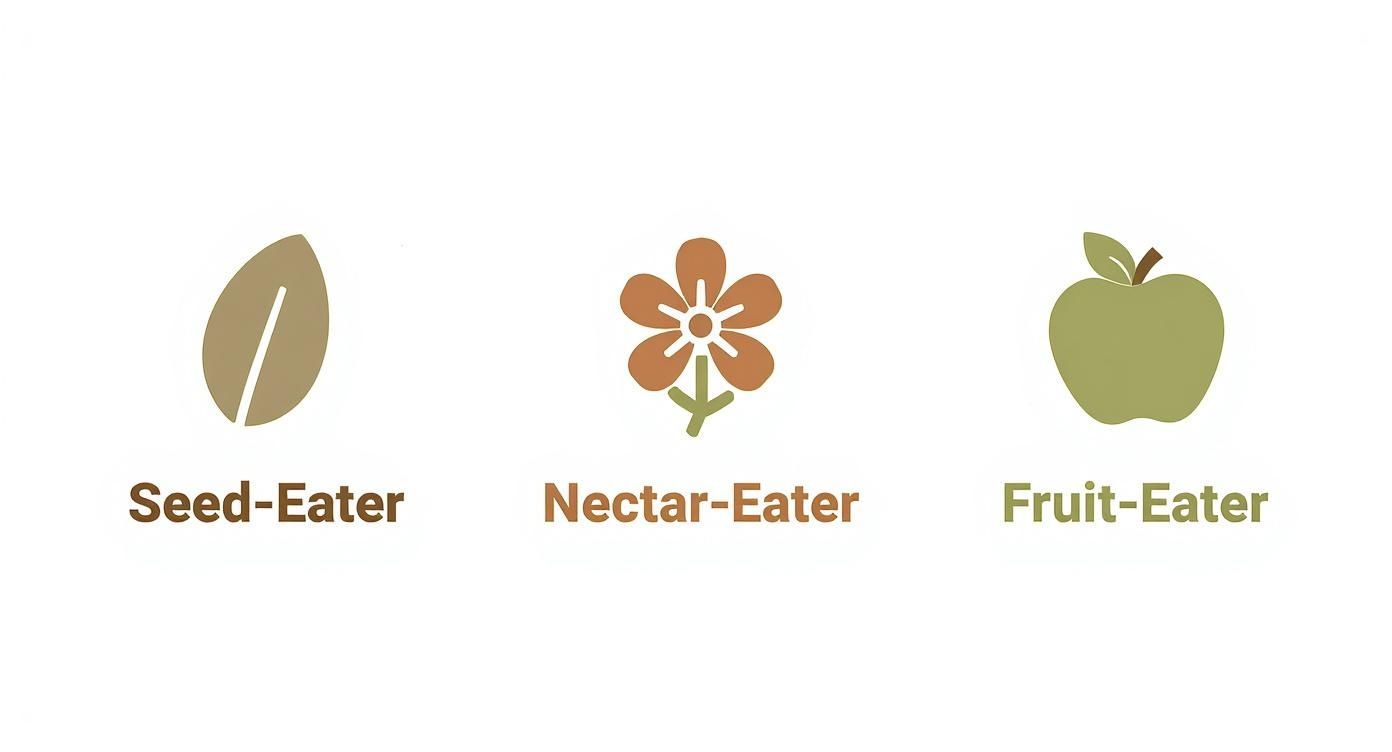
As you can see, parrots have evolved with incredibly specific diets, from seed-eaters to nectar specialists. It’s a great reminder that a one-size-fits-all approach just doesn't work for them.
Safe Vegetables for Your Parrot
Vegetables should be a daily staple in your parrot's diet. They're bursting with vitamins, minerals, and fibre that pellets and seeds alone can't provide. Just be sure to wash them thoroughly to get rid of any lingering pesticides or bacteria.
Most parrots are drawn to a colourful mix, which is great because different colours often mean different nutrients. Here are some fantastic choices to get you started:
- Leafy Greens: Kale, bok choy, and spinach (in moderation) are packed with goodness.
- Orange & Yellow Veggies: Carrots, cooked sweet potato, pumpkin, and capsicum are rich in Vitamin A—vital for healthy feathers and eyes.
- Other Great Options: Broccoli, peas, corn on the cob (as a treat), zucchini, and cucumber are also wonderful, hydrating choices.
Expert Advice: Keep things interesting by offering veggies in different ways. Some birds love a finely chopped "chop" mix, while others prefer a big chunk they can hold and tear apart. You can even stuff veggies into a durable foraging toy to turn mealtime into playtime.
Safe Fruits and Grains
Fruits are a brilliant treat, but because they're high in sugar, they should be offered sparingly. Think of fruit as dessert, not the main course. For most parrots, a few small pieces a day is more than enough.
Excellent Fruit Choices:
- Apples (with every single seed removed)
- Berries (like blueberries, raspberries, and strawberries)
- Melon (watermelon and rockmelon are big hits)
- Mango and papaya
- Stone fruits like peaches and plums (with the pit removed)
Cooked whole grains are another healthy addition you can offer in small amounts. A little bit of cooked brown rice, quinoa, or oats provides complex carbs for sustained energy.
If you want to dig deeper, this comprehensive guide on food for parrots has a lot more detail.
Safe vs Toxic Foods: A Quick Reference Guide
To make things a bit easier, here’s a quick reference table to help you distinguish between safe snacks, occasional treats, and definite no-gos. It’s always best to be cautious—if you’re not sure about a food, it’s better to avoid it.
| Food Item | Safety Level for Parrots | Important Notes |
|---|---|---|
| Avocado | TOXIC - DO NOT FEED | Contains persin, which is extremely dangerous and can cause fatal respiratory distress. |
| Chocolate | TOXIC - DO NOT FEED | Contains theobromine, which affects their nervous system and can cause heart failure. |
| Apple | Safe (flesh only) | Seeds are toxic. Always remove the core and all seeds before serving. |
| Carrots | Safe | Excellent source of Vitamin A. Can be served raw or cooked. |
| Onion & Garlic | TOXIC - DO NOT FEED | Contain sulphur compounds that can cause anaemia in birds. |
| Grapes | Moderation | High in sugar. Offer small amounts as a treat. |
| Caffeine & Alcohol | TOXIC - DO NOT FEED | Extremely harmful to a parrot's sensitive system. |
| Cooked Pasta | Moderation | Plain, cooked pasta is a safe treat, but offers little nutritional value. |
| Xylitol | TOXIC - DO NOT FEED | This artificial sweetener is found in sugar-free items and causes liver failure. |
| Bell Peppers/Capsicum | Safe | All colours are safe and a great source of vitamins. |
This table isn't exhaustive, but it covers some of the most common items you'll find in your kitchen. Memorising the toxic items is one of the most important things you can do as a parrot owner.
Foods to Never Feed Your Parrot
This is the list every parrot owner needs to commit to memory. These everyday items are highly toxic and should never be given to your bird, no matter what. If you suspect your bird has eaten any of these, call your avian vet immediately.
The Absolute No-Go List:
- Avocado: All parts of the avocado plant contain a toxin called persin, which is incredibly dangerous for birds and can lead to respiratory distress and death.
- Chocolate: This contains theobromine, which parrots can't metabolise. It affects their nervous system and can quickly cause heart problems and seizures.
- Caffeine & Alcohol: These are highly toxic to a parrot's sensitive systems, causing severe cardiac and neurological damage.
- Onion & Garlic: Both contain sulphur compounds that can rupture a bird's red blood cells, leading to anaemia.
- Xylitol: This artificial sweetener, often found in sugar-free gum, peanut butter, and baked goods, can cause a sudden drop in blood sugar and liver failure.
Crucial Food Preparation Tips
Keeping your parrot safe is about more than just choosing the right foods; it’s also about how you prepare them. A little care in the kitchen can prevent serious health problems.
First and foremost, wash all fresh produce thoroughly. Even organic fruits and veggies can carry harmful bacteria from the soil or from being handled in the store.
Second, be diligent about removing pits and seeds. The seeds of apples and the pits of stone fruits (like cherries, apricots, and peaches) contain small amounts of cyanide. While one seed is unlikely to cause harm, it’s a risk that’s just not worth taking. Always core your apples and completely remove the pits from stone fruits before offering them to your parrot. This simple habit will give you peace of mind as you provide a varied and, most importantly, safe diet for your beloved bird.
How to Encourage Natural Foraging Behaviour
Feeding time is so much more than just filling a bowl; it’s a golden opportunity to enrich your parrot's entire day. Think about it: out in the Australian bush, parrots don't get a neat dish of food handed to them. They spend a huge chunk of their day actively hunting for it—climbing, chewing through bark, and solving little puzzles to get their next meal. This natural instinct to work for food is called foraging.
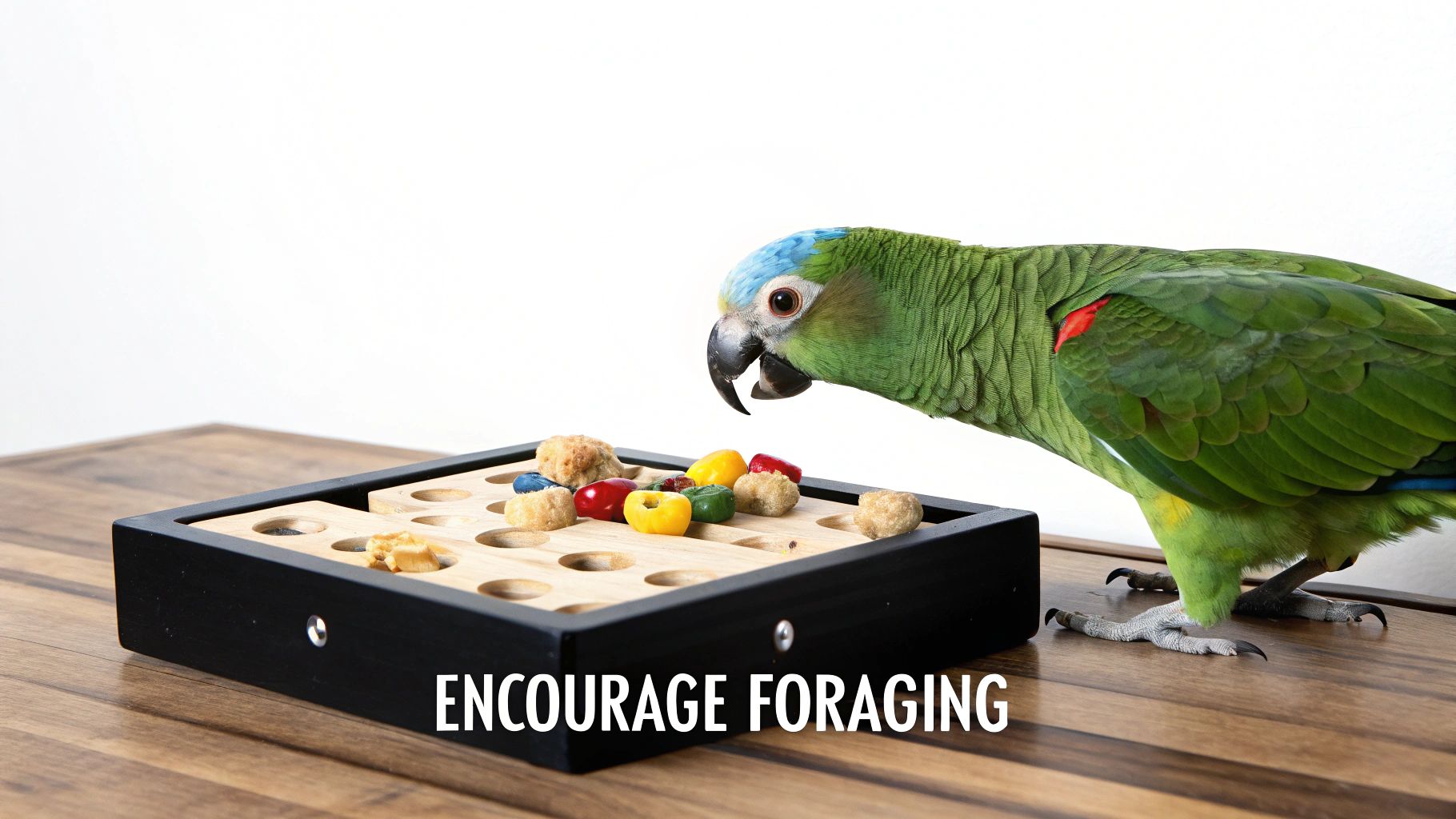
When we give our companion parrots a full bowl with zero effort needed, we accidentally take away one of their most important jobs. A bored parrot often becomes a stressed parrot, which is when you can see behavioural issues like feather plucking or screaming start to pop up. By bringing foraging back into their lives, you’re giving them vital mental stimulation that keeps their brilliant minds busy and engaged.
It’s just like giving a clever dog a puzzle toy instead of dumping kibble in a bowl. It turns a routine chore into a rewarding challenge. This simple shift can dramatically improve your bird’s quality of life, strengthen your bond, and lead to a much happier, healthier companion.
Simple DIY Foraging Ideas to Start Today
You don’t need to splash out a fortune to get your parrot foraging. In fact, you can get started right now with a few things you probably already have at home. The trick is to start with easy wins and gradually make the challenges a bit harder as your bird figures out the game.
Here are a few simple, budget-friendly ideas:
- The Paper Parcel: Wrap a favourite nut or a couple of pellets in a small piece of plain, unwaxed paper and twist the ends shut. Your bird will have a great time shredding the paper to get the reward inside.
- The Cardboard Roll Surprise: Grab an empty toilet paper or paper towel roll (make sure it's just the cardboard, no glue) and stuff it loosely with shredded paper. Hide some treats in the middle for your bird to find.
- The Egg Carton Puzzle: In a clean cardboard egg carton, place a few pellets or bits of dried fruit in the cups. Your parrot will need to figure out how to get into each cup to retrieve the goodies.
These little activities tap right into your bird’s natural desire to chew and destroy, giving them both a mental workout and a physical one. Just remember to always supervise your bird with new toys to make sure they're playing safely.
Expert Advice: "Foraging isn't just a fun extra; it's a behavioural necessity. A parrot that is actively foraging is less likely to develop anxiety-related behaviours. It allows them to express natural instincts that a static food bowl completely stifles."
Stepping Up the Challenge with Foraging Toys
Once your parrot has nailed the basics, you can introduce more complex toys from pet shops, specifically designed to challenge their problem-solving skills. These are built to be durable and come in all sorts of difficulty levels, making them a fantastic long-term investment in your bird's well-being.
There is a huge range of foraging toys for birds available here in Australia, with something for every type of bird and personality.
- Puzzle Feeders: These often have little drawers to pull, lids to lift, or wheels to spin. They really make your bird think strategically to get to the food inside.
- Shreddable Toys: Perfect for the bird that just loves to destroy things. These are made from safe materials like cardboard, yucca, or palm leaf, and you can stuff them with pellets or healthy treats.
- Foraging Wheels: These toys require your bird to spin a wheel to release food, which is a great combination of physical dexterity and mental effort.
By mixing in both DIY and store-bought foraging options, you’re not just answering the question of "what do parrots eat," but also "how do parrots eat." This holistic approach to feeding provides essential nourishment for both their body and their incredibly intelligent mind.
Feeding Schedules, Portions, and Fresh Water
Nailing what your parrot eats is a huge win, but getting the how and when right is just as vital for their long-term health. So many well-meaning owners in Australia fall into the trap of keeping the food bowl topped up 24/7. It feels like a kind thing to do, but this common habit can backfire, leading to picky eating, obesity, and—critically—making it hard to spot the first signs of illness.
Instead, think about creating a routine with set meal times. This simple change has massive benefits. It turns feeding into a predictable, positive part of their day and, most importantly, it lets you see exactly how much your bird is eating. A sudden drop in appetite is often the very first clue that something isn't right, an early warning you'd completely miss with a perpetually full bowl.
Getting Portion Sizes Right
Figuring out the perfect portion size can feel like a bit of guesswork at first. It all depends on your parrot's species, size, age, and just how active they are. A zippy young galah will burn through more fuel than an older, more chilled-out cockatiel.
As a general rule of thumb, many avian vets suggest offering around 10-15% of your parrot's body weight in fresh food daily, alongside their base pellets. For a small bird like a budgie weighing 40 grams, that’s about 4-6 grams of fresh chop. For a bigger bird like a 400-gram Galah, you're looking at 40-60 grams.
Expert Advice from an Avian Vet: "The best way to fine-tune your parrot's diet is through observation. Weigh your bird weekly—a stable weight is a great sign. Also, pay close attention to their activity levels and droppings. Healthy droppings are a key indicator of good internal health, and any drastic change warrants a vet visit."
This means you become an active partner in your bird's health, using what you see to tweak their portions as needed.
The Importance of Variety and Consistency
While routine is king, variety within that structure is queen. Wild Australian parrots show us how this works perfectly. Take the Gang-gang cockatoo—studies show they eat a massive range of foods. While over 275 different food items have been recorded in their diet, just 12 core foods make up more than half their meals. You can dive deeper into these fascinating habits through the Hungry Parrots Project journal.
What does this tell us? A healthy captive diet should echo this balance. Give them a consistent base of high-quality pellets, but rotate the fresh veggies and treats you offer. This ensures they get a broad spectrum of nutrients and keeps them mentally engaged, preventing food boredom. Hiding different healthy treats inside a shreddable toy is a fantastic way to put this into practice.
Fresh Water Is Non-Negotiable
If there's one rule with zero exceptions, this is it: your parrot must have access to fresh, clean water every single day. Water is essential for everything, from digestion right through to regulating their body temperature.
A dirty water bowl can quickly turn into a breeding ground for nasty bacteria, which can lead to serious illness. It's crucial to empty, scrub, and refill their water dish at least once a day—and even more often if it gets mucky with food or droppings. Many owners prefer stainless steel bowls because they're non-porous and much easier to keep hygienically clean than plastic ones. A simple trick is to place the water dish away from perches where droppings are likely to fall, helping it stay cleaner for longer.
Got Questions About Your Parrot's Diet?
Figuring out the ins and outs of what your parrot should be eating can feel like a minefield. You're not alone—many Australian parrot owners share the same worries. We've pulled together some of the most common questions we hear, with straightforward answers to help you get it right.
Think of this as your go-to guide for those everyday feeding puzzles.
Can I Share My Dinner With My Parrot?
It’s incredibly tempting, especially when those beady little eyes are locked on your plate. But sharing your food is almost always a bad idea. Human meals are loaded with salt, fat, and sugar that a parrot's delicate system just can't handle.
Even worse, plenty of ingredients we eat all the time—like onion, garlic, and avocado—are downright toxic for birds. To keep them safe, stick to food made just for them. If you absolutely have to share, a single, unseasoned steamed veggie from your meal before you've added anything else is okay now and then. But it should be a rare treat, not a habit.
How Do I Get My Parrot to Switch from Seeds to Pellets?
Moving a parrot from a seed-heavy diet to healthier pellets takes time and a whole lot of patience. Birds are creatures of habit, and a sudden change can stress them out or even be dangerous if they refuse to eat.
Expert Advice: Never try to "starve" a parrot into eating pellets. This can backfire and cause serious health problems in just a day or two. Always keep a close eye on their weight and droppings during a diet change.
A slow, gradual transition is your best bet:
- Start by mixing just a tiny amount of pellets (around 10%) into their regular seed mix.
- Every few days, slightly increase the pellets and reduce the seeds. It's a marathon, not a sprint.
- Try offering a separate bowl with only pellets in it first thing in the morning. This is often when they're hungriest and might be more curious to try something new.
This gentle approach gives them time to recognise pellets as food. For a plan specific to your bird, your avian vet is the best person to ask.
Does My Parrot Need Extra Vitamin Supplements?
Probably not. If your parrot is already on a high-quality pellet diet that makes up 70-80% of their food, they're likely getting everything they need. Adding extra vitamins can actually do more harm than good, leading to vitamin toxicity.
Supplements really only have a place for birds still on an all-seed diet (which you should be working to change) or those with specific health issues diagnosed by a vet. Always have a chat with your trusted Australian avian vet before adding anything to your parrot's food or water.
What Are the Signs of a Poor Diet in a Parrot?
A bad diet rarely stays a secret for long—it shows up in their appearance and behaviour. As a bird owner, your eyes are your most important tool.
Keep a lookout for these red flags:
- Feather Problems: Are their feathers looking dull, patchy, or discoloured? "Stress bars," which are faint lines running across the feathers, are another big giveaway of nutritional gaps.
- Beak and Nail Health: A flaky, overgrown, or strangely coloured beak is a classic sign something is wrong with their diet.
- Dropping Changes: Any major shift in the colour, consistency, or amount of their droppings needs attention.
- Mood and Energy: If your normally active bird becomes lethargic, grumpy, or less playful, their food could be the culprit.
If you spot any of these signs, don't put it off. Book a visit with your avian vet for a proper check-up. They can help you figure out what's missing and get your bird back on track.
At Lou Lou Bells Bird Toys, we know that a brilliant diet and an enriching environment go beak-in-beak. Giving your parrot engaging toys to shred, solve, and explore is just as vital as what's in their food bowl. Check out our huge range of safe and stimulating toys to keep your feathered friend thriving at https://louloubellsbirdtoys.com.au.
Disclaimer Summary:
The information in this article is general in nature and may include external links or resources not created by Lou Lou Bells Bird Toys. Every bird is unique, so we encourage you to seek personalised advice from your own veterinarian or avian specialist. For full details, please read our complete disclaimer here.