
For a lot of Aussie bird owners, nuts in shell aren't just another treat. They're a fantastic way to tap into a bird's natural instincts, turning a simple snack into a mental and physical workout. Offering a whole nut is worlds away from just dropping a few shelled almonds in a bowl; it mimics the foraging that wild parrots spend hours on every single day. This simple switch can make feeding time the most exciting part of their day.
A Bird Owner's Guide To Nuts In Shell
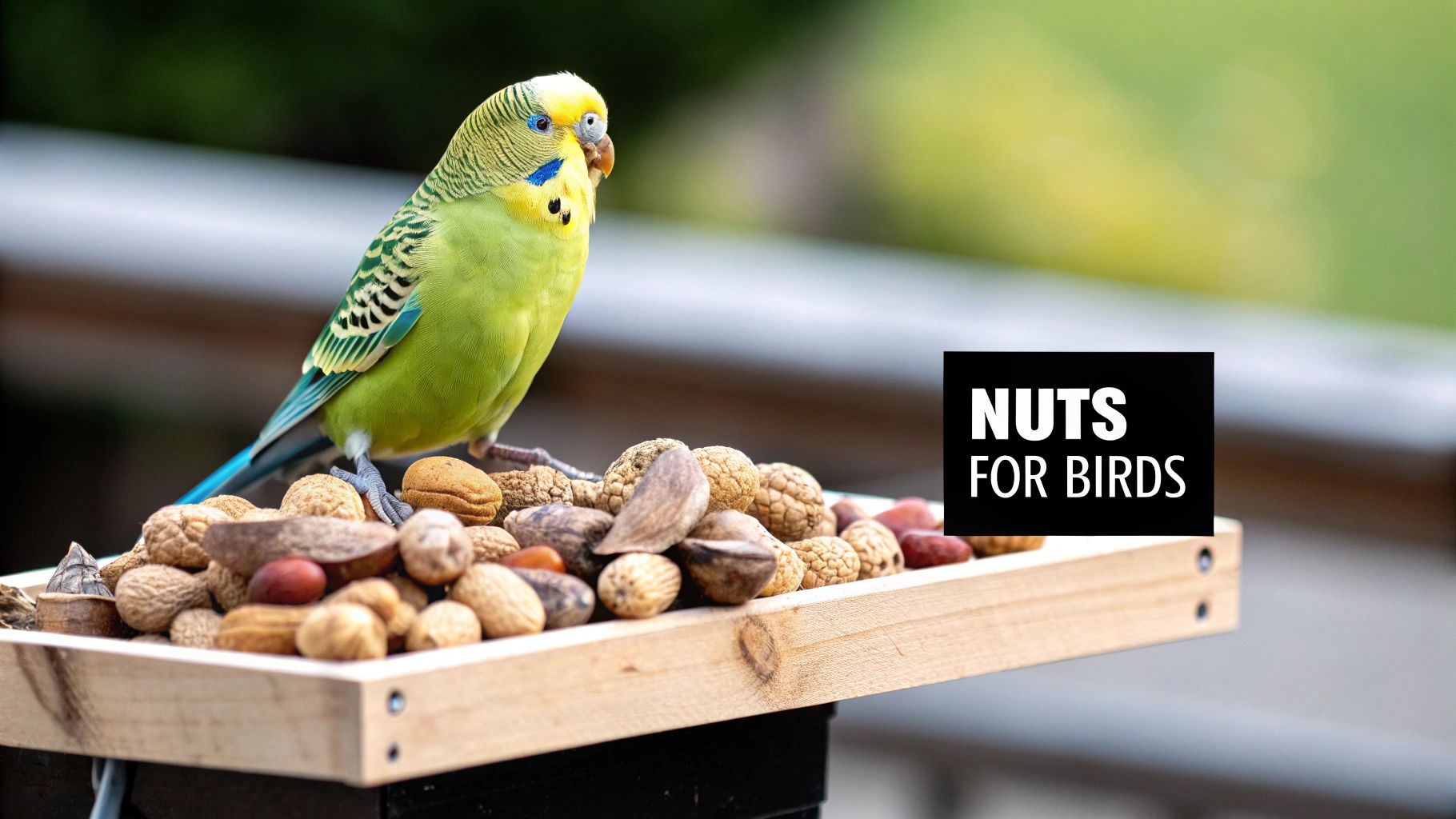
There’s something incredibly satisfying about watching your feathered mate figure out how to get into a tough shell. They'll hold it, turn it over, find the weak spot, and finally crack it open. That whole process is a huge win for them, keeping boredom at bay and preventing the stress that can lead to destructive habits like feather plucking.
This guide is for caring Australian bird owners who want to bring this amazing form of enrichment into their bird’s life, safely and effectively. We know how deep that bond with your companion is, and that you want to give them the best care possible. Here, we’ll get into everything you need to know about using nuts in their shells—not just as food, but as a vital tool for their happiness and health.
What This Guide Covers
We'll walk you through the essentials of using whole nuts for enrichment, focusing on practical, safe, and fun ways to make your bird's life more interesting. You'll learn about:
- The Power of Foraging: We'll dive into why cracking a nut is such a crucial, instinctual behaviour for parrots.
- Species-Specific Safety: Find out which nuts are safe for your bird, whether you have a tiny budgie or a massive macaw.
- Sourcing and Storage: Get practical tips on finding top-quality, bird-safe nuts here in Australia and how to store them properly to avoid mould.
- Creative Enrichment: Get inspired with ideas for turning nuts in shells into engaging foraging toys. We'll even share some ideas that work perfectly with items like the Natural Pinata Shredder to keep your bird busy and happy.
Expert Advice: "Enrichment isn't a luxury; it's a necessity for a bird's psychological well-being. A nut in its shell is a perfect 'puzzle box'—it engages their mind and beak, significantly reducing boredom and promoting natural behaviours," notes an avian behaviour specialist.
By giving them these opportunities, you’re doing so much more than just feeding your bird. You're nurturing their mind, strengthening your bond, and building a happier, healthier companion for life.
Why Foraging With Nuts Is More Than Just A Snack
Giving your bird a handful of shelled nuts is one thing. But handing them a nut still in its shell? That’s something else entirely. It’s an act of profound enrichment, transforming a quick snack into a meaningful activity that taps straight into their wild instincts.
Out there, foraging isn’t just a way to find food. It’s a parrot’s main job—a complex, all-day affair that keeps their minds sharp and their bodies strong.
When you offer a nut in its shell, you’re not just giving them a treat. You're handing them a puzzle to solve. The shell becomes a natural ‘puzzle box’, challenging them to think, fiddle, and work for their reward. It’s a job that comes with a delicious paycheck, mimicking the satisfaction of cracking a tough problem in their natural world.
The Physical And Mental Workout
The sheer effort of cracking a shell is a fantastic workout. It strengthens their jaw and facial muscles and keeps their beak in prime condition through natural wear and tear. This is a brilliant outlet for a bird's energy, heading off the boredom and frustration that can bubble over into destructive habits like screaming or feather plucking.
Beyond the brawn, there’s the brain. A bird has to figure out the nut—find its weak spot, apply just the right pressure, and get it open without crushing the prize inside. This encourages critical thinking and builds up their confidence every time they succeed.
An avian behaviourist notes, "Foraging activities like cracking nuts reduce stress and anxiety in companion birds. By providing an outlet for their natural instincts, we are directly contributing to a calmer, happier, and more well-adjusted animal."
This kind of mental stimulation is the heart of quality animal enrichment, a practice vital for helping captive animals not just survive, but truly thrive. You can learn more about creating a stimulating environment in our guide to animal enrichment in Australia.
A Thriving Market For Enrichment
Thankfully, finding good quality nuts for your bird is getting easier all the time here in Australia. The Aussie nut market is booming, packed with in-shell varieties like walnuts, pistachios, and Brazil nuts that are perfect for parrot toys. The market hit AUD 1.71 billion in value and is projected to climb to AUD 3.12 billion.
This growth is being driven by health-conscious people wanting organic, sustainable products. For us bird owners, that means a steady supply of top-notch, in-shell nuts ideal for enrichment.
This availability means you can offer consistent and varied challenges. You might tuck a whole almond into a shreddable toy like our Foraging Box Bird Toy, or simply offer a walnut as a standalone puzzle. By bringing nuts in their shells into your bird's routine, you're doing so much more than feeding them—you’re nurturing their mind, body, and spirit.
A Species-Specific Guide To Safe Nuts
Not all birds are built the same, and neither are the nuts they can safely crack open. A massive Brazil nut might be a fantastic puzzle for a Macaw, but it's an impossible—and potentially dangerous—challenge for a little Budgie. Figuring out which nuts in shell are right for your specific feathered friend is absolutely crucial for safe and fun enrichment.
It’s just common sense, really. You wouldn't give a toddler a steak knife, so we need to match the nut's size and shell hardness to the bird's beak strength and physical ability. This isn’t just about stopping them from getting frustrated; it’s about preventing choking hazards and making sure the whole experience is rewarding, not risky.
Many Aussie bird owners worry about the high fat content in nuts. It's true they are packed with energy, but that's exactly why moderation is your best friend. Think of nuts as a special treat or a high-value foraging reward, not a daily meal. As any good avian vet will tell you, nuts should supplement a balanced diet, never replace it.
Matching Nuts To Your Bird
To make things a bit easier, here’s a quick breakdown of which nuts are generally safe for some of our most popular companion birds in Australia. Always remember to introduce new foods slowly and keep a close eye on your bird's reaction.
- For Small Birds (Budgies, Cockatiels, Lovebirds): These little powerhouses have surprisingly strong beaks but can be totally overwhelmed by large, thick shells. It’s best to stick to smaller, softer options like pine nuts and pistachios. If you want to offer something tougher, like an almond, you’ll need to give them a head start by lightly cracking the shell first.
- For Medium Birds (Galahs, Conures, Ringnecks): This group is ready for a bit more of a challenge. Almonds, pecans, and hazelnuts are brilliant choices. They provide a really satisfying crunch and require a good amount of beak work to get to the prize inside.
- For Large Birds (Macaws, Cockatoos, African Greys): These birds were basically built for demolition. Their powerful beaks can make short work of even the toughest shells out there. Walnuts, Brazil nuts, and even macadamia nuts (one of our hardest native nuts) offer the perfect level of difficulty to keep them engaged and their beaks in top condition.
This simple decision tree shows just how much of a positive impact the right kind of nut enrichment can have.
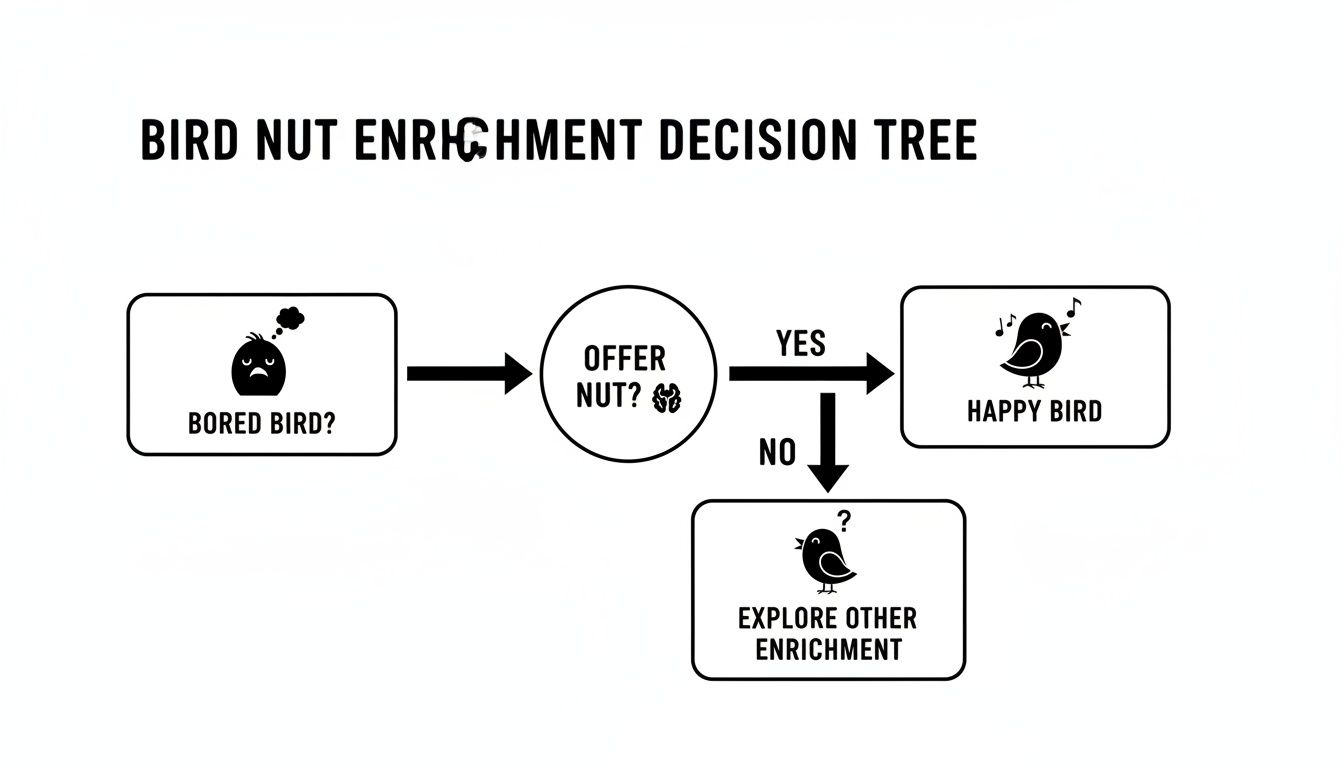
As the flowchart shows, a simple nut can transform a bored bird into a happy, engaged one. It’s a perfect illustration of the direct link between foraging and a bird's overall wellbeing.
Navigating Potential Risks
While plenty of nuts are perfectly safe, some come with important warnings that every bird owner needs to know. Understanding these risks helps you make smarter, safer choices for your bird’s health.
The biggest worry is with peanuts. While birds absolutely love them, peanuts in their shells can grow in damp, dark conditions, which makes them a prime target for Aspergillus mould. This mould produces nasty things called aflatoxins, which are extremely toxic to birds and can cause severe liver damage. Because of this, many avian experts recommend avoiding peanuts in the shell altogether. If you must offer them, only source them from extremely reputable, human-grade suppliers and inspect every single one meticulously.
Expert Avian Vet Advice: "When it comes to nuts, think 'treat, not meal.' They are a fantastic source of enrichment and healthy fats, but overfeeding can lead to obesity and related health issues. A single, appropriate-sized nut a few times a week is a great guideline for most species."
It's also vital to make sure any nuts you offer are raw, unsalted, and unflavoured. Birds simply can't process the high levels of salt found in roasted or seasoned nuts, and it can lead to serious health problems. Always stick to the pure, natural form. You can explore a broader range of dietary considerations by reading our comprehensive guide on safe food for parrots.
Finally, always supervise your bird when they’re tackling a new type of nut. This lets you step in if they're struggling too much or if a piece of shell becomes a potential hazard. By following these species-specific guidelines and safety precautions, you can confidently turn nuts in shell into one of the most exciting and beneficial parts of your bird's enrichment routine.
Safe Nuts In Shell A Guide For Popular Companion Birds
To help you get started, we've put together a quick-reference table. It covers some of the most common companion birds we see here in Australia and offers a simple guide to what they can handle.
| Bird Species | Recommended Safe Nuts in Shell | Nuts to Offer with Caution or Avoid | Serving and Preparation Tips |
|---|---|---|---|
| Small Parrots (e.g., Budgies, Cockatiels) | Pine nuts, pistachios. | Almonds, walnuts (too hard/large). AVOID all others unless pre-cracked. | Always offer smaller nuts. For anything larger, crack the shell open for them to explore. |
| Medium Parrots (e.g., Galahs, Conures) | Almonds, pecans, hazelnuts, walnuts (smaller varieties). | Brazil nuts (often too hard), macadamias. AVOID peanuts in shell due to aflatoxin risk. | A great size for beak conditioning. Ensure nuts are fresh and inspect for mould. |
| Large Parrots (e.g., Macaws, Cockatoos) | Walnuts, Brazil nuts, almonds, macadamia nuts. | Peanuts (due to aflatoxin risk). Be cautious with very small nuts that could be swallowed whole. | These birds need a challenge! Offer the toughest nuts to keep their beaks strong. Always supervise. |
| Eclectus Parrots | Almonds, pistachios, pine nuts. | High-fat nuts like macadamias and Brazil nuts should be very limited due to their sensitive systems. | Focus on lower-fat options. Offer as a rare treat within a diet rich in fruits and vegetables. |
Remember, this is just a guide. Every bird is an individual, so start slowly and see what your feathered friend enjoys and can handle safely.
How To Source And Store Nuts Safely In Australia
Bringing the fun of nuts in shell into your bird’s life is brilliant, but it all starts with one crucial step: where you get them from. The quality and safety of the nuts you offer are just as important as the enrichment they provide. Here in Australia, we're lucky to have easy access to high-quality, human-grade nuts, and that should always be your benchmark.
When you're shopping, the rule is simple: always look for nuts that are unsalted, unflavoured, and raw. Any seasoned or roasted nuts contain additives like salt and oils that are a no-go for a bird's delicate system. Stick to the pure, natural stuff you’d find in the bulk food aisle of your local grocery, at a farmers' market, or from a trusted online supplier specialising in wholefoods.
Choosing Australian-grown nuts is another fantastic way to ensure they're fresh while also supporting our local growers. Australia's tree nut industry is booming, and this means a reliable supply of fresh, local nuts perfect for our feathered mates.
The Golden Rules Of Nut Storage
Once you get your nuts home, storing them properly is your number one defence against spoilage and, most importantly, mould. The biggest threat lurking in stored nuts is Aspergillus flavus, a nasty mould that can produce dangerous aflatoxins. These toxins are a serious health risk for birds, so preventing them from growing is non-negotiable.
The key is to create an environment where mould simply can't get a foothold. Just follow these simple steps to keep your nut supply safe and fresh:
- Keep Them Cool: Store nuts in a cool, dark place. A pantry cupboard away from the oven or direct sunlight is perfect. The fridge is an even better choice, especially for nuts with higher oil content like walnuts and pecans.
- Keep Them Dry: Moisture is the enemy. Make sure the storage location is completely dry to stop any mould from taking hold.
- Use an Airtight Container: Oxygen is what makes nuts go rancid. Pop them in a glass or BPA-free plastic airtight container to lock in freshness and keep moisture out.
- Buy in Small Batches: It’s tempting to buy in bulk to save a few dollars, but it’s much safer to purchase smaller quantities more often. This ensures your supply is always fresh and cuts down the risk of spoilage.
Your Final Safety Check
Before you hand over any nut to your bird, get into the habit of doing a quick visual inspection. Think of it as your final line of defence—it only takes a few seconds.
Expert Advice: "Never underestimate the importance of a 'sniff and see' test. Your eyes and nose are excellent tools for detecting spoilage. If a nut looks discoloured, shrivelled, or smells musty or 'off,' discard it immediately. When in doubt, throw it out—it's never worth the risk."
Look for any signs of mould, which might look like black, white, or greenish spots. Check for insect damage or tiny holes in the shell. Lastly, give it a good sniff. A fresh nut will smell clean and nutty, not sour or musty.
By sticking to these sourcing and storage habits, you can offer nuts in shell with complete confidence, knowing you’re giving your bird a safe, healthy, and exciting challenge.
Creative DIY Foraging Toys Using Nuts In Shell
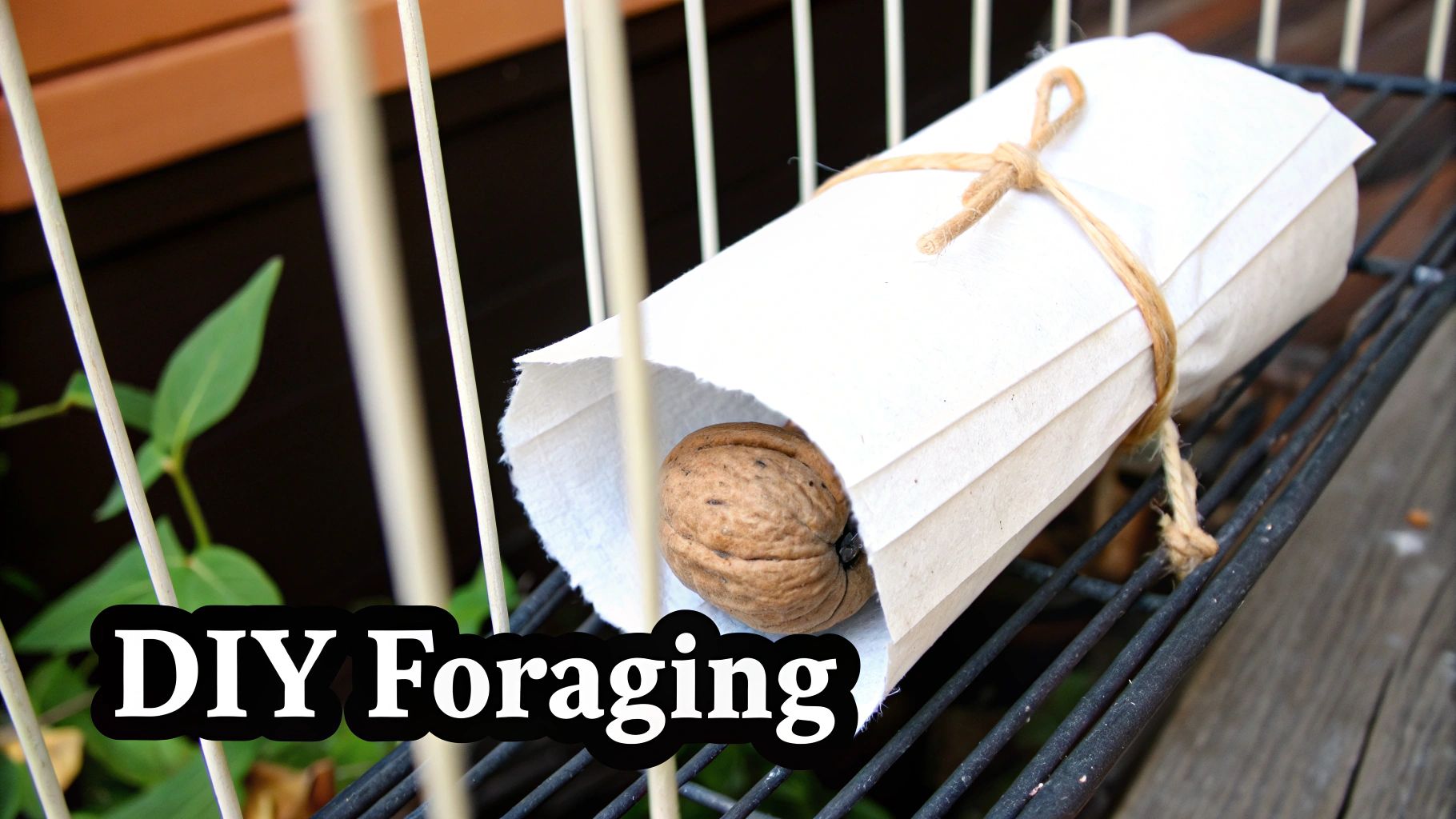
Turning a simple nut in its shell into an engaging puzzle is one of the easiest and most satisfying ways to enrich your bird’s day. It gets them thinking, shredding, and properly working for their food, tapping straight into those powerful, wild instincts.
You don't need to be a DIY whiz, either. With just a few bird-safe materials you probably already have, you can create exciting challenges that keep your feathered mate happy and busy. The aim is to turn a simple snack into a stimulating "job" for your bird. This small shift makes a huge difference, preventing boredom and giving their sharp minds a healthy outlet.
Getting Started: Simple Ideas for Beginners
If your bird is new to the whole foraging game, it's smart to start with some easy wins to build their confidence. The trick is to make the reward accessible, but not too easy. These ideas are the perfect starting point.
- The Paper Parcel: Grab a single nut, like an almond, and wrap it in a small bit of plain, unwaxed paper or cardboard. Twist the ends like a lolly wrapper. This simple barrier adds an extra step, encouraging them to shred and tear to get to their prize.
- The Egg Carton Surprise: Pop a nut inside one of the cups of a clean cardboard egg carton. For first-timers, leave the lid open. Once they get the hang of it, you can close the lid to add a lifting or chewing challenge.
- The Cup Forage: Drop a nut into a small paper cup or a bird-safe plastic one and stuff some shredded paper on top. Your bird will have to dig through the paper to find their reward, just like they would in the wild.
These introductory puzzles teach that all-important concept: "work for a reward." They're also a fantastic way to see what kind of problem-solver you have on your hands.
Stepping It Up: Intermediate Foraging Fun
Once your bird has the basics down pat, you can dial up the difficulty a notch to keep things interesting. This is also a great time to start mixing nuts in shell with their favourite toys for a new layer of excitement.
You can easily hide a nut inside existing enrichment to make it even more tempting. For example, tucking a pistachio inside a destructible toy like the Shreddy Kabob adds a high-value reward to an already fun activity. The sound of the nut rattling around inside will spark their curiosity and get them chewing.
Another great option is to thread nuts onto a bird-safe skewer. You can create a fun, edible kabob by alternating pieces of wood, cardboard, and tough nuts like almonds. Our guide on the safety of almond nut shells explains more about why they’re a great choice for this kind of toy.
Expert Advice: "Always supervise your bird with any new toy, especially DIY ones. Watch how they interact with it to ensure they are playing safely and not becoming overly frustrated. The goal is positive stimulation, not stress."
Advanced Puzzles for Brainy Birds
For the avian Einsteins out there who need a real challenge, you can build more complex, multi-step foraging puzzles. These toys require more thought and skill, providing long-lasting entertainment for clever birds like Macaws and Cockatoos.
- The Foraging Box: Find a small, sturdy cardboard box. Punch a few holes in the sides and fill it with a mix of shredded paper, foot toys, and a couple of those prized nuts in shell. Your bird will need to either pull out the filler or chew right through the box to claim their treasures.
- The Nutty Piñata: Use a natural, untreated vine ball or even a small paper bag. Place a nut inside, stuff it with shreddable material, and hang it up in the cage. This forces your bird to hang, swing, and balance while they work, giving them a full-body workout.
A brilliant way to level this up is by using a purpose-built toy like our Foraging Box Bird Toy. Hiding a walnut inside this durable toy creates a tough, rewarding puzzle that will keep even the most determined beak busy for ages. By getting creative, you can turn a simple nut into a source of endless fun.
Common Questions About Feeding Nuts In Shell
Even with the best intentions, bringing something new like nuts in shell into your bird's life can throw up a few questions. It’s completely normal to want to get it right.
To help you feel confident, we’ve put together answers to the queries we hear most often from fellow Aussie bird owners. Think of it as a quick guide to clear up any worries and make sure enrichment is a fun, safe experience for you both.
How Many Nuts In Shell Can I Give My Bird Per Day?
This is probably the most important question, and the answer comes down to one word: balance. Because of their high fat content, nuts should always be a treat, not a main meal. How many is okay really depends on your bird's size, species, and general health.
- Small Birds (like Cockatiels): One or two smaller nuts a week, like a pistachio, is a good starting point.
- Large Birds (like Macaws): A bigger nut, such as a walnut or Brazil nut, a few times a week is generally fine.
Expert Advice: "Always think of nuts as a high-value reward. They're perfect for foraging activities or training, but not as a regular part of their dinner. If your bird is a bit on the chubby side or has a health issue like liver disease, it's vital to have a chat with your avian vet to figure out what's safe."
Are Salted Or Roasted Nuts In Shell Safe For Birds?
This one is a hard no. Never, ever give your bird nuts that are salted, seasoned, roasted in oil, or flavoured in any way.
A bird’s system just isn't built to handle all that sodium, which can quickly lead to dehydration and even kidney damage. Always stick to raw, unsalted, human-grade nuts. That way, you’re providing a natural, safe challenge without any risky additives. The goal here is enrichment, and the purest form is always the best.
What Should I Do If My Bird Cannot Open The Shell?
Don't worry, this happens all the time, especially with smaller birds or those who are new to the whole foraging game. If a shell is proving just a bit too tough, it’s a great chance for you to step in and help.
The aim is to offer a fun challenge, not an impossible task that just leads to frustration. You can give them a head start by lightly cracking the shell with a nutcracker. This creates a weak spot for them to work on and helps them learn how to get to the good stuff inside. This bit of teamwork not only makes it achievable but can also be a nice bonding moment. They still get to do the satisfying work of pulling out the nut, which is what this is all about.
Don't Stop There...
Now that you've got the scoop on nuts, why not dive deeper into the world of enrichment?
Giving your bird puzzles to solve and things to discover is one of the best ways to keep them happy and engaged. If you're keen to learn more, our guide to foraging toys for birds is the perfect next step.
Keep Reading
- A Parrot's Pantry The Best Nuts And Seeds For Your Bird's Health
- What Is Animal Enrichment And Why Is It Important For Australian Birds
- Foraging For Beginners A Guide For Australian Bird Owners
Disclaimer Summary:
The information in this article is general in nature and may include external links or resources not created by Lou Lou Bells Bird Toys. Every bird is unique, so we encourage you to seek personalised advice from your own veterinarian or avian specialist. For full details, please read our complete disclaimer here.