
For Aussie parrot owners, one of the biggest questions that comes up is a simple one: are almond nut shells safe for my bird?
The short answer is yes, but with a massive catch—they have to be sourced and prepared the right way. When they are, these tough, natural casings go from being a simple byproduct to an incredible source of enrichment and fun for your flock.
The Uncracked Truth About Almond Shells for Parrots
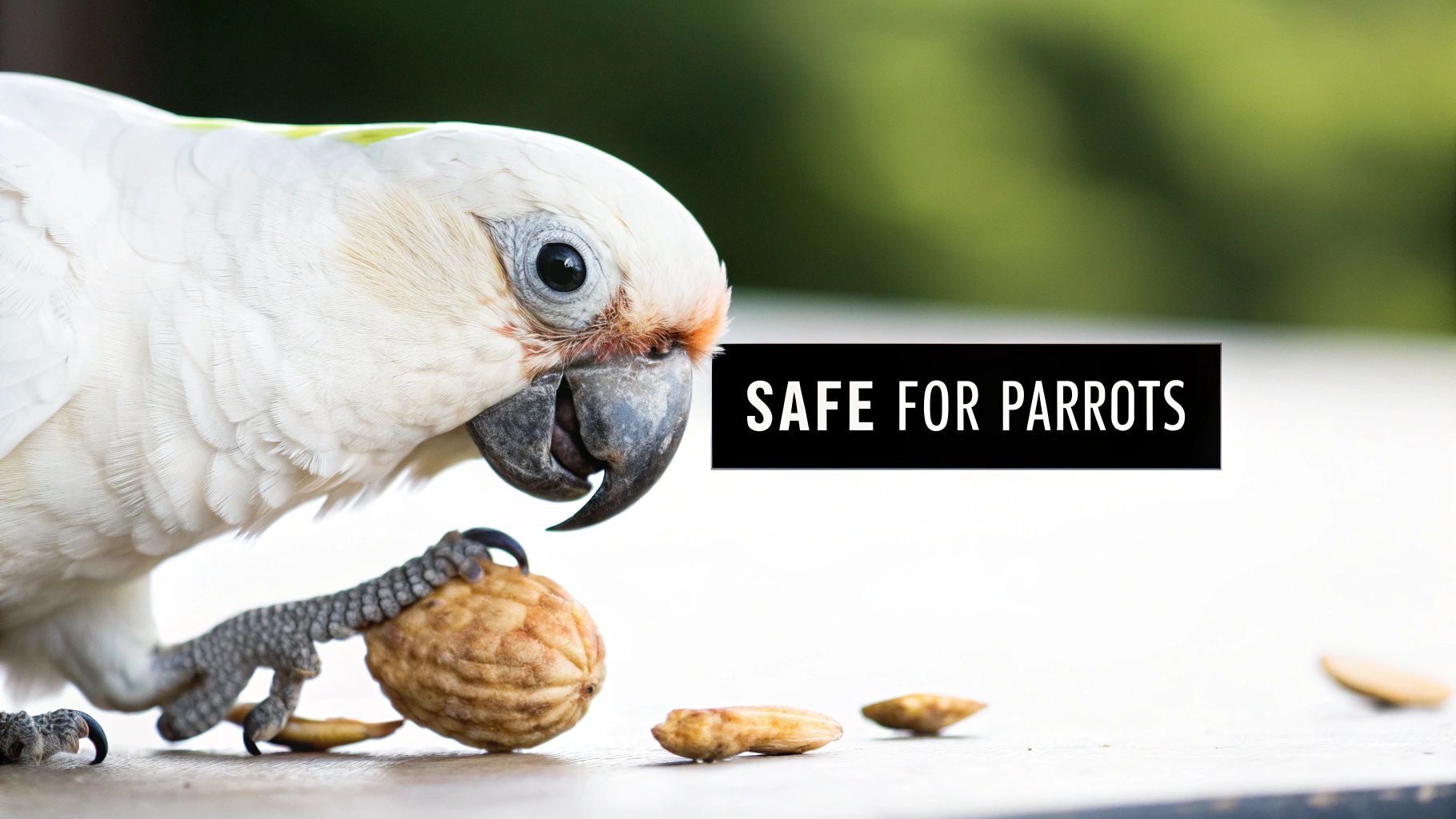
Watching a parrot work on cracking open a nut is one of the simple joys of having a bird. It’s a moment where you can see their intelligence, dexterity, and natural instincts all come together in a flurry of activity.
That satisfying crunch isn't just about getting to the tasty kernel inside; the shell itself provides a crucial outlet for their deep-seated need to chew, shred, and destroy. An almond nut shell offers the perfect challenge, keeping both their beak and their brain busy.
But here’s the thing: not all shells are created equal. The safety of an almond shell depends entirely on its journey from the farm to your bird’s cage. This guide is here to be your trusted resource, giving you the expert advice you need to confidently turn this natural wonder into a safe and stimulating toy.
What This Guide Will Cover
We'll dive into every aspect of using almond nut shells for parrot enrichment, making sure you have all the info you need to make safe choices for your feathered mate. Here’s what’s coming up:
- Understanding the Appeal: We’ll look at what makes these shells so tough and why they are so satisfying for a parrot to get their beak into.
- Sourcing in Australia: You’ll discover how to find clean, untreated shells from local Aussie growers, so you can sidestep the risks of imported nuts.
- Proper Preparation: I'll walk you through the simple but essential steps for cleaning and sterilising shells to get rid of any potential nasties.
- Creative DIY Ideas: Get inspired with some fun and engaging ways to pop shells into homemade toys and foraging setups.
Expert Advice: As avian enrichment specialists, we truly believe the best toys often come from nature. An almond nut shell taps into a parrot's primal need to work for their food and fiddle with objects, providing mental and physical exercise that is absolutely vital for their wellbeing.
This whole journey starts with getting the basics right. Making informed decisions is the first step in providing the best care, which is a huge part of being a responsible bird owner in Australia. To help you on this path, you might also find our guide on how to choose the right bird toys for your bird really useful.
Together, we’ll uncover the uncracked truth about this amazing enrichment tool.
Understanding the Appeal of Almond Shells
To really understand why a parrot goes nuts for an almond shell, we need to look under the bonnet and see what it’s made of. Don't worry, there's no complex chemistry here. Just think of it as nature's perfect balsa wood, but with a bit more of a challenge.
An almond shell is built from tough, fibrous materials that are just begging to be shredded. The shell is mostly made of three key things: cellulose, hemicellulose, and lignin. In simple terms, these are the same building blocks that make wood strong and rigid. Lignin, in particular, acts like a natural glue, binding all the fibres together and giving the shell its impressive durability.
This is exactly what makes an almond shell so incredibly satisfying for a parrot to destroy. It’s not so hard that it risks damaging their beak, but it's tough enough to provide a real, rewarding challenge. The act of splintering, cracking, and peeling away the layers taps directly into a parrot's natural instinct to chew and manipulate things in their environment.
Nature's Perfect Chew Toy
Imagine giving a dog a sturdy chew toy versus a flimsy one; they'll almost always gravitate toward the one that offers some resistance. For parrots, an almond nut shell provides that perfect middle ground. It’s a puzzle and a workout all in one.
This fibrous, woody texture is similar to other bird-safe materials your feathered friend might already love:
- Balsa Wood: Known for being soft and easy to shred, ideal for smaller beaks.
- Yucca Wood: Offers a slightly tougher, more fibrous chewing experience.
- Pine Wood: A classic, harder wood that requires more effort to break down.
An almond shell sits beautifully within this spectrum, offering a unique texture that’s both shreddable and durable. This natural resistance is fantastic for maintaining beak health, providing a great outlet for grinding and conditioning. It's this very toughness that makes the shell such an excellent part of many engaging foraging toys for birds, turning a simple treat into an enriching activity.
Expert Insight: The physical act of breaking down a material like an almond shell is a huge form of mental stimulation for parrots. It requires problem-solving skills and focus, which helps prevent boredom and the destructive behaviours that often come with it, something we see all too often in Australian homes.
Understanding what the shell is made of really highlights why its origin and preparation are so vital. Because it’s a natural, porous material, it can absorb pesticides or harbour bacteria if it’s not sourced from a clean, Australian farm and properly sterilised. These steps aren't optional—they are absolutely essential for turning this natural byproduct into a safe and delightful toy.
How to Source Safe Almond Shells in Australia
A shell’s journey from the orchard to your bird's beak is the most critical part of its safety story. The secret to a truly safe almond nut shell is knowing exactly where it’s from, and for us Aussies, that means sourcing from clean, reliable local growers. This is the single best way to dodge the serious risks that come with imported nuts.
Many nuts brought into Australia are fumigated with chemicals like methyl bromide to kill off any pests before they cross our borders. Those residues can hang around on the shells, and they're definitely not something you want your beloved companion chewing on.
Why Australian Almonds Are Best
Fortunately, choosing local isn't just a safer bet; it's also incredibly easy. Australia’s almond industry is absolutely booming, which means high-quality, untreated nuts are more accessible than ever before.
The industry has seen massive growth, with a recent season hitting a record crop of 163,148 tonnes of almonds. Victoria’s growing regions are the powerhouse here, accounting for about 61% of that production. This local abundance is fantastic news for Aussie parrot owners, and you can get a closer look at the numbers from the Australian Almond Board's recent statistics.
What this boom really means for you is direct access to a supply chain that doesn't need harsh chemical treatments just to get through customs.
Finding a Reliable Supplier
So, how do you get your hands on these pristine shells? The best way is to get as close to the source as you possibly can.
- Visit a Farmers' Market: This is my favourite method. Many almond growers, especially the smaller or organic farms, sell directly to the public at local markets. It’s a brilliant chance to have a chat with the farmer, ask about their growing practices, and get a clear "yes" that their products are pesticide-free and untreated.
- Contact Growers Directly: A quick search online for "organic almond farms Australia" or "pesticide-free almonds Victoria" can point you to growers who might be happy to sell you raw nuts or even just the shells.
- Health Food and Bulk Food Stores: These shops often make a point of sourcing from local, organic suppliers. Check the almond bins for info about where they’re from, and don’t be shy about asking staff if they can confirm the nuts are raw and untreated.
Expert Advice: When you're talking to a supplier, be direct. Just ask them plainly, "Are these almonds raw, unsalted, and free from pesticides or fumigation chemicals?" A reputable Australian grower or supplier will be transparent and happy to answer, giving you complete peace of mind.
Taking these extra steps is non-negotiable when it comes to providing safe enrichment for your bird. Making sure all their accessories are safe is fundamental, which is why we've also put together a guide on what to look for in quality parrot supplies in Australia. Sourcing carefully means you can confidently offer a natural, stimulating, and completely safe chewing experience.
Preparing Almond Shells for Your Bird
So you’ve managed to get your hands on some clean, Australian-grown almonds. Fantastic! But before you hand those shells over to your feathered friend, there’s one non-negotiable step: preparation. Transforming them from a raw agricultural product into a genuinely bird-safe enrichment item is simple, but it’s a step you can't skip.
This process is all about getting rid of any lingering orchard dust, bacteria, or mould spores that could pose a risk to your flock.
Before we even get to cleaning, sourcing is everything. This little guide sums up the best way to find safe shells right from the start.
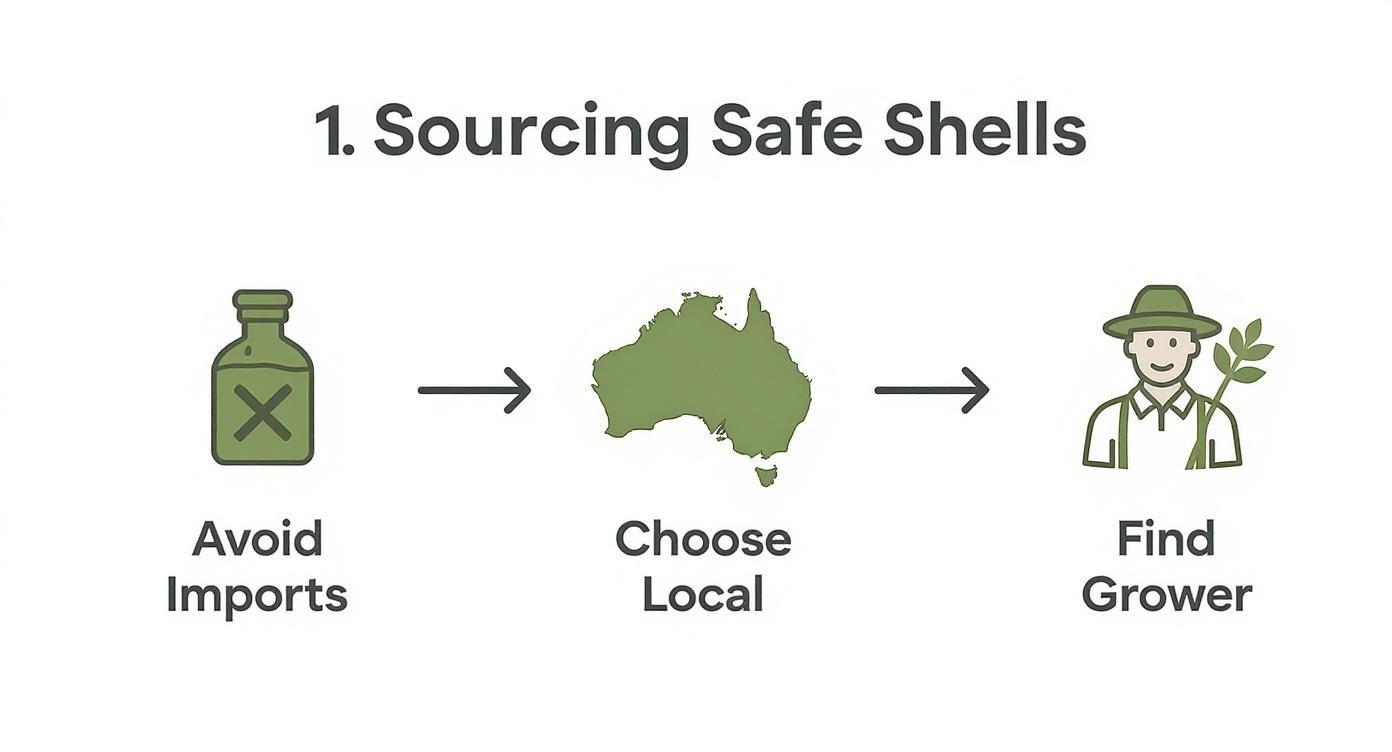
The main takeaway here is pretty clear: stick with local Australian growers. This helps you avoid shells that may have been fumigated during import, giving you a much cleaner starting point.
The Cleaning and Sterilisation Process
Think of this as your safety checklist before you introduce any new natural material into your bird's world. The goal is simple: make the shells hygienically clean and completely safe for your bird to get their beak into.
Step 1: Wash Thoroughly
First things first, give the shells a really good scrub under running water. A stiff vegetable brush is perfect for getting into all the little crevices to remove any dirt or dust. You don’t need any soap for this—good old-fashioned tap water and a bit of elbow grease will do the job perfectly.
Make sure you rinse them well when you're done.
Step 2: Choose Your Sterilisation Method
Now for the most important part: sterilisation. This is what eliminates the invisible threats like bacteria and mould spores. You've got two great, easy options here.
- Baking: Spread the clean shells out in a single layer on a baking tray. Pop them into a preheated oven at around 120°C (250°F) for about 15-20 minutes. This gentle heat is more than enough to kill any pathogens without scorching the shells.
- Boiling: If you prefer, you can place the shells in a pot of boiling water and let them simmer away for about 10 minutes. This method is just as effective for sterilisation.
No matter which method you choose, it's critical that the shells are completely dry before they go anywhere near your bird. You can let them air-dry on a wire rack or, to speed things up, put them back into the warm (but turned-off) oven. Remember, a damp shell is a perfect breeding ground for mould.
Expert Tip: I always recommend baking as the go-to method. It doesn't just sterilise the almond nut shell; it also ensures it's bone dry and ready for playtime, completely removing any risk of leftover moisture that could encourage mould growth.
To make things even easier, here’s a quick checklist you can follow every time you prepare almond shells or other natural materials for your birds.
Almond Shell Safety Checklist for Bird Owners
| Safety Step | Why It's Important | Expert Tip |
|---|---|---|
| Source Locally | Avoids imported shells that may be treated with fumigants or pesticides not approved for use in Australia. | Look for growers in regions like the Riverina or Sunraysia who can confirm their shells are clean and untreated. |
| Scrub and Rinse | Removes visible dirt, dust, and debris that can harbour bacteria. | Use a dedicated vegetable brush just for your bird toy prep to prevent cross-contamination from your kitchen. |
| Sterilise Thoroughly | Kills invisible pathogens like bacteria, fungi, and mould spores that can make your bird sick. | Baking is often better than boiling as it leaves the shells completely dry, preventing any chance of mould regrowth. |
| Dry Completely | Ensures no residual moisture is left behind, which could lead to mould developing on the shell later on. | After baking, leave the shells in the cooling, turned-off oven for an extra 30 minutes to be absolutely sure they're dry. |
| Inspect Before Use | A final check for any cracks, sharp edges, or signs of mould that might have been missed. | Hold the shell up to a bright light. If you see any dark spots inside or discolouration, it's best to toss it. |
Following these simple steps gives you complete peace of mind, knowing you’re offering an enrichment item that is safe, stimulating, and hygienic. This process is essential for any natural toy parts, whether they're used in a simple shreddable toy like our Foraging Kabob Parrot Toy or a more complex puzzle like the Foraging Box with Wooden Blocks.
Creative Ways to Use Almond Shells in Toys
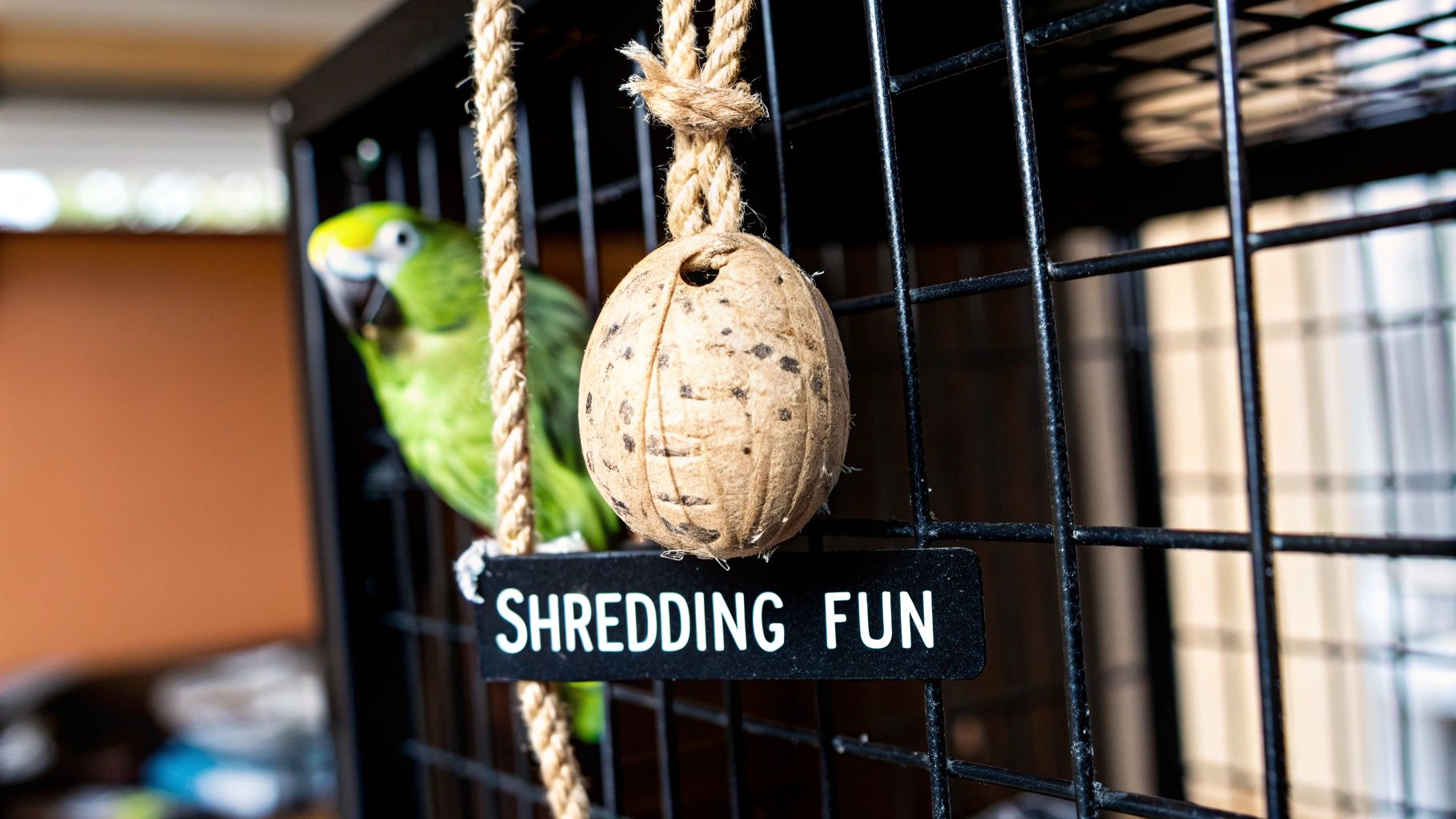
Once your almond shells are cleaned, sterilised, and completely dry, the real fun can begin. Turning these humble husks into brilliant toys isn’t just a great way to save a few dollars; it’s a direct line to satisfying your bird’s most primal instincts. Think of an almond nut shell as a blank canvas for enrichment, perfect for keeping both beak and brain in tip-top condition.
That tough, fibrous texture is basically nature’s own beak conditioner. As your bird gets busy chewing, cracking, and shredding the shell, they are naturally trimming and shaping their beak, which helps prevent overgrowth. Even better, this act of pure destruction is a fantastic stress reliever. It gives them a healthy outlet for behaviours that might otherwise turn into feather plucking or screaming fits.
Simple Foraging Trays for Beginners
One of the easiest yet most effective ways to introduce almond shells is in a simple foraging tray. This is a brilliant way to get birds of all sizes hooked on foraging, from the tiniest budgies to the mightiest macaws. It taps straight into their natural instinct to hunt for their food.
All you need to do is place a handful of your prepared almond shells into a shallow, bird-safe dish. Then, sprinkle some of their favourite treats—like seeds, dried fruits, or pellets—in amongst the shells. Your parrot will have to dig, toss, and shift the shells around to find their rewards, giving them a stimulating mental workout that mimics life in the wild.
Building Intricate Shredding Toys
For the more enthusiastic shredders in your flock, almond shells can be the star of the show in a hanging toy. With a bird-safe drill bit, you can easily pop a hole through the centre of each shell half.
From there, get creative. String them onto a length of vegetable-tanned leather or stainless steel wire, mixing them up with other fun, shreddable materials to create a texture explosion:
- Balsa Wood Blocks: Soft, satisfying, and perfect for smaller beaks to demolish.
- Yucca Slices: Offers a completely different, more fibrous texture to tear apart.
- Cardboard Squares: A simple and cheap addition that’s always a shredding favourite.
- Mahogany Pods: Another tough, natural element that adds a different chewing challenge.
This approach creates a multi-textured toy that encourages exploration and holds your bird's attention for much longer. The mix of different materials simply makes the toy more interesting and provides a richer sensory experience.
Expert Advice: When you're making toys, safety has to be your number one priority. Always use bird-safe hardware like stainless steel wire and quick links. Steer clear of treated woods, dyed leathers, or plastics that can become sharp when chewed.
The goal is to build a challenge that makes your bird think and work for their fun. By using natural goodies like an almond nut shell, you’re mimicking the puzzles they’d encounter in their natural habitat. For a bit of inspiration on how to combine natural textures, our professionally crafted Natural Ball and Bits Bird Toy is a perfect example of how different materials can be layered to create an irresistible shredding experience.
The Eco-Friendly Afterlife of Your Almond Shells
After your feathered friend has had a brilliant time tearing an almond shell to absolute bits, you might think its job is done. But that’s where the story gets even better, especially for those of us who are conscious about our environmental footprint here in Australia. Those tiny, shredded pieces of almond nut shell don’t need to end up in the bin; they’re destined for a far more valuable role in your garden.
This final step creates a really satisfying, full-circle journey for the humble almond shell. It goes from a farm product to an enriching toy, and finally, back to the earth, leaving no waste behind. It’s a wonderful way to know that even your parrot’s playtime is doing something positive for the environment.
A Brilliant Boost for Your Compost
Shredded almond shells are a fantastic addition to any compost bin or pile. Because they’re essentially a woody, carbon-rich material, they fall into the "browns" category in composting talk. They provide the perfect balance to the "green" materials you add, like veggie scraps and lawn clippings.
Expert Tip: For the best results, make sure the shell pieces are small. Your parrot will probably do most of this work for you, but smaller bits break down much faster. They also help to aerate the compost and stop it from turning into a sludgy mess.
When you mix these shell fragments into your compost bin, you’re introducing tiny pockets of air. This is vital for the aerobic bacteria that do all the hard work of breaking things down. Over time, even these tough fibres will decompose, enriching your compost with valuable organic matter.
This process turns the remnants of a fun toy into a nutrient-rich soil conditioner for your garden plants. It’s a simple, sustainable practice that closes the loop, turning your bird’s shredded treasures into food for your plants. It's a beautiful example of how thoughtful enrichment, like our natural Foraging Skewer Bird Toy, can be both engaging for your bird and kind to the Aussie environment.
Got Questions About Almond Shells? We've Got Answers
Even with all the facts, it’s natural to have a few last-minute questions before you hand over a new toy. We get it! To put your mind completely at ease, we’ve put together some of the most common queries we hear from Aussie parrot owners about using almond nut shells for enrichment.
Is There Any Cyanide in Almond Nut Shells?
This is a really important question, and it’s one that comes up a lot. The concern comes from bitter almonds, which contain a compound that can break down into cyanide. It’s a valid worry.
However, the almonds grown commercially here in Australia for us to eat are a completely different variety—sweet almonds. These don't carry the same risk. The shells from these food-grade, sweet almonds are non-toxic and perfectly safe for parrots to chew on. The golden rule is to always get your shells from a trusted Australian supplier. That way, you know for sure they’re from the right kind of almond tree. Never, ever use shells if you don't know where they came from.
What if My Bird Swallows a Tiny Piece of Shell?
Parrots are born destroyers, not eaters, of woody things. Think about it—in the wild, they’ll shred a tree branch to bits, not swallow it whole. Their instinct is to chew, splinter, and let the pieces fall.
In the very unlikely event a tiny sliver gets swallowed, it would almost certainly pass straight through their system without any issue. That said, it's always smart to keep an eye on your bird with any new toy. If you ever spot signs of distress or see a big change in their droppings after introducing something new, a quick call to your avian vet is always the best move.
Can I Use Shells from Salted or Flavoured Almonds?
This is a big, emphatic NO. Please only ever use shells from raw, unsalted, and unflavoured almonds. The amount of sodium in salted nuts is incredibly dangerous for birds and can cause serious, life-threatening health problems.
It’s the same story for artificial flavours, oils, and preservatives. A parrot’s system is far too sensitive for these additives, which can be toxic. Always start with pure, natural almonds so you can be 100% sure the shells are clean and safe. It’s all about peace of mind.
At Lou Lou Bells Bird Toys, we believe giving your feathered mate safe, natural, and engaging things to do is one of the best parts of being a bird owner. Have a look at our expertly designed, handcrafted toys to spark your bird’s next big playtime adventure. You can find the perfect match for your flock right here at louloubellsbirdtoys.com.au.
Disclaimer Summary:
The information in this article is general in nature and may include external links or resources not created by Lou Lou Bells Bird Toys. Every bird is unique, so we encourage you to seek personalised advice from your own veterinarian or avian specialist. For full details, please read our complete disclaimer here.