
Welcome to the amazing world of parrot ownership here in Australia! Looking after these incredibly smart, social birds is one of the most rewarding things you can do. The absolute cornerstone of their health, happiness, and sharp little minds is providing them with high-quality, species-appropriate parrot supplies Australia.
Creating the Ideal Home for Your Parrot
Giving your feathered mate the best life goes way beyond just a cage and a bowl of seed. It's about creating a whole world for them—an ecosystem that caters to their physical needs and keeps their active intellect engaged. Think of this guide as your go-to companion, here to help you sort through the essentials of parrot care with confidence.
From the suburbs of Sydney to the heart of the Outback, Aussie parrot owners have access to a fantastic range of products. The real trick is understanding what your specific parrot needs and why. This isn't just a shopping trip; you're the architect of your bird’s environment. Every single item, from the simplest perch to a tricky puzzle toy, has a role to play.
Why Quality Supplies Matter
Choosing the right products is a direct investment in your bird's long-term wellbeing. You really can't cut corners here. Poorly made items can be genuine safety hazards, while a lack of enrichment often leads to boredom and behavioural problems like feather plucking or screaming. Your goal is to build a space that encourages all their natural instincts.
- Safety First: This means making sure all materials are non-toxic and that toy designs are free from traps where a foot or head could get stuck.
- Mental Stimulation: Parrots are thinkers! They need engaging activities that challenge their minds and stop boredom in its tracks.
- Physical Health: The right setup supports everything from daily exercise and proper foot health to a balanced, nutritious diet.
This commitment to quality care is something you see right across the country. The Australian pet supplies industry is booming and expected to hit a market size of $4.1 billion in 2025. A big reason for this is that more and more, we’re treating our pets like the beloved family members they are.
This growth is great news for us, as it means a huge selection of specialised items is available for discerning parrot owners. If you want to get back to basics, check out our essential guide to caring for pet birds.
Choosing the Right Cage for Your Parrot
Think of your parrot's cage as more than just an enclosure. It's their castle, their bedroom, their dining room—all rolled into one. When you're pulling together your parrot supplies in Australia, picking the right cage is probably the most important decision you'll make. It’s easy to get caught up in how a cage looks, but what really matters for your bird's long-term health is safety and function.
A cage is your parrot's home base. It needs to be a space where they feel secure, can stretch out comfortably, and stay engaged. Get this choice wrong, and you could be dealing with stress, physical injuries, or even behavioural issues down the line. It's foundational.
This infographic really drives home how a suitable environment, with the right cage at its core, underpins your parrot's overall health, happiness, and mental stimulation.
As you can see, a bird's home is the bedrock of its well-being. A great setup directly influences their capacity for enrichment and play.
Size and Bar Spacing Are Not Negotiable
When it comes to cage size, the golden rule is simple: bigger is always better. As an absolute minimum, your parrot must be able to fully stretch out and flap its wings in every direction without bumping into the sides, perches, or toys. This isn't just about comfort; it’s vital for exercise and preventing muscle atrophy.
Bar spacing is just as critical, but for safety reasons. For smaller birds like Budgies or Cockatiels, bars that are too far apart can lead to a trapped head, which can cause serious injury or even death. On the flip side, for a big Macaw or Cockatoo, bars that are too flimsy can be bent or snapped by a powerful beak.
Expert Tip: The cage should be at least 1.5 times your parrot's full wingspan in width, depth, and height. This provides adequate room for movement and enrichment without feeling cramped.
To help you get it right, here’s a quick reference guide covering some of the most common parrot species kept in Australian homes.
Australian Parrot Cage Size and Bar Spacing Guide
Use this handy table to quickly find the right cage dimensions and bar spacing for your feathered friend. These are minimums, so always go larger if you can!
| Parrot Size | Common Australian Species | Minimum Cage Dimensions (cm) | Recommended Bar Spacing (mm) |
|---|---|---|---|
| Extra Small | Budgerigar, Lovebird | 60 W x 45 D x 45 H | 10 - 12 mm |
| Small | Cockatiel, Green-cheeked Conure | 65 W x 55 D x 65 H | 12 - 16 mm |
| Medium | Galah, Corella, Sun Conure | 90 W x 60 D x 100 H | 16 - 20 mm |
| Large | Eclectus, Amazon, African Grey | 100 W x 75 D x 150 H | 20 - 25 mm |
| Extra Large | Macaw, Sulphur-crested Cockatoo | 120 W x 90 D x 180 H | 25 - 35 mm |
Remember, these measurements are a starting point. A more active bird will always appreciate more room to move, climb, and play.
Material Safety and Smart Design
Not all metals are created equal in the world of bird cages. Your safest bets are high-grade stainless steel or a cage with a non-toxic, powder-coated finish over a bird-safe metal like iron. You absolutely must avoid any cages that might contain zinc or lead. These metals are toxic to birds and can cause heavy metal poisoning if they chew on the bars over time.
Any experienced avian vet in Australia will tell you to give the cage a thorough once-over. Check the quality of the welds and the door locks. Poorly made cages can have sharp edges, and a clever parrot can make short work of a simple latch. Look for secure, parrot-proof locks to prevent any unplanned adventures around the house.
The layout inside is just as important as the cage itself. Set up perches at different heights to encourage climbing and exercise. Just be sure that no perches are placed directly over food and water bowls—that’s a recipe for contamination from droppings. A thoughtful layout turns a simple box into a dynamic gym, promoting a healthy, active lifestyle. This setup is perfect for hanging interesting items like our durable shreddable bird toys to keep them busy. For even more mental stimulation, add engaging puzzles like our foraging toys.
Enriching Your Parrot's World with Toys and Perches
A busy beak is a happy beak. For an intelligent creature like a parrot, enrichment isn’t just a nice-to-have; it’s an absolute necessity. A bored bird is often a stressed bird, and that stress can show up as destructive behaviours like constant screaming or feather plucking. This is where toys and perches—the two pillars of in-cage enrichment—come into play. They’re what transform a simple cage into a dynamic, stimulating home.
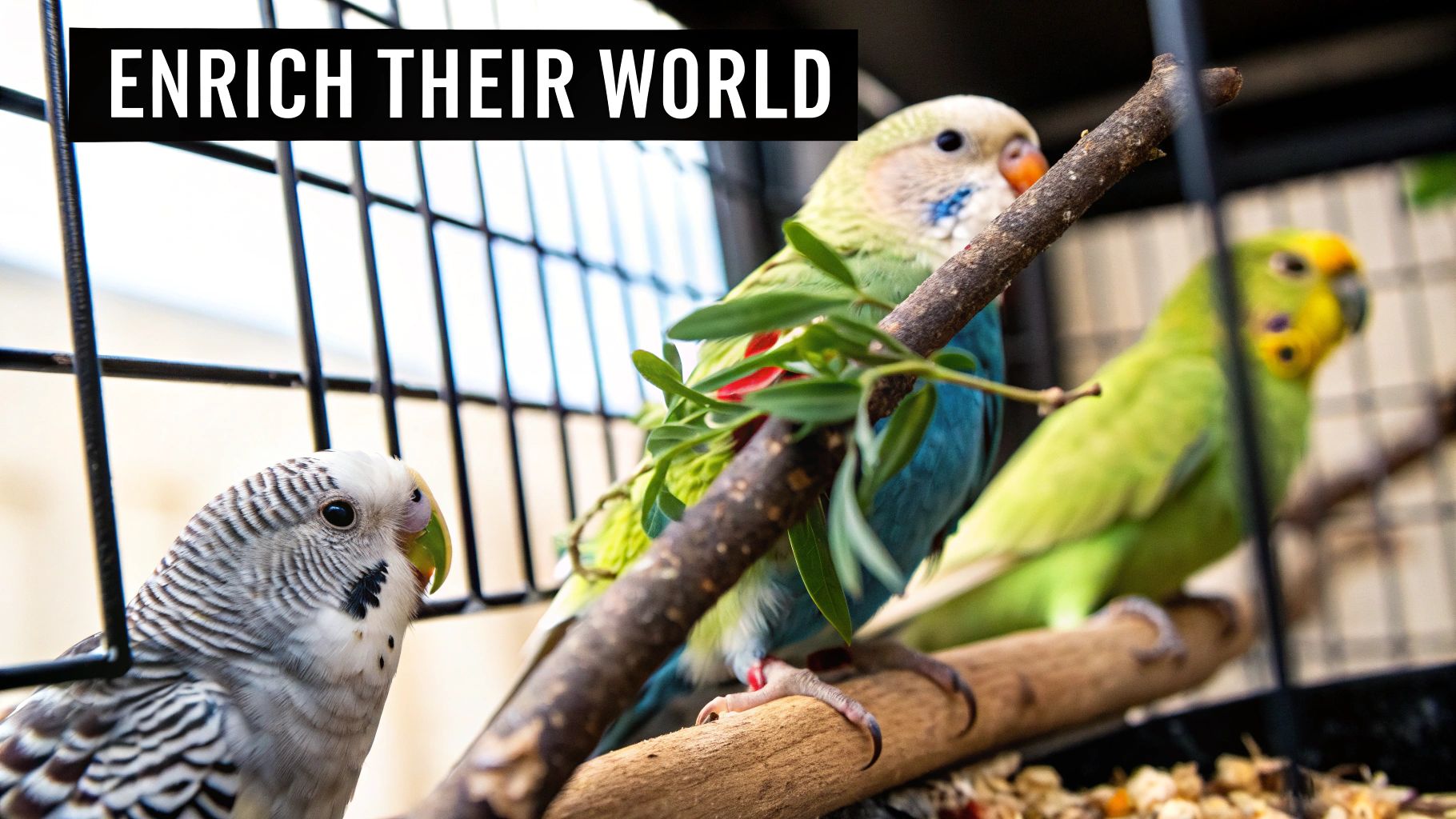
This focus on enrichment is a huge part of modern pet care in Australia. With an estimated 30 million pets nationwide, it's clear we're a country of animal lovers. This culture of dedicated care, supported by thousands of vets and groomers, extends enthusiastically to our feathered mates, with bird ownership continuing to grow. For more on these trends, you can discover more insights about Australia's pet industry here.
The Foundation of Healthy Feet: Perches
Think about it: your parrot stands on its feet 24/7. Providing a variety of perches is one of the most critical things you can do for their physical health, helping to prevent painful conditions like bumblefoot and arthritis. A cage kitted out with just one type of dowel perch is like a person wearing the same pair of ill-fitting shoes every single day.
To keep those feet healthy, you need to offer a mix of textures, materials, and diameters. This encourages their foot muscles to work in different ways, improving circulation and grip strength.
- Natural Native Branches: These are the gold standard. Branches from Australian natives like eucalyptus or bottlebrush offer irregular shapes and textures that are perfect for exercising feet. Just make sure they're pesticide-free and properly cleaned before you pop them in the cage.
- Rope Perches: These provide a softer resting spot and can be bent into interesting shapes. Always keep an eye on them for fraying, as long threads can be a serious entanglement risk.
- Platform Perches: A flat perch gives your bird a chance to completely rest their feet and take the pressure off. They're especially great for older or special-needs birds.
- Grooming Perches: These have a rough surface to help naturally trim nails and beaks. The trick is to place them where your bird is likely to step but not sit for long periods, like near a food bowl.
Expert Advice from an Australian Avian Specialist: "Never rely on a single perch type. Variety is the key to preventing pressure sores and keeping your parrot's feet strong and healthy. A mix of hard, soft, thin, and thick perches mimics the diverse environment they would encounter in the wild."
Unlocking Instincts with the Right Toys
Toys are far more than just cage decorations; they are essential tools for mental exercise. The right toy selection caters to a parrot's natural instincts to chew, shred, and solve problems. Providing healthy outlets for these behaviours is crucial when you're looking for parrot supplies Australia.
A rotating selection of toys keeps things interesting and stops your bird from getting bored. A good rule of thumb is to have several different types in the cage at all times.
Categories of Essential Parrot Toys
- Foraging Toys: These are arguably the most important. In the wild, parrots spend most of their day searching for food. Foraging toys replicate this challenge by making your bird work for its treats, providing fantastic mental stimulation.
- Shreddable Toys: Parrots have a natural, hardwired urge to destroy things! Toys made from bird-safe materials like cardboard, paper, yucca, or soft wood give them a healthy way to satisfy this chewing instinct.
- Preening and Puzzle Toys: These intricate toys often feature beads, knots, and leather strips that encourage manipulation and problem-solving. They can also help redirect birds who might be over-preening their own feathers.
- Foot Toys: These are small, lightweight toys a parrot can hold in its foot to manipulate. They're brilliant for improving dexterity and coordination.
Choosing safe, engaging toys from trusted local brands ensures you're providing the best for your bird. If you want to dive deeper into making mealtime a fun challenge, you can learn more about the benefits of foraging toys in our detailed article. By thoughtfully selecting a variety of perches and toys, you are directly investing in your parrot's physical health and mental wellbeing, ensuring they lead a happy, fulfilled life.
A Healthy Diet and Essential Feeding Supplies
Good nutrition is the absolute foundation of a long, happy life for your parrot. And while what you put in their bowl is obviously critical, how you serve it up can be just as important for their mental and physical health. Getting this part right is a big step in finding the best parrot supplies Australia has to offer.
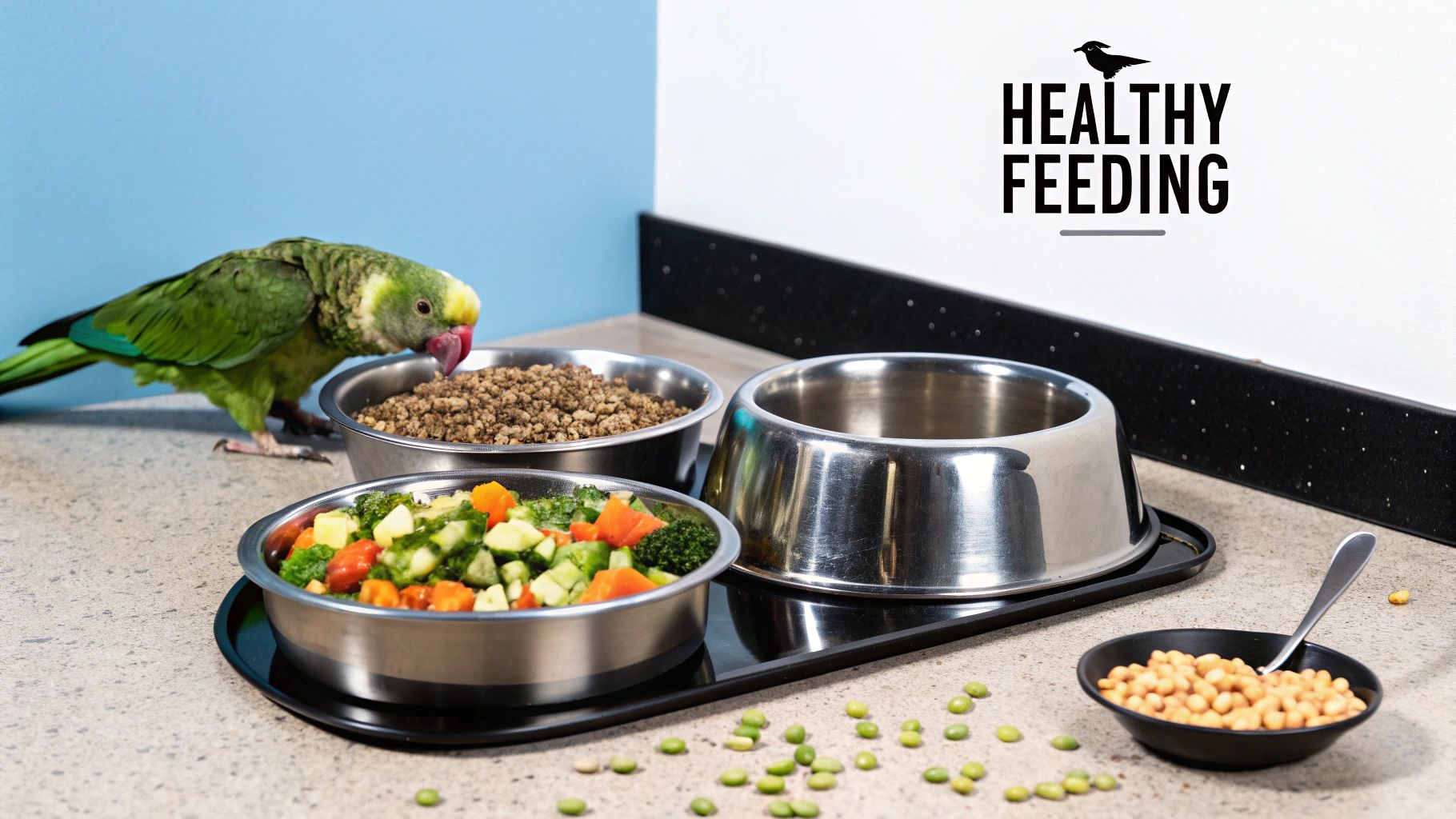
The old idea of feeding parrots a diet of only seeds is long gone. We now know that a balanced, varied diet that mimics what they’d find in the wild is the key to preventing the health problems linked to high-fat, low-nutrient seed mixes.
Building a Modern Parrot Diet
A truly healthy diet is built in layers: a solid base, a fresh daily addition, and the occasional special treat. This approach makes sure your bird gets all the nutrients they need without piling on empty calories.
The ideal diet breaks down into three main parts:
- High-Quality Pellets (70-80%): Formulated pellets need to be the staple. Australian brands like Vetafarm or Passwell give your bird a complete nutritional profile, so you know they're getting a balanced mix of vitamins and minerals in every bite.
- Fresh Vegetables or 'Chop' (20-30%): A daily helping of finely chopped, bird-safe veggies is essential. Think dark leafy greens like kale and bok choy, plus colourful options like capsicum, carrot, and sweet potato. This adds natural vitamins and much-needed moisture to their diet.
- Seeds, Nuts, and Fruits (Less than 10%): These are rewards, not a meal. They’re often high in fat and sugar, so save them for training sessions or hide them in foraging toys to make treat time a fun challenge.
Choosing the Best Feeding Bowls
When it comes to food and water bowls, the material really matters. Plastic or ceramic bowls might look nice, but they have some serious downsides. Plastic is porous and scratches easily, creating tiny crevices where nasty bacteria can hide and multiply. Some ceramic glazes can contain heavy metals, and a strong beak can easily chip or break them.
Avian Vet Recommendation: Stainless steel is, without a doubt, the best choice for parrot food and water bowls. It’s non-porous, incredibly tough, and super easy to clean and disinfect. Plus, there's no risk of chemicals leaching into their food. Investing in a good set of stainless steel bowls is a one-time purchase that will last your bird’s entire life.
It's a good habit to have at least two sets of bowls for each bird. This way, you can swap in a fresh, clean set every day while the others are being properly washed and dried—a simple but crucial step in keeping your companion healthy.
Turning Mealtime into a Mind Game
Out in the wild, parrots spend a huge chunk of their day foraging—searching, problem-solving, and working for every single meal. Just plopping a bowl of pellets in their cage takes all that away, which can quickly lead to boredom and frustration. This is where foraging comes in.
Foraging is probably the single best form of enrichment you can give your bird. It taps into their natural instincts, gives their brain a fantastic workout, and helps head off behavioural problems. The best part? Getting started is easy.
You can begin with simple DIY options. Try scattering their food in a shallow tray filled with bird-safe goodies like shredded paper, foot toys, or large, smooth stones. This small change forces them to hunt around and manipulate things to get their reward.
Once your bird gets the hang of it, you can move on to more complex commercial foraging toys. They come in all shapes and sizes, from simple puzzles to clever devices that require multiple steps to solve. A great way to serve fresh fruit and veg is with a skewer, making your bird work for each bite. You can find excellent options like a durable and easy-to-clean stainless steel fruit spear from local Aussie suppliers. By making mealtime a fun challenge, you're not just feeding your parrot—you're enriching their entire day.
Essential Health and Husbandry Items
So you’ve sorted the cage, toys, and food. What’s next? Keeping your parrot’s world clean and being ready for those little bumps and scrapes that can happen along the way. Good husbandry is your absolute best defence against illness, and having the right health and hygiene parrot supplies Australia on hand makes a world of difference. This is all about being proactive, not just reacting when something goes wrong.
A clean cage is completely non-negotiable. It’s the frontline in preventing nasty bacterial and fungal infections that can seriously harm your bird. But—and this is a big but—most household cleaners contain harsh chemicals and strong fumes that are toxic to a parrot’s incredibly sensitive respiratory system. You absolutely must use a bird-safe disinfectant.
Bird-Safe Cleaning and Hygiene
When it comes to getting cages, perches, and toys properly clean, you need something that kills germs effectively but is 100% safe for your bird to be around. The gold standard, recommended by avian vets all across Australia, is F10SC Veterinary Disinfectant.
F10SC is a broad-spectrum disinfectant that is non-toxic, non-corrosive, and non-irritating. The best part? You can use it to clean surfaces without needing to rinse them off afterwards, which makes your daily and weekly cleaning routines so much safer and faster.
It’s no surprise that products like this are becoming more common. Globally, the pet bird health market was valued at nearly USD 959 million in 2024 and is on the rise. We’re seeing that same trend here in Australia, thanks to our high pet ownership rates and a growing understanding of just how important preventative care is for our birds. If you want to dive deeper into this growing sector, you can read the full research on the pet bird health market.
Assembling a Parrot First-Aid Kit
Accidents happen. Being prepared to handle a minor emergency while you get in touch with your avian vet can make a massive difference. Every single parrot owner in Australia should have a dedicated first-aid kit ready to go.
Expert Advice: Having a well-stocked first-aid kit doesn't replace veterinary care, but it empowers you to provide immediate, stabilising support in an emergency. It's an essential part of responsible parrot guardianship.
Keep your kit somewhere secure but easy to grab in a hurry. Here’s what it should contain:
- Styptic Powder or Gel: This is an absolute must-have. It’s for stopping bleeding from a broken blood feather or a nail clipped a fraction too short.
- Sterile Gauze and Vet Wrap: Perfect for applying pressure to a wound or temporarily securing a wing.
- Saline Solution: Use this for gently flushing dirt or debris from an eye or a wound.
- Tweezers and Small Scissors: For carefully removing splinters or cutting bandages to size.
- A Small Towel: For gently and safely restraining your bird if you need to.
- Your Avian Vet’s Phone Number: Make sure it's written clearly and is easy to find in a panic.
Supplements and Safe Cage Liners
While a balanced pellet diet should cover most of your parrot’s nutritional needs, some birds might need a little extra help with supplements—but only under veterinary guidance. Never, ever add vitamins to your bird’s water or food without talking to an avian vet first. They can run tests to see if there’s a deficiency and prescribe exactly what’s needed.
Finally, let’s talk cage liners. A safe, practical liner makes daily clean-ups a breeze. Plain, unprinted newspaper or butcher's paper are fantastic, cheap options. They also let you easily keep an eye on your bird's droppings for any early signs of illness. Steer clear of things like cat litter, wood shavings (especially cedar), or corncob bedding. These can be dusty, grow mould, or even be toxic if your bird decides to nibble on them.
Finding the Best Parrot Supplies in Australia
So, you've got a good handle on what your feathered mate needs. The next big question is, where do you actually find it all? Diving into the world of parrot supplies Australia can feel a bit much at first, but knowing what to look for will have you shopping with complete confidence. You're not just buying stuff; you're picking partners in your bird's care.
Making a smart choice means looking beyond the price tag. It's really about weighing up the convenience of massive online stores against the hands-on expertise you get from local Aussie businesses. Both have their place, but it pays to know the difference.
Where to Shop: Local vs. Online Giants
Big online retailers can be tempting with their huge selection and often competitive prices. But that convenience can come with a catch. With so many products crammed onto one site, it's tough to know if everything is genuinely safe or good quality. Plus, you miss out on that personal touch—the advice you can only get from a real specialist.
On the other hand, throwing your support behind local Aussie shops or dedicated online makers has some serious perks:
- Real Advice: The people running these places are often bird owners themselves. They've been there and can give you advice that's actually tailored to your parrot.
- Better Quality Control: Smaller, focused businesses know their stock inside and out. They're far more likely to ensure everything meets high safety standards.
- Supporting Local Artisans: Some of the most incredible, bird-safe toys are made by hand right here in Australia. When you buy from them, you're backing a passionate community of creators.
How to Spot a Reputable Supplier
Whether you're browsing in a physical store or clicking through a website, a good supplier always puts your bird's safety and wellbeing first. They aren't trying to hide anything; they make it easy for you to be a smart shopper by giving you all the details.
A reputable seller always stands out by offering:
- Detailed Product Info: Look for clear descriptions of what things are made of, their dimensions, and which bird species they’re right for. If a listing is vague, that's a red flag.
- Transparent Safety Standards: They should be upfront about where their products come from and what makes them safe for your bird.
- Genuine Customer Feedback: Honest reviews from other Australian bird owners are worth their weight in gold.
Expert Advice: The best suppliers aren't just shifting products; they're providing real solutions for your bird's health and happiness. They're passionate about what they do and are truly committed to the welfare of the animals they serve.
This passion is exactly what fuels so many local Australian businesses. When you get to know the story behind a brand like Lou Lou Bells, you see a commitment to quality and safety that comes from a genuine love for birds. You can read more about the passion behind this local South Australian toymaker and see the difference it truly makes.
Ultimately, investing in quality supplies from people you trust is a direct investment in your parrot's long, happy, and healthy life.
A Few Common Questions
When you're getting started with parrots, it's natural to have a tonne of questions. Below, we've tackled some of the most common ones we hear from Australian bird owners to give you clear, straightforward answers.
What Household Items Are Most Dangerous to Parrots in Australia?
A parrot's respiratory system is incredibly sensitive, which means a lot of everyday household items can be seriously risky, even fatal. It's not just about what they might chew on; fumes are a huge danger.
Here are the top hazards to keep far away from your bird:
- Non-stick Cookware (Teflon): If these pans overheat, they release polytetrafluoroethylene (PTFE) fumes. These fumes are completely invisible and odourless to us but are extremely toxic to birds and can cause sudden death.
- Aerosols and Air Fresheners: Anything you spray—deodorant, hairspray, cleaning products, plug-in air fresheners—can wreak havoc on a bird's delicate lungs.
- Toxic Foods: Never, ever let your parrot have avocado, chocolate, alcohol, caffeine, or onions. They are poisonous.
- Poisonous Plants: Many common house and garden plants, including some Aussie natives like oleander, are toxic if your parrot has a nibble.
The golden rule is to always supervise your bird when they're out of the cage and make sure the room has been thoroughly "bird-proofed" first.
How Often Should I Replace My Parrot's Toys?
There’s no hard and fast rule for this one. The life of a toy really comes down to what it’s made of and just how much of a demolition expert your parrot is.
Shreddable toys, like those made from cardboard or yucca, are meant to be destroyed. For a big chewer, you might be replacing these weekly, or even more often. Tougher acrylic or hardwood toys, on the other hand, will last a lot longer. The most important thing is to inspect all toys daily. You're looking for sharp, broken edges, frayed ropes that could tangle a foot, or small loose parts like bells that could be swallowed. It's also a great idea to rotate toys every week or two to keep your bird's mind busy and prevent boredom from setting in.
Our Expert Tip: A "toy graveyard" filled with shredded remnants is a good sign! It means your bird is using those toys exactly as intended, satisfying their natural need to chew and tear things apart. A toy that still looks brand new after a few months is probably a pretty boring toy.
Can I Use Branches from My Garden as Perches?
Absolutely! In fact, it's a fantastic way to give your bird some natural enrichment. Branches from native Aussie trees like eucalyptus, bottlebrush, or grevillea are perfect. They have different diameters and textures, which is brilliant for exercising your parrot's feet.
But—and this is a big but—you have to be extremely careful. First, you must be 100% certain the tree has never been sprayed with pesticides, herbicides, or any other chemicals. Secondly, you need to sanitise the branch properly to get rid of any mould, fungi, or parasites left by wild birds. Give it a good scrub with a bird-safe disinfectant (like F10SC), rinse it thoroughly, and then either bake it at a low temperature (around 100°C) for an hour or leave it out in the hot Aussie sun until it's completely dry.
How Do I Find a Qualified Avian Vet in Australia?
Finding a vet who actually specialises in birds is one of the most critical things you'll do for your parrot. A general cat-and-dog vet often doesn't have the specialised training needed for avian medicine. You really want to find a qualified expert before you're facing an emergency.
Your best bet is to start with the member directory on the Australian and New Zealand College of Veterinary Scientists (ANZCVS) website. Look for vets listed as members or fellows in Avian Health. You can also get great recommendations from local bird clubs, reputable breeders, or specialty shops that focus on parrot supplies in Australia.
At Lou Lou Bells Bird Toys, we're all about providing the safest, most engaging enrichment to keep your feathered friends happy and healthy. Explore our huge range of handcrafted and carefully chosen toys, perches, and supplies today. Shop the Best Range of Parrot Toys in Australia at louloubellsbirdtoys.com.au
Disclaimer Summary:
The information in this article is general in nature and may include external links or resources not created by Lou Lou Bells Bird Toys. Every bird is unique, so we encourage you to seek personalised advice from your own veterinarian or avian specialist. For full details, please read our complete disclaimer here.