
If you're an Aussie bird owner, you'll know the sight well: a happy budgie or cockatiel going to town on a spray of millet. It's a joy to watch. This popular treat is a type of small-seeded grass that most birds just seem to love instinctively. Think of it less as a meal and more as a fantastic, healthy indulgence—perfect for training, foraging, or just strengthening your bond.
A Bird's Eye View of Millet
Millet is so much more than a simple treat; for many companion birds across Australia, it's a cornerstone of their enrichment. From the smallest chirpy budgie to a curious cockatiel, the pull of these seed-laden sprays is hard to deny. So, what’s the big deal, and why is it such a staple for bird keepers?
Well, its popularity comes down to how well it taps into a bird's natural instincts. Out in the wild, birds spend a huge chunk of their day looking for seeds, grains, and insects. Offering a millet spray lets them mimic this foraging behaviour, giving them mental stimulation and physical activity that a simple bowl of seeds just can't match. This makes it a brilliant tool for beating boredom and encouraging a more natural lifestyle for your feathered mate.
Australia's Passion For Parrots
The connection we Aussies have with our birds is incredibly strong, which is why providing top-notch nutrition and enrichment is a priority in so many homes.
This chart gives you an idea of just how big pet bird ownership is in Australia.
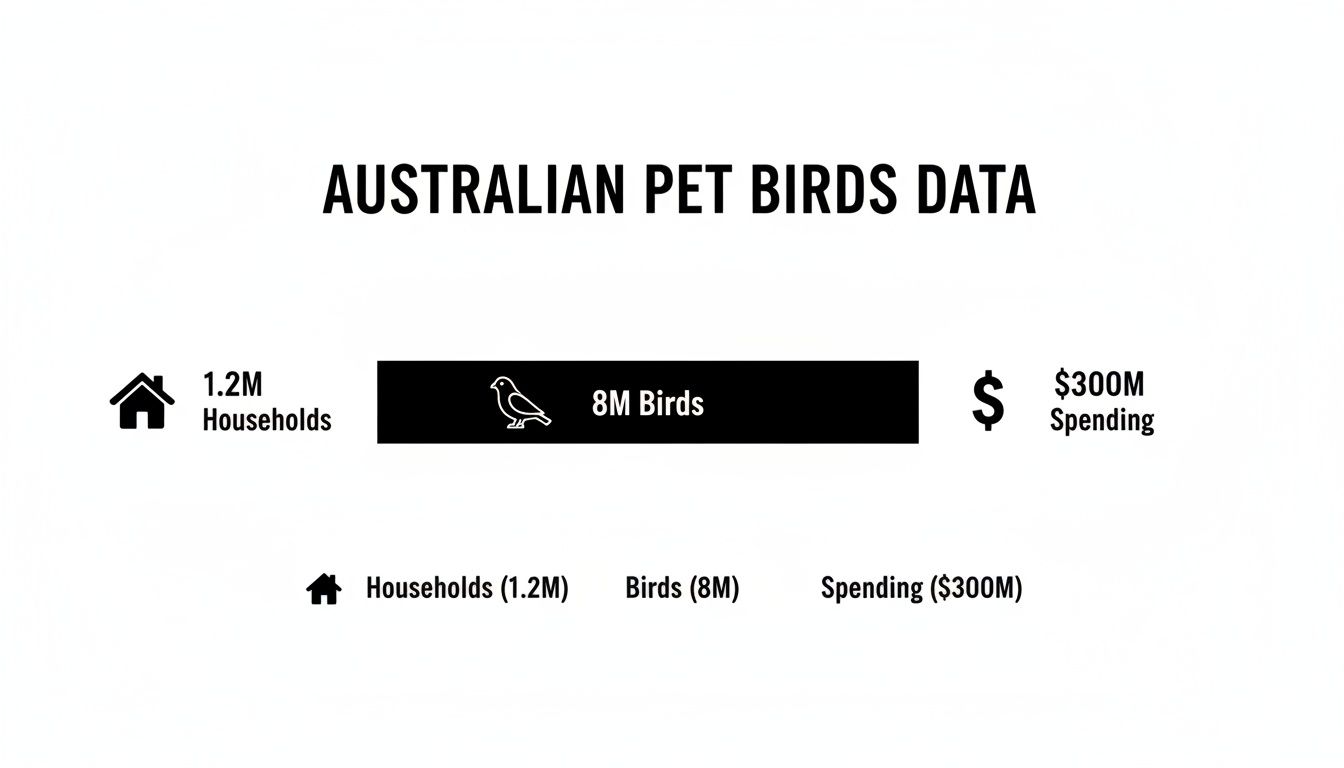
The numbers really show how deeply our birds are woven into the fabric of Australian life. A massive 1.2 million households own around 8 million pet birds, and together we spend about $300 million on them every year, covering everything from food to accessories. These figures point to a dedicated community of owners who are genuinely committed to giving their companions the best life possible.
Expert Advice: Remember, millet's main job should be for enrichment and as a high-value reward, not a dietary staple. When you offer it correctly, a simple treat becomes a powerful tool for training and mental engagement, making the bond you share with your bird even stronger.
Understanding how to use millet for your bird's enrichment is the key to unlocking its full potential. By weaving it thoughtfully into their routine, you’re not just giving them a snack; you’re offering them a chance to use their minds, sharpen their skills, and just enjoy being a bird. This guide will walk you through exactly how to do that, safely and effectively.
Understanding Millet's Nutritional Role
It’s no secret that our feathered mates go absolutely nuts for millet. But it’s crucial we see it for what it truly is: a treat, not a complete meal.
Think of it like this: for us, millet is the birdie equivalent of a chocolate biscuit. It’s a delightful pick-me-up, tastes great, and provides a quick burst of energy, but you wouldn’t swap it for a proper, balanced dinner.
Millet does contain some protein, fibre, and minerals like magnesium and phosphorus. The problem is, it just doesn't have the full range of vitamins and amino acids that birds need for tip-top health—things that keep their feathers strong and bones dense. Relying too heavily on millet can quickly lead to a fussy eater who turns their beak up at more nutritious foods.
A Treat, Not a Staple
The golden rule here is moderation. Millet is a popular choice for bird owners across Australia because it’s a cheap and cheerful way to treat our pets. While seed-based products are common, it's important to recognise their limitations in providing complete nutrition.
Even with its popularity, millet’s nutritional profile doesn't hold a candle to a scientifically formulated pellet. A high-quality pellet is designed to be a complete diet, making sure your bird gets everything it needs in every single bite. Our guide on what food is best for parrots dives into this with a lot more detail.
To make it even clearer, let’s put them side-by-side.
Expert Advice: Any good avian vet will tell you that 70-80% of a healthy diet should come from high-quality formulated pellets. The rest can be a mix of fresh veggies, a little bit of fruit, and occasional treats like millet.
Nutritional Snapshot: Millet vs. Balanced Pellets
This quick comparison shows exactly why pellets should be the foundation of your bird's diet, with millet playing a supporting role as a fun and rewarding treat.
| Nutrient | Millet (Approximate %) | Balanced Bird Pellet (Approximate %) |
|---|---|---|
| Protein | 10-12% | 14-20% |
| Fat | 2-5% | 4-8% |
| Fibre | 8-10% | 3-5% |
| Calcium | Very Low | Balanced (with added sources) |
| Vitamins | Low (lacks A, D3, B12) | Fortified with essential vitamins |
As you can see, the table really highlights the gaps in what millet offers. While it’s great for a bit of energy, it falls short on the crucial vitamins and minerals that a balanced pellet is specifically made to deliver. This is why using millet for bird health means seeing it for what it is—a brilliant tool for training and enrichment, but definitely not the main course.
Spray Millet Versus Loose Millet For Your Bird
Wander down the bird aisle in any Australian pet shop, and you'll spot millet in two main forms. You’ve got the natural-looking sprays hanging on the stalk, and you’ve got bags of loose, hulled seeds. They both come from the same plant, but how you use them can make a big difference to your bird's day.
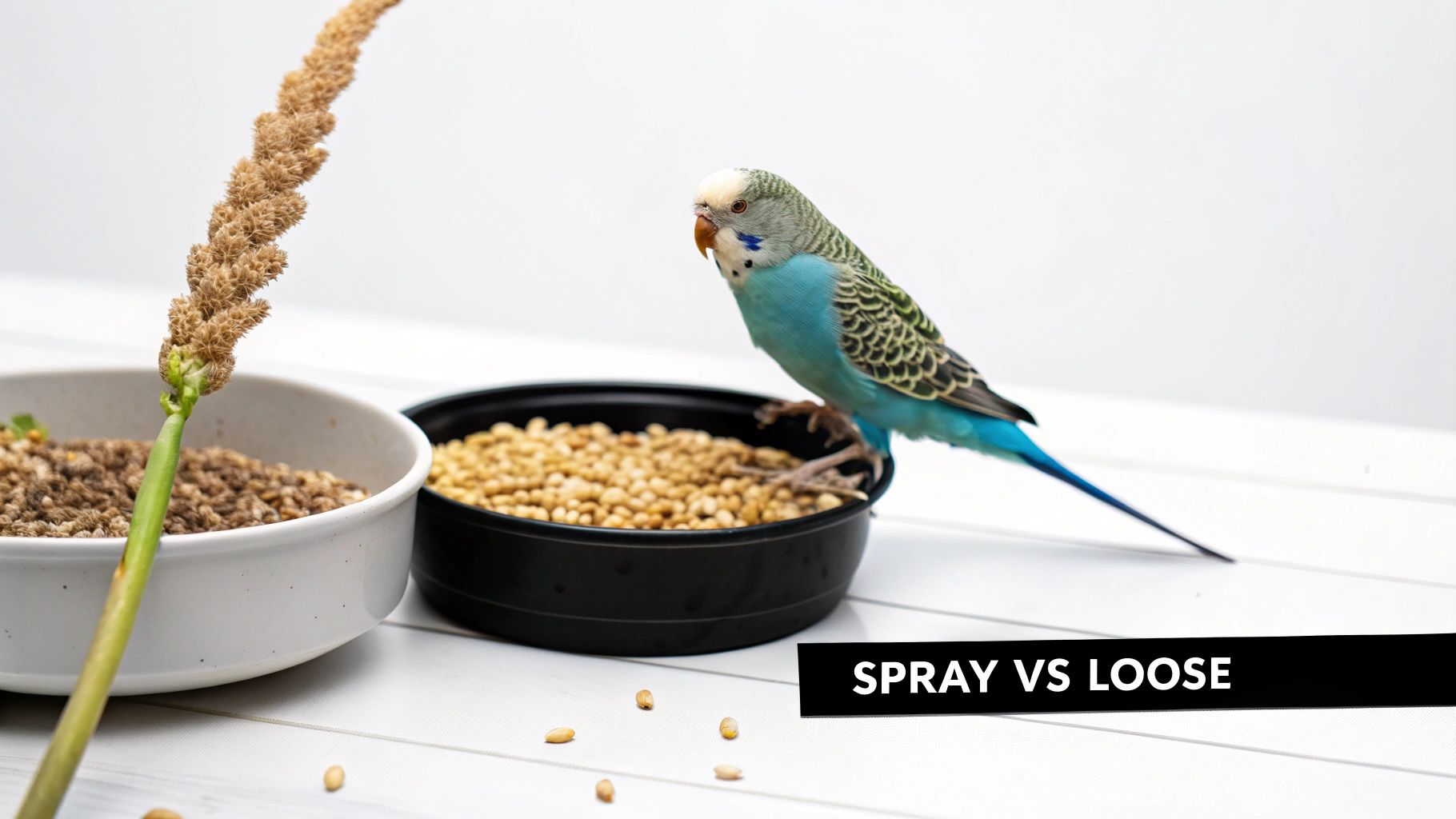
This isn’t just about looks; it's about purpose. Choosing between spray and loose millet really comes down to what you want to achieve. Are you trying to encourage natural behaviours, or are you in the middle of a training session?
The Enrichment Star: Spray Millet
When it comes to enrichment, spray millet is the undisputed champion. Because it’s left on its natural stalk, your bird has to actually work for its food, mimicking how they would forage in the wild. This whole process of nibbling, pulling, and shredding the seeds off the stalk is fantastic for keeping their mind and body active.
This natural setup is brilliant for busting boredom and preventing the behavioural issues that can come with it. Picture a little flock of budgies excitedly climbing all over a large spray—it’s an activity that engages their brains and muscles at the same time. If you want to dive deeper, our guide on the benefits of millet spray for birds is a fantastic resource.
Expert Advice: Use a simple clothes peg or a special clip to attach millet spray to the side of the cage. This encourages your bird to climb and stretch, turning a quick snack into a fun physical workout.
The Training Tool: Loose Millet
Loose millet seeds, on the other hand, are the perfect tool for training and targeted foraging. The seeds are small and easy to dish out, making them brilliant high-value rewards. They’re ideal for clicker training or for teaching your cockatiel a new trick like 'step up'.
Their small size also makes them perfect for sprinkling into foraging toys. You can mix loose millet with a few other healthy treats and hide them inside a puzzle toy, encouraging your bird to problem-solve to get their reward. It's a great way to introduce a beginner forager to the idea without making it too difficult.
By picking the right type of millet for the job, you can turn a simple treat into a powerful tool for bonding and enrichment.
Serving Millet Safely And In Moderation
Let's be honest, it's incredibly easy to be a little too generous with millet. Watching your bird's absolute delight as they get stuck into a fresh spray is one of the real joys of having a bird. But the biggest mistake we can make is treating millet like it's just another part of their daily meal. That path can quickly lead to health problems.
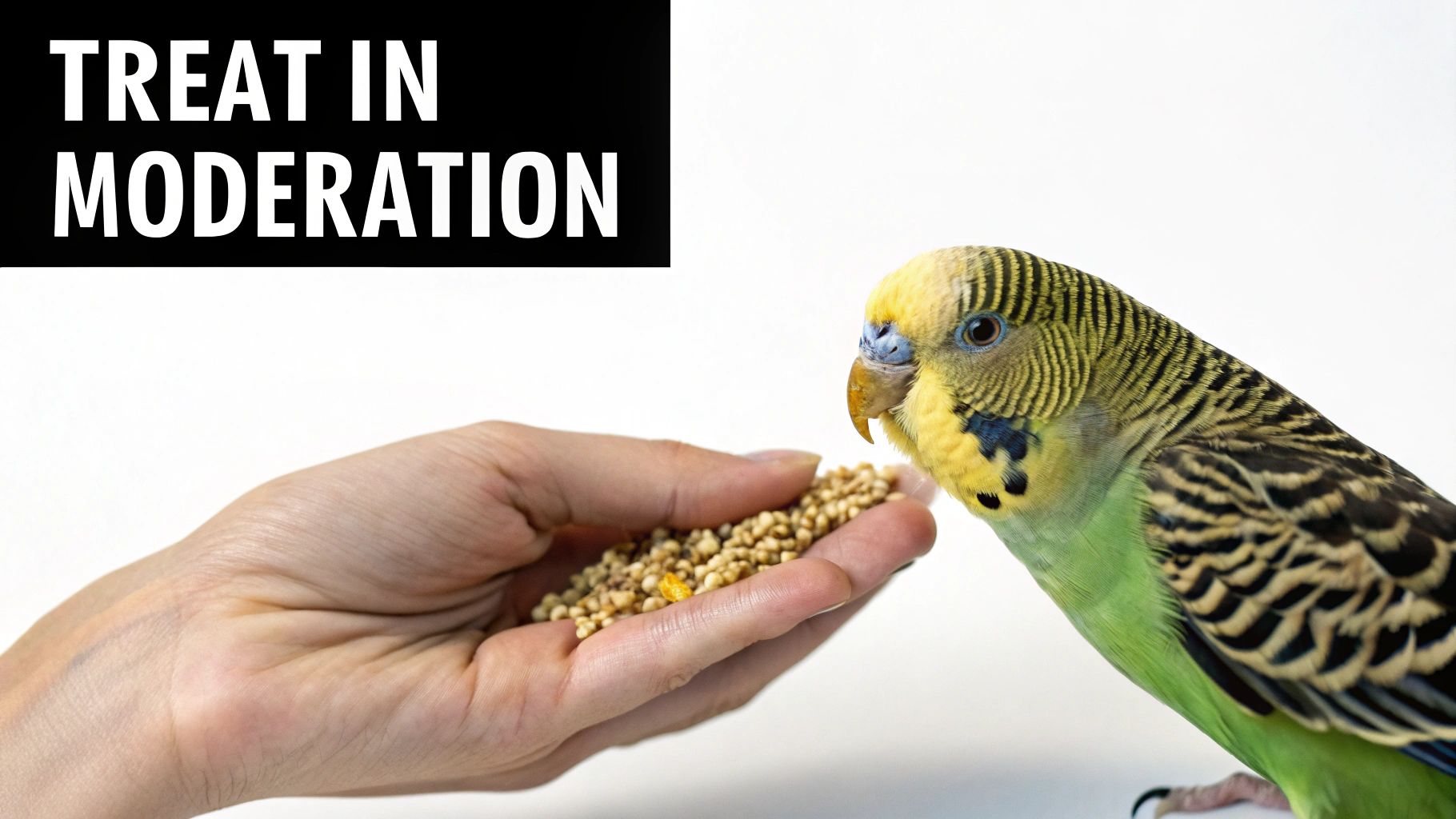
Leaving a full spray of millet in the cage 24/7 is a bit like giving a child unlimited access to the lolly jar. Many birds will simply gorge on their favourite food, turning their beaks up at the healthier, balanced pellets and fresh veggies they actually need. Before you know it, you can end up with a picky eater, which can lead to serious nutritional imbalances and obesity down the track.
A Vet-Approved Rule Of Thumb
So, what's a safe amount? To keep things simple, many Australian avian vets suggest a pretty straightforward guideline for portion control. It’s all about making sure millet stays a special, healthy part of your bird’s life, not a dietary staple.
Expert Advice: A good rule of thumb is to offer a piece of millet spray roughly the size of your bird's head, only once or twice a week. This keeps it as a high-value treat that they will genuinely look forward to.
Following this simple rule transforms millet from a potential problem into a powerful tool. You can use that small portion for training sessions, as a reward for good behaviour, or just as a special way to bond with your feathered mate. It means they get all the fun and enrichment without you having to worry about their long-term health.
Weaving Millet Into Enrichment Toys
Instead of just handing over the treat, why not make your bird work for it? Breaking up their weekly portion and weaving small pieces into foraging toys is a brilliant way to make the fun last longer while providing crucial mental stimulation.
- For Puzzle Lovers: Try stuffing a small piece of millet into a shreddable toy like our Foraging Pinata. This encourages them to rip, tear, and problem-solve to get their reward.
- For Active Foragers: Weaving millet stems through the seagrass mat of a toy like the Woven Foraging Wall promotes climbing and dexterity as they hunt for every last seed.
- For Clever Birds: Hiding tiny millet bits inside the puzzle boxes of the Foraging Box Bird Toy gives their clever little brains a real workout.
By controlling the portion size and using it creatively, you ensure that offering millet for bird health and happiness go hand in hand. It’s all about moderation.
Turning Millet Into an Enrichment Activity
Millet is so much more than a quick snack; it’s a brilliant way to tap into your bird’s natural instincts and get their brain working. While just clipping a spray to the cage is the easy option, we can get a lot more creative to turn this favourite treat into a proper activity. It’s time to think beyond the basic handout and make snack time a rewarding puzzle.
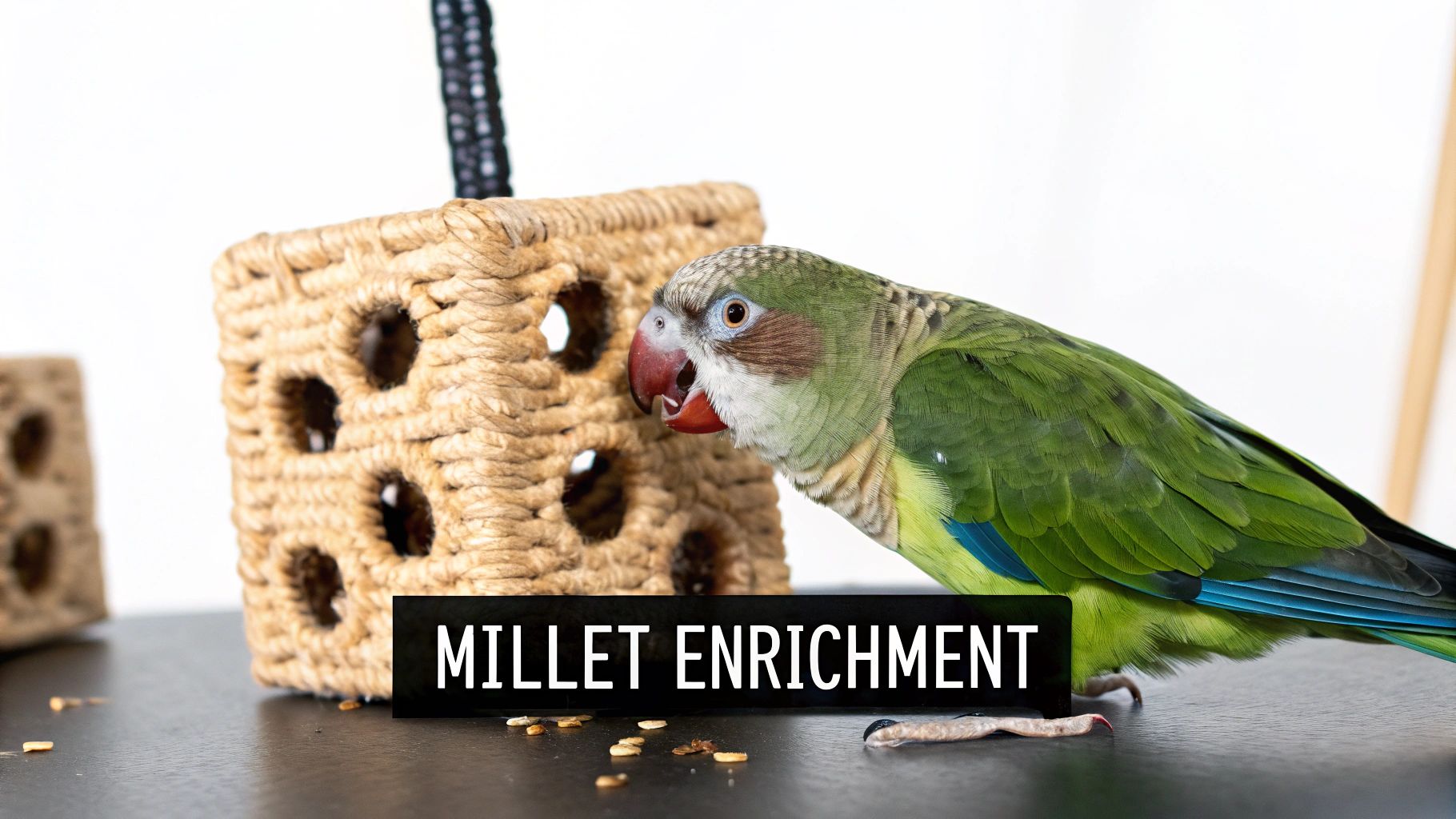
Out in the wild, birds spend a huge chunk of their day foraging for food. This constant hunt keeps their minds sharp and their bodies moving. By weaving millet into enrichment activities, we’re letting our companion birds use these deep-seated behaviours, which helps kick boredom to the curb and gives them a real sense of achievement.
Creative Ways to Serve Millet
Making millet a fun challenge is simpler than you might think. The main goal is to get your bird to think, work, and play for their reward. This doesn't just make the treat last longer; it also provides fantastic physical and mental exercise.
Here are a few simple but effective ideas:
- Weave and Hide: Take a small piece of millet spray and poke it through the bars of your bird's cage. This gets them climbing, stretching, and problem-solving as they work out how to pull it free.
- The Millet Bundle: Tie a few little pieces of millet spray together with a bird-safe material like sisal rope. You can hang it from the top of the cage to create a swinging piñata they need to steady and shred.
- Foraging Trays: Grab a shallow tray and fill it with bird-safe goodies like shredded paper, bits of cardboard, and foot toys. Sprinkle loose millet seeds all through the tray, forcing your bird to dig and rummage to find their prize.
Expert Advice: Always keep an eye on your bird with new enrichment activities to make sure they're interacting with them safely. Start off with easier puzzles and slowly make them trickier as your bird gets more confident with foraging.
Pairing Millet with Lou Lou Bells Toys
Our toys are designed to encourage those natural behaviours, and they become even more tempting when you add a high-value treat like millet. When you combine the two, you’re creating an enriching experience with multiple layers that will keep your feathered friend busy for ages. For more tips on getting started, have a look at our guide on foraging toys for birds.
Here’s how you can pair millet with some of our most popular toys:
- Foraging Pinata: This toy is made for shredding! Carefully push small bits of a millet spray or a sprinkle of loose seeds deep inside the woven palm leaf. Your bird will have to chew, rip, and tear through the natural fibres to get to the delicious treat hidden inside.
- Woven Foraging Wall: The clever design of this seagrass mat is perfect for stashing treats. Weave the stems of a millet spray in and out of the woven squares to make a stimulating vertical puzzle that encourages climbing and dexterity.
- Foraging Box Bird Toy: Give your bird’s brain a workout by placing a few loose millet seeds inside one of the small drawers. They’ll need to use their beak and mind to slide the box open, giving them a satisfying and rewarding mental challenge.
By turning a simple millet for bird treat into an interactive game, you’re doing so much more than just feeding them—you’re nurturing their mind and spirit.
Choosing High Quality Millet in Australia
When you're picking out millet for your bird, it’s worth remembering that not all sprays are the same. Good quality is important for your feathered friend's health and enjoyment, so knowing what to look for when you're shopping in Australia can make all the difference.
The best millet sprays just look and smell fresh. They should have a slightly sweet, earthy scent and be absolutely packed with plump seeds. If a spray looks brittle, discoloured, or feels strangely light, it’s probably past its best. A high-quality spray won't have much dust, any cobwebs, or signs of moisture, which is a big red flag for mould. If it smells dusty or musty, leave it on the shelf.
What to Look for When Buying
It pays to be a little picky when you're choosing millet. Sticking with reputable Australian suppliers is always a good bet, as they usually have stricter quality control. If you’re on the hunt for other quality items, our guide to finding the best parrot supplies in Australia can give you a few pointers.
Here are a few key things to check before you buy:
- Check for Pests: Have a close look for tiny insects or any webbing. Even the best stores can get a bad batch every now and then.
- Inspect the Colour: Fresh millet should have a healthy, consistent golden-yellow or reddish colour, depending on the type. Steer clear of sprays that look pale, greyish, or have dark, mouldy spots.
- Feel the Texture: The seeds should feel firm and full. If they just crumble into dust when you touch them, the millet is old and won't have much nutritional value left.
Expert Advice: If you're buying pre-packaged millet, always glance at the expiry date. Even though it’s a dried product, the natural oils in the seeds can go rancid over time, making it taste awful and unhealthy for your bird.
Storing Millet For Maximum Freshness
Once you get your millet home, how you store it is key to keeping it fresh and safe. Storing it properly stops mould from growing and keeps pests out, so every bite is a good one.
The best way is to pop it in an airtight container and keep it in a cool, dark, and dry spot, like your pantry. This protects it from humidity, heat, and light, which all make it go stale faster. For spray millet, you can just break it into smaller pieces to fit inside your container. It's a simple step that really helps it last.
Common Questions About Feeding Birds Millet
Even with the best of intentions, questions can pop up when you bring a new treat into your bird’s life. To help you feel completely confident, we’ve put together some of the most common queries we hear from Aussie bird owners about millet, with clear, experience-backed answers.
Can Large Parrots Like Galahs Eat Millet?
Yes, but think of it as a rare, high-value reward rather than a regular snack. While smaller birds like budgies and cockatiels are millet's biggest fans, larger parrots like Galahs or Macaws can certainly enjoy it.
Because the seeds are so tiny, it's less of a meal and more of a special treat you can use for training. A fantastic way to offer it is by breaking off a small piece of spray millet and stuffing it inside a tough foraging toy. This gets their powerful minds and beaks working, turning a tiny snack into a satisfying puzzle. Just remember, it should never be a staple in their diet.
Is Red Millet Better Than Yellow Millet?
Nutritionally, there's hardly any difference between the red and yellow varieties. Both are perfectly fine as a treat when you’re offering them in moderation. You might even find your bird develops a colour preference, so offering both can be a simple bit of enrichment in itself.
What matters far more than the colour is the quality. Always make sure the millet for bird snacks you buy is fresh, clean, and comes from a trusted Australian supplier. That’s how you know it’s both safe and nutritious.
Expert Advice: If your bird is carrying a bit of extra weight, it's crucial to chat with your avian vet before introducing any treats, including millet. They might suggest cutting back on high-energy foods for a while or using just a few individual seeds as a reward for exercise. Always follow your vet's personalised advice.
What If My Bird Only Wants To Eat Millet?
This is a classic sign that millet is being offered a bit too often. If your bird starts turning its beak up at its main food in favour of millet, it’s time to pull back significantly.
Take all millet out of the cage for a while. Then, reintroduce it only in tiny amounts as a special reward for trying their healthier pellets or veggies. Using it exclusively inside foraging toys, like our Foraging Box Bird Toy, can also help break the habit by making them work for every single seed.
Keep Reading
Disclaimer Summary:
The information in this article is general in nature and may include external links or resources not created by Lou Lou Bells Bird Toys. Every bird is unique, so we encourage you to seek personalised advice from your own veterinarian or avian specialist. For full details, please read our complete disclaimer here.