
Millet spray for birds is a completely natural, unprocessed seed head that serves as both a high-value treat and an incredible enrichment tool. It's so much more than just a snack; think of it as an interactive experience that plugs directly into a bird's natural instinct to forage. This is why it’s such a hit with small to medium parrots like budgies, cockatiels, and lovebirds.
Why Your Bird Goes Wild for Millet Spray
Ever wondered why the mere sight of a millet sprig can turn your calm, quiet companion into a frantic, chirping fluffball of excitement? It’s not just about the taste—it's about the form. The secret is that it's natural and unprocessed, mirroring how birds would find and eat seeds in the wild.
It's a bit like a person choosing fresh corn on the cob over a tin of processed kernels. The experience of working for the food is just as rewarding as the food itself.
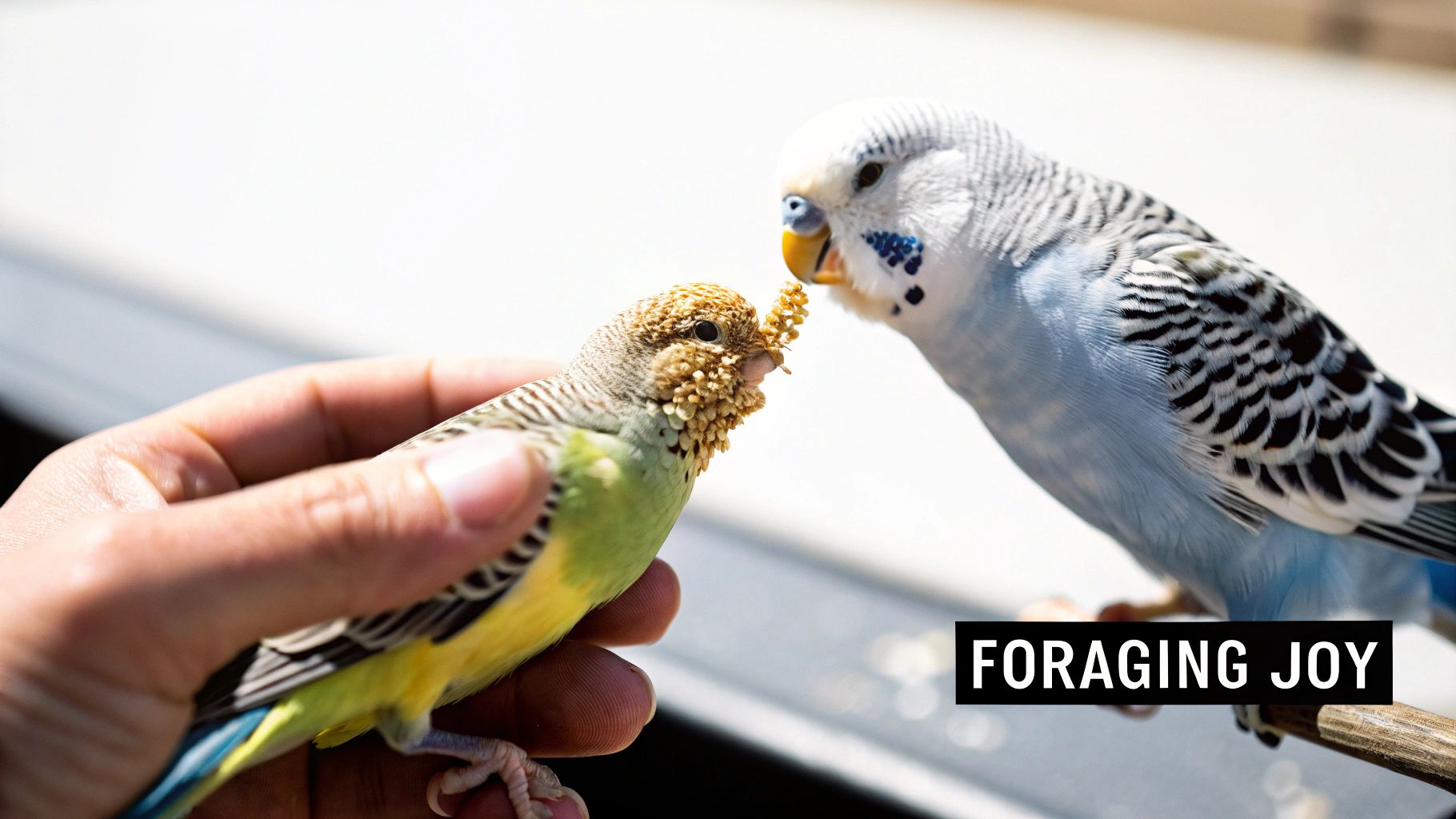
For our companion birds here in Australia, millet spray offers a unique sensory joy that a scoop of processed seed mix just can't compete with. It’s a treat that doubles as a brilliant activity, satisfying their powerful, ingrained drive to forage and work for their meals.
The Instinctual Appeal
The attraction to millet spray is wired deep into a bird’s natural behaviour. In their native habitats, birds spend a huge chunk of their day flying, searching, and physically manipulating food sources. A simple bowl of pellets or loose seed, while nutritious, offers zero mental stimulation. Millet spray bridges that gap perfectly.
This powerful instinct is a key part of understanding what birds love the most, because it neatly combines food with both mental and physical effort. Presenting a sprig of millet allows them to perform several satisfying actions:
- Shredding: They get to rip and tear at the stalk, which is great for beak conditioning.
- Picking: They have to carefully pick each tiny seed off the head.
- Manipulating: They can hold the spray with their feet, hang upside down from it, and move it around with their beak.
Millet spray transforms snack time into puzzle time. It satisfies not just your bird's hunger, but also its deep-seated need to chew, shred, and explore. This makes it one of the most effective and beloved enrichment treats you can offer.
More Than Just a Treat
While it's a fantastic snack, millet is also an incredibly valuable tool for bird owners. You can use it to build trust with a shy new bird, reward good behaviour during training sessions, or simply provide a fun distraction to bust boredom.
Just a quick note: while online forums offer some great personal stories, they aren't always the best source for specific dietary advice. For personalised recommendations, especially if your bird has any health conditions, it's always best to chat with your avian vet to make sure you're providing the best possible care.
Understanding Millet’s Nutritional Place in Your Bird’s Diet
It’s impossible to miss how much our birds adore millet spray. The moment they see it, their eyes light up. But let’s clear up a common misconception: millet spray is a treat, not a complete meal.
While it’s a fantastic source of carbohydrates for a quick energy boost, it just doesn’t have the balanced vitamins, minerals, and proteins your bird gets from a high-quality formulated pellet diet.
Think of it as your bird's version of dessert. It’s delicious, exciting, and a brilliant motivator, but you wouldn’t build a healthy diet around it. Relying too much on millet can lead to serious nutritional gaps, weight gain, and can even encourage picky eating habits where your bird starts turning its beak up at healthier foods.
A Treat Versus a Staple
The secret to a thriving companion bird is a varied diet built on a solid foundation. A seed-only diet might seem natural, but it’s a bit like a person eating only bread. It provides energy, sure, but it’s missing the wide range of nutrients needed for long-term health, strong feathers, and a tough immune system.
For a deeper dive into crafting a balanced diet, our comprehensive guide on the best food for parrots offers some great insights into building a healthy feeding plan. This is where high-quality pellets step in, as they are specifically designed to provide complete and balanced nutrition in every single bite.
As Australian avian nutritionist Dr. Tony Gestier advises, "Millet should be viewed as a 'high-value' reward, comprising no more than 10-15% of the total daily food intake. Its primary role is for enrichment and training, not as a dietary staple. A bird's foundation diet must always be a quality formulated pellet to prevent common nutritional deficiencies."
To really see what this means in practice, let’s look at a simple nutritional comparison.
Millet Spray vs Formulated Pellets: A Nutritional Snapshot
This table gives a clear, at-a-glance look at why one is a treat and the other is a daily essential.
| Nutrient | Millet Spray (Approx.) | High-Quality Pellets (Approx.) | Role in Bird's Diet |
|---|---|---|---|
| Carbohydrates | High | Balanced | Provides quick energy, but too much can lead to weight gain. |
| Protein | Low (9-12%) | Optimal (14-20%) | Essential for muscle, feather, and overall cellular health. |
| Fat | Low (2-4%) | Balanced | Necessary for hormone production and vitamin absorption. |
| Vitamins & Minerals | Very Limited | Fortified & Complete | Crucial for immune function, bone density, and organ health. |
As you can see, the difference is stark. Pellets should absolutely form the core of your bird's diet, with millet spray serving as a delightful and enriching supplement.
By understanding this balance, you can offer this beloved treat with confidence, knowing you’re supporting your bird's overall health and well-being for years to come.
How to Offer Millet Spray Safely
Millet spray is one of those treats that birds go absolutely bonkers for. But just like a child in a lolly shop, letting them have too much is a recipe for trouble. The key to offering it safely is all about balance and moderation.
Think of it as dessert for your bird. A little bit is a wonderful, exciting treat, but overdoing it can quickly throw their whole diet out of whack. The biggest risks are obesity and nutritional imbalances. If your bird fills up on high-carb, low-nutrient millet, they won’t have any room left for the good stuff like their pellets and fresh veggies, which can lead to weight gain and deficiencies down the track.
Portion Control for Different Birds
So, how much is the right amount? There’s no single answer—it really comes down to the size and species of your bird.
- For small birds like budgies and cockatiels, a 5cm piece once or twice a week is plenty. It gives them all the fun and enrichment without messing up their main diet.
- For larger birds like Galahs or Eclectus parrots, millet should be an even rarer, high-value reward. A small piece offered occasionally during a training session is more than enough to get their attention.
If you’re introducing millet for the first time, always start small. Give them just a tiny piece and keep an eye on them to make sure it agrees with their system. This gradual approach is always the safest bet with any new food. A simple millet spray clip is a great way to hang small, pre-portioned pieces in the cage, keeping the treat clean and off the floor.
This chart really brings home why a balanced diet, with millet as just a small part, is so vital for your bird's health.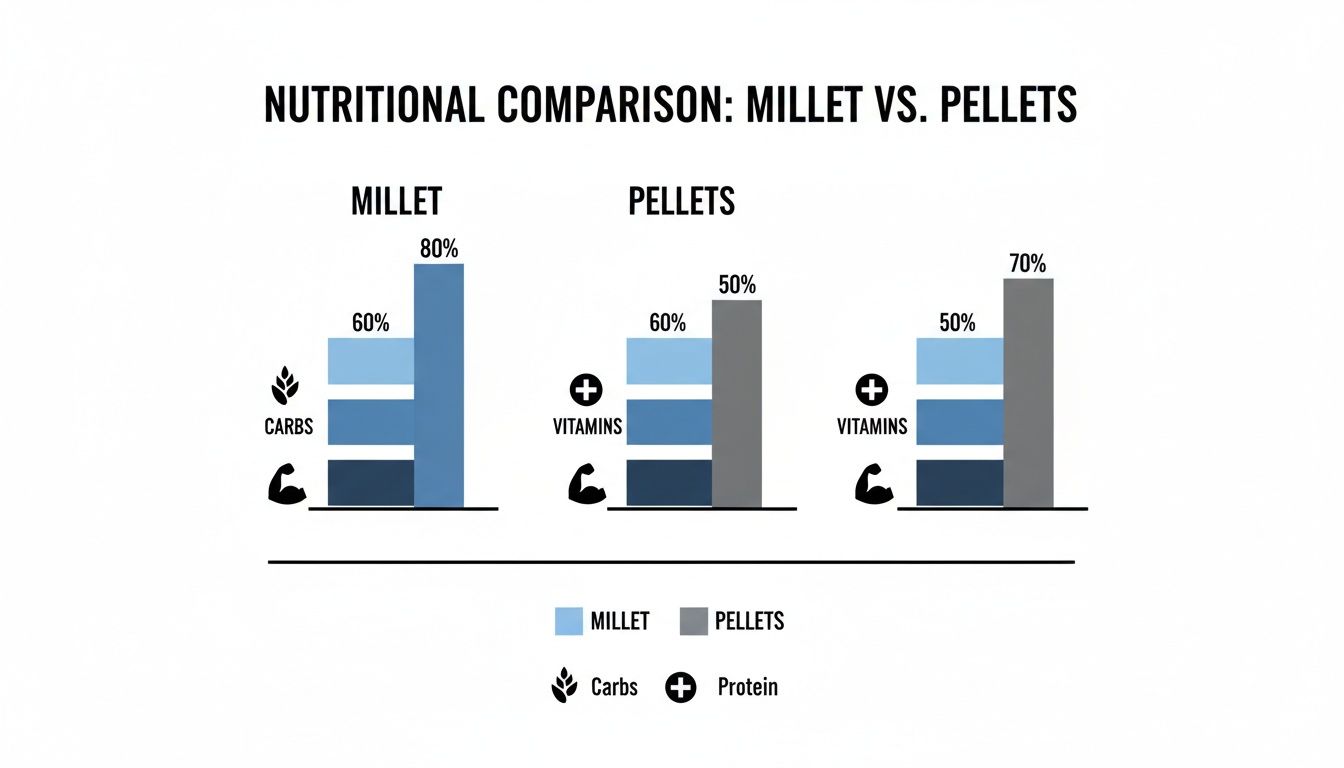
As you can see, millet is packed with carbohydrates for a quick energy burst, but it just doesn't have the balanced protein and vitamins found in a complete pellet diet.
To be sure you're offering this treat safely, you need to be observant. It’s something any experienced Australian avian vet will tell you.
"Whenever you introduce a new treat like millet, pay close attention to two things: your bird’s weight and their droppings. Any significant change in either is a sign to cut back and consult your vet. Consistent monitoring is the best way to ensure treats remain a healthy part of their enrichment."
By sticking to these simple guidelines—portion control, a slow introduction, and careful observation—you can confidently let your bird enjoy millet spray. It ensures this special snack remains a source of joy and mental stimulation, supporting your bird’s well-being without compromising their health.
Turning Millet into an Enriching Foraging Experience
Just handing your bird a whole millet spray is easy, but you’re missing a trick. Its real value shines when you turn this simple snack into a rewarding puzzle. Using millet for enrichment taps into your bird's natural instinct to work for their food, making a high-value treat a powerful tool against boredom.
Instead of just dropping it in a bowl, you can make snack time an engaging activity. This simple shift can make a world of difference to your bird's daily life, preventing boredom and encouraging healthy, natural behaviours.
Integrating Millet with Foraging Toys
The easiest way to level up your millet game is by combining it with foraging toys. This gets your bird thinking, problem-solving, and physically manipulating things to get their reward—which is incredibly satisfying for them.
Here are a few simple ideas to get you started:
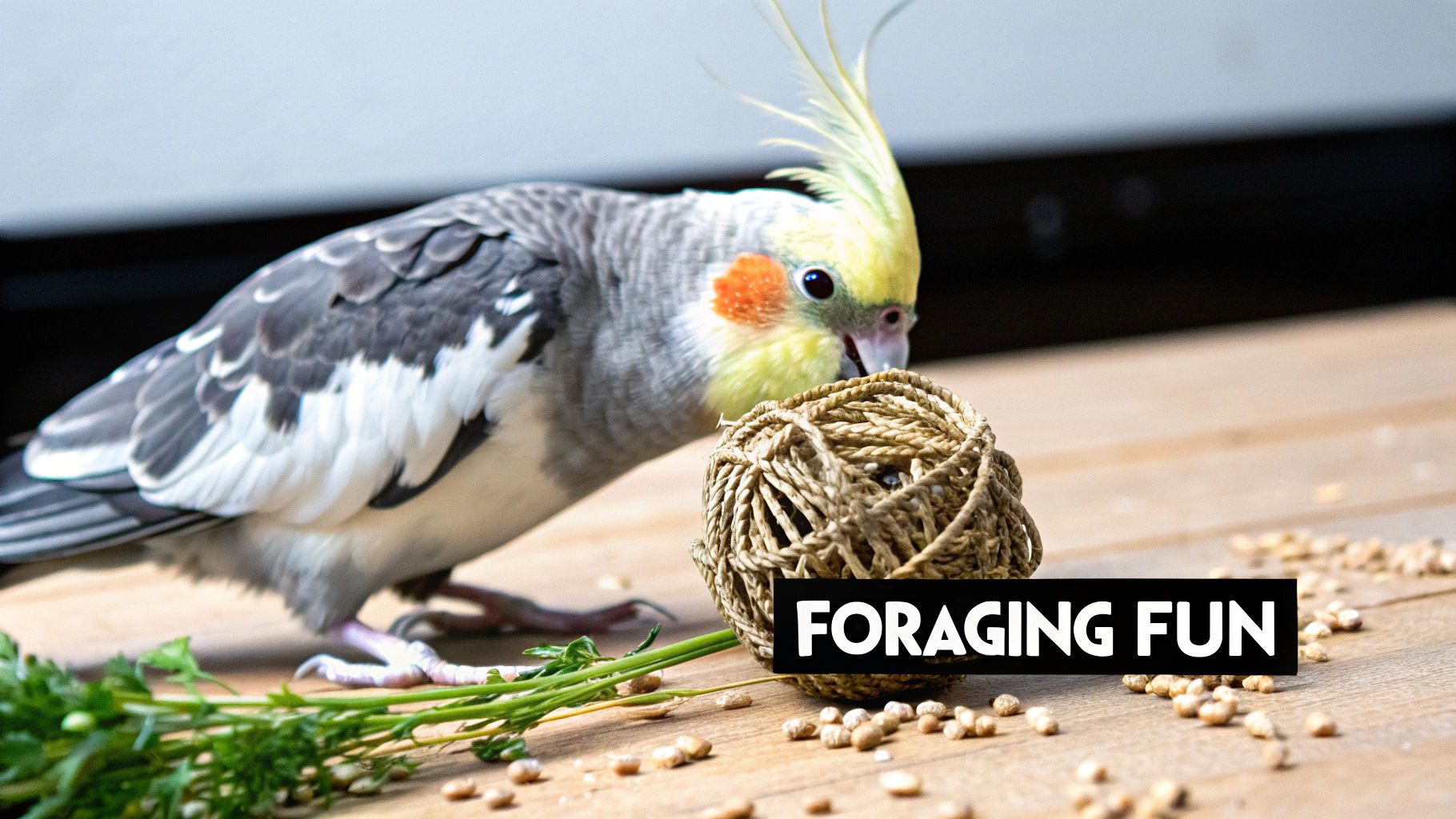
- Weave it: Poke small pieces of millet spray through the bars of your bird’s cage or weave them into the gaps of a natural vine ball. This forces them to pull, tug, and chew to get the seeds out.
- Stuff it: Hide sprigs of millet inside shreddable toys. Our Foraging Ball is perfect for this—you can stuff pieces of millet among the colourful paper, creating an irresistible puzzle that encourages natural shredding behaviour.
- Conceal it: Place small millet pieces inside a toy like our Shred Pouch. Your bird will have to chew through the outer layer to discover the hidden treasure inside, providing hours of entertainment.
Foraging isn't just about food; it's about providing a 'job' for your bird. By making them work for a treat like millet, you are fulfilling a deep-seated behavioural need, which can reduce stress and prevent destructive behaviours like feather plucking.
Millet as a Powerful Training Tool
Beyond foraging, millet is an exceptional tool for positive reinforcement training. Birds go nuts for it, which makes it the perfect reward for teaching new behaviours or just strengthening your bond. And because the seeds are tiny, you can offer a small piece as a quick, effective reward without overfeeding.
Use tiny pieces broken off the spray to reward behaviours like:
- Step-Up Commands: Offer a tiny nibble as soon as your bird steps onto your finger.
- Recall Training: Reward them for flying to you when called.
- Trick Training: Use it to teach fun tricks like turning around or waving.
This method turns learning into a positive, exciting game. If you're new to this idea, exploring different foraging toys for birds can give you even more ideas on how to weave treats into daily enrichment.
Choosing and Storing Millet Spray in Australia
Not all millet sprays are created equal, and knowing what to look for can make a huge difference to your feathered friend’s safety and enjoyment. When you’re shopping for this popular treat here in Australia, your eyes are your best tool. You want to choose sprigs that look healthy, full, and fresh.
High-quality millet spray has dense, plump seed heads. The seeds should be packed tightly together, not looking sparse or patchy. Colour is another dead giveaway; look for a vibrant, golden-yellow hue. If the spray looks dull, dusty, or has faded to a sad-looking brown, it’s probably old stock that has lost much of its freshness and appeal.
Sourcing your millet from trusted Australian suppliers is always the way to go. Local stock is often much fresher and hasn’t had to endure long shipping journeys that can degrade its quality.
Keeping Your Millet Fresh and Safe
Once you’ve brought your premium millet home, storing it properly is just as important as picking the good stuff. Poor storage can lead to pests like pantry moths or, even worse, the growth of dangerous mould that can be incredibly harmful to your bird.
The best method is simple but effective: store your millet spray in a cool, dark, and dry place. A pantry or cupboard, well away from direct sunlight and humidity, is perfect.
While you might reach for an airtight container for pellets, millet seeds have a slightly higher moisture content. It's actually better to use a container that allows for a little air circulation, like a paper bag or a cardboard box. This helps prevent condensation and the mould growth that comes with it.
Storing millet correctly is just as important as choosing a good spray. An airtight plastic container might seem like a good idea, but it can trap moisture and promote mould. A breathable container in a cool, dark place is your safest bet for keeping it fresh.
Freezing Millet: The Pros and Cons
Freezing is a fantastic trick that can seriously extend the shelf life of your millet. It’s also an excellent way to kill off any potential pest eggs that might be hiding. Just pop the millet in a freezer-safe bag and store it for at least 72 hours.
Just be mindful when you thaw it out. Let it come back to room temperature completely before offering it to your bird, and always check for any signs of sogginess or condensation. Excess moisture is never ideal.
By following these simple selection and storage tips, you can make sure every piece of millet spray for birds you offer is a safe, fresh, and delicious treat.
Common Questions About Feeding Millet to Birds
Alright, let's tackle some of the common questions we hear from bird owners across Australia. Getting these answers straight will help you feel more confident about offering millet and make it a fun, safe experience for your feathered mate.
Can I Give Millet Spray to Large Parrots?
You can, but it's a bit like giving a person a single lolly — it’s a tiny, high-value treat, not a meal. For a bigger bird like a Galah or a Macaw, millet spray should be a rare reward, perfect for training moments.
Because it's high in carbohydrates, it's not the best choice for larger parrots who can easily put on weight. If you do offer it, just break off a small 2-3cm piece from the spray. That’s plenty. For regular treats, always lean towards healthier options like fresh veggies or a single, species-appropriate nut.
Is Red Millet Better Than Golden Millet?
Nutritionally, there's hardly any difference between the red and golden (or white proso) varieties. Some birds might seem to have a favourite, but that usually just comes down to what they’ve seen before.
The colour is never the most important thing; quality is. Always choose a millet spray for birds that looks fresh and plump, not dusty or showing any signs of mould. Offering both types now and then is a great way to add a little variety to their treat rotation.
My Bird Ignores Millet Spray What Should I Do?
This happens more often than you'd think! Not every bird instantly goes crazy for millet. If yours seems completely uninterested, don't just leave it sitting in a food bowl where it will be ignored.
Instead, try making it a game. Weave a small piece through the bars of their cage or tie it onto a favourite toy to spark their curiosity. It's fantastic for attaching to shreddable toys like the Lou Lou Bells Tiel Ripper. Another trick is to break off a few loose seeds and sprinkle them over their normal food to introduce the taste gently.
If they still turn their beak up at it after a few tries, don't push it. Every bird has its own personality and preferences. There are plenty of other healthy treats and fun foraging challenges out there to explore.
Keep Reading
- Foraging For Beginners
- A Guide to Safe and Toxic Woods For Parrots
- How to Choose the Best Toys For Your Bird
Disclaimer Summary:
The information in this article is general in nature and may include external links or resources not created by Lou Lou Bells Bird Toys. Every bird is unique, so we encourage you to seek personalised advice from your own veterinarian or avian specialist. For full details, please read our complete disclaimer here.