
Tired of fresh veggies for your bird going limp and losing their goodness in the fridge? We've all been there. Freeze-dried veg offers a brilliant solution, locking in flavour, nutrients, and a satisfying crunch that parrots find irresistible. It's the ultimate pantry staple for busy Australian bird owners who refuse to compromise on quality nutrition.
What Are Freeze-Dried Veg and Why Do Birds Love Them
Imagine taking a fresh, vibrant vegetable and instantly pressing a pause button on nature. That’s essentially what freeze-drying—or lyophilisation, for the science buffs—does. This clever process is a world away from simply removing moisture with heat, like in standard dehydration.
Here’s how it works: first, the vegetables are frozen solid. Then, they're placed in a strong vacuum, which lets the frozen water crystals inside turn directly into vapour, completely skipping the liquid stage.
This gentle technique is the secret to its success. By avoiding the high heat used in dehydration, freeze-drying preserves the vegetable's original structure, colour, and, most importantly, its nutritional value.
Expert Advice: The freeze-drying process can retain up to 97% of the original nutrients found in fresh vegetables. This makes freeze-dried veg a nutritionally superior option compared to other preservation methods that rely on heat, which can degrade sensitive vitamins.
The Irresistible Crunch Factor
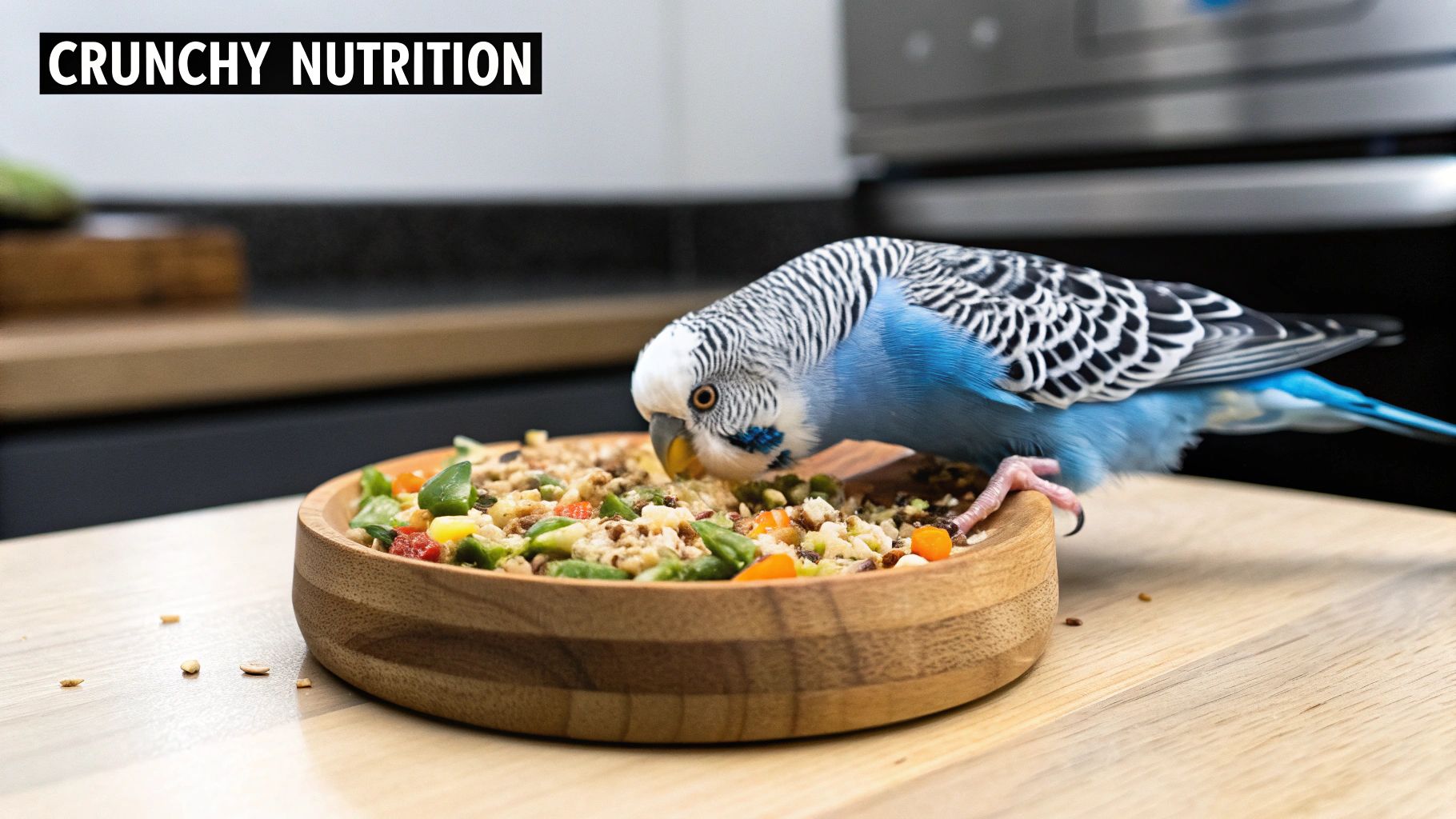
For a bird, texture is a huge part of the eating experience. The most noticeable difference between freeze-dried and other preserved veggies is the light, airy, and incredibly crunchy texture.
This satisfying crunch isn't just for fun; it provides a stimulating and engaging eating experience that mimics the sensation of cracking seeds or nuts in the wild. Birds from tiny budgies to mighty macaws are often drawn to this unique texture, making freeze-dried veg an excellent high-value reward.
Why Parrots Prefer Them
Beyond the fantastic texture, the flavour is also remarkably well-preserved. Because the process doesn't 'cook' the vegetables, they retain a concentrated taste that is much closer to fresh produce. This makes them a fantastic choice for:
- Picky Eaters: The intense flavour can entice birds that might otherwise turn their beaks up at fresh or mushy vegetables.
- Enrichment and Foraging: The dry, crunchy pieces are perfect for stuffing into bird toys or scattering in a foraging tray, encouraging natural behaviours.
- Convenient Nutrition: They offer a shelf-stable way to provide vegetable goodness without the worry of rapid spoilage, a common issue in Australia's varied climate.
Freeze-Dried vs Dehydrated: A Clear Comparison for Bird Owners
When you’re browsing the pet food aisle or shopping online, it’s easy to see "freeze-dried" and "dehydrated" and think they’re pretty much the same thing. But for your bird’s health and happiness, the difference is huge. A quick look at how they’re made shows why freeze-dried veg is often the better choice.
Dehydration is the old-school method. It works by using low, steady heat for a long time to slowly evaporate the water out of the vegetables. It gets the job done for making food last, but that heat can be a real problem. It often breaks down delicate vitamins and minerals, reducing the food's nutritional punch. It also changes the texture completely, leaving it chewy and leathery.
Freeze-drying, on the other hand, is a much more modern and gentle process. The vegetables are first frozen solid and then placed into a strong vacuum. This clever technique turns the ice straight into vapour, skipping the liquid stage entirely. By avoiding the high heat that damages nutrients, this method locks in the vegetable's original structure, bright colour, and natural flavour almost perfectly.
Nutritional Value: The Key Difference
For any bird owner, the most important takeaway is how many nutrients are left in the final product. The heat used in dehydration can destroy essential vitamins like Vitamin A (which is vital for healthy feathers and good eyesight) and Vitamin C (a big player in immune support).
Expert Advice: When you look at the numbers, the difference is stark. Freeze-drying typically keeps over 90% of the original nutrients intact. Dehydration, because it relies on heat, can lead to a much greater loss of these essential compounds.
What this means in practice is that a piece of freeze-dried carrot is nutritionally almost identical to a fresh one. When you’re adding veggies to your bird’s diet to boost their wellbeing, you want every single bite to count. This makes freeze-dried veg a brilliant investment in your bird's long-term health.
Texture and Parrot Appeal
For a parrot, food isn't just fuel—it's an experience, a puzzle, and a source of entertainment. The texture of dehydrated vegetables is often dense and tough, which can be a real turn-off, especially for smaller birds. It can feel rubbery and take a lot of effort to break apart.
Freeze-dried veggies are a whole different story. They have a light, airy, and incredibly crunchy texture. This "crunch factor" is a massive hit with most parrots. It taps right into their natural foraging instincts, mimicking the satisfying feeling of cracking open a nut or a tough seed pod, which makes for a much more engaging mealtime. It’s also perfect for stuffing into a fun foraging toy to give their brain a workout.
To make things even clearer, let's break it down side-by-side.
Veggie Preservation Methods at a Glance
Choosing between preservation methods can feel a bit overwhelming, but a simple comparison makes the best option for your feathered friend stand out. This table highlights the key differences between freeze-dried, dehydrated, and even frozen vegetables from a parrot's perspective.
| Attribute | Freeze-Dried Veg | Dehydrated Veg | Frozen Veg |
|---|---|---|---|
| Process | Frozen, then water removed as vapour in a vacuum (no damaging heat). | Low heat is used over a long time to evaporate water. | Quickly frozen to lock in water content. |
| Nutrients | High retention (90%+), preserving most vitamins and minerals. | Some nutrient loss due to heat exposure. | High nutrient retention, but can lose some when thawed. |
| Texture | Light, airy, and very crunchy. Highly appealing to birds. | Dense, chewy, and sometimes leathery or tough. | Soft and mushy once thawed. |
| Rehydration | Rehydrates quickly, returning close to its fresh state. | Rehydrates slowly and may stay tough. | Already contains water; no rehydration needed. |
| Shelf Life | Extremely long shelf life (up to 25 years) when stored correctly. | Long shelf life, but can be more prone to absorbing moisture. | Limited to freezer life; requires power. |
| Best For | Nutrient-dense snacks, foraging toys, and emergency food kits. | Occasional treats, but less nutritionally dense. | Daily "chop" mixes, but not shelf-stable. |
While each method has its place, the table really shows why freeze-dried comes out on top for convenience, enrichment, and nutrition.
Ultimately, both dehydrated and freeze-dried options offer a handy way to get more veggies into your bird’s diet. However, the superior nutrition and stimulating texture of freeze-dried veg make it the clear winner for supporting your bird’s health and keeping them happily engaged.
The Nutritional Power of Freeze Dried Veg
When you reach for freeze dried veg for your bird, you’re not just handing over a snack; you're offering a tiny, crunchy powerhouse of nutrition. The magic is all in how they're made. The freeze-drying process locks in the good stuff—vitamins and minerals that often get zapped by heat or lost during the long journey fresh produce takes to get to the store. This means your parrot gets a much bigger nutritional bang for its buck.
Take Vitamin A, for instance. It's vital for a healthy immune system, good eyesight, and keeping those feathers bright and beautiful. Freeze-drying keeps it intact. The same goes for dietary fibre, which is crucial for keeping your bird's digestive system running smoothly. It's a simple way to support their overall health from the inside out.
This chart quickly shows you why freeze-dried is a cut above the rest, especially when compared to standard dehydrated options.
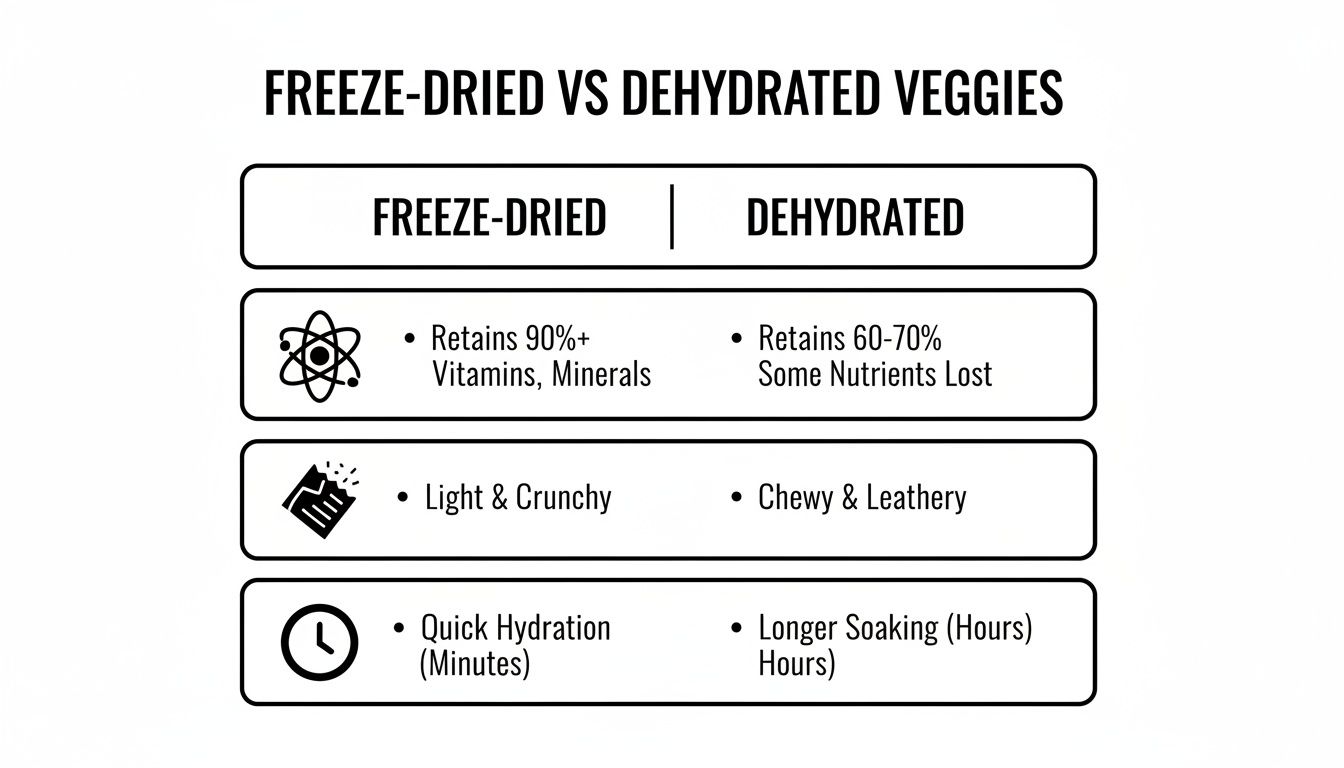
As you can see, freeze-drying comes out on top for holding onto nutrients and creating that satisfying, crunchy texture birds love. It's a clear winner for your feathered friend's health and happiness.
Tailored Benefits for Australian Parrots
These advantages really hit home for our Aussie companion birds. That incredibly hard, crunchy texture is fantastic for natural beak conditioning. For big chewers like Cockatoos and Galahs, getting their beak into these crunchy morsels is a great way to help keep them strong and perfectly trimmed.
Plus, their super-low moisture content is a massive win for enrichment. Fresh veggies can turn to mush and spoil in a heartbeat in our warmer Aussie climate, but freeze-dried pieces stay crisp and safe inside foraging toys for ages. This means less risk of spoilage and bacterial growth, making playtime safer and keeping them engaged for longer.
Expert Advice: "A varied diet rich in high-quality, nutrient-dense foods is fundamental to preventative healthcare for parrots. Freeze-dried vegetables offer a convenient way to provide this variety, supporting everything from immune function to beak health, without the risk of artificial additives." - Leading Australian Avian Veterinarian.
Pure Goodness in Every Bite
One of the best things about high-quality freeze dried veg is what they’re missing. They are completely free from the artificial preservatives, added sugars, and salts you often find lurking in commercial bird treats. All you get is pure, unadulterated vegetable goodness.
You know exactly what your bird is eating. Providing the right food for your parrot is one of the biggest responsibilities we have as bird owners, and these natural treats make that job just a little bit easier.
How to Safely Introduce Freeze Dried Veg to Your Bird
Bringing any new food into your bird's life is something you want to do gently and with a close eye, and freeze-dried veggies are no different. The trick is to start small, make it a fun and positive experience, and give their digestive system time to adjust.
Always start with high-quality, bird-safe products. When you're shopping here in Australia, be sure to give the ingredients list a good look. Your best bet is always a single-ingredient product. That means the only thing in the bag is the vegetable itself—no added salt, sugar, preservatives, or weird artificial flavours.
Sourcing and Serving Safely
When you're checking out a bag of freeze-dried veggies, look for products that clearly state they are 100% natural. You’ll want to steer clear of anything with sulphites or other additives, as these can be harmful to your bird’s delicate system.
Once you’ve got a quality product, it's time to talk portions. These are nutrient-dense treats, not a full meal. Think of them as a healthy little bonus to your bird's main diet of high-quality pellets, fresh chop, and appropriate seeds.
Here’s a good rule of thumb for serving sizes:
- Small Birds (Budgies, Cockatiels): Just a few tiny pieces, like two or three freeze-dried peas or corn kernels, is more than enough for one day.
- Medium Birds (Conures, Galahs): A small pinch is perfect, about what you could fit on half a level teaspoon.
- Large Birds (Macaws, Cockatoos): One level teaspoon is a generous serving for the bigger parrots.
Expert Tip: Treat freeze-dried veg like a healthy garnish or a special reward for training. It should only make up about 5-10% of their total daily food intake to keep their diet balanced.
Dry vs Rehydrated: How to Choose
One of the best things about freeze-dried vegetables is how versatile they are. You can offer them in two main ways, and what you choose will depend on what your bird prefers and what you're trying to achieve. While most fruits are best served dry, understanding when to rehydrate certain veggies can be a game-changer, much like knowing the answer to common questions like "can birds eat grapes?" and the best way to prepare them.
Serving Dry (As Is):
This is the easiest and most popular method. The crunchy texture is fantastic for keeping their minds busy and their beaks in good shape. Serving dry pieces is perfect for stuffing into foraging toys, mixing into seed blends, or just offering by hand as a quick treat.
Serving Rehydrated:
To rehydrate, just soak the pieces in a bit of warm water for a few minutes until they soften up. This gives them a texture a lot like fresh vegetables, which can be ideal for:
- Birds with sensitive or sore beaks.
- Older birds who might find hard foods a bit of a struggle.
- Getting very picky eaters to try vegetables, especially if they prefer softer textures.
- Mixing into a soft food mash or "chop."
Just remember to remove any uneaten rehydrated vegetables from the cage after an hour or two to stop any nasty bacteria from growing. The key is to start slow, see what your bird enjoys, and make it a fun part of their healthy routine.
Boost Enrichment with Freeze Dried Veg and Bird Toys
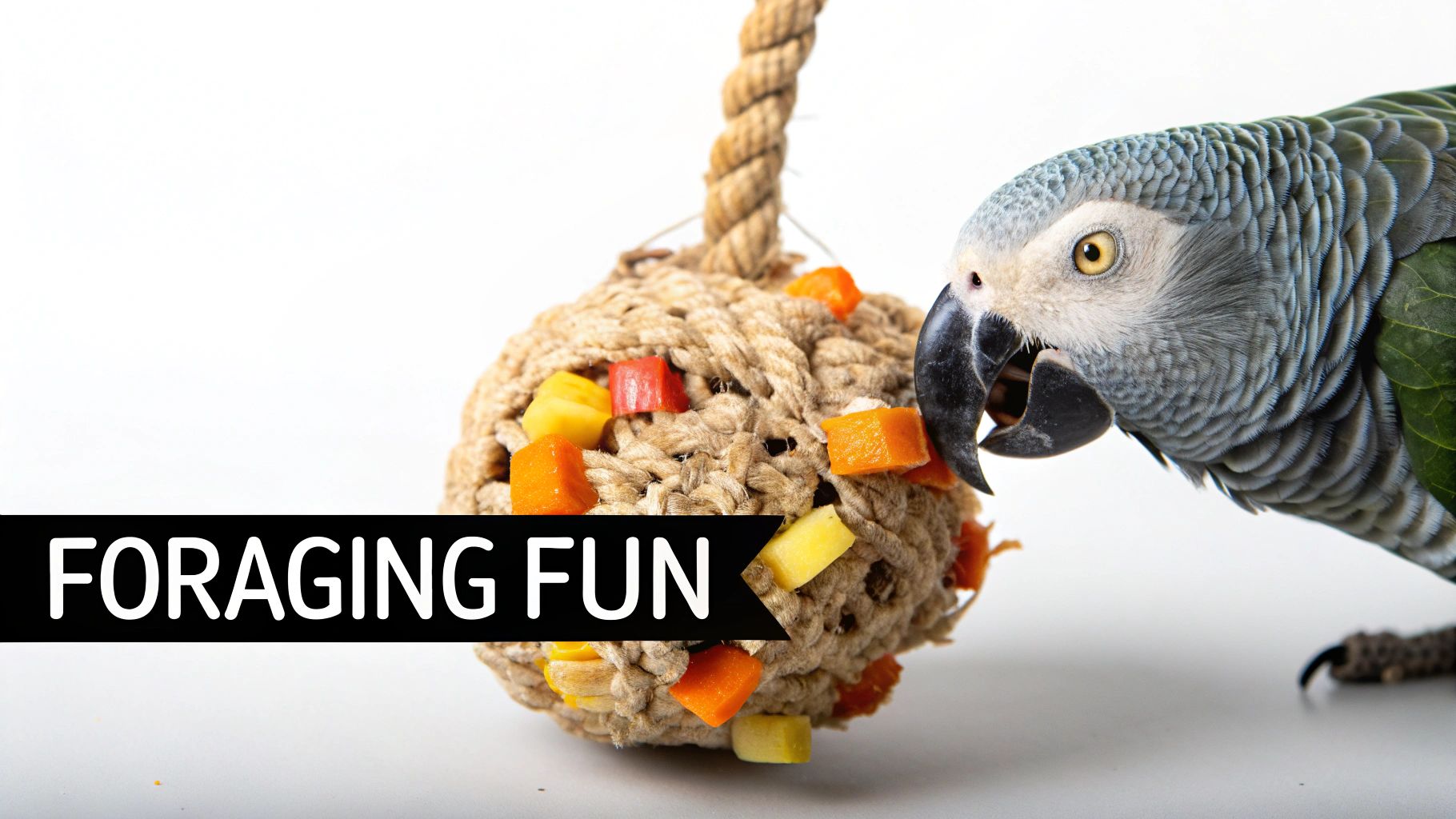
This is where the real fun begins. Beyond just being a nutritious snack, freeze-dried veg are a fantastic tool for battling boredom and sparking your bird's natural instincts.
In the wild, parrots spend a massive chunk of their day searching for food—a behaviour we call foraging. Trying to replicate this experience is honestly one of the most powerful things you can do for your bird’s mental health.
The lightweight, crunchy nature of freeze-dried vegetables makes them perfect for all sorts of enrichment activities. They don’t spoil quickly like fresh produce, which means you can safely leave them in toys for longer, providing a bit of stimulation that lasts throughout the day.
Creative Foraging Ideas for Your Flock
Getting started with foraging is easy and incredibly rewarding. The whole point is to make your bird think, work, and play for their food, turning a simple snack into a stimulating little puzzle.
Here are a few simple but effective ideas to get you going:
- Stuff a Shredder: Take a popular toy like the Coconut Piñata Shredder and gently push pieces of freeze-dried corn, carrot, or peas deep into the natural fibres. Your bird will have to chew, rip, and shred to get to the tasty rewards inside.
- Puzzle It Out: Use a dedicated puzzle toy designed to challenge their problem-solving skills. The Foraging Flower Pot is perfect for this—just drop a few colourful pieces of veg into the compartments and let your bird figure out how to get them.
- Weave and Hide: For birds that absolutely love to dismantle things, try weaving pieces of freeze-dried veg into the nooks and crannies of a shreddable toy. Our Wicker Foraging Box provides countless hiding spots, encouraging your bird to explore and manipulate the toy to find every last morsel.
Expert Advice: Start with easy challenges to build your bird’s confidence. If a toy seems a bit too difficult at first, show them where the treat is hidden. A bit of success early on is the key to encouraging them to tackle more complex foraging puzzles later.
The Psychological Payoff of Foraging
Enrichment is about more than just keeping your bird busy; it provides profound psychological benefits that lead to a happier, healthier companion. Encouraging foraging helps to prevent common behavioural issues like feather plucking and excessive screaming, which often stem from boredom and a lack of mental stimulation.
As health awareness grows in Australia, more people are looking for nutrient-dense options for their families and their pets, making high-value treats like freeze-dried broccoli and capsicum perfect for enriching activities.
By providing opportunities to forage, you are fulfilling a deep-seated, natural instinct. This builds their confidence, reduces stress, and strengthens the bond you share. It's a simple change that makes a world of difference, transforming their environment into a place of discovery and fun.
Sourcing and Storing the Best Freeze-Dried Veg in Australia
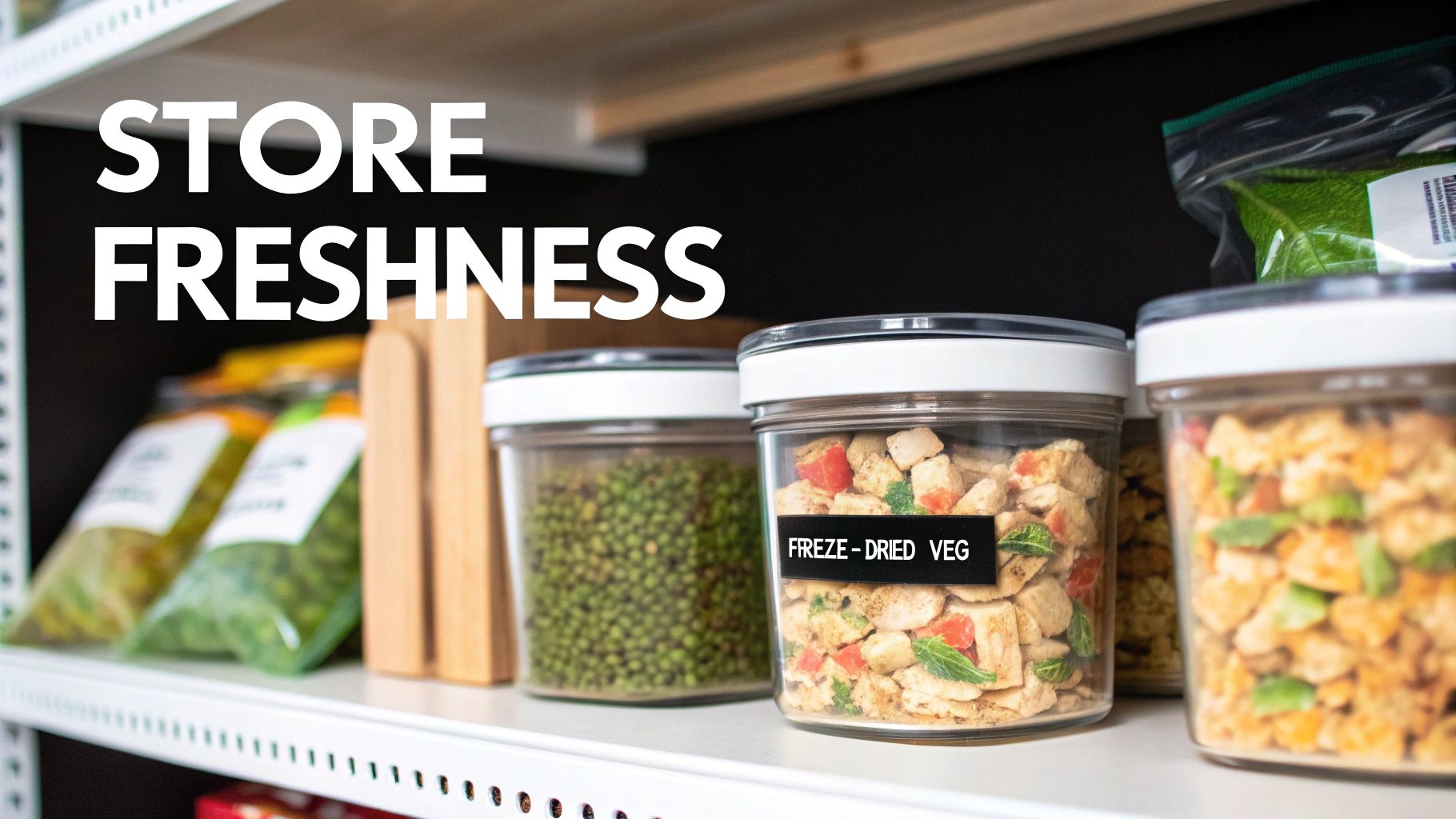
Thankfully, finding good-quality freeze-dried veg in Australia is getting much easier. But with more choice comes the need to be a savvy shopper. When you’re picking out a product for your bird, the golden rule is simple: always read the label.
You're looking for products that are as close to nature as possible. The best options will be single-ingredient, stating clearly that they are 100% vegetable with nothing else added. An ingredient list that says "Freeze-Dried Corn" is exactly what you want to see. Steer clear of anything with added salt, sugar, sulphites, or preservatives, as these can be a real problem for a bird's sensitive system. Choosing Australian-sourced or packed products is also a great way to support local businesses and often means you're getting fresher stock.
Keeping the Crunch The Right Way
Proper storage is what makes or breaks your freeze-dried veg experience. That signature crunch and all the goodness locked inside are incredibly vulnerable to one thing: moisture. The moment you open a packet, the veggies start absorbing humidity from the air, and it doesn't take long for them to turn soft and unappealing.
To keep them perfect, just follow these simple steps:
- Transfer Immediately: Don't leave them in the original bag. As soon as you open it, tip the contents into a completely dry, airtight container. Glass jars with tight-fitting lids or quality BPA-free plastic containers are perfect for the job.
- Find a Cool, Dark Place: Your pantry or a cupboard is ideal. Keep the container away from direct sunlight and heat sources like the oven or stove, as big temperature swings can create condensation inside.
- Label Everything: It’s a small step that makes a huge difference. Slap a label on the container with the type of veggie and the date you opened it. This way, you can keep track of what you have and use up the oldest stock first.
Expert Tip: If you live in a particularly humid part of Australia, think about popping a food-safe desiccant or silica gel packet into the bottom of your container. Just make sure it's tucked underneath the veg where your bird can't get to it. This will soak up any sneaky moisture that gets in.
Taking these simple storage steps seriously means your investment in quality freeze-dried veg will last, keeping every piece as crunchy and nutritious as the day you bought it. And remember, these principles of careful sourcing and storage don't just apply to veggies. If you're curious about other long-lasting treats, you can learn more in our guide to freeze-dried fruits for birds.
Common Questions About Freeze-Dried Veg for Birds
Working out the details of your bird's diet can bring up a lot of questions. Let's tackle some of the most common ones Australian bird owners have about using freeze-dried veg, so you can feel confident you're doing the right thing for your flock.
Can My Bird Eat Any Type of Freeze-Dried Veg?
Definitely not, and it’s really important to know the difference. You need to stick to vegetables that are already known to be safe for birds. Think single-ingredient corn, peas, carrots, capsicum, and broccoli—these are all great choices.
The big rule is to always avoid anything toxic to parrots, no matter what form it's in. That means things like onion, garlic, avocado, and rhubarb are completely off the table. Always check the label to make sure you're getting 100% pure vegetable with no added salt, sugar, or sneaky preservatives.
How Much Freeze-Dried Veg Can I Give My Bird?
Think of these as a healthy supplement or a high-value treat, not a main meal. A balanced diet is all about moderation, and freeze-dried veg is no exception.
Here’s a simple guideline to get you started:
- Small Birds (Budgies, Cockatiels): Just a few little pieces, like 2-3 peas or corn kernels, is more than enough for a daily treat.
- Medium to Large Birds (Galahs, Macaws): A small pinch, up to about one level teaspoon per day, is a good amount.
Expert Advice: As a rule of thumb, freeze-dried goodies should make up no more than 5-10% of your bird's total daily food intake. But every bird is different, so for advice that’s specific to your feathered friend, it’s always best to chat with your avian vet.
Do I Have to Rehydrate Them Before Serving?
This one is completely up to you and, more importantly, your bird! Some parrots have a strong preference for one over the other, so don't be afraid to experiment.
Serving them dry offers that fantastic crunch, which is brilliant for mental stimulation inside a foraging toy like our Coconut Piñata Shredder. On the other hand, rehydrating them in a little water for a few minutes creates a soft, tender texture. This can be perfect for older birds, those with beak issues, or for mixing into their fresh chop. See what your bird enjoys most!
At Lou Lou Bells Bird Toys, we believe enrichment is the key to a happy and healthy bird. Our range of shreddable, natural, and foraging toys is designed right here in South Australia to keep your companion engaged and stimulated.
Explore our full collection of bird enrichment toys
Keep Reading
- What Are Foraging Toys for Birds
- What Food Can I Give My Parrot
- A Guide to Freeze-Dried Fruits for Birds
Disclaimer Summary:
The information in this article is general in nature and may include external links or resources not created by Lou Lou Bells Bird Toys. Every bird is unique, so we encourage you to seek personalised advice from your own veterinarian or avian specialist. For full details, please read our complete disclaimer here.