
If you’ve ever had to toss out fresh fruit that’s gone off in the Aussie heat before your bird even had a nibble, you’re definitely not alone. It’s a common frustration. The answer might just be freeze-dried fruits—a super convenient, long-lasting, and surprisingly nutrient-rich alternative. They give you all the nutritional perks of fresh fruit but with a shelf life that actually makes sense.
Why Aussie Bird Owners are Turning to Freeze-Dried Fruits
For anyone with a busy schedule, keeping up a varied and healthy diet for their bird can feel like a constant juggling act. Fresh produce is fantastic, but it goes off so quickly, leading to wasted food and extra trips to the shops. This is where freeze-dried fruits step in as a brilliant, hassle-free option that supports your bird's health.
The magic behind it is a clever process called sublimation. Imagine the frost on your lawn vanishing on a cold, sunny morning without ever melting into water—it’s a bit like that. The fruit is frozen solid, then put into a special vacuum where the ice turns straight into vapour. This gently removes the water while leaving the fruit's shape and goodness almost perfectly intact.
The Benefits Are Obvious
This gentle technique locks in nearly all of the fruit's original quality. Unlike old-school drying methods that rely on heat, freeze-drying is fantastic at preserving:
- Nutrients and Vitamins: It keeps a very high percentage of the fruit's original nutritional value, so your bird is getting a genuinely healthy boost.
- Natural Colour and Flavour: The vibrant colours and delicious tastes that birds are drawn to stay put, making these treats incredibly appealing.
- A Light, Crunchy Texture: This creates an exciting new texture that many birds absolutely love, and it’s perfect for adding some variety to their day.
This makes freeze-dried fruits a far better choice than many other preserved snacks, which can be loaded with added sugars or artificial preservatives like sulphur dioxide—all things that are harmful to birds. A well-rounded diet is key, and you can learn more about what goes into a great food plan for parrots in our detailed guide.
Expert Advice: Freeze-drying essentially presses pause on the fruit, capturing its flavour and nutrition right at its peak. It gives you the goodness of fresh fruit without the pressure to use it up before it spoils.
This shift towards high-quality, convenient food isn't just a trend in our homes. Across the wider Asia-Pacific region, including right here in Australia, the demand for these products is booming. Market research shows some serious growth, which is great news for Aussie bird owners as it means better availability and more competitive prices. Freeze-dried fruits are simply a smart, easy way to enrich your bird's life with healthy, delicious treats they’ll love.
A Nutritional Showdown: Freeze-Dried vs Fresh vs Dehydrated
Walking down the pet aisle or even your own kitchen, the choices for bird treats can feel a bit much. You've got the fruit bowl on the counter, bags of chewy dried fruit, and now this freeze-dried stuff. Each one offers something different, so let's break down what separates fresh, dehydrated, and freeze-dried fruits to help you pick the best for your feathered mate.
Fresh fruit is, without a doubt, the gold standard for pure nutrition. It’s bursting with natural vitamins, minerals, and of course, water—which is brilliant for keeping your bird hydrated, especially during a scorching Aussie summer. The biggest catch? It goes off. Fast. That short shelf life often means waste if your bird doesn't eat it right away.
Then there's dehydrated fruit, the kind most of us are familiar with. This method uses low heat over a long time to slowly draw the water out. While it makes the fruit last for ages, that heat can destroy some of the more delicate vitamins, like Vitamin C. Even more importantly for our birds, the fruit shrinks down, which concentrates all the sugar into a small, dense, chewy morsel. It’s easy to accidentally overdo it on the sugar front.
This is where freeze-dried fruits really shine. The process removes water while the fruit is frozen, which cleverly locks in nearly 97% of the original nutrients. You get the nutritional punch of fresh fruit but with the stay-fresh convenience of a pantry snack. It’s the best of both worlds.
Comparing Fruit Preservation Methods For Your Bird's Diet
To make the choice clearer, this table puts the three options side-by-side. It’s a quick way to compare the key features and decide what fits best for your bird's health and enrichment needs.
| Attribute | Fresh Fruits | Dehydrated Fruits | Freeze Dried Fruits |
|---|---|---|---|
| Nutrient Retention | Highest, but degrades quickly after picking. | Lower, as heat destroys some vitamins (e.g., Vitamin C). | Excellent, retaining up to 97% of original nutrients. |
| Sugar Concentration | Natural, balanced with fibre and water. | Very high and concentrated due to water removal. | Natural sugar levels, but without the water weight. |
| Moisture Content | High, great for hydration. | Very low, offers no hydration benefit. | Very low, but can be rehydrated to add moisture back. |
| Shelf Life | Very short, days at most. | Very long, can last for months or even years. | Extremely long, often lasting for years if stored properly. |
| Texture & Enrichment | Soft and juicy, offers a natural texture. | Chewy and dense, can be tough for small beaks. | Light, crunchy, and airy. Great for foraging and texture. |
| Convenience | Requires washing, chopping, and quick serving. | Ready to serve, but requires strict portion control. | Ready to serve, lightweight, and easy to store. No mess. |
Each method has its place, but as you can see, freeze-dried offers a fantastic balance of nutrition and convenience without the high sugar risk of dehydrated options.
A Closer Look at What Matters
When you get down to it, the biggest differences come down to three things: moisture, nutrients, and sugar.
Let’s put it this way. If a fresh strawberry is a glass of flavoured water full of vitamins, a dehydrated one is like a thick, sugary syrup. A freeze-dried strawberry, however, is like the concentrated powder of flavour and nutrients—all the good stuff, just without the water.
- Moisture Content: Fresh fruit is tops for hydration, but you can always rehydrate freeze-dried fruit for a similar effect. Dehydrated fruit, on the other hand, is pretty useless for adding moisture to your bird's diet.
- Nutrient Retention: Freeze-drying is the hands-down winner here. It keeps most of the vitamins and antioxidants that get cooked away during the dehydration process.
- Sugar Concentration: This is a big one for bird health. Because dehydrated fruits are so shrunken and dense, it's incredibly easy to give your bird too much sugar. Freeze-dried fruits are light and puffy, making portion control a breeze while still delivering that sweet flavour birds go nuts for.
Expert Advice: From an avian nutritionist's point of view, it's pretty clear. While fresh is always a great choice, freeze-dried fruits are an exceptional alternative. They hold onto their nutritional goodness without the spoilage of fresh fruit or the intense sugar hit of traditionally dried ones. For a convenient, healthy treat, they’re a top-tier choice.
Making an Informed Choice
Knowing the difference helps you build a more interesting and balanced diet for your bird. You don't have to stick to just one; they each have their moments. Fresh fruit is perfect when it’s in season and you can serve it right away. Dehydrated fruits? Use them very sparingly, if at all, because of that sugar density.
Freeze-dried fruits fill the gap beautifully. They’re fantastic for sprinkling over your bird's daily chop, stuffing into foraging toys, or just offering as a special treat by hand. That satisfying crunch and vibrant flavour encourage natural foraging instincts, making them a treat that's both nutritious and enriching.
This chart shows just how popular freeze-dried products are becoming, with big market growth reflecting how many health-conscious people are catching on.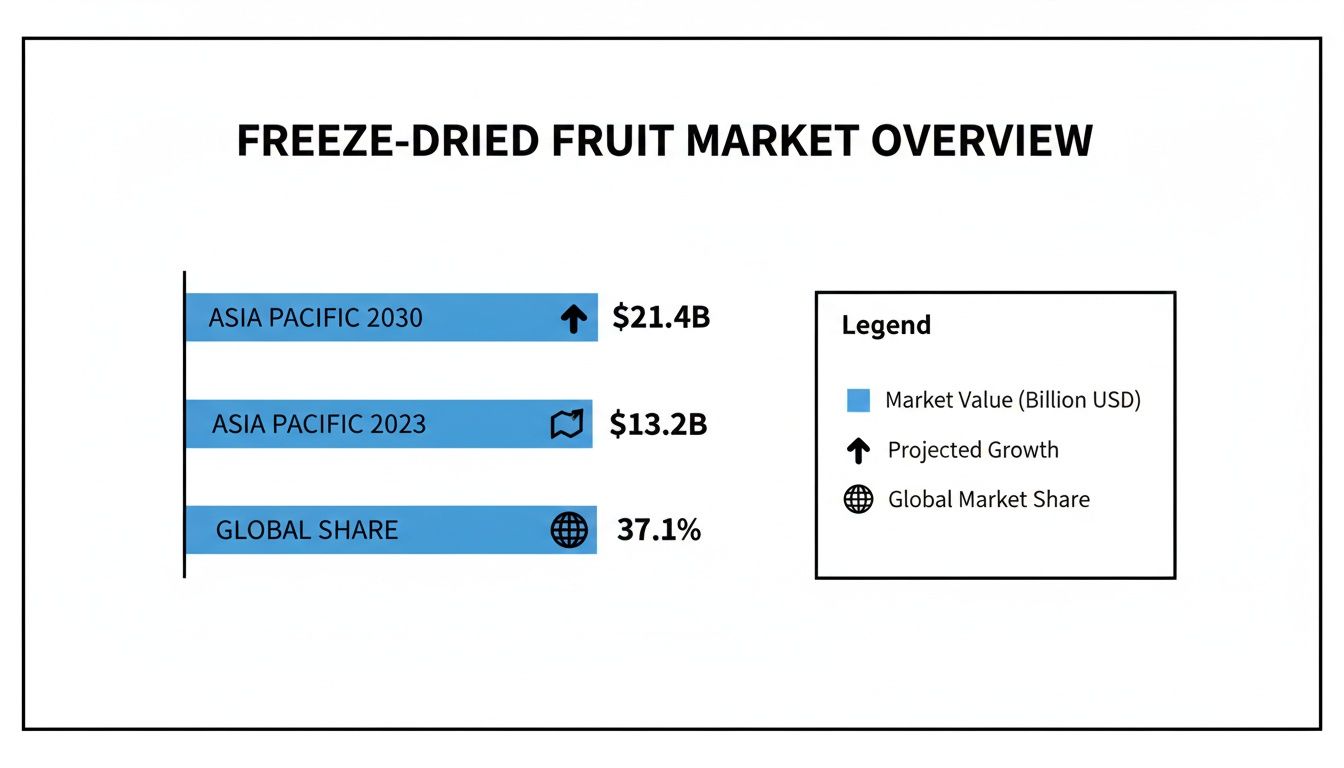
For bird owners in Australia, the strong growth in our region means these healthy, convenient options are only getting more accessible and affordable.
At the end of the day, variety is what matters most. You wouldn’t feed your bird a diet of only seeds, and the same goes for fruit. While seed mixes are common, it's worth understanding their place in a balanced diet, which you can read more about in our guide on the pros and cons of millet for birds. By mixing things up with fresh and freeze-dried options, you give your bird a wonderful range of tastes, textures, and nutrients to keep them healthy, happy, and engaged.
A Bird Safety Checklist For Serving Fruits
Bringing new foods into your bird's life is one of the most exciting parts of enrichment, but their safety has to come first. In the avian world, not all fruits are created equal; some are fantastic nutritional powerhouses, while others can be downright dangerous. Think of this checklist as your go-to guide for navigating freeze dried fruits safely, making sure every crunchy bite is a healthy one.
Before you offer any new treat, always follow the golden rule: start slow and use tiny amounts. Keep an eye out for any changes in your bird’s droppings or behaviour. And, as always, a quick chat with your trusted avian vet here in Australia is the best way to get advice tailored specifically for your feathered friend.
Safe Freeze Dried Fruits For Your Bird
Plenty of fruits offer a wonderful boost of vitamins and antioxidants. When they’re served in moderation as part of a balanced diet, these freeze-dried options are excellent choices:
- Berries (Strawberries, Blueberries, Raspberries): These are absolutely packed with antioxidants, which are brilliant for supporting your bird’s immune system. Their vibrant colours also tend to be a big hit, encouraging even the most cautious birds to try something new.
- Mango and Papaya: These tropical favourites are rich in Vitamin A, an essential nutrient for healthy feathers, sharp eyesight, and proper immune function.
- Apple (flesh only): A great source of fibre and Vitamin C. It is absolutely crucial to make sure there are no seeds, as they are toxic.
- Banana: A good source of potassium and Vitamin B6, which supports nerve function. Its natural sweetness makes it a winner with most birds.
- Peaches and Apricots (flesh only): These offer beta-carotene and fibre, but just like apples, their pits must be completely removed.
Grapes are another fruit that birds often enjoy, but it’s important to know the right way to serve them. You can find out more by reading our article Can Birds Eat Grapes?.
Fruits You Must Absolutely Avoid
This list is non-negotiable. These fruits and plant parts contain toxins that can cause serious illness or even prove fatal to birds, whether they are fresh or freeze-dried.
- Avocado: This is at the very top of the danger list. Every part of the avocado plant contains a fungicidal toxin called persin, which can lead to respiratory distress, heart damage, and death in birds, often very quickly.
- Rhubarb: The leaves of the rhubarb plant are highly toxic, containing oxalic acid crystals. These can cause severe kidney damage and are poisonous to birds.
- Fruit Seeds and Pits: The seeds or pits from apples, cherries, peaches, apricots, and pears all contain cyanide compounds. While a single seed might not be fatal to a large parrot, it's a risk that is never worth taking, especially for smaller birds.
Expert Advice: The rule of thumb is simple—if you have any doubt at all about a fruit's safety, don't serve it. It is always better to err on the side of caution and stick to the list of known safe options.
How To Read Product Labels
When you're buying commercial freeze-dried fruit mixes, whether from a pet supply shop or your local Aussie supermarket, you need to become a bit of a label detective. Not all products are pure, and hidden additives can be harmful.
Here’s a quick checklist to run through before you buy:
- Check the Ingredients List: The only ingredient should be the fruit itself. Look for straightforward wording like "100% Mango" or "Ingredients: Strawberries."
- Scan for Added Sugars: Avoid anything with added sugar, corn syrup, fructose, or fruit juice concentrate. Birds get all the natural sugar they need from the fruit itself; they don’t need any extra.
- Look for Preservatives: Steer clear of products containing sulphur dioxide (preservative 220), sulphites, or other artificial preservatives. These are commonly used in dehydrated fruits but can sometimes pop up in lower-quality freeze-dried products.
- Confirm No Artificial Additives: Make sure there are no artificial colours, flavours, or sweeteners on the list. Your bird is drawn to the fruit's natural vibrancy and taste, not fake extras!
By sticking to this safety checklist, you can confidently add the exciting textures and flavours of freeze-dried fruits to your bird's diet, making treat time a safe, healthy, and enriching experience.
Creative Serving Ideas For Australian Birds
Getting treats out of the food bowl is one of the best things you can do for your bird. It transforms a quick snack into a stimulating, enriching game. Freeze-dried fruits are perfect for this, letting you get creative and tap into the natural foraging behaviours that are so important for your bird’s mental health.
It’s all about making them work for their food, just like they would out in the bush.
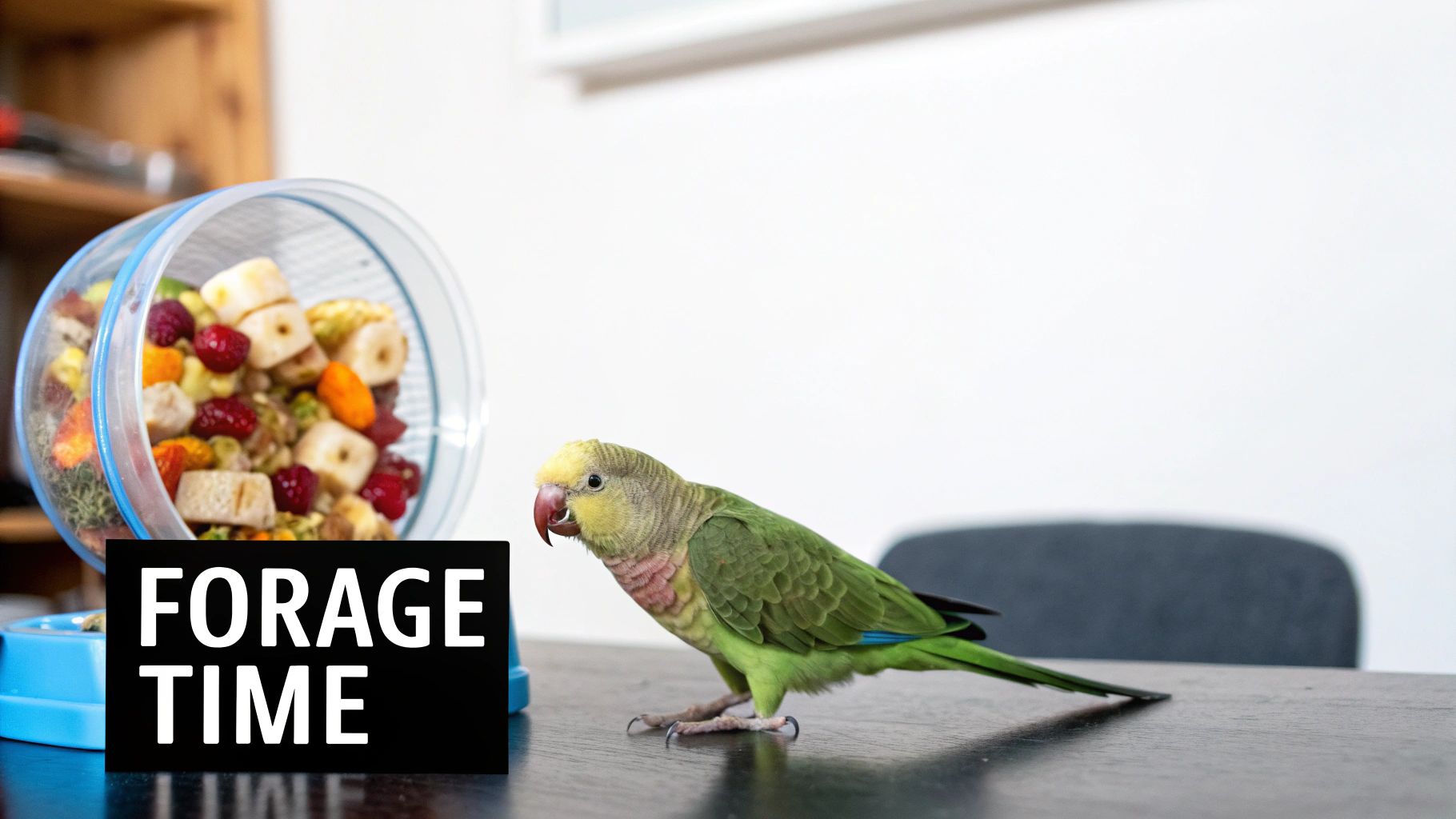
The trick is to think about portion size. A whole freeze-dried strawberry might be a great mouthful for a Galah, but it’s a massive meal for a little budgie. Always tailor the amount to your bird's size to keep their diet in balance.
Portion Guidance For Aussie Birds
A good rule of thumb is to use measures we all know. Think of it like this:
- For Small Birds (Budgies, Cockatiels, Lovebirds): A pinch of crumbled freeze-dried berries or a tiny piece of mango—no bigger than your pinky fingernail—is plenty.
- For Medium Birds (Conures, Quakers, Ringnecks): Offer a few small pieces, roughly about a quarter of a teaspoon's worth.
- For Large Birds (Galahs, Cockatoos, Macaws): A small handful, about the size of a 20-cent piece, is a suitable portion for a special treat.
Expert Advice: Remember, these are treats, not a meal replacement. They should only make up a tiny fraction of your bird's diet, which needs to be built on high-quality pellets, fresh veggies, and native Australian flora where you can.
Boosting Foraging and Mental Stimulation
The real fun starts when you use these treats to engage your bird's clever mind. Just dropping them in a bowl is a huge missed opportunity for enrichment.
Instead, try these simple but effective ideas:
- Sprinkle and Mix: Crumble some freeze-dried raspberries over their daily "chop" (a mix of fresh, finely chopped vegetables). The pop of colour and flavour will encourage them to dig through their healthy greens to find the prize.
- Stuff a Foraging Toy: This is where freeze-dried fruits really shine. Because they’re dry and not messy, they’re perfect for stuffing into puzzle toys, woven grass balls, or even a simple cardboard tube with the ends folded in. Your bird will have a fantastic time shredding and problem-solving to get their reward. You can learn more about the benefits of using foraging toys for birds in our dedicated guide.
- Create Foraging Trays: Grab a shallow tray and fill it with bird-safe things like shredded paper, foot toys, and clean bottle caps. Hide a few pieces of freeze-dried fruit in the mix and let your bird rummage around to find them.
Try Different Textures
Don’t forget you can completely change the texture just by adding a little water.
Rehydrating freeze-dried fruit for a few minutes turns it into a soft, juicy morsel that’s a lot like fresh fruit. This is a brilliant option for birds who prefer a softer texture or to help boost their hydration on a hot Aussie summer day. Just make sure to remove any uneaten rehydrated fruit quickly to stop bacteria from growing.
How To Choose And Store The Best Freeze Dried Fruits
Walking down the snack aisle, you're faced with a wall of options for freeze dried fruits. It can feel a bit much, but picking out the good stuff for your bird is actually pretty simple once you know the secret. Think of yourself as a detective for pure, unadulterated fruit that's as close to nature as possible.
The first clue is always on the back of the pack: the ingredients list. The best products are brilliantly simple.
Expert Advice: The gold standard is a product with just one ingredient: the fruit itself. Look for labels that proudly state "100% Strawberries" or "Ingredients: Mango." Anything more complicated should be a red flag.
This single-ingredient focus is your best defence against additives that can be harmful to your bird. Here's a quick checklist to take with you on your next shop.
Your Buyer's Checklist
- No Added Sugars: Your bird doesn’t need a sugar rush. Steer clear of products listing sugar, fructose, corn syrup, or even fruit juice concentrate. The fruit itself is sweet enough.
- No Preservatives: Keep an eye out for sulphites or sulphur dioxide (often listed as preservative 220). These are common in regular dehydrated fruits but have no place in a quality freeze-dried snack.
- No Artificial Additives: Avoid anything with artificial colours, flavours, or sweeteners. The natural vibrancy and taste of the fruit are exactly what your bird is after.
- Country of Origin: It’s worth checking where the fruit was grown and processed. Supporting Australian-grown produce is a fantastic way to ensure you're getting quality and freshness.
This growing interest in pure, healthy snacks isn't just a niche trend. Australia's freeze-dried food market is booming, with a projected value of USD 64.0 million in 2025. This growth is partly fuelled by Aussie consumers looking for sustainable, local food options and the ease of finding them online. You can read more about Australian freeze-dried market trends if you're curious.
Identifying Quality By Sight and Touch
Beyond the label, you can often judge quality just by looking at the product. Premium freeze-dried fruit should feel almost weightless and airy. It should also hold onto its natural, vibrant colour—a freeze-dried raspberry should still look like a rich red, not a dull, sad brown.
When you touch it, it should be dry and crisp, snapping or crumbling with little effort. If it feels bendy, leathery, or soft, that’s a giveaway that moisture has crept in and the quality is no longer there.
Proper Storage in Australia's Climate
Once you get your high-quality treats home, storing them properly is everything, especially with Australia's humidity. Moisture is the number one enemy of freeze-dried food. It will quickly turn that satisfying crunch into a soft, unappealing mush and can even lead to mould.
To keep your freeze dried fruits fresh and crunchy for as long as possible:
- Use an Airtight Container: This is non-negotiable. Whether it's a glass jar with a rubber seal or a good-quality plastic container, it must seal out the air completely.
- Find a Cool, Dark Place: Stash the container in a pantry or cupboard, well away from direct sunlight and heat sources like the oven or stove.
- Keep it Dry: Always make sure your hands are completely dry before you reach into the container. Even a tiny bit of moisture can spoil the whole batch.
- Consider Smaller Batches: Instead of opening and closing a large bag all the time, think about moving a week's worth into a smaller jar. This minimises how often the main supply is exposed to air and humidity.
By choosing wisely and storing carefully, you’ll make sure every piece of freeze-dried fruit you offer is a safe, crunchy, and nutritious treat for your feathered friend.
Your Questions Answered
As more and more Aussie bird owners discover how handy freeze-dried fruits are, a few questions tend to pop up. It’s only natural! Getting good, clear answers is the key to feeling confident about what you’re offering your feathered mate. So, let’s tackle some of the most common ones.
Should I Rehydrate Freeze-Dried Fruits Before Serving Them?
You can do it either way, and both have their perks!
Served dry, they offer a fantastic, satisfying crunch that many birds absolutely love. This makes them perfect for stuffing into enrichment toys, getting your bird to work for their food and tapping into those natural foraging instincts. Our range of foraging toys for birds are brilliant for this.
On the other hand, soaking them in a little water is a great trick for boosting your bird's hydration, especially during a scorching Aussie summer. It softens them up into a juicy texture that smaller or older birds might find easier to manage. If you do rehydrate, just be sure to serve it right away and clear out any leftovers within an hour or two to stop any nasties from growing.
Aren't Freeze-Dried Fruits Too High in Sugar for Birds?
That's a really sharp question, and an important one. When all the water is removed, the natural fruit sugars (fructose) become much more concentrated by weight. This is exactly why you need to be sensible with portion sizes for any fruit treat, freeze-dried included.
Expert Advice: Think of freeze-dried fruits as a special, healthy treat, not a main meal. They should make up no more than 5-10% of your bird's total daily diet.
If your bird has a health condition like avian diabetes or fatty liver disease, it’s absolutely vital to have a chat with your avian vet before introducing any sugary foods. They can give you tailored advice that suits your bird's specific dietary needs.
Can I Give Freeze-Dried Fruit to Young or Weaning Birds?
This is a really delicate stage where nutrition has to be spot on. Unweaned baby birds should only ever be fed their specialised formula from an experienced hand-rearer or breeder. Their little digestive systems just aren't ready for solid foods.
For birds that are in the process of weaning, tiny, rehydrated pieces of soft, safe fruits like mango or banana can be a gentle way to introduce new tastes and textures. However, you should always do this under the watchful eye of your avian vet or a reputable breeder. They’ll guide you on the right timing and amounts to make sure your bird’s development stays right on track during this crucial time.
At Lou Lou Bells Bird Toys, we believe enrichment is key to a happy, healthy bird. Our handcrafted and carefully selected toys are designed to stimulate your bird's mind and encourage natural behaviours. Explore our collection and find the perfect addition to your bird's playtime.
Shop the full range of bird toys at Lou Lou Bells Bird Toys
Keep Reading
Disclaimer Summary:
The information in this article is general in nature and may include external links or resources not created by Lou Lou Bells Bird Toys. Every bird is unique, so we encourage you to seek personalised advice from your own veterinarian or avian specialist. For full details, please read our complete disclaimer here.