
If you've ever offered your bird a spray of millet, you've seen the reaction. It's pure, unadulterated joy. For our feathered friends, millet is often the equivalent of us spotting our favourite comfort food—it’s an irresistible treat that grabs their attention like nothing else.
This small-seeded grass is more than just a snack; it's an experience. Especially in its spray form, it taps into a bird’s natural instincts, provides a welcome energy kick, and honestly, it’s just plain fun for them.
What Is Millet and Why Do Birds Find It So Addictive?
Think of millet as the ultimate feel-good food for your bird. For many companion birds across Australia, from the tiniest finch to the most curious budgie, the mere sight of a millet spray is enough to trigger a frenzy of excitement. So, what’s the secret behind this simple grain’s universal appeal in the bird world?
Millet isn't just a single type of seed; it's a whole family of small-seeded grasses. The varieties you'll most commonly find in Australian bird seed mixes are Proso and Foxtail millet. These tiny, delicate seeds are a perfect size for small beaks to handle and crack open, offering a quick, tasty reward. But the real magic goes beyond just taste—the texture and the format are a huge part of the attraction.
The Psychology of a Perfect Snack
The deep-seated love for millet is all tied up in a bird’s natural behaviour. In the wild, birds spend a huge chunk of their day foraging—that means searching for, handling, and finally eating their food. A spray of millet mimics this entire process perfectly.
- It Satisfies Foraging Instincts: Instead of just dipping their beak into a bowl, a bird has to work for every single tiny seed on the spray. They need to cling to the stalk, carefully pick off each grain, and then husk it. This whole sequence is incredibly stimulating, both mentally and physically.
- The Taste and Texture are Spot On: Millet has a mild, slightly sweet flavour that birds seem to adore. Those small, crunchy seeds provide a satisfying mouthfeel that keeps them coming back for more.
- It Provides a Quick Energy Boost: As a food rich in carbohydrates, millet delivers a rapid source of energy. This makes it an excellent treat, particularly for small, active birds that burn through calories at an amazing rate.
Expert Tip: "Millet taps into a bird's innate desire to work for its food. Presenting it on a spray encourages movement, problem-solving, and dexterity, turning a simple treat into a valuable enrichment activity that fights boredom."
It's Far More Than Just Food
While you'll find loose millet seed in plenty of mixes, the spray form is where the real enrichment begins. A millet spray isn't just a meal; it's a gateway to a happier, more stimulated bird. For us as owners, it's a fantastic tool for training, building trust, and keeping their minds active.
When you see your cockatiel or budgie eagerly nibbling away at a spray, they aren't just eating. They're playing, they're problem-solving, and they're fulfilling an instinct that runs deep. This humble grain is often the first step in understanding how food can be used to dramatically improve your bird’s well-being, paving the way for more complex foraging challenges with toys and puzzles.
The Real Nutritional Value of Millet
When you watch your bird go absolutely nuts for a spray of millet, it’s easy to think it must be the healthiest thing in the world. But while millet is definitely a five-star treat in the bird world, it's crucial to understand where it fits into a balanced diet. Is it a superfood or just 'bird candy'? Honestly, it's a bit of both.
Millet's main job is to provide a quick energy hit. It's loaded with carbohydrates, which is perfect for fuelling the high-speed antics of little birds like budgies and finches. It also has a decent amount of protein and is naturally low in fat, making it a far better choice than oily seeds like sunflower.
But here’s the trap many bird owners fall into: thinking millet is a complete meal. It is one of the most popular seeds in Australia, yet it's vital we get the facts straight on what these popular seeds actually provide.
A Look at What Millet Lacks
The biggest problem with millet isn't what's in it, but what's missing. A diet built around millet will create serious nutritional gaps that can cause real health problems down the line.
Here’s what your bird won't get from millet alone:
- Vitamin A: This is essential for a strong immune system, healthy eyesight, and good feather condition. A shortage can lead to nasty respiratory infections.
- Calcium: Birds need calcium for strong bones, proper muscle function, and for hens to lay healthy eggs. Seeds are notoriously low in this vital mineral.
- Essential Amino Acids: While millet does have protein, it doesn't offer the complete set of amino acids your bird needs to truly thrive.
This is exactly why millet must always be treated as a supplement, not a staple. Think of it as a fun, occasional snack within a much broader diet. For a complete guide on building that diet, check out our advice on a variety of healthy food for parrots.
Comparing Popular Millet Varieties
Not all millet is created equal, but the nutritional differences between the common types are pretty small. In Australia, you’ll mostly come across Proso, Foxtail, and sometimes Pearl millet.
Here’s a quick look at how they stack up.
Nutritional Snapshot of Common Millet Varieties
This table compares the typical protein, fat, and carbohydrate content in millet types you're likely to find in Australian bird seed mixes.
| Nutrient | Proso Millet (Approx. %) | Foxtail Millet (Approx. %) | Pearl Millet (Approx. %) |
|---|---|---|---|
| Crude Protein | 10-13% | 11-14% | 10-12% |
| Crude Fat | 2-5% | 3-6% | 4-6% |
| Carbohydrates | 65-75% | 60-70% | 65-75% |
As you can see, they’re all very similar: high in carbs, moderate in protein, and low in fat. This just reinforces that no single type of millet is a magic bullet. The real key is moderation and ensuring your bird gets a wide variety of other foods.
Expert Advice from Avian Specialists: "Think of millet like a biscuit for a child. It's a delightful treat that brings joy, but it can't replace a proper meal of vegetables, protein, and essential nutrients. A diet based only on millet is a recipe for malnutrition."
This chart breaks down why millet is such a hit with birds, and it’s not just about the taste.
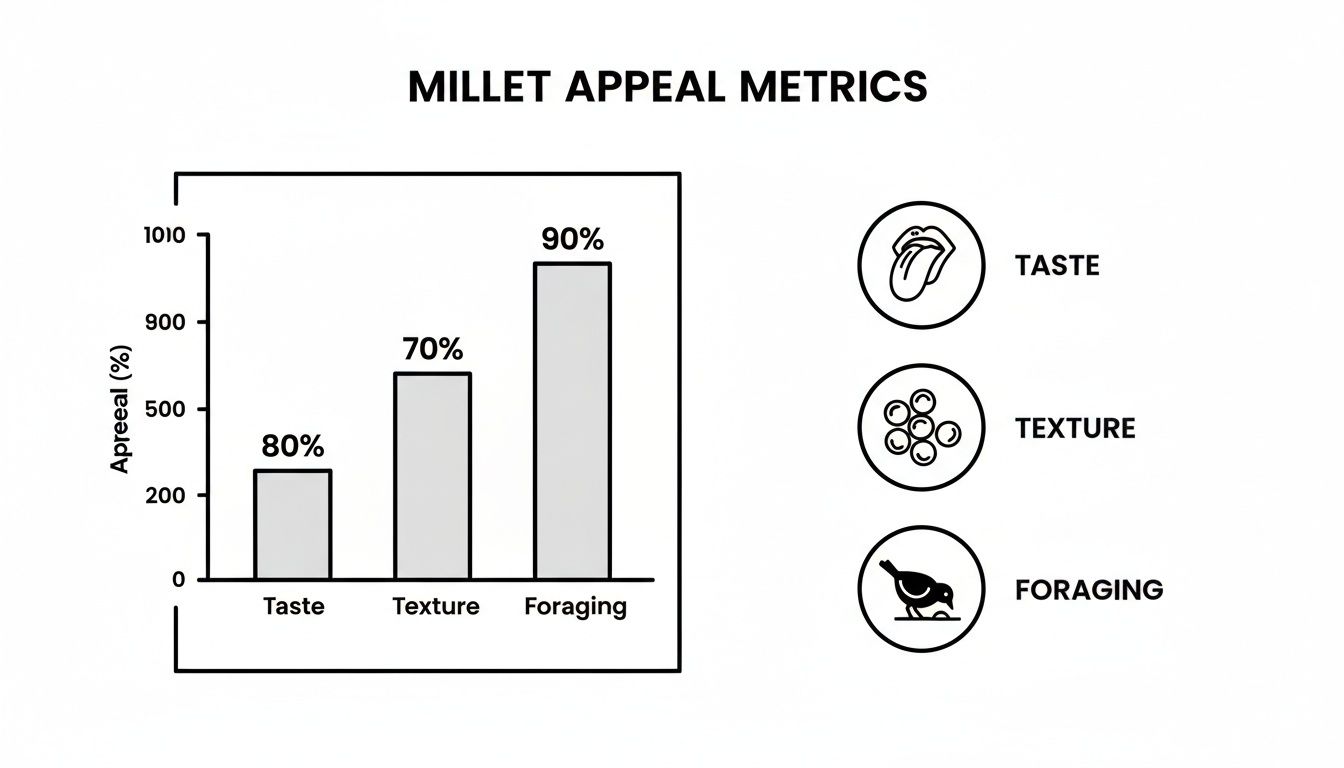
What this shows us is that the biggest drawcard is the foraging fun. The act of picking each tiny seed off the spray is deeply satisfying for a bird's natural instincts—even more so than the flavour itself.
Which Australian Birds Love Millet Most
Walk into any pet store in Australia, and you’ll see sprays of millet everywhere. It’s a classic, but not every bird goes for it in the same way. A bird's interest in millet often comes down to its size, what it would eat in the wild, and its natural foraging instincts.
For small, seed-eating birds, millet is the ultimate treat. It's perfectly sized for their little beaks and fuels their high-energy lifestyles. Think of species like budgerigars, cockatiels, finches, and lovebirds—for them, tackling a millet spray is both a delicious meal and an engaging puzzle. The tiny seeds are easy to pop out, offering instant gratification and a bit of mental work.
This behaviour is a direct throwback to their life in the wild. In the Aussie bush, these birds would spend hours picking tiny seeds from native grasses. A millet spray in their cage is a safe and accessible way to satisfy that deep-seated instinct, making it far more enriching than just eating loose seeds from a bowl.
Small Birds and Their Millet Mania
There’s no doubt that small Australian companion birds are millet’s biggest fans. The very structure of the spray makes it an ideal enrichment food, encouraging them to climb, hang, and really work for their reward.
- Budgerigars: Budgies often enter a state of pure bliss with millet. It’s a fantastic training tool and a perfect way to help a new bird feel more at home.
- Cockatiels: These clever parrots love the challenge of methodically stripping a millet spray clean. It keeps their active minds whirring and satisfies their deep need to chew and shred.
- Finches and Canaries: For these tiny birds, a millet spray is a community feast. They’ll happily cling to it in groups, nibbling away throughout the day.
For these smaller species, millet should be a regular but controlled part of their diet. It’s an excellent way to supplement their main meals of high-quality pellets and fresh veggies, not replace them.
Do Larger Parrots Eat Millet?
Millet is clearly a superstar for the little guys, but what about the big birds? Can your Galah, Eclectus, or even a Macaw get in on the action? The short answer is yes, but their relationship with millet is completely different.
For a large parrot, millet isn't a meal; it's more like a delicate, high-value snack. Because the seeds are so small, a big bird can demolish a spray in minutes. This makes it an excellent reward during training sessions. Trying to teach a "step-up" command, for instance, can be a lot easier when the prize is a few coveted bites of millet.
From an avian care perspective, using millet for large parrots is all about context. It’s a low-fat, enjoyable snack that can be strategically woven into foraging toys to encourage exploration. Tucking pieces inside a puzzle or mat makes them work harder for a small, satisfying crunch.
You can break off small pieces of a millet spray and hide them inside foraging toys to spark your larger parrot's natural curiosity. Integrating it into toys like the Stainless Steel Foraging Cage or weaving it through the Woven Foraging Wall Mat turns this simple grain into a fantastic boredom buster. You can even attach small clusters to an Activity Wall Play Gym to promote climbing and physical activity, making treat time a full-body workout.
Safe Feeding Guide and Portion Control
We all love spoiling our birds, and seeing them eagerly tuck into a spray of millet is one of the best parts of being a bird owner. But here’s where many of us make a mistake: we turn a special treat into an everyday meal, and that can cause some serious health problems down the track. The most important question you can ask is, "How much millet is too much?"
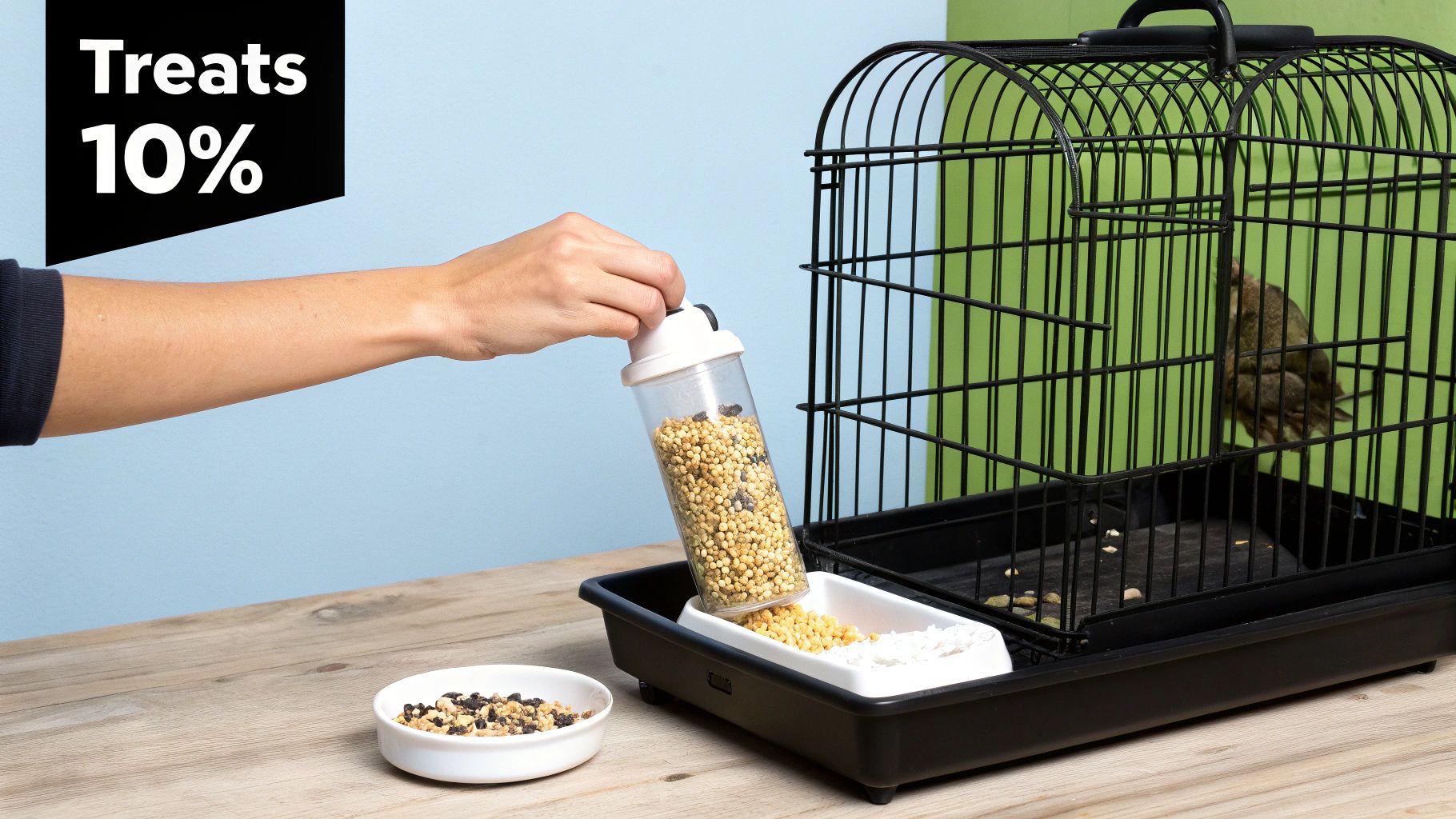
The answer is simple but so important. Treats like millet should make up no more than 10% of your bird’s total daily diet. Picture your bird's food bowl as a pie chart. The biggest slice by far should be a high-quality formulated pellet, followed by a healthy serving of fresh veggies. Millet? It’s just a tiny, delicious sliver of that pie.
For a little bird like a budgie or cockatiel, this looks like a 5-7 cm piece of a millet spray, offered just two or three times a week. For bigger parrots, millet is better kept as a high-value reward during training sessions, given in even smaller amounts.
The Dangers of Overindulgence
Millet is natural and birds love it, but overfeeding can throw their whole diet out of balance. As we’ve covered, it’s high in carbs but low on essential nutrients like Vitamin A and calcium. When a bird gorges on this "bird candy," they’re too full to eat the foods that actually nourish them.
This can lead to some pretty serious health issues:
- Nutritional Deficiencies: A millet-heavy diet can mean a weak immune system, poor feather quality, and brittle bones because your bird is missing out on vital vitamins and minerals.
- Obesity: All those carbs provide a lot of energy. If that energy isn't used, it turns into excess weight, putting a strain on your bird's heart and joints.
- Picky Eating: It’s easy for birds to become "millet addicts," turning their beaks up at healthier pellets and veggies. This is a common headache for bird owners and can be incredibly difficult to fix.
Expert Avian Advice: "A bird that is overfed treats is often malnourished. We frequently see health problems stemming from an unbalanced diet where seeds like millet dominate. The 10% rule is not just a suggestion; it's a vital part of preventative healthcare for your companion bird."
Smart and Safe Presentation Tips
How you offer millet is just as important as how much you give. Just tossing a whole spray into the cage might feel generous, but it encourages binging and creates a lot of waste. A much better way is to turn treat time into a fun and hygienic activity.
Try hanging a small piece of the millet spray from the side or top of the cage with a bird-safe clip. This makes your bird work for their food, encouraging them to climb and stretch to get to the tasty seeds. It also keeps the millet off the cage floor, so it doesn't get dirty with droppings. To keep things even tidier, you could look into options like no-mess bird feeders that help contain the seed scatter.
Understanding Quality and Health Standards
It's also worth remembering that the quality of the millet you buy matters. In Australia, there are quality standards for bird seed that cover things like biosecurity and nutritional content. Experts agree that while millet is a great energy source, a captive bird's diet needs more protein and specific micronutrients than millet alone can provide.
This is exactly why Australian avian vets overwhelmingly recommend formulated pellets as the foundation of a bird's diet, with millet used strictly as a supplementary treat.
By keeping these portion and presentation tips in mind, you can make sure millet remains a source of joy and enrichment for your bird, not something that harms their long-term health.
Using Millet as a Powerful Enrichment Tool
Millet is so much more than just a simple snack; it's one of the most effective and affordable enrichment tools you can have. By presenting it in creative ways, you can turn a passive treat into a boredom-busting activity that gets your bird's mind ticking, encourages physical activity, and taps into their deep-seated natural instincts. The real goal here is to make your bird work for their food, just like they would in the wild.
This process, called foraging, is absolutely crucial for the psychological wellbeing of companion birds. It transforms mealtime from a two-minute dip into a food bowl into an engaging puzzle that can keep them happily occupied. This mental workout is a powerful antidote to common behavioural issues like feather plucking and excessive screaming, which often pop up out of sheer boredom and stress.
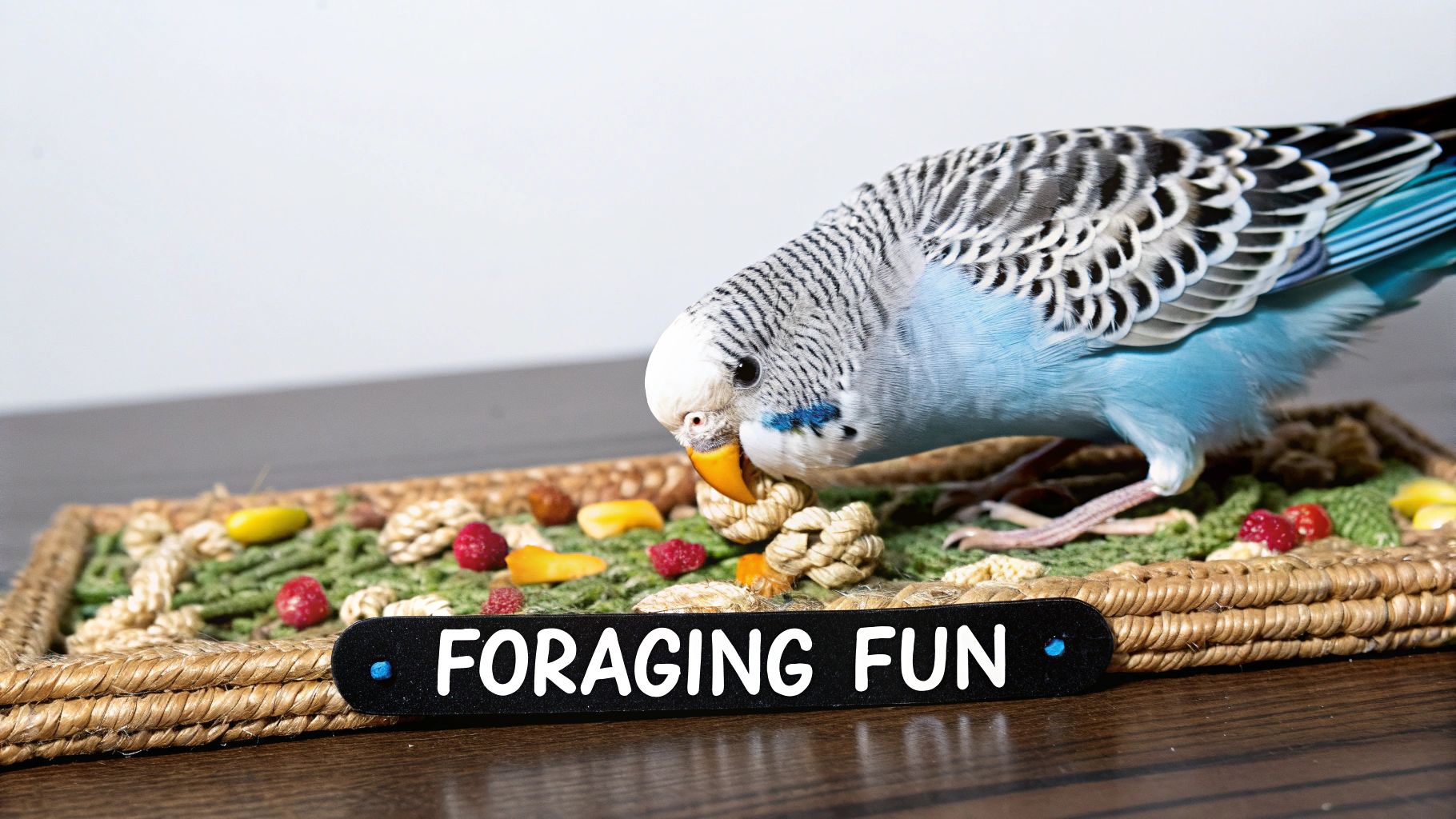
It's simple, really: a bird that's busy foraging is a happy bird. It gives them a sense of purpose and lets them perform behaviours that are hardwired into their DNA.
Creative Ways to Offer Millet
Moving beyond just clipping a spray to the cage bars opens up a whole world of enrichment. The trick is to make the millet just a little bit challenging to get to, encouraging your bird to problem-solve and use its physical skills. Because most birds already love millet, it's an easy and effective way to start your journey into enrichment.
Here are some of our favourite practical ideas to get you started:
- Weave It: Thread a millet spray through the bars of the cage. This forces your bird to climb and reach from different angles just to get a bite.
- Hang It: Use a bird-safe stainless steel skewer to hang small pieces of millet alongside chunks of veggies or wooden blocks, creating a fun, edible kebab.
- Wrap It: Bundle a small piece of millet inside some chemical-free paper or a cardboard tube and fold the ends over. Your bird will have to shred and tear through the packaging to claim their reward.
These simple tweaks immediately elevate a treat into an activity, promoting movement and keeping your bird’s mind sharp and engaged.
Integrating Millet with Foraging Toys
For even more powerful enrichment, you can start incorporating millet into dedicated foraging toys. This is where you can really see your bird’s intelligence and dexterity shine. Lou Lou Bells Bird Toys are designed specifically to encourage these natural behaviours, and millet is the perfect "starter" treat to introduce them.
Expert Insight from Avian Behaviourists: "Using a high-value treat like millet is the best way to introduce a new foraging toy. It provides a strong incentive for the bird to investigate and interact with the puzzle, building their confidence and problem-solving skills for more complex challenges later on."
Here’s how you can combine millet with specific toys for maximum impact:
- Foraging Frenzy Mat: Weave small sections of a millet spray into the fleece strips of the mat. Your bird will have to dig, pull, and explore to find every last seed, satisfying their instinct to root around for food.
- Treasure Chest Forager: Stuff small, broken pieces of millet into the drawers of this forager. It encourages your bird to manipulate the drawers with their beak and feet, providing a great mental challenge.
- Activity Wall Play Gym: Securely attach tiny bits of millet spray to different points on an activity wall. This clever placement promotes climbing, stretching, and full-body movement, turning treat time into a healthy workout.
When you use these methods, you're doing more than just feeding your bird. You are providing critical mental stimulation that reduces stress, prevents boredom, and strengthens your bond. If you're keen to dive deeper, you can learn more about the benefits in our complete guide to foraging toys for birds.
How to Choose and Store High-Quality Millet
Not all millet is created equal. Picking out fresh, high-quality sprays is one of the most important things you can do for your bird’s safety and enjoyment. The cheap, dusty stuff at the bottom of the bin can lose its nutritional value and even harbour dangerous mould or pests.
Giving your feathered friend the best starts with knowing what to look for at the shop.
When you're buying millet, trust your senses. A good spray should have plump, tightly packed seeds and a uniform golden-yellow or reddish hue, depending on the variety. Give it a sniff—it should smell fresh and slightly sweet, like hay or earth. If it smells musty, dusty, or even remotely sour, leave it on the shelf.
Steer clear of sprays that look brittle, have big gaps where seeds have fallen off, or are covered in a fine layer of dust. These are all dead giveaways of old stock that’s been sitting around for far too long.
Spotting the Best Quality Millet
Whether you're at a specialty pet shop or your local supermarket, there are a few key things to check for. Paying attention to these little details can make all the difference to your bird's health.
- Check for Pests: Always inspect the packaging carefully. You're looking for any signs of pantry moths, weevils, or their silky webbing. Contaminated seed is never safe.
- Look for Plump Seeds: The individual seeds on the spray should look full and rounded, not flat or shrivelled. This tells you the millet was harvested at its peak.
- Avoid Dust and Debris: A lot of loose dust at the bottom of the bag is a bad sign. It often means the product is old or has been handled poorly, causing the delicate seeds to break.
It's also worth knowing that while Australia grows millet, a lot of what we see in stores is sourced internationally. This makes quality control a huge priority for suppliers. If you’re curious about industry standards, you can explore the details of Australia's seed trade and biosecurity assessments.
Proper Storage in the Australian Climate
Once you get that perfect millet spray home, how you store it is crucial—especially with the heat and humidity in many parts of Australia. The goal is simple: protect it from moisture, heat, and pests.
The golden rule of seed storage is cool, dark, and dry. Heat and sunlight can break down the nutrients in the seeds, while moisture is an open invitation for harmful mould and bacteria to grow.
Never just leave millet in the thin plastic bag it came in. The best practice is to transfer it to an airtight container made of glass, metal, or a hard, food-safe plastic. This creates a solid barrier against humidity and any lingering pantry pests.
Tuck that container away in a cool, dark place like a pantry or cupboard, well away from the oven or any other appliances that generate heat. For a convenient and enriching way to offer this treat, you might also consider a purpose-built holder like the Millet Spray Bird Toy, which keeps the spray secure and off the cage floor.
By being a little picky when you buy and careful with how you store it, you can make sure every millet treat you offer is as safe and nutritious as it is delicious.
Got Questions About Feeding Millet?
Even after getting all the tips, it's totally normal to have a few more questions rattling around. To make sure you feel confident, we've answered some of the most common queries we hear from Aussie bird owners. Think of this as a quick-fire round to lock in the key points for your feathered friend's health.
Can I Give My Bird Millet Every Day?
Your bird would probably throw a party if you did, but daily millet is a definite no-go. It should always be treated as a special snack, not a main meal.
For little guys like budgies or cockatiels, a small piece of a millet spray a couple of times a week is plenty. For bigger parrots, it’s best saved as a high-value reward for training. If you offer it every day, you risk turning them into picky eaters who'll ignore their nutritious pellets and fresh veggies, which can cause serious health problems down the track.
Is Red Millet Better Than White Millet?
This is a classic question, but the truth is, nutritionally, they're practically twins. The main difference is the husk – red millet's is a bit tougher, which some birds seem to enjoy cracking into. But one isn't healthier than the other.
When it comes to choosing millet for birds, the most important thing isn't the colour; it's the quality and freshness. Offering both red and white can add a bit of variety to keep things interesting for your bird.
My Bird Only Wants to Eat Millet. What Should I Do?
Ah, the "millet addict." We hear this a lot, and it's a sure sign that it's time for a gentle diet intervention. When a bird gets fixated on millet, you need to be patient but firm to get their nutrition back on track.
Start by slowly cutting back on the millet while consistently offering healthier foods. Put their high-quality pellets and some chopped fresh veggies in the cage first thing in the morning when they're hungriest. You could even try sprinkling a tiny pinch of crushed millet over the new food to tempt them into giving it a go.
Changing a bird's diet takes time and persistence. If you're really struggling, we strongly recommend a chat with an avian vet. They can help you come up with a safe and effective plan that’s tailored to your bird's needs.
Here at Lou Lou Bells Bird Toys, we believe treats should be both fun and functional. By using millet as a smart reward and pairing it with engaging toys, you give your bird the mental and physical workout they need for a happy, healthy life. Check out our full range of enrichment toys at louloubellsbirdtoys.com.au.
Keep Reading
- Foraging Toys for Birds
- A Guide to Healthy Food for Parrots
- The Ultimate Guide to No-Mess Bird Feeders
Disclaimer Summary:
The information in this article is general in nature and may include external links or resources not created by Lou Lou Bells Bird Toys. Every bird is unique, so we encourage you to seek personalised advice from your own veterinarian or avian specialist. For full details, please read our complete disclaimer here.