
Anyone who loves having birds visit their garden knows the joy of seeing them up close. But let's be honest—the constant mess from scattered seeds and husks can turn that joy into a real chore. This is where no mess bird feeders come in. Think of it as the difference between a messy, all-you-can-eat buffet and a tidy, well-run restaurant for your local birdlife.
Enjoy Birds Without the Backyard Mess
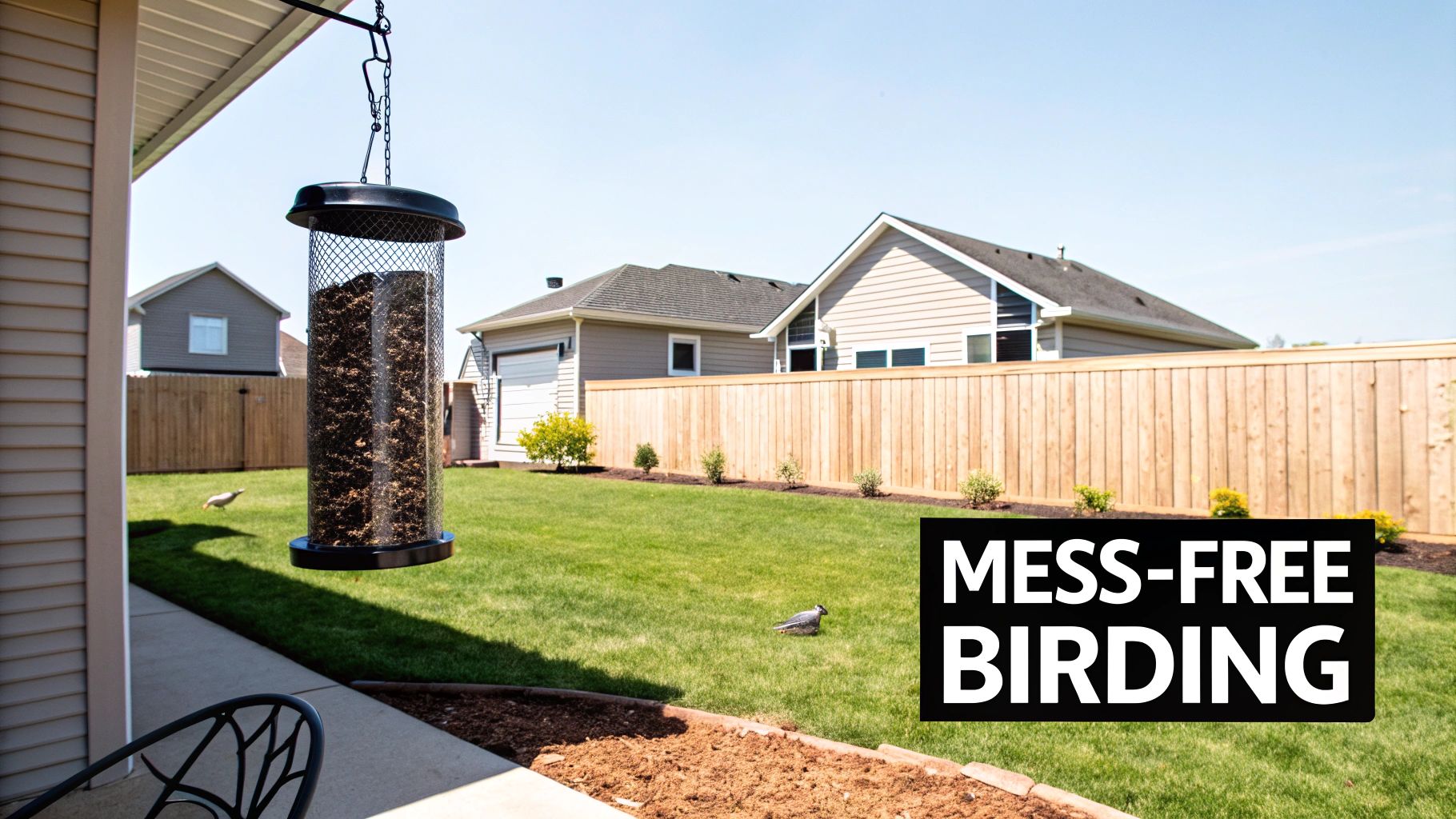
For so many of us here in Australia, watching a vibrant rosella or a cheeky kookaburra drop by is a highlight of the day. The problem is, traditional feeders often make this simple pleasure a frustrating cycle of sweeping and cleaning.
Seed husks pile up on patios, balconies, and lawns, looking untidy and frankly, a bit grim. Even worse, all that spilt seed can attract unwanted guests like rodents, and it often sprouts into stubborn weeds right in the middle of your garden beds. It’s a common headache that can really take the shine off your birdwatching hobby.
The Smart Solution for Tidy Feeding
This is where no mess bird feeders really prove their worth. These designs have been specifically created to tackle the common frustrations of feeding birds by keeping the food—and the waste—contained.
This simple shift in design brings a few key benefits for both you and the birds:
- A Cleaner Space: By catching dropped seeds and empty hulls, they keep your outdoor areas looking neat and tidy, which means far less cleaning work for you.
- Less Wasted Seed: When seed stays in the feeder instead of ending up on the ground, you save money and make sure more food goes to the birds you actually want to attract.
- Better Hygiene: Minimising spilt, rotting seed creates a healthier feeding station and reduces the risk of spreading disease among your feathered visitors.
As a bird lover myself, I've seen firsthand how switching to a no-mess feeder can completely change the game. It lets you shift your focus from constant maintenance back to what really matters—simply enjoying the beautiful birdlife in your own backyard.
The popularity of these feeders is definitely on the rise across Australia. In fact, demand has grown so much that low-spill designs now account for around 35% of all feeder sales, a big jump from just 22% a few years back. It’s a clear sign that people are looking for more practical and thoughtful solutions. You can find out more about this shift in the Australian bird care market.
How No Mess Feeders Actually Work
So, what’s the secret behind a feeder that promises ‘no mess’? It’s not magic, just clever design. These feeders are built with a bird’s messy eating habits in mind, creating barriers to contain the chaos that comes with feeding time. Think of it less like an open buffet where seeds can fly everywhere and more like a tidy, self-contained vending machine made just for birds.
The main idea behind most no-mess bird feeders is simple: containment. They use a few key features that work together to keep seeds, husks, and other bits and pieces off your deck, balcony, or the bottom of the cage.
The Engineering of Tidy Feeding
One of the most common features you’ll see is a built-in seed-catching tray. This simple addition is like a safety net, catching any seeds a bird might flick aside while digging for its favourite piece. Instead of falling to the ground where they can attract pests or sprout into weeds, the dropped seeds land right in the tray, ready to be eaten later. This one feature alone makes a huge difference in cutting down ground waste.
Another popular design element is a protective cover or hood. These covers are great because they do a few jobs at once:
- They shield the seed from rain, keeping it fresh and dry.
- They help contain the empty husks that birds toss aside as they eat.
- They can stop larger, more boisterous birds from splashing seed everywhere.
Some feeders also have smaller feeding ports. These openings are just big enough for a bird to get its beak in to eat, but too small for them to pull out and drop big mouthfuls of seed. It encourages them to eat more deliberately instead of just flinging food around.
Expert Advice: The best no-mess feeders usually combine a few of these features. A feeder with a deep seed tray, a weather guard, and smaller ports will always do a better job than one that only has a single anti-mess feature.
Key Benefits for Australian Homes
The advantages of keeping this mess contained go way beyond just looking tidy. Here in Australia, spilt seed is a major drawcard for unwanted visitors like rodents and pigeons, which can create health hazards and become a real nuisance. By keeping the food off the ground, a no mess bird feeder makes your property far less attractive to these pests.
On top of that, it’s much more hygienic for the birds themselves. A pile of damp, discarded seed on the ground can quickly grow mould and bacteria, becoming a source of illness for your feathered friends. A contained feeder keeps the feeding area cleaner and safer. This is just as important for your beloved pet budgie inside as it is for the wild lorikeets in your garden. For pet birds, combining a clean feeding station with engaging bird toys is a brilliant way to improve their overall wellbeing and stop boredom from setting in.
Finding the Right No Mess Feeder Design
Picking out the right no-mess bird feeder isn’t a one-size-fits-all deal. The perfect design really hinges on where you're setting it up—a big backyard is very different from a small balcony or an indoor aviary. And, of course, it depends entirely on which feathered locals you’re hoping to host, from the tiniest finches to our famously boisterous parrots.
Let's walk through some of the most popular designs you’ll find here in Australia. Each has its own way of tackling the mess, making them better suited for different birds and spaces.
Enclosed Hopper Feeders with Trays
Picture the classic hopper feeder—a central container that lets seed flow down into a feeding area. The no-mess version takes this idea and seriously upgrades it with a deep, wide seed-catching tray at the base and, often, a protective roof. This combination is brilliant for containing the enthusiastic flicking and flinging that birds like finches, sparrows, and rosellas are known for.
- Best For: Gardens and patios where you’re looking to attract a whole variety of small to medium-sized birds.
- Pros: The tray does a fantastic job of catching most of the mess, while the roof helps keep the seed nice and dry. They're also a breeze to fill and you can see seed levels at a glance.
- Cons: Really large birds, like cockatoos or galahs, might still find a way to make a mess or could even be a bit rough on the feeder itself.
This decision tree can help you visualise whether a no-mess feeder is the answer to your current setup.
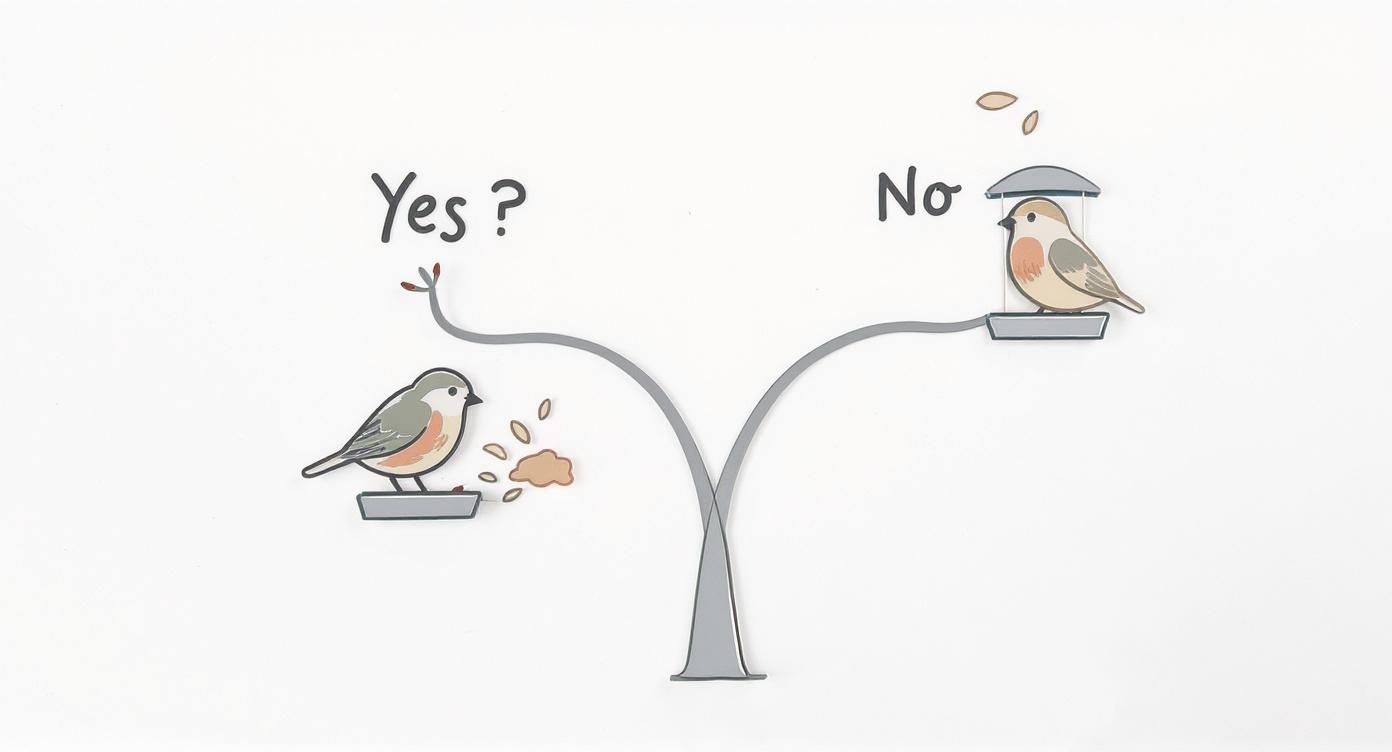
The takeaway is pretty straightforward: if seed spilling all over the ground is your problem, then upgrading to a purpose-built no-mess bird feeder is your most effective solution.
Smart Gravity-Fed Systems
These clever feeders are an absolute game-changer, particularly for indoor aviaries or cages. They work on a simple gravity system: seed is stored in a reservoir and flows down to a small feeding port as your bird eats. The bird has to pop its head into the port to get to the food, which makes it nearly impossible for them to scatter seeds everywhere.
Expert Advice: Gravity-fed systems are fantastic for pet birds. They not only keep the cage immaculately clean but also ensure a constant supply of fresh food, cutting down on your daily top-up chores.
These are absolutely ideal for small parrots like budgies, cockatiels, and lovebirds. Because the seed is completely enclosed, it stays fresher for longer and is protected from any contamination. For anyone wanting a clean and efficient feeding station, these are a top choice among the essential parrot supplies in Australia.
Specialised Hull-less Seed Feeders
Sometimes, the best way to stop mess is to use food that doesn't create any waste to begin with. Specialised feeders, often with mesh sides or smaller feeding ports, are designed specifically for hull-less seeds like sunflower hearts or Nyjer seed. Australian birds like finches and siskins absolutely adore these tiny seeds.
Since the birds eat the entire seed, there are no empty husks left to be tossed aside. When you pair this type of food with a feeder designed to minimise spillage, you get a feeding station that is about as close to zero-mess as you can possibly get. It’s an approach that tackles the problem right at the source, ensuring a tidy area from the get-go.
Matching Your Feeder to Your Feathered Friends
Choosing the right no-mess bird feeder isn’t just about picking a neat design—it’s about knowing who you’re inviting over for a meal. The perfect feeder for a tiny finch is a world away from one that can withstand a boisterous galah. Getting this match right is the real secret to a tidy, popular feeding station.
For the larger, more powerful Aussie parrots like galahs and rosellas, you need something built to last. These birds have incredibly strong beaks and can make short work of flimsy plastic feeders. Your best bet is to look for heavy-duty metal or thick, reinforced acrylic models with wider perches that can comfortably take their weight. They’re also clever birds, so a simple feeder might just get pulled apart for fun. Durability is everything.
Sizing It Right for Your Space
The environment where you hang the feeder is just as important as the birds you want to attract. A huge hopper feeder that looks great in a sprawling backyard would be completely impractical—and a bit of an eyesore—on a small apartment balcony.
For pet bird owners, the decision is even more specific. An in-cage no mess bird feeder has to be compact but still do its job properly. Gravity-fed systems are a fantastic choice here. They mount securely to the cage bars and do an excellent job of keeping both husks and dropped seeds contained. This doesn't just keep the cage floor clean; it protects your home from scattered mess, too.
Expert Advice: When picking an in-cage feeder, always measure the gap between your cage bars and check it against the feeder's dimensions. You’re after a snug, secure fit that your bird can’t wiggle loose. This ensures it stays a clean and, most importantly, safe feeding spot.
Prime Real Estate for Feeders
Where you place your feeder can be the difference between it becoming a bustling hotspot or an empty eatery. A little bit of strategic thinking goes a long way in attracting birds while also keeping them safe.
Follow these simple tips for the best placement:
- Safety from Predators: Position your feeder at least three metres away from dense bushes, fences, or anything else a neighbourhood cat could use as an ambush spot.
- Preventing Window Collisions: Window strikes are a real and serious danger for birds. Place feeders either very close (less than one metre) to a window, so birds can’t build up enough speed to get hurt, or more than 10 metres away, which helps them see the glass as a solid barrier.
- Offer a Quick Escape: Try to hang the feeder near a natural perch, like a tree or a large shrub. This gives birds a safe place to land and check things out before they eat, and a quick spot to bolt to if they feel threatened.
Getting into the mind of a bird is key to creating a space they’ll love. To learn more about what makes them tick, you can explore our detailed guide on what birds love the most, which is packed with insights into their preferences. By thinking like a bird, you can turn your feeder into the most popular dining destination on the block.
Keeping Your Feeder Clean and Hygienic
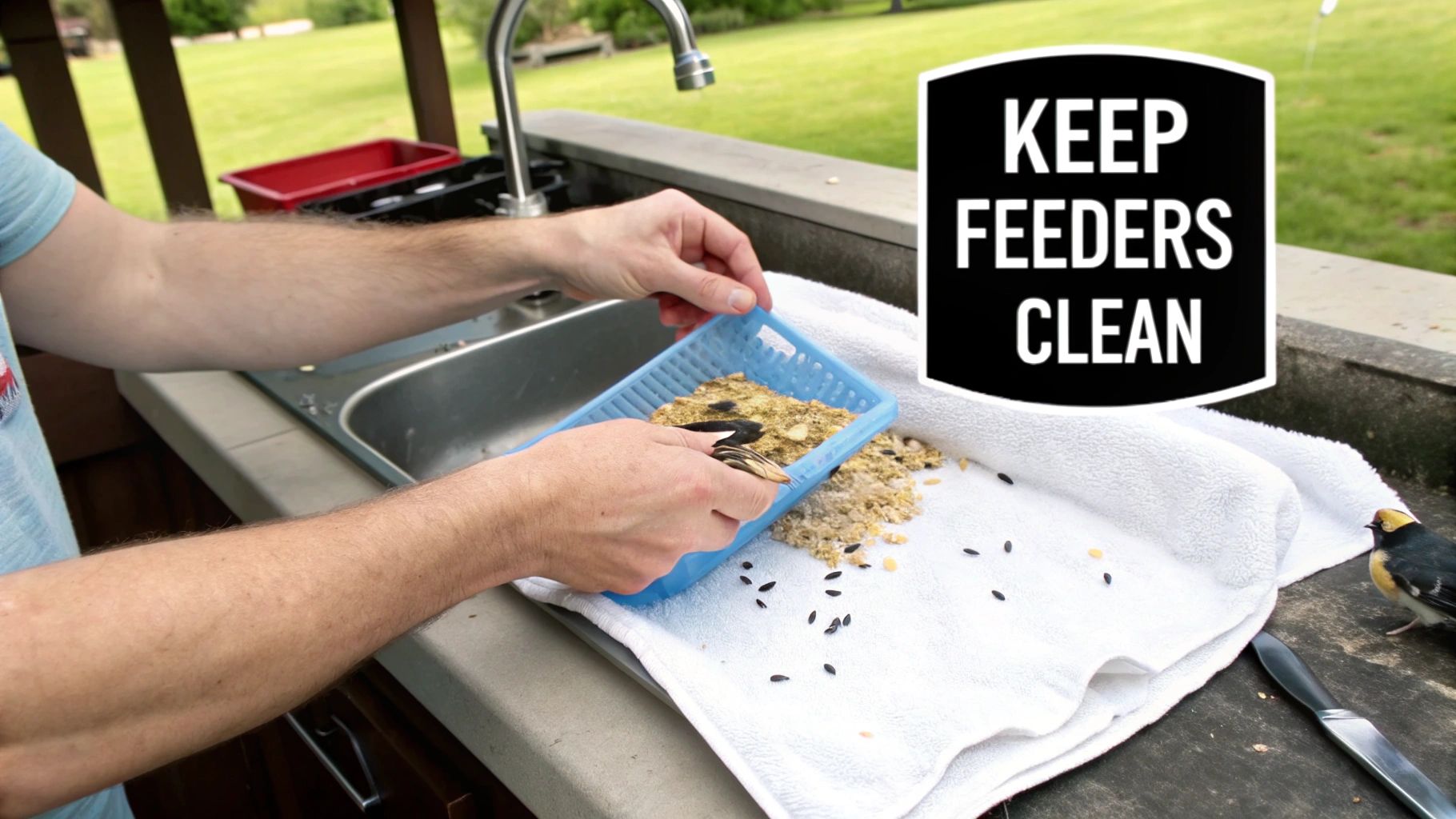
While no-mess feeders are designed to keep things tidy, it's easy to fall into the trap of thinking they're 'no-maintenance' too. They aren't. A clean feeder is non-negotiable for the health of your birds, as a dirty one can quickly become a breeding ground for nasty bacteria and mould.
Think of it like a restaurant kitchen; it needs a regular, thorough clean to keep its patrons safe and healthy. This simple routine is your best defence against spreading common avian diseases, whether among your local wild birds or within your own aviary.
A Simple Cleaning Routine
Keeping your feeder safe and sparkling is a pretty straightforward job. For a proper deep clean, you'll want to take it apart completely—most good no-mess designs are made to come apart easily for exactly this reason.
Once it's in pieces, just follow these simple steps:
- Scrub Everything: Grab a stiff brush and give all the components a good scrub with hot, soapy water. Really get into the corners, feeding ports, and any little crevices where old seed gunk might be hiding.
- Disinfect Safely: Soak all the parts for at least 10 minutes in a bird-safe disinfectant. You don't need anything fancy; a simple mix of one part white vinegar to nine parts water does the trick perfectly.
- Rinse Thoroughly: After soaking, give every single piece a good rinse with clean water. You want to wash away any leftover cleaning solution.
- Dry Completely: This step is critical. Let the feeder air dry completely before you put it back together and refill it. Even a little bit of moisture can make fresh seed clump up and spoil fast.
Expert Advice: Always pop on a pair of gloves when you're handling and cleaning your bird feeders. It's a simple way to protect both you and the birds from any potential cross-contamination.
How Often Should You Clean It?
The ideal cleaning schedule really depends on a few things. During busy times with lots of bird traffic, or in damp, humid weather, you should aim to clean your feeder at least once every two weeks. If it sees less action or the weather is dry, a monthly clean should be fine.
For those of us with pet birds, keeping their environment hygienic is a core part of being a responsible owner. You can dive deeper into other essential practices in our complete bird care guide for pet birds. By sticking to a simple cleaning schedule, you'll make sure your feeder stays a safe, welcoming spot for a meal, not a health hazard.
Turn Feeding Time into Fun Time for Pet Birds
For a pet bird, a feeder can be so much more than just a place to eat. When you get a little creative, a no mess bird feeder becomes a brilliant tool for enrichment, turning a simple meal into an activity that gets your bird thinking.
In the wild, birds spend a huge chunk of their day just looking for food. It’s a constant job that keeps their minds busy and their bodies in good shape. By making your pet bird work just a little for their meal, you can bring a bit of that natural experience into their cage, helping to fend off boredom and behavioural problems like feather plucking.
Engaging Your Bird's Brain
Instead of just pouring seed into an open dish, think of feeding time as a game. A gravity-fed no mess feeder, for example, makes your bird retrieve seeds from a small opening. It might seem like a tiny challenge to us, but for them, it's a fantastic bit of mental exercise.
This simple switch transforms eating from a passive act into an interactive puzzle. It’s a small change that can make a big difference to your bird's daily happiness and overall wellbeing.
As an expert in avian enrichment, I always recommend integrating feeding with play. A mentally stimulated bird is a happy bird, and using a feeder as an interactive toy is one of the easiest ways to provide that essential daily challenge.
Creating a Foraging Playground
You can easily take this idea a step further by mixing your no mess feeder with other interactive elements. Try placing the feeder near one of our colourful engaging bird toys. This encourages your bird to move around and explore their space to get their reward.
You can also supplement their main meals by hiding treats in special puzzle toys. To find out how to introduce these fun challenges safely, have a look at our guide to the best foraging toys for birds. When you combine a clean feeding station with fun foraging opportunities, you create a dynamic environment that looks after both the physical and mental health of your feathered mate.
A Few Common Questions About No-Mess Feeders
Switching over to a cleaner way of feeding your birds usually brings up a question or two. To help you feel good about your choice, we’ve tackled some of the most common queries we hear from Aussie bird lovers about no-mess bird feeders.
Will No-Mess Feeders Stop Possums or Cockatoos?
While they do a fantastic job of cutting down the ground spillage that brings in rodents, no-mess feeders aren’t automatically pest-proof. Many of the clever designs make it much tougher for bigger animals to get at the seed, which is a great start.
But for those really stubborn visitors, like a determined possum or a sharp-witted cockatoo, you’ll probably need a bit more defence. The best bet is often to pair your feeder with a baffle or choose a specific pest-proof model designed to handle these more persistent critters.
What Is the Best Seed for a No-Mess Feeder in Australia?
The real secret to a mess-free setup often comes down to the seed itself. Your best bet is to go for seeds that come without hulls. This means the birds eat the whole thing, leaving nothing behind to toss on the ground.
Expert Advice: Always aim for high-quality, hull-less seed mixes. Things like sunflower hearts, cracked corn, and safflower seeds are brilliant choices. Using a premium blend made for Australian native birds will not only give you the cleanest feeding station but also attract a wonderful variety of local species.
Can I Make My Own DIY No-Mess Bird Feeder?
You absolutely can! It’s pretty straightforward to make a simple but effective DIY no-mess feeder at home. For example, a clean, recycled plastic bottle can be easily turned into a basic gravity feeder, which works a treat for smaller birds.
The trick is to ensure the feeding ports are small enough that birds can't just flick or pull out heaps of seed at once. Another great DIY hack is to simply attach a wide tray or a shallow dish underneath your existing feeder. This works as a catch-all, stopping any spilt seed from ever hitting the ground. It’s a cheap and cheerful way to get many of the benefits of a purpose-built design.
At Lou Lou Bells Bird Toys, we believe feeding your feathered friends should be a joy, not a chore. Explore our range of high-quality, bird-safe toys and accessories to create the perfect enrichment environment for your pet bird. https://louloubellsbirdtoys.com.au
Disclaimer Summary:
The information in this article is general in nature and may include external links or resources not created by Lou Lou Bells Bird Toys. Every bird is unique, so we encourage you to seek personalised advice from your own veterinarian or avian specialist. For full details, please read our complete disclaimer here.