
Welcome to our definitive guide on food for parrots, written especially for Australian bird owners. As an avian enthusiast, I want to let you in on a crucial piece of advice right from the start: a seed-only diet is simply not enough for a healthy, long life. Getting your parrot's diet right is the absolute cornerstone of their well-being, and I'm here to help you navigate it.
Building Your Parrot's Perfect Diet
Thinking about parrot nutrition can feel a bit overwhelming, but it helps to compare it to your own plate. You wouldn't feel your best living on biscuits alone, and it's the same for your bird. They need a variety of foods to get all the essential vitamins and minerals for a vibrant, happy life.
A diet of only seeds is basically the junk food equivalent for a parrot. It might taste good to them, but it inevitably leads to serious health problems down the track.
The hard truth is that poor nutrition is one of the biggest dangers facing our companion parrots today. In fact, vets here in Australia estimate that a staggering 90% of pet parrots are fed diets that just don't meet their needs. This can lead to illness and a much shorter lifespan. It’s why understanding what makes a proper diet is so critical for any dedicated owner.
The Australian Parrot Food Pyramid
To make this all a bit easier, let's look at a healthy diet using a simple model: the Parrot Food Pyramid. This gives you a clear visual of the right proportions for different food groups, ensuring your bird gets a balanced intake every single day. It’s a shift away from those outdated, seed-heavy feeding habits towards a modern, vet-approved nutritional plan.
Here's a simple graphic that shows how a balanced diet is structured. You've got pellets forming the base, followed by fresh vegetables, and just a small portion of treats at the very top.
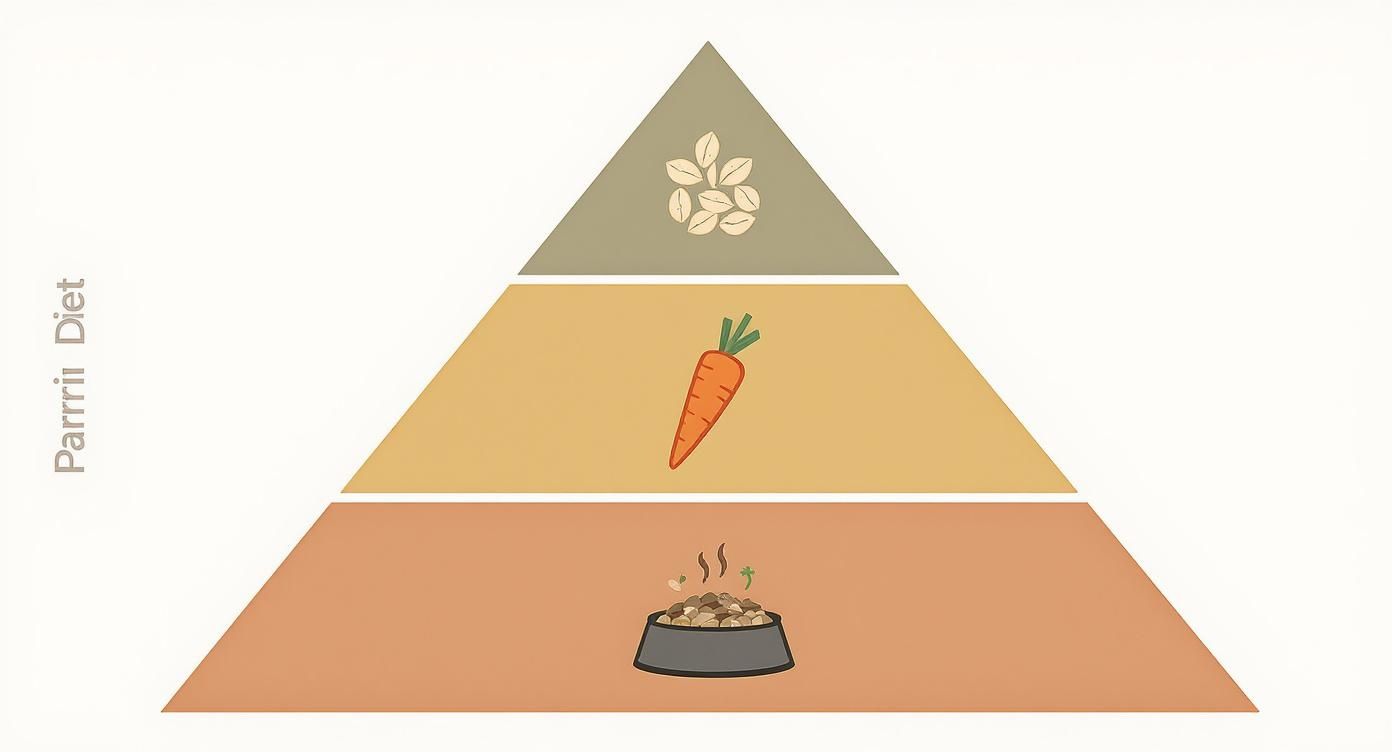
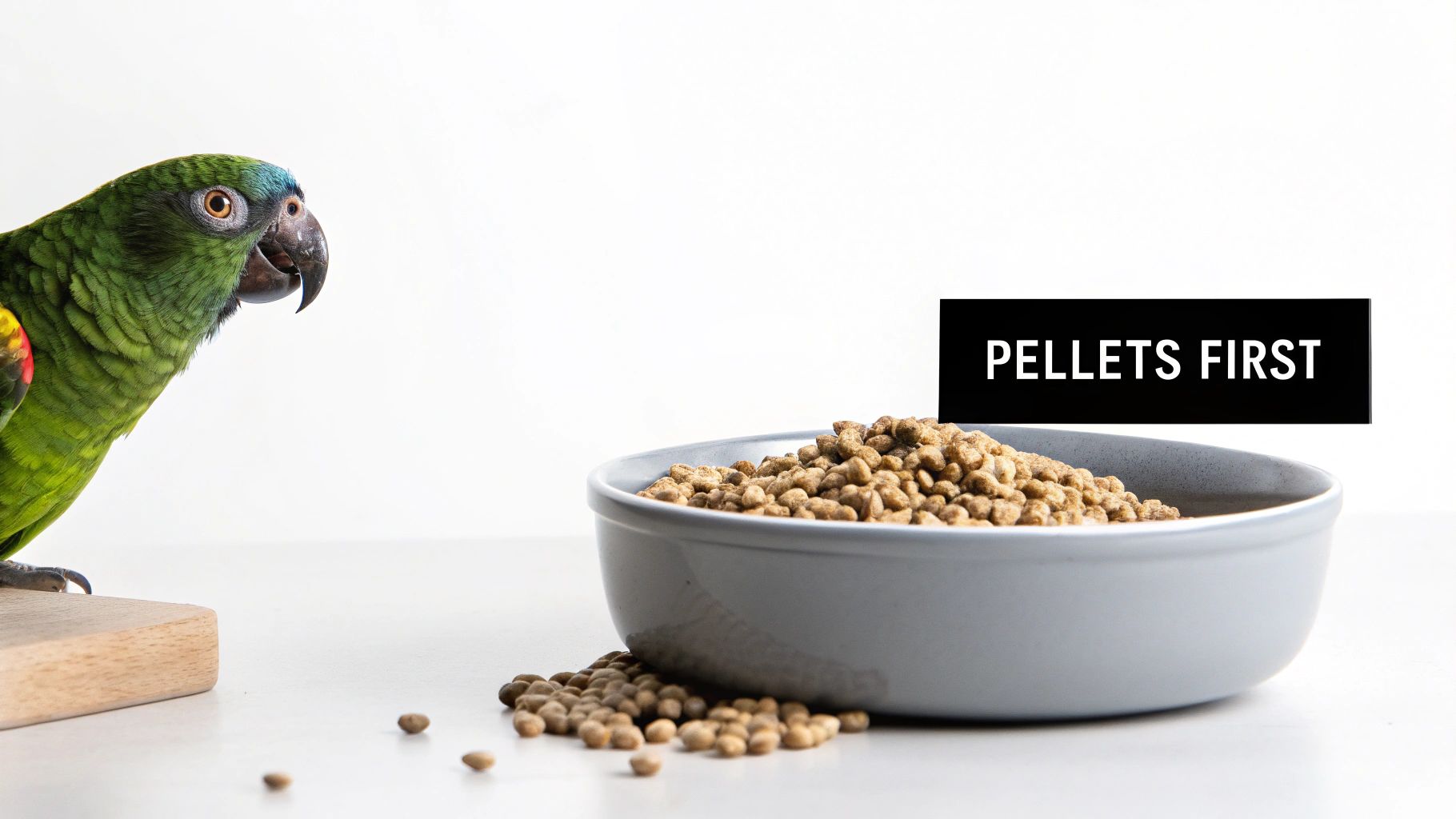
As you can see, formulated pellets should be the foundation. Fresh foods add that essential variety and enrichment, while high-fat seeds and other treats should be kept to a bare minimum.
My expert advice is to think of your parrot’s daily meal as a complete nutritional package. Each part has a job to do, from the vitamins in fresh veggies to the balanced formula in high-quality pellets.
The Australian Parrot Food Pyramid At a Glance
To break it down even further, this table shows you exactly how those dietary proportions look in practice. It moves from the most important foods at the base of the pyramid right up to the occasional treats at the top.
| Dietary Level | Food Type | Percentage of Diet | Examples |
|---|---|---|---|
| Foundation | Formulated Pellets | 60-70% | High-quality, species-specific pellets |
| Daily Fresh Foods | Vegetables & Leafy Greens | 20-30% | Broccoli, carrots, capsicum, spinach, kale |
| Limited Additions | Fruits & Healthy Proteins | 5-10% | Berries, apple slices, cooked eggs, legumes |
| Occasional Treats | Seeds & Nuts | Less than 5% | Sunflower seeds, almonds (used for training) |
Following this model takes the guesswork out of daily feeding and sets your bird up for a long, healthy life.
Getting the diet right is the first big step, but it goes hand-in-hand with creating a stimulating world for your bird to live in. Making sure you have the right parrot supplies in Australia is just as important as the food itself. A balanced diet and an enriching environment truly are the keys to a happy, healthy companion. My goal here is to give you a clear, practical plan for your parrot's long-term health.
Why Pellets Are the Foundation of a Healthy Diet
For a long time, the go-to advice for feeding parrots was a simple bowl of seeds. We now know this approach is dangerously outdated. Think of a seed-only diet as giving a child nothing but lollies and chips; sure, it’s tasty and easy, but it always leads to serious health problems down the track. Formulated pellets are the modern, science-backed solution that should be the cornerstone of any healthy parrot diet.
Imagine a pellet as a complete, balanced meal designed by an avian nutritionist just for your bird. Each bite contains a precise blend of essential vitamins, minerals, and proteins, which cleverly gets around the problem of picky eating. When birds see a seed mix, they instinctively pick out the tastiest, highest-fat options (like sunflower seeds) and leave the rest. This creates severe nutritional gaps. Pellets solve this problem entirely.
This balanced approach is critical for preventing common health issues seen by Australian avian vets every day. So many illnesses, from liver disease and respiratory infections to poor feather quality, can be traced directly back to long-term malnutrition caused by a seed-based diet.
The Key Nutrients in Quality Pellets
So, what exactly makes a high-quality pellet so good for them? It comes down to a careful mix of vital nutrients that are almost always lacking in seed mixes. A good pellet formula provides a solid nutritional foundation, ensuring your bird gets everything they need to thrive, not just survive.
These key components work together to support everything from bone strength to immune function.
- Vitamin A: Absolutely essential for healthy vision, skin, feather quality, and the function of the respiratory and digestive tracts. A deficiency can make birds highly susceptible to infections.
- Vitamin D3: This one is crucial for calcium absorption. Without it, parrots can't properly use calcium, leading to weak bones and, for female birds, life-threatening egg-binding.
- Calcium: It's the building block for strong bones, beaks, and proper muscle function. Pellets provide a consistent, balanced source of this vital mineral.
By packing these nutrients into every single bite, pellets act as a preventative measure against the most common diet-related health problems.
Choosing the Right Pellets in Australia
Walking down the pet store aisle can be a bit overwhelming, but a few simple guidelines will help you choose the best food for your parrots. Not all pellets are created equal, and making an informed choice is a massive part of providing excellent care.
First up, read the ingredients list. Look for whole grains and natural sources of vitamins. It’s always best to steer clear of brands that use artificial colours, flavours, or high levels of sugar (often listed as sucrose or corn syrup). These additives offer zero nutritional value and can sometimes trigger health or behavioural issues.
Expert Tip: Many Australian avian vets recommend brands like Vetafarm, Harrison's, or Roudybush. These companies really focus on nutritional science and offer formulas tailored to the needs of different species. You can find these at most good pet suppliers across Australia.
Next, have a look at the pellet size. What’s perfect for a big Galah would be impossible for a tiny Budgerigar to eat. Brands usually offer different sizes, from "micro" or "crumbles" for small birds to larger chunks for Macaws and Cockatoos. Matching the pellet size to your bird's beak is key to encouraging them to actually eat it.
Finally, when you introduce a new pellet, do it gradually. Don't just swap the food overnight. Mix a small amount in with their old food, slowly increasing the proportion of pellets over several weeks. Patience is absolutely key to helping your feathered friend make a successful switch to a healthier, more balanced diet.
Enriching Their Diet with Fresh Foods
While formulated pellets are the nutritional bedrock, they're only one part of the puzzle. The vibrant world of fresh vegetables and fruits is where your parrot’s diet goes from just good enough to genuinely brilliant. This is where they get natural vitamins, minerals, and the mental stimulation that pellets alone can't offer.
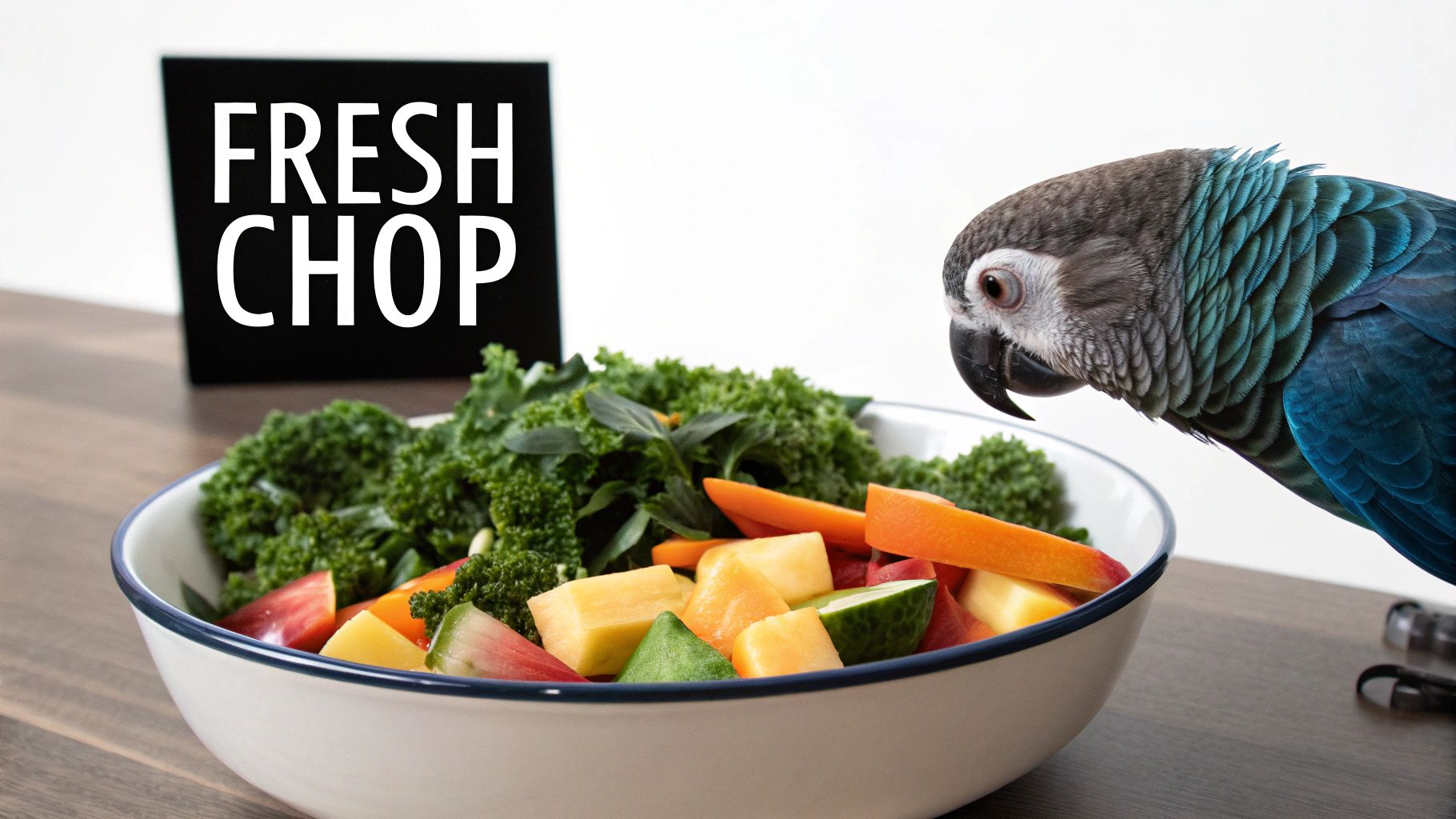
Think of it this way: pellets are the complete, balanced dinner. Fresh foods are the colourful, exciting side dishes that make the meal truly healthy and fun. Serving a daily mix of fresh produce, what many of us call ‘chop’, is one of the best things you can do for your bird’s long-term health and happiness.
Crafting the Perfect 'Chop' Mix
Putting together a daily chop mix doesn't need to be a huge chore. The aim is simple: offer a wide variety of textures, colours, and flavours to keep your bird engaged and well-fed. The most practical approach is to focus on Australian-grown produce you can easily find at your local supermarket or farmer's market.
Excellent staples for a daily chop mix include:
- Leafy Greens: Kale, spinach, and silverbeet are packed with vitamins.
- Vibrant Vegetables: Grated carrot, diced sweet potato, and chopped capsicum (all colours) offer beta-carotene and other key nutrients.
- Crunchy Additions: Broccoli florets, green beans, and peas provide satisfying textures.
The key is variety. Rotating these ingredients ensures your parrot gets a broader spectrum of nutrients and, just as importantly, stops them from getting bored with their food.
My expert advice is this: one of the biggest benefits of a fresh chop is the psychological enrichment it provides. The different shapes, textures, and tastes tap into a parrot's natural foraging instincts, turning a simple meal into a stimulating activity.
The Role of Fruit as a Healthy Treat
Fruit is a fantastic addition, but it should always be thought of as a healthy treat, not a main course. While they’re bursting with vitamins, fruits are also high in natural sugars, which can cause health problems if you overdo it. A good rule of thumb is to keep the vegetable-to-fruit ratio at about 80/20 in their daily chop.
This measured approach actually mirrors how they eat in the wild. Studies on wild Australian parrots, for instance, show their diet shifts with the seasons. They often ramp up their fruit intake during late summer and early autumn, which lines up perfectly with when local plants are fruiting. This shows their natural inclination for varied, seasonal food. To see more about their natural feeding patterns, you can explore detailed observations of wild parrot diets.
Awakening Their Foraging Instincts
In the wild, parrots spend a huge chunk of their day just looking for food. This act of foraging is hard work, both mentally and physically. Just plonking a bowl of food in their cage takes away this vital part of their routine, which can easily lead to boredom and stress.
This is where enrichment feeding comes in. By making them work just a little for their fresh food, you’re satisfying a deep-seated instinct. Serving fresh chop isn’t just about nutrition; it's about engaging their brilliant minds.
You can encourage this natural behaviour easily. Instead of just using a bowl, try threading big chunks of capsicum, carrot, and kale onto a stainless-steel skewer. This simple change turns mealtime into an interactive puzzle. There are so many great options out there, and you can learn more about how to choose the right ones in our guide to the best foraging toys for birds. It’s a small step that makes a massive difference in their quality of life.
Decoding Natural Parrot Feeding Behaviours
Have you ever watched your parrot pick up a piece of carrot, take a single bite, and then joyfully chuck it across the room? It can be maddening, especially after you’ve spent time chopping up a beautiful, healthy meal. But what looks like messy, wasteful behaviour to us is actually your parrot acting on powerful, deep-seated instincts.
Out in the wild Australian bush, a parrot's day is a non-stop quest for food. They don’t get a neat bowl delivered at the same time each morning. Instead, they spend hours flying, climbing, and problem-solving to find their next meal. This process of foraging isn’t just about eating; it’s their job, their workout, and their mental stimulation all rolled into one.
Reframing Messy Eating
When your Galah or Budgie makes a mess, they are essentially 'foraging' in their own little world. They're exploring textures, testing food with their beak and tongue, and sometimes discarding bits to find the most delicious or nutritious part. It’s all a natural part of food exploration for them.
This instinct to test, taste, and toss is completely hardwired. Research has shown that even in our homes, parrots waste a huge amount of the food they're given. One study found that captive parrots wasted an average of 21.2% of their food, with some individuals flinging up to 72.7%! Funnily enough, this isn't too far off from their wild cousins, who were seen wasting around 11-15% of the fruits and seeds they found. You can read more about these fascinating feeding studies to get into the science behind the mess.
So, instead of seeing it as a problem, we can see it for what it is: a clue. Your parrot is telling you they have a biological need to work for their food.
The Problem with a Full Food Bowl
A constantly full bowl of food might feel like the kindest thing to do, but for a clever animal like a parrot, it can lead to some serious problems. When the main challenge of their day is taken away, boredom and stress can quickly creep in. This can show up in unwanted behaviours like feather plucking, screaming, or repetitive actions.
As an expert, I often compare a full food bowl to giving a human a comfy chair, a remote control, and a lifetime supply of fast food. It might be easy, but it’s a recipe for physical and mental decline. The same principle applies to our birds; they need a challenge to thrive.
By simply providing a bowl, we accidentally strip away one of the most enriching parts of their natural daily routine. The good news is, it’s incredibly easy to bring this challenge back into their lives in a safe and fun way.
Turning Mealtime into an Adventure
The solution is to channel that energy constructively through enrichment feeding. This just means moving beyond the bowl and making your parrot think, play, and work for their meals. This simple shift can dramatically improve your bird's quality of life, cutting down on boredom and satisfying their innate drive to forage.
Here are a few simple ways to get started:
- Simple Puzzles: Instead of putting chopped veggies in a bowl, try stuffing them into a bird-safe paper cup or wrapping them in a piece of paper for your bird to shred open.
- Foraging Skewers: Thread chunks of carrot, capsicum, and leafy greens onto a stainless-steel skewer. This forces them to hang, climb, and really work at the food to get a bite.
- Puzzle Toys: Use a specially designed puzzle toy, like this fantastic foraging puzzle box available in Australia, where you can hide pellets or healthy treats inside for them to figure out.
By weaving foraging into their daily routine, you transform feeding from a passive activity into an engaging, fun experience. You’re not just providing good food for parrots; you’re providing a fulfilling daily purpose that honours their wild instincts. A happy, engaged bird is almost always a healthier one.
Toxic Foods That Can Harm Your Parrot
Figuring out what not to feed your parrot is every bit as important as knowing what they should eat. Our birds are naturally curious and often want a nibble of whatever we're having, but a surprising number of common human foods are downright dangerous for them.
Keeping your companion safe means being vigilant about what they can get their beaks on. Even a tiny taste of the wrong thing can be devastating for their sensitive systems, so let's walk through the absolute no-go list.
The Most Dangerous Household Foods
Some of the biggest threats are things you probably have in your kitchen right now. A parrot's curiosity is lightning-fast, and it only takes a second for them to grab a bite of something harmful. Knowing these specific dangers is your first line of defence.
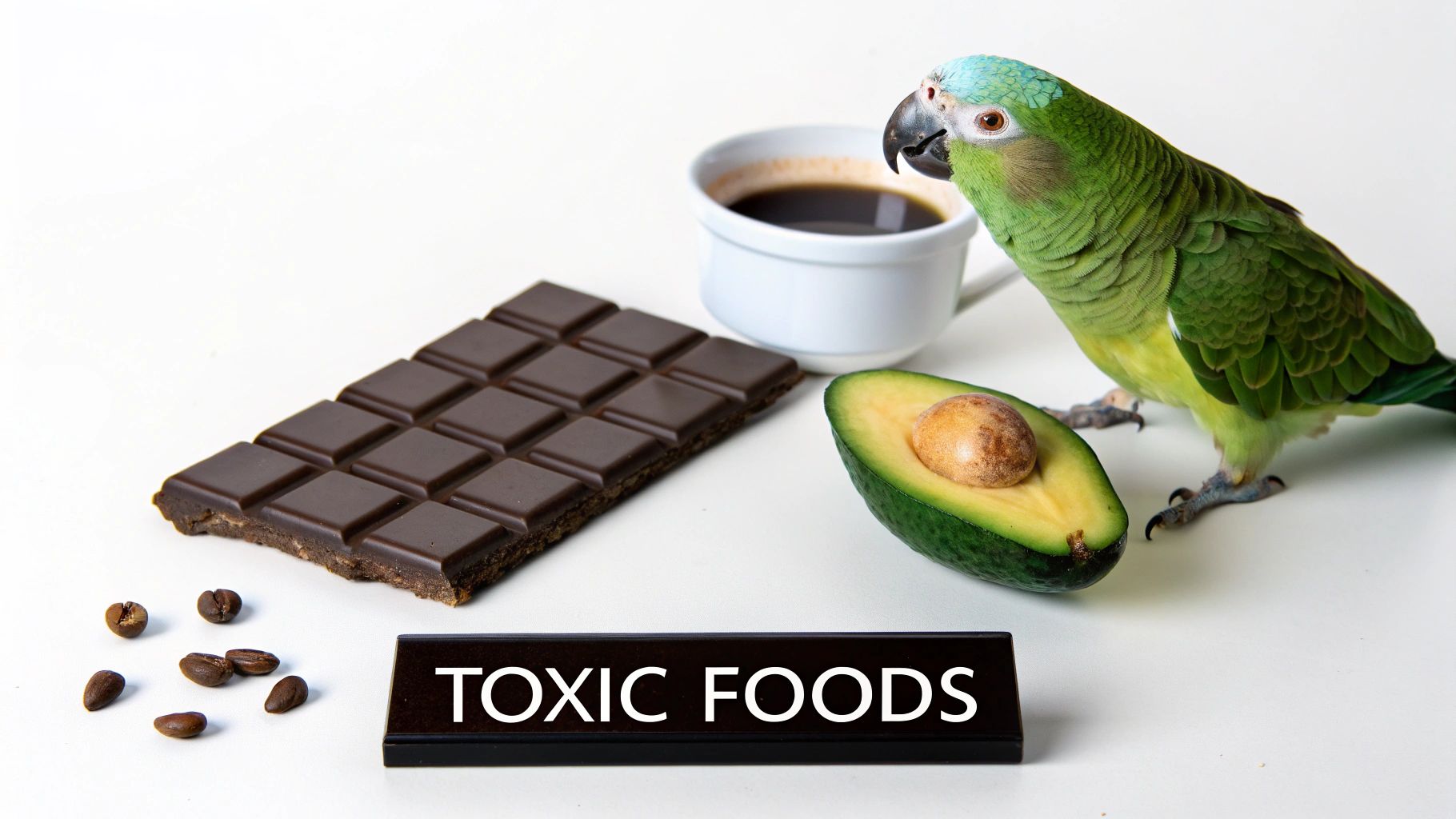
Here are the top toxic foods to keep far away from your bird at all times:
- Avocado: This is probably the most well-known toxin for birds. It contains a substance called persin, which is incredibly poisonous to them. It can cause breathing difficulties, fluid buildup, and heart failure, often with frightening speed.
- Chocolate: Just like with dogs, chocolate is a major no. It contains theobromine and caffeine, which can lead to hyperactivity, a racing heart, tremors, seizures, and can easily be fatal. The darker the chocolate, the more toxic it is.
- Alcohol and Caffeine: These substances hit a bird's nervous and cardiac systems much harder than ours. Even a small amount can cause heart problems, seizures, and death. Never let your bird have a sip from your morning coffee or evening wine.
- Onion and Garlic: Both of these contain compounds that can wreck a bird's red blood cells, leading to a dangerous form of anaemia. It doesn't matter if they're raw, cooked, or powdered—they're always off the menu.
A crucial piece of advice from Australian avian vets is to treat your kitchen as a potential hazard zone. It's not just food—fumes from non-stick cookware (like Teflon) can also be fatal, so always make sure you've got good ventilation when you're cooking.
Hidden Dangers in Seemingly Innocent Foods
Beyond the obvious poisons, a few other common foods carry hidden risks. These might seem harmless enough, but they can cause serious health problems for your feathered friend. When in doubt, always err on the side of caution.
The pits and seeds from many fruits—like apples, cherries, peaches, and plums—contain trace amounts of cyanide. The flesh of the fruit is perfectly fine, but you must never let your parrot chew on the seeds or pits. Another big one is any food high in salt, fat, or sugar. A parrot's body simply isn't built to process these things, and they can lead to obesity, fatty liver disease, and other long-term health issues.
Quick Guide to Parrot-Safe Swaps
It's easy to feel like everything is off-limits, but there are plenty of wonderful, healthy treats you can share. To make it simple, here’s a quick-reference table to help you swap out a dangerous food for a safe and delicious alternative.
| Toxic Food | Reason for Toxicity | Safe Alternative Treat |
|---|---|---|
| Avocado | Contains persin, which can cause heart failure. | A small piece of cooked sweet potato or pumpkin. |
| Chocolate | Contains theobromine and caffeine, toxic to the nervous system. | A few blueberries or a raspberry. |
| Apple Seeds | Contain cyanide, which is a poison. | The apple flesh itself (seedless) or a slice of pear. |
| Salty Crisps | High sodium content leads to dehydration and kidney issues. | A piece of plain, air-popped popcorn (no salt or butter). |
| Onion/Garlic | Damages red blood cells, leading to anaemia. | A small floret of steamed broccoli or a green bean. |
Keeping a list like this handy can take the guesswork out of treat time and ensure you're only sharing things that will benefit your bird's health.
What to Do in an Emergency
If you even suspect your parrot has eaten something toxic, time is absolutely critical. Don't wait around for symptoms to show up.
The first and most important thing to do is contact your nearest Australian avian veterinarian immediately. Have their phone number saved in your contacts and stuck on the fridge for easy access. They can give you urgent, specific advice for your situation. Never try to make your bird vomit or give them home remedies without professional guidance, as you could easily make things worse. Acting fast is the key to giving your bird the best possible chance.
Tailoring Diets for Popular Australian Parrots
Australia is home to an incredible variety of parrots, and it’s a common mistake to think a single diet plan will work for all of them. A tiny Budgerigar has completely different nutritional needs from a large, powerful Galah. Tailoring the food you offer to your specific parrot is one of the most important things you can do for their long-term health.
This isn't about getting overly complicated. It’s about making smart adjustments based on your bird's natural history and biology. Let’s look at some of the most popular companion parrots in Australian homes and what makes their ideal diet unique.
Budgerigars and Cockatiels
These beloved Aussie natives are small, active birds that do wonderfully on a diet based on high-quality micro-pellets. Because they're so small, their fresh food portions need to be managed carefully.
Finely chopped veggies like broccoli, carrot tops, and spinach are perfect for them. It’s also important to remember their natural foraging behaviours. Sprinkling some pellets into a fun and shreddable grass mat toy can provide fantastic mental stimulation and make mealtimes more interesting.
Galahs and Cockatoos
Our iconic pink-and-grey Galahs, along with other cockatoo species, are particularly prone to obesity and fatty liver disease. Because of this, their diet needs to be carefully managed to avoid high-fat foods.
The best foundation is a diet based on formulated pellets designed for Australian parrots. Keep high-fat seeds like sunflower seeds as a rare training treat only. Their daily 'chop' should be heavy on vegetables, but go easy on the sweet fruits and starchy veggies like corn and sweet potato.
Eclectus Parrots
Eclectus parrots are a special case. They have a uniquely long digestive tract, which means they are incredibly efficient at absorbing nutrients from their food. This also makes them very sensitive to artificial additives and vitamin overload.
Avian vets in Australia strongly advise that Eclectus diets should consist of a much higher proportion of fresh foods—around 50% of their total intake. They thrive on a vibrant mix of vegetables, fruits, and edible flowers, with a smaller portion of natural, colour-free pellets.
Lorikeets
Lorikeets are nectarivores. In the wild, their diet is primarily nectar and pollen, and their digestive systems simply aren't designed to handle seeds or traditional pellets.
Feeding a Lorikeet a seed or pellet-based diet will cause serious, often irreversible, damage to their health. Instead, their entire diet must be built around a high-quality, commercially prepared wet or dry nectar mix. You can supplement this with small amounts of native Australian flowers and soft, juicy fruits like berries and melon.
Fine-tuning your parrot's food based on their species is one of the most impactful things you can do as an owner. It acknowledges their unique biology and ensures they get the precise nutrition they need to flourish. A varied diet is just one part of their enrichment; offering a range of engaging items like shreddable bird toys ensures their minds stay as healthy as their bodies. Always consult with an avian vet to create the perfect plan for your feathered companion.
Common Questions About Feeding Your Parrot
Stepping into the world of parrot nutrition always brings up a few common questions. To wrap things up, we’ve put together a quick FAQ to tackle some of the practical challenges and queries that Australian parrot owners often ask.
Think of this as a handy troubleshooting guide, with vet-informed answers to help you feel confident in your daily feeding routine.
How Do I Switch My Parrot from a Seed Diet to Pellets?
Moving a bird from a familiar seed diet to healthier pellets is all about patience and persistence. Whatever you do, never try to starve your parrot into making the switch—this is dangerous and will only create stress and distrust.
A slow, gradual approach always works best. Start by mixing a tiny amount of pellets (about 10%) into their usual seed mix. Every few days, just slightly increase the pellet ratio while decreasing the amount of seed. You can also try offering a separate bowl of pellets in the morning when they're typically hungriest, which might encourage them to give the new food a go.
During this transition, keep a close eye on their droppings and weight to make sure they're eating enough. For more detailed advice and answers to other common questions, you can check out our full parrot care Q&A section.
Can I Share My Dinner with My Parrot?
It’s tempting to let your feathered friend have a nibble from your plate, but it’s generally a very unsafe idea. Our meals are often loaded with salt, fat, sugar, and seasonings that a parrot’s sensitive system simply can't handle.
Expert Advice: Many ingredients we cook with every day, like onion, garlic, and certain spices, are actually toxic to parrots. To keep your bird safe, it's always best to stick to foods prepared just for them.
How Much Fresh Food Should I Offer Daily?
The right amount of fresh food really depends on your bird's species, size, and how active they are. A practical guideline from Australian vets is to offer roughly 1.5 to 2 times the amount your bird is likely to eat in a day. This gives them room to explore and discard food—a natural behaviour—without going hungry.
For a medium-sized parrot like a Galah, a small bowl of finely chopped veggies in the morning is a great starting point. You can then adjust the portion based on how much is consistently left over. Remember, fresh food should supplement their core pellet diet, not replace it.
At Lou Lou Bells Bird Toys, we know a healthy diet is just one part of a happy bird’s life. Providing opportunities for mental stimulation and physical activity is just as crucial. Explore our extensive range of safe, engaging, and handcrafted foraging toys to turn every meal into a fun and enriching adventure for your feathered friend.
Shop the best range of bird toys in Australia at Lou Lou Bells Bird Toys
Disclaimer Summary:
The information in this article is general in nature and may include external links or resources not created by Lou Lou Bells Bird Toys. Every bird is unique, so we encourage you to seek personalised advice from your own veterinarian or avian specialist. For full details, please read our complete disclaimer here.