
If you've ever found yourself snacking on a bunch of grapes while your feathered friend watches on, you've probably asked the question: "Is it safe to share?" It's a great question to ask. The short answer is yes, most pet birds can eat grapes, but it comes with a big asterisk: only in strict moderation and with the right preparation.
Think of grapes as a juicy, special treat—not a meal.
The Simple Answer to a Juicy Question
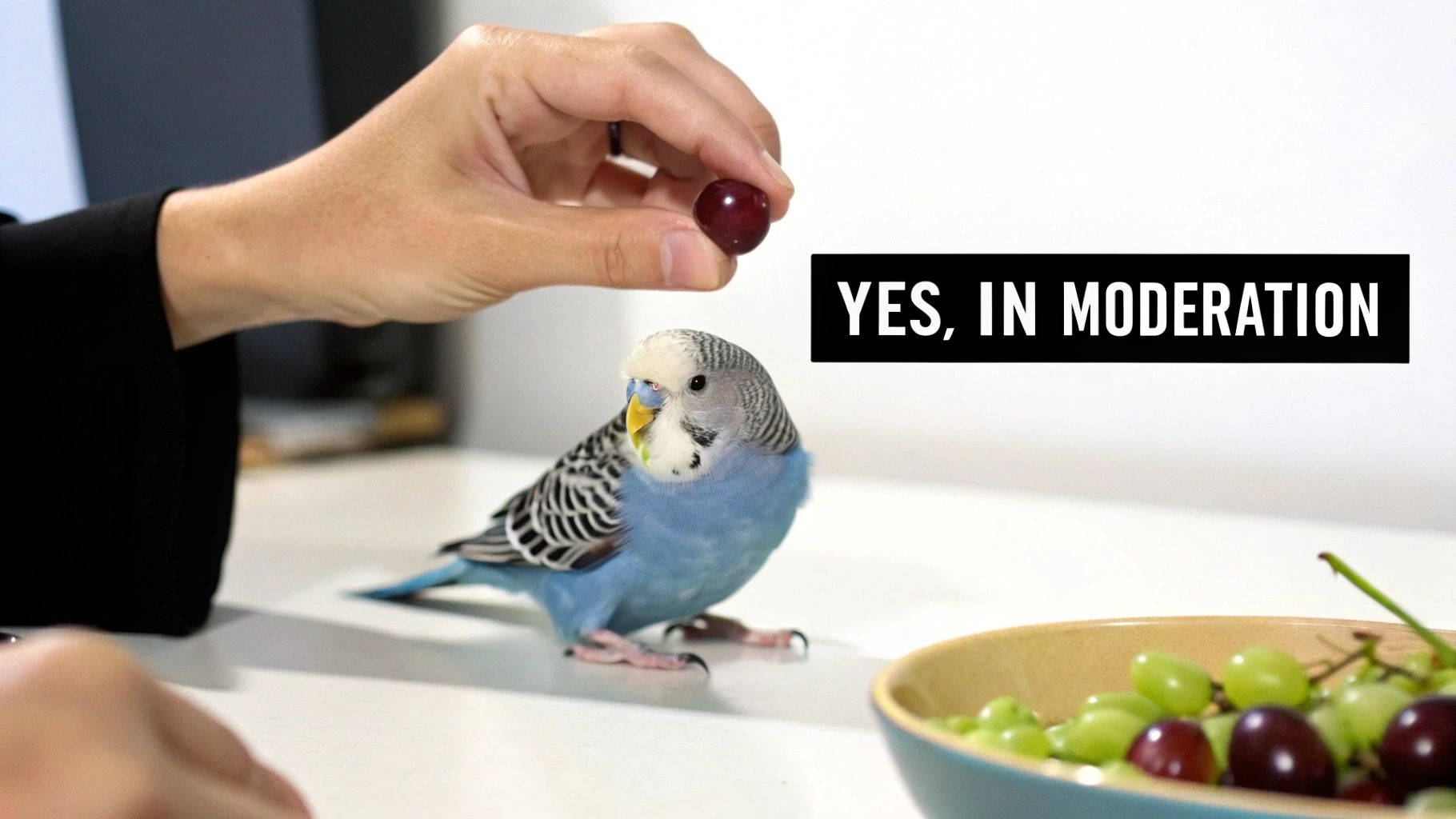
It’s a familiar scene for Aussie bird owners. You’re enjoying a healthy snack, and a curious little beak is poking through the cage bars, hoping for a taste. Sharing grapes can be a lovely way to bond, but it's not as simple as just dropping one in their bowl.
The key thing to remember is that while grapes aren't toxic to birds (unlike for dogs, where they are a major danger), they do come with a few ground rules. This guide will walk you through everything you need to know to offer this sweet fruit safely, so it remains a healthy bit of fun.
What We'll Cover in This Guide
Whether you have a tiny Budgie, a chatty Cockatiel, or a magnificent Galah, the rules for safe feeding are pretty much the same. We’ll get into the details so you can feel confident.
Here’s a quick look at what’s ahead:
- Nutritional Perks: A peek at the vitamins and antioxidants grapes bring to the table.
- Potential Dangers: We’ll look closely at pesticides, seeds, and the problem with too much sugar.
- Safe Preparation: Simple, step-by-step instructions on how to wash, cut, and serve grapes.
- Creative Feeding: How to turn a simple grape into a fun puzzle using foraging toys, like our Lou Lou Bells Originals.
Expert Advice: Any good avian vet in Australia will tell you that treats—including fruit like grapes—should make up no more than 10% of your bird’s total diet. The real foundation of their health is a high-quality formulated pellet, with a side of fresh veggies.
Our aim is to give you practical advice you can actually use. By treating grapes as a special occasion snack, not a daily staple, you can add a bit of flavour and fun to your bird's life without risking their health.
It all comes down to balance and preparation—a core part of being a responsible bird owner. A fantastic way to combine a treat with mental exercise is by hiding pieces in our engaging Foraging Toys for Birds.
What's Actually in Grapes for Your Bird?
When your feathered mate gives you that hopeful, beady-eyed stare as you're snacking on some grapes, it's natural to wonder what they're getting out of it. Beyond the sweet, juicy burst of flavour, grapes do have a few nutritional tricks up their sleeve. But think of them less as a superfood and more as a fun, flavourful bonus.
The most obvious thing grapes provide is a quick hit of energy. They're packed with natural sugars like fructose and glucose, which act as a fast-burning fuel source. This can be handy for active, playful birds that zip around all day and burn through a lot of calories.
But the good stuff doesn't stop there.
A Little Boost of Vitamins and Antioxidants
Grapes contain a handful of micronutrients that can play a small role in your bird's overall health. While their main diet of high-quality pellets, fresh veggies, and other balanced foods should already cover all their bases, a tiny extra boost from a treat doesn't hurt.
Here are a few key nutrients found in grapes:
- Vitamin C: This is a fantastic antioxidant that helps support a robust immune system, giving your bird a better chance of fighting off illnesses.
- Vitamin K: Crucial for healthy blood function. It plays a big part in blood clotting, which is vital if your bird ever gets a minor scrape or injury.
- Antioxidants: Grapes, especially the red and purple ones, are loaded with antioxidants like flavonoids and resveratrol. These compounds are great for helping protect the body's cells from damage.
It's easy to look at that list and think grapes are a must-have. But it's so important to put this into context. The amount of grape your bird can safely eat is tiny, so these nutritional contributions are pretty minimal in the grand scheme of things. Their main diet is, and always will be, the foundation of their health.
Expert Advice: Any good avian vet will tell you that treats are just that—treats. They're a brilliant way to offer enrichment and add variety to their day, not a tool to fill nutritional gaps. A balanced, formulated diet is the only non-negotiable for long-term health.
Keeping It All in Perspective
So, while we can appreciate the vitamins and hydration grapes offer, it's their high sugar content that really keeps them in the "occasional treat" category. The answer to "can birds eat grapes?" is completely tied to understanding their role as a supplementary snack. They should never, ever replace the core parts of a well-rounded avian diet.
Think of it like a kid having a small slice of birthday cake. It's a delightful experience and brings a lot of joy, but it's not a substitute for their dinner of lean protein and vegetables. In the same way, a tiny piece of grape can be a wonderful, enriching moment that adds a bit of fun to your bird's day without messing with their overall health.
Understanding the Potential Risks and Dangers
It’s tempting to share a juicy grape with your feathered mate, but it’s a bit like giving a child a new toy without checking the safety warnings first. For a small bird, what looks like a harmless treat can hide a few real dangers.
Once you know what to look out for, though, preparing them safely is simple. The three main things to keep on your radar are pesticides, seeds, and sugar overload. A bird’s tiny body and fast metabolism make them much more sensitive to these things than we are. Let's break down each one so you can offer this treat with total confidence.
The Problem with Pesticides
Grapes are almost always on the list of produce with high levels of pesticide residue. An amount that a human body wouldn't even notice can be a toxic dose for a little budgie or cockatiel. Their systems just aren't built to handle these chemicals, and over time, that exposure can lead to serious health problems.
This is why a thorough wash is non-negotiable. A quick rinse under the tap just won’t cut it.
- Step 1: Pop the grapes into a colander.
- Step 2: Give them a good rinse under cool, running water to get rid of any surface dirt.
- Step 3: Make a soaking bath with one part white vinegar to four parts water. Let the grapes sit in this for at least 10-15 minutes.
- Step 4: Rinse them again properly to wash away any leftover vinegar taste.
If you can, grabbing organic grapes from your local Aussie grocer is a great first step to cutting down pesticide exposure right from the start.
The Choking Hazard of Grape Seeds
While not all grape seeds have toxic levels of cyanide, it’s best to avoid them altogether for two very practical reasons. First, they are a definite choking hazard, particularly for smaller birds who might try to gulp down a piece whole.
Second, the seeds can be tough for a bird's digestive system to break down. It’s always better to be safe than sorry, so get into the habit of de-seeding every grape before you offer a piece. Thankfully, most grapes in Australian supermarkets are seedless, but it never hurts to slice one open to double-check first.
Sugar Overload: A Sweet but Serious Issue
Grapes are packed with natural sugar. This makes them a delicious source of quick energy, but too much of a good thing can cause big problems for our birds. A diet high in sugar can lead to weight gain, which puts a huge strain on their tiny organs and joints. It can even be a factor in conditions like fatty liver disease.
Expert Advice: An expert avian vet will always stress that a bird's diet should be based on high-quality pellets and fresh vegetables. Sugary fruits are a treat, not a staple, and should make up a tiny fraction of their overall food intake.
This is especially important for Australian species like Cockatoos and Galahs, which are known to be prone to obesity. A balanced diet is everything.
Interestingly, this craving for grapes isn't just a pet bird thing. Wild birds are well-known to flock to Australian vineyards. Past reports from local wine regions have shown crop losses of up to 50% in some areas. It just goes to show how powerfully wild birds are drawn to these sugary fruits. Think of your pet bird as having that same powerful instinct for sweet things—it’s our job to provide it in responsible amounts.
How to Prepare Grapes for Your Bird
So, you're ready to share a juicy grape with your feathered mate? Fantastic. But before you do, a little prep work is essential to make sure this sweet snack is a safe one. It’s quick, easy, and means your bird gets all the enjoyment without any of the hidden dangers.
The first stop on the journey from the supermarket bunch to your bird’s beak is a good, thorough clean. Grapes are well-known for carrying pesticide residue, and a quick rinse under the tap just won't cut it. Your best bet is to give them a proper soak for at least ten minutes in a solution of one part vinegar to four parts water, then rinse them again with fresh water.
The Golden Rules of Grape Prep
Once your grapes are sparkling clean, the next step is all about making them physically safe for your bird to eat. It really comes down to three things: size, seeds, and how much you're offering.
A whole grape, even for a larger bird like a Galah, is a serious choking hazard. It's also way too much sugar for one tiny body to handle.
- Slice and Dice: Always, always cut the grape into small, manageable pieces. For smaller birds like Budgies or Cockatiels, a good rule of thumb is to offer a piece no bigger than their eye.
- Deseed Diligently: While many grapes you find in Aussie shops are seedless, it pays to be certain. Slice them open and double-check. Grape seeds are a choking risk and are best removed completely.
- Portion Perfection: Remember, a grape is a treat, not a meal. One or two tiny pieces, just a couple of times a week, is more than enough.
Following these simple steps turns a potentially risky fruit into a perfectly safe, delicious snack.
Beyond the Bowl: Enrichment and Engagement
Now for the fun part! Instead of just dropping the grape pieces into a food bowl, why not turn treat time into a bit of a brain game? Using grapes for enrichment is a brilliant way to encourage natural foraging behaviours, bust boredom, and give your bird some much-needed mental stimulation.
The infographic below highlights the key risks to watch out for when preparing grapes, giving you a clear visual of the dangers of pesticides, seeds, and too much sugar.
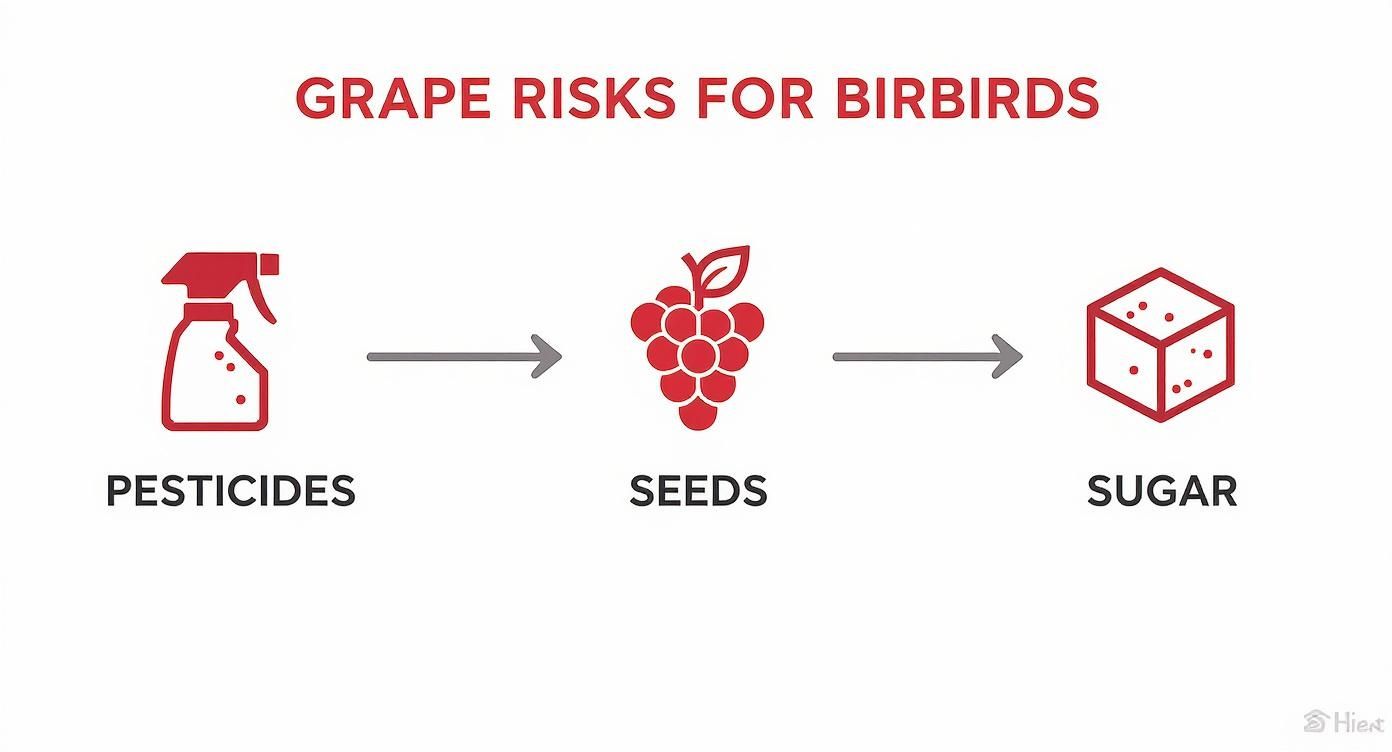
It’s a great reminder that with proper washing, deseeding, and portion control, you can easily sidestep these issues and provide a safe treat.
Expert Advice: Hiding a tiny piece of grape inside a toy is a fantastic way to engage your bird’s mind. It taps into their natural instinct to work for their food, which is far more rewarding than simply eating from a dish.
For example, you could wedge a small piece inside one of our Lou Lou Bells Originals toys. Your bird will have to poke, pull, and puzzle out how to get that tasty reward. This simple trick turns a five-second snack into a ten-minute puzzle, giving them both a physical and mental workout. To learn more about turning mealtime into playtime, have a look at our detailed guide on the benefits of foraging toys for birds. Trust us, this small change can make a massive difference in your bird’s daily happiness.
An Australian Avian Vet's Perspective
When it comes to your bird’s health, nothing beats advice straight from the experts. We’ve framed this section around the core principles an Australian avian vet would share, and their first message is always crystal clear: diet is the foundation of everything.
A balanced, formulated pellet diet should be the absolute cornerstone of your bird's daily food intake. Think of it as their essential "meat and three veg," providing all the core nutrients they need to thrive. Treats like grapes are the dessert—fun, enjoyable, but strictly for special occasions.
Expert Advice: An avian vet would stress that treats of any kind, including fruit, should never make up more than 10% of your bird's total diet. This ensures they don’t fill up on sugary snacks at the expense of their essential nutrition.
This "diet first" philosophy is critical for preventing common health issues like obesity and nutritional deficiencies, which vets see all too often in companion birds across Australia.
Watching for Reactions and Seeking Advice
Whenever you introduce a new food, even something as simple as a grape, you have to be observant. Your bird can't tell you if something doesn't agree with them, so it's up to you to watch for the subtle clues. Keep a close eye on their behaviour and, most importantly, their droppings.
Look for any changes in:
- Dropping consistency: Any signs of diarrhoea or unusual colour could indicate digestive upset.
- Behaviour: Watch for lethargy, fluffing up, or a lack of interest in their usual activities.
- Appetite: If they suddenly go off their main food after having a new treat, it's a red flag.
If you spot any of these signs, stop offering the new food immediately and get in touch with your vet. This is especially crucial for birds with pre-existing health conditions like liver or kidney issues.
It's a fascinating contrast to their wild counterparts. Here in Australia, many native bird species are notorious for feasting on grapes in vineyards, causing significant economic damage. Studies show that bird-related losses in Australian horticulture can reach nearly $300 million annually, with some vineyards losing up to 30% of their crop. This just goes to show how much wild birds love this fruit, and it highlights their natural attraction to sugar—reinforcing why we, as responsible owners, must carefully control their intake.
The Importance of Regular Check-ups
Ultimately, your avian vet is your best partner in your bird's health journey. Regular check-ups are vital for catching problems early and getting advice that's tailored to your individual bird. Before making any significant changes to your bird's diet, a quick chat with your vet ensures you're doing what's best for your specific feathered friend.
For a broader overview of responsible ownership, check out our essential guide to caring for pet birds.
Common Questions About Birds and Grapes
Even when you know the basics, a few specific questions always pop up just before you offer a new treat. It's completely normal to want to get it right.
Let's run through some of the most common queries we hear from Aussie bird owners about feeding grapes to their feathered mates. This way, you can find the exact answer you're looking for, fast.
Can My Budgie Eat a Whole Grape?
In a word: no. A whole grape is way too big for a tiny bird like a budgie and is a serious choking hazard. Even if they could manage the size, the sugar content of an entire grape would be a huge shock to their small system.
For a budgie, you should only ever offer a tiny, seedless sliver. Think about the size of a single grain of quinoa—that's the scale we're talking about, and only as a very rare treat.
Are Red or Green Grapes Better for My Bird?
Honestly, either colour is fine as long as you prepare them properly. It's true that red and purple grapes contain antioxidants called anthocyanins, giving them a slight nutritional edge. But given the tiny portions your bird will be eating, this benefit is pretty minimal.
The things that really matter are that the grapes are fresh, washed well, completely seedless, and chopped into very small pieces. Don't get too caught up on the colour; focus on safe preparation instead.
Expert Advice: Whether red or green, the golden rules remain the same: wash thoroughly, remove all seeds, chop into tiny pieces, and offer sparingly. The colour is far less important than the preparation.
Should I Give My Bird Grape Juice or Raisins?
That’s a definite no on both counts. Grape juice is just sugar water. It's stripped of all the useful fibre you get from the whole fruit, offering zero nutritional value and a massive sugar hit.
Raisins (which are just dried grapes) are also incredibly high in sugar. Their sticky texture can make them a choking hazard, too. It’s best to stick to small, manageable pieces of fresh, well-washed grapes. It's by far the safest and healthiest way to share this fruit.
What If My Bird Accidentally Eats a Grape Seed?
First off, try not to panic. If your bird has only swallowed a single grape seed, it's unlikely to cause any immediate harm, especially for a larger bird.
The best thing to do is keep a close eye on your bird for the next 24 hours. Watch for any signs of illness—things like lethargy, changes in their droppings, or a sudden loss of appetite. If you notice anything unusual or you think they might have eaten several seeds, don't hesitate to call your local avian vet. It’s always better to be safe than sorry.
At Lou Lou Bells Bird Toys, we believe enrichment is just as important as diet. Turning a healthy treat into a fun challenge with our foraging toys keeps your bird’s mind sharp and active. Explore our Australian-made range of engaging toys today
Disclaimer Summary:
The information in this article is general in nature and may include external links or resources not created by Lou Lou Bells Bird Toys. Every bird is unique, so we encourage you to seek personalised advice from your own veterinarian or avian specialist. For full details, please read our complete disclaimer here.