
Parrot toys are far more than just a way to keep your bird busy. They're an absolute cornerstone of your feathered friend's mental, physical, and emotional health. Think of them less as simple playthings and more as a direct investment in a happy, healthy companion.
Why Toys Are More Than Just Playthings
Imagine spending your whole day, every day, in a single room with absolutely nothing to do. No books, no puzzles, no hobbies—just the same four walls. For a parrot living in a cage without engaging toys, this is pretty close to reality. Parrots are incredibly intelligent and social creatures, and they need constant mental and physical challenges to really thrive.
Without an outlet for all that energy and intellect, things can go downhill fast. Destructive habits like feather plucking, incessant screaming, and cage-bar biting often pop up as direct symptoms of boredom and frustration. Providing a good variety of the right parrot toys is the single best way to stop these issues before they even start.
The Power of Enrichment
The secret to a happy parrot is enrichment. All this really means is creating an environment that encourages their natural, instinctual behaviours. Back in the Australian wild, a parrot’s day is packed with activity:
- Foraging: They spend hours hunting for food, cracking open nuts, and pulling apart branches.
- Shredding: Tearing up bark, leaves, and seed pods is a completely natural and satisfying job.
- Climbing and Flying: Moving around their environment keeps them physically fit and mentally sharp.
- Problem-Solving: Figuring out how to get to a tricky food source is a daily puzzle.
Enrichment in our homes is all about mimicking these essential activities. A well-chosen toy isn't just a distraction; it's a tool that lets your parrot be a parrot. Foraging toys turn mealtime into a treasure hunt, while shreddable toys give them a safe and satisfying outlet for that deep-seated need to chew and destroy.
A Growing Trend in Australian Pet Care
Thankfully, this deep understanding of animal wellness is becoming more and more common among Aussie pet owners. In fact, the local pet toy market is valued at USD 36.53 million in 2024 and is on track to grow significantly. This trend shows a wonderful shift in how we see our companion animals—we’re finally recognising that their mental health is every bit as important as their physical health. If you're interested, you can check out these detailed insights on pet toy trends in Australia.
At the end of the day, a thoughtfully selected toy is a cornerstone of responsible bird care, contributing directly to a behaviourally balanced and joyful companion.
Exploring the Main Types of Parrot Toys
Building a ‘toy library’ for your parrot is a lot like planning a balanced diet for them. Just as they need different nutrients to stay physically healthy, they need a mix of stimulating activities to be mentally well. A single type of toy just won’t cut it. To create a truly enriching home, you need to offer a blend of challenges and comforts that speak to all their natural instincts.
Think of each toy category as a different tool for their wellbeing. Some are for exercise, some are for a mental workout, and others are purely for satisfying that deep-seated urge to chew and destroy. By providing a proper selection, you’re building a dynamic world that keeps your parrot engaged, curious, and happy.
Chewable and Shredding Toys for Beak Maintenance
Chewable and shredding toys are the absolute bread and butter of any parrot's toy collection. Out in the wild, parrots spend a huge part of their day tearing apart bark, leaves, and seed pods. This isn't just for a bit of fun; it’s essential for keeping their constantly growing beaks in top condition.
Toys made from soft woods, cardboard, yucca, palm leaves, or woven seagrass give them a safe and deeply satisfying outlet for this destructive instinct. Without these, your bird might turn their beak to the cage bars, your furniture, or even their own feathers.
Expert Advice: A "destroyed" toy is a successful toy! When your parrot tears a shreddable toy to absolute pieces, it means that toy has done its job perfectly. It has provided hours of engagement, satisfied a natural urge, and probably saved a household item from the same fate.
Foraging Toys to Challenge Their Mind
Foraging toys are the puzzles of the parrot world. They turn mealtime from a simple, boring affair into an exciting treasure hunt. These toys make your parrot think, manipulate objects, and work to get their food—mimicking exactly how they would search for meals in their natural habitat.
This mental workout is crucial for keeping boredom at bay. Studies have shown that birds that get to forage regularly show fewer stress-related behaviours like feather plucking or screaming. Foraging can be as simple as hiding treats inside a cardboard tube or as complex as multi-stage acrylic puzzles. The goal is always the same: make them use their brain and beak to solve a problem.
Here’s a great visual of how mental stimulation through toys helps prevent problem behaviours while encouraging positive, natural ones.
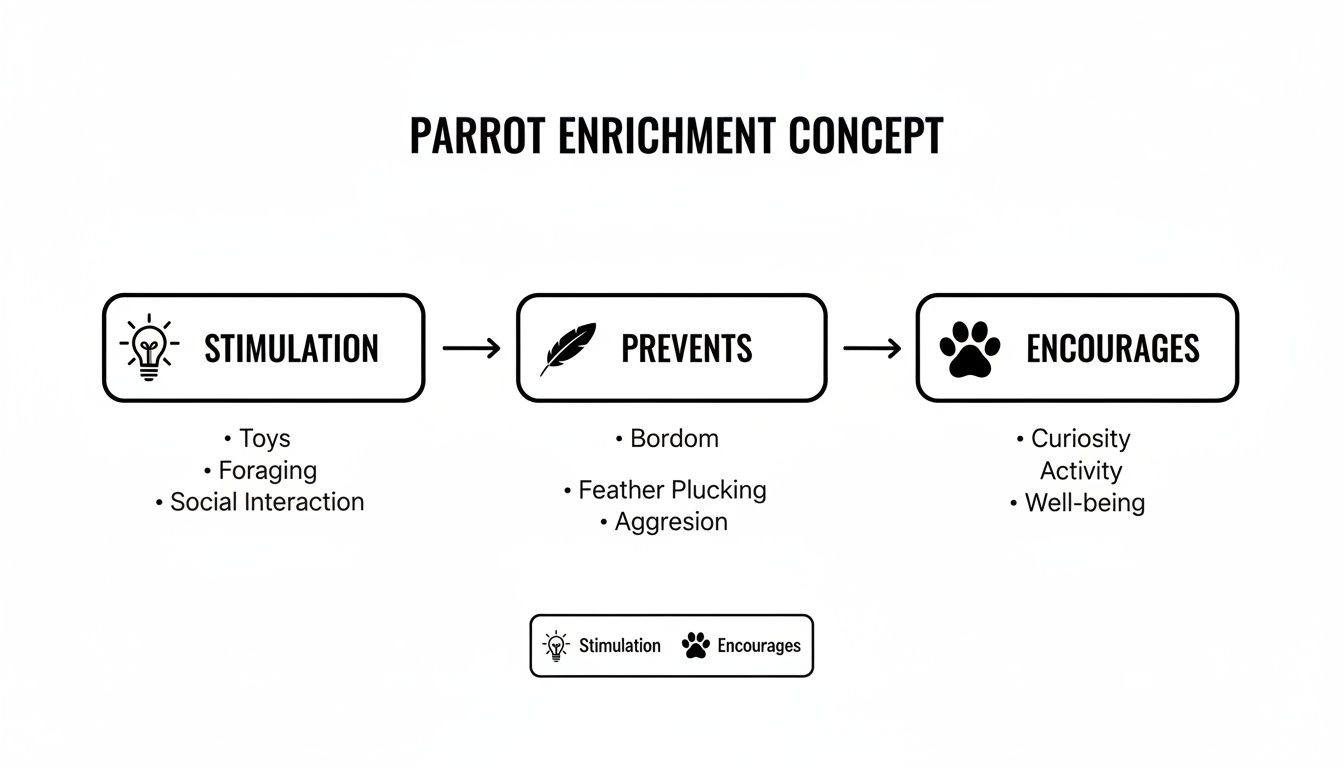
As you can see, the right kind of stimulation is the foundation of a happy, well-behaved bird. It directly channels their energy into curiosity and problem-solving, preventing issues that often spring from a boring environment.
Foot Toys for Dexterity and Play
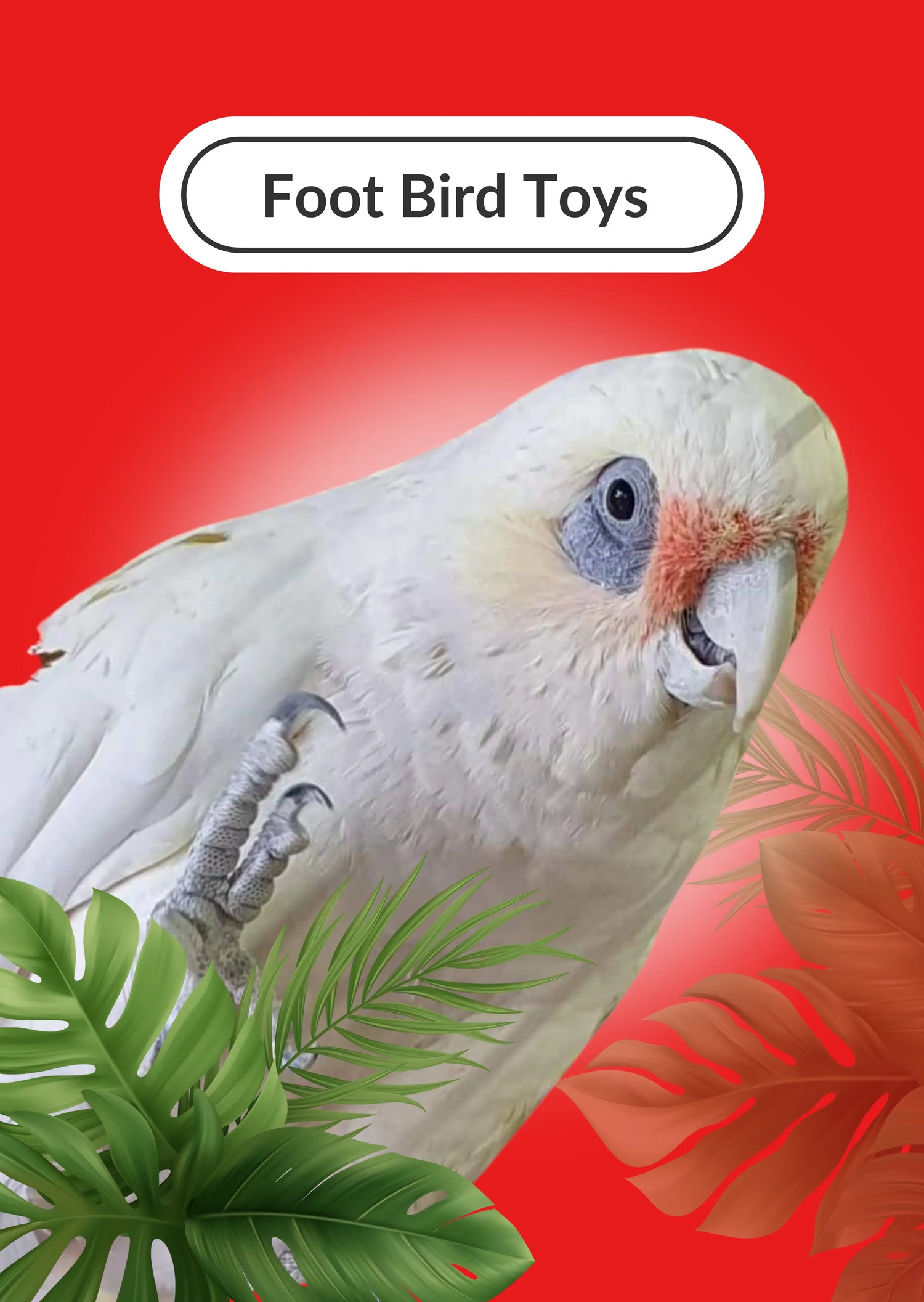
Foot toys, or "handheld" toys, are small, lightweight items that parrots can hold in their feet and manipulate with their beak. They’re brilliant for developing dexterity, coordination, and strength in their feet and legs. Think of them as your bird's version of a stress ball or a fidget spinner.
Popular foot toys include things like:
- Wiffle balls stuffed with crinkle paper
- Small, chunky wooden blocks
- Woven vine balls
- Plastic nuts and bolts designed specifically for birds
These toys are especially important for young birds who are still developing their motor skills, but even older birds love a good foot toy to toss around.
Swings and Perches for Exercise and Comfort
Finally, don't overlook swings, boings, and varied perches. These provide essential physical exercise and comfort. Moving perches like swings and bungee ropes (or ‘boings’) challenge a bird's balance, strengthening their leg and core muscles in the process.
Having different perch textures and diameters is also vital for good foot health, helping to prevent serious conditions like bumblefoot. By offering a range of natural wood perches, rope perches, and flat platform perches, you ensure their feet are constantly exercised and rested in different ways. They aren't just for sitting; they are a critical part of your bird’s in-cage gym.
A Quick Guide to Parrot Toy Categories
To pull it all together, this table breaks down the main types of parrot toys and the natural behaviours they support. It's a handy cheat sheet to help you choose a well-rounded selection for your bird.
| Toy Type | Primary Purpose | Encourages Natural Behaviours Like... | Ideal For Species Like... |
|---|---|---|---|
| Chew & Shred | Beak maintenance & destructive urges | Tearing, stripping bark, nest building | Galahs, Cockatoos, Macaws, Conures |
| Foraging | Mental stimulation & problem-solving | Searching for food, manipulating objects | Greys, Amazons, Budgies, Cockatiels |
| Foot Toys | Dexterity, coordination & fine motor skills | Holding, manipulating, tossing, chewing | All species, especially Eclectus, Caiques |
| Movement | Exercise, balance & physical activity | Swinging, climbing, hanging upside down | All species, from Finches to Macaws |
Remember, the best approach is a mix-and-match one. A cage filled with a variety of these toys gives your parrot the freedom to choose what they need at any given moment, keeping them happy, healthy, and wonderfully engaged.
How to Identify Safe Parrot Toys and Materials
When you bring a parrot into your home, their safety lands squarely on your shoulders. It’s a big responsibility! Navigating the world of bird toys can feel a bit overwhelming at first, but once you know what to look for, you’ll feel confident you’re making the best choices for your feathered friend. This is your essential guide to spotting safe, non-toxic toys and steering clear of the hidden dangers in poorly made products.
The focus on better avian care has made the bird toy market explode. While more choice is great, it also means we have to be extra careful about what we buy.
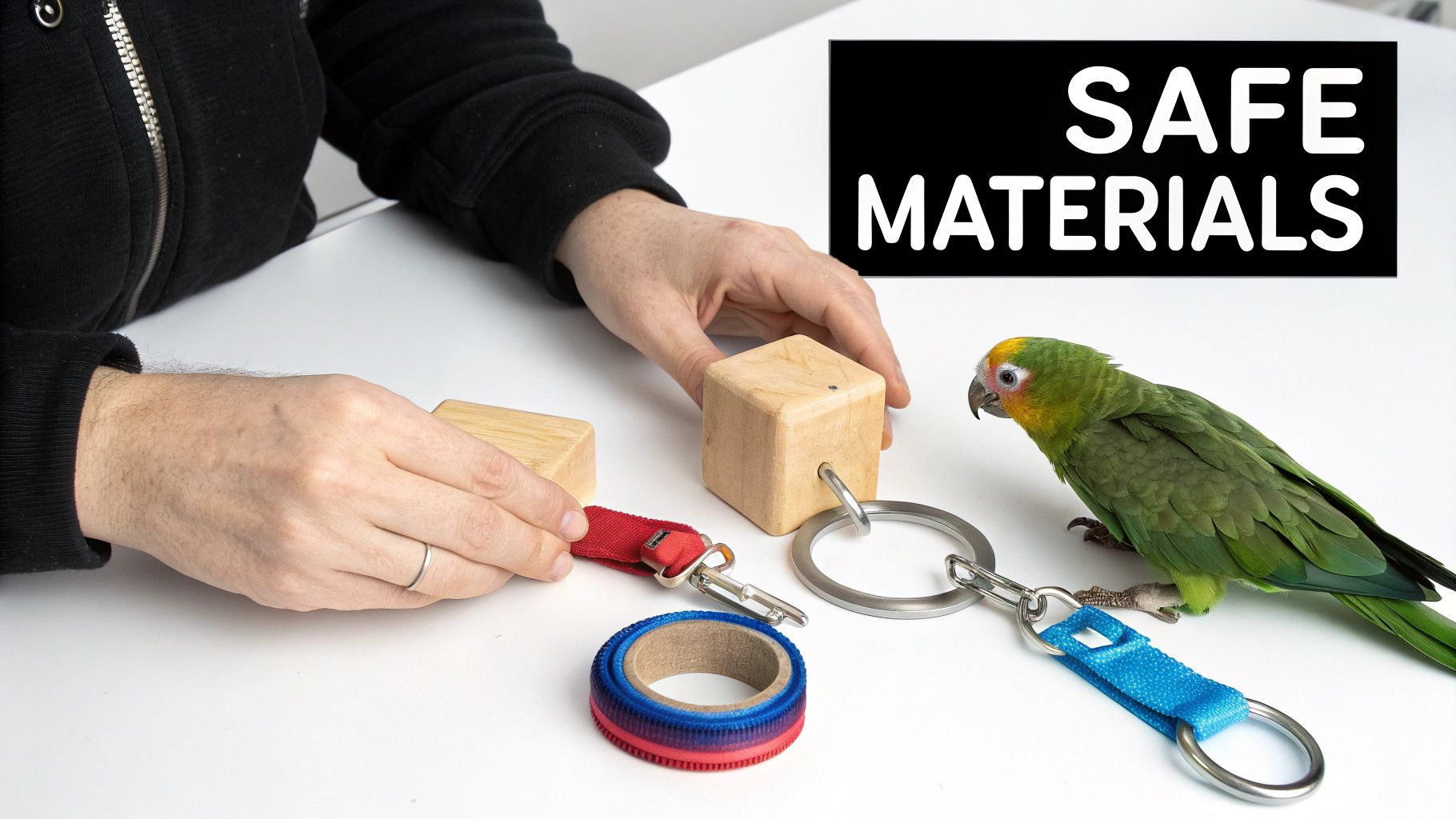
Bird-Safe Materials: The Green Light List
The best and safest parrot toys are almost always made from natural, unprocessed materials. Your bird is going to chew, shred, and maybe even swallow tiny bits of their toys, so everything they touch has to be completely non-toxic.
Here are the best materials to look for:
- Untreated Natural Woods: Think pine, balsa, birch, and native Aussie woods like bottlebrush or gum tree branches (as long as they’re properly cleaned and from a safe source). These are perfect for satisfying that chewing instinct.
- Vegetable-Tanned Leather: If there’s any leather on a toy, it absolutely must be vegetable-tanned. The alternative, chrome-tanned leather, is loaded with toxic heavy metals that are a huge no-go.
- Bird-Safe Metals: The gold standard here is stainless steel. It’s the only truly safe metal because it doesn’t rust or contain heavy metals like zinc or lead, which can cause severe poisoning. Nickel-plated hardware is another safe choice.
- Natural Fibres: Ropes made from sisal, jute, or cotton are generally safe, but they need close supervision. More on the risks of these in a moment.
- Food-Grade Plastics and Acrylics: Hard, durable acrylics are brilliant for foraging puzzles. Just make sure they’re food-grade and thick enough that a strong beak can’t shatter them into sharp, dangerous pieces.
Materials and Construction to Avoid: The Red Flag List
Knowing what’s safe is only half the battle; you also need to know what’s dangerous. Certain materials and design flaws can pose a serious risk to your bird’s health. We cover this in more detail in our guide to the best toys for parrots.
Steer clear of any toys containing:
- Toxic Woods: Woods from trees like cherry, oak, and black locust are toxic to birds. If you're not sure, don't buy it.
- Zinc or Lead Components: Lots of cheap toys use zinc-plated hardware for things like quick links and bells. This is a major cause of heavy metal toxicity. Look for shiny, chrome-like metals and avoid anything that looks dull or galvanised.
- Soft Plastics and Rubber: While a tiny bird might be okay with some plastics, a stronger beak can easily snap off pieces, leading to a dangerous intestinal blockage.
- Treated Leather or Dyed Ropes: Never give your bird leather that’s been tanned with chemicals or ropes coloured with non-food-grade dyes.
More Than Just Materials: Construction Matters
Even a toy made from the safest materials can be a deathtrap if it’s poorly constructed. A toy’s design is just as critical as what it’s made from. According to Australian avian vets, a huge number of bird injuries come from design flaws, not toxic materials.
Expert Advice: Before you give any new toy to your bird, inspect it yourself. Look for small gaps where a toe or beak could get stuck, loops of chain that could trap a head, and small parts that could be easily chewed off and swallowed. Your hands-on check is the final, and most important, safety inspection.
Pay special attention to long, fine fibres from cotton ropes or frayed fabric toys. These can be accidentally swallowed and cause a deadly crop impaction. Worse, they can wrap around a toe or leg, cutting off circulation.
If you use rope toys, inspect them daily. Trim any long, loose threads to keep them safe. Making these simple checks part of your daily routine is the best way to create a safe, stimulating, and worry-free environment for your feathered companion.
Matching Toys to Your Parrot's Size and Species
Giving a delicate, balsa wood toy to a Sulphur-crested Cockatoo is like handing a paper cup to a woodchipper. It’s not just a waste of a toy—it’s downright dangerous.
When it comes to picking parrot toys, one size absolutely does not fit all. After checking that the materials are safe, the next most important thing is matching the toy to your bird's size, species, and beak strength.
A toy that’s perfectly safe and fun for a little Budgie can become a serious hazard for a Galah. A small plastic bell that a Cockatiel can jingle could be shattered into sharp, swallowable pieces in seconds. This is why the toy's size, durability, and how it's built must scale up with your bird.
Small Parrots, Big Personalities
Small Aussie parrots like Budgies, Cockatiels, and Lovebirds have busy beaks but they don't have the sheer crushing power of their bigger cousins. Their toys need to be lightweight, easy to handle, and designed more for shredding than for serious demolition.
Look for toys made from softer materials that give them that satisfying crunch without too much effort. Think shredded paper, yucca slices, balsa wood, and thin cardboard. It’s also critical to make sure any bits and pieces, like beads or links, are small enough that they can't get a beak stuck or pose a choking risk.
Medium Birds: The Powerful In-Betweeners
Medium-sized parrots—like Galahs, Conures, and Ringnecks—are often the trickiest to shop for. They’ve got surprising beak strength and can make short work of toys meant for smaller birds, but the huge, chunky toys made for Macaws might intimidate them.
For these birds, you need a balance. Look for toys that mix shreddable fun with durable construction, like medium-density woods, tightly woven palm leaves, and sturdy leather strips. Any hardware must be robust, and plastic parts need to be tough enough to stand up to a determined beak. If you have a clever Cockatiel, you can find more specific ideas in our guide to the best bird toys for Cockatiels.
Expert Advice: Always watch how your bird plays with a new toy for the first time. A medium-sized bird has a knack for finding a weak point you might have missed. If they tear a toy into potentially dangerous pieces too quickly, it’s a clear sign you need to go for something tougher next time.
Large Parrots: The Demolition Experts
When you're choosing toys for big parrots like Cockatoos, Macaws, and Amazons, it all comes down to extreme durability. These birds have incredibly powerful beaks designed by nature to crack the hardest nuts. Their toys have to be built to withstand that immense pressure.
Focus on toys constructed with:
- Thick, dense hardwoods that offer a real chewing challenge.
- Heavy-duty stainless steel hardware for all links and connectors.
- Tough, bird-safe ropes that can stand up to serious pulling.
- Durable foraging devices made from thick acrylic or dense wood.
Anything less just won't last. Worse, it could break apart, creating sharp edges or small parts that can be swallowed. For these power-chewers, investing in well-made, large parrot bird toys isn't just a good idea—it’s an essential safety measure. When you get the size and strength right, you’re making sure their playtime is always safe, engaging, and perfectly suited to them.
Implementing a Toy Rotation to Keep Things Fresh
Even the most amazing, super-fun toy will eventually become just another bit of furniture in the cage. Parrots are far too smart for that; they genuinely thrive on novelty and fresh challenges. This is where a simple toy rotation system can make a world of difference, keeping their minds ticking over and their days interesting.
Think of it as heading off ‘enrichment fatigue’. When a bird sees the exact same things in the exact same spots, day in and day out, they eventually tune them out. A rotation schedule brings new things to explore, sparking their curiosity and stopping boredom before it can lead to bigger problems.
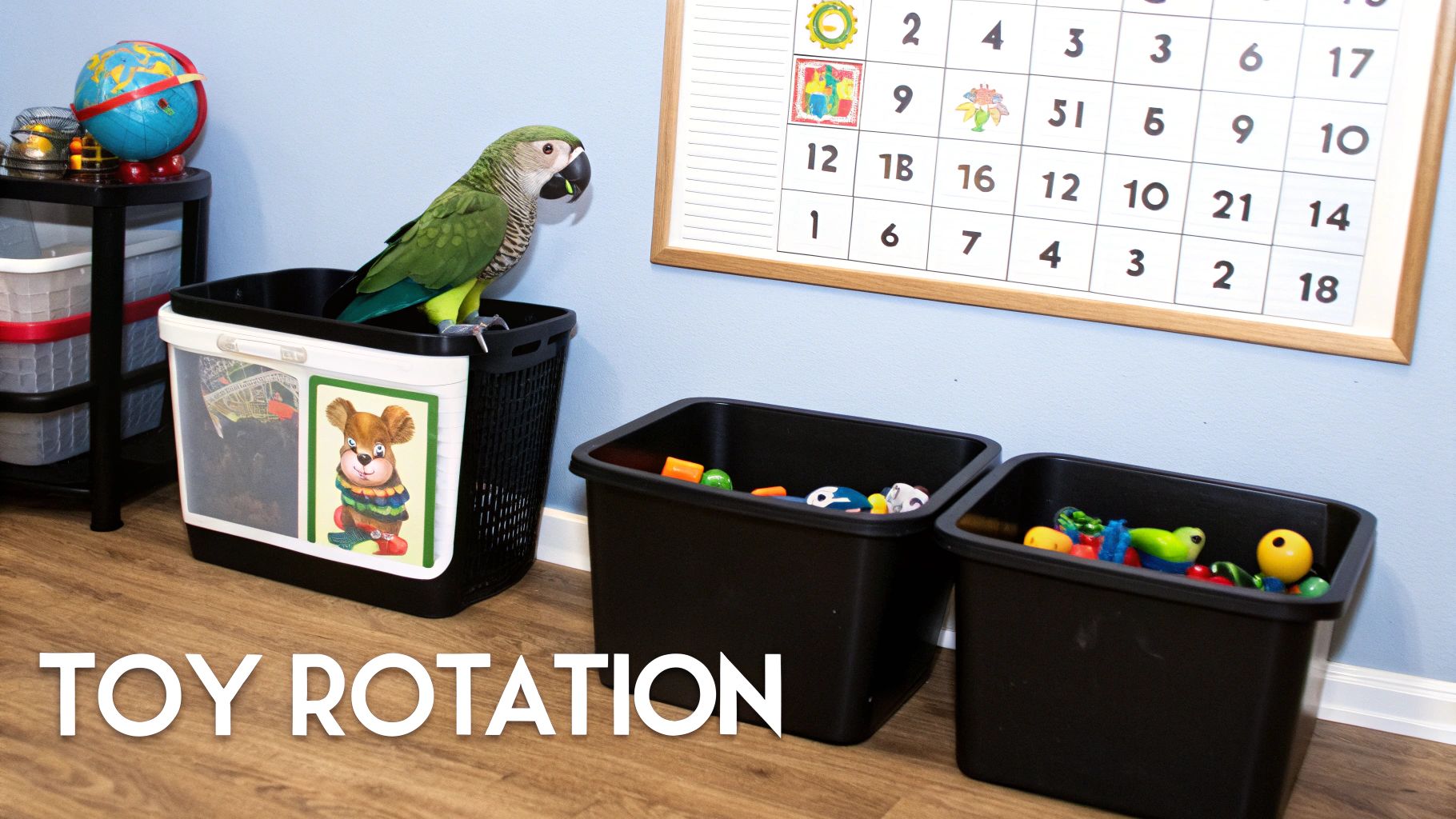
Setting Up Your Rotation System
Don't worry, this isn't complicated. The main thing is to build up a decent stash of toys so you have things ready to swap in and out. A great goal is to have at least two to three full sets of toys for your bird's cage.
1. How Many Toys at Once? It's tempting to fill the cage, but that can actually restrict their movement. A good starting point is 3-5 toys at a time, depending on how big the cage is. This gives them options without creating clutter.
2. How Often to Swap? Try swapping out just one or two toys every week. This gives them a steady little hit of novelty without the stress of suddenly being in a completely different environment.
3. Cleaning and Storage: When a toy comes out of the rotation, it’s the perfect time for a deep clean. Use a bird-safe disinfectant, give it a good rinse, and let it dry completely. Pop the clean toys in a dedicated box or container, ready for their next tour of duty. This is also your chance to give everything a once-over for damage and toss anything that looks unsafe.
This whole idea of providing better enrichment is really taking off across Australia. The boom in online sales just goes to show how committed Aussie owners are to their pets' happiness.
Introducing New Toys to a Cautious Bird
Some parrots are naturally a bit suspicious of new things—it’s an instinct that keeps them safe in the wild. If your bird is on the timid side, never just shove a new toy in their face.
Expert Advice: Take it slow. Start by placing the new toy on a table near the cage for a day or two. Let your bird get used to the sight of it from a safe distance. Once they seem relaxed, you can move it to the outside of the cage before finally placing it inside, maybe in a quiet corner away from their main perch.
Sample Weekly Enrichment Schedule
To keep things truly engaging, you can even theme your days to focus on different kinds of play. It’s a great way to ensure a well-rounded week of stimulation.
- Monday Mayhem: Kick the week off with some glorious destructive fun. Introduce a brand new, highly shreddable toy like the Coconut Piñata.
- Foraging Friday: Make this day all about mental exercise. Swap a simple toy for a more complex puzzle. You can learn more about why this is so good for them in our guide to bird foraging toys.
- Swinging Sunday: Get them moving! Focus on physical activity by bringing in a new swing or boing to encourage climbing, balancing, and just plain playing.
By setting up a simple rotation, you create a routine that is constantly stimulating and fun, catering to all the different sides of your parrot’s personality.
Common Questions About Parrot Bird Toys
Even when you've got the best of intentions, questions are bound to pop up when it comes to parrot toys. That's completely normal. We've gathered some of the most common queries from Aussie parrot owners to give you the clear, expert-backed answers you need.
My Parrot Is Scared of New Toys. What Should I Do?
This is something we hear all the time, and it’s a perfectly natural reaction. Parrots are creatures of caution, hardwired to be suspicious of anything new in their territory. That strange new object could be a predator, after all! The trick is a slow, gentle introduction.
Never, ever force a new toy on your bird. Instead, start by leaving it on a chair or table near the cage for a few days. Let them eyeball it from a safe distance until they realise it’s not a threat. It also helps if you interact with the toy yourself—pick it up, talk to it, and show your bird it’s a safe, interesting thing.
After a few days of this, you can try hanging it on the outside of the cage. Once they're comfortable with that, you can finally move it inside, maybe in a corner far from their favourite perch. The key is to let them approach it on their own terms.
How Often Should I Replace My Parrot's Toys?
There's no single answer here—it all comes down to the type of toy and how enthusiastically your bird plays with it. Toys that are meant to be destroyed, like shreddables or soft wood toys, are doing their job perfectly when they end up in a pile of debris. These might need replacing weekly or even monthly.
On the other hand, more durable toys like acrylic foraging puzzles or tough hardwood blocks can last for ages. A great example of a long-lasting option is our Stainless Steel Bell Star, which is built to withstand some serious play.
The most important rule is to inspect all toys daily for any wear and tear. If a toy is broken, badly frayed, or has developed sharp edges, it’s time to replace it.
Expert Advice: A well-loved but utterly destroyed toy isn't a waste of money—it's a sign of a happy, engaged parrot. Think of it as a successful investment in your bird's wellbeing. It means the toy did exactly what it was supposed to do: provide enrichment and save your furniture from the same fate!
Is It Safe to Make My Own DIY Parrot Toys?
Making your own toys can sound like a fun way to save a bit of cash, but it’s an area where you need to be extremely careful. Without expert knowledge of avian safety, it's easy to make a mistake that could have devastating consequences for your bird.
Many common household and hardware store items are hazardous:
- Hardware: Things like chains, clips, and bells from a standard hardware shop often contain zinc, which is highly toxic to parrots.
- Woods: Some woods are poisonous, and even "safe" woods need to be free of pesticides or chemical treatments.
- Dyes and Ropes: Craft store supplies can contain toxic dyes, and many types of rope can fray and pose a serious entanglement risk.
Unless you are 100% confident you can source certified bird-safe materials, we strongly recommend buying from reputable Australian suppliers who specialise in safe construction. It’s simply the best way to ensure your bird’s playtime is fun and worry-free.
A Happy Parrot Makes a Happy Home
Giving your parrot the right toys is one of the most powerful things you can do to fill their life with purpose and joy. As we've seen, these aren't just simple playthings or distractions; they're essential tools that keep your bird mentally sharp, physically active, and emotionally balanced. A good toy is how your parrot gets to be a parrot—safely, and right there in your home.
When you thoughtfully pick out toys that are safe and right for their species, and you keep things fresh by rotating them, you're doing more than just basic care. You're building a world that respects their incredible intelligence. This prevents boredom and the destructive habits that come with it, like feather plucking or excessive screaming. You're essentially giving them a job to do—puzzles to crack, things to chew, and textures to explore—just as they would in the Australian wild.
Your Partner in Parrot Enrichment
We get it. Creating this kind of vibrant, stimulating world for your bird can feel like a massive responsibility. That’s why we’re so committed to making it easier for Aussie bird owners to find toys that are not only fun but completely safe. Every material is checked, and every design is made with a genuine understanding of what makes a parrot tick. From the soft balsa a Budgie loves to shred, to the tough hardwoods a Cockatoo needs to really get stuck into, our range has something for every beak.
At the end of the day, we believe a happy bird makes a happy home. Investing in high-quality enrichment isn't just buying toys; it's an investment in your parrot's long-term health and the special bond you share. It's a promise to give them a life full of curiosity, activity, and purpose.
Expert Advice: An enriched life is a happy life. When you provide a stimulating environment, you’re not just stopping bad habits before they start. You’re actively creating a state of positive wellbeing that allows your parrot's unique personality to truly shine. That’s the real goal of great avian care.
So go on, create a world for your feathered friend that’s full of joy and adventure. They’re counting on you to be their provider of fun, their puzzle master, and their protector.
Ready to transform your bird's world? At Lou Lou Bells Bird Toys, we offer Australia's largest range of handcrafted, safety-focused enrichment toys. Explore our full collection and find the perfect parrot bird toys for your feathered friend today.
Keep Reading
Disclaimer Summary: The information in this article is general in nature and may include external links or resources not created by Lou Lou Bells Bird Toys. Every bird is unique, so we encourage you to seek personalised advice from your own veterinarian or avian specialist. For full details, please read our complete disclaimer here.