
At their heart, bird foraging toys are clever puzzles that get your parrot thinking and working to find their food. Unlike a plain old dish, these toys are designed to tap directly into a bird's natural instinct to search for their meals, transforming feeding time into a stimulating and rewarding game.
Why Your Bird Needs More Than Just a Food Bowl
Imagine eating the exact same meal, out of the same bowl, in the same spot, every single day. Sounds mind-numbingly boring, right? For so many of our feathered mates in Australia, this is their reality. A standard food bowl gets the job done when it comes to nutrition, but it offers absolutely zero mental engagement, leaving a massive gap in their daily lives.
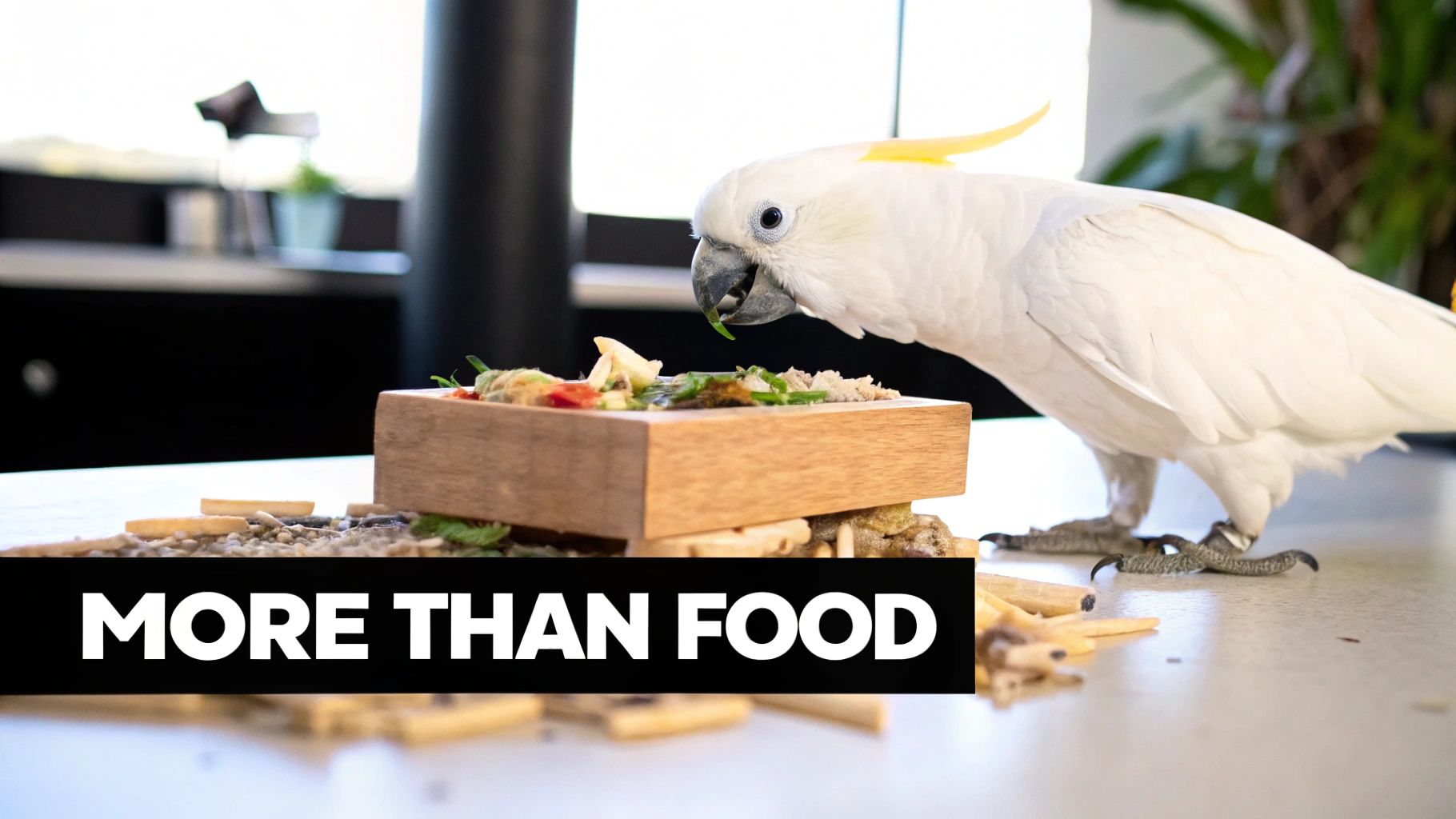
This predictable routine couldn't be more different from the life of their wild cousins. Think about a flock of Sulphur-crested Cockatoos digging for roots in the Aussie bush or Rainbow Lorikeets carefully pulling nectar from bottlebrush flowers. Wild birds spend a huge chunk of their day—often up to 50% or more—actively looking for food.
This isn't just about eating. It's a complex, all-day job that involves problem-solving, physical skill, and non-stop mental gymnastics.
The Problem With a Boring Bowl
When we take away that deep-seated need to work for food by just handing them a full dish, we unintentionally create a recipe for boredom and frustration. A smart bird with nothing to do will almost always find its own, less desirable, ways to keep busy.
This is where a lot of common behavioural issues come from:
- Feather Plucking: A stressed or under-stimulated bird might start over-preening or pulling out feathers.
- Excessive Screaming: Loud squawking can be a cry for attention or a clear sign of a bored mind.
- Destructive Chewing: An idle beak can quickly turn to destroying perches, cage bars, or things around your home.
- Aggression: Built-up frustration can bubble over as nipping or other aggressive behaviours towards their human family.
Expert Advice: "Providing foraging opportunities is one of the single most effective ways to improve a companion parrot's psychological welfare. It transforms feeding from a passive, two-minute event into an engaging, enriching puzzle that occupies their mind and body, mimicking the challenges they were evolved to solve."
The Foraging Solution
This is where bird foraging toys step in as essential tools, not just playthings. By making your bird think, fiddle with objects, and explore to get their food, you're giving back a vital piece of their natural world. You’re giving their brilliant mind a job.
The difference this simple change can make is incredible. To see it clearly, let's compare a day in the life of a bird with and without foraging enrichment.
A Bird's Day Before and After Foraging Enrichment
| Daily Experience | Life Without Foraging Toys | Life With Foraging Toys |
|---|---|---|
| Morning Meal | Eats from a bowl in 2-5 minutes, then boredom sets in. | Spends 30-60+ minutes working on a puzzle to get breakfast. |
| Mid-Day | Naps excessively, screams for attention, or starts chewing on things. | Engages with shreddable toys, preens contently, or explores other puzzles. |
| Mental State | Prone to stress, frustration, and lethargy. | Alert, curious, and mentally stimulated. |
| Physical Activity | Minimal movement outside of basic cage activity. | Climbs, manipulates objects, and uses beak and feet with purpose. |
| Behaviour | More likely to develop issues like plucking, screaming, or aggression. | More confident, calm, and engaged in healthy, natural behaviours. |
| Evening | May be restless or demanding due to unspent energy. | Physically and mentally tired in a healthy way, ready to rest. |
As you can see, introducing foraging is a cornerstone of modern, responsible bird care. It’s an acknowledgment that our feathered friends are more than just beautiful pets; they are highly intelligent creatures who thrive on challenge and engagement.
Making them work for their food doesn't just prevent bad habits—it builds a more confident, active, and happy companion. This simple change can make a world of difference to their overall wellbeing.
Why Foraging Is a Game-Changer For Your Parrot
Putting a foraging toy in your parrot's cage is about so much more than just keeping them occupied. It’s a powerful, science-backed way to directly improve their mental and physical health. When a parrot has to work and problem-solve to get its food, it’s not just playing a game—it’s fulfilling a deep biological need that echoes through its entire wellbeing.
This mental workout is a huge stress buster. Australian avian vets often point out that the intense focus a bird needs to figure out a foraging toy helps lower cortisol, the main stress hormone. A bird with a busy, engaged mind is far less likely to fall into chronic stress, which is a known trigger for destructive habits like obsessive feather plucking, repetitive behaviours, and cage aggression.
Boosting Brain Power and Mental Health
Parrots are incredibly smart, with cognitive abilities sometimes compared to those of a young child. Leaving a brain like that with nothing meaningful to do is like asking a person to sit in an empty room all day. It’s a recipe for boredom, anxiety, and frustration.
Foraging provides the exact kind of mental stimulation they’re wired to seek. Every puzzle, whether it’s shredding paper to find a seed or turning a wheel to release a pellet, keeps their brain firing and learning. This kind of engagement is a cornerstone of good parrot welfare. A stimulated bird is a happier, more balanced companion, plain and simple.
An engaged mind is a healthy mind. Foraging isn't a luxury; it's a medical and psychological necessity for intelligent birds. It provides a constructive outlet for their energy and intellect, preventing the vacuum of boredom that so often leads to behavioural problems.
The understanding of these benefits is growing fast across Australia. The local pet toys market, which includes these vital foraging toys, hit USD $36.53 million in 2024 and is expected to climb to $65.4 million by 2033. For clever species like conures or African Greys, avian behaviourists have noted that foraging can slash stress-related behaviours by up to 70%. Vets in Australia have even reported a 25% drop in feather-plucking cases among birds given daily enrichment.
Encouraging Physical Activity and Wellbeing
The benefits of foraging aren't just in their heads; they're profoundly physical, too. A food bowl requires almost no effort, but a foraging toy encourages a whole range of natural movements that are critical for a bird’s long-term health.
Just think about the physical actions involved:
- Improved Dexterity: Birds have to use their feet and beaks in coordinated, precise ways to hold, turn, and manipulate the toys.
- Better Foot Health: Gripping and climbing different surfaces to get to a toy strengthens foot muscles and helps prevent conditions like bumblefoot.
- Healthy Weight Management: The simple act of moving more to get food burns calories, helping to ward off the obesity that is so common in companion parrots.
Foraging essentially transforms a sedentary mealtime into a mini workout. All that extra activity supports cardiovascular health, maintains muscle tone, and promotes overall physical fitness. When you invest in good bird foraging toys, you're making a direct investment in your companion's health and happiness for years to come.
How To Choose The Right Foraging Toy For Your Bird
Stepping into the world of bird foraging toys can feel a bit overwhelming at first. With so many shapes, materials, and designs out there, how do you know which one your feathered friend will actually enjoy—and more importantly, use safely?
The secret is to think like your bird. You need to consider their species, size, personality, and current skill level. Choosing the right toy isn’t just about picking something colourful; it’s about providing a challenge that’s perfectly matched to their abilities.
A toy that’s too tricky can lead to frustration and disinterest, while one that’s too easy will be solved in minutes, defeating the whole point. The goal is to find that sweet spot that builds confidence and keeps their clever mind whirring.
Matching Toys To Your Bird's Size And Species
Different birds are built for different challenges. What delights a tiny budgie could be destroyed in seconds by a macaw, and a complex puzzle for a macaw might be impossible for a smaller bird to even manipulate.
-
Small Birds (Budgies, Cockatiels, Lovebirds): These little dynamos thrive on toys they can shred and dismantle. Think lightweight materials like balsa wood, bird-safe paper, yucca, or vine balls. Simple foraging boxes filled with crinkle paper or skewers with soft wooden blocks are perfect starting points.
-
Medium Birds (Conures, Galahs, Ringnecks): With stronger beaks and a love for problem-solving, medium-sized birds enjoy a mix of shreddable and durable toys. Foraging wheels that require them to spin a chamber into place or boxes with drawers they need to pull are excellent choices. They appreciate a bit more of a challenge.
-
Large Birds (Macaws, Cockatoos, African Greys): These powerful birds need toys built to last. Tough, bird-safe acrylic or stainless steel foraging toys are essential for safety and longevity. Look for complex puzzle feeders with multiple steps, locks, or screws that require serious brainpower to solve. Their intelligence demands a significant challenge to keep them engaged.
This diagram shows how foraging directly supports your bird's core needs, impacting their mental, physical, and emotional health.
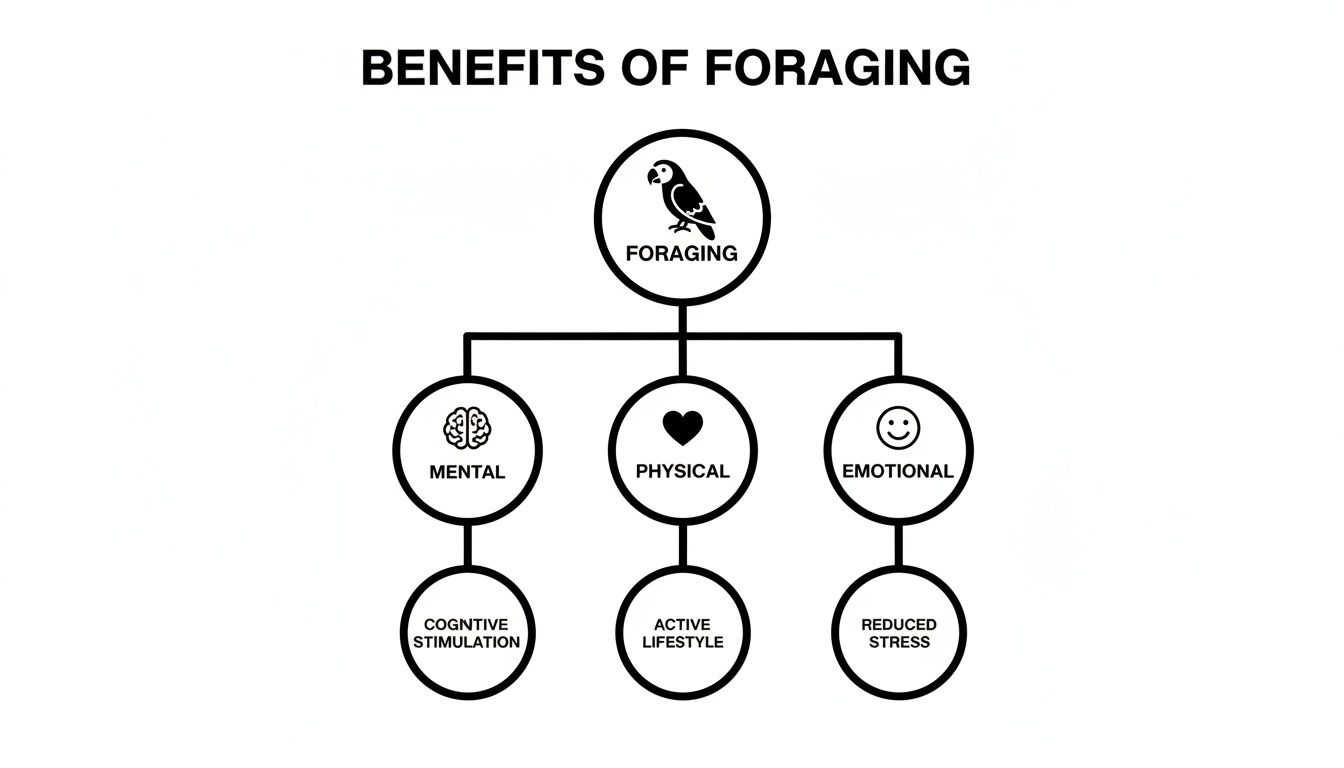
As you can see, the benefits are all linked. Mental stimulation leads to better emotional stability, and both encourage a more active, healthy lifestyle.
To make things even easier, here’s a quick-reference guide to get you started.
Your Bird's Perfect Foraging Toy Match
| Bird Size and Species | Recommended Toy Type | Ideal Materials | Difficulty Level |
|---|---|---|---|
| Small (Budgies, Lovebirds, Tiels) | Shred boxes, vine balls, paper-stuffed toys, soft skewers | Balsa wood, yucca, paper, cardboard, seagrass | Beginner to Easy |
| Medium (Conures, Galahs, Ringnecks) | Foraging wheels, simple drawers, block puzzles | Soft to medium woods, palm leaf, sturdy cardboard | Easy to Intermediate |
| Large (Macaws, Cockatoos, Greys) | Multi-step acrylic puzzles, stainless steel feeders | Hardwood, acrylic, stainless steel, tough plastics | Intermediate to Hard |
This table is just a starting point, of course. Always watch how your bird interacts with a new toy to see if it’s the right fit for their unique personality.
Considering Materials and Design
The material of a foraging toy is just as important as its design. Safety should always be your number one priority. Always opt for materials that are non-toxic and appropriate for your bird's chewing strength.
-
Natural and Shreddable: Materials like seagrass, palm leaf, cardboard, and soft woods are perfect for birds who love to destroy things. They satisfy that natural chewing instinct and are fantastic for beginner foragers.
-
Durable and Reusable: For the heavy chewers, acrylic and stainless steel are the go-to options. These materials can withstand powerful beaks and can be washed and reused endlessly, making them a great long-term investment.
-
Interactive Designs: Look for toys that require specific actions—pulling, twisting, spinning, or sliding. These designs encourage dexterity and more complex problem-solving skills, providing a much richer enrichment experience.
Expert Advice: Start simple, especially with a bird new to foraging. The goal is to guarantee an easy win. Let them see you place a high-value treat inside a very simple, open-style foraging toy. Success builds confidence and teaches them that interacting with these new objects is rewarding.
Once your bird masters the basics, you can gradually introduce more complex puzzles. For a deeper dive into selecting the best items for your specific companion, be sure to review our complete guide on how to choose the right bird toys for your bird. This systematic approach ensures your bird stays motivated and excited about their foraging journey, turning mealtime into a highlight of their day.
Introducing Foraging To a Sceptical Parrot
You’ve just brought home a fantastic new foraging toy, filled it with your parrot's absolute favourite treat, and popped it in their cage, waiting for the magic to happen. And... crickets. Your bird eyes it with deep suspicion, maybe even shuffles to the far side of the perch. It’s a scene familiar to many Aussie bird owners, and it can feel pretty disheartening.
Don’t stress! This doesn't mean your bird is lazy or you've wasted your money. Parrots are hardwired to be cautious. A strange new object in their safe space is naturally a bit scary. More importantly, a bird who has only ever known food to appear magically in a bowl simply doesn't understand they’re supposed to work for it.
The solution is to become your bird's personal foraging coach. Your job is to gently show them that these puzzles aren’t threats, but fun, rewarding games. The secret is to start with a guaranteed win.
Making the First Step Ridiculously Easy
Forget the complex, multi-step puzzles for now. Your first and only goal is to forge a super strong, positive connection between 'new toy' and 'delicious treat'.
Start with the simplest 'puzzle' imaginable. This might be a shallow, open-topped dish or a toy with massive, wide-open holes. Let your bird watch you place a high-value snack—something they’d do anything for—right inside.
High-value treats are key here. A sliver of a favourite nut, a single sunflower seed, or a snippet of millet for birds can work wonders. If you're not sure how to use treats effectively, learning more about options like millet for birds can make a huge difference in training and enrichment.
Now, place the toy in a familiar, non-threatening spot in their cage. Don't push it towards them. Just leave it be and walk away. Their natural curiosity will eventually do the rest.
Demonstrating and Praising Every Little Step
If your bird is still giving the toy the cold shoulder, it’s showtime. Parrots are incredibly observant and learn a lot just by watching what you do.
- Be the Forager: With your bird watching, get really enthusiastic with the toy yourself. Use your fingers to 'peck' at it and pull out a treat. Pretend to eat it with lots of happy noises. You're showing them it's safe and has a delicious purpose.
- Praise Any Progress: The second your bird even touches the toy with their beak or foot—even accidentally—offer calm, happy praise. Every tiny step forward is a huge win.
- Keep Sessions Short and Sweet: If they haven’t cracked it after 15-20 minutes, take the toy out and just give them the treat. This stops frustration from building and makes sure the whole experience ends on a high note.
Expert Advice: Consistency is your best friend. Aim for these short, positive sessions every day. By making foraging an easy and rewarding game at the start, you’re building the foundation for a confident, clever companion who will soon be ready to tackle bigger challenges.
Once your bird is confidently getting the treat from the super-easy toy, you can slowly dial up the difficulty. Maybe you’ll add a loose-fitting lid, stuff a bit of shredded paper over the treat, or introduce a toy that needs a simple spin or pull. This step-by-step approach turns what could be fear into a fun, engaging adventure for you both.
Creating a Toy Rotation System To Beat Boredom
Just like a child gets tired of the same old plaything, a clever parrot can quickly become bored with the same foraging toys day after day. Novelty is the secret ingredient to keeping their minds sharp and engaged. This is where a toy rotation system becomes one of the most powerful tools in your bird care toolkit.
A good rotation strategy prevents "toy burnout." By cycling through different sets of toys, you keep your bird’s environment stimulating and unpredictable, which is fantastic for their mental health. It turns familiar items into exciting, fresh challenges all over again.
Why Novelty Is So Important For a Parrot's Brain
A parrot’s brain is wired for discovery. In the wild Australian bush, their environment is constantly changing—new food sources appear, old ones disappear, and they must adapt daily. A static cage with the same old toys simply can't provide this vital stimulation, and that quickly leads to boredom and disinterest.
Once a toy becomes too familiar, it's no longer a puzzle. The challenge is gone, and so is the mental workout. Introducing a "new" (or simply rotated) toy sparks their natural curiosity, encouraging them to explore, problem-solve, and engage their minds.
Building Your Toy Rotation Library
First things first: you need a collection. You don’t need dozens of toys at once, but aim for enough to create at least two or three distinct sets.
- Set A (Current Toys): The toys currently in your bird’s cage.
- Set B (Resting Toys): A different selection of toys, all cleaned and stored away.
- Set C (Optional): Another set for even more variety. This is especially good for highly intelligent birds like Galahs or Eclectus parrots who figure things out fast.
A brilliant addition to any set is a versatile toy that can be refilled with different materials. The Foraging Basket of Colour Bird Toy, for instance, keeps the challenge fresh each time because you can stuff it with new textures and treats.
Setting Up a Practical Rotation Schedule
For most Aussie households, a weekly rotation is a fantastic, manageable schedule. It keeps things fresh without being overwhelming for you or your bird.
- Choose a "Swap Day": Pick a consistent day, like Saturday morning, to do the toy swap.
- Remove Set A: Take all the current toys out of the cage. This is the perfect time for a thorough inspection and clean.
- Introduce Set B: Place the clean, "resting" toys from Set B into the cage. Try arranging them in different spots to add another layer of novelty.
- Clean and Store Set A: Thoroughly clean and disinfect the toys you just removed. Once they're completely dry, store them away, ready for the next rotation.
Expert Advice: Pay close attention to how your bird reacts. If they have an absolute favourite comfort toy, you might choose to leave that one in the cage permanently while rotating the others around it. The goal is stimulation, not stress.
Safety First: Cleaning and Inspection
Hygiene is non-negotiable. A dirty toy can harbour harmful bacteria, so cleaning is a critical part of your rotation schedule.
- Disassembly: Take toys apart as much as you can for a deep clean.
- Washing: Use a bird-safe disinfectant or a simple solution of white vinegar and water. Scrub every surface to get rid of old food or droppings.
- Rinsing and Drying: Rinse every part thoroughly with clean water and let them air dry completely before storing them. Any lingering moisture can lead to mould.
- Inspection: Before storing or reintroducing a toy, give it a good look-over for any hazards. Check for frayed ropes, sharp edges on chewed wood, or cracked acrylic. If it looks unsafe, chuck it out.
The Australian pet toy market is booming for a reason. It's expected to grow from USD $36.53 million in 2024 to $65.4 million by 2033, driven by owners who understand just how important this kind of enrichment is. You can discover more insights about the bird toy market trends and see how this focus on welfare is shaping the whole industry.
Easy DIY Bird Foraging Toys You Can Make Today
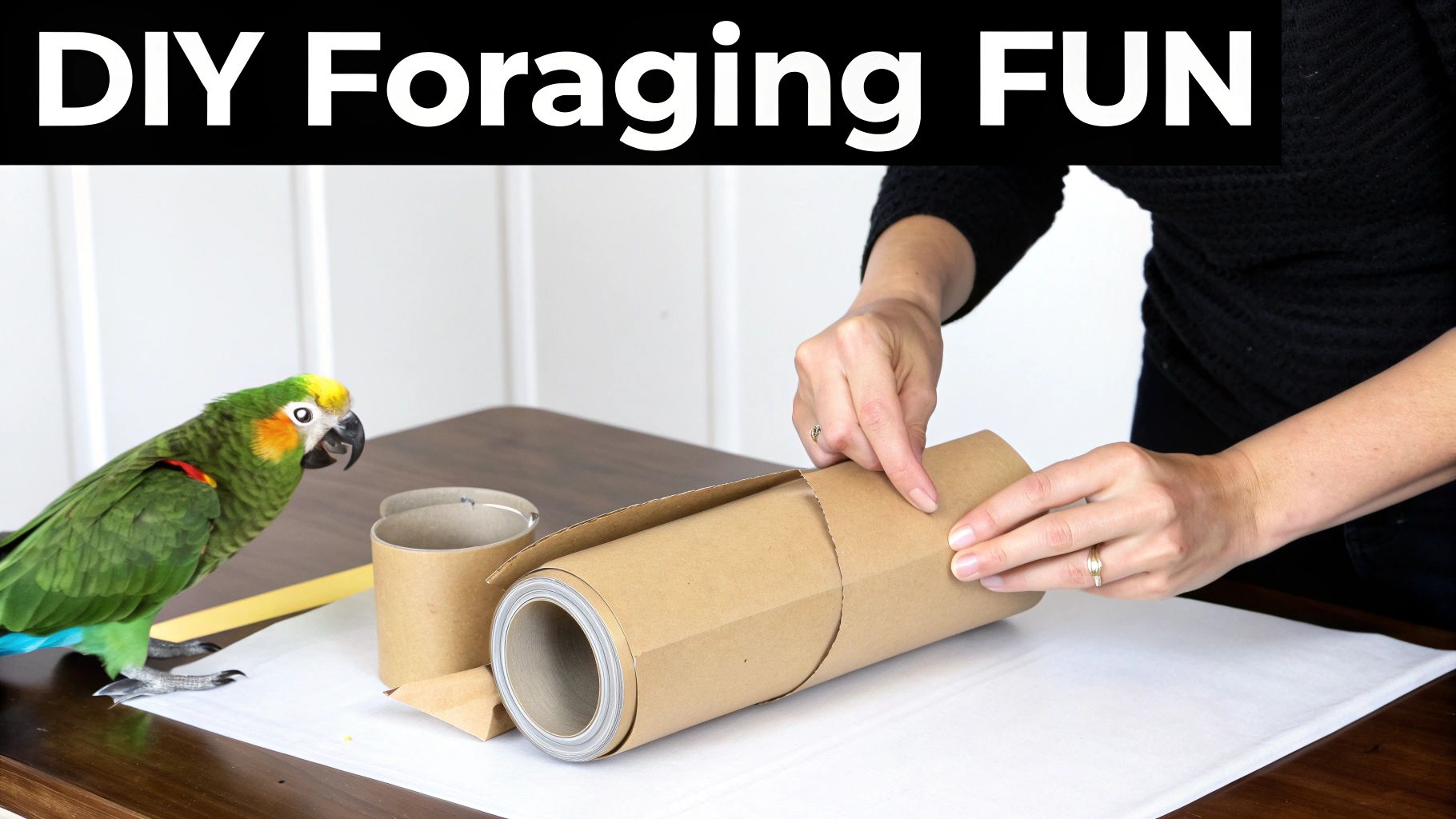
Giving your bird fantastic enrichment doesn't have to break the bank. In fact, some of the most engaging foraging toys are the ones you can whip up at home from simple, everyday items. Getting creative with DIY toys is a brilliant way to see what kind of puzzles and challenges your feathered friend loves before you splash out on more permanent, store-bought options.
It's also a great way to provide some instant fun. You can turn common household bits and bobs into a stimulating game in just a few minutes, heading off boredom at the pass.
Bird-Safe Materials From Around Your Home
Before you start building, safety has to be your top priority. Always stick to materials you know are non-toxic and free from nasty chemicals, dyes, or glues.
Safe to Use:
- Untreated cardboard (think toilet paper rolls, paper towel tubes, and plain boxes)
- Plain paper cups and cupcake liners
- Unbleached coffee filters
- Natural fibre twine like jute or sisal (just make sure you use short lengths)
- Untreated wooden skewers (with the sharp points snipped off)
- Plain, unwaxed paper bags
This focus on enrichment is a massive part of modern pet care. Australia's pet products market hit USD 1,462.8 million in 2022 and is forecast to reach USD 2,307.8 million by 2030. A huge driver of this growth is owners looking for tools like foraging toys to beat boredom and boost their pets' mental health. You can learn more about Australia's pet product market growth and see just how important enrichment has become.
What to Avoid At All Costs
Just as important as knowing what to use is knowing what not to. Lots of common craft and household items can be surprisingly dangerous for birds.
Never Use:
- Cardboard with glue, tape, or glossy, colourful ink
- Soft plastics that can be chewed up and swallowed
- Treated or pressure-treated wood
- Fabric with synthetic fibres or loose threads that can cause impaction or get tangled
- Anything with glitter, sequins, or toxic glues
- Scented items like dryer sheets or air fresheners
Expert Advice: When in doubt, throw it out. A bird’s system is incredibly sensitive, so it's always better to be overly cautious. Supervise your bird with any new DIY toy to make sure they're playing with it safely.
Quick and Easy DIY Foraging Ideas
Ready to get crafting? Here are a couple of super simple projects you can make in under five minutes.
1. The Cardboard Treat Parcel
This one is a classic for a reason—it’s ridiculously easy and taps right into a bird’s natural instinct to shred and destroy.
- Grab an empty toilet paper roll.
- Fold one end inwards to close it up.
- Pop a few treats inside, like seeds, nuts, or your bird’s favourite bit of dried fruit.
- Fold the other end in to seal the parcel.
- For an extra bit of challenge, poke a few small holes in the sides so your bird can get a sneak peek of the goodies inside.
2. The Paper Cup Forage Box
This is a perfect starting point for birds who are new to foraging and need an easy win to get them hooked.
- Take a small paper cup or a cupcake liner.
- Place a really tempting treat right at the bottom.
- Lightly scrunch up a piece of plain paper or a coffee filter and pop it on top of the treat.
- Don't pack the paper in too tightly at first. The goal is for your bird to easily pull it out and get their reward.
These simple, cost-free ideas provide fantastic mental stimulation and give you priceless insight into the kinds of puzzles your bird enjoys most.
Got Questions About Foraging Toys? We've Got Answers
Stepping into the world of bird enrichment can bring up a few questions. It's totally normal! To help you feel confident, here are some straightforward, expert-backed answers to the queries we hear most often from fellow Aussie bird owners.
How Do I Know If a Foraging Toy Is Safe for My Bird?
This is the most important question, and safety always comes first. A safe toy really starts with choosing the right materials for your bird's beak. For gentle chewers, look for things made from natural, untreated wood, bird-safe paper, or 100% cotton rope. But if you have a parrot with some serious beak power, you'll want to stick to super durable materials like hard acrylic or stainless steel to stop them from breaking bits off.
Before you hand over any new toy, give it a once-over. Are there any small parts that could be swallowed? Any sharp edges? It’s also a great idea to watch your bird with a new toy for the first few times, just to see how they interact with it and make sure they're playing safely. Our Foraging Fun Box, for example, is packed with safe, shreddable materials perfect for medium-sized birds.
My Bird Is Scared of New Toys. What Should I Do?
Don't worry, this is incredibly common. Parrots are naturally wary of anything new in their space—it's a survival instinct. The trick is a slow, positive introduction. Never just shove a new toy in their cage. Instead, try placing it somewhere outside the cage for a few days so they can get used to seeing it from a distance.
After a few days, you can move it a bit closer, and then finally pop it inside the cage, but well away from their favourite perch or food bowl. As we talked about earlier, using their absolute favourite treats to lure them closer is a brilliant way to build a positive connection. It teaches them that the new thing brings rewards, not threats.
Expert Advice: "Fear of new objects, or neophobia, is a natural survival instinct. Your role is to be a patient guide. By demonstrating that the toy is safe and rewarding through your own calm interactions, you help your bird overcome their initial hesitation and build their confidence."
How Often Should I Clean My Bird's Foraging Toys?
A good rule of thumb is to clean foraging toys as often as you clean their food and water bowls. If you're using a toy to hold fresh food like fruit or veggies, it absolutely must be cleaned daily to stop nasty bacteria from growing.
For hard, non-porous toys like acrylic or stainless steel, a weekly wash with a bird-safe disinfectant is perfect. For toys made of wood, paper, or other porous materials—like a Shreddable Kabob—you can't really deep-clean them. Once they get too soiled or chewed up, it's time to toss them out and replace them.
Can Foraging Toys Make My Bird Aggressive?
It's almost always the other way around! Foraging is a fantastic way to reduce aggression. It channels a bird's energy into productive problem-solving, which helps ease boredom and stress. That said, in some rare cases, a bird might get a bit territorial over a particularly high-value toy, especially if it's stuffed with their favourite treats.
If you spot any possessive behaviour, the best thing to do is make sure there are plenty of other toys and fun things to do. This is especially important if you have more than one bird. Providing multiple foraging stations can prevent squabbles over resources and keep the peace. A Birdie Piñata is a brilliant option for distracting and engaging even the most determined beaks.
Keep Reading
- A Guide to Parrot Enrichment
- Why You Need to Get Your Bird Out of the Cage
- DIY Bird Toys: Foraging Edition
Disclaimer Summary:
The information in this article is general in nature and may include external links or resources not created by Lou Lou Bells Bird Toys. Every bird is unique, so we encourage you to seek personalised advice from your own veterinarian or avian specialist. For full details, please read our complete disclaimer here.