
For anyone with a parrot in their home, you quickly learn that toys aren’t just a bit of fun—they're an essential tool for keeping your bird healthy and happy. Providing a good mix of safe, engaging toys is one of the most important things you can do, and it heads off a lot of common behaviour problems that spring from simple boredom.
Why Quality Parrot Toys Are Not Just Child's Play
Bringing a parrot into your home is a big commitment. These are highly intelligent, emotional creatures, and unlike a cat or dog who might be happy with a few simple playthings, a parrot's mind is a complex engine that needs to be kept running. If that energy and intellect don't have a proper outlet, serious problems can pop up surprisingly fast.
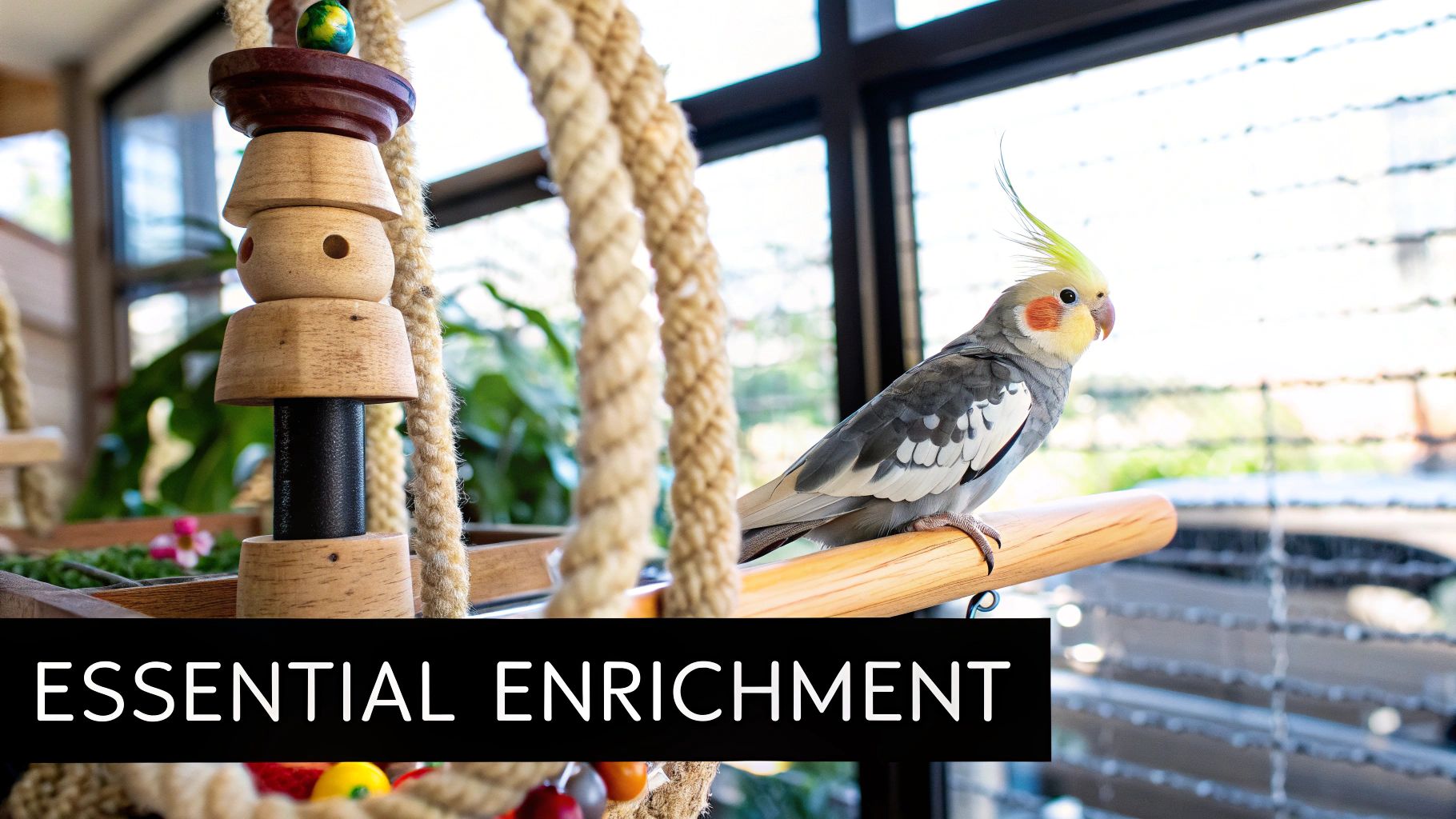
Think about their life in the wild here in Australia. Parrots spend most of their day foraging for food, navigating tricky environments, and interacting with their flock. Those natural instincts don't just switch off when they live with us. If that pent-up energy has nowhere to go, it often comes out in destructive ways.
The Real Cost of Boredom
Honestly, boredom is one of the biggest threats to a companion parrot's wellbeing. A bird with nothing to do is a bird under stress, and that stress can lead to a whole range of issues that are just as distressing for you as they are for your bird.
By providing quality toys, you're actively preventing things like:
- Feather-plucking: A common and heartbreaking condition that’s often a sign of anxiety and a lack of mental stimulation.
- Excessive screaming: All parrots make noise, but that constant, ear-splitting shriek can be a cry for attention or a sign of deep frustration.
- Destructive behaviour: An under-stimulated beak will always find something to chew, whether that's your furniture, skirting boards, or dangerous electrical cords.
- Aggression: A bored and frustrated parrot can easily become nippy or aggressive towards its human family.
Expert Advice: A mentally stimulated parrot is a happy parrot. The goal of enrichment isn't just to keep them busy, but to give them a 'job' that satisfies their natural instincts to chew, shred, and figure things out. This is a fundamental part of responsible parrot care.
An Investment in Wellbeing
It's great to see that Aussie pet owners are really starting to understand the importance of enrichment. The Australia Pet Toys Market was valued at USD 36.53 million in one year and is projected to hit USD 65.4 million within nine years. That growth shows a real shift in understanding what our companions need. You can read more about this trend in the Australian market and its growth.
Taking the time to provide a variety of safe, high-quality bird toys for parrots is fundamental. Investing in things like stimulating foraging bird toys and satisfying shredding toys isn’t just about spoiling your bird. It’s about building the foundation for a long, healthy, and joyful life together. This guide will walk you through everything you need to know.
Decoding Your Parrot's Play Instincts
To pick the right toys for your parrot, you have to start thinking like one. Their drive to play isn't just about having fun—it’s about satisfying instincts they've honed over millions of years. A parrot's brain is hardwired to solve problems, explore its surroundings, and pull things apart.
When we give them a variety of toys, we're not just decorating their cage. We're creating an "enrichment diet" that provides a healthy outlet for these powerful, natural urges. Ignoring these instincts is often where behavioural problems start, because a brilliant mind with nothing to do will always find its own entertainment, and it's usually destructive.
A well-stocked toy box is one that caters to every part of your bird’s psychology.

The Foraging Instinct
Out in the Australian bush, a parrot spends a massive part of its day just working for its food. That might mean cracking open tough gumnuts, digging for roots, or meticulously pulling apart blossoms. A food bowl filled to the brim takes that essential 'job' away from them.
Foraging toys are designed to bring that challenge back. They make your bird think, manipulate, and problem-solve to get a reward. This isn't about being mean; it’s about providing the deep mental satisfaction that comes from tapping into their core nature. Even something as simple as wrapping a treat in paper can kickstart this instinct.
Expert Advice: Avian behaviourists consistently point to foraging as one of the single most important enrichment activities for companion parrots. It cuts down on boredom, builds confidence, and can dramatically reduce stress-related behaviours like screaming or feather plucking.
The Need to Shred and Destroy
Does your parrot chew on everything? That’s not naughty behaviour—it's a vital, hardwired instinct. In the wild, parrots are constantly chewing on wood to create nesting hollows, keep their beaks in shape, and just explore what’s around them.
Shredding toys give them a safe and appropriate target for this destructive urge. Materials like yucca, balsa wood, cardboard, and palm leaves offer immense satisfaction. For a Galah or a Cockatoo, tearing a toy to absolute pieces is a job well done. It’s so important to see this destruction not as a waste of money, but as a sign of a successful enrichment activity.
Preening and Comfort Toys
Parrots are incredibly social flock animals. In the wild, they spend a lot of time preening each other, which strengthens social bonds and keeps their feathers in perfect condition. Without a feathered friend to do this with, some birds can start to over-preen their own feathers out of stress or boredom.
Preening toys, often made from soft, shredded fibres like sisal or paper, provide an outlet for this behaviour. Your bird can meticulously pull apart and 'groom' the toy instead of themselves. These are especially wonderful for gentle species like Cockatiels, and for any bird living on its own.
Foot Toys for Dexterity
A parrot’s feet are as versatile as our hands. They use them to hold food, climb, and manipulate objects with amazing precision. Foot toys are small, lightweight items a bird can hold in one foot to chew on and explore.
These are essential for developing coordination and strength, especially for smaller species like Budgies and Lovebirds who might be a bit intimidated by large hanging toys. Think of them as the parrot version of a stress ball or a fidget toy—perfect for keeping their feet and minds busy.
Puzzle Toys for Big Thinkers
Finally, we have puzzle toys. These are the ultimate challenge for your parrot’s intellect. They often require multiple steps to solve, like pulling levers, turning dials, or removing pegs to get to a hidden treat.
They are fantastic for highly intelligent species like African Greys, Macaws, and our native Cockatoos, who get bored incredibly easily. A great approach is to start with a simple puzzle and slowly increase the difficulty. It’s a brilliant way to build your bird’s confidence and problem-solving skills. For more on figuring out what your bird really enjoys, check out our guide on what birds love the most.
Your Guide to Choosing Safe Bird Toys
When you bring a new toy home for your parrot, their safety isn't just a nice-to-have feature—it's everything. A colourful, fun-looking toy can hide serious dangers, so knowing what to look for is one of the most important skills you can develop as a bird owner here in Australia.
Think of yourself as the chief safety inspector for your flock. A parrot’s powerful beak and relentless curiosity mean they’re going to chew, shred, and pull apart every last piece of that toy. Every single component, from the clip at the top to the knot at the bottom, has to be completely non-toxic and built to last.
Spotting Dangerous Materials
The first and most important safety check is always the materials. Many cheap, mass-produced toys are made with components that might be fine for other pets, but are downright toxic for parrots. A trained eye is your best line of defence.
Keep a sharp lookout for these common culprits:
- Toxic Metals: This is a big one. Hardware like chains, clips, and bells can contain zinc and lead, both of which are extremely poisonous to birds. Your safest bet, always, is to look for stainless steel hardware. Never, ever use anything made from galvanised metal.
- Unsafe Dyes: Bright colours are fantastic for grabbing your bird's attention, but the dyes absolutely must be non-toxic and bird-safe. If you notice colour running when the toy gets wet, or if it rubs off easily, that's a major red flag. Reputable Aussie suppliers will always use food-grade vegetable dyes that are harmless if ingested.
- Dangerous Plastics: Not all plastics are created equal. Hard, durable acrylics can be great for big beaks, but soft plastics are a huge risk. They can be chewed into small pieces and swallowed, leading to devastating internal blockages. The rule of thumb? If your parrot can bite a piece off, the plastic is too soft.
Expert Advice from an Australian Avian Vet: "We see too many preventable injuries from unsafe toys. The most common issues are heavy metal toxicity from cheap hardware and gastrointestinal blockages from ingested soft plastics or synthetic fibres. Always prioritise toys made from natural, untreated materials and stainless steel fittings."
Risky Designs and Poor Construction
It's not just about what a toy is made of; how it's put together is just as crucial. A toy that seems perfectly fine at first glance might have hidden traps waiting for an unsuspecting bird.
A well-made, safe toy should never have:
- Small Gaps or Loops: Chains with open links, small O-rings, or loops of rope can easily trap a toe, beak, or even a bird's entire head. It's a terrifying thought, but it happens. Go over every toy with a fine-tooth comb, checking for any potential entrapment points.
- Flimsy Clips: The standard clips you find on many imported toys are often weak and can be dismantled in minutes by a determined Galah or Cockatoo. This can lead to your bird swallowing a broken piece or, worse, managing to escape.
- Loose Threads and Long Fibres: While natural fibres are excellent, toys made with long, dangly cotton threads are a serious hazard. These can wrap around a bird's neck or toe, cutting off circulation. If ingested, they can cause a fatal crop impaction. Stick to materials that shred into safe, small, digestible pieces. Even seemingly harmless natural items need a second look; understanding the risks of materials like almond shells for parrots is all part of being a responsible owner.
Choosing bird toys for parrots from trusted Australian suppliers like Lou Lou Bells is the simplest way to get it right. Local makers know the incredible strength of our unique native species and are held to much higher safety standards. It gives you the peace of mind that every toy you bring home is a source of joy, not a potential danger.
Matching Toys to Your Parrot's Beak Strength
When you're looking at the world of bird toys for parrots, one size most definitely does not fit all. Handing a toy designed for a Budgie to a Sulphur-crested Cockatoo is like giving a toddler a cardboard box and expecting it to last against a demolition crew. It’ll be obliterated in seconds, and worse, small parts could become a serious choking hazard.
Understanding your parrot's beak strength isn't just about saving money on toys; it's a fundamental part of keeping them safe and happy. A toy that's too soft offers no real challenge and is gone in a flash, while one that's too hard can lead to beak damage or just plain boredom. The goal is to find that perfect sweet spot: durable enough to be a satisfying project, but soft enough to be successfully demolished over time.
This simple flowchart is a great place to start your safety check before you even get to beak strength.
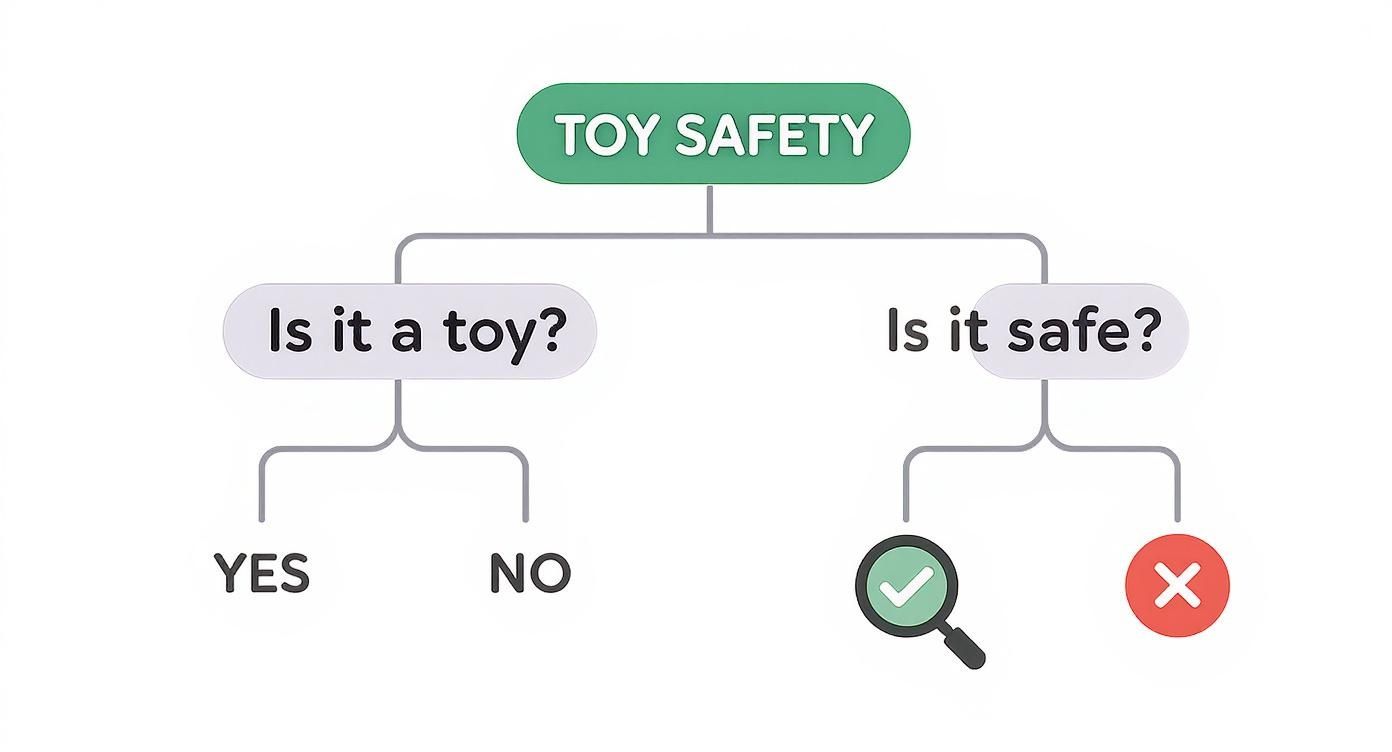
It's a quick visual reminder to ask the most important questions first. After all, an item has to be safe before it can ever be considered a toy.
To make it easier, let's break down the common parrot sizes and what works best for them. The table below gives you a quick-glance guide to matching materials to your bird.
Toy Recommendations by Parrot Size
| Parrot Size Category | Example Aussie Parrots | Recommended Toy Materials | Toys to Avoid |
|---|---|---|---|
| Small Beaks | Budgies, Cockatiels, Lovebirds, Parrotlets | Balsa wood, yucca, shredded paper, vine balls, palm leaves | Dense hardwoods, thick acrylics, large metal parts, heavy-duty rope |
| Medium Beaks | Galahs, Corellas, Conures, Quakers | Pine blocks, native softwoods (Banksia), vegetable-tanned leather, coconut shell | Toys made for small birds (choking hazard), extremely hard woods, thin plastics |
| Large Beaks | Macaws, Sulphur-crested Cockatoos, Eclectus Parrots | Australian native hardwoods (Gum, Mallee), thick pine, heavy-duty ropes, tough acrylics | Soft balsa wood, small plastic parts, thin leather, any toy not built for high impact |
This is just a starting point, of course. Every bird has its own personality and preferences, but this framework will help you avoid the common pitfalls and choose toys that are both safe and genuinely enriching.
Small Beaks: Gentle But Mighty
This group includes some of Australia’s most beloved companion birds, like Budgies, Cockatiels, Lovebirds, and Parrotlets. Their beaks might look small, but they’re driven by that powerful parrot instinct to chew, shred, and explore. The trick is giving them materials that are soft and lightweight enough for them to really get stuck into.
For these gentle chewers, think delicate and destructible. Their perfect toys include:
- Balsa Wood: This super soft wood is incredibly satisfying for small beaks to shred into confetti.
- Yucca Slices: Often called 'bird kabobs', these fibrous, crunchy pieces are a massive hit with tiny shredders.
- Paper and Cardboard: Plain, un-inked paper rolls and shredded cardboard offer fantastic, low-cost shredding fun.
- Vine Balls and Palm Leaves: These natural materials are perfect for hiding treats inside to get them foraging.
What you need to steer clear of are dense hardwoods, tough acrylics, or big, chunky toy parts. They simply can’t get a grip on them, which leads to frustration and could even risk injuring their smaller, more delicate beaks.
Medium Beaks: The All-Rounders
Here we find many popular Aussie parrots like Galahs, Corellas, Conures, and Quakers. These birds are the versatile middleweights of the parrot world. They have some serious beak strength and can make short work of toys meant for smaller birds, but they can also be overwhelmed or uninterested in toys designed for the true heavyweights.
Their toy box needs a good mix of materials that offer a moderate, satisfying challenge.
Expert Advice: Medium-sized parrots often love 'combination' toys that have both softer, shreddable bits and tougher wooden blocks. This variety keeps them engaged for longer, letting them switch between easy shredding and more serious chewing.
Good choices for this group include:
- Soft Native Woods: Woods like Banksia and Bottlebrush offer a great chewing experience without being rock-hard.
- Pine Blocks: Untreated pine is a classic for a reason. It's soft enough to be chewed and splintered safely but offers more of a fight than balsa.
- Tough Leather Strips: Vegetable-tanned leather provides an excellent texture for chewing and pulling.
- Coconut Shells: A fantastic natural material that is tough but can be successfully chewed apart over time. Our Natural Coconut & Husk Foraging Toy is a perfect example for this group.
Large Beaks: The Power Chewers
This category is for the true avian demolition experts: Macaws, Sulphur-crested Cockatoos, and other large Cockatoo species. Their beaks are incredibly powerful tools, capable of cracking the hardest nuts and splintering dense wood like it's nothing. For them, durability is the name of the game.
Giving weak toys to these birds isn't just a waste of money—it can be downright dangerous. They can snap off and swallow parts that were never meant to come loose. They need toys built to withstand serious punishment, like our robust Hardwood Block Bird Toy.
The best materials for these powerhouses include:
- Australian Native Hardwoods: Think tough Gum and Mallee wood. These provide a long-lasting and appropriate challenge for a powerful beak.
- Thick Pine or Hardwood Blocks: Large, chunky blocks of wood are essential for giving them a substantial chewing project.
- Tough Acrylics: For puzzle and foraging toys, high-quality, thick acrylic can stand up to a big beak.
- Heavy-Duty Ropes: Thick sisal or other natural fibre ropes are great for climbing and hanging, as long as you check them regularly for any fraying.
Matching the toy to the beak is the secret to successful enrichment. It ensures your bird is safe, keeps them from getting bored, and honours the incredible natural power of your parrot's most important tool.
Mastering Toy Rotation and Foraging
So, you’ve picked out a fantastic collection of safe, engaging, and beak-ready bird toys for parrots. Good on you. But the job isn't quite done. Just filling the cage with toys is a great start, but to really get the most out of them, you need a bit of a strategy. This is where you go from being a toy buyer to a true master of enrichment.
The two most powerful tools in your kit are toy rotation and foraging. These strategies turn static objects into a dynamic, ever-changing world that keeps your parrot’s clever mind whirring. Think of it as curating an ongoing festival of fun, rather than just setting up a playground and walking away.
The Power of Novelty Through Toy Rotation
Ever noticed how a brand-new toy is the centre of your parrot's universe for a day or two, only to be totally ignored by the end of the week? Your bird isn’t being fussy; it’s a natural response called habituation. Out in the wild, their environment is always changing, and their brains are wired to pay close attention to what’s new and different.
Toy rotation is the simple but incredibly effective answer. It’s like creating a subscription box service for your parrot, where old favourites reappear and feel brand new again. This constant sense of discovery is crucial for stopping boredom in its tracks.
Expert Advice: An expert tip from avian behaviourists is to have at least three sets of toys for your parrot's cage. One set is in the cage, one is being cleaned, and one is 'resting' in storage. This simple system makes rotation effortless and consistent.
Getting a rotation schedule going is easy:
- Group Your Toys: Split your parrot's toys into two or three groups. Make sure each group has a good mix—a shreddable toy, a foraging toy, a foot toy, and maybe a puzzle.
- Schedule the Swap: Once a week, take out the current group of toys and pop in the next set from your storage. A weekly swap is a great starting point for most birds.
- Clean and Store: Give the toys you've removed a thorough clean and store them away, out of your bird's sight. This 'resting' period is what makes them exciting again when they reappear in a few weeks.
This simple routine keeps your parrot's world feeling fresh and interesting, preventing that dreaded "toy blindness" where even the best toys become little more than cage decorations. It also gives you a regular chance to check toys for wear and tear, making sure everything stays safe.
Unlocking Natural Instincts with Foraging
Foraging is, without a doubt, one of the most important things you can offer your parrot. In their natural habitats across Australia, parrots spend up to 80% of their waking hours just looking for food. It’s their main job, and it’s a job that engages their body, their senses, and their incredible intellect. A simple food bowl completely removes this fundamental purpose from their day.
Introducing foraging is about giving that purpose back. It turns mealtime from a two-minute snack into an engaging, problem-solving challenge that’s immensely satisfying for them. You can start small and slowly ramp up the difficulty as your bird gets the hang of it.
Here are a few ideas for Aussie parrot owners:
- Beginner Level: Start by just wrapping a favourite nut in a piece of plain paper or stuffing a treat inside a cardboard tube. The goal is to get your bird working, even in a small way, for its reward.
- Intermediate Level: Use simple foraging toys where your bird needs to pull open a little drawer or lift a lid to get a treat. You could also mix dry foods with safe, non-food items like wooden beads or shredded paper in a dish, forcing them to sift and search.
- Advanced Level: Introduce multi-step puzzle toys that require your bird to figure out several steps to unlock the food. A fantastic project for a skilled forager is to create a "foraging tree" from a safe native branch, drilled with holes to stuff with food and toy parts.
The growing awareness around enrichment is clear. The Asia Pacific pet toys market, which includes Australia, was valued at USD 2,520.5 million and is projected to grow significantly. This shows a real shift towards owners wanting more advanced and behaviourally enriching products for their pets. You can discover more insights about the Asia Pacific pet toys market to see how this trend is shaping the industry.
For a deeper dive into making foraging fun and effective, check out our guide on foraging toys for birds.
Your Parrot's Ultimate Toy Box Checklist
Giving your parrot a rich and engaging life isn't a one-and-done task; it's a journey. It’s a joyful, ongoing process of figuring out what sparks their curiosity and satisfies those deep-seated instincts. Think of this checklist as your go-to guide, bringing everything together to help you build the best possible toy box for your feathered mate.
Use this to do a quick audit of what you already have and to plan your next shopping trip. The real goal here is to build a well-rounded "enrichment diet" that keeps your bird’s mind sharp and body active, every single day.
The Five-Point Toy Audit
Run through these five simple questions. They'll help you see if your parrot's current toy stash is safe, stimulating, and a perfect match for them.
-
Is it Safe? This is non-negotiable. Look at every single part of the toy for potential hazards. Is the hardware stainless steel? Are the dyes non-toxic and bird-safe? Are there any small gaps, loops, or frayed ropes that could trap a toe, beak, or even a head? If you have any doubt at all, it's better to be safe and just throw it out.
-
Is it Species-Appropriate? Does the toy actually suit your bird's beak strength and size? A tough native hardwood that’s perfect for a Sulphur-Crested Cockatoo would be useless for a Budgie, who’d much prefer a softer, shreddable balsa toy. It’s all about matching the material to the beak.
-
Does it Cover All Instincts? A truly great collection needs variety. Take a look in the cage. Do you have something for shredding, something for foraging, a preening toy for feather care, and a few foot toys for them to grapple with? Ticking all these boxes means you’re catering to their natural behaviours.
-
Is there a Rotation Plan? Are you swapping toys in and out at least weekly to keep things interesting? An ignored toy isn't necessarily a bad toy—it's often just a familiar one. Keeping things fresh is the key to fighting boredom and making old toys feel new again.
-
Does it Encourage Foraging? Are you creating chances for your bird to actually work for their food? Even simple challenges tap into their most powerful natural drive. It builds confidence, busts boredom, and is one of the most effective forms of enrichment there is.
Expert Advice: A thoughtfully curated toy box is one of the greatest gifts you can give your parrot. It's a clear demonstration of your love and a commitment to their wellbeing, strengthening the incredible bond you share.
Ultimately, putting this level of care into their world is a deeply rewarding experience for you, too. Seeing your parrot excitedly shred a new toy or cleverly solve a foraging puzzle is a joy like no other.
For a trusted source of safe and engaging enrichment, explore our full range of Australian-made and curated parrot supplies in Australia, designed to meet the needs of every Aussie flock.
Parrot Toy FAQs
Even with the best intentions, picking out the right toys can feel a bit overwhelming. As parrot people ourselves, we get a lot of the same questions from devoted owners all across Australia. Here are some quick, practical answers to help you on your journey.
How Many Toys Should Be in My Parrot's Cage at Once?
A good rule of thumb is to have around three to five different types of toys in the cage at any one time. You might have one for shredding, a puzzle for foraging, and maybe a foot toy they can toss around.
But the real secret isn't how many, it's how fresh they are. Variety over quantity is key. A cage with four diverse toys that you swap out every week is far more exciting than a cage cluttered with twenty toys that never change. That regular rotation is what keeps your bird’s curiosity firing.
My Parrot Seems Scared of New Toys. How Do I Introduce Them?
Ah, you've met neophobia—the fear of new things! It’s a completely normal parrot instinct that helps keep them safe from danger in the wild. Whatever you do, never force a new toy on your bird.
Instead, try a gentler approach. Place the toy somewhere in the same room, but far enough away that your parrot can see it without feeling threatened. Over a few days, inch it closer to the cage. Make a big deal of playing with the toy yourself—pick it up, talk to it, and show your bird it's a safe, fun thing. Placing a favourite treat near the toy can also work wonders to build a positive vibe. Patience is everything.
Are Homemade DIY Bird Toys Safe for My Parrot?
DIY toys can be a fantastic, budget-friendly way to keep your bird busy, but only if safety is your absolute number one priority. You have to be certain that every single material you use is 100% bird-safe.
Expert Advice: Safe DIY materials include untreated pine, natural fibres like sisal or jute (never use cotton rope), and plain cardboard or paper without any inks, gloss, or glue. It’s also critical to make sure your design has no small gaps or loops where a beak, toe, or head could get stuck. If you have any doubt at all, it's always safer to go with a professionally made toy from a trusted Australian supplier.
At Lou Lou Bells Bird Toys, we take all the guesswork out of enrichment. Explore our huge range of safe, handcrafted, and carefully selected toys designed to delight every Aussie parrot, big or small. Give your feathered friend the joy and stimulation they deserve today. Find their new favourite toy at https://louloubellsbirdtoys.com.au.
Disclaimer Summary:
The information in this article is general in nature and may include external links or resources not created by Lou Lou Bells Bird Toys. Every bird is unique, so we encourage you to seek personalised advice from your own veterinarian or avian specialist. For full details, please read our complete disclaimer here.