
Imagine spending your entire day stuck in one room with absolutely nothing to do. No books, no puzzles, not even a conversation. For many companion birds without the right stimulation, this is their reality. It’s why quality bird toys in Australia aren’t just a nice-to-have; they’re an absolute necessity for your bird's health.
Why Quality Bird Toys Are A Necessity, Not A Luxury
For our feathered friends, toys are so much more than simple playthings. They are fundamental tools for their wellbeing. Out in the wild, birds spend most of their day foraging for food, socialising with their flock, and exploring their environment. A life in a cage, even a big one, strips away these natural jobs and can lead to serious boredom and stress.
This is exactly where enrichment comes in. Giving your bird a variety of engaging toys helps bring back some of the challenges and activities they’d find in nature. By satisfying their deep-seated instincts to chew, shred, and figure things out, you’re actively preventing common behavioural problems before they start.

The Role of Toys in Avian Health
A lack of mental and physical activity is often the root cause of issues like excessive screaming, destructive behaviour, and feather plucking. When a bird doesn’t have a proper outlet for its natural energy and intelligence, it will find its own—often in ways that are harmful to itself or frustrating for you.
Think of it like this:
- Chewable toys, like our Poplar Popsicle, give birds a safe and satisfying way to work their beaks, which grow continuously throughout their lives.
- Shreddable toys let them act on their instinct to rip apart bark and leaves for nest building, offering a fantastic outlet for those destructive urges.
- Foraging toys, such as the popular Lolly Jar, turn mealtime into a stimulating puzzle. This challenge keeps their minds busy and stops boredom in its tracks.
This growing understanding of bird welfare is being recognised around the world. The global bird toy market is seeing huge growth and is expected to hit US$2.16 billion by 2030. This boom is driven by owners realising just how much toys benefit their birds' mental health. As a full market analysis shows, the trend is all about valuing enrichment to cut down on stress and keep our companion birds psychologically happy.
Your Guide to Bird Enrichment in Australia
Here at Lou Lou Bells Bird Toys, we’re a passionate South Australian business built on this very cause. We handcraft and carefully source toys designed to nurture your bird’s natural instincts.
This guide will walk you through everything you need to know about choosing the best bird toys in Australia. We’ll cover the different toy types, like the engaging Foraging Kabob, and make sure you know what to look for in terms of safety. Let's work together to turn your bird's cage from a simple house into a stimulating, joyful home.
Understanding The Different Types Of Bird Toys
Walking into a bird supply shop can be a bit full-on. With so many toys hanging there, it’s easy to feel lost. But it all starts to make sense once you realise each toy has a specific job to do. Different toys tap into different natural instincts, and giving your bird a good variety is the secret to a happy, well-adjusted companion.
Think of it like building a personal playground for your bird, one that caters to every part of their personality. Just like we need a mix of work, exercise, and relaxation, our birds need a range of activities to really thrive. Let's break down the essential categories every Aussie bird owner should have in their toolkit.
Chewable And Shreddable Toys For Natural Urges
For most parrot species, chewable and shreddable toys are completely non-negotiable. Out in the wild, birds spend hours using their beaks to strip bark, crack open nuts, and build nests. These toys give them a safe and productive way to act on those powerful, deep-seated instincts.
Without a proper outlet, your bird might start eyeing your furniture, door frames, or even their own feathers. Giving them materials like yucca, paper, vine balls, and soft woods provides them with a proper job. The goal here is complete destruction—when a toy is in tatters, it’s a sign your bird is happily engaged.
This chewing instinct is also crucial for their beak health. A bird’s beak never stops growing, and gnawing on the right materials helps keep it trimmed and in great shape. It's basically a natural manicure for their most important tool.
Foraging Toys To Challenge The Mind
If there’s one type of toy that’s vital for your bird’s intelligence, it’s a foraging toy. In their natural habitat, finding food is a complex puzzle that takes up a huge part of their day. Just dropping a scoop of seeds into a bowl robs them of this essential mental workout.
Expert Advice: An avian behaviourist can be an incredible resource for creating a stimulating environment. Mel Vincent, a qualified avian behaviourist at Bird Vet Melbourne, emphasizes force-free methods and cooperative care, which can be applied when introducing new toys or enrichment activities to anxious birds. This approach builds trust and makes enrichment a positive experience.
Foraging toys bring that challenge back into their lives. They require your bird to solve a problem—pull a lever, open a drawer, or chew through a layer—to earn a treat. This directly mimics how they'd feed in the wild, which is a fantastic way to beat boredom and reduce stress-related behaviours like screaming. If this is a new concept for you, our guide on foraging bird toys is a great place to start.
Preening And Comfort Toys For Soothing
Preening toys are all about satisfying your bird’s natural grooming habits. They are usually made from soft, satisfying materials like shreddable fabrics, veggie-tanned leather strips, or ropes that a bird can gently nibble and "preen." These are especially helpful for birds that might be prone to feather-plucking.
By offering a safe alternative, you can redirect that plucking behaviour onto the toy instead. These toys also give your bird a sense of comfort and security, sometimes acting like a ‘buddy’ in the cage they can snuggle up against. This is particularly important for birds housed alone, as it helps satisfy their need for social grooming.
Foot Toys For Dexterity And Play
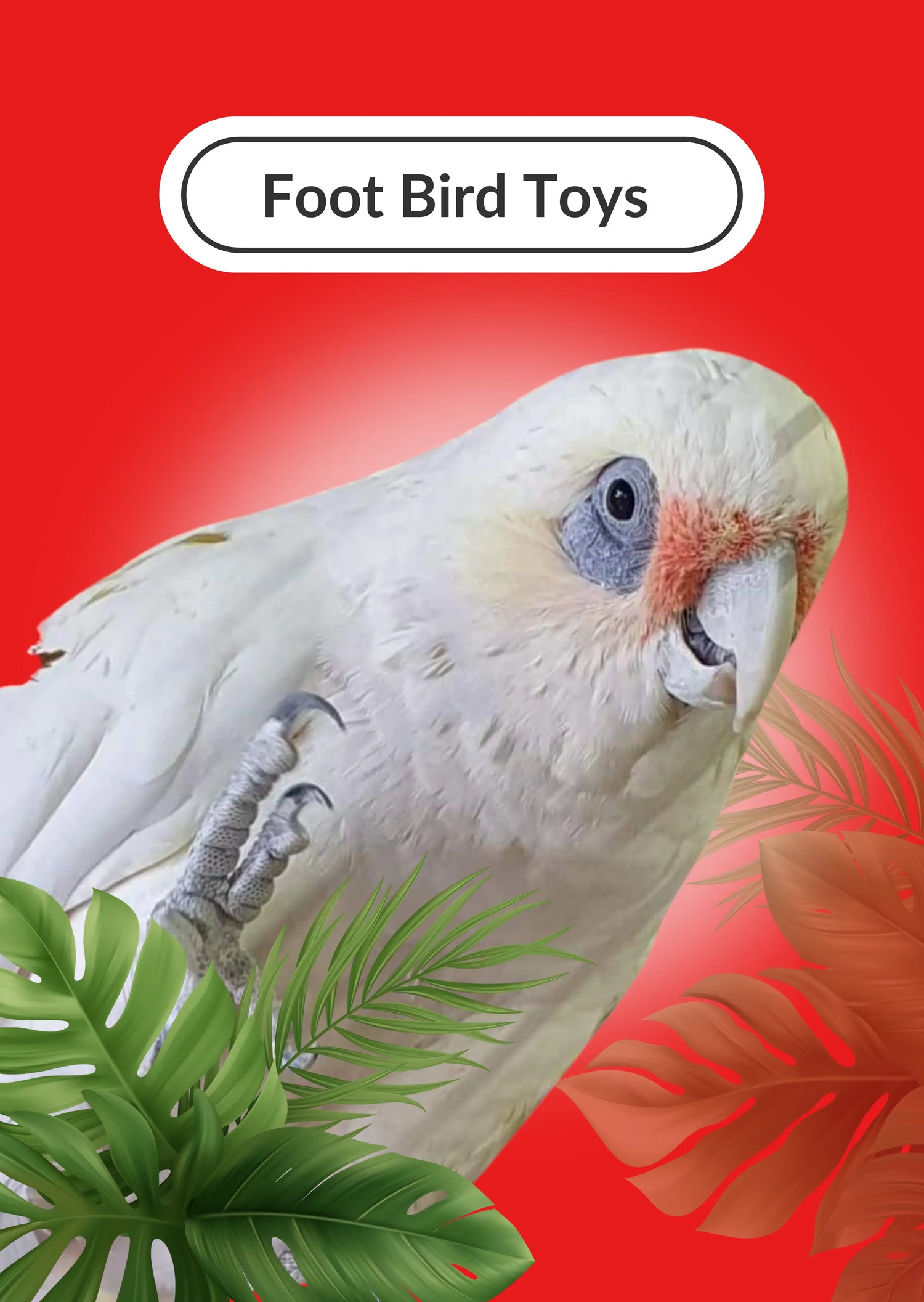
Foot toys are small, lightweight items a bird can hold in their feet to toss, turn, and manipulate. Parrots have zygodactyl feet (two toes forward, two toes back), making them incredibly nimble—almost like having a second pair of hands. Foot toys are the perfect way to put those clever feet to work.
They can be as simple as a small wooden block, a plastic ball with a bell, or a woven vine star. They are brilliant for:
- Improving coordination and fine motor skills.
- Encouraging independent play outside the cage.
- Keeping active birds busy when you need a quick distraction.
Swings And Perches For Exercise
Finally, don't overlook the importance of swings, ladders, and a variety of perches for physical exercise. Movement is key to keeping your bird’s body healthy. It strengthens their leg muscles, sharpens their balance, and helps prevent foot problems like arthritis down the track.
Swings are a fun way to combine play and exercise. Ladders encourage climbing, which is a natural behaviour that works different muscle groups. It's also vital to have perches of different diameters, shapes, and textures to exercise their feet and prevent pressure sores from forming.
Matching Toy Types To Your Bird's Behaviour
Sometimes, the best way to choose a toy is to watch your bird. Their behaviour is a massive clue about what they need emotionally and mentally. Are they a busybody, a thinker, or a bit of a demolition expert?
This table connects common bird behaviours to the type of toy that will satisfy that specific need.
| If Your Bird Is... | Recommended Toy Type | Core Psychological Benefit |
|---|---|---|
| Constantly chewing on their cage or your furniture | Chewable & Shreddable Toys | Satisfies the instinct to destroy, maintains beak health. |
| Screaming from boredom or seems lethargic | Foraging Toys | Provides mental stimulation, mimics natural feeding behaviour. |
| Over-preening, plucking, or seems anxious | Preening & Comfort Toys | Offers a safe outlet for grooming, provides a sense of security. |
| Always fiddling with things with their beak or feet | Foot Toys | Promotes dexterity, coordination, and independent play. |
| Restless and pacing in their cage | Swings & Exercise Toys | Encourages physical activity, strengthens muscles, and improves balance. |
Using this as a guide can help you build a more thoughtful and effective toy collection. Instead of just grabbing what looks colourful, you can target the exact enrichment your bird is craving.
Choosing The Right Toys For Your Bird's Species
Picking out bird toys isn’t a one-size-fits-all game, especially here in Australia. A toy that’s a perfect challenge for a tiny budgie could be a serious choking hazard for a macaw in just a few seconds.
Matching the toy to your bird’s species, size, and beak strength isn’t just a nice idea—it’s one of the most important parts of responsible bird ownership. You wouldn't give a Chihuahua’s chew toy to a Rottweiler and expect it to last, let alone be safe. The same logic applies to our feathered mates, whose beaks range from delicate little tools to incredibly powerful crushers.
A good starting point is to watch your bird. Are they bored, destructive, or just a bit fidgety? Their behaviour is a huge clue to what kind of enrichment they need right now.

By observing your bird's behaviour, you can quickly narrow down the most effective type of toy to keep them mentally stimulated and physically engaged.
Small Birds: Budgies, Cockatiels, And Lovebirds
For the little parrots so many of us have in our homes—like budgies, cockatiels, and lovebirds—it’s all about providing soft, easily destructible materials. Their smaller beaks aren't built for tough hardwoods, so they get the most satisfaction from toys they can shred and pull apart with ease.
Look for toys made from things like:
- Balsa wood: This is a super soft wood that’s perfect for small beaks to get through.
- Vine balls and stars: These are lightweight and have a fantastic crunchy texture they love to destroy.
- Shreddable paper and cardboard: Easy to tear up and great for satisfying their natural nesting instincts.
- Yucca pieces: A unique, soft texture that’s highly shreddable and keeps them busy.
Giving them soft, shreddable items provides a huge sense of accomplishment and is a brilliant outlet for their energy. If you're not sure where to start, our comprehensive guide on how to choose the right bird toys for your bird offers even more detailed advice.
Medium Birds: Galahs, Conures, And Ringnecks
When you get to the medium-sized birds, like our iconic Galahs, energetic Conures, or clever Ringnecks, they need a bit more of a challenge. They have stronger beaks than their smaller cousins and can make very short work of soft toys.
The ideal toy box for them contains a mix of both destructible items and more durable materials. These birds thrive on having a combination of softer woods for chewing and tougher woods that require more effort. Think pine blocks, vegetable-tanned leather strips, and medium-density foraging toys. This variety is what keeps them mentally sharp and physically challenged.
Large Birds: Macaws, Cockatoos, And Eclectus
Now we're talking about serious beak power. Large parrots like Macaws and big Cockatoos (think Sulphur-crested) have beaks that can crack hard nuts and splinter wood with incredible efficiency. For these birds, durability is everything.
Toys made from soft woods will be gone in minutes. That’s fine for a quick treat, but it won’t provide long-lasting enrichment. Their main toys should be made from tough, bird-safe hardwoods like java wood and gum wood, or even hard-wearing acrylic and stainless steel for foraging puzzles.
This is where customising their world becomes fundamental to preventing boredom-related issues like feather plucking. A bird’s environment must be a dynamic, enriching space, not a static one. Thankfully, the market for bird toys in Australia is increasingly catering to this need, recognising just how important species-specific design is for our birds' mental and physical health.
Your Essential Guide To Bird Toy Safety In Australia
As bird owners, our main job is to keep our feathered mates safe. While toys are absolutely vital for a happy, healthy bird, a badly made toy can go from a bit of fun to a serious hazard in a heartbeat. Think of this as your must-read guide for making sure every toy you bring home is safe, especially when you're buying bird toys in Australia.
Here at Lou Lou Bells, safety is something we're completely obsessive about. We handcraft our toys to incredibly high standards, so every piece of wood, every dye, and every link gives you total peace of mind. Let’s get into the details you really need to know.
Identifying Safe Versus Unsafe Materials
Your first line of defence is simply knowing what your bird’s toys are made of. Not all materials are safe, and some common ones found in cheap, mass-produced toys can be downright dangerous. Your bird is going to chew, shred, and probably swallow tiny bits of their toys, so everything they touch must be non-toxic.
Look for these key materials:
- Bird-Safe Woods: Natural, untreated woods are fantastic. Things like pine, balsa, banksia, and bottlebrush are all excellent choices. Be very careful with native botanicals unless you get them from a trusted Aussie supplier who guarantees they’re free from pesticides and any contamination from wild birds.
- Bird-Safe Plastics: Hard, durable plastics like acrylic are generally a good option for those really tough chewers, as they’re hard to break into small, swallowable pieces.
- Vegetable-Tanned Leather: This is the only type of leather that is safe for our birds. It's tanned using natural plant-based tannins instead of harsh, toxic chemicals.
Expert Advice: One of the biggest hidden dangers we see is heavy metal toxicity. So many cheap toys use parts plated with zinc or lead. These toxins can build up in a bird’s system over time, causing severe illness or even death. Always, always choose toys with stainless steel hardware. It’s non-toxic, won't rust, and is incredibly durable.
The Hidden Dangers In Ropes And Fasteners
Ropes and fabrics can be brilliant for preening and shredding, but they come with two major risks: entanglement and crop impaction.
When you're choosing toys with any kind of rope, stick to natural fibres like sisal or jute. You should never buy toys with fine nylon rope or cotton rope with long strands. It’s just too easy for a bird to get a toe, a leg, or even its neck caught. If you do have cotton toys, make sure the fibres are short and check them daily, trimming any long frays straight away. For a bird-safe way to bring in similar fun, have a look at our guide to different toys for parrots, which goes through a whole range of materials.
Crop impaction is the other serious worry. If a bird swallows too much fabric or lots of long fibres, it can create a blockage in its crop that needs a vet to fix. This is exactly why easily shredded paper or cardboard is often a much safer bet for birds that love to destroy things.
A Quick Safety Checklist Before You Buy
Before you purchase any bird toy in Australia, just run through this quick mental checklist. It could save you a lot of heartache.
- Metal Check: Are all the metal bits (links, bells, clips) made from stainless steel? If it’s shiny and looks like cheap costume jewellery, it’s probably zinc-plated and not safe.
- Dye Check: Are the colours from bird-safe food dyes? If the colours run a lot when they get wet or have a chemical smell, give them a miss.
- Rope Check: Is the rope a natural fibre like sisal? Are the strands short and unlikely to trap a little foot?
- Size Check: Could any part of the toy get stuck in or on your bird’s beak? Could your bird’s head get trapped inside a link or a loop?
By staying vigilant and putting safety ahead of price, you can build a fun, stimulating world where your bird can truly thrive without any unnecessary risks.
Your Toy Rotation and Maintenance Playbook
So, you’ve bought a fantastic selection of bird toys in Australia. Job done, right? Not quite. The next step is where the real magic happens for your bird's wellbeing: creating a strategy to keep them interested. Parrots are far too clever to be happy with the same old things day in, day out. This is where 'toy rotation' becomes your secret weapon against boredom.
Think of it like occasionally rearranging the furniture in your living room. Swapping out a few pictures or moving a lamp can make the whole space feel fresh again. The same goes for your bird’s cage. A simple rotation keeps their world stimulating and stops those great toys you bought from becoming just another part of the scenery.

How to Build a Toy Rotation Schedule
Putting a rotation plan together is surprisingly simple. The aim is to keep things novel without making your bird anxious about a constantly changing environment. A good rule of thumb is to swap out one or two toys every week.
Here’s a simple way to get started:
- Build Your Collection: You’ll want to own at least two to three times the number of toys you keep in the cage at any one time. This creates a healthy "back stock" to pull from. So, if you have four toys in the cage, you should have another eight to twelve cleaned and stored away.
- Organise Your Stash: Keep your spare toys clean and ready to go in a dedicated box or tub. This makes it quick and easy to grab a "new" toy when it’s swap day.
- Rotate Weekly: Once a week, take one or two toys out and replace them with ones from your storage box. To add another layer of novelty, you can even just move the remaining toys to different spots in the cage.
By following this, a toy that was put away a month ago will feel completely new and exciting when you bring it back. It’s a small habit that does wonders for keeping your bird’s mind sharp and curious.
Keeping Toys Clean and Safe
Proper maintenance is about two things: making your toys last longer and, most importantly, keeping your bird safe. Over time, toys can get dirty or damaged, turning from a fun plaything into a real hazard.
Expert Advice: A daily visual check is non-negotiable. Look for frayed ropes that could tangle a foot, sharp edges on chewed wood or acrylic, or any small parts that might have come loose. Damaged toys need to be repaired straight away or thrown out.
How you clean a toy depends entirely on what it’s made of. Regular cleaning stops germs from building up and keeps the toys looking their best.
Cleaning Different Toy Materials:
- Wood: For a quick clean, just wipe it down with a damp cloth. For a more thorough job, use a bird-safe disinfectant (like F10SC), let it sit for the recommended time, then rinse it really well with water. Always let wooden toys dry completely before they go back in the cage, otherwise you risk mould growing.
- Acrylic & Stainless Steel: These are the easiest to look after. You can wash them in hot, soapy water (a mild dish soap is fine), give them a scrub with a brush, and rinse well. They can also be disinfected and are often safe for the hot cycle in your dishwasher.
- Ropes & Fabrics: These can be hand-washed with a gentle soap and water. Make sure you rinse them thoroughly to get all the soap residue out, then hang them to air dry completely.
A solid maintenance routine not only protects your bird but also helps your high-quality bird toys go the distance, providing endless hours of enrichment and fun.
The Benefits Of Choosing Australian Made Bird Toys
When you’re on the hunt for bird toys in Australia, you’re not just looking for something to keep your bird busy. You’re looking for quality, safety, and a bit of peace of mind. It can be tempting to grab a cheap, mass-produced toy from a big-box store, but choosing Australian-made brings real advantages for both you and your feathered friend.
Supporting local makers means you’re getting a product built with genuine care. Small-scale artisans—like us here at Lou Lou Bells in South Australia—are involved in every single step. We’re the ones picking the materials, putting the toy together, and checking the final product. That hands-on approach gives a level of quality control that’s just not possible in a massive overseas factory.
Understanding Materials And Supporting Local
Local makers have a home-ground advantage: we know our native materials. We understand which Aussie timbers are safe for beaks and which ones to steer clear of. This means every piece of wood or native flora in our toys is free from nasty pesticides and toxins—an invaluable layer of safety you can count on.
Plus, buying Australian-made is a direct investment in our own economy. You’re helping small businesses like ours stick around and keeping jobs right here in our communities. It’s a choice that supports a market of passionate craftspeople who genuinely care about birds, not just the bottom line.
Expert Advice: Choosing a local designer and maker means you're not just a customer; you're joining a community. When you buy from a dedicated Australian business, you get access to expert advice, faster shipping, and a direct line to the people who made your bird’s toy, ensuring accountability and peace of mind.
The numbers back this up, too. The Australian toy market, which includes pet products, was valued at USD 2,653.43 million in 2024 and is expected to hit USD 3,943.08 million by 2032. This shows a clear trend: Aussie pet owners are choosing to invest more in quality products, creating a fantastic space for local retailers who specialise in enrichment.
The Practical Perks Of Buying Aussie
Beyond the quality and safety, there are some very practical wins when you buy local bird toys. For starters, shipping is faster, more reliable, and usually easier on the wallet. You won’t be stuck waiting weeks for a parcel to clear customs, and if something isn’t right, sorting it out with a local business is a whole lot simpler.
At the end of the day, picking from a collection of thoughtfully created handmade Australian bird toys means you’re putting your bird’s wellbeing first. You’re choosing toys built with expertise, passion, and a true understanding of what our parrots need, ensuring what they chew, shred, and play with is made to the highest possible standard.
Your Bird Toy Questions, Answered
Even for seasoned bird owners, choosing and managing toys can feel like navigating a maze. As people who live and breathe bird toys in Australia, we get a lot of questions. We’ve put together clear, practical answers to the ones we hear most often, to help you feel more confident in your choices.
How Often Should I Replace My Bird's Toys?
This is a great question, and the honest answer is: it depends entirely on the toy and how much your bird loves it. For things like shreddable and soft wood toys, destruction is the goal! Seeing a toy torn to absolute shreds is a sign of a happy, busy bird. These should be replaced as soon as they’re demolished or get too small to be safe.
With tougher toys made from hardwood or acrylic, it’s less about destruction and more about safety. You’ll want to keep an eye out for a few things:
- Frayed ropes or fabrics: Long, loose strands are a serious entanglement hazard. Trim them daily or, if it gets too bad, remove the toy altogether.
- Sharp edges: When wood or acrylic gets chewed down, it can create dangerously sharp points. These can injure your bird’s beak, feet, or mouth, so it’s time for the toy to go.
- Loose or broken parts: If a bell clapper can be pulled out or a link pried open, it instantly becomes a choking or entrapment risk.
A quick check of all toys each day is the best habit to get into. It helps you spot wear and tear before it becomes a real problem.
Are DIY Bird Toys Safe?
Making your own bird toys can be a fantastic way to bond with your parrot and customise their enrichment. There’s a huge sense of satisfaction in watching them play with something you made. The main advantage is you can tailor it perfectly to what your bird loves. The risk, however, is accidentally using materials that aren't safe.
If you decide to go the DIY route, you have to be 100% certain that every single component is bird-safe. This isn't something to guess on. It means:
- Using only untreated, non-toxic woods.
- Sourcing vegetable-tanned leather, not the chemically treated kinds.
- Sticking to stainless steel hardware to avoid toxic metals like zinc or lead.
- Never using toxic glues, paints, or varnishes of any kind.
When in doubt, it’s always safer to buy from a trusted Australian supplier. That way, you know an expert has already done the safety vetting for you.
My Bird Is Scared Of New Toys, What Should I Do?
This is completely normal, so don't worry. Birds are naturally neophobic, which is a fancy way of saying they are instinctively wary of new things in their space. Just dropping a new toy into their cage can be quite stressful, so a slow, gentle introduction is always the best approach.
Expert Advice: A great strategy is to show your bird that the new object is safe and, even better, fun. Play with the toy yourself near their cage. Tap it, talk to it, and act excited about it. Your positive energy signals to your bird that this new thing isn't a threat.
Try these simple steps to build their confidence:
- Start by placing the new toy on the floor somewhere in the room, well away from the cage, for a few days. Let your bird just observe it from a distance.
- Next, move it a bit closer, maybe hanging it on the outside of the cage.
- Once your bird seems calm and curious, place it inside the cage, but put it far away from their favourite perch or food bowls.
- Reward any curiosity! If your bird even looks at or dares to touch the toy, offer enthusiastic praise and a favourite treat.
What Are The Best Toys For A Feather-Plucking Bird?
Feather plucking is a complex and often heartbreaking issue. It can be caused by anything from medical problems to stress, boredom, or hormonal changes. While toys are not a cure-all, they are an incredibly powerful tool for redirecting that plucking instinct. The aim is to give your bird a better, more satisfying outlet for their need to preen and shred.
Shreddable toys made from paper, cardboard, or yucca can provide that satisfying "destroy" sensation. Preening toys, like our Sisal Preener or the Coconut Preener with Paper, offer textures they can groom instead of their own feathers. For a bird that really needs to get in and fiddle with something, the Preening Box is another brilliant option.
It's absolutely critical, however, to consult with an avian veterinarian first. They can help you rule out any underlying health conditions and get to the root cause of the behaviour, creating a holistic plan that includes diet, environment, and enrichment.
Keep Reading
Disclaimer Summary: The information in this article is general in nature and may include external links or resources not created by Lou Lou Bells Bird Toys. Every bird is unique, so we encourage you to seek personalised advice from your own veterinarian or avian specialist. For full details, please read our complete disclaimer here.