
Picture this: your bird gets breakfast, lunch, and dinner served right in a bowl, no effort needed. Sounds like the good life, right? But for a creature as clever as a parrot, it’s a one-way ticket to boredom and frustration. That’s where foraging bird toys come in. These aren't just playthings; they're vital tools that turn feeding time into a stimulating challenge, tapping right into your bird's deepest natural instincts.
Why Foraging Toys Are Essential for Your Bird
Out in the wild Australian bush, birds like Galahs, Cockatoos, and Lorikeets spend a huge chunk of their day hunting for food. This whole process, called foraging, is a full-time job involving problem-solving, physical skill, and a lot of mental energy. It keeps their minds sharp and their bodies strong.
When you take away that crucial mental and physical work, birds can develop some serious behavioural problems. These issues are almost always a direct result of having nothing meaningful to do.
- Feather Plucking: This is a classic stress behaviour where a bird starts compulsively pulling out its own feathers.
- Excessive Screaming: When they lack other ways to engage their minds, birds might scream for attention or simply out of sheer frustration.
- Aggression: A bird without proper enrichment can become aggressive in its cage or display other unwanted behaviours.
The Science of 'Contra-Freeloading'
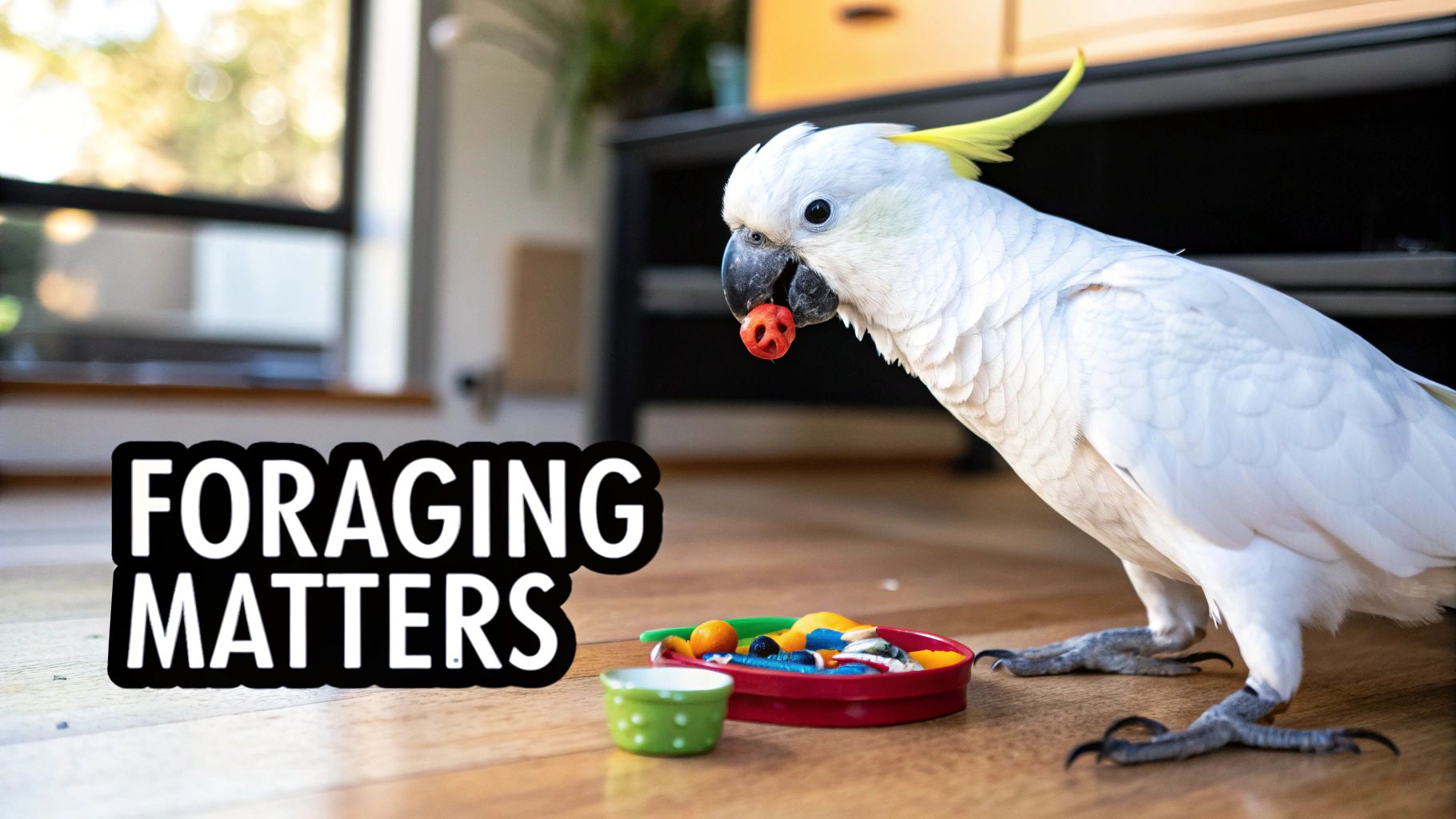
Here’s a fascinating quirk of animal psychology: many animals, parrots included, actually show a preference known as contra-freeloading. This is when they choose to work for their food even when the exact same meal is sitting right there, free for the taking. It’s proof that the act of seeking and earning a reward is deeply satisfying for them.
Foraging gives your bird a 'job.' It provides a sense of purpose, control, and accomplishment, turning the passive act of eating from a bowl into an engaging puzzle that fuels their busy minds.
This innate drive to work is exactly what makes foraging bird toys so brilliant. They reintroduce the challenge-and-reward cycle that’s missing from life in a cage. By hiding treats or their daily food inside a toy, you’re encouraging your bird to think, fiddle, and explore to get its meal.
This simple switch can provide hours of enrichment, cut down on stress, and promote a much healthier, happier bird. We can see this shift in thinking across the pet industry, with market research showing a strong growth in the bird toy market, all driven by owners becoming more aware of their birds' mental health needs.
To help you see the benefits at a glance, here’s a quick breakdown.
Quick Guide to Foraging Benefits
| Benefit Type | How It Helps Your Bird |
|---|---|
| Mental Stimulation | Fights boredom by turning feeding into a puzzle, keeping their brain active and engaged. |
| Physical Exercise | Encourages movement, climbing, and manipulation, which helps maintain a healthy body. |
| Behavioural Health | Reduces the likelihood of stress-related issues like feather plucking, screaming, and aggression. |
| Natural Instincts | Allows them to perform the natural, rewarding behaviour of searching for food, just like in the wild. |
| Builds Confidence | Solving puzzles to get a reward gives your bird a sense of accomplishment and control over its environment. |
Ultimately, bringing foraging into your bird's daily life is one of the most powerful things you can do for their wellbeing. For a deeper dive into why enrichment is so critical for animal care, check out our detailed guide on animal enrichment in Australia. It’s a foundational step toward making sure your feathered mate leads a happy, stimulated, and truly fulfilling life with you.
How Foraging Fights Birdie Boredom
Imagine having a brilliant, energetic mind but being trapped in a room with nothing to do. No books, no puzzles, no challenges—just the same four walls, day in and day out. This is what life can feel like for a parrot stuck in a cage with only a bowl of food for entertainment.
As many Aussie bird owners know all too well, a bored parrot is often an unhappy and destructive parrot.
This lack of mental stimulation is a direct path to serious behavioural issues. When a bird's natural drive to explore, solve problems, and work for its food isn't met, all that pent-up energy has to go somewhere. Unfortunately, it often comes out in ways that are distressing for both the bird and its human family.
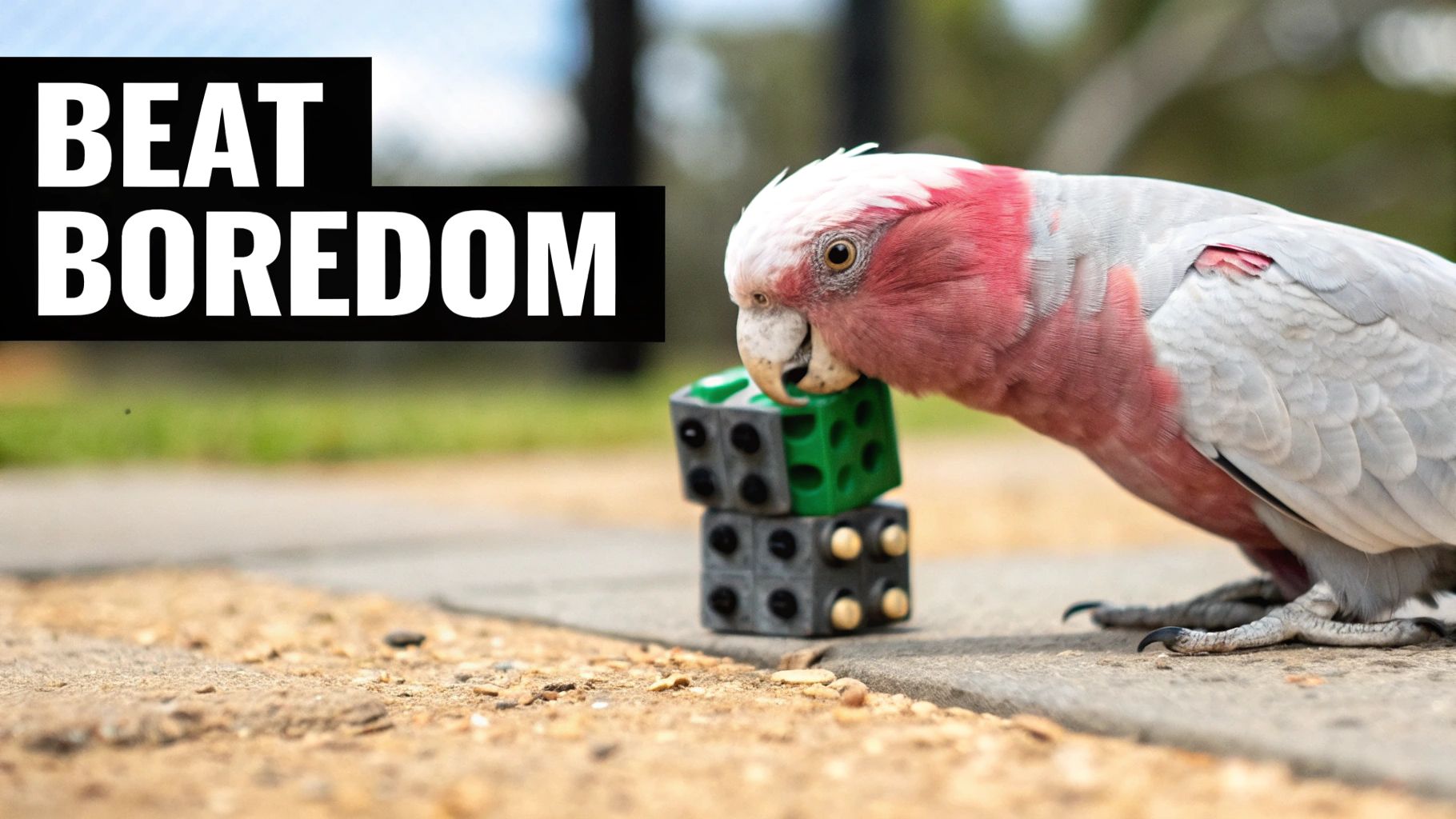
From Boredom to Behavioural Problems
Australian avian vets see the fallout from chronic boredom every day. Without a positive outlet for their intelligence, parrots can develop a range of problems that are simply cries for help.
- Excessive Screaming: A bird might scream out of sheer frustration or to demand attention when it has no other way to engage its mind.
- Cage Aggression: Territorial behaviour can ramp up when a bird feels its cage is its only domain, leading to biting and hostility.
- Destructive Chewing: This goes way beyond healthy beak maintenance. Think chewing on cage bars, furniture, or other things they shouldn't.
- Self-Mutilation: In severe cases, extreme stress can lead to feather plucking or even self-harm, which needs immediate veterinary attention.
Foraging toys directly tackle these issues by giving your bird a job. They redirect that powerful mental energy into a positive, problem-solving activity that’s much closer to their life in the wild.
Think of foraging not just as a way to feed your bird, but as a form of therapy. It’s a proactive way to manage stress and satisfy their innate psychological needs before behavioural problems can take root.
This shift in thinking is crucial. Toys aren't just playthings; they are essential tools for a bird’s mental wellbeing. The global market for bird foraging toys hit USD 478 million in 2024 and is projected to climb to USD 823 million by 2033. You can explore more data on the bird foraging toy market growth to see just how vital these tools have become for responsible bird care.
Building Confidence and Independence
Beyond just stopping bad habits, foraging actively builds good ones. The simple act of solving a puzzle to get a reward has a profound psychological upside. Each time your bird successfully gets a treat from a toy, they get a little burst of accomplishment.
This process has a powerful snowball effect on their confidence. A bird that forages learns it can influence its environment and achieve goals on its own. This fosters a sense of independence and cuts down on them relying on you for constant entertainment.
Foraging also helps with anxiety. A bird focused on shredding paper to find a nut or figuring out how to open a small drawer is a bird that isn't fixating on stressors. It keeps their mind occupied in a calm, rewarding way. A bird with a ‘job’ to do is almost always a calmer, more contented companion.
That’s why we encourage owners to see toys as more than just accessories. They are instruments for building a resilient, confident, and mentally healthy bird. Offering a variety of challenges ensures your bird is always learning and growing—whether it’s an easy-to-shred beginner puzzle or a more complex device for a seasoned forager, every interaction is a step toward a happier life.
Choosing the Right Foraging Toy for Your Bird
Walking into a pet store or browsing online can feel a bit overwhelming. You're met with endless rows of colourful, complex-looking toys, and it's hard to know where to start. So, how do you pick the right one for your feathered mate?
Selecting the perfect foraging bird toys isn't about grabbing the most elaborate puzzle off the shelf. It’s all about matching the toy to your bird's unique personality and needs.
The key is to think about three main things: your bird's size, its beak strength, and how much experience it already has with foraging. A toy that’s too tricky will just lead to frustration, while one that’s too simple will be solved in minutes, defeating the whole point of keeping their clever mind busy.
Matching Toys to Your Bird's Size and Beak Strength
Safety and suitability should always come first, and that starts with size and strength. A big, powerful bird like a Sulphur-crested Cockatoo could turn a Budgie toy into splinters in seconds, which could be dangerous. On the other hand, a large, heavy toy might intimidate or even injure a smaller bird.
Our Australian native parrots, in particular, are famous for their incredible beak power. Galahs, Corellas, and Cockatoos are nature’s demolition experts, so they need toys built tough enough to handle their enthusiastic chewing.
-
Small Birds (Budgies, Cockatiels, Lovebirds): Look for lightweight toys made from softer, shreddable materials like balsa wood, seagrass, vine balls, and crinkle paper. The parts should be small enough for them to easily grip and manipulate with their beaks and feet.
-
Medium Birds (Conures, Quakers, Ringnecks): These birds can handle slightly tougher materials, like pine and heavier cardboard, mixed in with plenty of shreddable bits. They often love toys that combine a good chew session with a simple puzzle.
-
Large Birds (Galahs, Cockatoos, Macaws): Durability is everything. Choose toys made from tough native woods, sturdy ropes, and resilient materials. For these powerful chewers, reusable acrylic or stainless steel foraging devices are fantastic options.
Always check that any metal parts are made from stainless steel to prevent heavy metal toxicity, which is a serious health risk for parrots. For a deeper dive, check out our guide on how to choose the right bird toys for your bird.
Gauging Your Bird's Experience Level
Think of it like a person learning a new skill – you start with the basics and work your way up. Throwing a complicated puzzle at a beginner forager is just setting them up to fail. Instead, you want to build their confidence by matching the toy's difficulty to their current skill level.
Expert Tip: The goal of a foraging toy isn't for it to last forever. For many birds, especially powerful chewers, destruction is the solution. A shredded toy is a sign of a mentally engaged and happy bird who successfully solved their puzzle.
Here's how to think about the different stages of foraging.
Foraging Toy Matchmaker Finding the Perfect Fit
This little table is a great starting point for finding the right type of foraging toy based on your Australian bird's size, experience, and personality.
| Foraging Level | Best Toy Types | Ideal for These Birds | Key Feature |
|---|---|---|---|
| Beginner | Shred-to-Reveal Toys | Budgies, Cockatiels, and birds new to foraging. | Treats are visible or lightly covered by soft, easy-to-destroy materials like paper, cardboard, or balsa. Instant gratification builds confidence. |
| Intermediate | Reusable Puzzles | Conures, Ringnecks, Galahs. | These often involve simple mechanisms like sliding doors, drawers, or spinning parts. They require some thought but are not overly complex. |
| Advanced | Multi-Step Devices | Cockatoos, Macaws, and experienced problem-solvers. | These toys require multiple actions in a specific sequence to unlock the reward, offering a significant mental challenge. |
The best way to get your bird hooked on foraging is to start with an easy win. You can find some brilliant beginner options, like the Beginner's Foraging Box, which encourages them to shred their way to hidden treats. Once they get the hang of it, you can introduce an intermediate challenge like the Foraging Pinata Bird Toy. And for the true geniuses, an advanced puzzle like the Foraging Rocket will keep their brilliant minds firing for hours.
By moving through these levels, you turn mealtime from a simple feed into a continuous learning adventure.
How to Introduce Foraging Toys Successfully
Every Aussie bird owner has been there. You come home with a fantastic, colourful new foraging toy, fill it with your bird’s absolute favourite snack, and proudly hang it in their cage.
And then… crickets. Your bird eyes it with deep suspicion or, even worse, pretends it doesn't exist. It's a common frustration, but it doesn't mean you've got a fussy bird on your hands—it just means they need a gentle introduction.
Parrots are naturally cautious. A strange new object in their safe space can feel more like a threat than a treat. The trick is to introduce foraging toys slowly and patiently, setting your bird up for an easy win to build their confidence. Think of it less like giving them a puzzle and more like teaching them a fun new game, one simple step at a time.
Start with an Easy Win
Your first goal is to make the toy seem as harmless and appealing as possible. Forget about complex challenges for now; we're aiming for immediate success to show your bird that this new thing is a source of delicious rewards.
- Let Them Watch You Play: Before the toy even goes near the cage, let your bird see you playing with it. Hold it, talk to it excitedly, and pretend to stash a treat inside. Your positive energy signals that the object is safe and interesting. Vets and behaviourists call this 'modelling', and it works wonders.
- Make it Incredibly Easy: For the first go, don't actually hide the treat. Place a high-value snack, like a sunflower seed or a tiny bit of nut, so it's sticking out of an opening. This way, your bird doesn't have to 'solve' anything; they just have to grab the visible reward.
- Use High-Value Treats: The motivation needs to be powerful. Use their absolute favourite snack—something they don’t get in their regular food bowl. This makes the effort of interacting with a weird new object totally worth it.
Expert Tip: Positive reinforcement is your best friend here. The moment your bird shows any interest—even just a glance or a tentative tap with their beak—praise them enthusiastically. A cheerful "Good bird!" tells them they're on the right track and reinforces their curiosity.
This simple infographic is a great visual reminder of the core factors to consider as you get started.
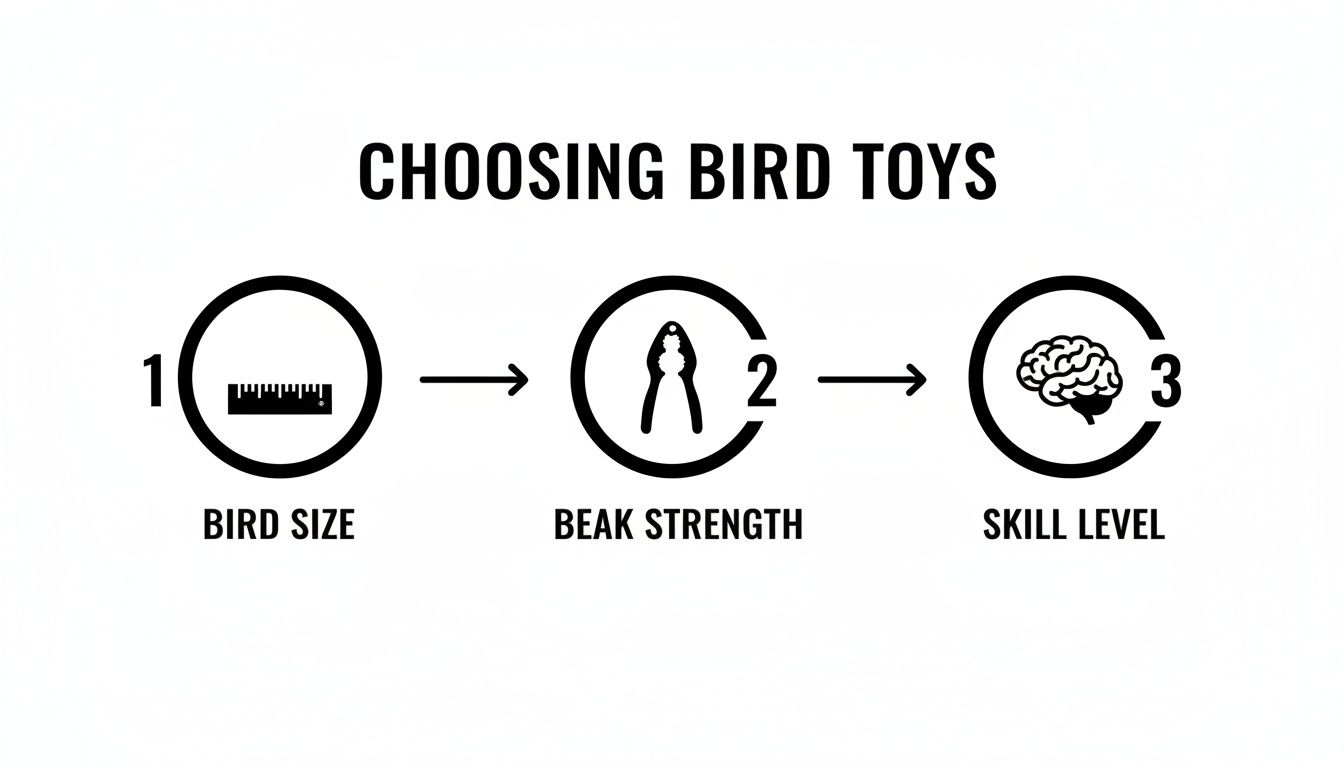
It all comes down to setting your bird up for a safe and successful experience by starting with the basics: bird size, beak strength, and their current skill level.
Moving from Beginner to Pro
Once your bird confidently grabs treats from the toy, it's time to slowly dial up the difficulty. This step-by-step approach ensures they never get so frustrated that they give up. Remember to go at your bird’s pace—some will get the hang of it in a day, while others might take a week or more.
- Absolute Beginner: Start with simple, shreddable toys where the treat is barely hidden. A great first step is a basic cardboard puzzle box. The Treat House Bird Toy, for example, is perfect. Your bird can easily chew through the soft balsa wood to get the reward inside, teaching them the fundamental concept of "work for food."
- Confident Explorer: Now you can start hiding the treat a bit deeper inside shreddable material or behind a simple flap. Try wrapping a treat in a small piece of paper and stuffing it into a toy, requiring them to shred the paper to get their reward.
- Foraging Pro: This is where you introduce reusable puzzles with moving parts. Start on the easiest setting, like leaving a drawer slightly ajar. Once they master that, you can close the drawer completely, encouraging them to figure out how to pull it open themselves.
Every small victory is a building block. By celebrating these steps and introducing challenges gradually, you'll turn a hesitant bird into a confident forager who can't wait for their daily puzzles. Better yet, the whole journey is a wonderful bonding experience for you both.
Keeping Your Bird Safe While Foraging
Giving your bird a great foraging toy is one of the best things you can do to keep them happy and engaged, but safety always, always comes first. As a bird owner, your companion’s wellbeing is your number one priority. That means every single toy you bring into their cage needs a thorough safety check before they ever get their beak on it.
Think of it exactly like baby-proofing a house. You have to get down on their level and look at every toy from your bird's perspective, imagining all the ways their curious beak and clever feet might get into trouble. A little bit of diligence upfront ensures playtime is always fun, never hazardous.
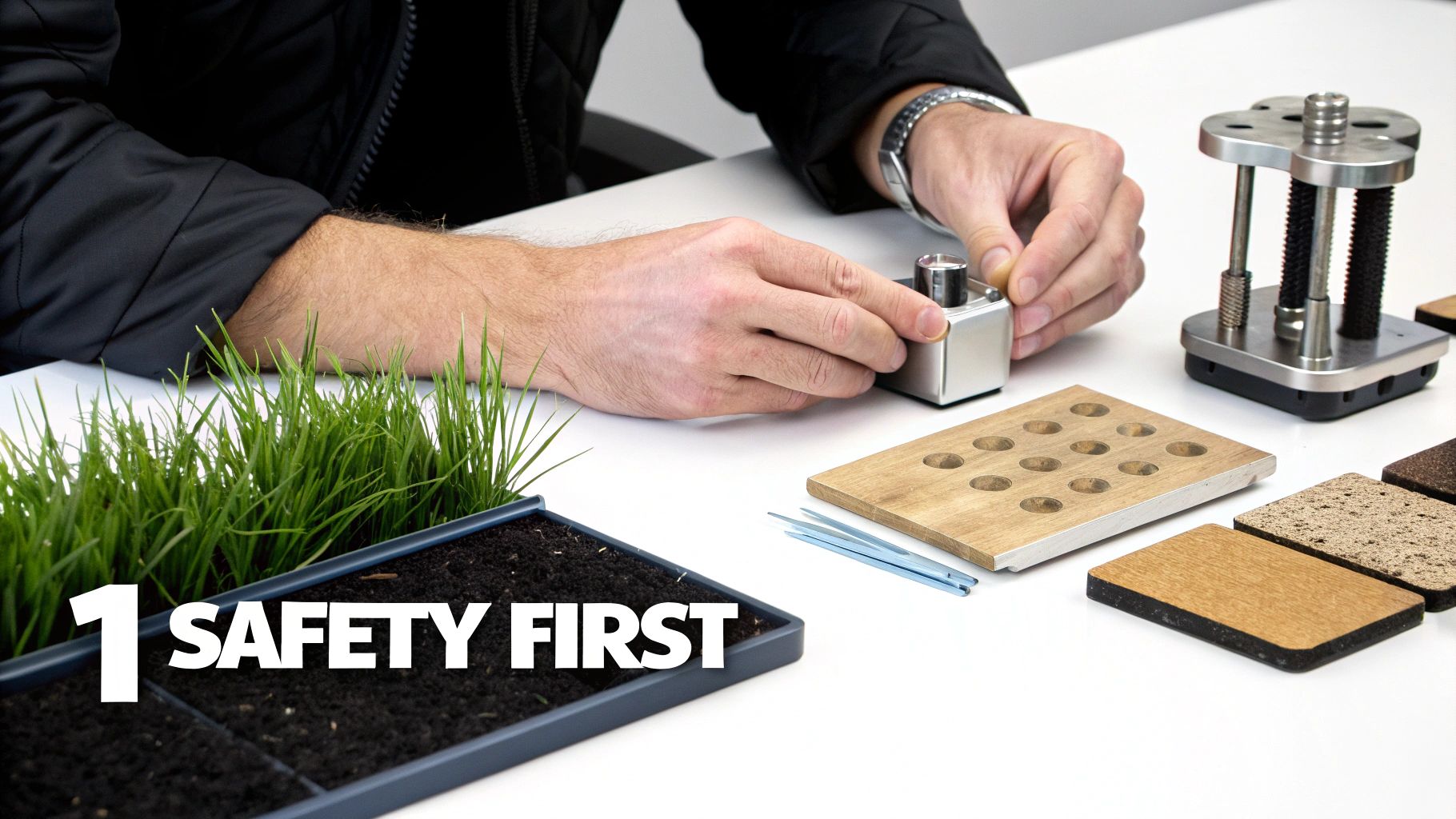
Bird-Safe Materials and Construction
It all starts with the materials. Since a bird's beak is their primary tool for exploring the world, it's absolutely critical that everything they chew, shred, and lick is non-toxic.
- Metals: The only metal that is 100% safe for your bird is stainless steel. Stay well away from toys made with zinc, lead, or brass. If ingested, these can cause heavy metal poisoning, a serious and often fatal condition for parrots.
- Woods: Always go for natural, untreated woods. Australian natives like eucalyptus (gum) are fantastic choices, as are other safe woods like pine, balsa, and birch. Never use treated pine (CCA), MDF, or any wood that’s been painted or varnished with mystery substances.
- Plastics: High-quality, tough plastics like acrylic can be great for reusable puzzle toys, especially for birds with powerful beaks. Just be sure to avoid soft, flimsy plastics that can be easily chewed into small, swallowable pieces.
Beyond the materials, get a good look at how the toy is put together. Hunt for any small gaps, loops, or rings where a toe, foot, or even a head could get stuck. Make sure all links and hardware are properly closed and strong enough for your bird’s beak.
The Importance of Proper Sizing
Getting the size right isn't just about picking a toy that looks good next to your bird—it's a massive safety issue. A toy that’s too small for a big bird like a Macaw can be demolished and swallowed in minutes, creating a serious choking or blockage risk.
On the other hand, a toy that's too big or heavy for a little one like a Budgie or Cockatiel can be intimidating or even dangerous. They might not be able to manipulate it, or worse, could get a foot caught in a component designed for a much larger bird. For more tailored advice, our guide on selecting the right toys for parrots of all shapes and sizes is a great place to start.
Maintenance and When to Retire a Toy
Your job isn’t done once the toy is hanging in the cage. Keeping your bird's foraging activities safe means doing regular checks and maintenance.
A well-loved toy is often a well-worn toy. Part of responsible bird ownership is knowing when a toy has provided its enrichment and is ready to be retired for safety's sake.
Give all toys a quick once-over every day. Look for dangers like frayed ropes that could tangle a foot, sharp splinters on chewed wood, or cracked plastic parts. Clean the toys regularly based on what they're made of; shreddable and wooden toys often just need to be replaced, while stainless steel and acrylic puzzles can be washed and reused.
It's clear that Aussie bird owners are more focused on safety than ever. The demand for high-quality, safe enrichment is growing fast, and it shows. The Asia-Pacific pet toys market, which includes Australia, was the fastest-growing region in 2023, hitting a market size of USD 0.70 billion. This trend really highlights how important it is for us to provide the best and safest options for our birds.
Got Questions About Foraging? We’ve Got Answers
Even when you know how important foraging is, it’s natural to have a few questions pop up. From birds who prefer destruction over puzzles to finding the right treats, here are our answers to the common queries we hear from Australian bird owners about foraging bird toys.
My Bird Just Destroys the Toy Instead of Solving It. What Am I Doing Wrong?
Nothing at all! In fact, this is a brilliant sign that your bird is engaging with the toy exactly as their instincts tell them to. For many parrots, especially our powerful Aussie natives like Galahs and Cockatoos, destruction is the solution.
Chewing, shredding, and ripping things apart are core foraging behaviours. It’s how they’d get to food in the wild. The goal here is engagement, not making the toy last forever.
Start them off with toys made from soft, shreddable materials like balsa, cardboard, or palm leaf. This gives them an easy win and builds their confidence. The Foraging Tower of Power is a perfect example designed for this exact purpose. Once they get the hang of it, you can introduce tougher options, but always keep some good shreddable toys in the rotation.
Can I Use Foraging Toys for My Small Bird, Like a Budgie or Cockatiel?
Absolutely! Foraging is just as crucial for the little guys as it is for the big birds. The trick is simply to pick toys that are the right size—nothing too intimidating or difficult for them to get their beaks around.
Look for lightweight toys with smaller parts that are easy for tiny beaks and feet to manipulate. Small foraging boxes, shreddable foot toys like the Little Forager, and mini puzzle feeders are ideal for Budgies, Cockatiels, and Lovebirds. Just double-check that there are no tiny components they could accidentally swallow and that the toy isn’t too heavy for them.
How Often Should I Rotate My Bird's Foraging Toys?
To keep that clever mind of theirs sharp and prevent boredom from setting in, rotating their toys is a must. A great rule of thumb is to have a collection of about five to seven toys and swap out two or three of them every week.
This simple trick keeps the challenges feeling fresh and exciting. If your bird has an absolute favourite they can't live without, like the Foraging Pinata Bird Toy, it’s perfectly fine to leave that one in more often. But variety is the key to keeping them mentally stimulated in the long run and stops them from solving puzzles on autopilot.
What Are the Best Treats to Put Inside Foraging Toys?
The best rewards are healthy, high-value treats that your bird adores but doesn't usually get in their daily food bowl. Small, dry items tend to work best.
You could use a portion of their daily high-quality pellets, a few seeds like safflower or sunflower (as a special treat), or small pieces of nuts like almond slivers. The idea is to give them a really good reason to work for it! Always make sure the treat is the right size for the toy's openings to keep the game fun and avoid frustration.
Keep Reading
- A Guide to Animal Enrichment in Australia
- How to Choose the Right Bird Toys for Your Bird
- A Guide to Choosing the Right Toys for Parrots
Disclaimer Summary:
The information in this article is general in nature and may include external links or resources not created by Lou Lou Bells Bird Toys. Every bird is unique, so we encourage you to seek personalised advice from your own veterinarian or avian specialist. For full details, please read our complete disclaimer here.