
For many companion birds in Australia, life can feel a bit like being stuck in a single, unchanging room with nothing much to do all day. Animal enrichment is the vital practice of creating a stimulating environment that lets our pets express their natural, hard-wired behaviours. It’s what makes the difference between a bird just surviving in a cage and one that is truly thriving in your home.
Understanding Animal Enrichment in Australia
Picture a wild galah out in the bush. Its day is packed with purpose: flying kilometres to find food, stripping bark from a gum tree, chattering with its flock, and staying alert for predators. These aren't just survival tasks; they're mentally and physically fulfilling activities that make it a galah. When we bring a bird into our home, we remove the dangers, but we also risk removing its purpose.
This is where animal enrichment steps in. It’s our way of giving back that sense of purpose within the safety of our homes. It’s about turning a static cage into a dynamic, engaging habitat that nurtures your bird's clever mind and active body.
Beyond Just a Simple Toy
Enrichment is so much more than popping a single bell or a mirror in a cage and calling it a day. It’s a thoughtful approach to animal care that encourages problem-solving and taps into those powerful natural instincts.
Think of it this way: tipping a scoop of seed into a food bowl is like having your paycheque deposited directly into your bank account. It’s efficient, sure, but there’s not much satisfaction in it.
Giving your bird a foraging toy, however, is like giving them a fulfilling job. They have to think, fiddle with objects, and actually work for their reward. That process provides crucial mental stimulation that a simple food bowl just can't offer.
Expert Advice: "A bored bird is a stressed bird. Many common behavioural problems, such as screaming or feather plucking, are often direct symptoms of an under-stimulated environment. Providing opportunities for natural behaviours is not a luxury; it's a fundamental requirement for good welfare."
The Core Goal of Enrichment
At its heart, the main goal of animal enrichment in Australia is to improve an animal's quality of life by providing outlets for its innate behaviours. For our feathered mates, this means satisfying their deep-seated need to:
- Forage: The constant, active search for food.
- Chew and Destroy: Birds, especially parrots, use their beaks to explore their world, keep their beak in top condition, and even shred materials for nesting. A good shreddable toy channels this instinct perfectly.
- Problem-Solve: Engaging with puzzles, like those found in more advanced foraging puzzles, keeps their intelligent minds sharp and focused.
- Socialise: Interacting in a positive way with their human flock or other birds.
- Exercise: Moving, climbing, and flying to stay physically fit and healthy.
By getting a handle on these core needs, Aussie bird owners can move beyond just basic care. You can start providing a life that isn't just safe, but one that is rich with activity and engagement. This guide will walk you through exactly how to do that.
The Science Behind a Happy, Stimulated Bird
Ever wondered why a bored bird often becomes a stressed or destructive one? The answer is hardwired into their DNA. Out in the wild, a bird has a full-time, demanding 'job' that keeps it physically and mentally on its toes every single day. Enrichment isn't just about giving them something fun to do; it’s about providing a stand-in for that essential work.
A bird’s brain is built for a complex world. It's designed to map out huge territories, solve the daily puzzle of finding food, and navigate the intricate social politics of a flock. When we bring a bird into our home, we keep them safe from predators and make sure they never go hungry. But in doing so, we can accidentally strip away the very challenges that keep their minds sharp and healthy.
This lack of purpose can cause real psychological distress. A bird without problems to solve will often invent its own—and these can show up as behaviours that we, as owners, find pretty challenging.
From Natural Instincts to Problem Behaviours
Just think about how much time a wild parrot spends foraging. It might fly several kilometres, land on a tough branch, crack open a gumnut, and then work for ages to get the seeds out. That one activity alone engages its body, beak, and brain for hours.
Now, imagine that same bird is simply given a full bowl of food in a cage. That entire, natural sequence of behaviours is just… gone. The bird is left with a massive surplus of mental energy and physical drive, with nowhere to put it. This is often where common issues in companion birds across Australia begin.
- Excessive Screaming: This can be your bird trying to contact a flock that isn't there, or just a raw sign of frustration from being under-stimulated.
- Feather Plucking or Barbering: Often linked to anxiety and boredom, this self-destructive behaviour can be a bird's way of coping with a barren, uninteresting environment.
- Destructive Chewing: A bird’s beak is its main tool for exploring and shaping its world. Without appropriate things to chew, like a natural wood toy, that powerful instinct gets aimed at perches, cage bars, or even your furniture.
- Repetitive Behaviours: Pacing back and forth or constant head-bobbing can be red flags for chronic stress, much like the behaviours seen in zoo animals decades ago before enrichment became standard practice.
Why Stimulation is Key to Avian Wellbeing
Giving your bird enrichment is like handing them a series of engaging puzzles and tasks that mimic their natural world. It channels their incredible intelligence and energy into positive activities, which has a direct, profound impact on their mental health. It dials down the production of stress hormones and encourages the release of endorphins—the brain's 'feel-good' chemicals.
This is becoming more important than ever as more of us welcome pets into our lives. Pet ownership in Australia is at a record high, with almost 70% of households now owning a pet. This includes a huge and much-loved population of companion birds, and thankfully, owners are realising just how critical enrichment is for their feathered friends.
Expert Advice: "Enrichment is proactive healthcare. By preventing boredom, you are actively preventing the onset of stress-related behavioural and physical illnesses. A mentally engaged bird is almost always a healthier and more resilient companion."
Ultimately, the science is clear. A stimulated bird isn't just 'happier' in some vague way; it is psychologically balanced and physically healthier. By recreating the essential 'jobs' their wild cousins do, we give them the purpose and engagement they need to truly thrive in our homes.
Enrichment Essentials for Australian Pet Birds
Turning your bird's cage from a simple house into a stimulating, vibrant home is easily one of the most rewarding parts of bird ownership. To get it right, we need to start thinking like a bird. A truly holistic approach to enrichment means looking after their full range of natural instincts, not just ticking one or two boxes.
Let's break down the five core pillars of avian enrichment. Each one is a vital piece of the puzzle for raising a well-rounded, happy, and healthy companion.
The diagram below shows just how central natural behaviours like foraging and socialising are to a bird's overall wellbeing.
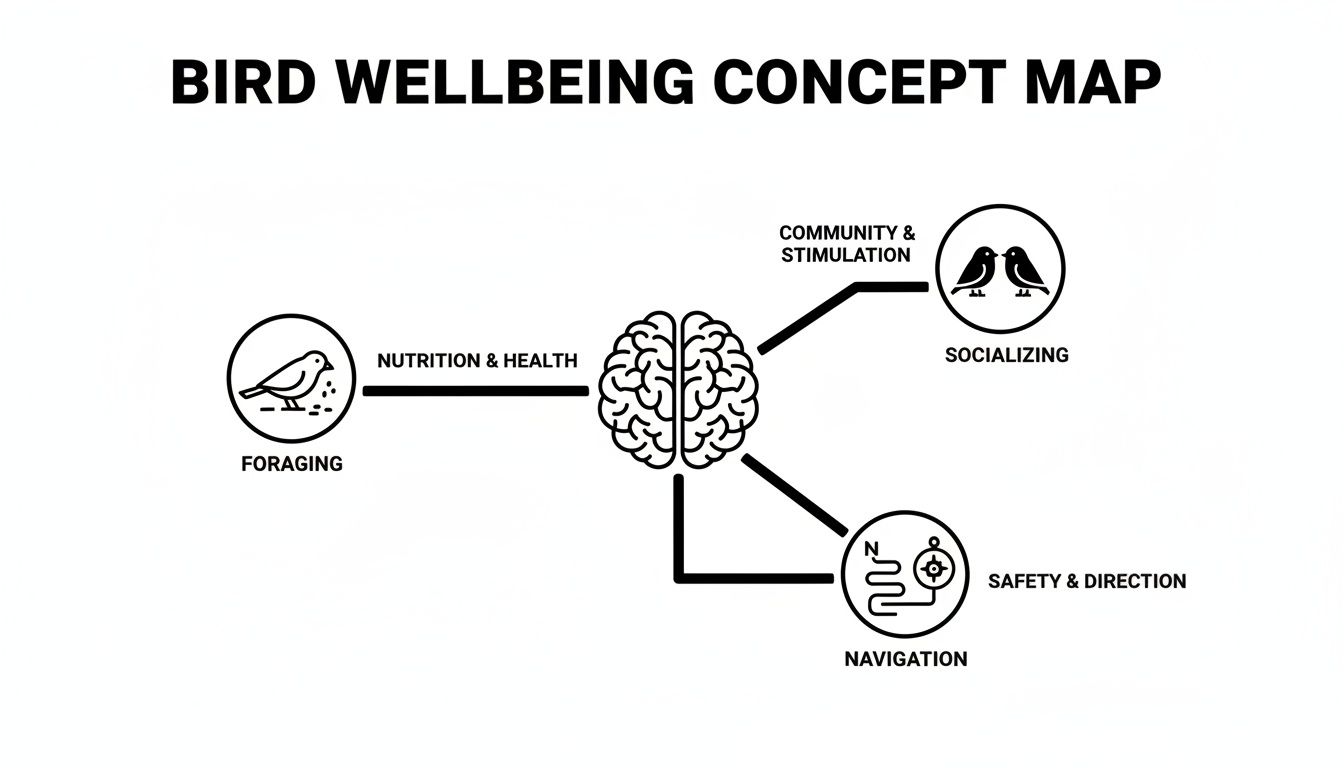
It's a great illustration of how a healthy mind is built on fulfilling these core drives, which is absolutely crucial for preventing boredom, stress, and behavioural issues.
Foraging Enrichment
Out in the Australian bush, a bird’s main job is finding food. It takes up most of their day. Trying to recreate this experience is arguably the single most impactful form of enrichment you can give your pet. Instead of just plopping food in a bowl, foraging turns mealtime into an engaging puzzle.
This simple switch gets their mind working, encourages problem-solving, and delivers a huge mental payoff. It's the perfect antidote to the boredom that creeps in when food is just too easy to get.
- For Beginners: Start easy. Scatter some seeds or pellets in a shallow tray filled with bird-safe goodies like shredded paper or bits of cardboard.
- Next Level: Introduce simple puzzles where they need to pull, push, or twist something to get their reward.
- Expert Foragers: Graduate to more complex acrylic puzzles or tough stainless steel toys that require a few different steps to crack.
If you want to go deeper on this, you can learn more about the incredible benefits of foraging toys for birds in our detailed guide.
Physical Enrichment
A bird's body is built to move. Physical enrichment is all about encouraging them to climb, swing, and balance, which is vital for maintaining muscle tone, keeping joints healthy, and preventing foot problems like bumblefoot.
Think of the cage as a gymnasium, not just a container. This means offering a variety of surfaces and chances for exercise that go way beyond a single, uniform dowel perch.
- Varied Perches: Mix it up! Offer different textures and diameters. Natural Australian gum branches, rope perches, and flat platform perches are all fantastic for exercising their feet.
- Ladders and Swings: These are brilliant for encouraging climbing and balancing, getting different muscle groups working and adding some dynamic fun to their setup.
- Play Gyms: An out-of-cage play stand is a brilliant way to give them exercise, a change of scenery, and a safe place to hang out with the family.
Cognitive Enrichment
Cognitive, or 'thinking', enrichment is all about challenging that clever little mind. Parrots are incredibly intelligent creatures. Without mental puzzles to solve, they can get bored and frustrated, fast.
This kind of enrichment doesn't just keep them busy; it builds their confidence and helps focus their energy on productive, satisfying tasks.
Expert Advice: "A busy beak is a happy beak. When a bird is focused on shredding a toy or solving a puzzle, it isn't thinking about destructive behaviours. Cognitive enrichment is a powerful tool for preventing and managing issues like excessive screaming and feather plucking."
- Training Sessions: Teaching simple commands like "step up," "target," or "turn around" is incredible mental stimulation and really strengthens your bond. Just keep the sessions short, positive, and full of praise.
- Puzzle Toys: Many foraging toys are also fantastic cognitive puzzles, as they require your bird to think and use their dexterity to get to the prize inside.
Sensory Enrichment
Birds experience their world through all their senses. Sensory enrichment is about stimulating their sight, hearing, touch, and even smell in interesting and positive ways.
It adds new layers of complexity to their world, keeping their environment fresh, novel, and engaging day after day.
- Auditory: You could play recordings of natural sounds, like Australian bird calls or gentle rain. Offering musical toys or bells for them to interact with directly is another great option.
- Visual: Pop the cage in a spot where they can see some action, but still feel secure. Hanging colourful toys or even some bird-safe plants nearby can add a lot of visual interest.
- Tactile: This is where shreddable and chewable toys really shine. Offering a whole range of textures—from soft balsa wood and cardboard to tough natural pods—gives their beak and feet a proper workout.
Social Enrichment
Last but not least, birds are deeply social, flock-oriented animals. Positive social interaction isn't just a bonus; it's a cornerstone of their wellbeing. This doesn't automatically mean you need to get another bird, either. To your bird, you are the flock!
Consistent, positive time spent with you is one of the most powerful and important forms of enrichment there is.
- Daily Interaction: Make time for your bird every single day. It could be talking to them, sharing a healthy snack, or just having them on a stand nearby while you read or work.
- Shared Activities: Try to include your bird in family life. For many birds, just being in the same room and feeling like part of the action is incredibly socially fulfilling.
How to Choose Safe Bird Toys in Australia
When it comes to enriching your bird's life, not all toys are created equal. Here in Australia, a cheap, poorly made toy isn't just a waste of money—it can be a serious health hazard. Choosing the right items is one of the most important things we do as bird owners, turning a fun purchase into a critical safety decision.
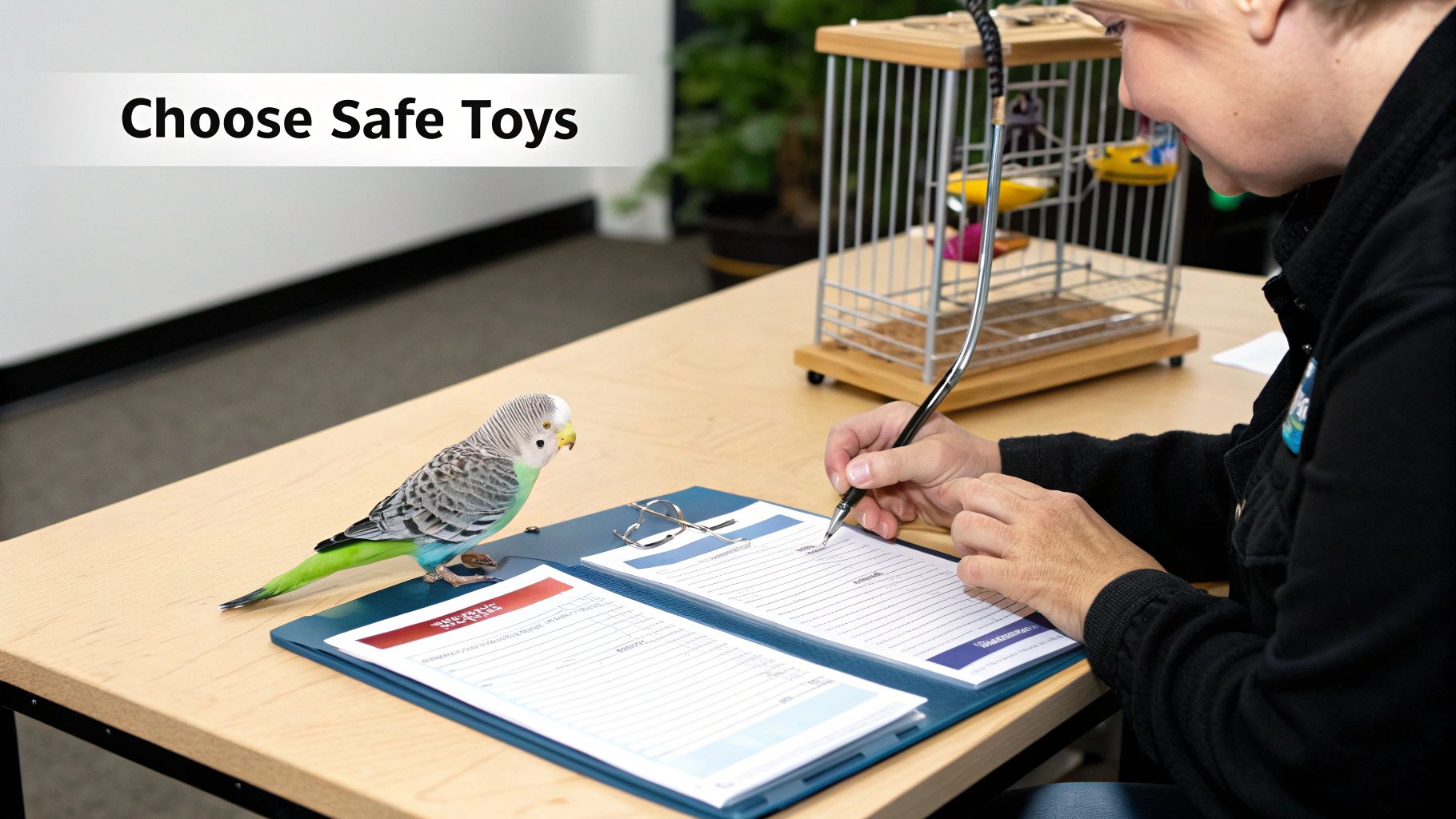
The market is flooded with options, but many toys, particularly those mass-produced overseas, hide real dangers. We're talking about everything from toxic metals that can cause slow poisoning to design flaws that lead to devastating injuries. This is exactly why sourcing enrichment from trusted Australian businesses that get local safety standards is a direct investment in your bird’s health and longevity.
As experienced toy makers, we've seen it all. Our advice comes from years of designing and handcrafting items that are not just engaging but, above all, safe for our feathered friends.
The Non-Negotiables of Bird Toy Safety
Before you add any new toy to your bird's cage, it needs a thorough safety inspection. A bird’s instinct is to chew, shred, and explore with its beak, so every single part of a toy must be able to withstand that intense curiosity without posing a threat.
Your main focus should be on the materials and how the toy is put together. So many common materials found in general-purpose craft stores are completely unsuitable and even lethal for birds.
Expert Advice: "Always assume your bird will try to ingest or completely dismantle every part of a new toy. This mindset forces you to look for potential hazards, such as small metal parts that could be swallowed or loose fibres that could cause an impaction. Safety isn't a feature; it's the foundation."
Here are the key dangers to watch out for:
- Toxic Metals: Heavy metal poisoning is a devastating and often fatal condition. Avoid any toy components containing lead or zinc. This includes things like split-key rings, jingle bells with an open clapper, and unidentified metal hardware. Always opt for stainless steel or nickel-plated hardware from reputable suppliers.
- Dangerous Ropes and Fibres: Never use nylon or fine cotton rope. These can fray into long threads that can cause crop impaction if swallowed or wrap tightly around a toe or limb, cutting off circulation. Stick to natural, bird-safe fibres like sisal, jute, or vegetable-tanned leather.
- Unsafe Construction: Look for toys with gaps, loops, or openings where a bird's head, foot, or toe could become trapped. Quick-links used to hang toys should always be screwed tightly closed to prevent a bird from getting caught.
Sourcing Quality from Australian Makers
Choosing to buy from local Australian businesses often means you're getting a product made with a much higher degree of care and knowledge. Local makers are typically more familiar with safe materials, including which native Australian woods are safe for birds to chew (like eucalyptus and bottlebrush).
Plus, small-scale production allows for better quality control. When you support a local business, you’re not just getting a toy; you're accessing a wealth of specialised knowledge. For a more detailed breakdown, our guide on how to choose the right bird toys for your bird offers even more specific advice tailored to different species.
Australian Bird Toy Safety Checklist
This quick checklist is your go-to guide for assessing the safety of any new toy before it goes anywhere near your bird's cage. Making this a habit can prevent a tragedy.
| Safety Check | What to Look For | Why It Is Important |
|---|---|---|
| Metal Components | Stainless steel or nickel-plated hardware. No zinc, lead, or rust. | Prevents heavy metal poisoning, a common and often fatal condition. |
| Ropes and Fibres | Natural fibres like sisal, jute, or seagrass. Avoid nylon and thin cotton. | Long, synthetic threads can cause crop impaction or entanglement. |
| Wood and Plastics | Untreated, bird-safe woods (e.g., pine, eucalyptus). Bird-safe plastics only. | Prevents exposure to toxic chemicals, preservatives, and splinters. |
| Dyes and Colours | Non-toxic, food-grade vegetable dyes. Colours should not run excessively when wet. | Birds chew and ingest parts of their toys, so dyes must be safe to consume. |
| Construction Integrity | No small gaps, loops, or rings where a head or foot could get stuck. | Entrapment is a serious risk that can lead to severe injury or death. |
| Size Appropriateness | Toy size matches the bird's size and beak strength. | A large bird can easily destroy a small toy, swallowing hazardous parts. |
| Small, Loose Parts | No tiny, swallowable components like bell clappers or beads that can be chewed off. | Prevents choking and intestinal blockages. |
Running through these checks gives you peace of mind, knowing you're providing enrichment that is both stimulating and secure.
By empowering yourself with this knowledge, you can confidently select animal enrichment in Australia that is not only fun but also fundamentally safe for your beloved companion.
Creating a Holistic Enrichment Strategy
Real enrichment isn't just about chucking a few toys in a cage and calling it a day. It’s about building a whole world for your bird—one that stimulates all their senses and lets their clever mind get to work. It’s a shift from just thinking about individual toys to considering their entire daily experience.
A holistic approach weaves different kinds of enrichment into your bird’s everyday life. The goal is to create a lifestyle that’s consistently interesting and fulfilling, heading off the deep-seated boredom that leads to stress and behavioural problems. Their world should be dynamic, not static.
Sensory and Social Enrichment
Birds take in the world with much more than just their beaks. Tapping into their other senses is a simple but incredibly effective way to make their life richer, especially when you connect it to the sounds and feelings of the Australian environment they’re built for.
- Auditory Enrichment: Try playing some gentle, natural sounds from the Aussie bush. The familiar calls of other native birds or the quiet sound of rain can be wonderfully soothing and stimulating, reminding them of their wild roots.
- Social Enrichment: Your bird is a flock animal, which means you’re part of their family. Daily, positive interaction is non-negotiable. This doesn't have to be complicated—it can be as simple as chatting to them while you make your coffee or having them on a play stand nearby while you work. That consistent, gentle contact reinforces your bond and gives them huge social comfort.
Expert Advice: "Enrichment isn't an event; it's an environment. The most effective strategies are those that are integrated into a bird's daily life, providing constant, low-level stimulation that keeps their minds active and prevents the build-up of boredom-related stress."
Environmental and Rotational Enrichment
The physical space your bird lives in has a massive impact on their mental wellbeing. Even small tweaks to their environment can make a big difference, stopping their cage from becoming a monotonous, unchanging box.
One of the best—and most overlooked—strategies is toy rotation. Think about it: a bird can get just as bored with the same old toys as a kid can. By keeping a collection of toys and swapping a few out every week or two, you’re constantly introducing something new. This simple act keeps their curiosity alive and makes them feel like they're always discovering something fresh and exciting. It's a key part of managing your parrot supplies in Australia to get the most value and engagement.
Here are a few other easy ways to shake up their environment:
- Rearrange the Cage: Just moving perches, food bowls, and toys to different spots can make the whole space feel new again. It encourages them to explore and figure out new ways to get around.
- Introduce a Play Gym: An out-of-cage play gym offers a complete change of scenery. It’s a safe, dedicated space for them to stretch their wings, do some training, and spend quality time with the family.
- Vary Food Placement: Don’t always hang that foraging toy in the exact same spot. Move it around the cage to encourage them to move and explore to find their reward.
By mixing sensory, social, and environmental strategies, you create a complete approach to your bird’s wellbeing. You're ensuring they aren't just being housed, but are truly living a life full of purpose, discovery, and joy.
Meeting Australian Animal Welfare Expectations
Across Australia, providing top-notch animal enrichment is fast becoming a hallmark of responsible pet ownership. When you thoughtfully choose toys and create a stimulating space for your bird, you’re not just doing something for your own pet—you’re part of a much bigger national shift toward higher standards of animal welfare.
This change in mindset is closing the gap between the incredible care you see in accredited Australian zoos and the kind of vibrant habitats that caring owners can create at home. Public awareness and concern for how animals are treated, whether in a zoo or in our living rooms, has never been higher.
These community expectations have a real impact on how we look after our companion animals. Research shows that most Australians feel strongly about the welfare of animals in places like zoos. It’s only natural for that value to extend to our own pets, with more and more owners aiming for zoo-level standards by making enrichment a priority.
Joining a Progressive Movement
By putting real effort into enrichment, you’re joining a well-informed and forward-thinking movement of Australian pet owners. This community gets it: a pet’s mental health is just as vital as its physical health. They see enrichment not as an optional extra, but as a fundamental need.
This way of thinking accepts that just providing food, water, and a roof over their head is only the starting line. True wellbeing comes from an environment that lets an animal be itself—to forage, to play, to figure things out, and to interact.
Expert Advice: "The standards you see in the best Australian zoos—complex habitats, varied diets, cognitive challenges—are the gold standard for a reason. Applying these principles at home, even on a smaller scale, shows a deep respect for your animal's intelligence and intrinsic needs."
Elevating the Standard of Care at Home
You don't need a zoo-sized budget to meet these rising expectations. The core ideas are scalable and can be adapted to any home, whether it’s a single budgie’s cage or a large outdoor flight. It’s all about being clever and intentional with the space and resources you have.
For instance, a well-designed outdoor aviary can be a brilliant way to provide a rich, semi-natural environment. If you want to learn more about setting one up, our guide on the essentials of an outdoor bird aviary is packed with practical tips.
Ultimately, every foraging toy you add or every new perch you install contributes to this higher standard of care. You're not just improving things for your companion; you're helping shape a better, more compassionate future for all pets in Australia.
Common Questions About Bird Enrichment
Jumping into the world of bird enrichment can bring up a few questions, especially when you're just starting out. Getting clear, practical answers is the best way to move forward with confidence and give your feathered mate the best care possible.
Here, we'll tackle some of the most common queries we hear from bird owners across Australia. The goal is to help you get past any early wobbles and feel good about creating a truly stimulating home for your bird. Let's get into it.
How Often Should I Rotate My Bird's Toys?
We find that rotating a few toys every one to two weeks works best. The idea isn't to constantly buy new things, but to bring back that sense of novelty. Birds, just like us, can get tired of looking at the same old things day in and day out.
By having a small collection of toys and swapping them out regularly, you keep their environment feeling fresh and interesting. This simple habit encourages them to explore and keeps their clever minds ticking over. Of course, any shreddable toys that have been happily destroyed should be replaced as you go.
Is It Safe to Make My Own Parrot Toys?
Making your own toys can be a fantastic and rewarding experience, but safety has to be your number one priority. You must use only bird-safe materials. In Australia, that means sticking to untreated native woods like eucalyptus, bottlebrush, or banksia.
Expert Advice: "Never use treated pine, toxic plastics, or any metals containing lead or zinc. Natural fibre ropes like sisal are best, and always make sure your design has no small, swallowable parts or loops that could trap a head or a foot. If you're ever in doubt, buying from a reputable Australian toy maker is the safest bet."
My Bird Seems Scared of New Toys. How Can I Help?
This is incredibly common, so don't worry! This fear of new things is called neophobia, and it’s a natural survival instinct that tells a bird to be cautious. The key to helping them through it is patience and a slow, gentle introduction.
Start by placing the new toy outside the cage for a few days, somewhere your bird can see it from a safe distance. After that, move it a bit closer to the cage. Finally, pop it inside, but keep it well away from their favourite perch or food bowl.
Here are a few extra tips that usually do the trick:
- You Play First: Let your bird see you handling the toy and having fun with it. Your calm engagement shows them it isn't a threat.
- Add a Treat: Tying a bit of millet spray or a favourite nut to a new foraging toy can be the perfect motivation for that first brave interaction.
- Be Patient: Never force it. Just let your bird approach the new item on their own terms. Building their confidence is the most important part of the whole process.
Keep Reading
- What Causes It and How to Stop It
- How To Choose The Best Bird Cage In Australia
- A Guide To Choosing The Best Food For Your Bird
Disclaimer Summary:
The information in this article is general in nature and may include external links or resources not created by Lou Lou Bells Bird Toys. Every bird is unique, so we encourage you to seek personalised advice from your own veterinarian or avian specialist. For full details, please read our complete disclaimer here.