
Picking the right bird toys for cockatiels comes down to understanding what makes them tick. It’s all about tapping into their natural instincts to chew, forage, and explore. Giving them a good mix of shreddable, foraging, and interactive toys isn’t just for a bit of fun—it's a core part of their daily care that keeps boredom at bay and supports their physical and mental health.
Why the Right Toys Are More Than Just Playthings
If you own a cockatiel in Australia, you know these birds are little bundles of energy and curiosity. That's because, in their native outback home, their days are spent foraging for food, chewing on grasses and tree branches, and generally exploring their surroundings. That hardwired drive doesn’t just switch off when they move into our homes.
Toys aren't just amusing trinkets; they're vital tools for your bird's mental, physical, and emotional wellbeing. Think of them as a crucial part of your cockatiel’s daily ‘job’—a job that satisfies a deep-seated need for purpose and stimulation. Without this enrichment, a cockatiel can quickly become bored, stressed, and anxious, which often opens the door to common behavioural issues.
Preventing Problem Behaviours Through Play
Many of the undesirable habits we see in companion birds boil down to one thing: a lack of proper stimulation. The right bird toys for cockatiels can tackle these issues head-on:
- Feather Plucking: When a bird has no outlet for its energy, it might start over-preening or even plucking its own feathers. Engaging chewable and shreddable toys give them a safe, appropriate target for that behaviour.
- Excessive Screaming: A bored cockatiel is often a loud one. They'll scream for attention or out of sheer frustration. Foraging and puzzle toys keep their clever minds busy, cutting down the need to vocalise.
- Destructive Chewing: If your cockatiel doesn’t have enough of its own things to chew, your furniture, walls, and even electrical cords can become fair game. A steady supply of safe, destructible toys is the perfect way to satisfy this completely natural urge.
Here in Australia, we're really starting to get this. Cockatiels make up roughly 25% of pet birds in Aussie households, and there's been a huge shift in what owners are looking for. Recent data shows that 62% of bird owners now put mental stimulation toys at the top of their shopping list—a massive jump from just a few years back. You can dig deeper into these bird toy market trends and their growth if you're curious.
By providing a rich, stimulating environment full of great toys, you're not just preventing problems. You're actively nurturing a happier, healthier, and more content little companion.
How to Choose Safe and Engaging Cockatiel Toys
Walking down a bird toy aisle can feel a bit overwhelming, can’t it? With so many options, colours, and materials, it’s easy to get lost. But if you keep one word at the front of your mind—safety—the whole process becomes much clearer. Choosing toys that are both safe and stimulating isn’t just about buying fun things; it’s a massive part of being a responsible bird owner. A good toy enriches your cockatiel’s life without putting them at risk.
The best first step is to become a bit of a material detective. Cockatiels explore absolutely everything with their beaks, so anything you put in their cage has to be non-toxic and sturdy enough for their light but persistent chewing. Think of it like baby-proofing a room—every single item needs a quick check for potential dangers.
Material Safety a Top Priority
When you're shopping for bird toys for cockatiels, the materials are everything. Seriously. Look for toys made from natural, untreated woods like balsa, pine, or even native Australian botanicals from a source you trust. These are soft enough for a cockatiel's beak, letting them satisfy that deep, natural urge to chew and shred.
Safe plastics are another good option, but you need to be sure they’re hard, durable, and free from nasty chemicals like phthalates. As for metals, the rule is simple: stainless steel only. That goes for all the hardware, from the quick links that attach the toy to the cage right down to the little clapper inside a bell. Stay far away from zinc, lead, and other cheap metals, as they can cause heavy metal poisoning if your bird chews on them.
The infographic below really nails the three fundamental needs that a good, safe toy should be helping your cockatiel fulfil.
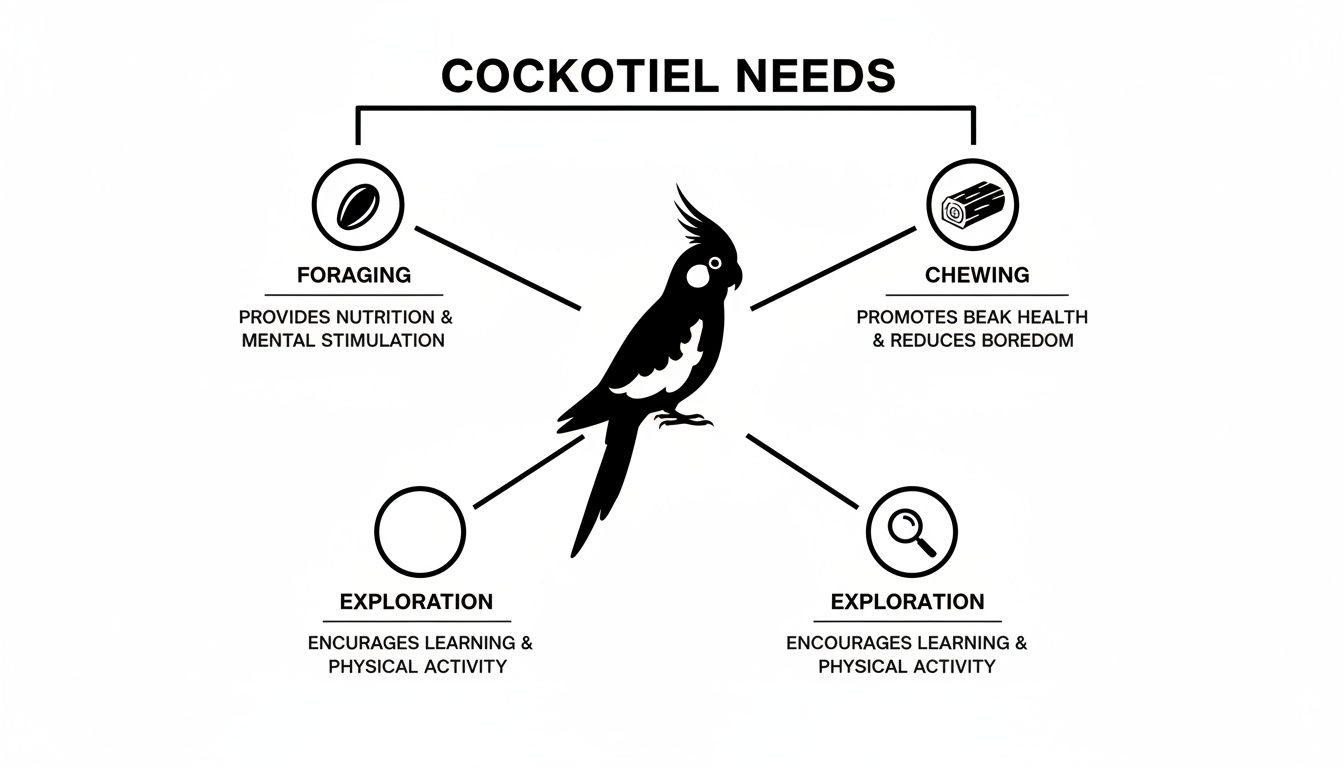
It’s a great little reminder that the best toys tap into a cockatiel's core instincts for foraging, chewing, and exploring their world.
To help you get a feel for what’s safe and what’s not, here’s a quick reference table.
A Quick Guide to Safe vs Unsafe Toy Materials
Use this reference to help you identify safe and potentially hazardous materials when choosing toys for your cockatiel.
| Material Type | Safe Options (Examples) | Materials to Avoid (Examples) |
|---|---|---|
| Wood | Untreated balsa, pine, yucca, bird-safe native botanicals. | Plywood, MDF, treated pine, wood from toxic trees (e.g., cherry pits, some oaks). |
| Metals | Stainless steel for all hardware (links, chains, clasps, bells). | Zinc, lead, brass, copper, any galvanised metal, rusty parts. |
| Fibres/Ropes | Natural sisal, jute, seagrass, paper rope, leather (vegetable-tanned). | Cotton rope, synthetic fibres (nylon, polyester), thin threads that can create loops. |
| Plastics | Hard, durable plastics like acrylic or PVC (phthalate-free). | Soft, brittle plastics that can be easily chewed into small, swallowable pieces. |
| Dyes | Non-toxic, food-grade colourings. | Any unknown or cheap paint, toxic dyes that may bleed when wet. |
Having a mental checklist like this makes spotting a potentially dodgy toy so much easier when you're out shopping.
Watch Out for Hidden Dangers
Beyond just the raw materials, the way a toy is put together is just as important. A lot of the most common hazards are easy to spot once you know what you’re looking for.
- Rope and Fibre Dangers: Steer clear of toys made with cotton rope or other fine threads. These can unravel into long strands that can get tangled around a bird’s toes, leg, or even neck. A much safer choice is natural sisal or jute rope, which frays into shorter, less risky fibres.
- Small, Detachable Parts: Always give a new toy a good once-over. Check for any small plastic beads, weak clasps, or bits and pieces that a curious cockatiel could pry off and swallow. This is a massive choking hazard.
- Toxic Dyes: Brightly coloured toys look great, but you need to be sure the dyes are bird-safe. Always go for toys coloured with non-toxic, food-grade dyes so your bird isn’t accidentally ingesting harmful chemicals.
Expert Tip: My simple rule of thumb is to check every single part of a toy. If a component looks like it could be easily snapped off, swallowed, or could trap a tiny toe, it's best to just leave it on the shelf. Trust your gut—if something feels unsafe, it probably is.
Choosing the right toy is a skill you'll get better at with a bit of practice. For a more detailed look, you can learn more about how to choose the right bird toys for your bird in our big guide. By putting safety first and understanding your cockatiel’s natural instincts, you can confidently pick out toys that will give them hours of healthy, happy fun.
The Must-Have Toy Categories for Every Cockatiel
Putting together the right toy collection for your cockatiel is a bit like packing a lunchbox for a kid—variety is everything. A balanced ‘toy box’ isn’t just about fun; it’s absolutely crucial for keeping them happy and healthy. Let’s break down the essential types of toys every cockatiel owner in Australia should have on hand to help their little mate thrive.
Each category of toy taps into a specific, natural instinct, making sure your cockatiel gets the mental, physical, and emotional workout they need. The goal is to build a collection that encourages the full range of activities they’d be doing in the wild.
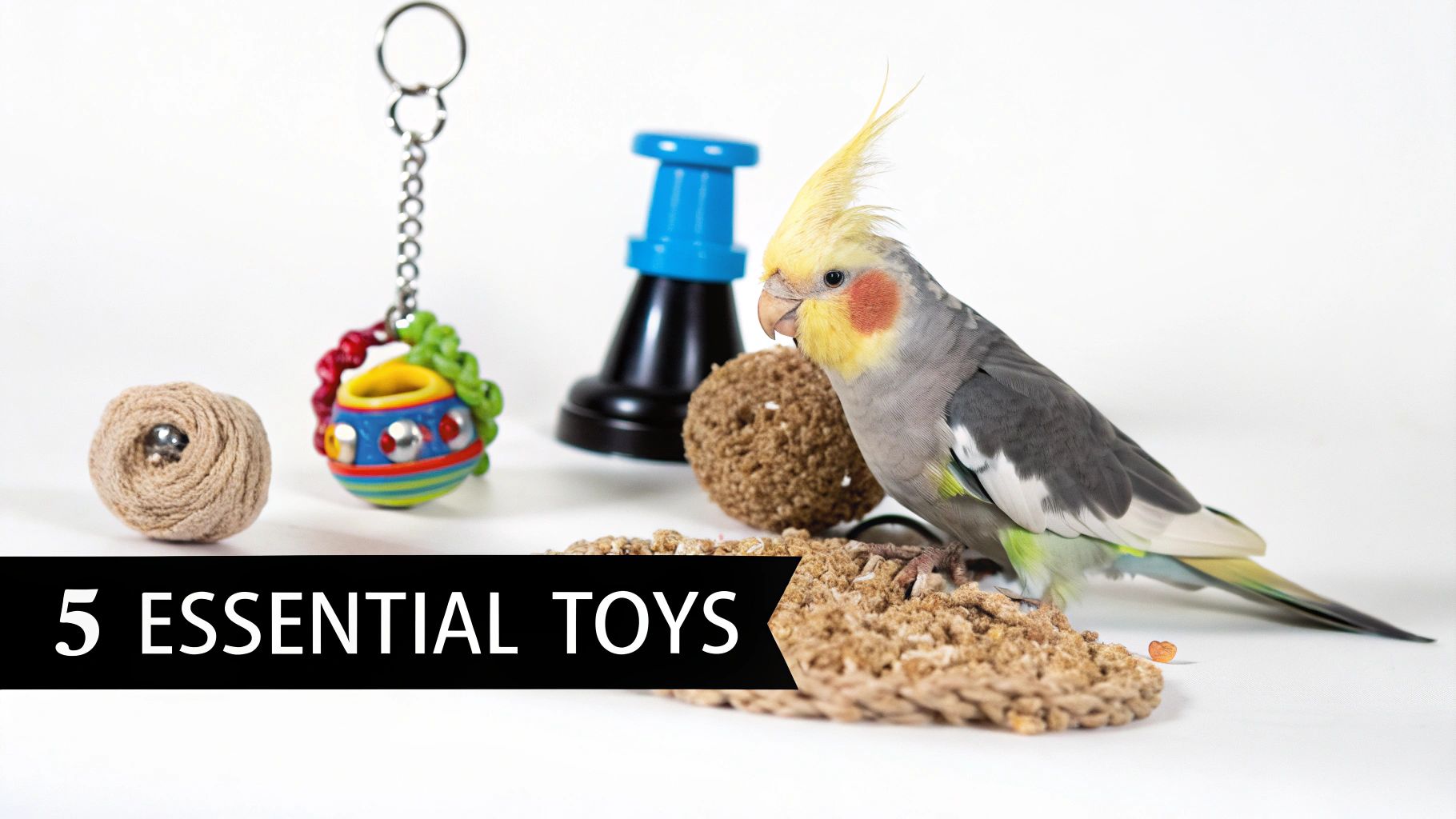
Shreddable and Chewable Toys
Out in the Australian bush, cockatiels spend a huge amount of their day stripping bark and chewing on native plants. This isn't just for something to do; it’s a vital behaviour that helps them explore their world and keep their beaks in good shape. Shreddable and chewable toys are the perfect stand-in for this.
Toys made from soft woods like balsa, yucca, palm leaves, or even thick cardboard and paper give your cockatiel a safe and satisfying outlet for that chewing drive. This not only keeps their beak trim and healthy but also stops them from eyeing off your furniture or skirting boards. A truly happy cockatiel often has a glorious pile of shredded paper at the bottom of its cage.
Foraging Toys
For a wild cockatiel, foraging is their main job. They spend hours searching for seeds and grains on the ground, and this is where foraging toys come in. They turn mealtime from a boring, predictable affair into an engaging puzzle that gives your bird’s brain a real workout.
These toys make your cockatiel solve a problem—like pulling a lever, opening a little drawer, or chewing through a barrier—to get to a tasty treat. This mental stimulation is so important for preventing boredom. Tapping into the natural foraging instincts is essential for these clever birds.
Expert Advice: Foraging is more than just a game; it's a direct line to your cockatiel's natural instincts. By making them work for their food, you're fulfilling a deep psychological need and building a more confident, content bird.
Foot Toys and Auditory Toys
Foot toys are small, lightweight items that your cockatiel can hold, toss, and manipulate with their feet and beak. Think small wicker balls, plastic rings, or little bundles of leather strips. They’re fantastic for improving dexterity and coordination.
Auditory toys, like those with small, safely enclosed stainless-steel bells, add another layer of sensory engagement. Cockatiels are social, vocal birds, and the gentle jingle of a bell can mimic the sounds of a flock, offering a bit of comfort and interaction. Just make sure the bell's clapper can’t be removed, so there’s no safety risk.
Swings and Textured Perches
Finally, don't forget toys that encourage movement. Swings are a massive favourite for cockatiels, giving them a fun way to exercise and work on their balance. Many tiels absolutely love to gently rock on a swing while chirping away to themselves.
Textured perches made from natural woods or other safe, varied materials are just as vital. They exercise the muscles in your bird's feet, helping to prevent pressure sores and conditions like bumblefoot. Providing a mix of swings and different perches essentially turns their cage into a stimulating playground and gym. For a bit more on this, you might want to read our guide on foraging toys for birds.
Building an Interactive Playground, Not Just a Cage
Having a fantastic collection of toys for your cockatiel is a great start, but how you set them up is what really turns a simple cage into a dynamic, stimulating world. The goal isn’t just to fill the space; it’s about creating an environment that gets them moving, thinking, and exploring all day long. Just dropping toys in a pile simply won’t cut it.
Strategic placement is the secret to building this interactive home. Instead of cramming everything into one corner, scatter the toys to encourage your cockatiel to move around their cage. For instance, try putting a foraging toy at the complete opposite end from their main food bowl. This tiny change motivates your bird to climb and travel across their space for a reward, which is brilliant physical exercise.
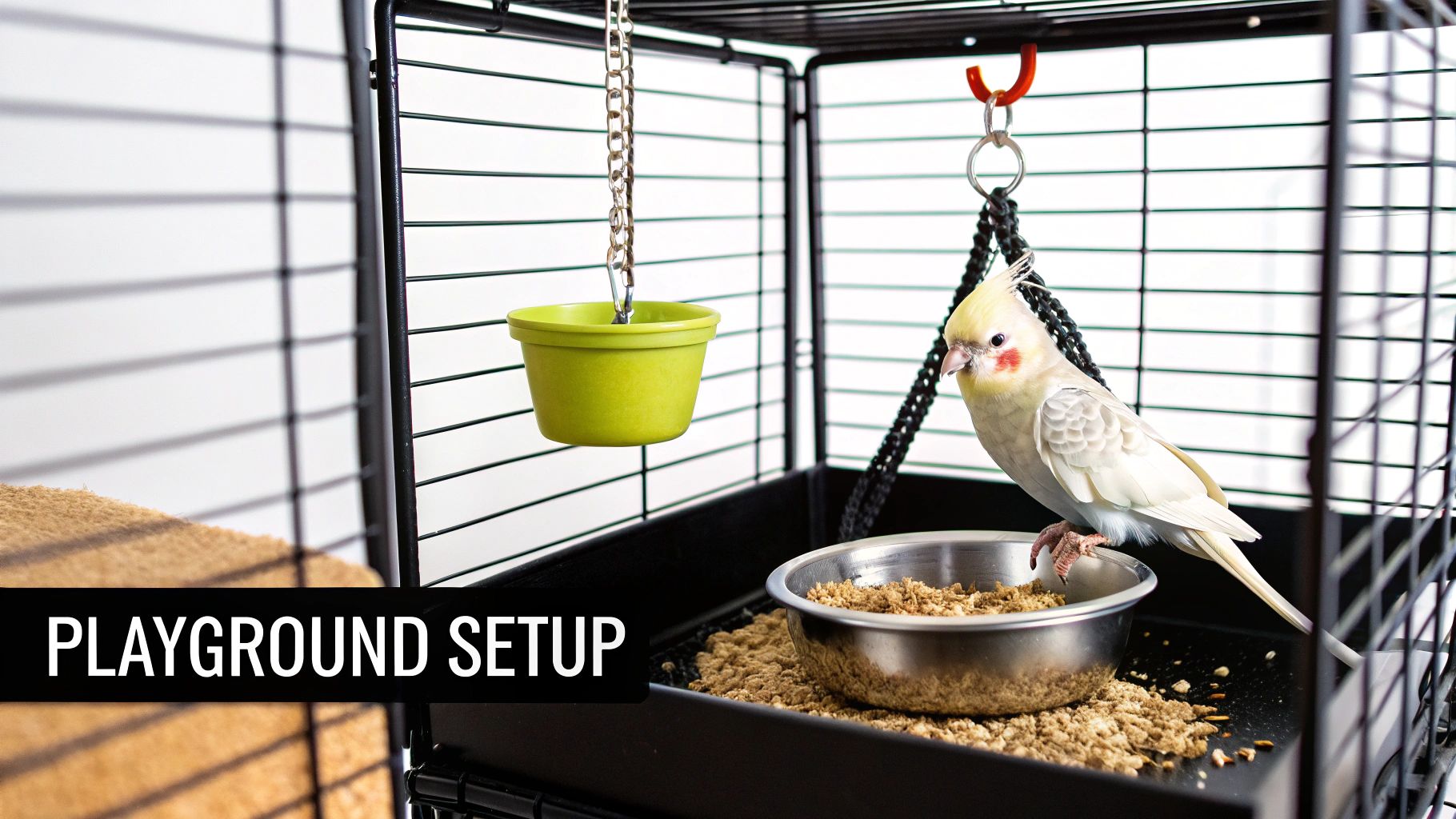
The Power of Toy Rotation
Imagine eating the exact same meal every single day. You’d get bored pretty quickly, right? Your cockatiel feels the same way about their toys. This is where the simple yet incredibly powerful strategy of toy rotation comes into play. It’s the secret weapon against "toy burnout," keeping your bird's curiosity permanently switched on.
The idea is easy: don't put all the toys in the cage at once. Keep a separate stash of toys and swap a few out every week or so. This way, old toys feel brand new and exciting again when they reappear after a break.
Expert Advice: "A rotating toy selection is one of the most powerful tools we have for cognitive enrichment. It challenges a bird's memory and problem-solving skills, preventing the mental stagnation that can lead to behavioural issues. It’s a simple change with profound benefits." - Australian Avian Specialist
Research from Murdoch University even backs this up, showing that 75% of Aussie bird vets recommend weekly toy rotation to prevent boredom and stimulate cognitive function in pet birds. It’s clear that providing enrichment is becoming a top priority for bird owners everywhere.
Creating Zones for Play and Rest
Think of your cockatiel's cage like their own little house, complete with different "rooms" for different activities. By placing toys strategically, you create zones that serve specific purposes. This thoughtful approach to the cage layout makes their world more predictable and comforting.
Try creating zones like these:
- The Gym: Hang swings, ladders, and boings near the top of the cage to encourage climbing, balancing, and a good workout.
- The Foraging Area: Place puzzle toys and shreddable items stuffed with treats away from the main food dish. This gets them actively searching for their food, just like they would in the wild.
- The Quiet Corner: Arrange softer, comforting toys or simple wooden perches near their favourite sleeping spot for a bit of relaxation and downtime.
By organising the space this way, you give them clear opportunities for different types of fun and engagement throughout the day. For more ideas on how to deck out your bird's home, check out our guide to essential parrot cage accessories. After all, a well-designed cage is the foundation of a happy bird's life.
A Practical Guide to Cleaning and Maintaining Toys
Toy hygiene is one of the most important, yet easily overlooked, parts of looking after a cockatiel. Since your bird explores absolutely everything with its beak, their playthings can quickly become a hotspot for nasty bacteria if they aren't cleaned regularly. Think of it as essential preventative healthcare for your feathered mate—it’s all about keeping them safe from potential illness.
Just like our own household chores, setting up a simple cleaning schedule makes everything manageable. This way, you can be sure your bird’s environment stays fresh and healthy, cutting down the risk of infections.
Your Weekly Cleaning Checklist
Consistency is everything when it comes to keeping bird toys safe and sanitary. Different materials need slightly different care, but a simple weekly routine will cover most of your cockatiel’s collection.
- Hard Toys (Plastic, Acrylic, Stainless Steel): These are the easiest to clean. Give them a good wash at least weekly in hot, soapy water using a bird-safe dish soap. For a deeper clean, you can soak them in a diluted solution of one part vinegar to two parts water.
- Wooden and Natural Toys: Porous materials like wood need a gentler touch. Wipe them down with a damp cloth or a spray made from that same vinegar and water mix. Try to avoid soaking them, as this can lead to waterlogging and, even worse, mould.
- Ropes and Fabric Toys: These can harbour bacteria without you even realising. Spot-clean them with a damp cloth and the vinegar solution. If they get heavily soiled with food or droppings, it’s often safest just to replace them. A toy like our Gumnut Shredder is designed for satisfying destruction, making it easy to see when it's time for a new one.
Proper Drying and When to Say Goodbye
After cleaning, drying is the most critical step. Any lingering moisture can quickly invite mould or bacterial growth, which is extremely dangerous for a bird's sensitive respiratory system. Always make sure toys are 100% dry before putting them back in the cage. Air drying in a sunny spot is a great, natural way to get this done.
Expert Advice From an Avian Vet in Australia: "One of the most common health issues I see stems from poor cage hygiene. A simple, regular cleaning routine is more effective than any medicine at preventing bacterial infections. Never underestimate the importance of a clean toy."
Eventually, even the toughest toy will reach the end of its life. It's crucial to know when a toy is past its prime. Give all their playthings a regular once-over, looking for:
- Frayed ropes that could form dangerous loops.
- Sharp, splintered wood.
- Cracked plastic with jagged edges.
- Loose or broken parts that could be swallowed.
When a toy starts showing these signs of wear, it’s time to repair or discard it. A well-loved but worn-out toy, like a thoroughly shredded Foraging Box, has done its job beautifully and should be replaced to keep your cockatiel safe—just as you would with a well-chewed Munch Ball.
Troubleshooting Common Toy Problems
Right, so you’ve filled the cage with an awesome collection of toys, but things aren’t quite going to plan. Don’t worry, it happens to all of us. Working through these little hurdles is all part of getting to know your cockatiel’s personality and building that bond of trust.
My Cockatiel is Scared of New Toys
Sometimes, a brand-new toy is met with sheer terror. This isn't your bird being difficult; it's a deep-seated prey instinct kicking in. An unfamiliar object is a potential threat. The trick is a slow, patient introduction. Instead of hanging it straight in their cage, just leave the toy on a nearby table for a few days where they can see it from a safe distance. Then, you can gradually move it closer, hang it on the outside of the cage for a day or two, and only then place it inside.
My Cockatiel Destroys Toys Too Quickly
Is your little mate a feathered demolition expert? It might feel like you're throwing money away, but a toy that’s been shredded to bits is actually a massive win! It means your cockatiel was fully engaged, having a blast, and giving their beak a fantastic workout. A quickly destroyed toy isn't a failure—it's a sign you've found something they absolutely love.
If a toy only lasts a day, it might mean they need more to do or something a bit tougher.
- Mix it up: Make sure they have a good variety. Offer easily shreddable paper and cardboard toys alongside some slightly more challenging soft wood or woven palm leaf options.
- Add more toys: If one toy is gone in a flash, they might just need a few more destructible options available at all times to keep them occupied.
A demolished toy has done its job perfectly. It’s kept your bird busy, happy, and their beak in top condition.
What if My Bird Ignores Their Toys?
On the flip side, what if your cockatiel won’t play with anything? This isn't them being stubborn; it's a signal that something isn't quite right. They could be bored with the selection, the toys might be in the wrong spot, or maybe they just aren't the right type to spark their interest.
Expert Advice: An Australian avian behaviourist once told me, "A bird that ignores its toys isn't being stubborn; it's often a sign that we, the humans, have missed the mark. We need to become better observers of their play style."
If your tiel is giving their toys the cold shoulder, try moving things around. Some birds love foraging on the cage floor, while others prefer to play with toys hanging near their favourite perch. Experiment with different textures and types—if they’re snubbing wooden blocks, maybe a crinkly paper toy or a foraging puzzle stuffed with a high-value treat will get their attention. Your best tools here are simply patience and observation.
Your Top Questions Answered
We get a lot of questions from cockatiel owners across Australia. Here are a few of the most common ones, with some practical answers to help you and your feathered friend.
How Many Toys Should a Cockatiel Have?
A good starting point is to have around three to five different types of bird toys in the cage at any one time. This gives your cockatiel plenty of choice without making the cage feel so cluttered they can’t comfortably move around.
The real trick is to keep things interesting. Try swapping one or two toys out each week. This simple rotation stops things from getting stale and keeps your bird engaged.
Are Homemade DIY Bird Toys Safe?
They can be, but you have to be incredibly careful. If you're going the DIY route, you must only use materials you know are 100% safe for birds. Think untreated pine, natural fibres like sisal or seagrass, and plain, ink-free paper.
Never, ever use things like toxic glues, treated leather, cotton rope (which can cause crop impaction), or any small parts that could break off and be swallowed. When you’re not completely sure, it’s always safer to stick with toys from a trusted supplier, like our range of Australian-made bird toys for cockatiels.
Why Has My Bird Stopped Playing With a Favourite Toy?
Most of the time, this is just a classic case of boredom setting in, which is exactly why rotating their toys is such a great habit. Your bird has probably just seen it, shredded it, and is ready for a new challenge.
However, keep an eye on their overall behaviour. If a sudden lack of interest in playing comes with other changes, like being sleepy, fluffed up, or not eating properly, it could be an early sign that something is wrong. If you notice anything else out of the ordinary, a quick chat with your local avian vet is always the best move for your peace of mind.
Where to Next?
You've got the basics down for keeping your cockatiel's cage fun and engaging, but the journey doesn't stop here. Diving deeper into your bird's natural instincts is the key to a truly happy and healthy companion.
If you're ready to learn more, these guides are a great next step:
Keep Reading
- Your Guide to Foraging for Birds
- What Is Bird Enrichment and Why Is It Important?
- Safe and Unsafe Foods for Your Birds
Disclaimer Summary: The information in this article is general in nature and may include external links or resources not created by Lou Lou Bells Bird Toys. Every bird is unique, so we encourage you to seek personalised advice from your own veterinarian or avian specialist. For full details, please read our complete disclaimer here.