
When it comes to the best bird toys for budgies, you want things that tap into their natural instincts. Think chewing, foraging, and just plain having fun. A good mix of safe, size-appropriate toys is your best bet for keeping them sharp, active, and happy.
Why Your Budgie Needs Engaging Toys
Our budgies are part of the family, and they deserve more than just a cage with a perch and a food bowl. These little guys are smart, energetic Australian natives who need something to do all day. Their cage should be a safe haven, but the toys inside are what make it a home filled with purpose.
Without things to keep them busy, budgies get bored, fast. And that boredom isn't just a mood—it can spiral into some pretty serious behavioural problems. Imagine being stuck in an empty room with nothing to do, day in and day out. That lack of stimulation is often the root cause of stress-related behaviours that can really affect your bird's health.
Preventing Boredom-Related Problems
The right toys aren't just for fun; they're essential tools for heading off common issues that crop up in an under-stimulated environment. Budgies have a ton of natural curiosity and energy, and if that has nowhere to go, it can come out in destructive ways.
Here are a few key problems that good enrichment helps prevent:
- Feather Plucking: A classic sign of stress or boredom where a budgie starts pulling out its own feathers.
- Excessive Screaming: This is often a cry for attention or a way to release all that pent-up energy.
- Destructive Chewing: Gnawing on cage bars, feeders, or anything else they can get their beak on out of sheer frustration.
- Lethargy and Depression: A general lack of interest in anything, which can lead to a poor appetite and a decline in their overall health.
By providing a rotating selection of engaging bird toys, you give your budgie a positive way to act on their instincts. Whether it's shredding a toy to bits, figuring out a simple puzzle to get a treat, or just swinging on a perch, these activities keep their minds and bodies occupied. You can learn more about what birds love most in our detailed article.
More and more Aussie pet owners are recognising just how important this is. In Australia, the pet toys market, which includes bird toys, hit a value of USD 36.53 million in 2024. On top of that, RSPCA Australia reports that a massive 68% of budgie owners who provided interactive toys saw a real improvement in their bird's health and longevity. You can explore the full pet toy market analysis for more on these trends.
Exploring the Essential Types of Budgie Toys
A happy budgie is a busy budgie. Keeping their clever little minds and energetic bodies engaged comes down to a well-rounded toy collection. Providing a variety of bird toys for budgies isn't about spoiling them; it's about giving them an outlet for their deep-seated natural instincts. Each type of toy serves a purpose, contributing to their physical health, mental sharpness, and overall happiness.
Think of it this way: we need different activities to feel fulfilled—sometimes a workout, sometimes a puzzle, sometimes just relaxing. Budgies are the same. They need a mix of toys that cater to their different moods and needs. A cage filled with only one type of toy gets boring, fast. The goal is to create a dynamic playground that encourages them to chew, think, climb, and play all day long.
This diagram shows just how fundamental toy-based stimulation is to a budgie's wellbeing, sitting right alongside basic health and safety.
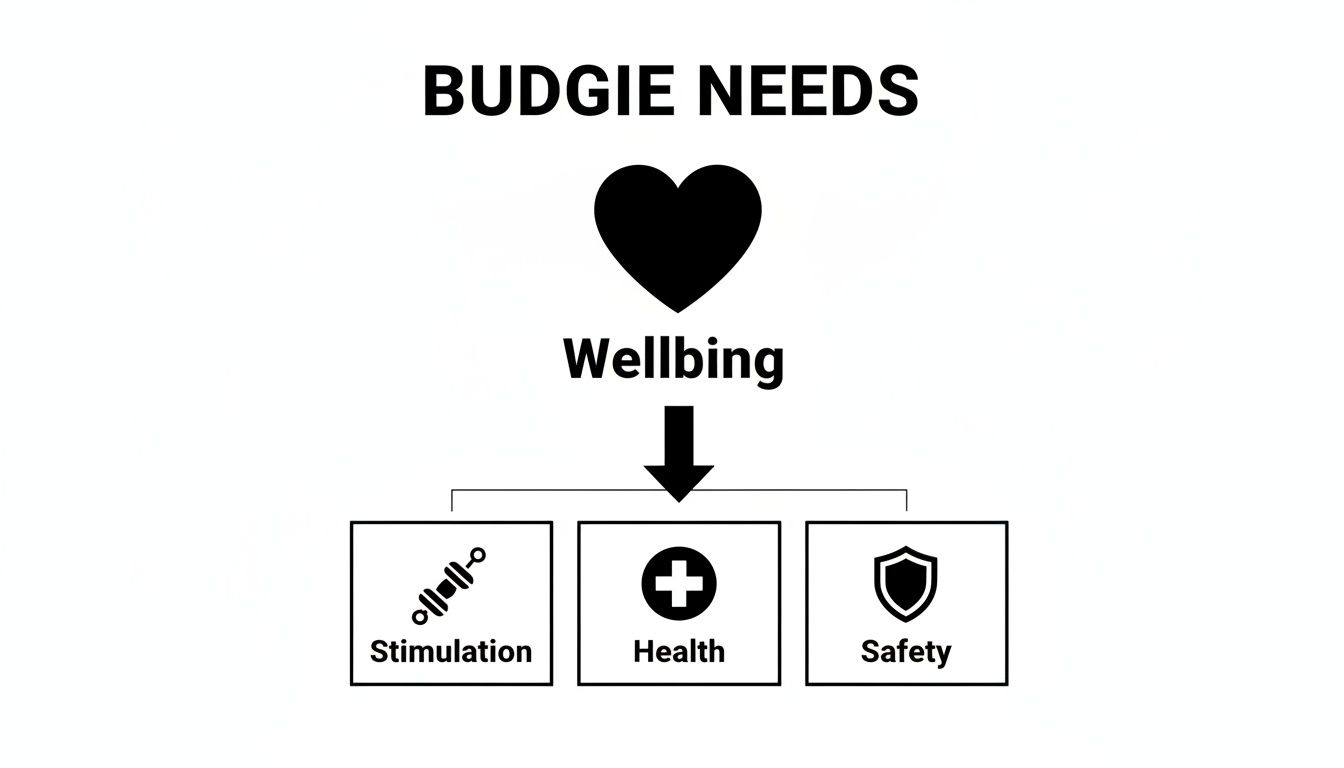
As you can see, stimulating toys aren't just an optional extra. They're a core pillar supporting the health and safety of your feathered companion.
To help you build the ultimate budgie playground, we've put together this handy checklist summarising the must-have toy categories.
Your Budgie's Essential Toy Checklist
| Toy Type | Main Benefit for Your Budgie | Example | How Often to Rotate |
|---|---|---|---|
| Foraging & Puzzle Toys | Mental stimulation, problem-solving, boredom busting | A treat-filled wicker ball, simple puzzle boxes | Every 1-2 weeks |
| Shredding & Chewing Toys | Beak maintenance, stress relief, instinct satisfaction | Balsa wood blocks, woven palm leaf rings | When destroyed or every 2-3 weeks |
| Swings & Perches | Exercise, balance, foot health, relaxation spots | Natural wood perches, simple rope swings | Add/change one every 3-4 weeks |
| Foot Toys | Dexterity, coordination, independent play | Small raffia balls, lightweight plastic shapes | Every 1-2 weeks |
By rotating these different types of toys regularly, you keep your budgie's environment fresh, exciting, and perfectly suited to their needs.
Foraging and Puzzle Toys
Out in the wild Australian bush, budgies spend a massive chunk of their day searching for food. Foraging toys tap directly into this powerful instinct, turning mealtime into a fun and rewarding challenge. Instead of just grabbing food from a bowl, they have to work for it, which is fantastic for their mental health.
These toys can be as simple as a woven grass ball stuffed with millet or more complex puzzles where they have to pull, push, or twist parts to get to a treat. The effort keeps them busy for ages, prevents boredom, and really gets their problem-solving skills firing. For a deeper dive, check out our guide on the incredible benefits of foraging toys for birds.
Shredding and Chewing Toys
Does your budgie just love to destroy things? Good! That's a great sign. Chewing and shredding are completely natural and necessary behaviours. Toys made from soft woods like balsa, yucca, or woven palm leaf give them a safe and satisfying outlet for this destructive urge.
This instinctual activity not only keeps their beak healthy but also doubles as a fantastic stress reliever. A toy like our Woven Wonders Ring is perfect for this, offering layers of fun textures for them to get their beak into and rip apart.
Swings and Perches
For a budgie, movement is life. Swings and different types of perches encourage balance, exercise, and play, which helps strengthen their leg and core muscles. Even a simple swing provides a fun spot to hang out, preen, or have a little nap.
Look for a variety of textures and materials to keep their feet healthy. Natural wood perches with varied diameters are excellent for exercising their feet and preventing issues like bumblefoot. Mixing these with a fun swing creates different "stations" for activity inside the cage.
Foot Toys
Never underestimate the power of a small toy your budgie can hold in their foot. Foot toys are designed to be picked up, thrown around, and fiddled with, which is brilliant for developing their dexterity and coordination. Think of them as the bird equivalent of a stress ball or a fidget toy.
They're small, but their impact is huge. These toys are a fantastic way to encourage independent play and keep your budgie entertained when they're pottering around on a flat surface.
A Budgie Owner's Guide to Toy Safety
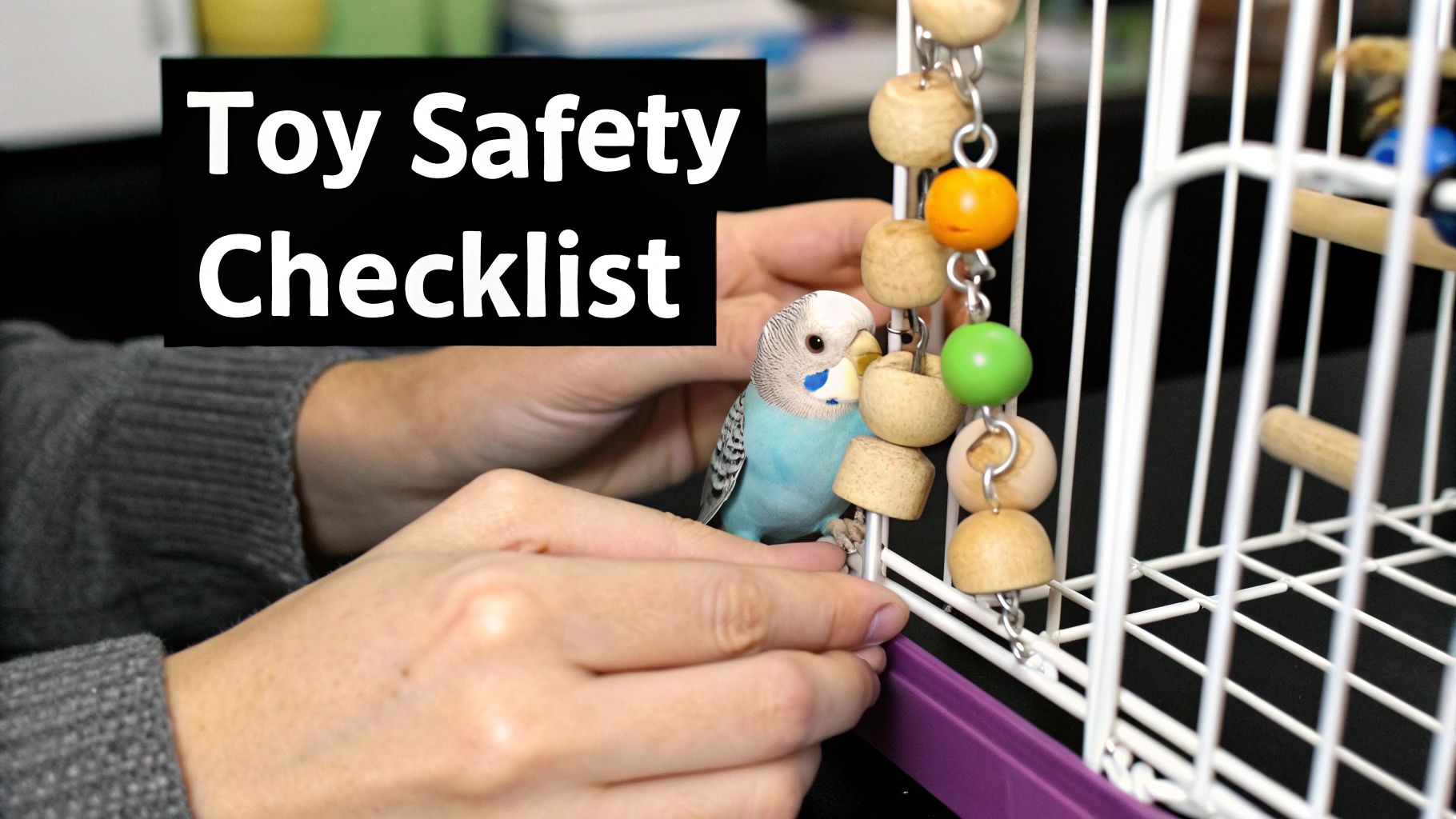
Nothing matters more than keeping your feathered friend safe while they play. A colourful, exciting toy might look fun on the shelf, but if it's made from the wrong materials or is poorly put together, it can pose a serious risk. This guide is your essential safety checklist for choosing high-quality, non-toxic bird toys for budgies and spotting potential dangers before they become a problem.
As a budgie owner in Australia, you have the power to make informed choices. By learning what to look for, you can confidently fill your bird's cage with toys that are both engaging and completely safe. It helps you avoid the hazards often lurking in cheap, unregulated products or unsafe household items.
Think of yourself as your bird's personal safety inspector—every new toy needs to pass your check.
Safe Materials for Budgie Toys
The first step in any safety check is simple: what is the toy made of? Budgies explore the world with their beaks, which means they will inevitably chew on, shred, and even ingest tiny pieces of their toys. That's why the material choice is so critical.
Look for toys made from these bird-safe materials:
- Untreated Natural Woods: Softwoods like balsa, pine, and yucca are perfect for shredding. Hardwoods from Australian natives like bottlebrush and gum tree branches are also excellent choices, but only after being properly cleaned and disinfected.
- 100% Natural Fibres: Materials like sisal, hemp, jute, and certain forms of cotton are great for preening and shredding.
- Paper Products: Simple things like unprinted cardboard, paper straws, and plain paper cups offer cheap and cheerful shredding fun.
- Vegetable-Tanned Leather: This is the only type of leather that is safe for birds. It doesn't use toxic chemicals in the tanning process, making it safe for curious beaks.
- Stainless Steel: When it comes to hardware like quick links, bells, and chains, stainless steel is the gold standard. It's non-toxic, incredibly durable, and won't rust.
Materials and Hazards to Avoid
Just as important as knowing what's safe is knowing what to steer clear of. Many common materials can be toxic or present physical dangers to a small bird like a budgie.
Keep an eye out for these potential hazards:
- Toxic Metals: Zinc, lead, and copper are highly toxic to birds. Always avoid any hardware that isn't confirmed stainless steel, as cheaper toys often use zinc-coated metal which can cause heavy metal poisoning over time.
- Certain Plastics: Soft plastics can be ingested and cause crop impaction, while brittle plastics can shatter into sharp, dangerous pieces. Only use hard, durable acrylics specifically designed for birds.
- Treated or Toxic Woods: Never use pressure-treated wood, MDF, or particleboard. Many common ornamental plants are also toxic, so always identify any wood before offering it.
- Unsafe Fasteners: Split-ring keychains and spring-loaded clips (like those on dog leads) are notorious for trapping toes and beaks. Always opt for bird-safe quick links instead. Our article covering general advice on safe toys for parrots goes into more detail on hardware safety.
Expert Advice: From an avian vet's perspective, the most common toy-related injuries we see are from two things: heavy metal toxicity from cheap hardware and entrapment from unsafe chains or clips. Choosing toys with stainless steel parts and checking for small gaps is the single most effective thing an owner can do to prevent a trip to the emergency clinic.
Inspecting Toy Construction
A toy can be made from perfectly safe materials but still be dangerous if it's poorly put together. Before you hang any new toy in the cage, give it a thorough, hands-on inspection. Pull on all the parts, check the knots, and examine every single link.
Ask yourself these questions:
- Are there any small gaps where a toe, foot, or head could get stuck? This is a common issue in link chains and between parts.
- Can my budgie get tangled in long ropes or fibres? Ropes should be kept short, and you should always trim any long, frayed ends as they appear.
- Are there small, weak bells with clappers that can be easily pulled out and swallowed? Opt for stronger, welded bells or open-style bells where the clapper can't be removed.
- Is the toy the right size? A toy designed for a huge macaw will have parts that are too large and heavy for a budgie, and a tiny toy could be a choking hazard.
Mastering Toy Rotation and Cage Placement
Just having a great collection of bird toys for budgies is only half the battle. If you really want to beat boredom and keep your little mate engaged, you need a smart strategy for where you put them and how often you change things up. This is the secret to turning a static cage into a dynamic, stimulating world.
Imagine being given the same book to read every single day; eventually, you’d stop even picking it up. Budgies are incredibly intelligent and can lose interest just as quickly. When toys become permanent fixtures, they just fade into the background scenery. Rotating them is the key to keeping things fresh and reigniting that natural curiosity.
Creating a Toy Rotation Schedule
An effective toy rotation doesn't need to be complicated. The goal is simply to create a cycle that keeps your budgie guessing and gives them something new to explore on a regular basis. This stops them from getting "toy blind" and ensures they get the full benefit of every toy in their collection.
A good place to start is by creating a "toy library" outside the cage. Try to have at least two to three times the number of toys you plan to have in the cage at any one time. This lets you swap items out without having to constantly buy new ones.
A simple but effective schedule could look like this:
- Weekly Swap: Once a week, take out one or two toys and replace them with different ones from your collection.
- Major Rearrangement: Once a month, change the entire layout. Move perches, swap all the toys, and create a completely new feel inside the cage.
- Introduce Novelty: Every few months, add a brand-new toy into the mix to keep the collection exciting. A great option is the Triple Treat Forager, which combines different textures and challenges.
This approach isn't just guesswork. A 2024 study by the Australian Veterinary Association found that budgies with a rotating selection of toys showed 45% less stress-related behaviours, like cage biting, compared to those in a static environment. You can learn more about the bird toy market trends and findings for more details.
Smart Cage Placement for Maximum Engagement
Where you hang a toy is just as important as what the toy is. Thoughtful placement encourages your budgie to move, problem-solve, and get some exercise. Avoid the temptation to just cluster everything in one corner, as this can create a cluttered and overwhelming space.
Instead, think about creating different "activity zones" inside the cage.
- Encourage Movement: Place a fun climbing toy, like the Jingle Ladder, on one side of the cage and their food bowl on the other. This little trick encourages them to travel right across the cage, getting in some valuable exercise.
- Separate Functions: Position foraging toys away from the main food bowl. This reinforces the idea that they need to work and explore to find special treats, mimicking their natural instincts.
- Create Rest Areas: Make sure swings and comfy perches are placed where your budgie can relax without being crowded by shreddable or noisy toys. Everyone needs a quiet corner to retreat to.
Introducing New Toys to a Nervous Budgie
It's completely normal for budgies to be a bit wary of new things—it’s a survival instinct. Never force a new toy on a nervous bird by suddenly hanging it in their favourite spot. This can cause a whole lot of unnecessary stress.
Expert Advice: The key to introducing new toys is patience and positive association. Let your bird set the pace. Your goal is to show them that the new object is safe and fun, not a threat.
Follow these gentle steps:
- Distant Introduction: For a few days, just place the new toy on a table near the cage. Let them get used to seeing it from a safe distance.
- Move It Closer: Gradually move the toy closer to the outside of the cage over another day or two.
- Inside Placement: Finally, hang the toy inside the cage, but in a neutral area well away from their food, water, and favourite sleeping perch.
- Lead by Example: Show your budgie that the toy is safe by playing with it yourself near the cage. Seeing you interact with it positively can really help build their confidence.
Creative and Safe DIY Budgie Toys
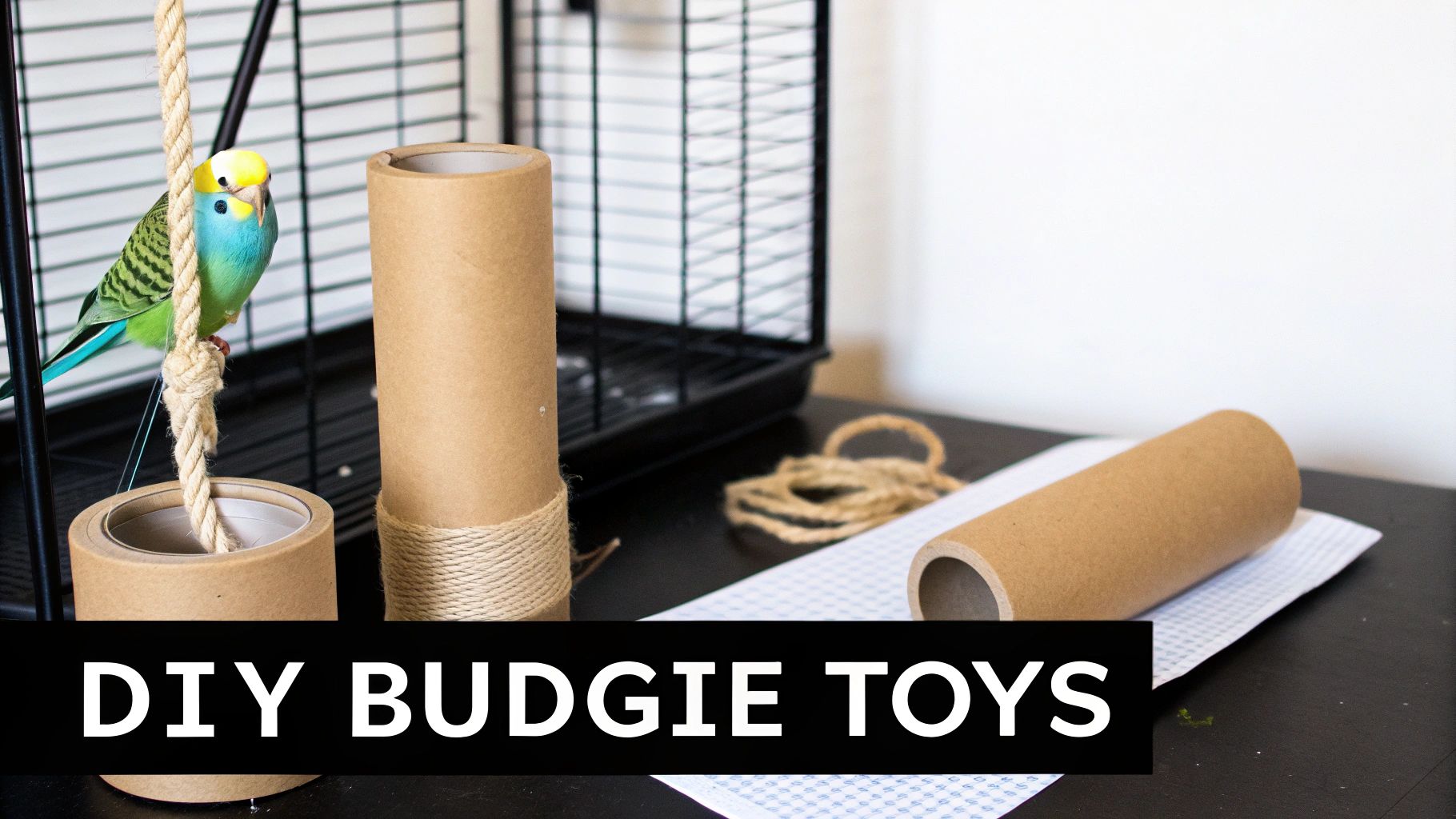
Keeping your budgie entertained doesn’t have to mean spending a fortune. With a bit of imagination, you can turn common household items—many of which you’ll find right here in Australia—into fantastic, safe, and shreddable bird toys for budgies. Making your own toys is a brilliant way to add variety, supplementing your store-bought collection and making sure your little friend always has something new to investigate.
The best thing about DIY toys? They’re often made for maximum destruction, which is exactly what a healthy, happy budgie is looking for. But before we get into the fun stuff, the golden rule is always safety first. Your budgie’s wellbeing is the number one priority, no exceptions.
Bird-Safe Crafting Materials
You probably have a treasure chest of bird-safe materials in your home right now. Just have a look around for simple, natural items you can repurpose into something fun.
Here’s a quick list of safe materials to get your creative juices flowing:
- Cardboard Rolls: Toilet paper or paper towel rolls (just make sure there’s no glue left on them) are perfect for shredding and stuffing with goodies.
- Plain Paper: Unprinted paper, brown paper bags, and non-glossy junk mail are brilliant for tearing into tiny pieces.
- Natural Twine: Sisal, jute, or hemp rope are great for stringing items together.
- Clean, Untreated Wood: Small, cleaned branches from Aussie natives like bottlebrush or gum trees make excellent chew perches.
- Natural Goodies: Pinecones (baked to sterilise them), coconut shells, and even certain nut shells can be a hit. You can learn more about using almond shells in our detailed guide.
Expert Advice: If you're gathering natural materials like branches or pinecones, it's vital to clean and disinfect them first. A simple way to do this is to scrub them with a mild, bird-safe disinfectant, then bake them at a low temperature (around 120°C) for about 20 minutes to kill off any nasty bacteria or pests.
Critical Materials to Strictly Avoid
Just as important as knowing what to use is knowing what not to use. Lots of common craft supplies and household bits and pieces are toxic or pose a real danger to your budgie.
NEVER use these materials for DIY bird toys:
- Toxic Glues: Most craft glues contain chemicals that are seriously harmful if your bird nibbles on them.
- Treated Woods: Steer well clear of pressure-treated lumber, MDF, or particleboard.
- Plastics with BPA: Avoid any soft or brittle plastics that aren't specifically marked as bird-safe.
- Dyed Materials: Commercial dyes can be toxic. Stick to natural colours, or only use vegetable-based food colouring if you want to add a splash of colour.
- Coated Wires: Twist ties or any plastic-coated wires are a huge no-go. If ingested, they can cause terrible internal blockages.
Simple and Fun DIY Toy Ideas
Ready to start crafting? Here are a couple of incredibly simple yet effective toy ideas that your budgie will absolutely love to destroy.
1. The Shredding Roll Forager
This is a classic for a reason. It’s dead easy to make and provides ages of fun.
- Grab an empty, clean cardboard toilet paper roll.
- Stuff it with shredded plain paper, crinkled paper strips, and a few of your budgie’s favourite seeds or treats to entice them.
- Fold the ends of the roll inwards to keep everything tucked inside.
- You can either hang it in the cage with a piece of natural sisal twine or just pop it on the cage floor for them to roll around.
2. The Paper Plate Pinwheel
This toy is great for encouraging natural shredding and preening behaviours.
- Find a plain, uncoated paper plate.
- Cut slits from the edge towards the centre, but stop about 2-3 cm from the middle to create "petals."
- Poke a hole right in the centre.
- Thread a piece of natural twine or a strip of vegetable-tanned leather through the hole and tie a good, secure knot.
- Hang it from the top of the cage and watch your budgie have a blast pulling it all apart.
Finding the Best Budgie Toys in Australia
Tracking down high-quality, safe, and genuinely fun bird toys for budgies can feel like a mission, but it gets a whole lot easier when you know where to look. When you're ready to invest in your feathered mate's happiness, sticking with a local Australian supplier has some massive upsides. You’re not just supporting a local business; you’re buying from people who get our native birds.
Australian retailers know their stuff. They're up on safety standards and have a much better handle on which materials—like local, native woods—are not only safe but also irresistible for a budgie to get its beak into. On top of that, you get all the practical perks: faster shipping, no-fuss returns, and a customer service team that’s actually awake when you are. Shopping local is just smarter.
What to Look for When Shopping Online
Scrolling through online stores for that perfect toy takes a bit of a trained eye. A good, trustworthy seller makes it dead simple for you to find what you need and feel confident you're making the right choice.
Here are the non-negotiables to look for on any website:
- Honest Material Descriptions: The site needs to be upfront about what every toy is made from. Look for specifics like "stainless steel hardware," "vegetable-tanned leather," or "natural, untreated balsa wood." If the description is vague, that’s a red flag.
- Bird Size Filters: A top-notch online store will let you filter toys specifically for small birds like budgies. This is a game-changer for making sure you're buying something that's the right size and not a potential hazard.
- Decent Photos: You should be able to see the toy from a few different angles. This helps you get a good look at the construction and spot any potential safety issues, like dodgy clips or small gaps, before you click "buy."
- Australian-Made Options: Many local suppliers, like us here at Lou Lou Bells, design and handcraft toys right here in Australia. These are often made with a level of care and understanding you just don't get from mass-produced stuff.
Your One-Stop Shop for Budgie Enrichment
We get how important it is to find those perfect toys that will light up your budgie's world. That’s why we’ve pulled everything you could possibly need into one easy-to-find spot. Our main Budgie Toys category is brimming with safe, engaging, and perfectly sized options.
Expert Advice: When you shop with a dedicated Australian bird toy specialist, you're tapping into a carefully curated selection. We've already done the hard yards—vetting materials and checking for safety—so you can get on with the fun part of choosing toys your budgie will go nuts for.
From shreddable textures that satisfy that chewing instinct to clever foraging puzzles that get their minds working, you’ll find toys that appeal to every part of what makes a budgie tick. Our collection is built to provide the mental and physical workouts these little geniuses need to thrive. Feel free to browse our fun and colourful Lollies Collection or our super-durable Stainless Steel Toys, all made with your little companion in mind.
Got a Question About Budgie Toys?
Even with the best intentions, questions pop up. It’s completely normal. To help you feel confident you're doing the absolute best for your little mate, here are some straight answers to the questions we hear most often from Australian budgie owners.
How Can I Tell if My Budgie Is Bored with Its Toys?
The best way is to simply watch your bird. Their behaviour tells you everything. Signs of boredom can be subtle, but they're often pretty obvious, like repetitive pacing on a perch, chewing on the cage bars, or letting out persistent, screechy calls for no clear reason.
A major red flag is any kind of feather plucking—this is a clear signal of stress or a serious lack of stimulation. A bored budgie might also just seem a bit flat, losing interest in things it used to enjoy or ignoring its toys completely.
Want a quick test? Try putting a brand-new toy in, or one that's been out of rotation for a while. If your budgie immediately perks up and starts investigating, that's a pretty strong hint it was craving something new to think about.
How Often Should I Be Cleaning My Budgie's Toys?
Keeping a clean cage is non-negotiable for your budgie's health, and toy hygiene is a massive part of that. How often you need to clean really comes down to what the toy is made of.
- Hard Surfaces: Things like hard plastic, acrylic, or stainless steel toys should get a quick wipe-down daily to remove any droppings. At least once a week, they need a proper deep clean with a bird-safe disinfectant.
- Porous Materials: Toys made from natural wood, rope, or woven palm leaf are a bit trickier. They need daily spot-cleaning, but if they get heavily soiled with droppings, you have to throw them out. They can trap bacteria and grow mould, which you definitely don't want.
After any deep clean, it is absolutely vital that every single toy is 100% dry before you put it back in the cage. A damp toy is a perfect breeding ground for nasty bacteria.
Are Mirrors Actually Safe for Budgies?
This is a big one, and you’ll find plenty of debate online. While it might look like your budgie is having a great time chatting to its reflection, most Australian avian vets and behaviour experts strongly advise against mirrors.
Here’s why: budgies can't recognise their own reflection. They genuinely believe they're looking at another budgie—a "mate" who never really interacts back. This can mess with their heads and lead to some serious behavioural issues.
Expert Advice: A budgie that forms an unhealthy bond with a mirror can start obsessively regurgitating food to "feed" its reflection. This can cause nasty health problems like crop infections and weight loss. It can also lead to sexual frustration and even aggression towards you.
It's so much healthier to provide real social interaction with you, your family, or another budgie. Toys that encourage them to play independently are a far better and safer choice.
My Budgie Is Terrified of New Toys. What Should I Do?
This is completely normal! Fear of new things (it’s called neophobia) is a hardwired survival instinct in prey animals like budgies. Something new in their safe space can feel like a threat. The absolute worst thing you can do is just shove a new toy into their cage and expect them to like it.
Patience is your best friend here. A slow and steady introduction is the way to go.
- Start from a Distance: For the first few days, just place the new toy on a table near the cage. Let your budgie get used to seeing it from the safety of its home.
- Move It Closer: Over the next couple of days, gradually bring the toy closer to the outside of the cage.
- Place It Inside (But Be Smart About It): Once your budgie seems relaxed about it, hang the toy inside the cage, but keep it away from their food, water, and their favourite sleeping spot. Don't put it somewhere they feel cornered.
- Show Them It's Safe: You can really help by playing with the toy yourself near the cage. If you're happy and relaxed with it, they'll learn it isn't a threat. Offering a little treat when they show the slightest bit of curiosity also works wonders.
Keep Reading
Disclaimer Summary:
The information in this article is general in nature and may include external links or resources not created by Lou Lou Bells Bird Toys. Every bird is unique, so we encourage you to seek personalised advice from your own veterinarian or avian specialist. For full details, please read our complete disclaimer here.