
Picture this: a beautiful, sunny afternoon at the park, with your feathered friend safely exploring the world right alongside you. An Aviator bird harness is more than just a piece of equipment; it's a passport to new experiences, a tool for deeper bonding, and your key to safe outdoor adventures with your parrot. It gives your bird a secure way to experience life beyond their cage.
Why Safe Outdoor Adventures Matter for Your Parrot
A rich and stimulating life for a companion bird goes far beyond what's inside their cage. For parrots—incredibly intelligent and curious creatures—supervised time outdoors is a vital part of their overall wellbeing. It offers a sensory smorgasbord that you just can't replicate indoors.
This is about much more than a simple change of scenery. Safe exposure to natural sunlight is crucial, allowing your bird to synthesise vitamin D3, which they need for proper calcium absorption and strong bones. The new sights, sounds, and smells provide powerful mental stimulation, heading off boredom and the behavioural problems that often come with it. Think of it as a real-world puzzle that engages their mind, much like the mental workout they get from quality foraging toys for birds.
A Growing Community of Responsible Owners
Here in Australia, we're seeing a real shift towards more engaged, responsible parrot ownership. It's becoming more common to see a parrot out for a walk in the park on a harness, enjoying the day with their human.
This trend shows a much deeper understanding of our birds' complex needs. Owners are actively looking for ways to enrich their parrots' lives, and safe, supervised outdoor time is one of the most powerful ways to do it. It builds your bird’s confidence and strengthens your bond through shared, positive experiences.
The Aviator Harness in Australia
The sheer popularity of the Aviator bird harness is proof of this positive change. It has become a go-to tool for Aussie bird owners, with demand right across the country. A quick look online shows hundreds of listings, and if you go to a bird community event, you'll often see dozens of harnessed parrots out enjoying the day with their families. It’s a clear sign that this safe practice is being widely adopted. You can see just how popular they are by checking out the numerous Aviator-style harness listings on Etsy Australia. This normalisation makes it easier than ever to join a community of like-minded owners dedicated to giving their birds the fullest life possible.
Choosing the Right Aviator Harness for Your Bird
Getting the size of your Aviator bird harness right is probably the single most important decision you'll make for your bird's safety and comfort. Think of it less like a piece of clothing and more like a car seatbelt; a harness that’s too tight can restrict breathing and movement, while one that’s too loose is a genuine escape risk. The fit has to be just right to do its job.
While plenty of sizing charts group birds by species, any experienced bird keeper will tell you that weight is a far more reliable metric. Just like people, individual birds can vary a lot in size. Your Galah might be petite and slender, while your friend's Galah is a much stockier, heavier bird. They likely won't wear the same size.
Weighing Your Bird Accurately at Home
To get that crucial number, you'll need a small digital scale that measures in grams. The key is to make this a stress-free, positive experience for your bird, and the best way to do that is with a bit of target training.
Here’s an expert-approved approach:
- First, place a small, familiar perch or one of their favourite foot toys on the scale and press the 'tare' button to zero it out. This gives them a stable, comfortable spot to stand.
- Next, gently encourage your bird to step onto the perch. Never, ever force them. This needs to be their choice.
- Have a high-value treat ready—a sunflower seed, a sliver of almond—to reward them the very second their feet touch the perch on the scale.
- Take a quick reading and let them step straight off. Keep the whole interaction short, sweet, and positive.
By making the process rewarding, what could be a scary moment becomes just another fun training game. You can find more tips on kitting out your bird for success by exploring a range of essential parrot supplies in Australia.
This flowchart sums up the simple path to safe outdoor fun, showing how that secure harness is the key to unlocking happy adventures.
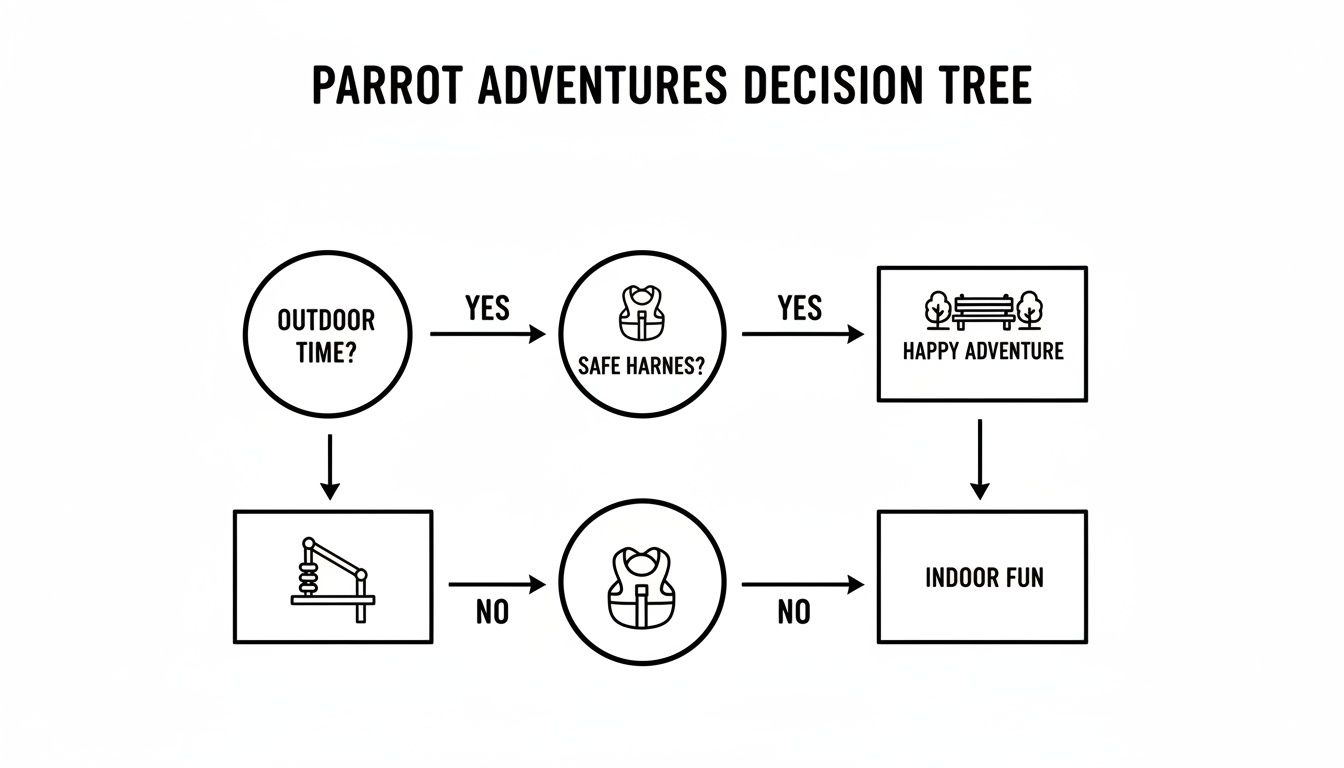
The main takeaway here is that the decision to use a harness is a critical safety checkpoint before any outdoor time can even be considered.
What if Your Bird Is Between Sizes?
Sometimes, your bird's weight will fall right on the cusp of two different Aviator harness sizes. It's a common dilemma, especially for owners of birds like Cockatiels or Conures whose weights can fluctuate.
Expert Tip: When in doubt, it is often better to go for the slightly larger size. A harness that is a little too snug is far more dangerous than one with a bit of extra room, as it can restrict their crop and breathing. Of course, you must still be able to adjust it for a secure fit without leaving large gaps where a wing or foot could get tangled.
Aviator Harness Sizing Guide for Common Australian Companion Birds
This table is a quick reference matching Aviator harness sizes to popular parrot species we see here in Australia. It's a great starting point, but always double-check the manufacturer's official chart and use your bird's exact weight for the most accurate fit.
| Harness Size | Typical Weight Range (grams) | Common Species Examples |
|---|---|---|
| Petite | 75-110 grams | Budgies, Lovebirds, Parrotlets, Small Grass Parakeets |
| X-Small | 110-190 grams | Cockatiels, Quakers, Small Conures (e.g., Green Cheek) |
| Small | 190-425 grams | Galahs, Corellas, Large Conures (e.g., Sun), Small Macaws |
| Medium | 425-600 grams | Eclectus, African Greys, Amazon Parrots, Small Cockatoos |
| Large | 600-1000 grams | Large Cockatoos (e.g., Sulphur-Crested), Large Macaws |
| X-Large | 1000-1600 grams | Hyacinth Macaws, Green-winged Macaws, Large Moluccans |
Always check the manufacturer's specific weight ranges before you buy. For instance, a Petite size is typically for birds like Budgies and Lovebirds weighing 75-110 grams, while the Extra Small is for species like Cockatiels and Quakers in the 110-190 gram range.
Making an informed choice right from the start prevents a poor fit and sets your training journey up for success. Remember, a bird who is uncomfortable in their harness will be much, much harder to train.
A Positive Approach to Harness Training Your Parrot
This is where the real journey begins, and it’s one built entirely on trust and patience. Successful harness training isn't about forcing your bird into something; it’s about making the Aviator bird harness a positive, or at least neutral, part of their world.
We're going to forget rigid, numbered steps. Instead, we'll focus on a fluid, bird-led process that uses positive reinforcement.
The whole thing should feel like a game, not a chore. Keep your sessions short—just a few minutes at a time is perfect—and always end on a high note, even if you only made a tiny bit of progress. Your parrot’s emotional state is the most important part of this whole process.
Stage One: Desensitisation and Familiarisation
Before you even think about putting the harness on your bird, they need to be completely comfortable with it just existing in their space. A parrot’s natural instinct is to be wary of anything new, so our first job is to show them the harness is not a threat.
Start by simply placing the harness near their cage where they can see it. Leave it there for a day or two, then maybe move it a little closer. The goal is for the harness to become a boring, everyday part of the furniture. Don't interact with it; just let it be.
Once your bird seems relaxed with the harness nearby, you can start building some good vibes around it.
- Positive Association: Hold the harness in one hand and offer a high-value treat, like a sunflower seed or a small piece of nut, with the other. Your bird gets the treat for simply being calm near the harness.
- Touch and Treat: Gradually work towards touching your bird gently with the harness, followed immediately by a reward. A quick, light touch on their back for a split second, then treat. The harness should start to predict that something wonderful is about to happen.
- Make it Fun: Use the harness as a prop during playtime. You could dangle it near a favourite toy or just have it sitting on the table while you're doing other training. The more it's around during happy times, the less intimidating it will be.
A great strategy here is to pair the harness with a highly desirable distraction. Introducing a new, exciting shreddable bird toy during these sessions can redirect their focus and energy, turning potential anxiety into playful curiosity.
Stage Two: The First Fitting
This is a huge milestone, so it needs to be handled with plenty of care and patience. Whatever you do, don't rush this part. The ideal time to try the first fitting is when your bird is calm and relaxed, maybe after a quiet play session.
Reading your parrot's body language is absolutely critical. If you see signs of stress—pinned eyes, a slicked-down or puffed-up body, or attempts to get away—stop immediately. You can always try again tomorrow. Pushing a fearful bird will only create a negative association that is incredibly difficult to undo.
Avian Behaviourist Insight: Many owners mistake a bird 'freezing' or 'playing dead' as acceptance. This is often a sign of extreme fear known as tonic immobility. A truly comfortable bird will remain engaged and responsive. Celebrate small victories, like getting the harness over their head for a second, with praise and a favourite treat before taking it straight off again.
Stage Three: Building Duration and Comfort
Once your bird allows you to put the harness on without a struggle, the next step is to slowly build up the time they spend wearing it. Start with just a few seconds. Put it on, give them a fantastic treat, and take it right off.
Over many sessions, you can gradually extend the duration. Let them wear it for a minute while they munch on a favourite snack or play with a fun foot toy. The goal is to make wearing the harness feel completely normal and uneventful.
During this phase, just let the leash part of the harness drag behind them in a safe, supervised indoor area. Don't pick it up yet; let them get used to the feeling of it being there first.
Your consistency and ability to read your bird's cues will set the pace. For some birds, this process takes days. For others, it might take months. Both timelines are perfectly okay.
By turning every session into a bonding opportunity and celebrating every small step forward, you're not just training your bird to wear a harness—you're building a stronger, more trusting relationship for all your future adventures. The reward for your patience will be countless safe and happy outings together.
Getting a Safe and Secure Harness Fit
A perfectly fitted Aviator bird harness isn't just a suggestion—it's completely non-negotiable for keeping your bird safe. Once your parrot seems comfortable wearing the harness inside, your next job is to fine-tune the fit long before you even think about heading out the door. This is a hands-on process, so be prepared to pay close attention to the details.
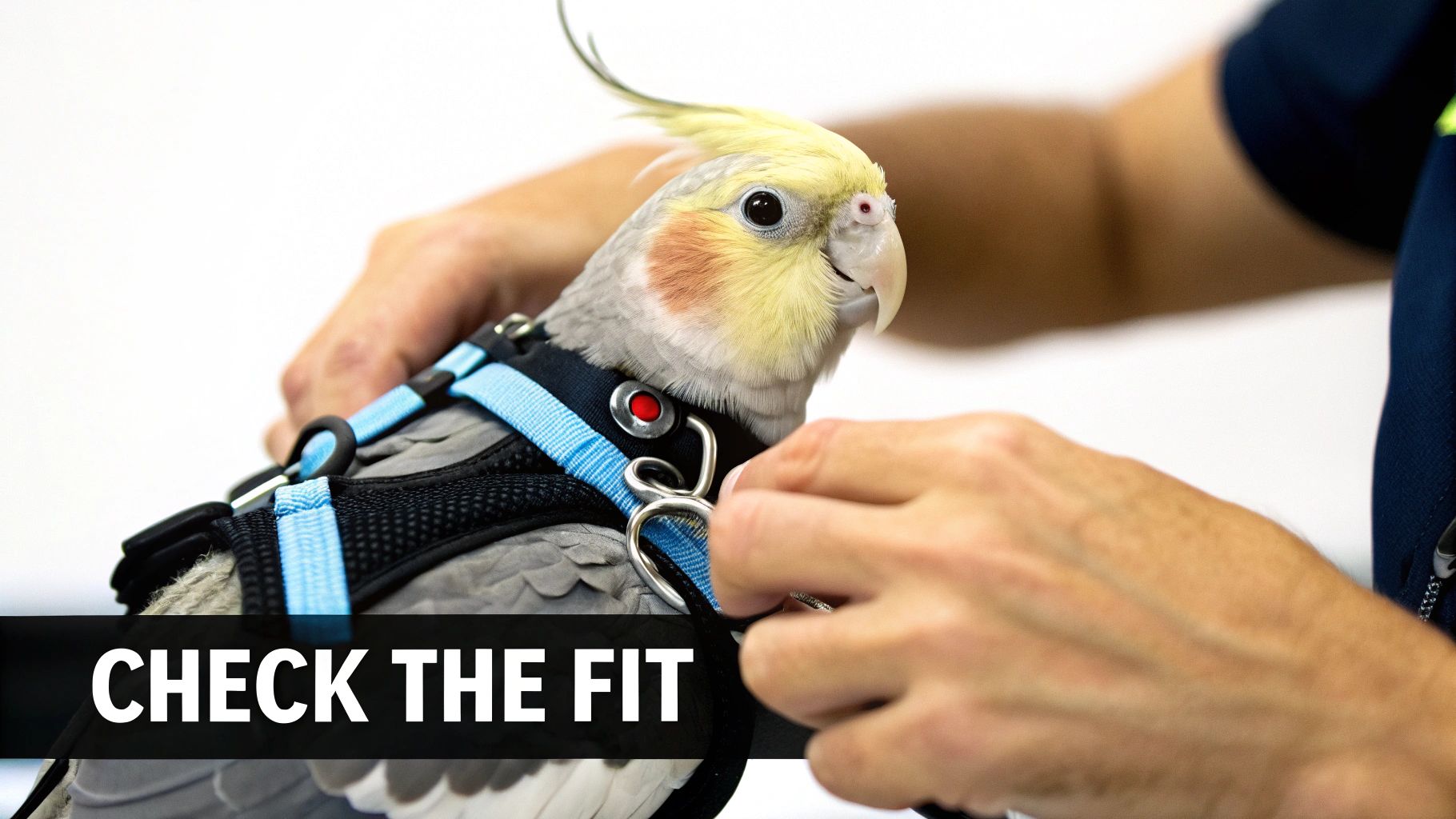
The aim here is for a snug fit, but definitely not a tight one. As a rule of thumb, you should be able to slide one finger comfortably between the harness straps and your bird’s body. Any more space, and you’re risking a foot or wing getting tangled. Any less, and you could be restricting their breathing or interfering with their crop.
A Hands-On Guide to Checking the Fit
You can't just eyeball this one. Getting the fit right means gently feeling around the harness once it's on your bird.
- Around the Torso: Carefully run your finger under the belly strap. It should feel secure, but you shouldn't be able to pinch any skin. The strap needs to sit comfortably behind their wings, not rubbing against them.
- Over the Head: The head loop should slip on and off without a fight, but it can't be so loose that your bird could hook a foot in and pull it off.
- The Crop Check: This is a big one. Pay close attention to the area over their crop, right at the base of their neck. Make sure there is absolutely no pressure there, particularly after your bird has just eaten.
Expert Tip: A brilliant time to check the fit is when your bird is distracted. Offer them a high-value treat or a tough foraging toy to keep them busy while you do a quick but thorough check of all the straps. It turns a potentially fussy moment into another positive training opportunity.
Your Pre-Flight Safety Checks
Your safety duties don't stop after you've got the fit right. Before every single outdoor trip, you need to run through a few quick but vital checks. Think of it like a pilot’s pre-flight inspection—it’s that important.
This little routine is your best defence against a potential disaster. Before you step outside, make this a habit:
- Check for Wear and Tear: Look over every centimetre of the harness. Are there any signs of fraying, thinning, or chewing? Pay extra attention to the leash connection point and any buckles.
- Test the Buckle: Make sure the cinch or buckle is properly secured and hasn't slipped. Give it a gentle tug to be sure it's locked in.
- Inspect the Leash: Run your hands along the whole length of the elastic leash. Feel for any weak spots or nicks that could weaken it.
Once you're out and about, you can make the experience even better by bringing along something familiar from home. A sturdy and portable travel bird perch stand can give your bird a safe and familiar 'home base' in a strange new place.
Minding the Dangers of the Aussie Outdoors
Here in Australia, our great outdoors comes with its own unique set of challenges. Beyond the harness itself, your situational awareness is everything. The Aviator manufacturer makes it clear that a secure fit is vital, but so is your local knowledge.
For example, experienced bird owners know all about seasonal hazards, like the magpie swooping season, which typically runs from August to November in many cities. You can find more official safety advice and sizing charts by exploring the Aviator harness manufacturer’s website.
Always be aware of what’s going on around you. Keep an eye out for predators from above, like hawks, and from below, like off-leash dogs or cats. Your vigilance is your bird’s best protection.
Working Through Common Harness Training Hiccups
Even with a tonne of patience, hitting a snag during harness training is completely normal. This guide tackles the real-world problems that bird owners across Australia often run into. Just remember, every bird is an individual, and setbacks are simply part of the journey.
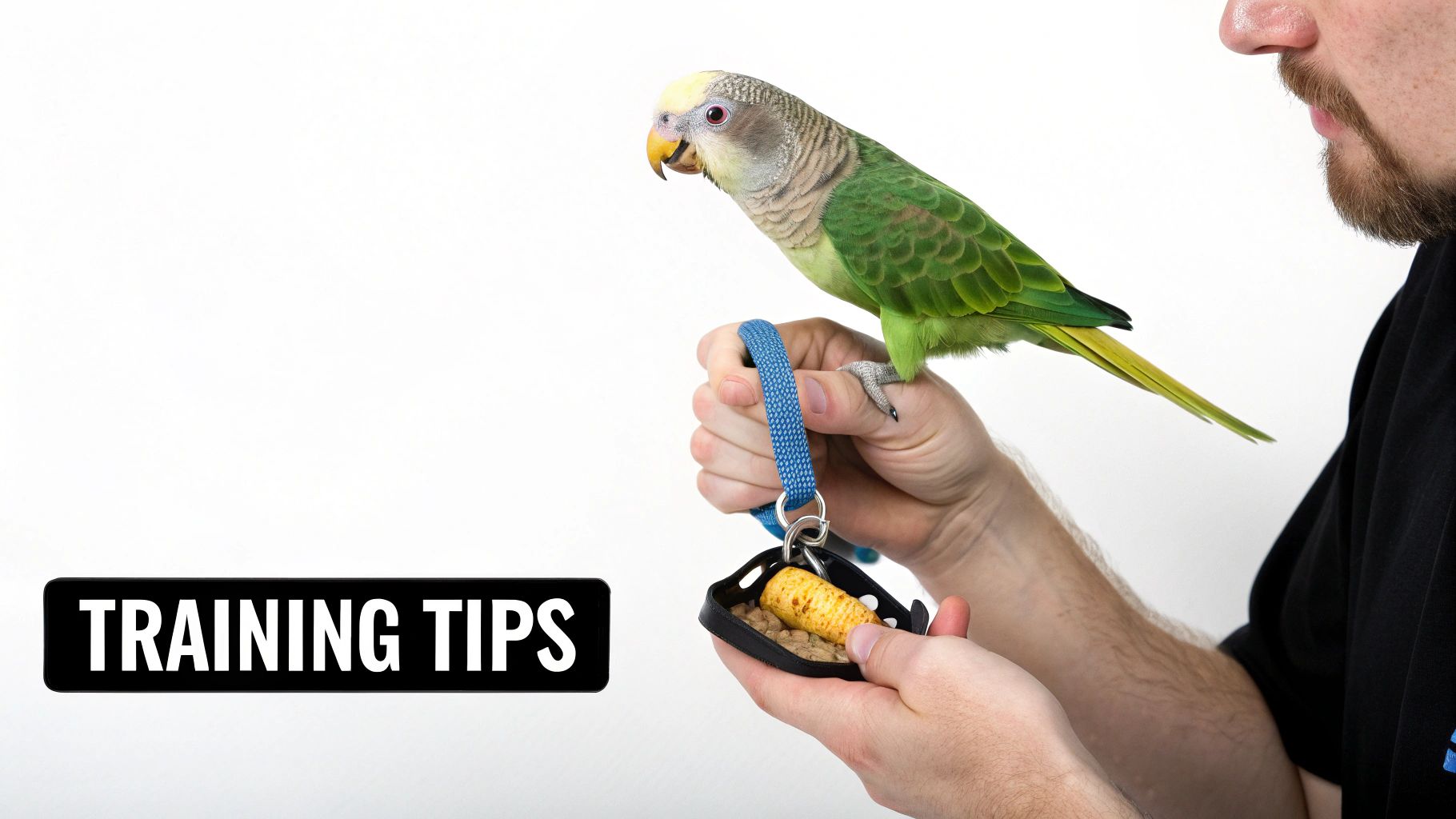
The key is to see these challenges not as failures, but as your bird communicating their discomfort or confusion. Your job is to listen to that feedback and adjust your approach with empathy and a bit of creativity.
My Bird Chews the Harness Straps
Chewing is what parrots do, but it can quickly destroy an Aviator bird harness. This usually stems from curiosity, frustration, or just plain boredom. The goal is to redirect this behaviour, not punish it.
A fantastic strategy is to offer a more appealing alternative. Before you start a training session, give your bird a brand-new shreddable paper toy to get their beak busy. This channels their chewing instinct onto something appropriate, making the harness straps seem far less interesting in comparison.
My Bird Suddenly Refuses the Harness
It can be baffling when a bird who was making great progress suddenly backtracks. This often points to a negative experience you might have missed—like a strap pinching them slightly or a loud noise startling them while they were wearing it.
Expert Advice: Go right back to the beginning. Reintroduce the harness as if it’s brand new, focusing only on positive association without any pressure to put it on. Short, happy sessions where the harness is just nearby while they enjoy a favourite treat can rebuild their confidence and trust.
My Bird Plays Dead or Freezes
This is one of the most misunderstood reactions. When a parrot freezes or goes limp, it isn't stubbornness; it's a sign of overwhelming fear. This behaviour, known as tonic immobility, is an instinctual response to what they perceive as a major threat.
If this happens, remove the harness immediately and call it a day. Take several steps back in your training, perhaps just rewarding your bird for looking at the harness from a distance. A bird in this state isn't learning, so pushing forward will only damage your bond. Sometimes, this fear can show up in other ways, and understanding the reasons behind a parrot squawking can offer deeper insights into their communication.
Your greatest tools for getting over these hurdles are patience and a solid understanding of your bird’s body language. By staying positive and supportive, you can work through any challenge together.
Got Questions About The Aviator Harness? We've Got Answers
Even with the best instructions, you're bound to have a few questions pop up. It's totally normal. Here are some of the most common queries we get from Aussie bird owners about the Aviator bird harness, answered with practical, real-world advice.
How Do I Clean the Harness?
Keeping the harness clean is straightforward, but really important for your bird's health.
For everyday grime, a gentle hand wash using a mild, bird-safe soap (a diluted F10 solution works a treat) and warm water is all you need. Stay away from harsh detergents or bleach – they can wreck the material and are awful for your bird's sensitive skin.
Give it a good rinse and let it air dry completely before you use it again. Whatever you do, don't chuck it in the dryer. The heat can seriously weaken the fibres and the elastic, making it unsafe.
Can My Bird Actually Fly in It?
The Aviator is designed for safety, not for long-distance flight training. The leash has a built-in elasticated section, which is fantastic for absorbing the shock of a sudden flutter or short flight. It stops that jarring jolt a rigid leash would cause.
This design means your bird has enough freedom to flap their wings and move naturally without getting hurt, but they can't simply fly off. It's all about safe, controlled exploration.
Expert Advice: Always keep a firm grip on the leash and be aware of your surroundings. The aim is for your bird to explore safely on foot or with short, happy hops, not to go for a cross-country flight.
What if Other Animals Approach Us?
When you’re out and about in Australia, you have to be your bird's bodyguard. Your eyes and ears are their first line of defence.
If an off-leash dog, a curious cat, or even a particularly bold native bird comes near, your job is to act immediately. Don't hesitate to see if the other animal is friendly. Calmly and quickly shorten the leash, pick your bird up, and hold them securely against your body.
Being proactive is everything. Scan your surroundings constantly to prevent a scary or dangerous encounter before it even begins. Sometimes, keeping your bird focused on a distracting natural bird toy can help keep their attention on you and away from potential trouble.
Keep Reading
- A Guide to Natural Bird Toys
- Foraging Toys for Birds
- Beginners Guide To Parrot Training
Disclaimer Summary:
The information in this article is general in nature and may include external links or resources not created by Lou Lou Bells Bird Toys. Every bird is unique, so we encourage you to seek personalised advice from your own veterinarian or avian specialist. For full details, please read our complete disclaimer here.