
A bird perch stand is so much more than a piece of furniture for your feathered friend. Think of it as their own personal playground—a dedicated spot to hang out, get some exercise, and feel part of the family, all while being safely outside their cage. It’s a crucial bit of kit for any Australian bird owner, supporting both their physical health and mental wellbeing.
More Than Just a Place to Sit
Imagine your bird’s perch stand as their personal gym, lounge, and lookout point, all rolled into one tidy package. Out in the wild Australian bush, birds spend their days gripping and navigating branches of countless different shapes, sizes, and textures. All that activity is what keeps their feet strong and healthy.
A good quality stand brings that essential variety right into your home. When your bird grips perches with different diameters and textures, it’s like a full workout for their feet. This simple, natural action is fantastic for helping prevent serious health issues like arthritis and painful pressure sores, often known as bumblefoot.
The Foundation of Foot Health
The health benefits of a good perch stand are massive. By giving them an environment that mimics what they’d find in nature, you’re encouraging vital physical conditioning.
- Muscle Strengthening: Gripping all those varied surfaces forces the muscles in their feet and legs to work, keeping them strong and preventing atrophy.
- Tendon Flexibility: Constantly making tiny adjustments on uneven surfaces keeps their tendons limber and responsive, cutting down the risk of stiffness.
- Nail Maintenance: The coarser textures of natural wood surfaces are great for helping to wear down nails naturally, which means fewer stressful clippings for everyone.
A Window to a Happier Bird
Beyond the physical side of things, the psychological benefits are just as important. Parrots are incredibly intelligent and curious creatures; they absolutely need stimulation to thrive. A stand placed in a social hub of your home, like the living room, becomes their personal observation deck.
Expert Advice: A bored bird is often a stressed bird, which can lead to destructive behaviours like screaming or feather plucking. A well-equipped perch stand acts as a preventative tool, channelling their energy into positive activities and enriching their daily life.
From this vantage point, they can watch everything going on in the household, have a good preen, and feel like a proper member of the family flock. This simple interaction drastically reduces the boredom and stress that can come from being confined. It encourages natural behaviours like stretching their wings, climbing, or even just happily watching their world go by.
At the end of the day, a bird perch stand isn't just an accessory. It's a cornerstone of a happy, healthy, and engaged companion.
Exploring Your Bird Perch Stand Options
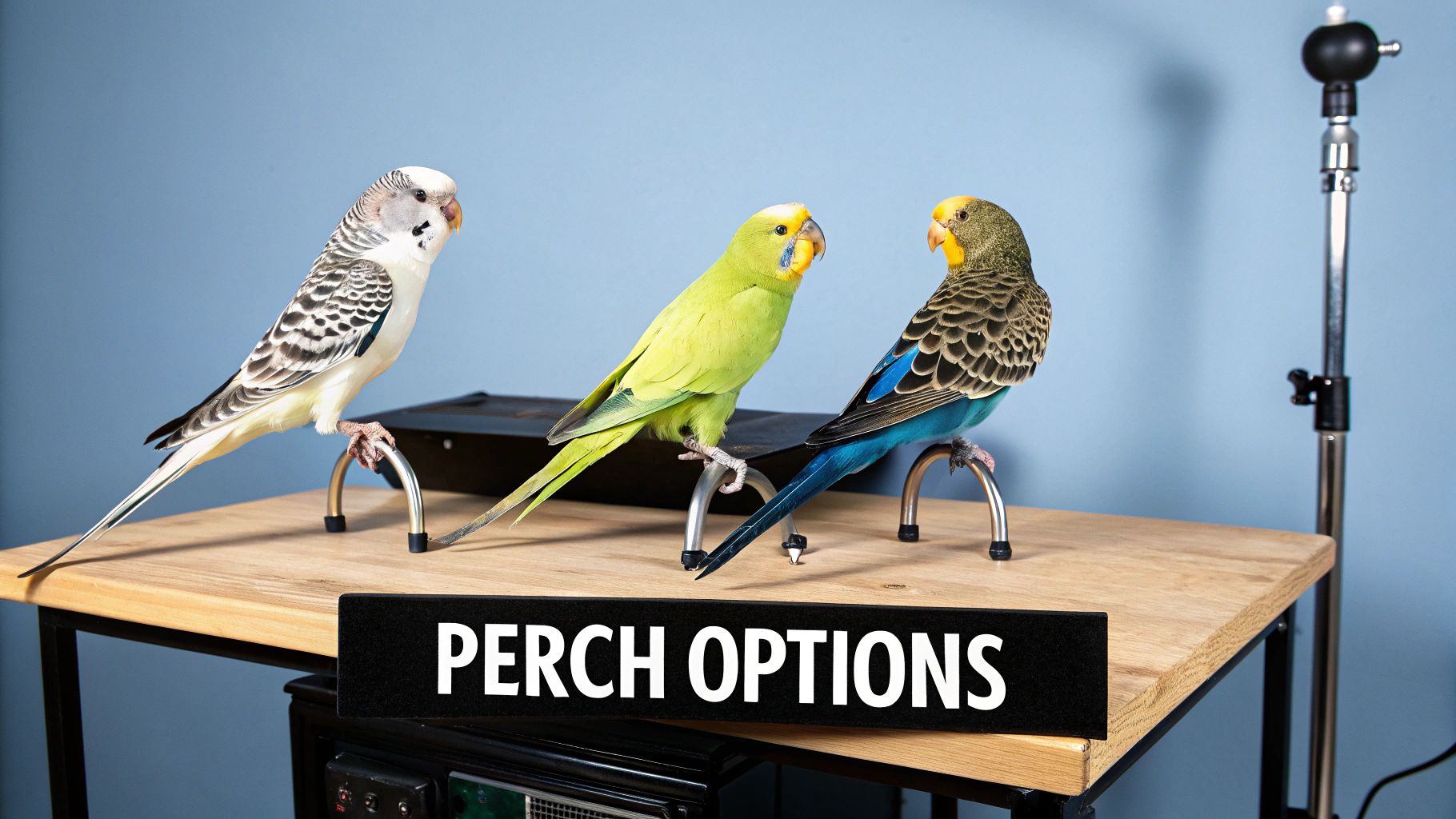
When you start looking for a bird perch stand, the number of choices can feel a bit overwhelming. But don't worry, the best one always comes down to what works for your bird, your home, and your lifestyle.
Let's walk through the most popular types you’ll find here in Australia. Getting a handle on the differences is the first step to creating a space your bird will genuinely love.
Free-Standing and Tree Stands
Picture a miniature gum tree right in your living room – that’s the magic of a big, free-standing bird stand. Often made from natural Java wood or native Aussie branches, these are the ultimate activity centres for your feathered mate.
These stands are brilliant for adventurous climbers like Galahs, Eclectus parrots, and Macaws. With branches at different heights and thicknesses, they offer fantastic physical and mental exercise, letting birds climb, explore, and stretch their wings. They definitely make a statement in a room, but for a large, energetic parrot, the enrichment is second to none.
Tabletop and Portable Stands
If you’ve got a smaller companion like a Budgie, Cockatiel, or Lorikeet, a tabletop stand is a fantastic pick. These compact perches are designed to sit on a table or bench, bringing your bird up to your level for easy interaction. They’re light, easy to shift around the house, and perfect for supervised playtime while you’re working or just relaxing on the sofa.
Expert Advice: Tabletop stands are one of the best tools for building a solid bond with your bird. Popping one on your desk or near the couch makes your companion feel part of the flock, which is so important for their social health.
Their portability also makes them a great starting point for birds who are still a bit shy about venturing too far from their cage.
Travel and Speciality Perches
For Aussie bird owners on the move, a travel stand is a must-have. These are usually super lightweight, often collapsible, and made from easy-to-clean materials like PVC or stainless steel. They give your bird a safe, familiar spot to hang out, whether you're off to the vet or just visiting a friend.
Beyond the basics, you can find clever options like doorway perches that give your bird a great high-up lookout spot without taking up any floor space. Taking a look at the full range of bird swings, ladders, and perches can spark some great ideas for enriching your bird's life both inside and outside the cage.
Choosing Materials for Safety and Durability
The material of your bird's perch stand is one of the most important decisions you’ll make. It’s not just about what looks nice in your home; it’s about providing a safe, comfortable, and durable surface that supports their health and happiness every single day.
Think of a natural wood branch as an ‘orthopaedic shoe’ for your bird. The irregular shapes, textures, and diameters found in nature are constantly exercising the muscles in their feet. This is what promotes strong joints and prevents nasty conditions like pressure sores. It's exactly why avian experts right across Australia recommend natural timber as the top choice.
Natural Woods: The Gold Standard
Australian native woods are a fantastic choice because they’re what your bird would naturally perch on in the wild.
- Eucalyptus (Gum): Readily available and perfectly safe once it's been properly cleaned and prepared. Gum tree branches offer an incredible variety in texture and thickness for your bird to explore.
- Bottlebrush and Grevillea: These native plants also provide safe and stimulating perching options, with unique surfaces for birds to grip and navigate.
- Imported Options: You'll also see woods like Java and Manzanita, which are extremely popular for a good reason. They are incredibly dense and hard-wearing, making them ideal for powerful chewers like cockatoos who can make short work of softer woods.
The main takeaway here is that variety is key. A stand that incorporates different types of natural wood provides a much more enriching and physically beneficial environment for your feathered friend.
Other Safe and Practical Materials
While natural wood is a brilliant primary choice, other materials serve really important functions, especially when it comes to hygiene and longevity. Sometimes, man-made materials can offer durability and an ease of cleaning that's hard to match.
For example, a soft and pliable option like a natural sisal rope perch can add another layer of texture and comfort to your setup. These perches are gentle on the feet and can be bent into different shapes, providing even more variety and interest.
Expert Advice: Stainless steel is the best choice for food and water bowls attached to a bird perch stand. It's non-porous, meaning it won’t harbour bacteria, and it’s tough enough to withstand even the strongest beaks. Avoid plastic bowls, as they can scratch easily, creating tiny crevices where germs can hide.
To help you weigh up your options, here is a quick comparison of the most common materials you’ll come across.
Bird Perch Material Comparison
This table breaks down the pros and cons of different perch materials, so you can make an informed choice based on your bird's needs and your own priorities for cleaning and durability.
| Material | Durability | Bird Safety | Cleaning Ease | Best For |
|---|---|---|---|---|
| Natural Wood | Good to Excellent | Excellent (non-toxic types) | Moderate | Daily use, foot exercise, all birds |
| Stainless Steel | Excellent | Excellent | Excellent | Food/water stations, travel stands |
| PVC Plastic | Good | Good (bird-safe only) | Excellent | Travel stands, shower perches |
| Rope (Sisal/Cotton) | Fair to Good | Good (inspect for fraying) | Moderate | Adding variety, comfort perching |
Ultimately, the best approach is often a combination of materials. A sturdy natural wood stand with stainless steel bowls and a soft rope perch for variety gives your bird the best of all worlds.
Matching the Perch to Your Bird Species
Picking out a bird perch stand isn’t a one-size-fits-all job. A stand that’s the perfect jungle gym for a sprightly Cockatiel could be totally unsuitable—or even dangerous—for a big Sulphur-crested Cockatoo. Getting the right size and design for your particular bird is one of the most important things you can do to create a happy, healthy space for them.
Just think about some of our beloved Aussie pets. For tiny companions like Budgies, a smaller, more intricate stand with thin branches is ideal. It lets them hop and explore without putting any strain on their little feet. But for a heavy-bodied bird like a Galah or Cockatoo, stability and strength are everything. They need a beefy stand with a heavy, wide base that won’t tip over when they decide to have a vigorous flap.
The Two-Thirds Grip Rule
When it comes to the perch diameter, there's a golden rule that avian experts swear by: the ‘two-thirds grip’ rule.
Expert Advice: Your bird's foot should wrap around roughly two-thirds of the perch's circumference. This keeps their foot in a comfy, partially open position, which helps prevent cramps and pressure sores. If their toes overlap, the perch is too thin; if the foot is almost flat, it's too thick.
This simple guideline is a game-changer for long-term foot health. A stand with varied branch diameters is even better, as it naturally encourages the foot to stretch and contract—mimicking exactly how birds perch in the wild. It's a foundational step in helping prevent arthritis later in life.
This hierarchy diagram shows the most common materials used for bird perches, each with its own benefits. 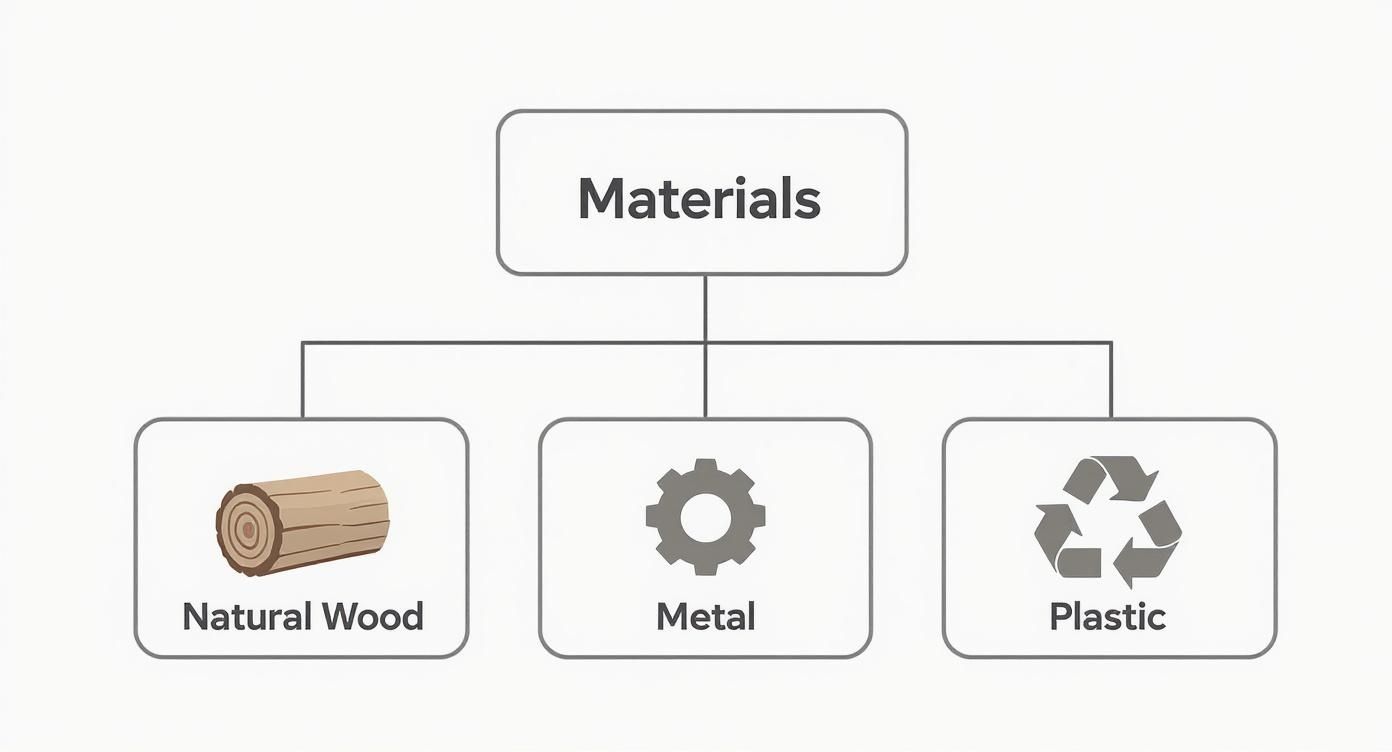 As you can see, natural wood is really the core of an ideal perching environment, supported by durable metal and specialised plastics for different needs.
Designing for Natural Instincts
Beyond just size, the design of the stand should click with your bird's natural instincts. Agile and energetic climbers like Lorikeets absolutely thrive on complex 'tree' style stands. These multi-branched setups provide endless chances for gymnastic feats, keeping their clever minds and active bodies busy.
On the other hand, a heavier or less active bird might prefer a simple, sturdy T-stand. This design offers a secure and comfortable spot for them to just relax and watch the world go by, without needing to perform any complex moves.
Australia is home to millions of these incredible birds. Citizen science estimates there are around 19 million Rainbow Lorikeets and 10 million Sulphur-crested Cockatoos, all of whom rely on finding suitable perches in the wild and in our homes. You can find more details in the full UNSW study on Australian bird populations. Understanding these species helps us cater to their unique needs.
For small parrots like Budgies—which are technically a type of parakeet—stands with horizontal bars and ladders can be especially fun. If you're curious about their classification, you can learn more about the difference between a budgie and a parakeet in our detailed guide.
Your Safety and Placement Checklist
Before your bird even gets a chance to hop onto their new bird perch stand, it’s your job to play safety inspector. Think of it as the final quality check before opening a new playground for your feathered mate. This isn’t a step to skip.
First up, a hands-on inspection. Run your hands over every single surface of the stand. You’re hunting for anything that could cause trouble: sharp edges, splinters in the wood, or any little bits and pieces that could be chewed off and swallowed.
Check that all the hardware, like screws and bolts, is bird-safe stainless steel and tightened up properly. A loose screw is just a toy waiting to be ingested.
Now, give the stand a good firm wobble. Does it feel solid? The base needs to be heavy and wide enough to stay put, even when your bird is having a manic flapping session. This is absolutely critical for bigger, boisterous Australian parrots like Galahs or Cockatoos, who can send a flimsy stand flying.
Finding the Perfect Spot
Once the stand gets your safety tick of approval, the next big question is where to put it. Finding the right location is a balancing act between making your bird feel included and keeping them away from household dangers.
Birds are flock animals through and through. They want to be where the action is. Placing their stand in a social hub like the living room lets them feel like part of the family’s daily rhythm.
That said, some spots are strictly off-limits:
- Avoid the Kitchen: This is probably the most dangerous room in the house for a parrot. Cooking fumes, especially from non-stick pans, can be lethal.
- Steer Clear of Draughts: Keep the stand away from open doors, windows, and air conditioning vents. Sudden chills can make your bird sick.
- Ensure Pet Safety: Make sure the stand is out of reach of other pets. Even a curious cat or dog can cause immense stress or a terrible accident.
Expert Advice: A spot near a window can be a fantastic source of entertainment. Watching the garden and the local Aussie birdlife provides hours of natural stimulation. Just make sure the window is secure against predators and the stand isn’t left in harsh, direct sunlight for too long.
A view of native trees and plants can be especially enriching. It’s fascinating to see data from the Aussie Bird Count statistics showing that even city birds like Rainbow Lorikeets use perches to get a good vantage point. With one simple placement choice, you can safely connect your bird to the world outside.
Turning a Perch Stand into a Playground
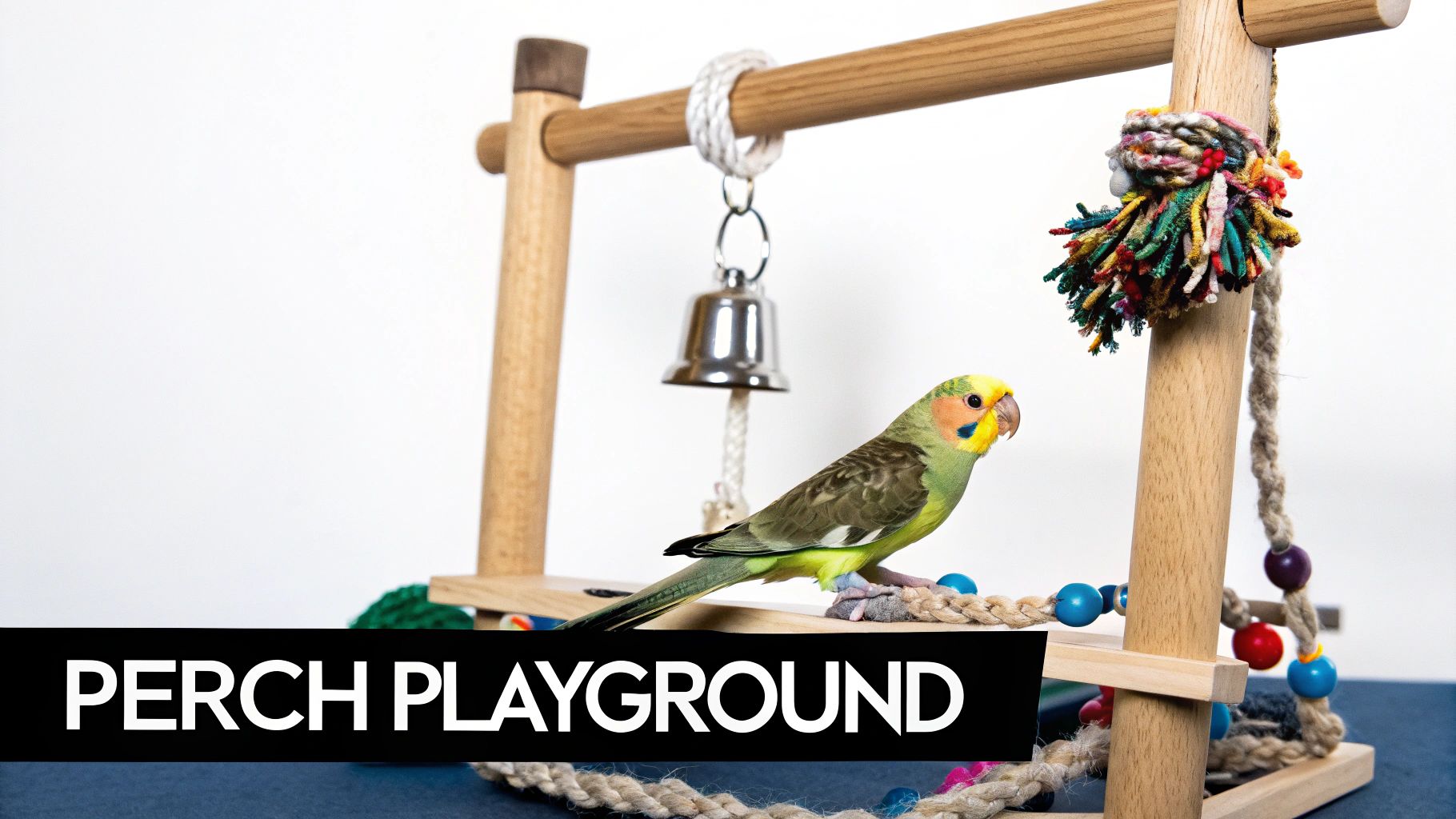
A bare bird perch stand is a fantastic start, but let's be honest, it's a bit like an empty house. To make it a home—or better yet, a playground—you need to fill it with things to do. By adding a few simple, engaging bits and pieces, you can transform that basic frame into a dynamic activity hub that keeps your bird’s mind sharp and their spirit happy.
This doesn't have to be complicated or break the bank. The real goal is to offer a mix of textures, sounds, and little challenges that get your bird's clever brain ticking. These small additions can make a massive difference to their quality of life, helping head off serious behavioural problems like feather plucking or screaming, which often start with simple boredom.
Simple Ideas for Maximum Fun
Enriching a perch stand is all about tapping into what a parrot does naturally. In the wild, they spend a huge chunk of their day foraging for food, chewing on branches, and solving little problems. Recreating these opportunities is the secret to a content companion.
Here are a few easy ways to get started:
- Bring on the Foraging: Attach small puzzle feeders or tuck treats inside shreddable toys. This turns snack time from a handout into a fun challenge, making them work for their food just like they would in the bush.
- Satisfy that Beak: Hang up some bird-safe, shreddable items like yucca pieces, bits of cardboard, or soft pine blocks. It gives them a healthy, approved outlet for that powerful chewing instinct.
- Add a Little Noise: A simple toy with a bell offers instant feedback and a bit of sound enrichment. Attaching something like the colourful Lou Lou Bells Classic Bird Toy can add a satisfying jingle to their playtime.
Expert Advice: Rotate the toys on the perch stand every week or two. This simple trick keeps things fresh and exciting. It stops your bird from getting bored with the same old setup and encourages them to rediscover their play area all over again.
By adding these interactive elements, your perch stand becomes so much more than just a place to sit. It grows into a centre for activity, learning, and fun. For more inspiration on creating an engaging space, check out our guide on the benefits of a dedicated bird play gym, which digs deeper into how these activity centres support your bird's overall wellbeing.
Frequently Asked Questions
When you’re bringing something new into your bird's world, it’s only natural to have a few questions. Here are some of the most common queries we hear from Aussie bird owners about getting the most out of their perch stands.
How Often Should I Clean a Bird Perch Stand?
Honestly, this comes down to two things: the material your stand is made of, and just how messy your feathered friend is! As a rule of thumb, a quick daily wipe-down to get rid of any fresh droppings is always a great habit for good hygiene.
For natural wood perches, you’ll want to give them a more thorough scrub with a bird-safe disinfectant at least once a week. Because wood is porous, it's absolutely vital to make sure it's completely dry before your bird uses it again. This stops any nasty mould or bacteria from taking hold. Materials like stainless steel are much simpler; you can deep clean and sanitise them easily whenever they need it.
Can I Use Branches from My Garden?
Using branches from your own backyard is a brilliant, budget-friendly idea, but you have to be super careful. Lots of beautiful Australian native trees like Eucalyptus, Bottlebrush, and Grevillea are perfectly safe for birds.
Expert Safety Tip: Before a garden branch becomes a perch, it needs to be properly treated. First, be 100% sure the plant species is non-toxic. Then, make sure it’s from an area free of pesticides or traffic pollution. Finally, the branch has to be scrubbed clean and then baked in an oven at a low temperature (around 120°C) for about an hour. This kills any hidden insects, bacteria, or mould.
My Bird Is Scared of Its New Perch Stand
Don't worry, this is an incredibly common reaction! Patience and positive reinforcement are your two best tools here. Start by placing the new stand somewhere near your bird’s cage, but not so close that it feels threatening.
Try to lure them over by placing their absolute favourite treats or a familiar toy on the stand, like one of their beloved shreddable bird toys. Keep any interactions around the stand short, fun, and positive. Whatever you do, never force your bird onto it. Let them explore and approach in their own time. Celebrating every tiny step with praise will build their confidence and help them see the new perch as their own fun, safe spot.
At Lou Lou Bells Bird Toys, we are passionate about providing the safest, most engaging enrichment to help your feathered friend thrive. Discover our handcrafted and expertly selected range of toys and perches. Explore the Collection at Lou Lou Bells Bird Toys
Disclaimer Summary:
The information in this article is general in nature and may include external links or resources not created by Lou Lou Bells Bird Toys. Every bird is unique, so we encourage you to seek personalised advice from your own veterinarian or avian specialist. For full details, please read our complete disclaimer here.