
Choosing the right bird toys for a cage is one of the most important things you can do for your feathered friend's happiness. These aren't just simple playthings; they are essential tools for keeping your bird mentally sharp, physically active, and free from common behavioural problems like feather plucking or screaming.
Why Your Bird's Cage Needs More Than Just Perches
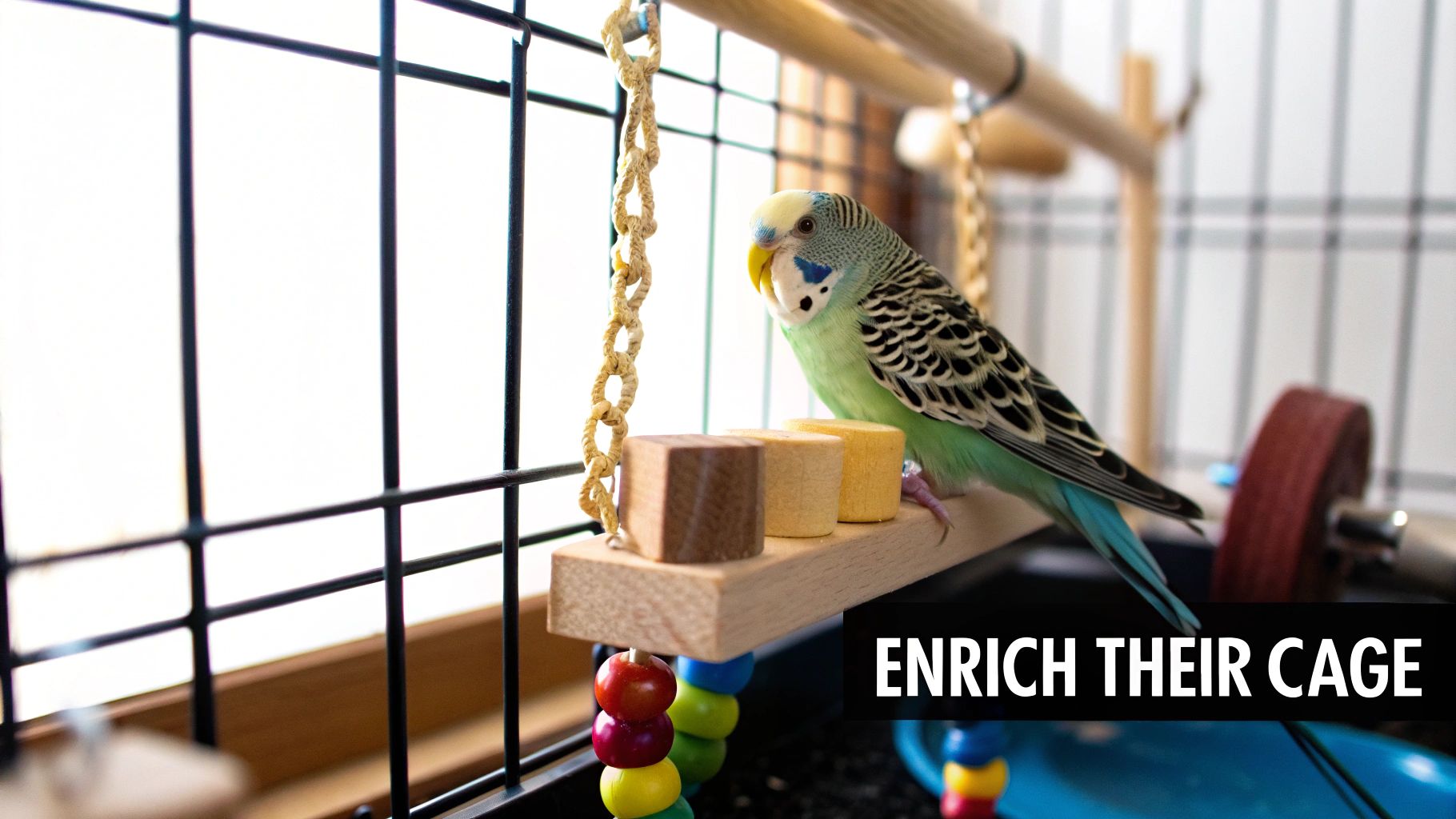
Think of your bird's cage as their entire world—it's their home, their gym, and their office all rolled into one. Just like us, birds get bored and stressed if their environment is empty and uninspiring. This is especially true for smart, active birds common in Australia, like budgies and cockatiels.
A cage with just a food bowl and a simple perch simply isn't enough for a fulfilling life. Without things to do, birds can develop stress-induced habits. The key to preventing this is giving them plenty of interesting toys to engage with.
The Role of Toys in a Bird's World
It's best to see toys not as optional extras, but as fundamental for a healthy, happy bird. They serve a few critical jobs that mimic the challenges and activities your bird would naturally encounter in the wild.
- Mental Stimulation: Puzzles and foraging toys are fantastic for this. They encourage problem-solving and keep their sharp minds busy, which is the perfect antidote to boredom.
- Physical Activity: Things like swings, ladders, and climbing toys get your bird moving. This helps them stay at a healthy weight and keeps their muscles strong.
- Natural Instincts: Birds have an innate urge to chew and shred. Providing toys for this helps them maintain their beak health and satisfies those deep-seated nesting behaviours.
An enriched environment is a cornerstone of preventative care in avian medicine. A well-stocked cage with a variety of appropriate toys can significantly reduce the likelihood of stress-related behaviours that often require veterinary intervention.
By understanding what toys actually do for your bird, you can turn their cage from a simple box into a vibrant, dynamic home. Choosing the right parrot cage accessories is a direct investment in your bird's long-term health, setting you both up for a joyful friendship.
Choosing Toys for Your Bird's Species and Size
Picking out the right bird toys for a cage isn't as straightforward as grabbing the most colourful one you see. Think of it like buying shoes for a person; what fits a toddler is useless for an adult, and what works for a ballet dancer is all wrong for a long-distance runner. It’s exactly the same with birds.
A toy that’s a perfect, delightful challenge for a tiny budgie could be swallowed in minutes by a powerful galah, creating a serious choking hazard. On the flip side, a heavy-duty toy built for a macaw’s beak would be an intimidating, unmovable lump of wood to a small cockatiel. The real goal is to find that sweet spot—the perfect match of size, material strength, and design that clicks with your bird's natural instincts, keeping them safe and genuinely happy.
Matching Toys to Small Birds
Small birds, like our beloved budgies, lovebirds, and finches, have delicate beaks and tiny feet. They need lightweight toys they can actually get a grip on, chew, and shred without a huge struggle. Big, chunky blocks of wood or thick, dense ropes will probably just get ignored.
Instead, you want to focus on toys made from softer, shreddable materials that are satisfying to destroy. Things like balsa wood, sola, paper, yucca, and thin vine pieces are absolutely perfect. These materials let small birds get their natural chewing urges out without getting frustrated. Look for toys with small, delicate parts they can easily grab and explore with their beaks and feet.
- Good choices include: Lightweight swings, toys with thin paper strips for shredding, and small foot toys they can hold and nibble.
- Avoid: Heavy wooden blocks, thick ropes they can't make a dent in, and toys with large metal parts that might be intimidating or hard to use.
A fantastic option for these little dynamos is something like our Loopy Lou Shredder, which is designed specifically with their smaller beaks in mind.
Selecting Toys for Medium Birds
This group covers some of Australia's favourite companions, like cockatiels, conures, and lorikeets. These birds pack more of a punch with their beaks than their smaller cousins, so they need toys that offer a bit more resistance and can last a bit longer. They still love to shred, but they can also handle tougher materials.
For these guys, you can start mixing shreddable items with softer woods like pine and natural bits like gum nuts. They often go nuts for toys that combine different textures—a bit of wood, some leather strips, and natural fibres all in one keeps things interesting. Puzzle toys that make them think a little to get a treat are also a massive hit with this clever bunch.
Expert Avian Vet Tip: "When you're looking at a toy, a good rule of thumb is that your bird should be able to visibly damage it or at least make a dent. If a wooden toy is so hard that your bird's beak just slips off without leaving a mark, it's not satisfying their chewing instinct and could even lead to beak or jaw strain over time."
Toys like the Wattle Delight are a great fit, offering a blend of textures perfect for these intermediate chewers.
Catering to Large Birds with Powerful Beaks
Large Australian birds like galahs, eclectus parrots, and major mitchell's cockatoos are in a totally different league. Their beaks are incredibly powerful tools, designed in the wild for cracking open hard nuts and digging into tree branches. A toy that lasts a medium-sized bird a week might be turned into confetti by a large bird in an hour—and that’s a good thing! It means the toy did its job.
For these feathered powerhouses, you need toys made from tough, bird-safe hardwoods and other durable materials. Look for toys with thick wooden blocks, sturdy ropes, and strong stainless steel hardware that can stand up to their enthusiastic chewing. A toy that's too soft or small can be quickly broken into pieces and swallowed, turning fun into a safety risk.
The best bird toys for a cage for this group are often larger, heavier, and built for serious destruction. They give your bird an excellent outlet for all that energy and stop them from chewing on things they shouldn't, like your furniture or the cage bars. A robust choice like our Native Wonder is built to take on the challenge of a strong beak, providing hours of safe, satisfying fun.
Toy Guide by Australian Bird Size
To make it even easier, we've put together a quick guide to help you match toys to some common Aussie birds. It's a great starting point for finding something your feathered friend will truly love.
| Bird Size Category | Common Australian Species | Recommended Toy Types | Example Lou Lou Bells Toy Link |
|---|---|---|---|
| Small | Budgerigars, Lovebirds, Finches, Parrotlets | Shredders (paper, sola, balsa), lightweight foot toys, small plastic parts, thin vine balls. | Loopy Lou Shredder |
| Medium | Cockatiels, Conures (Green-Cheeked), Lorikeets, Quakers | Softer woods (pine), natural parts (gum nuts), foraging puzzles, leather strips, medium ropes. | Wattle Delight |
| Large | Galahs, Eclectus, Major Mitchell's, Corellas | Hardwoods, thick wooden blocks, durable ropes, stainless steel hardware, complex foraging boxes. | Native Wonder |
| Extra-Large | Sulphur-Crested Cockatoos, Macaws | The toughest hardwoods available, large block toys, reinforced metal chains, heavy-duty construction. | (Check our large/XL range for suitable options) |
Remember, this table is just a guide. You know your bird best! Some smaller birds can be surprisingly destructive, and some larger birds might prefer gentler preening toys. Pay attention to what they enjoy and always supervise them with a new toy at first.
The A-Z of Safe and Unsafe Bird Toy Materials
When you're choosing bird toys for a cage, nothing matters more than the safety of what they’re made from. Your bird is going to spend hours chewing, licking, and shredding their toys, so you need to be 100% certain every single component is non-toxic and won't cause them any harm. Think of yourself as the head safety inspector for your bird's personal playground.
This guide will give you the confidence to tell the good stuff from the bad. We'll kick things off with a list of bird-approved materials that get a big green tick, then we’ll cover the definite no-go items that you should avoid at all costs.
The Safe List: Materials That Get the Go-Ahead
The best and safest materials are almost always natural. It's the kind of stuff your bird would encounter out in the wild, making it perfect for satisfying their instincts to chew and shred without you having to worry about harmful chemicals.
- Untreated Australian Woods: Native woods are a fantastic choice. Things like Banksia, Gum nuts, Bottlebrush, and Eucalyptus are excellent for birds to get their beaks into. Just always make sure the wood is untreated and has come from a pesticide-free area.
- Natural Fibres: Ropes and strings made from natural plant fibres are ideal for preening and shredding. Look out for materials like sisal, hemp, jute, and seagrass.
- Vegetable-Tanned Leather: Strips or shapes of leather can offer a fun, chewy texture. The key is that it must be vegetable-tanned, as the chemical tanning process leaves behind toxic residues you don’t want anywhere near your bird.
- Stainless Steel Hardware: For any metal bits on a toy, like quick links or bells, stainless steel is the gold standard. It’s tough, it won’t rust, and it won’t leach any heavy metals.
Choosing toys made from these materials means you’re providing enrichment that is both engaging and completely safe for your feathered mate. With Australian bird owners being increasingly dedicated to their pets' wellbeing, there is a fantastic variety of safe, high-quality toy options available from specialised local retailers.
The infographic below shows how different bird sizes need different levels of toy durability and material strength.
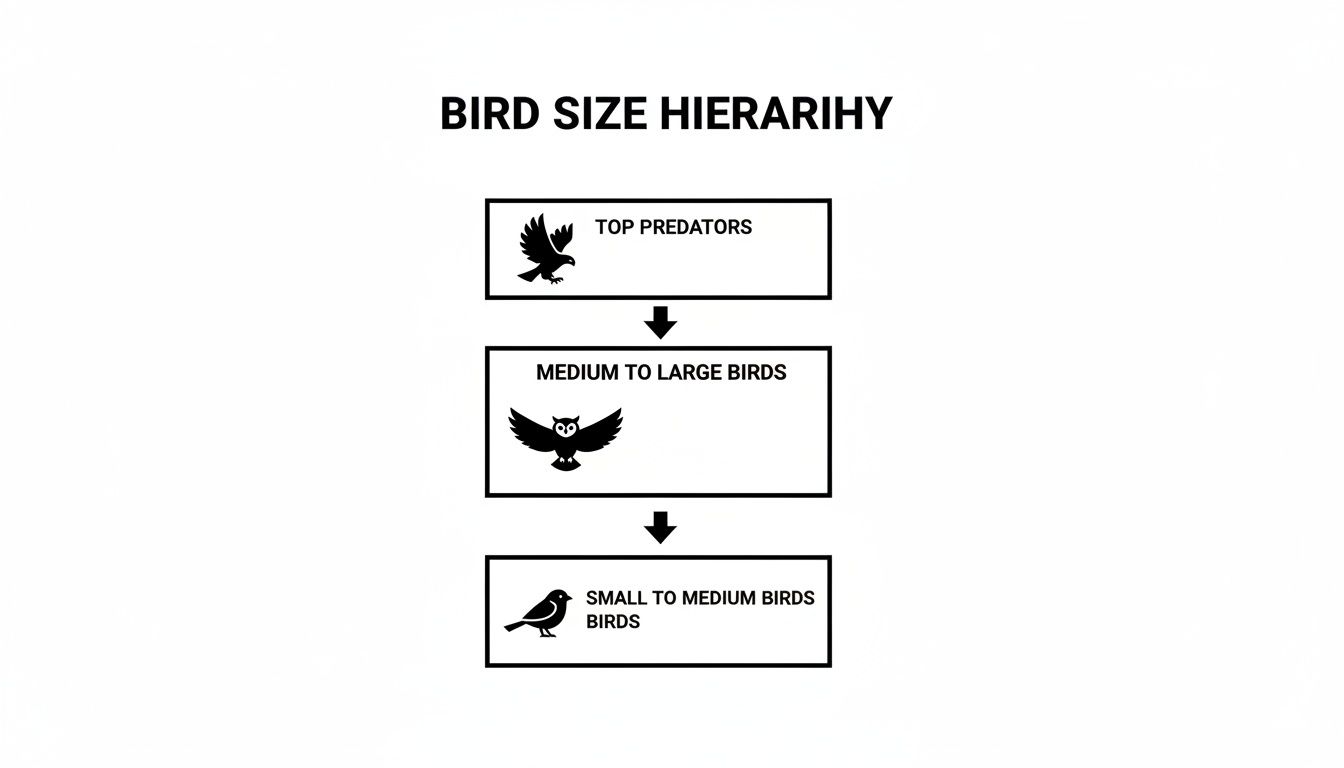
This visual is a great reminder that a toy's material has to be right not just in type, but also in toughness for your bird's specific size.
The Hazard Zone: Materials to Avoid
Knowing what's safe is one thing, but knowing what's dangerous is just as important. Some common materials found in cheap toys or household items can pose serious health risks, from poisoning to physical injury.
Expert Advice: A common mistake is to assume that if a toy is sold for birds, it must be safe. Unfortunately, that's not always the case. Always inspect every part of a new toy yourself—from the wood and fabric right down to the metal clasps and dyes.
Here is a critical list of materials and components to steer clear of when you're shopping for bird cage toys.
- Toxic Metals: Avoid any hardware made from zinc, lead, or copper. These can cause heavy metal poisoning, a serious and often fatal condition in birds. Stick exclusively to stainless steel.
- Treated or Toxic Woods: Never give your bird wood that has been pressure-treated, painted, or varnished. On top of that, some natural woods are toxic to birds, including cherry, cedar, and oak.
- Soft Plastics and Rubber: Toys with soft, pliable plastic or rubber parts are a major risk. Birds can easily chew off small pieces and swallow them, leading to a potentially fatal blockage in their crop or intestines.
- Certain Fabrics and Fibres: While natural fibres are great, synthetic ones like nylon and polyester can be a problem. Fine cotton ropes are especially dangerous, as the long threads can unravel and cause entanglement or be ingested, leading to crop impaction.
- Toxic Glues: Check how a toy is held together. If you can see clumps of glue, it could be toxic if your bird chews on it. Reputable toy makers use non-toxic glues or, even better, build their toys by knotting materials together. For a deeper understanding of what makes certain toys unsafe for parrots, you can check out our guide on toys for parrots.
Unlocking Your Bird's Natural Instincts with Enrichment
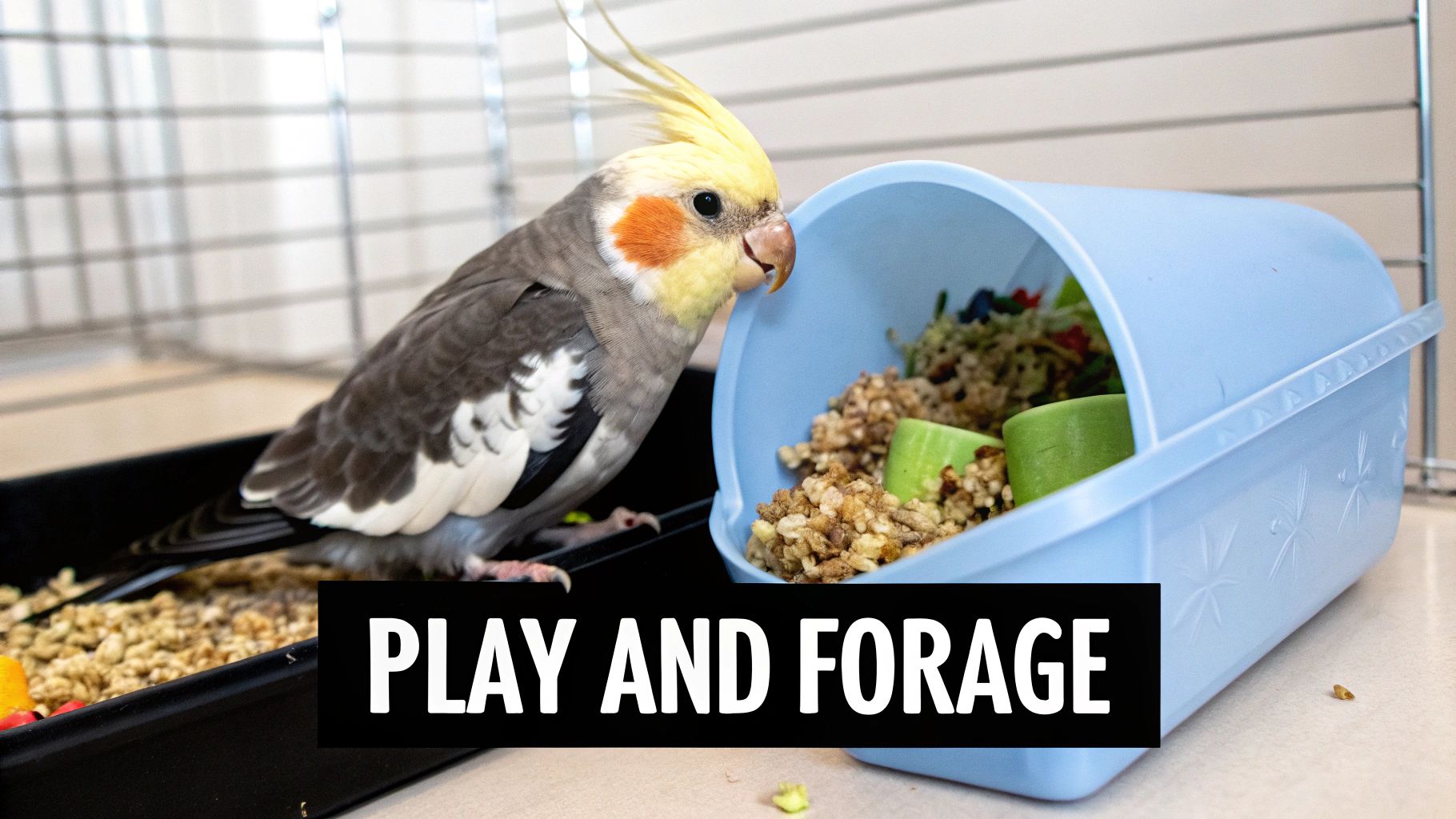
It’s easy to think of bird toys as just a way to keep your feathered friend busy. But true enrichment goes much deeper than that. It’s about tapping into the powerful, deep-seated instincts they’d rely on every single day in the wild.
A genuinely engaging environment isn't just full of random objects; it provides real outlets for the natural behaviours hardwired into your bird’s brain. Think of it less like giving them a toy and more like giving them a meaningful job to do.
By understanding what drives your bird, you can build a diverse ‘toy library’ that nurtures their intelligence and keeps them happy. This approach turns their cage from a simple home into a space that provides genuine purpose and fulfilment.
The Instinct to Forage
Out in the Australian bush, a parrot spends a huge chunk of its day just looking for food. This isn't only about filling its belly; it's a complex process of problem-solving, exploring, and using its physical skills. Foraging toys are designed to bring that essential activity into your home.
Instead of getting an easy meal from a bowl, your bird has to work for it—fiddling with puzzles, pulling levers, or shredding materials to get to a tasty reward. This mental workout is one of the most powerful tools for beating boredom and stopping the frustration that can lead to behavioural problems.
- Psychological Benefits: Foraging builds confidence and independence. Every time your bird successfully solves a puzzle, it gets a sense of accomplishment that keeps its mind sharp and active.
- Physical Benefits: It gets them moving, encouraging the use of their beak, feet, and brain to get to the goodies inside.
If you’re new to this idea, our guide on foraging toys for birds is a great place to start.
The Drive to Shred and Destroy
Does your bird treat a wooden block like a personal demolition project, leaving a pile of splinters in its wake? That’s not naughty behaviour; it’s a vital, healthy instinct in action. Shredding serves two critical purposes: maintaining their beak and satisfying nesting urges.
A bird’s beak never stops growing, much like our own fingernails. Chewing on safe, appropriate materials is how they keep it shaped and healthy. Providing plenty of shreddable bird toys for a cage gives them the perfect outlet for this natural drive. Without it, they might start chewing on cage bars, your furniture, or even their own feathers.
Providing a variety of destructible toys is not a luxury; it's a fundamental requirement for a parrot's psychological health. The act of destruction is a creative and stimulating process for them.
According to veterinary reports, proper enrichment can help prevent serious issues like feather plucking, which is a common stress-related behaviour seen in companion birds. Providing appropriate outlets for shredding is a key preventative measure.
The Need for Preening and Comfort
Preening is how a bird keeps its feathers in perfect condition. While they mostly groom themselves, they also love interacting with toys that mimic this gentle sensation. Toys made with soft, natural fibres like sisal or untanned leather strips let them engage in this calming, self-soothing activity.
Preening toys are especially important for birds that live alone, as they can simulate the feeling of being groomed by a flock mate. This helps reduce stress and offers a comforting outlet when they feel anxious or unsettled.
The Joy of Physical Movement
In the wild, birds are constantly on the go—climbing, swinging, flying, and exploring. While a cage naturally limits flight, you can still give them plenty of opportunities for acrobatic fun. Swings, ladders, and climbing nets are essential for promoting great physical fitness.
These kinds of toys help strengthen your bird's muscles, improve their balance, and burn off that boundless energy. Placing them in an open part of the cage encourages play and feats of agility, keeping your bird physically fit and thoroughly entertained.
Strategic Toy Placement and Rotation for Maximum Engagement
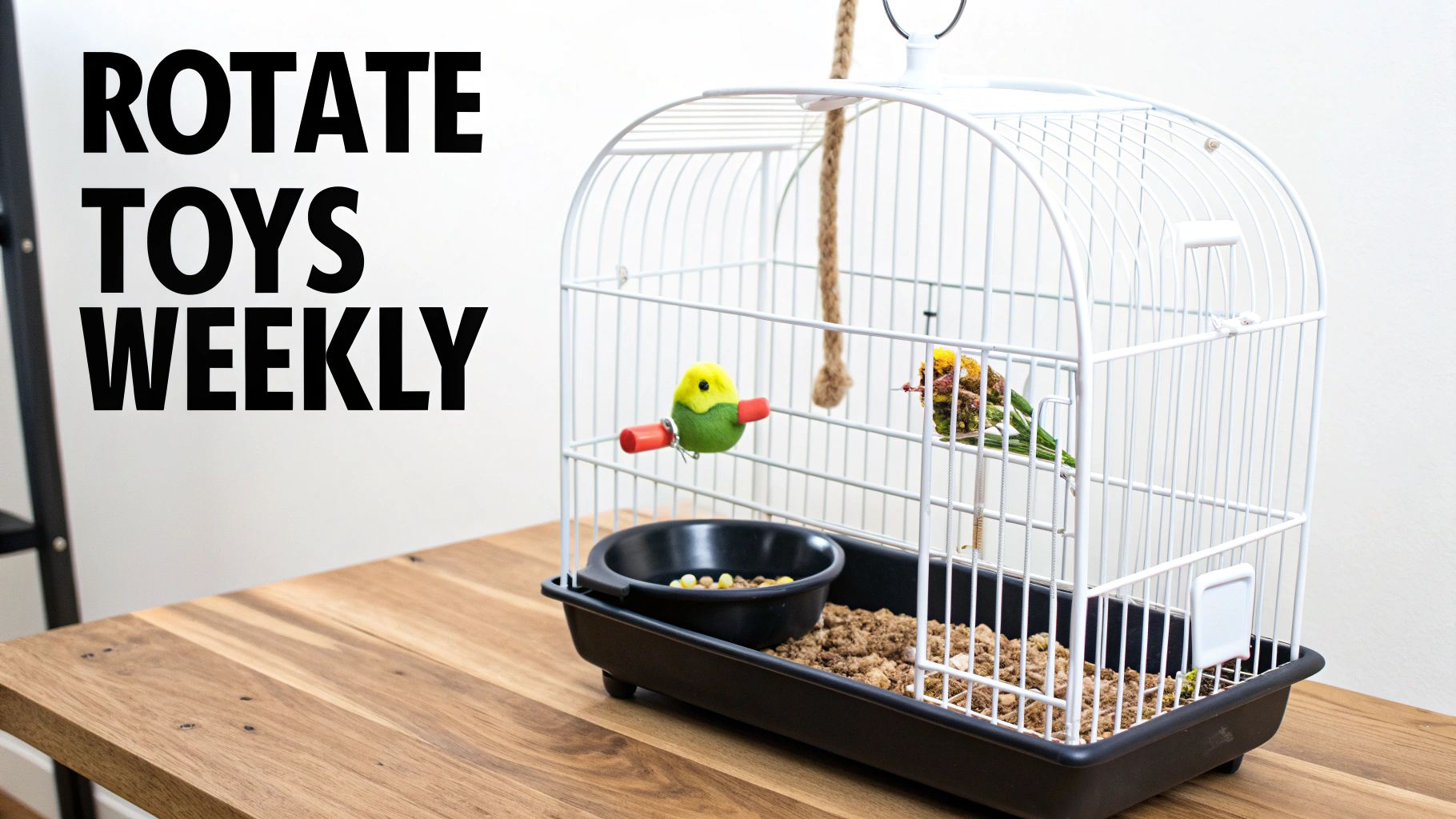
Having a brilliant collection of safe and engaging bird toys for a cage is a fantastic start, but it’s only half the battle. How you arrange them inside your bird’s home can be the difference between a stimulating playground and a cluttered, stressful obstacle course. Strategic placement and a smart rotation plan are the keys to keeping your bird truly engaged and happy long-term.
The goal is to create a space that encourages movement and exploration without being overcrowded. A bird needs clear pathways to hop between perches, stretch its wings, and move around freely. Think of it like interior design for your bird—you want a layout that is both functional and fun, not just a jumble of stuff.
Creating an Engaging Cage Layout
A well-organised cage makes toys far more inviting and effective. It's about putting the right toy in the right spot to encourage certain behaviours, making sure your bird gets the most out of every item you provide.
Here’s how to set up the cage for success:
- Encourage Foraging: Pop foraging toys away from the main food and water bowls. This simple move encourages your bird to work for treats, tapping into their natural instinct to search for food.
- Maximise Swing Space: Position swings in the centre or in more open areas of the cage. This gives your bird plenty of room for happy, acrobatic swinging without bumping into other toys or the cage bars.
- Designate a Shredding Zone: Hang destructible toys like our Loopy Lou Shredder near a favourite perch. This gives your bird a comfy spot to settle in for a satisfying session of chewing and shredding.
- Keep Pathways Clear: Make sure there are unobstructed "flight paths" between the highest and lowest points of the cage. This promotes healthy exercise and lets them move around their home with ease.
The Power of Toy Rotation
Imagine eating the same meal every day or watching the same movie on a loop—you'd get bored very quickly. Birds are exactly the same. When the same toys stay in the cage day after day, they lose their novelty and become little more than background scenery. This is where a toy rotation strategy comes in.
By regularly swapping out toys, you are constantly reigniting your bird's curiosity. A toy that has been 'away' for a week can feel brand new and exciting all over again, sparking renewed interest and preventing the onset of boredom.
This practice is essential for keeping your bird's mind active. With so many affordable shreddable toys and ladders available in Australia, like our Wattle Delight, building a "toy library" is very achievable for most owners and makes rotation easy.
How to Create a Simple Rotation Schedule
Setting up a schedule doesn't have to be complicated. The idea is just to have more toys than you need in the cage at any one time, creating a collection to pull from.
- Build Your Collection: Aim to have at least two to three sets of toys. For instance, if you keep four toys in the cage, try to own eight to twelve in total. This gives you plenty of options, including shreddable toys like the Native Wonder, foraging puzzles, and swings.
- Schedule a Weekly Swap: Once a week, during your regular cage clean, take out one or two of the old toys and replace them with different ones from your collection.
- Clean and Store: Give the toys you've removed a good clean and inspection before storing them away for the next rotation.
- Observe and Adapt: Pay attention to which toys get your bird most excited. This helps you learn their preferences and tailor your collection to what they truly love.
This simple routine ensures the environment inside the cage remains fresh, challenging, and endlessly interesting for your feathered friend.
Toy Maintenance: Cleaning and Knowing When to Say Goodbye
Choosing the right bird toys for a cage is only the first step. A much-loved toy can quickly turn into a hazard if it’s not kept clean or if it’s left in the cage long past its use-by date. Keeping your bird's playground safe and hygienic is one of the most fundamental jobs of a bird owner.
This really just boils down to a simple cleaning routine and, just as importantly, learning to spot the warning signs that a toy is done. Think of it as preventative care. A few minutes spent on maintenance each week can save you from dealing with health issues or accidents down the track.
Creating a Bird-Safe Cleaning Routine
You don’t need harsh chemicals to clean your bird’s toys—in fact, you should steer clear of them entirely. The simplest, most natural solutions are often the most effective and are completely safe for your feathered mate.
A weekly wipe-down and a monthly deep clean is a great schedule to get into. Of course, for any toys that get hit with food or droppings, it’s best to clean them as soon as you spot the mess.
Simple DIY Cleaning Solution:
- Mix equal parts white vinegar and water in a spray bottle.
- Spray the toys, give any stubborn spots a scrub with a dedicated brush, and rinse them thoroughly with clean water.
- Make sure every toy, especially wooden ones, is completely dry before it goes back in the cage. Damp wood is a perfect breeding ground for mould.
For a deeper, more serious clean, you can use a proper bird-safe disinfectant like F10SC, which is widely recommended by avian vets across Australia. Just be sure to follow the product’s instructions for dilution and rinsing.
Knowing When to Say Goodbye
This is one of the hardest but most important parts of being a bird owner: recognising when a fun toy has become a dangerous object. A well-loved toy is often a well-destroyed one, but there's a fine line between satisfying destruction and a genuine safety hazard.
An expert tip is to remember that the goal of many toys is for them to be destroyed. However, the way they break down matters. Your role is to supervise this process and remove the toy before its worn-out state creates a new risk.
Regular inspections are non-negotiable. At least once a week, pull every single toy out of the cage and give it a proper check-up.
Your Weekly Toy Safety Checklist
Use this checklist to inspect each toy carefully. If you spot any of these issues, it's time to repair it if you can or, more often than not, toss it out.
- Frayed Ropes and Fibres: Check all ropes, particularly cotton or natural fibres. Long, frayed strands can easily wrap around a bird's toe, foot, or even neck, causing serious injury or strangulation. Trim any short frays you find, but if the rope is unravelling, it’s finished.
- Splintered or Cracked Wood: Run your fingers over all wooden parts. Sharp splinters can injure your bird's mouth or feet, and can cause a crop impaction if swallowed. Small cracks are also a great place for bacteria to hide.
- Broken or Small Parts: Look for any plastic or metal bits that are cracked or might break off. A small, swallowed piece can lead to a life-threatening intestinal blockage. A durable option designed to minimise this risk is our Wattle Delight.
- Rusted or Damaged Hardware: Inspect all metal parts like bells, clasps, and chains. Any sign of rust means the toy is no longer safe. Check that bell clappers are secure and can’t be pulled out and swallowed. For total peace of mind, go for toys with stainless steel parts like our Native Wonder.
- Excessive Filth: Some toys, especially those made from porous materials like wood or fabric, can get so soiled that they become impossible to clean properly. These can turn into a breeding ground for nasty bacteria and should be replaced. A great shreddable option like the Loopy Lou Shredder is designed for this kind of turnover.
Saying goodbye to a favourite toy can feel a bit rough, but your bird's safety has to come first, always. A fresh, safe toy is a much better choice than a risky old one.
It’s Time to Build a Better Bird World
Well, there you have it. You’re now armed with everything you need to turn your bird's cage from a simple house into a thriving, exciting home. Getting this right isn’t just about buying stuff; it's about setting your feathered friend up for a life full of fun and purpose.
Let’s quickly run through the big takeaways for finding the best bird toys for a cage. Always match toys to your bird’s size and beak strength, double-check that every material is non-toxic, and offer a good mix of activities—things to forage, things to shred, and things to preen. And remember, keep their world interesting by rotating their toys regularly.
Providing the right toys isn't just a purchase. It's an act of care and a real commitment to your companion's happiness and well-being.
We hope you'll take these ideas and run with them to build a stimulating, joyful world for your bird. To get you started on this brilliant journey, why not have a look through our hand-picked collection of safe and engaging toys? They’re all designed by passionate Aussie bird lovers, right here in South Australia. Your companion’s next great adventure is just a click away.
What's Next?
You’ve just picked up a ton of great info for creating a safe and stimulating world for your bird, but the adventure doesn't stop here. Looking after a parrot is a continuous journey of learning and discovery, and every new thing you understand about them only makes your bond stronger.
Keeping that learning going is the best thing you can do for your feathered mate. It helps you make confident, informed choices about everything from their cage setup and diet to understanding their quirky behaviours.
To help you on your way, we've pulled together a few more handy guides from our blog. These articles dig a bit deeper into some of the topics we've touched on today, offering more expert advice and practical tips for Aussie bird owners like you.
Think of these as the next step in building your bird-care toolkit. You'll find detailed insights that answer common questions and help you tackle new challenges with confidence.
Explore More Bird Care Guides
Ready to deck out your bird's entire living space for maximum fun and safety? Start with our ultimate guide to cage accessories.
If you're excited by the idea of using foraging to bust boredom, this next article is packed with clever ideas and toy recommendations.
And for a brilliant overview of how to match different toy types to your bird's unique personality and instincts, don't miss this essential read.
Here at Lou Lou Bells Bird Toys, we're passionate about helping you create the best possible world for your bird. From the smallest shreddable delight to the toughest foraging puzzle, our entire collection of bird toys is designed with safety, enrichment, and fun firmly in mind. Explore all bird toys in our range and find your companion's next favourite adventure.
Keep Reading
- The Ultimate Guide to Parrot Cage Accessories
- What Are the Best Foraging Toys for Birds?
- Choosing the Right Toys for Parrots
Disclaimer Summary:
The information in this article is general in nature and may include external links or resources not created by Lou Lou Bells Bird Toys. Every bird is unique, so we encourage you to seek personalised advice from your own veterinarian or avian specialist. For full details, please read our complete disclaimer here.