
So, you're bringing a parrot into your life! That's brilliant. But let's talk about their cage. It’s so much more than just a place for them to sleep; it’s their entire world. The parrot cage accessories you pick are what turn a simple box into a home—a place where they can feel safe, engaged, and truly themselves.
Think of it as setting up a playroom, gym, and dining room all in one.
Building Your Parrot's Ultimate Sanctuary
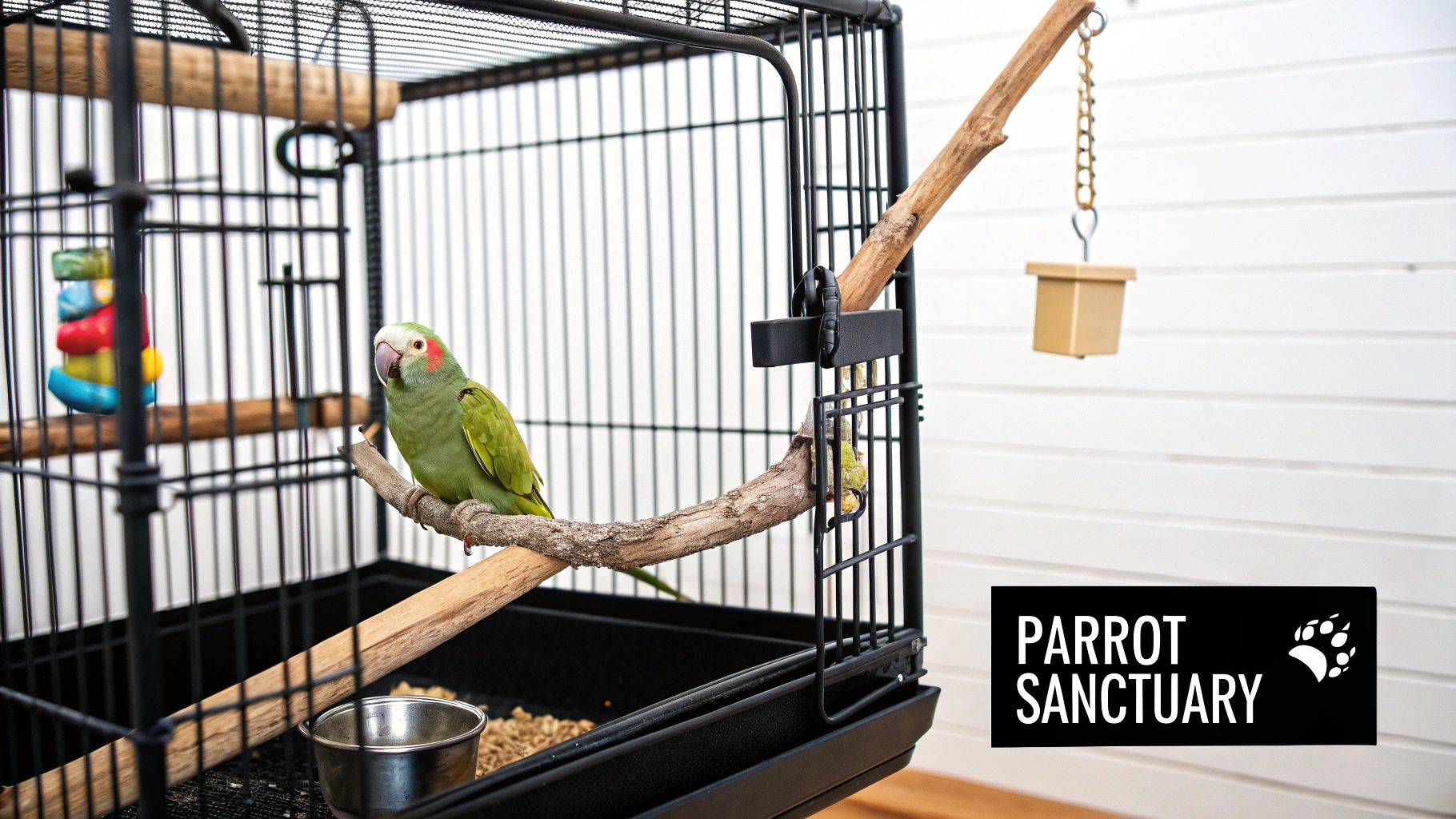
For parrot owners right across Australia, getting the cage right is the first big step. These items aren't just decorations to make the cage look pretty. They’re absolutely vital for your bird's physical health, mental sharpness, and overall happiness.
A cage kitted out with the right gear is your best defence against a bored parrot, and a bored parrot can quickly develop problem behaviours like feather plucking or constant screaming.
The Purpose Behind the Play
Every single thing you add to that cage has a job to do. When you provide a rich, varied environment, you’re giving your incredibly smart companion a chance to do what comes naturally—the very things they'd be doing all day in the wild.
This isn't just a niche idea; it's a huge shift in how we care for our birds. The global market for bird cages and accessories is massive, valued at around USD 3.4 billion and expected to climb to USD 4.8 billion by 2029. Why? Because owners are realising just how much their birds need proper stimulation, comfort, and safety.
To give you a quick idea of the essentials, here’s a checklist of the core categories you'll want to cover.
Essential Accessory Checklist for a Thriving Parrot
This table gives a quick overview of the must-have accessory categories that create a stimulating and comfortable cage environment for your bird.
| Accessory Category | Primary Purpose | Example |
|---|---|---|
| Perches | Foot health, comfort, exercise | Natural wood branches, rope perches |
| Toys | Mental stimulation, beak maintenance, fun | Shreddable toys, wooden blocks |
| Foraging Gear | Encourages natural food-finding behaviour | Foraging wheels, puzzle boxes |
| Feeders/Waterers | Clean and easy access to food and water | Stainless steel bowls, water bottles |
| Baths | Feather health, hygiene, and enrichment | In-cage bath tubs, spray misters |
| Comfort Items | Security, warmth, and a safe place to rest | Soft huts, heated perches |
Filling your cage with items from each of these categories is the best way to ensure your parrot has everything they need to flourish.
Expert Tip: The key isn't just to fill the cage, but to fill it with purpose. Each toy, perch, and feeder should encourage a natural behaviour, whether it's chewing, climbing, foraging, or simply resting comfortably.
More Than Just a Cage
Ultimately, choosing the right parrot cage accessories is an act of love. It shows you understand your bird’s instincts and are committed to giving them the best life possible.
It's about creating the foundation for a strong, trusting bond between you and your feathered mate. If you're looking for a complete rundown of what you'll need, check out our comprehensive guide on parrot supplies in Australia. Customising their space is one of the most rewarding parts of having a parrot.
The Foundation of a Healthy and Active Cage
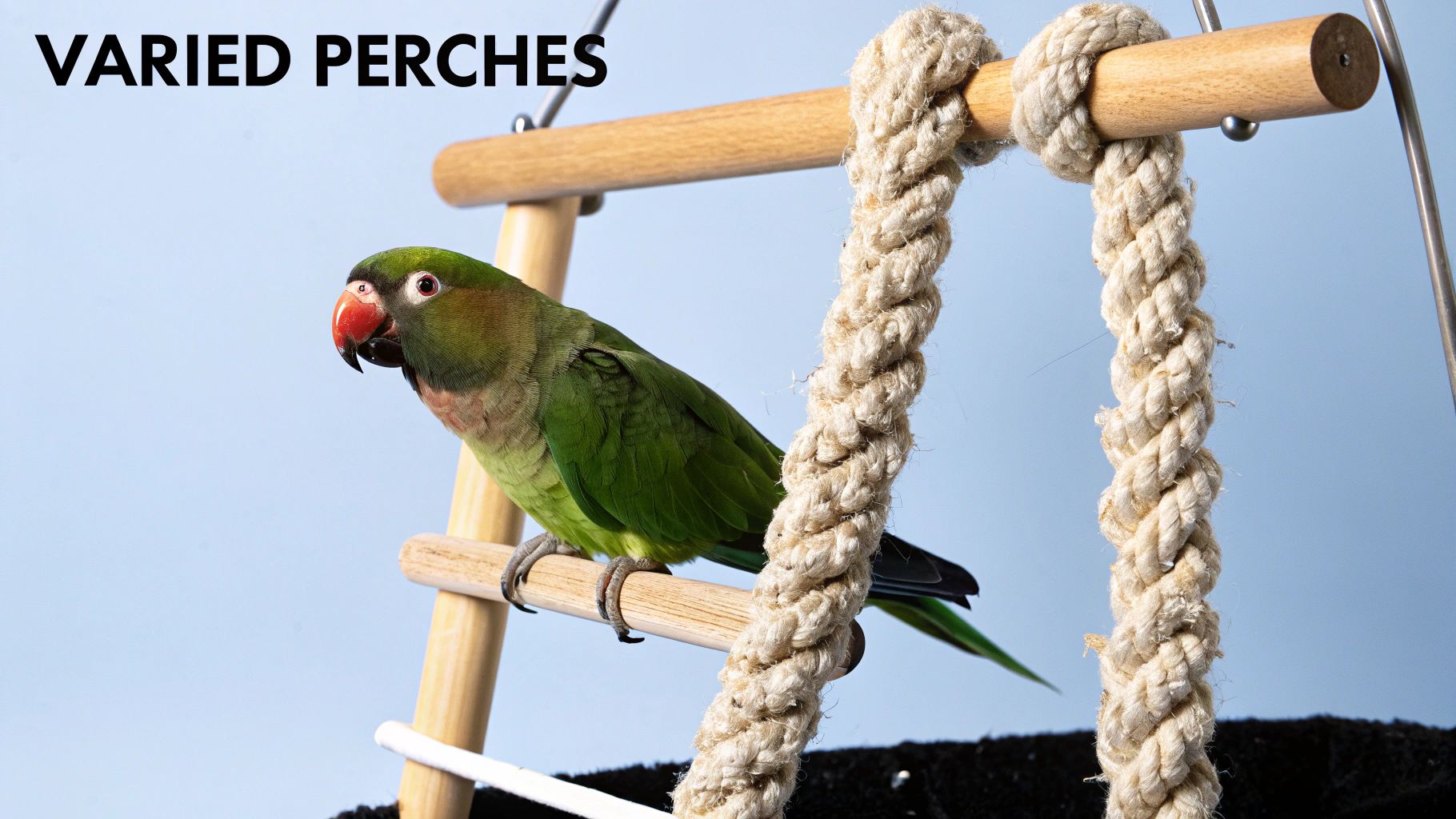
Before we even get to the fun, flashy toys, we need to talk about the absolute fundamentals of your parrot’s world. The perches, swings, and ladders in their cage are like the floorboards, stairs, and furniture in our own homes. They’re the core structures your bird will stand on, climb, and interact with all day, every day.
Think about it this way: you wouldn't wear the same pair of shoes for a marathon, a lazy day on the couch, and a fancy dinner. Your parrot’s feet are no different. They are incredibly strong and dextrous, but they were never designed to grip a single, uniform surface for hours on end.
This is exactly why the standard, smooth dowel perch that comes with most cages is such a problem.
The Problem with Uniform Perches
When a parrot is forced to stand on a single-diameter dowel perch, their foot is locked into the same grip position constantly. Over time, this repetitive pressure on the exact same spots can lead to serious, painful conditions like bumblefoot (pododermatitis) or arthritis. It’s the bird equivalent of us getting a repetitive strain injury from terrible ergonomics at a desk.
Expert Advice from Avian Specialists: Providing a wide variety of perch textures, materials, and diameters is one of the most crucial preventative health measures a parrot owner can take. It naturally exercises the muscles and tendons in their feet, promotes healthy circulation, and helps prevent pressure sores from developing.
Honestly, moving beyond that basic dowel isn’t just a good idea—it’s non-negotiable for responsible parrot care here in Australia.
Creating a Varied Perching Landscape
The goal is simple: mimic the diverse branches a bird would encounter in the wild. You want to create a rich landscape inside the cage that encourages constant movement and provides different sensations for their feet.
Here’s a look at the essential types of perches you should have:
- Natural Wood Perches: These are the gold standard, hands down. Branches from bird-safe, native Australian trees like eucalyptus, bottlebrush, or grevillea are perfect. Their naturally irregular shapes, twists, and varied diameters force your parrot to constantly adjust its grip, which is brilliant for foot conditioning.
- Rope Perches: Often called "bungees," these soft cotton perches are much gentler on your bird's feet. They make a comfy spot for resting and sleeping, and you can bend them into different shapes to add a bit of interest to the cage layout.
- Mineral or Conditioning Perches: These textured perches pull double duty. While they offer another surface for foot exercise, they also give your parrot a rough texture to rub its beak on, helping to keep it naturally trimmed. Just be sure to use them as a supplementary perch, not the main one.
Thankfully, parrot owners are more aware of these needs than ever. This is reflected in the market, which has seen huge growth in online sales for parrot cage accessories. The convenience of finding specialised products, from native wood perches to comfort items, has completely changed how we shop.
Introducing Your Parrot’s Personal Gym
Beyond stationary perches, you need to bring in dynamic accessories like swings and ladders. These are crucial for building a strong, confident, and physically fit bird. Think of them as your parrot's personal gym equipment, providing both a workout and mental engagement.
Swings are fantastic for developing balance and strengthening core muscles and leg joints. The simple act of stabilising themselves on a moving object is a great workout. It could be a simple rope swing or one adorned with shreddable wooden blocks—either way, it adds a whole new dimension of movement.
Ladders, on the other hand, encourage climbing and exploration. Connecting different zones of the cage with a ladder gives your parrot a clear pathway to travel, promoting activity. It turns a simple trip from a food bowl to a favourite toy into a deliberate physical challenge.
By thoughtfully combining a variety of perches with dynamic elements like swings and ladders, you build a robust physical foundation. You’re not just filling space; you're creating an environment that supports your parrot’s long-term health, strength, and coordination, every single day.
Unlocking Your Parrot's Mind with Enrichment
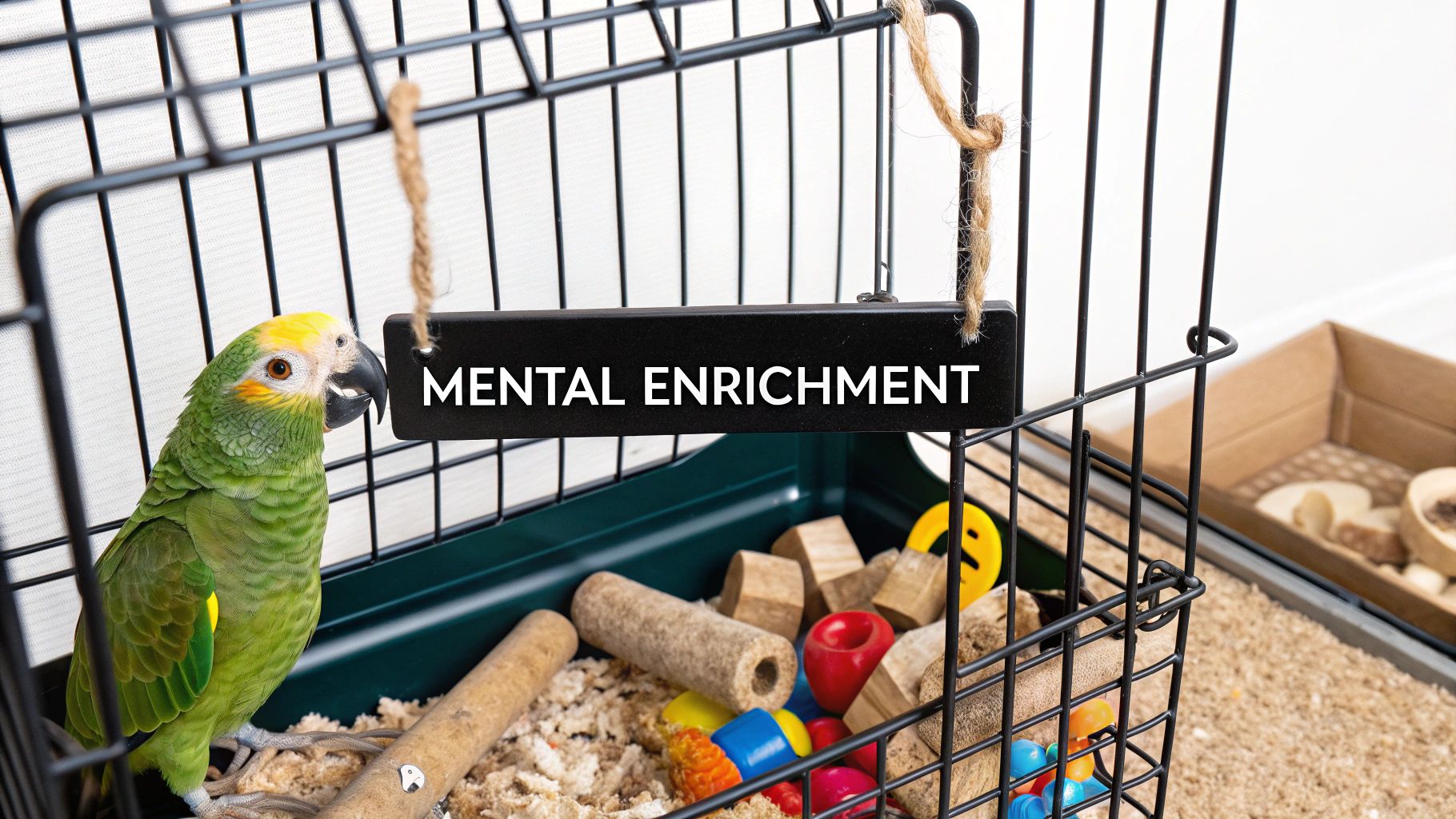
We've sorted out the physical foundation of the cage, but now for the really important part: keeping that brilliant parrot mind of yours sharp and happy. This is where enrichment comes into play, and frankly, it's the single biggest factor in stopping boredom in its tracks and keeping your bird psychologically healthy.
Think of your parrot as more than just a pet. They are incredibly smart creatures who, in the wild, have a full-time job. That job involves hunting for food, navigating tricky social hierarchies, dodging predators, and physically changing their environment. By providing high-quality parrot cage accessories, we're giving them a meaningful "job" to do in our homes.
Without this mental workout, parrots can quickly slide into behavioural problems like screaming, biting, or feather plucking. Enrichment isn't a bonus; it's a basic need.
The Essential Toy Categories
Every single toy you put in that cage should have a purpose. It needs to tap into a different natural instinct. Just like you'd feed your bird a balanced diet, you need to provide a balanced "toy diet" too.
- Shreddable Toys: These are made for one thing: total destruction! Crafted from materials like yucca, palm leaves, paper, or soft timbers, they let your parrot satisfy that powerful urge to chew and tear things apart. It’s a fantastic way for them to burn off energy and it helps keep their beak in great shape.
- Preening Toys: Made from things like soft cotton rope or leather strips, these toys appeal to a parrot’s instinct to preen. For birds that tend to over-preen or even pluck their own feathers, these can offer a safe and satisfying alternative to focus on.
- Puzzle Toys: Think of these as brain-teasers for birds. They challenge your parrot to figure something out—like unscrewing a nut or sliding open a drawer—to get a tasty reward. They are brilliant for building problem-solving skills and confidence.
- Foot Toys: These are smaller, lightweight toys that aren't fixed to the cage. Parrots can pick them up, hold them in their feet, and fiddle with them, which is excellent for their dexterity and coordination.
A good mix of these toy types makes sure your parrot has an outlet for all its core instincts. Our range of shreddable bird toys is perfect for satisfying that destructive urge in a safe way.
Expert Advice: One of the biggest mistakes I see owners make is leaving the same old toys in the cage for months. You need a toy rotation system. Keep a box of toys handy and swap a few out every week. It keeps their world new and exciting, always offering a fresh challenge and stopping the toys from becoming boring background clutter.
The Power of Foraging
Beyond just things to chew, the most enriching activity you can offer your parrot is foraging. Out in the Aussie bush, parrots spend a massive chunk of their day actively searching for something to eat. Just dumping seeds in a bowl robs them of this entire part of their natural life.
Foraging turns mealtime from a boring, two-minute task into a rewarding puzzle. It makes them think, work, and use their beaks and feet in complex ways—which is amazing for both their mental and physical health.
You don’t have to start with anything complicated, either. Simple DIY foraging ideas can be incredibly effective.
Simple and Safe DIY Foraging in Australia
It's easy to create your own foraging opportunities using safe items from around your home and garden.
- Native Botanicals: Try wrapping a seed or a favourite nut inside a pesticide-free gum leaf or a piece of bottlebrush.
- Cardboard Creations: Use untreated cardboard rolls from paper towels, stuff them with shredded paper and treats, and fold the ends in. It’s a simple but effective puzzle.
- The Scrunched Paper Ball: This is the easiest one of all. Just scrunch up a piece of paper with a treat hidden inside and let your bird have fun ripping it apart to find the prize.
Once your parrot gets the hang of these simple games, you can start introducing more advanced puzzle feeders and proper foraging toys for parrots. These specially designed parrot cage accessories can offer multi-step challenges that will keep a clever bird busy for ages.
By encouraging this natural instinct, you’re giving your parrot a real sense of purpose. You’re letting them "work" for their food, which builds their confidence and drastically cuts down on those boredom-related behaviours. If you want to dive deeper, you can explore our detailed guide on using foraging toys for birds.
Choosing the Right Feeders and Baths
Beyond the exciting world of toys and perches are the daily essentials that keep your parrot healthy—things that handle their nourishment and hygiene. Getting the right feeders and baths is a huge part of good care, especially with Australia’s varied climates. They might seem like basic bits of gear, but your choices here really do make a world of difference.
Picking the right food and water bowls is your first line of defence against illness. While those colourful plastic bowls might look fun, they're often porous and can get tiny scratches over time, creating a perfect breeding ground for nasty bacteria. This is why stainless steel bowls are the undisputed champions for both food and water. They’re non-porous, incredibly tough, a breeze to properly sanitise, and can stand up to even the strongest beaks.
Selecting the Best Feeder Type
Where you put your feeders is just as important as what they're made of. One of the most common mistakes I see owners make is placing bowls directly underneath perches.
Expert Avian Vet Tip: Never position food or water bowls under perches. Parrots defecate wherever they are perched, and droppings falling into their food or water is a primary cause of bacterial infections and gastrointestinal issues. Always place them in a clear, open area of the cage.
To make life cleaner and less messy, it's worth looking at different feeder styles:
- Open Stainless Steel Bowls: These are the standard for a reason. They clip securely to the cage bars, offer easy access, and are simple to clean. They're perfect for fresh foods like chopped fruit and veggies.
- Hooded or Guarded Feeders: If you’ve got a particularly messy eater who thinks flinging seeds is a sport, a hooded feeder can be a lifesaver. These help contain the mess, keeping the cage floor—and your home—a lot cleaner.
- Specialised Waterers: An open water bowl is perfectly fine, but some owners, particularly in warmer parts of Australia, prefer water bottles or silo waterers. These systems can help keep the water cleaner for longer by protecting it from food bits, dust, and droppings.
The Importance of Bathing for Feather Health
Bathing isn't just about getting clean; it’s a critical, natural behaviour for parrots. It helps them maintain their feather condition, keeps their skin hydrated, and dislodges dust and dander. Out in the wild, birds make do with rain, puddles, or even morning dew. In our homes, it's up to us to give them safe and inviting ways to have a good splash.
A bird with healthy, well-kept feathers is almost always a happier, more comfortable bird. For some parrots, regular bathing can even help soothe dry, itchy skin, reducing the urge for feather-plucking. It’s a vital part of their routine.
Finding the Right Bathing Solution
Not every parrot likes to bathe the same way, so you might need to try a few things to see what your feathered friend enjoys. Luckily, there are plenty of parrot cage accessories out there designed to make bath time easy and fun.
- In-Cage Baths: These are small, sturdy plastic tubs that either clip onto an open cage door or sit on the cage floor. They let your parrot splash about in the safety and comfort of their own territory.
- External Bath Houses: These attach to the outside of the cage over an open door. They give your bird a contained space to splash around in without soaking the entire inside of the cage.
- Misting with a Spray Bottle: A lot of parrots, especially those from rainforest climates, absolutely love being gently misted with lukewarm water. It’s like a gentle rain shower and is a fantastic way to encourage a bird that’s a bit reluctant to bathe.
If your bird seems hesitant, try making it a game. Splash the water gently with your fingers or toss a shiny little foot toy into the bath to get them curious. With a bit of patience, you can turn bath time into one of their favourite activities.
A Parrot Owner's Guide to Safe Materials
Your parrot’s beak is incredibly powerful, and their curiosity knows no bounds. They're going to chew, lick, and test every single thing they can get their beak on. This is why the safety of the materials in their parrot cage accessories has to be your number one priority. Think of this as your essential safety manual—it’ll help you create a completely hazard-free space for your feathered mate.
Just like we child-proof a home for a toddler, we absolutely must "beak-proof" a cage for a parrot. That instinct to explore with their mouth is hardwired, so it's our job to make sure everything they interact with is non-toxic and built to last.
The Gold Standard Safe Materials
When you're shopping for accessories, a few materials are consistently recommended by avian experts across Australia for their safety and durability. If you keep these in mind, spotting high-quality, safe products becomes a whole lot easier.
- Stainless Steel: This is the undisputed champion of safe metals for birds. It's non-porous, ridiculously durable, a breeze to clean and sanitise, and it won't rust or chip. It’s the perfect choice for food and water bowls, skewers for hanging fresh food, and toy parts like bells and quick links.
- Untreated Natural Woods: Parrots have a deep-seated need to chew, and giving them safe woods is the best way to satisfy it. Stick with untreated branches from native Australian trees like Eucalyptus, Bottlebrush, and Grevillea. These are not only safe but provide fantastic textures that are great for foot health and beak conditioning.
- Bird-Safe Plastics: Not all plastics are created equal, that's for sure. But high-quality, durable plastics like acrylic or certain ABS plastics are generally safe for toys. They’re tough enough to take a beating from a strong beak without shattering into sharp, dangerous fragments.
When it comes to choosing things like feeders, you really want to focus on hygiene and durability. This infographic can help you pick the best type for your bird's specific habits.
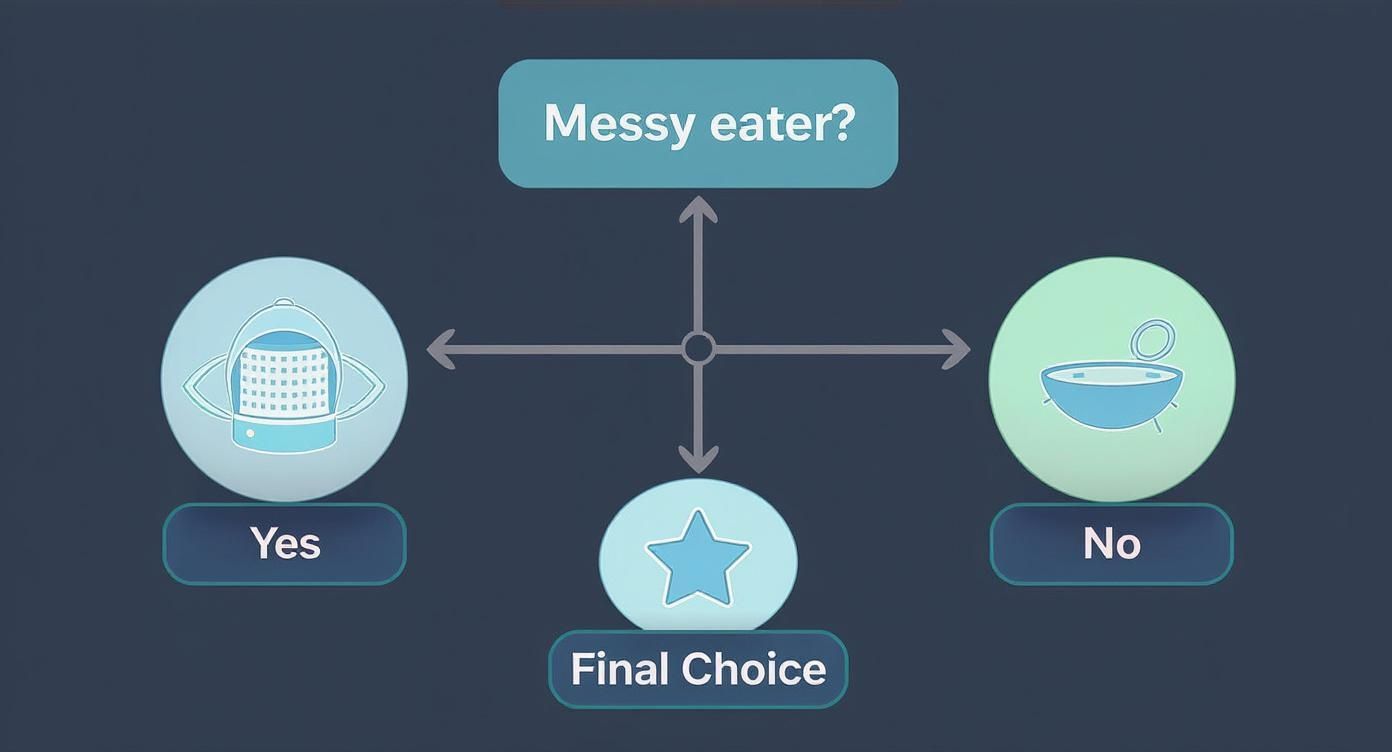
The main takeaway here is that you can pick a feeder that solves your biggest problem—whether that’s containing mess or making cleaning simple—without ever compromising on safety.
Hazardous Materials You Must Avoid
Unfortunately, a lot of cheap or poorly made accessories are riddled with materials that are toxic to parrots. If they ingest or even just consistently chew on these, it can lead to serious health problems down the track.
Expert Avian Vet Advice: Heavy metal toxicity, particularly from zinc and lead, is a serious and tragically common issue we see in pet parrots. It's a slow poison that builds up in their system, causing neurological damage, organ failure, and death. It is almost always preventable by choosing high-quality, bird-safe accessories from the start.
Here is a straightforward list of materials to steer clear of:
- Zinc and Lead: Often found in galvanised wire, cheap metal clips, bells with small clappers, and some paints. Always, always look for stainless steel hardware instead.
- Treated or Toxic Woods: Never use treated pine (CCA), particleboard, or MDF. They’re full of toxic glues and chemicals. Also, avoid woods known to be toxic to birds, such as cherry, oak, and cedar.
- Soft Plastics: Flimsy plastic toys can be broken apart in minutes and ingested, posing a choking risk or causing internal blockages.
- Certain Ropes and Fabrics: Stay away from synthetic fibres like nylon that can fray into long strands, creating a serious entanglement hazard. Also, avoid treated leathers that may contain harmful chemicals from the tanning process.
Inspecting for Quality Construction
Beyond the material itself, the way an accessory is put together is just as crucial for safety. Before you buy anything, give it a proper once-over. You’re looking for any potential weak points or design flaws that could harm your bird.
- Check for Small Parts: Could any part of the toy be easily chewed off and swallowed? This includes things like tiny bell clappers, beads, or plastic charms.
- Look for Entrapment Hazards: Examine the accessory for any loops, rings, or gaps where a head, foot, or toe could get trapped. Small chain links can be especially dangerous.
- Assess the Strength: Does it feel flimsy? A strong beak can make short work of a poorly constructed toy, turning it into a pile of dangerous small parts in no time.
By being vigilant about materials and construction, you can shop with confidence. Opting for reliable sources that prioritise safety, like our collection of durable stainless steel bird toys and parts, ensures every new addition to your parrot's cage is a safe one.
Alright, you've got all the bits and pieces—the perches, the toys, the feeders. Now comes the fun part: putting it all together. Think of yourself as an interior designer for your bird's home. A great cage layout isn’t about stuffing it full of stuff; it's about creating a space that works, a space that encourages your parrot to move, play, and just be a bird.
Just like we have a kitchen for eating and a bedroom for sleeping, your parrot’s cage should have different 'zones' for different activities. This simple idea transforms their cage from just a box into a multi-level playground, a gym, and a restaurant all in one.
Creating Functional Zones in the Cage
The secret to a fantastic layout is all about smart placement. You want to make your parrot travel around, climb, and check out every corner of their home. If you pile everything up in one spot, you'll end up with a cluttered mess and a bird that just sits there.
Here's how to break it down:
- The Dining Zone: Put the food and water bowls well away from the highest perches. Why? Nobody wants droppings in their dinner. Make sure this area is super easy for you to get to for daily cleaning.
- The Play Zone: This should be the most exciting spot in the cage, packed with a rotating selection of fun toys. Hang swings and shreddable toys here to make a dedicated area for all that glorious, happy destruction.
- The Rest Zone: Every bird needs a quiet corner to chill out. A soft rope perch or their favourite comfy perch, placed up high and away from the main action, makes a perfect, secure spot for a nap or a good night's sleep.
A top tip from seasoned bird owners is to build "pathways" with ladders and different types of perches to link these zones. This clever design gets your parrot moving and exercising as they travel from their food bowl to their favourite toy, just like they would in the wild.
Finding Quality Gear in Australia
For Aussie parrot owners, setting up the perfect cage is getting easier all the time. The Asia Pacific region is actually the fastest-growing market for bird cages and accessories right now, thanks to more people discovering the joy of pet ownership and a boom in local manufacturing. This is great news for us, as it means better access to high-quality, species-specific products from businesses right here at home.
When you support local Australian makers, you often get unique, handcrafted items made from safe, native materials you just won't find in the big pet store chains. These artisans really get the specific needs of parrots living in our climate. So, when you're ready to start building those pathways in your bird's home, checking out a collection of Australian-made ladders and perches is a brilliant place to start. It’s the best way to know that every piece you add is a safe and worthwhile investment in your bird's happiness.
Your Parrot Accessory Questions Answered
Setting up a parrot cage can feel a bit like decorating a new home—suddenly, you have all these options and a lot of questions. As a parrot owner in Australia, you want to get it right for your feathered mate. Here are some straightforward answers to the questions we hear most often.
How Often Should I Change My Parrot's Toys?
Most bird experts here in Australia will tell you to rotate your bird's toys every one to two weeks. It's not about constantly buying new things, but about keeping their world interesting.
Think of it as a "toy library." Keep a collection on hand and swap a few out regularly. This simple trick prevents boredom and keeps their clever minds ticking over. Of course, always pull out any toy that’s broken or getting a bit grubby to keep things safe. Our durable, handcrafted range, from fun shreddable bird toys to clever foraging toys for parrots, is perfect for building a stimulating rotation.
Are Mirrors a Good Accessory for Parrots?
This is a hot topic in the bird world. While some parrots seem to get a kick out of their reflection, for others, mirrors can cause real behavioural headaches like aggression or hormonal issues. They might see their reflection as a rival or a mate, which can lead to a lot of frustration.
If you do decide to try a mirror, watch your bird’s behaviour like a hawk for any negative changes. As a general rule, interactive or foraging toys are a much safer and healthier bet for mental stimulation.
What Are the Best Perches for a Galah or Cockatoo?
For our big Aussie parrots, it’s all about variety and toughness. Nothing beats natural branches from native, pesticide-free trees like Eucalyptus. Their irregular shapes and textures are fantastic for foot health.
It's also a great idea to mix it up. Add a soft rope perch for a comfy spot to rest and a concrete or mineral perch to help them keep their beak and nails in good shape naturally. The one thing to avoid using as a primary perch is a uniform dowel rod. Standing on the same smooth surface all day can lead to sore feet and other painful problems down the track.
At Lou Lou Bells Bird Toys, we're all about providing the safest, most engaging, and highest-quality enrichment for your companion bird. Have a look through our full collection of handcrafted toys, perches, and accessories today at https://louloubellsbirdtoys.com.au.
Disclaimer Summary:
The information in this article is general in nature and may include external links or resources not created by Lou Lou Bells Bird Toys. Every bird is unique, so we encourage you to seek personalised advice from your own veterinarian or avian specialist. For full details, please read our complete disclaimer here.