
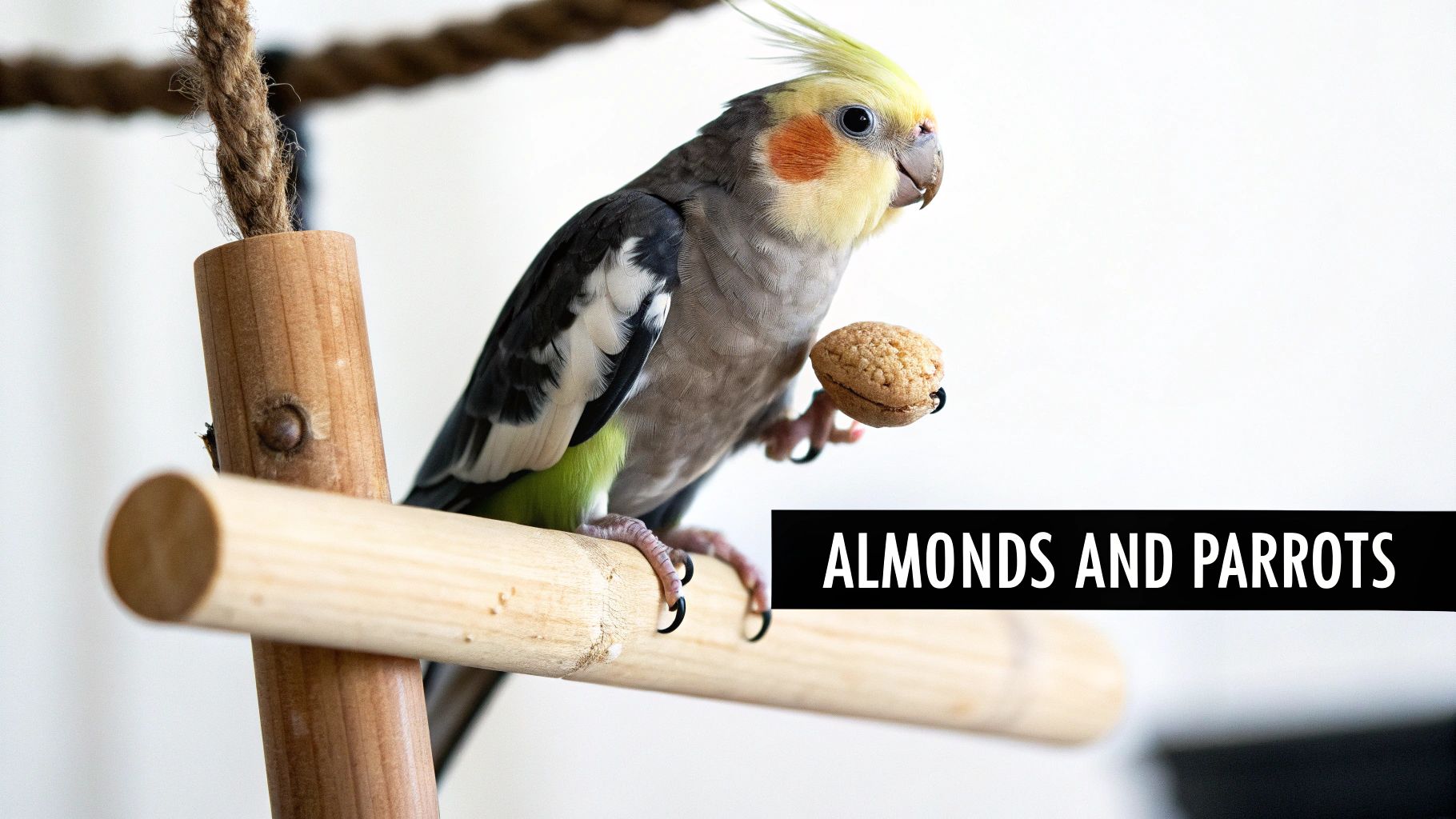
As a devoted bird owner, you're always on the lookout for natural, engaging ways to enrich your parrot's life. This often brings up a common question: are almonds with shell a safe and beneficial treat for our feathered friends?
The short answer is a resounding yes. When prepared correctly, they're not just a tasty, nutrient-rich snack but also a brilliant enrichment tool.
A Natural Choice for Your Parrot's Wellbeing
Foraging is a deep-seated, natural instinct for parrots. It's crucial for their mental and physical health, and offering treats like almonds still in their shells is a fantastic way to encourage it.
This simple nut isn't just another snack; it's a puzzle. It engages your bird's mind and beak, satisfying that innate drive to work for their food. Cracking open that hard shell provides a rewarding challenge that keeps them stimulated, active, and happy. It's a fantastic workout for their beak, too!
By encouraging this natural chewing and foraging, these nuts help maintain beak health and provide vital mental stimulation. This is especially true for us here in Australia, where we have access to some of the world's best almonds. The local industry has boomed, making fresh, high-quality nuts more available than ever.
So, let's get into the nitty-gritty. This guide will walk you through:
- The nutritional goodness locked inside each almond.
- Crucial safety measures to protect your feathered companion.
- Creative ways to use them for enrichment, including ideas for toys from Lou Lou Bells Bird Toys.
Providing these kinds of enriching experiences is a cornerstone of responsible bird ownership. Understanding how to properly incorporate treats like in-shell almonds is a key part of our essential guide to caring for pet birds. It ensures your companion not only enjoys their food but also thrives from the mental and physical activity it provides.
Ready? Let's crack open the details and see how these nuts can benefit your bird.
The Nutritional Powerhouse Inside the Shell
Beyond the fun of cracking it open, an almond with its shell on is hiding a powerhouse of nutrients for your parrot. Think of each kernel as a tiny, natural supplement, packed with goodness that supports everything from feather quality to energy levels. The shell isn't just a barrier; it's a natural guardian, protecting those delicate nutrients from light and air. This means the almond your bird finally gets to is as fresh and potent as it can be.
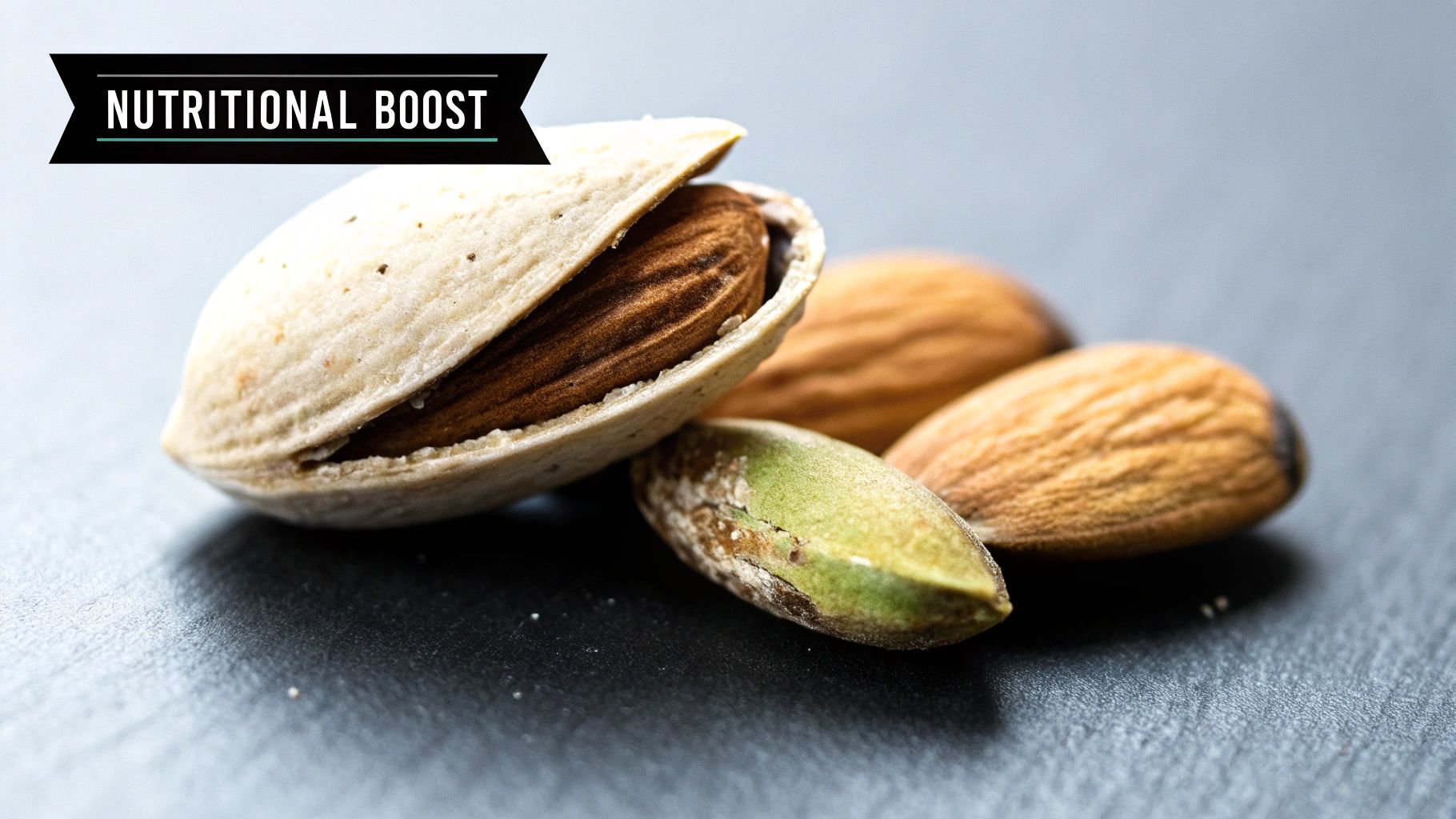
This powerful little nut offers a fantastic source of plant-based protein and healthy fats, which are essential for giving your bird sustained energy. But the benefits go much deeper than that.
Key Nutrients and Their Benefits
Almonds deliver a targeted dose of vitamins and minerals that play specific, important roles in your bird’s health. While they share some properties with other nuts, almonds have a unique nutritional profile that makes them a really valuable addition to a varied diet.
- Heart-Healthy Fats: Almonds are rich in monounsaturated fats. These are the "good" fats that support cardiovascular health—just as important for our feathered friends as it is for us.
- Vitamin E: This is a powerful antioxidant, crucial for supporting a strong immune system and promoting healthy skin and vibrant feathers. A shiny, colourful plumage is often a great sign of good internal health.
- Essential Minerals: Almonds provide a solid source of magnesium, which is vital for bone density, nerve function, and muscle health. A small serving can contribute a significant amount to your bird's daily needs.
Expert Advice from an Avian Nutritionist: "While almonds are incredibly nutritious, they should always be considered a 'treat,' not a staple food. Their high fat and calorie content means they're best used to supplement a balanced diet, which helps prevent potential weight gain and related health issues."
Almonds in a Balanced Diet
It's really important to see almonds with shell as just one piece of a much larger dietary puzzle. A parrot's main diet should be built on high-quality pellets, fresh vegetables, and a small amount of fruit.
Nuts like almonds are supplementary. They provide concentrated energy and specific nutrients that round out what your bird is already eating. Offering a variety of safe foods is the key to making sure your bird gets a wide spectrum of nutrients.
When you compare them to other nuts commonly offered to parrots, almonds definitely hold their own. They are lower in saturated fat than macadamia nuts and offer more fibre than cashews. But every nut has its place. For a deeper dive into what makes a well-rounded diet, you can explore our detailed guide on the best food for parrots. This will help you make sure that treats like almonds complement, rather than unbalance, their daily meals.
Safety First: Are In-Shell Almonds Always Safe?
When you’re about to hand over a treat to your feathered companion, safety is always front of mind. While almonds with shell are a fantastic way to add nutrition and fun to their day, it’s worth knowing about the potential risks so they stay a healthy, happy part of your bird’s diet.
The first thing to understand is that not all almonds are created equal.
Luckily, the ones you’ll find in Australian supermarkets and health food shops are sweet almonds, and these are perfectly safe for your bird. The real danger lies with bitter almonds, a completely different variety that contains a nasty compound called amygdalin. When chewed, it can release cyanide, making it extremely toxic and potentially fatal for parrots. Always stick to human-grade almonds from reputable Aussie sources to be certain you're only getting the safe, sweet kind.
The Hidden Danger of Mould
Another major risk to be aware of is mould, particularly the type that produces aflatoxins. These are toxic nasties produced by fungi that love to grow on nuts, grains, and seeds, especially in warm and humid conditions. For birds, aflatoxins are incredibly dangerous and can lead to severe liver damage or suppress their immune system.
This is exactly why giving each nut a quick once-over before you offer it is a non-negotiable step.
- Look for Discolouration: Check the shell and the kernel inside. Ditch any nuts that have dark spots, fuzzy bits, or a grey or black powdery look.
- Give it a Sniff: A fresh, safe almond should smell mild and nutty. If it has a musty, sour, or generally "off" smell, bin it immediately. Trust your instincts—if it doesn’t seem right, it probably isn’t.
Choking Hazards and Sizing
The shell itself is another thing to consider. For your bigger parrots like Cockatoos, Macaws, and Galahs, the challenge of cracking open an almond shell is brilliant for keeping their beaks in top condition and their minds busy. Their powerful beaks are built for the job.
But for smaller birds like Budgies or Cockatiels, a whole almond in its shell can be a serious choking hazard. They might enjoy shredding away at the shell, but they just don't have the beak strength to crack it open properly. For these little ones, it's much safer to offer slivered or crushed almond kernels, or just let them play with an empty shell while you're watching. You can find more detailed advice on which nuts in shell are suitable for different bird sizes in our specific guide.
Expert Advice from an Avian Veterinarian: "Always introduce new foods slowly and watch for any signs of an adverse reaction, such as changes in droppings, lethargy, or digestive upset. Even with safe foods, individual sensitivities can occur. Your observation is the first line of defence in keeping your bird safe."
By carefully sourcing your nuts, inspecting each one for freshness, and matching the treat to the size of your bird, you can confidently offer almonds with shell as the safe, engaging, and delicious treat they’re meant to be.
Which Birds Can Enjoy Almonds and How Many
When it comes to giving your parrot an almond still in its shell, one thing matters more than anything else: beak power. Not every parrot has the right equipment to crack that tough exterior, so it's crucial to match the treat to the bird.
For our big Aussie parrots like Macaws, Sulphur-Crested Cockatoos, and Galahs, in-shell almonds are a five-star enrichment activity. Their impressive beaks are literally built to crush and manipulate hard shells. This isn't just a snack for them; it’s a brilliant workout that keeps their beaks in top condition and gives their clever minds a puzzle to solve. That satisfying crunch is a job well done.
Portion Control for Different Sizes
Even for the birds strong enough to crack them, almonds are packed with fat. They should always be a special treat, not a daily staple, to avoid weight gain and related health problems.
Here’s a simple guide to help you get the portions right:
- Large Parrots (Macaws, Large Cockatoos): These feathered giants can safely enjoy 2-3 in-shell almonds per week. It's the perfect amount to provide a fantastic foraging challenge without piling on the calories.
- Medium Parrots (Galahs, Corellas, Amazons): For this group, 1-2 almonds per week is plenty. Their beaks are strong, but their smaller bodies mean they don't need as many calories.
- Small Parrots (Cockatiels, Conures): Most little birds just don't have the jaw strength to open a whole almond shell. They might have a great time shredding it to bits, but they'll never get to the nut inside. For them, it’s much safer to offer tiny slivers of a shelled almond kernel.
This infographic cuts right to the chase, showing you what makes an almond safe versus unsafe for your bird.
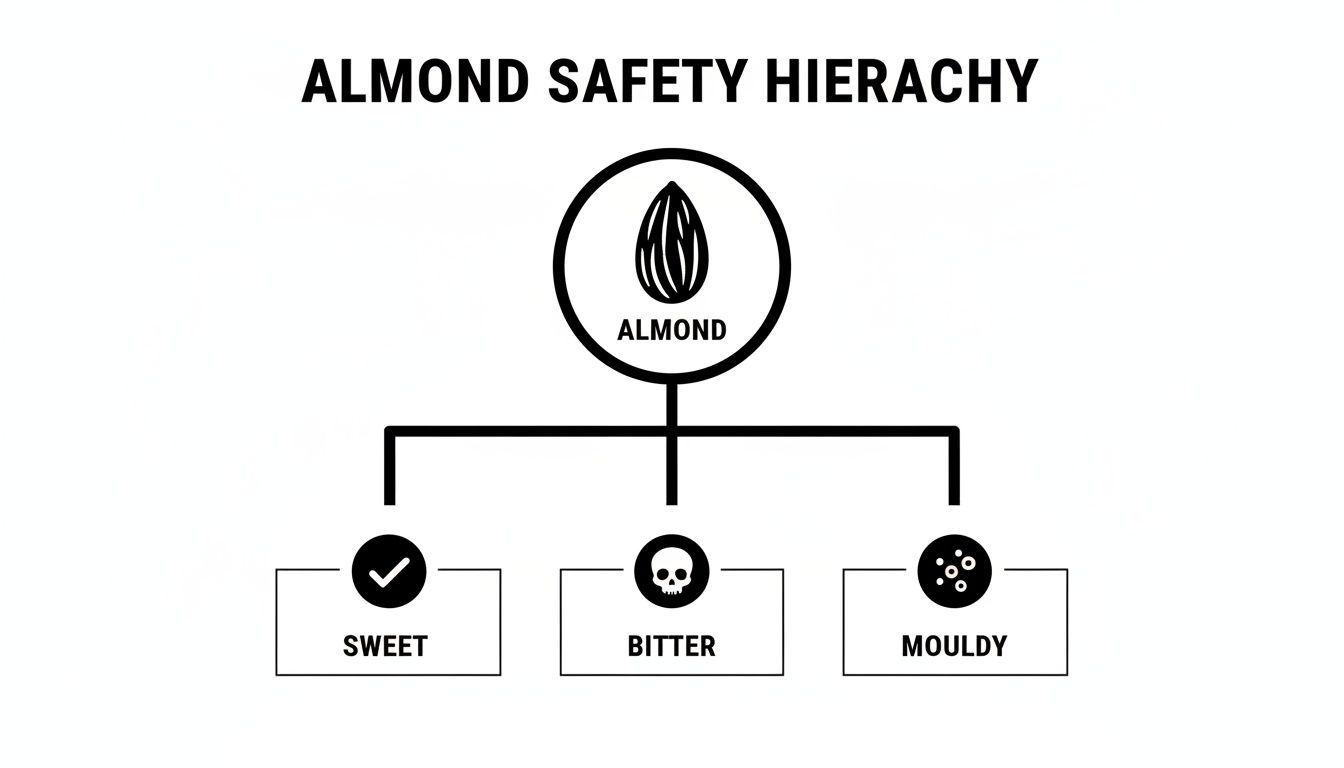
The bottom line? Always stick with sweet, fresh almonds and immediately toss any that seem bitter or show even the slightest hint of mould.
We know our customers—dedicated Aussie parrot guardians and aviaries—are always looking for high-quality, local options for enrichment. These almonds are perfect for stuffing into shreddable toys and foraging puzzles. And with Australia’s almond industry booming, there's a great supply. You can read more about the growth of Australian almonds at Tridge.com.
Expert Advice: When you first introduce in-shell almonds, just offer one and watch. See how your bird tackles the shell and make sure they can manage it safely before you make it a regular part of their routine.
To make things even more exciting, why not hide an almond inside a durable toy? A sturdy puzzle like the Chamber of Secrets Foraging Toy is a great challenge for big birds. For the medium chewers, the Birdie Bento Box is fantastic for hiding treats, and the Foraging Pinata Box is ideal for any bird that loves to shred.
To give you a clearer idea, here's a handy table summarising our serving suggestions for common companion birds in Australia.
Recommended Serving Guide for In-Shell Almonds
| Bird Size Category | Example Species | Recommended Weekly Amount | Suggested Lou Lou Bells Toy |
|---|---|---|---|
| Large | Macaw, Sulphur-Crested Cockatoo | 2-3 almonds | Chamber of Secrets |
| Medium | Galah, Corella, Amazon Parrot | 1-2 almonds | Birdie Bento Box |
| Small | Cockatiel, Budgerigar, Conure | None (offer slivers of kernel instead) | Foraging Pinata Box (for shredding) |
Remember, this guide is a starting point. Every bird is an individual, so always watch yours to see what works best for them. Treating them with care is what it's all about.
Beyond a Snack: Turning Almonds Into Enrichment
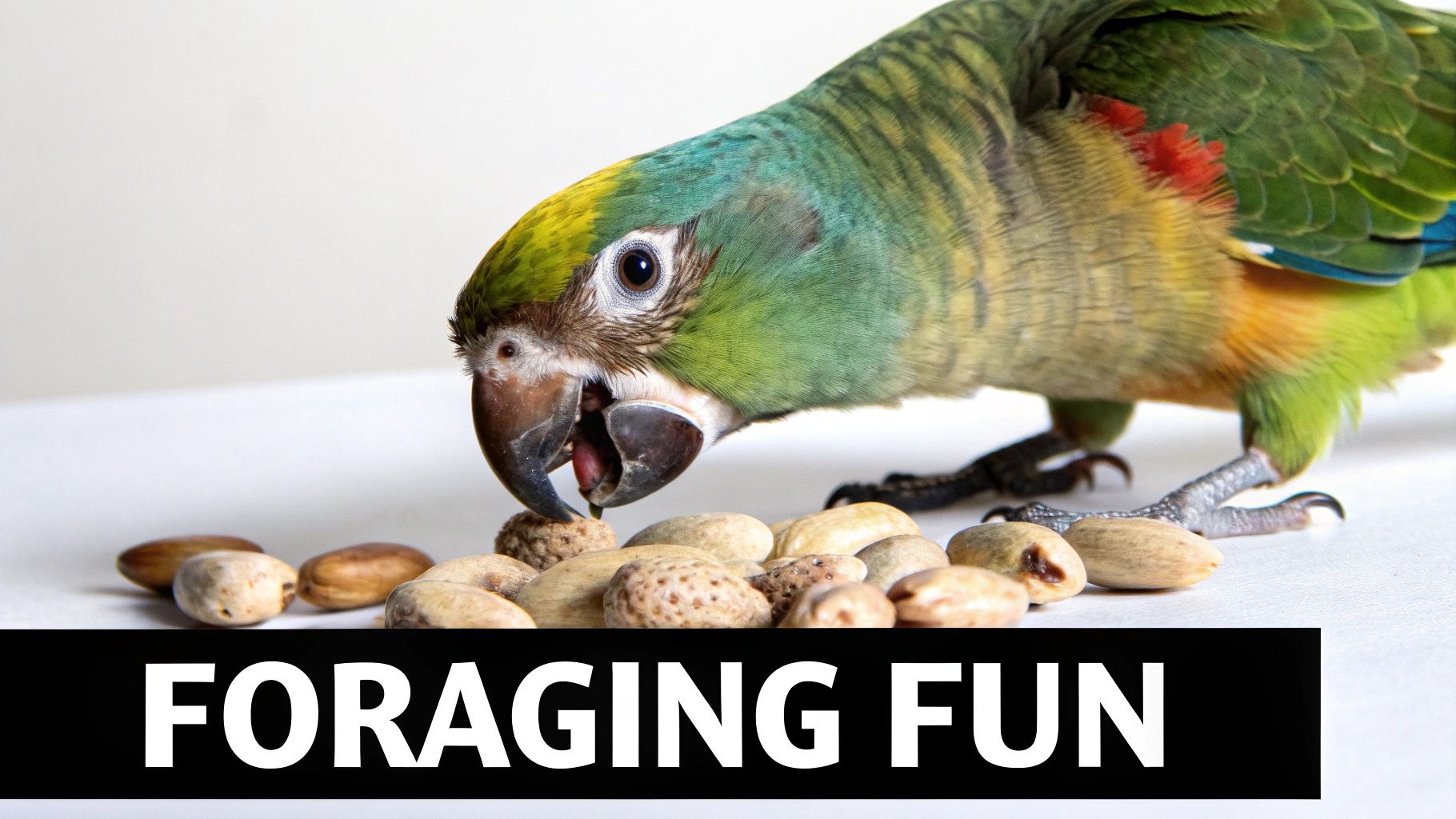
Let's move beyond the food bowl and transform a simple nut into a powerful enrichment tool. An almond with its shell on is more than just food; it’s a puzzle, a workout, and a rewarding challenge all in one.
Using it creatively can tap into your parrot's natural foraging instincts, providing essential mental stimulation that prevents boredom and related behavioural issues. It’s all about making them work for their food, just as they would in the wild.
The joy of watching your bird figure out a puzzle to earn its reward is immense. You'll see their focus, determination, and the sheer pride they take in cracking that shell. This process isn't just fun; it's a vital part of their psychological wellbeing.
Simple Foraging Ideas to Get Started
You don’t need elaborate setups to start. Sparking your bird’s problem-solving skills can be as simple as wrapping an almond in a piece of bird-safe paper and twisting the ends. This adds an extra layer they must shred through to get to their prize.
Another fantastic idea is to create a foraging tray. Fill a shallow, bird-safe tray with a mix of materials like shredded paper, cardboard pieces, wooden beads, and foot toys, then hide a couple of almonds with shell inside. This encourages them to dig, sort, and explore, mimicking their natural environment.
Integrating Almonds With Foraging Toys
To take the challenge to the next level, integrate almonds with shell into durable foraging toys. This is where you can really maximise mental stimulation and encourage more complex problem-solving. At Lou Lou Bells, we handcraft toys in South Australia specifically for this purpose.
- For the Shredders: The Foraging Pinata Box is perfect for hiding an almond inside. Your bird will have a blast shredding the box to bits to uncover the hidden treasure.
- For the Thinkers: A puzzle toy like the Birdie Bento Box requires your parrot to slide, lift, or pull open compartments to find the almond, offering a brilliant cognitive workout.
- For the Heavy Chewers: For larger parrots with powerful beaks, the Chamber of Secrets Foraging Toy provides a durable and long-lasting challenge they can really sink their beak into.
An Avian Behaviourist's Insight: "Foraging is not just a 'nice to have'; it's a fundamental need for a parrot's mental health. Integrating high-value treats like an in-shell almond into a foraging toy turns a simple snack into a purposeful activity that builds confidence and reduces stress."
In Australia, the thriving almond industry ensures we have access to high-quality, locally grown nuts ideal for enrichment. These South Australian-made toys, combined with local almonds, foster natural behaviours vital for birds of all sizes. For more inspiration, check out our guide on how to get started with parrot foraging toys.
Finding and Storing Almonds for Your Bird
Giving your bird the best starts with picking the right ingredients. When it comes to almonds with shell, finding top-notch nuts in Australia is easy enough once you know what you’re looking for. The safety and freshness of these treats are everything.
Always go for human-grade, raw, and completely unsalted almonds. You'll want to steer clear of any roasted or flavoured types, as they're often loaded with oils, salt, and preservatives that can be harmful to parrots. Your best bet is to pop into local health food stores, bulk food shops, or even chat directly with growers at farmers' markets. This way, you can be sure you're getting sweet almonds, not the toxic bitter variety.
Keeping Your Almonds Fresh and Safe
Once you get your almonds home, storing them properly is key. You need to stop them from going rancid or, even worse, developing dangerous mould. Almonds are full of healthy fats, but those fats can spoil when they meet heat, light, and air. Humidity is also a big no-no, as it’s a breeding ground for aflatoxins.
Just follow these simple storage tips:
- Get an Airtight Container: Glass jars or BPA-free plastic tubs with tight lids are perfect for keeping moisture and pesky pantry moths out.
- Find a Cool, Dark Spot: A pantry or cupboard that’s not too close to the oven or a sunny window is ideal for short-term storage.
- Think About the Fridge or Freezer: If you've bought in bulk and want them to last, the fridge or freezer is your best friend. This really slows down the process of the oils going off.
Expert Advice from a Food Safety Specialist: "Always give nuts a quick sniff before serving them up. Fresh almonds have a mild, sweet, and nutty smell. If they smell sharp, bitter, or musty—a bit like old paint—they've gone rancid and need to be tossed out immediately."
Knowing these simple things helps you maintain the highest safety standards, showing just how much care you put into every little part of your bird's life.
Your Top Questions About Parrots and Almonds With Shell
Let's finish up by tackling some of the most common questions we hear from parrot owners across Australia. Getting these basics right is key to keeping your bird safe and happy.
Can My Bird Eat Shelled or Blanched Almonds?
They sure can. Shelled, raw almonds are a fantastic option, especially for smaller birds like cockatiels and conures who just don't have the beak power to crack the tough outer shell.
Blanched almonds (with the skin removed) are also safe, but they do lose a little of the fibre found in the skin. Just remember, the biggest win with almonds with shell is the enrichment. Without the shell, it's a great snack, but not a puzzle.
For a bit of extra fun, you can hide shelled almonds inside a shreddable toy like the Foraging Pinata Box to bring back some of that foraging challenge.
What if My Bird Eats a Piece of the Shell?
It’s something we see all the time with big parrots. When a powerful beak crushes an almond shell, it's normal for them to swallow small fragments in the process. Almond shells are mostly fibrous and usually pass straight through their digestive system without any trouble.
That said, you should always keep an eye on them to make sure they aren't swallowing large, sharp pieces that could pose a choking risk.
Are Salted or Flavoured Almonds Ever Okay?
This one’s a hard no. Parrots should never, ever be given salted, smoked, sweetened, or otherwise flavoured almonds. Their little bodies simply aren't built to handle the high levels of sodium, sugar, and artificial additives.
Expert Vet Advice: "Always stick to raw, unsalted, human-grade almonds. Any added ingredients can lead to serious health problems, from dehydration to kidney damage. When it comes to your bird's diet, simple is always the safest and healthiest choice."
If you have any specific health concerns or questions about your individual bird, your first port of call should always be your trusted avian vet. They're the only ones who can give you personalised advice based on your bird's unique needs.
Keep Reading
- Parrot Foraging Toys An Essential Guide for Bird Owners
- Bird Care Essential Guide to Caring for Pet Birds
- Food for Parrots What's Safe and What's Not
Disclaimer Summary: The information in this article is general in nature and may include external links or resources not created by Lou Lou Bells Bird Toys. Every bird is unique, so we encourage you to seek personalised advice from your own veterinarian or avian specialist. For full details, please read our complete disclaimer here.