
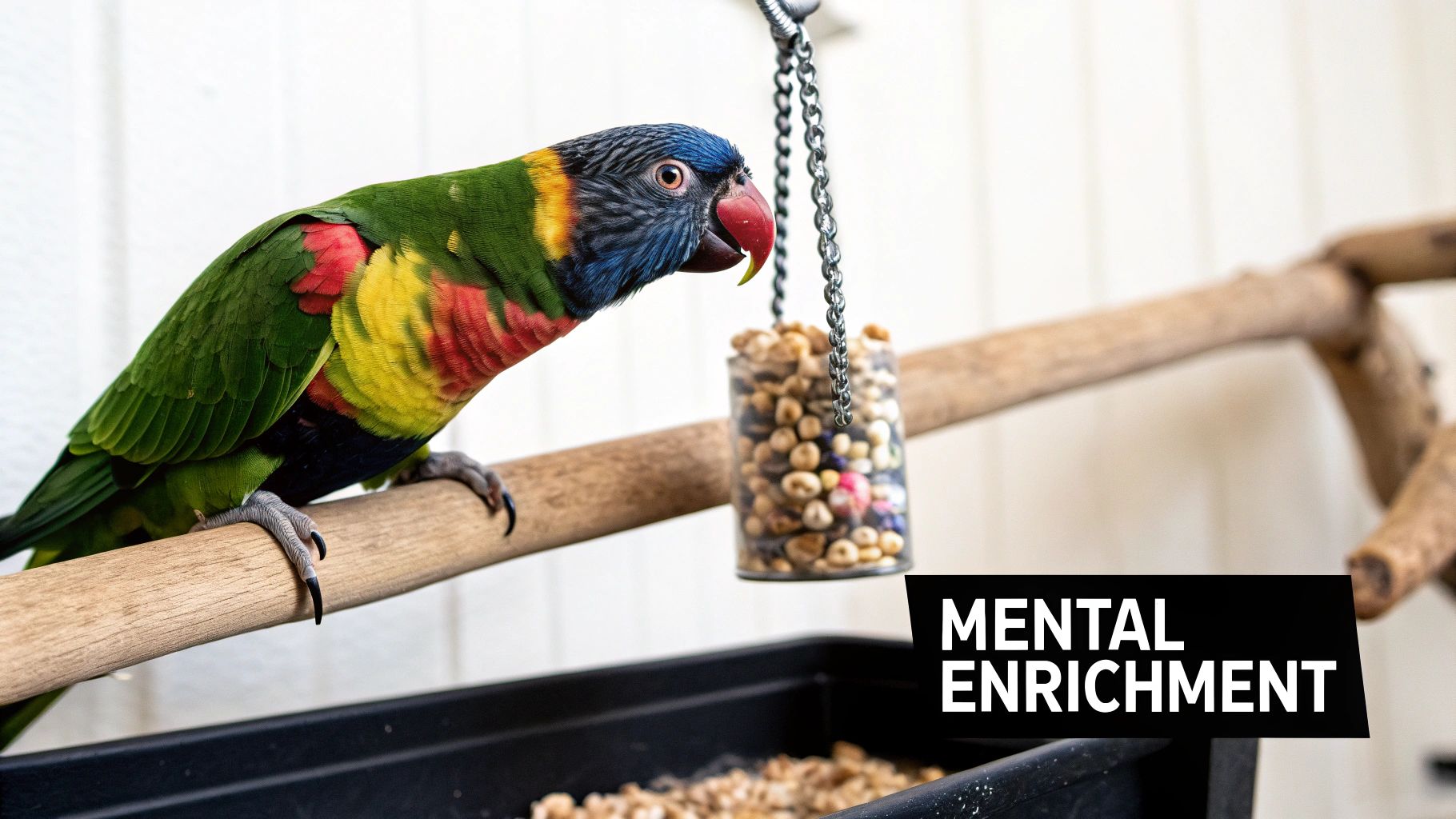
Picture this: every single meal you eat is just served to you in a bowl. Day in, day out. Sure, it gets the job done, but it’s incredibly boring. For a parrot—a highly intelligent animal with a brain wired to solve problems—this kind of monotony can easily lead to stress and destructive habits.
This is exactly where parrot foraging toys come into play. They aren't just toys; they are essential tools that turn mealtime into a stimulating puzzle, tapping directly into your bird's powerful, natural drive to hunt for its food.
Why Foraging Is Essential for Your Parrot
Out in the wild, Australian parrots like Galahs and Cockatoos spend a huge chunk of their day actively searching for food. This whole process is called foraging, and it involves everything from flying and climbing to problem-solving and using their beaks and feet to get into seeds, nuts, and fruits. It’s a complete mental and physical workout.
When we bring these clever birds into our homes as companions, just plopping food into a bowl robs them of this fundamental daily activity.
This lack of stimulation is one of the biggest causes of behavioural issues. Without a healthy way to use their mental energy, parrots can become bored, anxious, and deeply frustrated. This often bubbles up as the undesirable behaviours many bird owners struggle with.
The Problem with Boredom
A bored parrot is an unhappy parrot. Simple as that. When their sharp minds aren't given a job, they often invent their own, which can look like:
- Excessive Screaming: This can be a sign of distress or a demand for attention when their need for stimulation isn't being met.
- Feather Plucking: A common stress-related behaviour where birds pull out their own feathers, sometimes causing serious self-harm.
- Destructive Chewing: Parrots might start chewing on furniture, wires, or other household items simply because there's nothing better to do.
- Aggression: Frustration and boredom can sometimes lead to nipping or aggressive behaviour towards their human family.
Giving them opportunities to forage helps channel all that energy into a positive and rewarding activity. It enriches their environment, builds their confidence, and satisfies a core biological need.
Key Benefits of Parrot Foraging Toys
| Benefit Category | How It Helps Your Bird |
|---|---|
| Mental Stimulation | Challenges their problem-solving skills and keeps their mind active, preventing cognitive decline. |
| Physical Exercise | Encourages climbing, pulling, and manipulating objects, which helps maintain muscle tone and beak health. |
| Behavioural Improvement | Reduces boredom-related issues like screaming, plucking, and aggression by providing a healthy outlet. |
| Confidence Building | Successfully "solving" a toy and getting a reward builds self-esteem and independence. |
| Natural Instinct Fulfilment | Allows them to engage in the natural behaviour they would perform for hours every day in the wild. |
In short, these toys do more than just entertain; they contribute to a well-rounded, happier, and healthier bird.
Expert Advice: "Foraging is not a luxury for a companion parrot; it is a necessity. It provides the mental stimulation required to prevent behavioural issues and promotes a psychological state of well-being. A bird that is working for its food is a bird that is mentally engaged and content."
The Australian Context
Here in Australia, the need for proper enrichment is especially critical. The companion bird population has jumped significantly in the last decade, with budgies, cockatiels, and larger parrots like corellas becoming common members of the family.
Disturbingly, avian experts report that a high percentage of pet parrots show stress-related behaviours like feather plucking when they don't have enough enrichment. That figure climbs even higher in urban homes where space can be tight.
By adding parrot foraging toys to their daily routine, we can dramatically improve their quality of life. Instead of just eating, your bird gets to think, play, and work for their meal—just as nature intended. Exploring the different types of bird toys for parrots is a fantastic first step toward creating a more engaging and fulfilling world for your feathered friend.
The Real Impact of Foraging on Bird Health
It’s easy to think of foraging toys as just another way to keep your parrot busy, but their impact goes so much deeper. This isn't just about entertainment; it's a holistic workout for their incredibly sharp minds and active bodies. When you swap a simple food bowl for a foraging challenge, you're nurturing their health from the inside out.
A Workout for the Mind
Mentally, the simple act of solving a puzzle to get a treat is rocket fuel for your bird's brain. Parrots are ridiculously smart, and without problems to solve, their minds get restless. That's when boredom kicks in, which is often the primary cause of common behavioural issues like excessive screaming and feather plucking.
According to Australian avian behaviourists, a mentally engaged parrot is a happier, more confident, and well-adjusted companion. Foraging gives them a sense of purpose and accomplishment, which can go a long way in reducing their anxiety and stress levels.
Expert Advice: "A parrot with nothing to do is like an artist with no canvas. Foraging provides that canvas, allowing them to express their natural intelligence and problem-solving skills in a healthy, rewarding way. This simple change can be the key to unlocking a calmer and more content bird."
A Workout for the Body
The physical benefits of foraging are just as crucial as the mental ones. In a typical home, a bird's food bowl is often just a few lazy steps from their favourite perch. This kind of sedentary lifestyle is completely unnatural and, frankly, unhealthy.
Foraging gets your parrot moving. It encourages them to climb, stretch, pull, and manipulate different objects with their beak and feet. It's a world away from just sitting beside a full food bowl all day.
This natural form of exercise helps in a few key ways:
- Combats Obesity: All that extra physical activity helps burn calories and maintain a healthy weight—a common concern for pet birds here in Australia.
- Improves Joint Health: Moving, climbing, and hanging keeps their joints flexible and strong, reducing the risk of arthritis in their later years.
- Maintains Beak and Nail Condition: Working at different toy materials helps to naturally wear down their beak and nails, preventing overgrowth.
Think of it like this: a parrot with a static food bowl is like a person who only ever gets takeaway delivered directly to their couch. A foraging parrot, on the other hand, is like someone who enjoys the whole process of shopping for fresh ingredients, preparing a meal, and then savouring the delicious, well-earned result.
From Anxious to Engaged
The positive effects of foraging can be life-changing, especially for rescue birds who might have a history of neglect or under-stimulation. A bird that was once withdrawn or destructive can completely blossom when given the chance to engage its mind and body. The process rebuilds their confidence and helps them form a much stronger, more positive bond with their human family.
By providing parrot foraging toys, you’re doing so much more than just feeding them; you are enriching their entire existence. A consistent daily routine that includes foraging is a cornerstone of excellent parrot care. For anyone new to bird ownership or just looking to improve, getting the fundamentals right is key; exploring a bird care essential guide can provide a solid foundation for creating a truly happy and healthy environment. This one simple addition to their day can make all the difference, transforming a quiet, bored bird into a vibrant and active member of your family.
How to Choose the Right Foraging Toy
Stepping into the world of parrot foraging toys can feel a bit overwhelming at first. But trust me, matching the right toy to your bird is the secret to unlocking their natural instincts and keeping them happy. The key is to think about your bird’s species, size, personality, and what they’re used to. You want to set a challenge that’s fun, not frustrating.
A tiny Budgie, for example, will have a blast with a simple, shreddable toy where seeds are easy to find. On the other hand, a clever Galah or a powerful Macaw needs something more substantial—like a tough, multi-step puzzle that really gets their brain working. It’s all about finding that perfect sweet spot.
This simple decision tree shows how a parrot's day can go. It’s a clear picture of how a foraging toy leads to a much happier, more engaged bird compared to one just eating from a bowl.
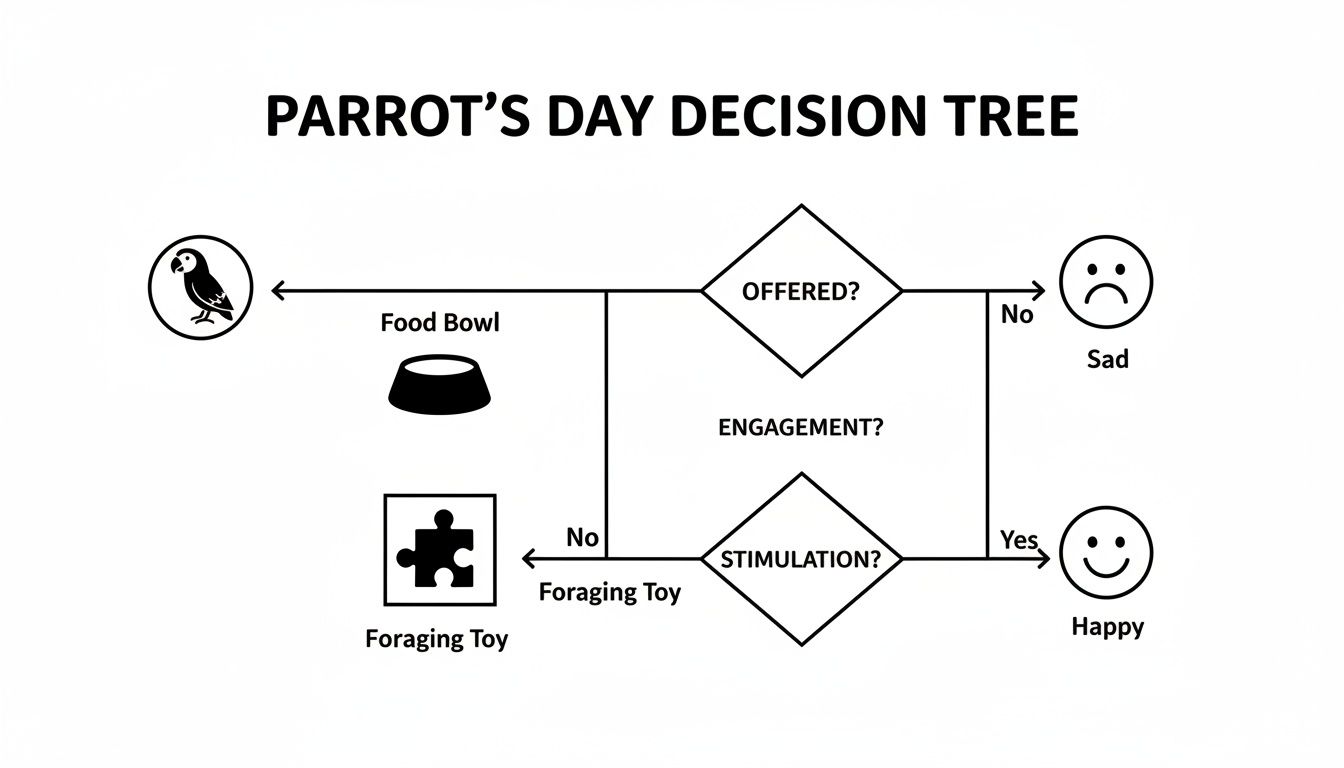
As you can see, popping a foraging puzzle into their cage transforms a boring daily routine into a rewarding activity. It’s a direct boost to your parrot's well-being.
Matching Toys to Your Bird's Size and Species
It goes without saying, but not all beaks are created equal. A toy that’s perfect for a Cockatiel could be demolished in seconds by a Major Mitchell's Cockatoo, or worse, become a choking hazard. Always choose toys designed for your bird's specific size and beak strength.
Here’s a quick breakdown of where to start:
- Small Birds (Budgies, Cockatiels, Lovebirds): These little parrots do best with lightweight, easily manipulated toys. Think shreddable materials like paper, cardboard, or soft wood where treats can be tucked away.
- Medium Birds (Galahs, Corellas, Conures): These intelligent birds enjoy a good mix of shreddable toys and reusable puzzles. They have the smarts to figure out more complex challenges and the beak strength for tougher woods and some bird-safe plastics.
- Large Birds (Macaws, Sulphur-Crested Cockatoos): For these feathered powerhouses, durability is everything. You need toys that can stand up to a serious beak, challenging both their mind and their jaw.
Foraging Toy Matches for Common Australian Parrots
To make it even easier, here’s a table to help you find the perfect foraging toy type based on your bird's size and natural tendencies.
| Bird Species | Beginner Toy Examples | Advanced Toy Examples | Recommended Materials |
|---|---|---|---|
| Budgie | Shredded paper in a ball, soft balsa wood blocks with hidden seeds | Foraging wheels, small acrylic puzzles | Paper, cardboard, yucca, balsa wood |
| Cockatiel | Woven palm leaf pockets, easy-to-open cardboard boxes | Multi-chamber foraging blocks, hanging skewers | Natural fibres, soft woods, leather strips |
| Galah | Wooden blocks with drilled holes, treat-stuffed pinecones | Stainless steel puzzles, layered wood-and-cardboard toys | Gumtree nuts, harder woods, bird-safe acrylic |
| Sulphur-Crested Cockatoo | Large, dense wood blocks, tough cardboard tubes | Heavy-duty acrylic puzzles, bolt-and-nut toys | Hardwoods, thick acrylic, stainless steel |
Remember, this is just a starting point. Your bird's personality is the final piece of the puzzle!
Safe Materials Are Non-Negotiable
This is the most important part: safety must always come first. Your bird will be chewing, pulling, and licking their toys, so the materials have to be completely non-toxic and sturdy enough not to break into dangerous pieces.
Stick to these safe materials:
- Untreated Natural Woods: Aussie native woods like bottlebrush or gumtree branches (properly cleaned and prepared) are fantastic. Just be sure to avoid treated pine or any wood that splinters easily.
- Stainless Steel: This is the gold standard for durability and safety. It’s easy to clean, impossible for most beaks to destroy, and perfect for hanging skewers or puzzle feeders.
- Bird-Safe Plastics: High-quality, durable plastics like acrylic or polycarbonate are great for puzzle toys. They’re tough and can be cleaned effectively.
- Natural Fibres: Things like sisal, vegetable-tanned leather (in moderation), and plain paper or cardboard are brilliant for shredding and hiding treats.
Expert Advice: Always supervise your parrot with a new toy for the first few sessions. Watch how they interact with it to make sure they're using it safely and not getting frustrated or accidentally swallowing non-edible parts.
Making the right choice really just comes down to knowing your bird. For a deeper dive, check out our comprehensive guide on how to choose the right bird toys for your bird, which offers advice tailored for every feathered personality.
Getting Your Bird Started with Foraging Toys
Introducing something new into your parrot's cage can sometimes be met with a suspicious side-eye rather than excitement. Many birds, especially the more cautious ones, can be pretty wary of unfamiliar objects. The secret to successfully introducing parrot foraging toys is to make the whole experience positive, rewarding, and completely stress-free. Your goal here is to build their confidence, not overwhelm them.
The best way to kick things off is by making the puzzle ridiculously easy—so easy it's barely a puzzle at all. Let your bird watch you place a high-value treat, like a sliver of almond or a sunflower seed, inside the toy. Then, leave the toy partially open or put the treat where it’s clearly visible and almost falling out. This simple trick shows them that this new object is a source of good things.
Place the toy near their favourite perch and just walk away. Let them approach it on their own terms. Curiosity almost always wins out, and when they easily get the treat, they learn a valuable lesson: this new thing is safe and rewarding.
Gradually Increasing the Challenge
Once your bird is confidently grabbing treats from the wide-open toy, you can slowly start to up the difficulty. This step-by-step approach is key to keeping them engaged without causing frustration. If a toy is too hard too soon, your parrot might just give up on it altogether.
Here’s a simple method to build their foraging skills:
- Start Easy: As mentioned, begin with the toy open and the treat in plain sight. Repeat this a few times until your bird is comfortable.
- Slightly Harder: Close the toy a little more, or push the treat further inside. Now they have to manipulate the toy slightly to get their reward.
- Introduce an Obstacle: Add a simple, shreddable barrier like a piece of paper or a bit of cardboard they have to chew through to reach the food.
- Increase Complexity: Gradually move to toys with multiple steps, like drawers they have to pull or lids they need to lift. A great intermediate option is the Foraging Flower Box, which really encourages exploration.
Expert Advice: Pay close attention to your bird's body language. If they seem frustrated, they might be biting the toy aggressively or ignoring it completely. If this happens, take a step back and make the puzzle easier again. Foraging should always be fun.
The Importance of Toy Rotation
Just like people, parrots can get bored seeing the same old things every single day. A toy that was once fascinating can quickly become just another piece of cage furniture. This is why a "toy rotation" strategy is so important for keeping their environment fresh and stimulating.
The idea is simple: don't have all your bird’s toys in the cage at once. Keep a collection of parrot foraging toys, shreddable toys like the Seagrass Foraging Wall, and preening toys like the Shreddable Preening Ring, and swap them out regularly.
A good schedule is to rotate one or two toys every week. When you remove a toy, give it a good clean and store it away. When you reintroduce it a few weeks later, your bird will often greet it with renewed interest, as if it’s a brand-new gift. This simple habit keeps their mind constantly engaged and ensures their environment remains exciting.
Safe and Creative DIY Foraging Ideas
You don't need a massive budget to keep your parrot's mind sharp and their day interesting. Getting creative with DIY foraging toys is a brilliant way to offer them endless fun, save a bit of money, and even strengthen your bond. Using simple, bird-safe bits and pieces you probably already have at home, you can whip up engaging puzzles that are perfectly suited to your bird’s personality.
Before you dive in, just remember that safety comes first. Always, always stick to materials that are completely non-toxic and won’t get your bird tangled up or create a choking hazard.
Bird-Safe Crafting Materials
When you're making your own toys, you need to think like a parrot. If it can be chewed, shredded, or swallowed, it absolutely must be safe.
- Plain Cardboard: Toilet paper rolls, paper towel tubes, and plain cardboard boxes are a shredder's dream. Just make sure you've removed all the tape and sticky labels first.
- Untreated Paper: Things like butcher paper, packing paper, and plain paper lunch bags are perfect for wrapping treats or stuffing into other toys to add a layer of fun.
- Natural Fibres: Sisal, jute, or natural seagrass are great for tying things together. Just be sure there are no long, loose strands that could catch a foot.
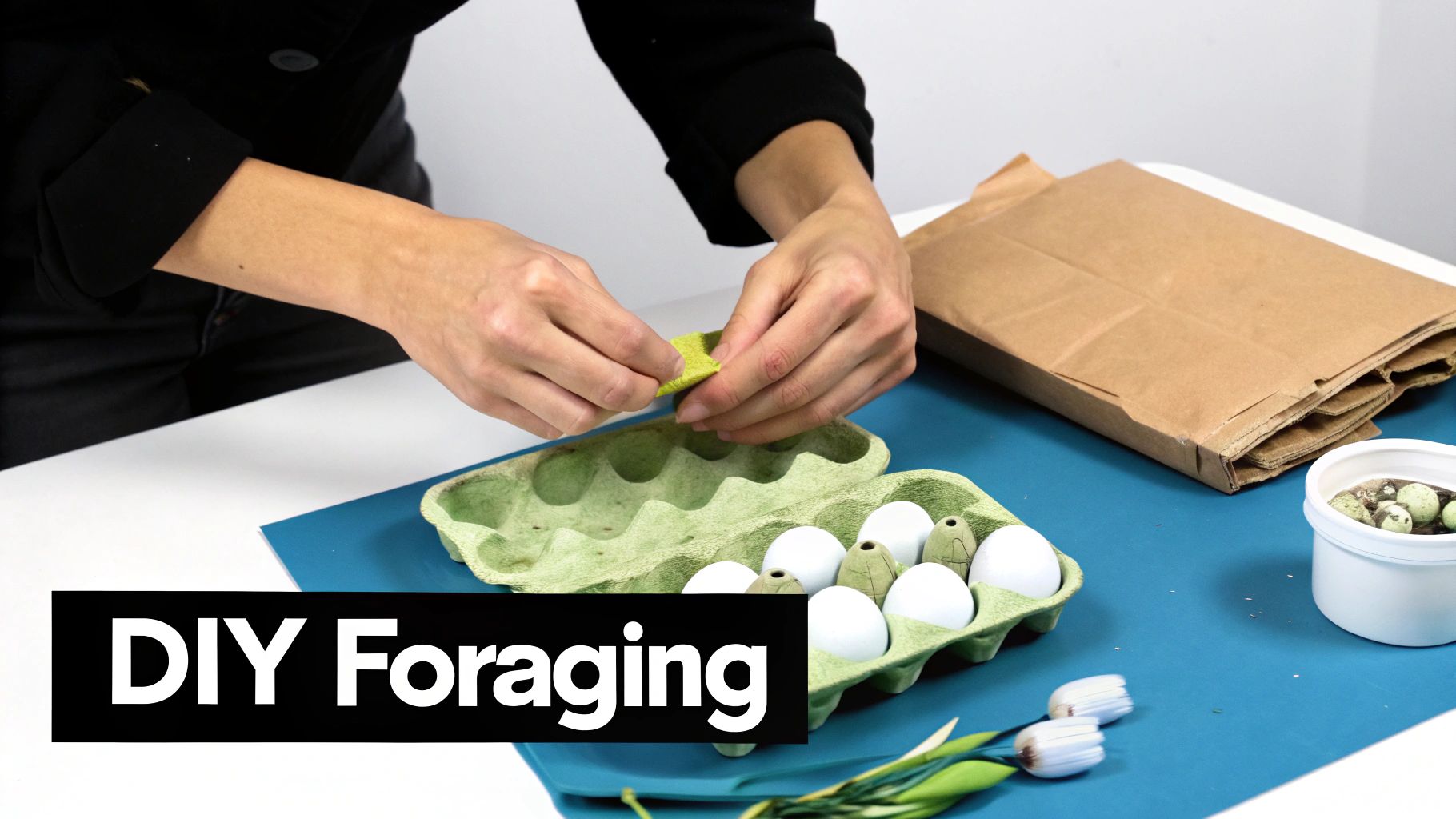
- Clean Egg Cartons: Cardboard egg cartons make fantastic little foraging trays. Just be sure they’re clean and completely dry before using them.
Simple DIY Foraging Toy Ideas
Ready to get making? These simple ideas come together in minutes but can provide hours of entertainment for your bird. They're also a great way to introduce the whole concept of foraging if it's new to them.
1. The Foraging Tray
Grab a clean, empty cardboard egg carton and pop a different treat into each cup—a pellet, a seed, a little piece of dried fruit, or even a safe nut. To make it a bit trickier, scrunch up small pieces of paper and place them over the treats. Your bird will have a grand time pulling out the paper to uncover the treasures hidden below.
2. Treat Parcels
Wrap a favourite treat inside a small piece of plain paper, twisting the ends like an old-fashioned lolly wrapper. If your bird is new to this, make the parcels super easy to tear open. For the seasoned pros, you can use a few layers of paper or tie them loosely with a bird-safe piece of sisal.
3. The Cardboard Tube Puzzle
Take a cardboard toilet paper roll and fold in one end. Drop a few treats inside, stuff it with some shredded paper, and then fold in the other end to seal it. Your parrot will have to chew right through the cardboard to get to the goodies inside—a seriously rewarding job for any bird that loves to chew.
In the wild, parrots like cockatoos can spend a significant portion of their day foraging for food. Research shows a huge contrast with our companion birds, which might only forage for less than an hour without proper enrichment. The good news is that Aussie parrot owners who add foraging toys can see playtime triple for species like galahs and conures.
Making your own toys isn't just about saving a few dollars; it's an act of love. It shows you understand your bird’s deep, instinctual need to work for their food, and it’s a brilliant way to keep their world new and exciting. And if you're looking for safe treats to hide inside, you might be wondering about nuts like almonds and if the shell can be a toy itself.
How to Keep Foraging Toys Safe and Clean
A fantastic foraging toy can quickly turn from a source of fun into a potential hazard if it isn't properly maintained. Keeping your parrot’s toys safe and clean is just as important as choosing the right ones in the first place.
A simple, regular inspection and cleaning routine is all it takes to ensure playtime is always safe time. Think of it as a quick "safety check" before your bird gets to work.
Your Weekly Toy Check-Up
Making a weekly "toy check-up" a habit is one of the best things you can do for your bird's safety. During this check, you'll want to look closely for any signs of wear and tear that could pose a risk.
Even the most durable parrot foraging toys will eventually show signs of a good time. It’s your job to spot potential problems before they happen.
What to Look for During Inspection
Your parrot’s safety depends on spotting small issues before they become big ones. Here's a quick checklist of things to watch out for:
- Wooden Toys: Check for sharp splinters or deep cracks where bacteria could hide. You can sand down any rough spots with bird-safe sandpaper. If a wooden part is heavily chewed and weakened, it’s probably time to replace it.
- Acrylic and Plastic Toys: Look for sharp edges or cracks, especially on toys for powerful chewers. A small crack can quickly become a broken piece that could be swallowed or cause an injury.
- Rope and Fabric Toys: This is a big one. Inspect all ropes for fraying. Long, frayed strands can easily entangle a bird's foot or neck, leading to serious injury. Trim any loose threads short immediately.
- Metal Components: Ensure all metal parts, like quick links and bells, are secure and free of rust. Only stainless steel should be used, as other metals can be toxic. Make sure the little clappers inside bells cannot be removed and swallowed.
Cleaning Toys the Bird-Safe Way
Cleaning your bird’s toys is crucial for preventing the build-up of bacteria and mould, especially on toys that hold food. The right cleaning method really depends on the toy's material.
Expert Advice: Always use bird-safe cleaning solutions. A simple mix of white vinegar and water (a 50/50 solution) is an excellent, non-toxic disinfectant for most surfaces. For a deeper clean, specialised avian-safe disinfectants are available from veterinary clinics and pet suppliers across Australia.
For hard surfaces like stainless steel and acrylic, a good scrub with hot, soapy water (using a bird-safe soap) is perfect. Follow it with a thorough rinse and a spritz of your vinegar solution.
Wooden toys need a bit more care. They shouldn't be soaked, as this can cause them to warp and crack. Instead, wipe them down with a damp cloth and your vinegar solution, then let them dry completely in the sun before returning them to the cage.
Knowing when to repair a toy versus when it’s time to retire it is key. A simple trim of a frayed rope is a quick fix, but a cracked acrylic puzzle or a splintered wooden block should be discarded. Your bird's safety is always the top priority.
Your Top Foraging Questions Answered
Even when you're excited to get started, a few questions nearly always pop up. Let's tackle some of the most common queries we hear from Aussie bird owners, so you can feel confident your foraging journey is a success right from the start.
Will Foraging Make My Bird Aggressive?
This is a big concern for many owners, but the short answer is no—not when it's done right. Foraging is a natural, stress-busting behaviour that almost always leads to a calmer, happier bird. The aggression you might be worried about, known as food guarding, is a totally separate issue.
The key is to make sure your bird always has their regular food available in a separate bowl, especially when they're just learning. Foraging should be for special treats or maybe part of their daily pellets, not their entire meal. This way, they never feel like they have to fight for survival.
What if My Bird Just Ignores the Toy?
Don't be discouraged! This happens all the time, especially with older parrots or rescue birds who might be seeing a foraging toy for the very first time. Patience is everything, along with making the toy as tempting as possible.
- Start Simple: Make it ridiculously easy to win. Let them watch you pop a favourite, high-value treat inside.
- Show Them How It's Done: Play with the toy yourself in front of them, acting like it's the best thing ever. Parrots are flock animals and learn a lot by watching you.
- Location, Location, Location: Put the toy in a comfortable, safe spot in their cage, maybe right next to a favourite perch.
Persistence is your best friend here. Sometimes it takes days, or even a few weeks, for a bird to work up the courage to investigate something new.
How Many Foraging Toys Should My Parrot Have?
There's no magic number, but variety beats quantity every time. A great rule of thumb is to have at least two or three different types of foraging toys in their cage at once. This lets them pick the challenge they're in the mood for.
Combine this with a solid toy rotation schedule. Having a collection of five to seven toys that you swap out weekly keeps their world interesting and stops boredom in its tracks. A shreddable toy like the Shreddable Preening Ring, a puzzle like the Foraging Flower Box, and an easy option like the Seagrass Foraging Wall create a fantastic, well-rounded setup.
Expert Advice: If your bird completely destroys a toy, that's a huge win! It means they were engaged and got to satisfy their natural urge to chew and shred. Don't see it as a waste of money; see it as a successful day of enrichment.
Foraging is a journey, not a destination. By watching your bird's unique personality and figuring out what they love, you can tailor their foraging experiences to provide endless mental and physical perks, helping them become a confident and happy companion.
At Lou Lou Bells Bird Toys, we are passionate about providing the highest quality, safest, and most engaging enrichment for your feathered family members. Explore our extensive collection of handcrafted and carefully selected parrot foraging toys designed right here in Australia.
https://louloubellsbirdtoys.com.au
Keep Reading
- Bird Toys For Parrots
- Bird Care Essential Guide To Caring For Pet Birds
- Almond Nut Shell Is It A Toy For Parrots
Disclaimer Summary:
The information in this article is general in nature and may include external links or resources not created by Lou Lou Bells Bird Toys. Every bird is unique, so we encourage you to seek personalised advice from your own veterinarian or avian specialist. For full details, please read our complete disclaimer here.