
When you look at a colourful toy hanging in a parrot's cage, it’s easy to see it as just a bit of decoration. But for your bird, the right bird toys for parrots are so much more than that. They're vital tools for keeping your companion happy, healthy, and mentally engaged. Just like we need hobbies, puzzles, and exercise to feel our best, these incredibly intelligent birds need constant stimulation to truly thrive.
Why the Right Toys Are Essential for Your Parrot's Wellbeing
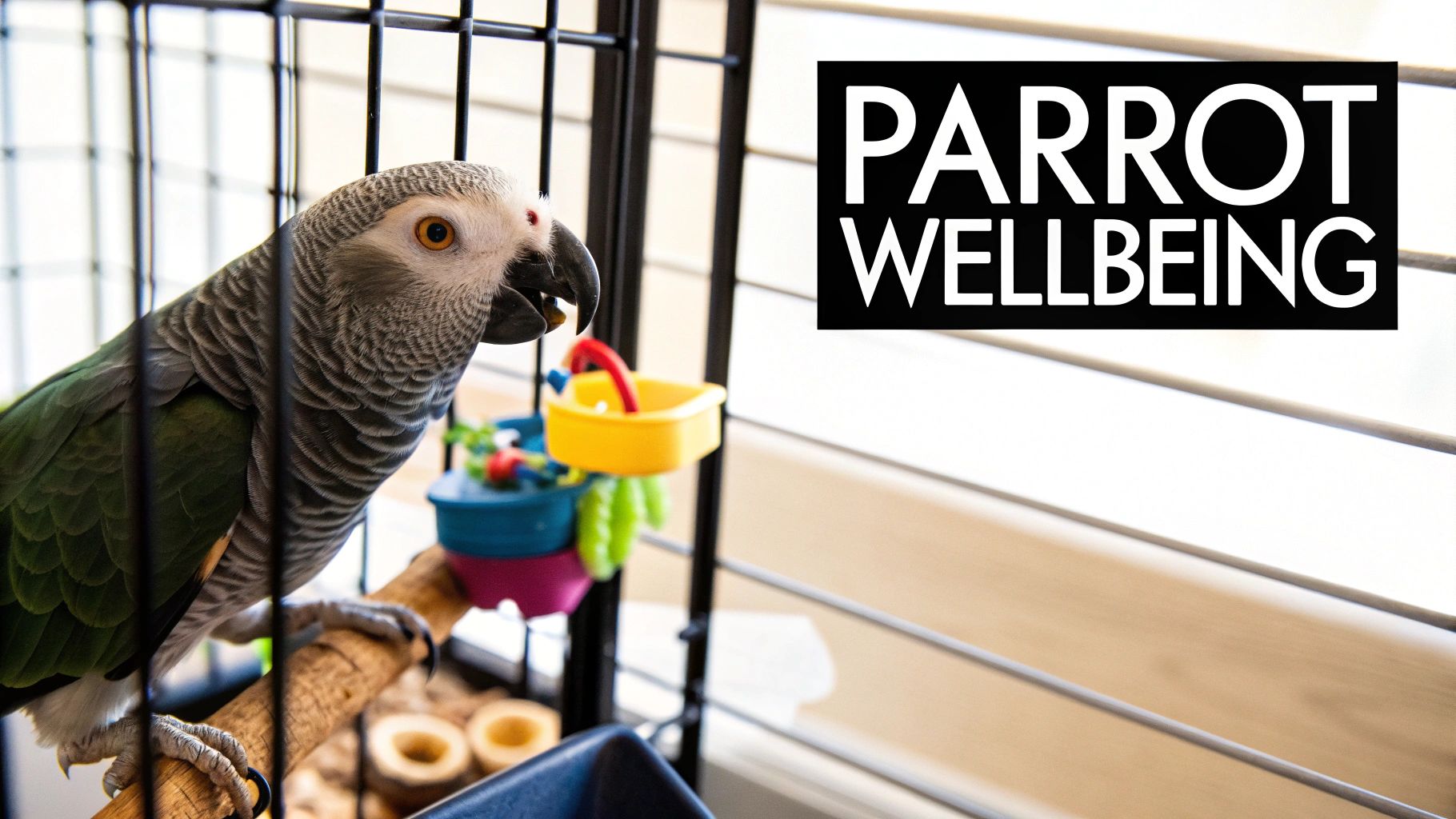
Picture this: you're one of the cleverest creatures on the planet, but you're stuck inside the same four walls all day with absolutely nothing to do. That’s the unfortunate reality for many companion parrots here in Australia. Without interesting activities to fill their time, their sharp minds can turn inwards, leading to destructive habits born from pure boredom and frustration.
A lack of proper enrichment is often the hidden cause behind some of the most common and distressing behavioural issues we see in parrots. When a bird doesn't have a safe and appropriate outlet for its natural instincts to chew, shred, and forage, you can bet it will find something else to occupy itself.
The Connection Between Toys and Behaviour
Incessant screaming, chewing on the cage bars (or your furniture!), and even feather plucking are often desperate cries for help. These behaviours are huge red flags, signalling that a bird is bored, stressed, or mentally unfulfilled.
Giving your parrot a variety of suitable toys is like giving them a "job." It channels all that brilliant energy into positive, healthy activities. This focus on animal enrichment in Australia isn't just a fleeting trend; it’s a cornerstone of responsible parrot care.
A Quick Tip from the Experts: A parrot's beak is its version of our hands. It’s used to explore, manipulate objects, eat, and climb. Taking away a parrot's chance to use its beak on appropriate items is like asking a person not to use their hands all day.
This growing awareness is even showing up in the market. In Australia, the pet toys market—which includes these crucial bird toys—hit a value of USD 36.53 million in 2024 and is expected to keep climbing. Parrot owners, avian vets, and rescues are all prioritising enrichment to fight boredom-related behaviours like feather plucking, a heartbreaking condition that can affect up to 30% of captive parrots.
More Than Just Fun and Games
Ultimately, having the right toys is about giving your parrot a fantastic quality of life. They are crucial for:
- Mental Stimulation: Puzzles and foraging toys keep their clever minds sharp and working.
- Physical Exercise: Swings, ladders, and climbing toys build strength and keep them active.
- Beak Health: Chew toys are essential for maintaining a healthy beak shape and preventing overgrowth.
- Emotional Wellbeing: Preening and shreddable toys offer a comforting outlet for their natural instincts.
This guide will walk you through everything you need to know about choosing safe, engaging, and perfect toys for your feathered friend, from the tiniest budgie to the mightiest macaw.
So, What Kinds of Parrot Toys Are There, Anyway?
Walking into a pet shop and staring at a wall of bird toys can be completely overwhelming. With all the different shapes, colours, and textures, how on earth do you know what your feathered mate actually needs?
Here’s the thing: a good collection of toys isn’t just about keeping your bird from being bored. It’s about fulfilling deep-seated, natural instincts—everything from mental challenges to physical exercise. Think of it as building a personal gym, library, and workshop all rolled into one for your bird. Each type of toy serves a very specific purpose, and understanding them is the key to creating a rich environment that keeps your parrot happy, healthy, and out of trouble.
Toys Made for Total Destruction: Shredding and Chewing
Out in the wild, parrots spend a huge chunk of their day just breaking things. They’re constantly ripping bark off trees, tearing into seed pods, and chewing on branches. This isn't naughty behaviour; it's a powerful, hardwired instinct that needs an outlet. That's where Shredding Toys and Chewing Toys come in.
-
Shredding Toys: These are the ones made from softer stuff that’s just begging to be annihilated. We’re talking about materials like yucca, palm leaves, paper, cardboard, and balsa wood. They’re perfect for that instant gratification of ripping something to shreds and are a massive hit with birds like Cockatiels and Conures.
-
Chewing Toys: Built to last a bit longer, these toys are for some serious beak work. They’re crafted from tougher materials like Australian native woods, coconut husks, or even specially designed acrylics. They do a fantastic job of helping to keep beaks in good condition and offer a real, long-lasting challenge for powerful chewers like Galahs, Amazons, and Macaws.
Without these options, a bored parrot will find its own things to destroy. Your furniture, the door frames, even its own feathers can become targets. Keeping a steady supply of shreddable and chewable toys is hands-down one of the best ways to prevent boredom and destructive behaviours.
Toys for Brain Gains: Foraging and Foot Toys
Parrots are incredibly smart, and their brains need a solid workout just as much as their bodies do. This is where toys that encourage a bit of problem-solving can turn a simple activity into a fascinating puzzle.
Foraging Toys are probably one of the most important investments you can make for your bird’s mental wellbeing. They make your parrot work for its food, just like it would in the wild. It could be something as simple as hiding a nut inside a scrunched-up piece of paper, or as complex as a puzzle box with multiple steps to unlock a treat. This process doesn't just beat boredom; it builds confidence. If you want to dive deeper, we've got a whole guide on parrot foraging toys and their benefits.
Expert Advice: As the renowned avian specialist Dr. Scott Echols points out, foraging is a "biologically essential activity" for parrots. He stresses that making birds work for their food can dramatically reduce stress and many common behavioural issues.
Foot Toys are another brilliant tool for boosting mental and physical coordination. These are just small, lightweight toys that a parrot can hold, spin, and fiddle with using its feet and beak. Things like little wooden blocks, woven vine balls, or plastic beads on a string are perfect. They help improve dexterity and keep your bird's feet strong and agile. While they're ideal for smaller birds like Budgies and Lovebirds, parrots of all sizes get a kick out of them.
Toys for Staying Active: Swings, Perches, and Preening Toys
A healthy parrot is an active parrot. Toys that get your bird moving are absolutely essential for preventing obesity and keeping their muscles and joints in top shape.
Swings & Perches might seem like basic cage accessories, but they're fantastic toys in their own right. A simple swing encourages balance and gives a whole range of muscles a workout as your bird shifts its weight. It's also vital to offer perches of different materials and diameters—think natural gum branches, rope perches, and textured conditioning perches. This helps exercise their feet properly and prevents nasty pressure sores from developing.
Finally, Preening Toys are designed to give a parrot's natural grooming instincts a safe outlet. These toys often have soft, chewable materials like short-fibred cotton rope (to avoid any risk of entanglement), leather strips, or paper that a bird can nibble and "preen." For birds that might be prone to feather-plucking, these toys can be a lifesaver, offering a comforting and safe alternative that satisfies their grooming urge without causing any self-harm.
How to Choose the Right Toy for Your Parrot's Species
Giving a powerful Macaw a toy designed for a delicate budgie isn’t just a waste of money—it's a massive safety risk. Every single parrot species, from the tiny finches zipping around Australian aviaries to our formidable cockatoos, has unique needs based on its size, beak strength, and natural instincts.
Choosing the right bird toys for parrots means looking past the bright colours and fun shapes and thinking about the bird itself.
A toy has to be tough enough to handle your bird’s beak but interesting enough to actually capture their attention. It’s a delicate balance. A toy that’s too hard for a small bird can lead to frustration and even beak damage. On the flip side, one that’s too flimsy for a big parrot can be destroyed in seconds, leaving behind a mess of potential choking hazards.
Small Parrots: Budgies, Cockatiels, and Lovebirds
For the little guys in your flock, the name of the game is lightweight, easy-to-handle toys that offer plenty of shredding and preening fun. Their beaks aren't built for demolishing solid hardwood, so they get far more satisfaction from softer textures they can happily tear to bits.
Think toys made from balsa wood, yucca, paper, palm leaves, and thin pieces of cardboard. Foot toys are also a huge hit with smaller birds. They can easily grasp and toss them around, which is fantastic for improving their dexterity and keeping them busy.
If you're looking for a great starting point, our guide to the best bird toys for cockatiels has some excellent ideas that work well for most small species.
Medium Parrots: Galahs, Conures, and Ringnecks
This group is where things get really interesting. Medium-sized parrots like Galahs and Conures pack a surprising amount of power into their beaks. They need toys that give them a real challenge but aren't totally indestructible. They sit right in the middle, enjoying both shreddable materials and more durable wooden parts.
Look for toys that combine different textures—a mix of hardwood blocks, leather strips, and woven vine balls can keep them happily occupied for hours. Foraging toys are especially crucial for these intelligent birds; they need puzzles to solve to keep their sharp minds engaged.
Not sure what your bird is in the mood for? This simple decision tree can help you pick the perfect toy based on their behaviour right now.
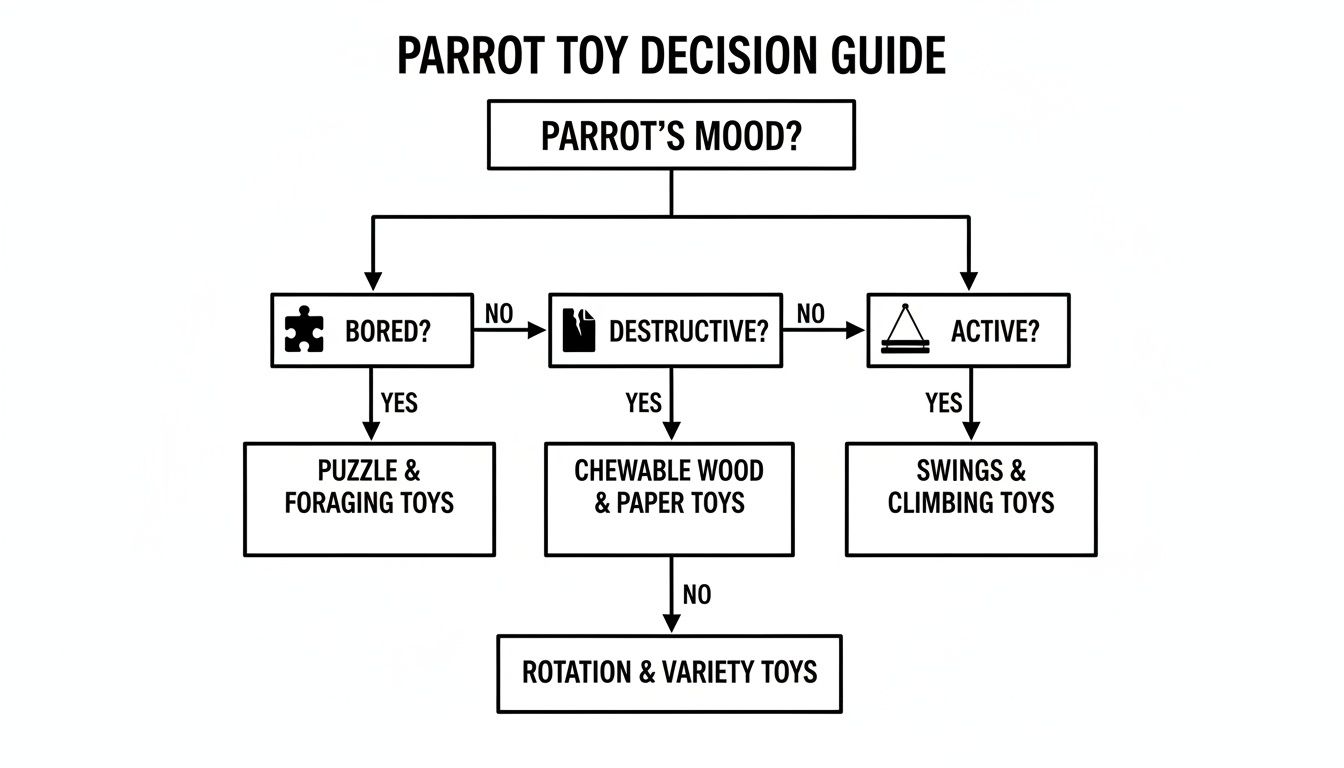
As you can see, simply watching your bird is the best first step to choosing a toy they will actually use and love.
Large Parrots: Macaws, Amazons, and Cockatoos
When you're shopping for a large parrot, your new mantra is "durability, durability, durability." These birds have beaks that can crack nuts with frightening ease, which means they can make short work of poorly made toys. Safety is your number one priority.
You must choose toys made with heavy-duty components: thick hardwood blocks (especially from tough Australian native woods), strong stainless steel hardware, and durable acrylics for foraging puzzles. Anything with flimsy plastic or thin metal links is a definite no-go. These powerful birds need serious, substantial toys that can stand up to a proper chewing session.
To make things a little easier, we've put together a quick guide matching common Aussie parrots with the kinds of toys that suit them best.
Parrot Toy Selector Guide by Species and Beak Strength
This table is your cheat sheet for matching a bird to the right kind of fun. It’s not an exhaustive list, but it’s a brilliant starting point for finding toys that will be both safe and stimulating.
| Parrot Size / Species | Best Toy Types | Recommended Materials | Enrichment Focus |
|---|---|---|---|
| Small (Budgies, Cockatiels) | Shred, Preening, Foot, Swings | Balsa, Yucca, Paper, Vine Balls, Natural Fibres | Dexterity, Preening, Light Chewing |
| Medium (Galahs, Conures) | Foraging, Chew, Shred, Swings | Hardwood, Leather, Acrylic, Coconut Shell | Problem-Solving, Moderate Chewing, Puzzles |
| Large (Macaws, Cockatoos) | Chew, Foraging, Foot | Tough Hardwood, Stainless Steel, Thick Acrylic | Heavy-Duty Chewing, Durability, Complex Puzzles |
| Extra-Large (Hyacinth Macaw) | Extreme Chew, Heavy-Duty Foraging | Java Wood, Dense Native Hardwoods, Forged Steel | Maximum Durability, Extreme Beak Conditioning |
Remember to always supervise your bird with a new toy and check it daily for any signs of unsafe wear and tear.
Alarming statistics from the Australian Veterinary Association in 2023 revealed that a staggering 28% of parrot vet visits were linked to problems caused by a lack of enrichment. That number plummeted to just 12% when owners practiced regular toy rotation.
This shows just how vital proper stimulation is. The demand is clear: in 2022, one South Australian bird company sold over 20,000 toys, with 35% of those going to owners of larger parrots who were specifically looking for anti-anxiety items.
By carefully matching a toy to your parrot's species-specific needs, you’re not just giving them a fun distraction. You're supporting their physical health, nurturing their mental well-being, and honouring the wild instincts that make them such incredible companions.
A Parrot Owner's Guide to Toy Safety and Maintenance
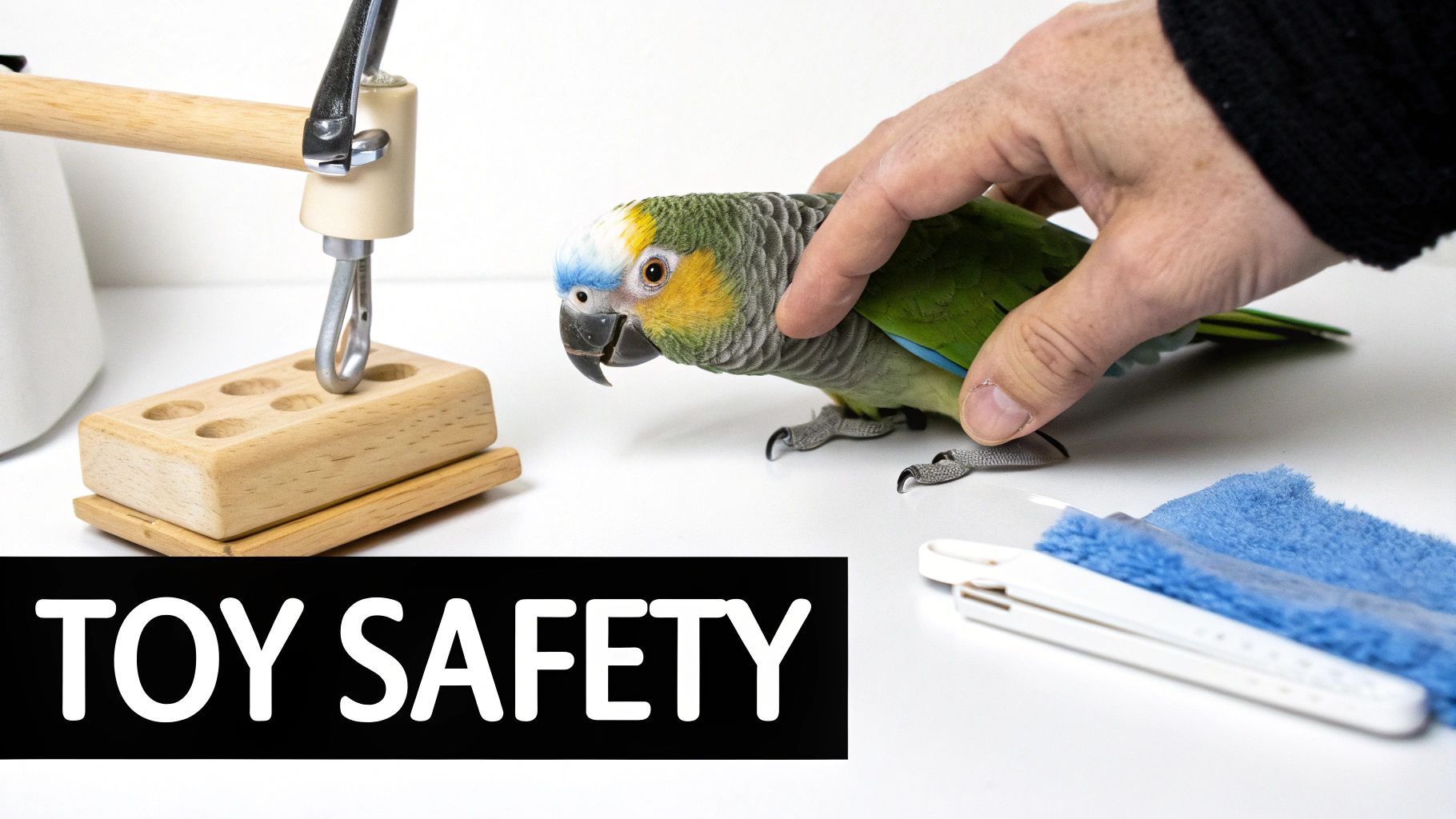
A parrot's beak is its connection to the world. Anything new or interesting gets explored with a curious nibble, a playful chew, or a full-on crunch. Because their beaks are always busy, toy safety is one of the most critical responsibilities for any Aussie parrot owner. An unsafe toy isn't just a waste of money—it's a genuine hazard waiting in the cage.
Learning what to look for is the first real step in protecting your feathered mate. The aim is to fill their life with bird toys for parrots that are not just fun but also built from materials that won't cause them any harm. It means you have to become a bit of a safety detective, spotting the good from the bad before a toy ever makes it home.
The Anatomy of a Safe Parrot Toy
A truly safe toy always starts with safe materials. When you're shopping, it helps to keep a mental checklist of what to look for and, just as importantly, what to run away from. Here in Australia, we're lucky to have access to some incredible, bird-safe native resources that should really be the foundation of your parrot's toy box.
Safe Materials to Embrace:
- Natural, Untreated Woods: Look for tough Australian natives like gum, banksia, or bottlebrush. Softer woods like balsa and pine are fantastic for shredding but won't last long against a powerful beak.
- Stainless Steel Hardware: For any metal parts like chains, bells, or quick links, stainless steel is the only truly safe option. It’s non-toxic and built to withstand even the most destructive chewers.
- Vegetable-Tanned Leather: If a toy has leather strips or shapes, make sure they've been tanned with vegetable dyes, not harsh chemicals that are toxic if your bird ingests them.
- Natural Fibres: Seek out ropes made from materials like sisal, jute, or seagrass. Always check that any strands are short and can't form a loop that might trap a head or foot.
Expert Advice: One of the most common hidden dangers is zinc toxicity from cheap, nasty metal hardware. Always double-check that quick links and other metal bits are made from parrot-safe stainless steel. It might cost a bit more upfront, but it prevents a health risk that could be fatal.
Red Flags and Materials to Avoid
It’s just as vital to know what materials have absolutely no place in your parrot’s cage. Some common items can pose serious risks, from poisoning to nasty physical injuries.
Hazardous Materials to Avoid:
- Toxic Metals: Steer clear of any toys with parts made from zinc, lead, or copper. These are often found in cheap bells, clips, and chains from overseas suppliers.
- Brittle Plastics: Hard plastics can shatter into razor-sharp pieces that can injure your bird’s mouth, crop, or stomach if swallowed.
- Treated Ropes and Fabrics: Never use ropes or fabrics treated with chemicals, perfumes, or fire retardants. Polished cotton rope is also a big no-no, as the fine fibres can get compacted in a bird's crop.
- Glues and Adhesives: A well-made toy should be held together with knots or stainless steel hardware, not toxic glues that a curious parrot can easily ingest.
Your Daily Toy Inspection Checklist
Your job as the safety inspector doesn't stop once you've bought the toy. Parrots are masters of destruction, and what was once a safe toy can become dangerous as it gets worn down. A quick daily check is all it takes to spot problems before they cause harm.
- Check for Sharp Edges: As your bird chews on wood or acrylic, it can create sharp points. File these down or just get rid of the toy if it's too jagged. Our Chains of Chews is made with smooth wood to help minimise this exact risk.
- Look for Frayed Ropes: Long, frayed strands on rope toys can form loops, which are a serious entanglement hazard. Trim any frays right back or replace the toy completely.
- Inspect Metal Parts: Make sure all links are closed tightly and show no signs of rust or breakage. A broken link can create a dangerously sharp point. The Natural Nuts and Bolts Foot Toy uses sturdy, safe hardware you can trust.
- Know When to Say Goodbye: When a toy is mostly destroyed, it’s time for it to go. Small, leftover pieces can easily become choking hazards. A well-loved but demolished toy like the Jingle Jangle Ball has served its purpose and should be replaced with something new and exciting.
By making safety your top priority and turning maintenance into a daily habit, you can guarantee your parrot’s playtime is always fun, stimulating, and—most importantly—completely safe.
Keeping Your Parrot Engaged with Toy Rotation
You know the feeling. You bring home a fantastic new toy, certain it’s the one. For two glorious days, your parrot goes to town on it—chewing, shredding, and having a blast. Then, crickets. The toy is suddenly invisible, gathering dust in the corner of the cage.
It’s a classic story for parrot owners everywhere, and it's not your fault. The problem isn't the toy, and it's not your bird being fussy. It's simply that the novelty has worn off.
The fix is an incredibly powerful enrichment trick called toy rotation. Think of it like a kid’s toy box—if they played with the same three Lego sets every single day, they’d get bored pretty quickly. Parrots, with their sharp little minds, are exactly the same. By cycling their toys in and out of the cage, you keep their world feeling fresh, exciting, and mentally challenging.
A toy that’s been tucked away for a week can feel brand new all over again. This simple habit reignites their natural curiosity, busts boredom before it starts, and honestly, saves you a fair bit of money in the long run.
Creating a Practical Toy Rotation Schedule
Getting a rotation system going doesn't need to be complicated. The whole point is to offer variety without turning the cage into a cluttered mess, which can actually cause stress and make it hard for them to move around.
First, build up a bit of a "toy library." A great starting point is to have a collection of at least 10-15 different types of bird toys for parrots. Make sure you've got a good mix covering all the bases: shreddables, chew toys, foraging puzzles, and foot toys.
Here’s a simple schedule that works for most birds:
- Set the Cage: Start with 3-5 different toys inside the cage. A great combination would be one shreddable toy, one foraging puzzle, and a tough chew toy to work on.
- Swap Them Out Weekly: Once a week, take one or two toys out and replace them with something "new" from your library. You don't have to do a complete overhaul every time.
- Clean and Store: Before you put the used toys away, give them a good clean and a quick once-over for any damage. Pop them in a clean, dry box, ready for their next tour of duty.
This approach ensures there’s always something interesting to do, which is so important for keeping those clever minds busy and preventing naughty behaviours that stem from boredom.
Gently Introducing New Toys to a Nervous Parrot
While some parrots will dive beak-first into anything you give them, others are a bit more cautious. Many parrots experience neophobia, which is just a fancy word for the fear of new things. Shoving a scary new object into their personal space is a sure-fire way to create anxiety. The secret is a slow, patient introduction.
If you have a bird that's wary of new additions, don't just hang the toy in their cage and hope for the best. Instead, try this confidence-building process:
- Step 1 - The Distant Observer: For a few days, just place the new toy on a chair or table near the cage. Let your parrot get used to seeing it from a safe distance, allowing them to figure out it’s not a threat.
- Step 2 - You Go First: Pick up the toy and play with it yourself where your bird can see you. Talk to it, act interested. Your calm interaction shows them that this new thing is safe and maybe even fun.
- Step 3 - Move It Closer: Over the next day or two, gradually move the toy so it’s sitting right outside their cage.
- Step 4 - The Final Move: Once your bird starts showing curiosity—maybe leaning towards it or watching you intently—it’s time. Hang it inside the cage, but try to place it in a less-frequented area so they can approach it on their own terms.
Expert Advice: Never, ever force it. The moment your bird takes a brave step, even if it’s just a glance in the toy's direction, shower them with praise or offer a favourite treat. This positive reinforcement turns a potentially scary situation into a rewarding game, building their confidence for the next new toy you bring home.
Safe and Creative DIY Parrot Toy Ideas
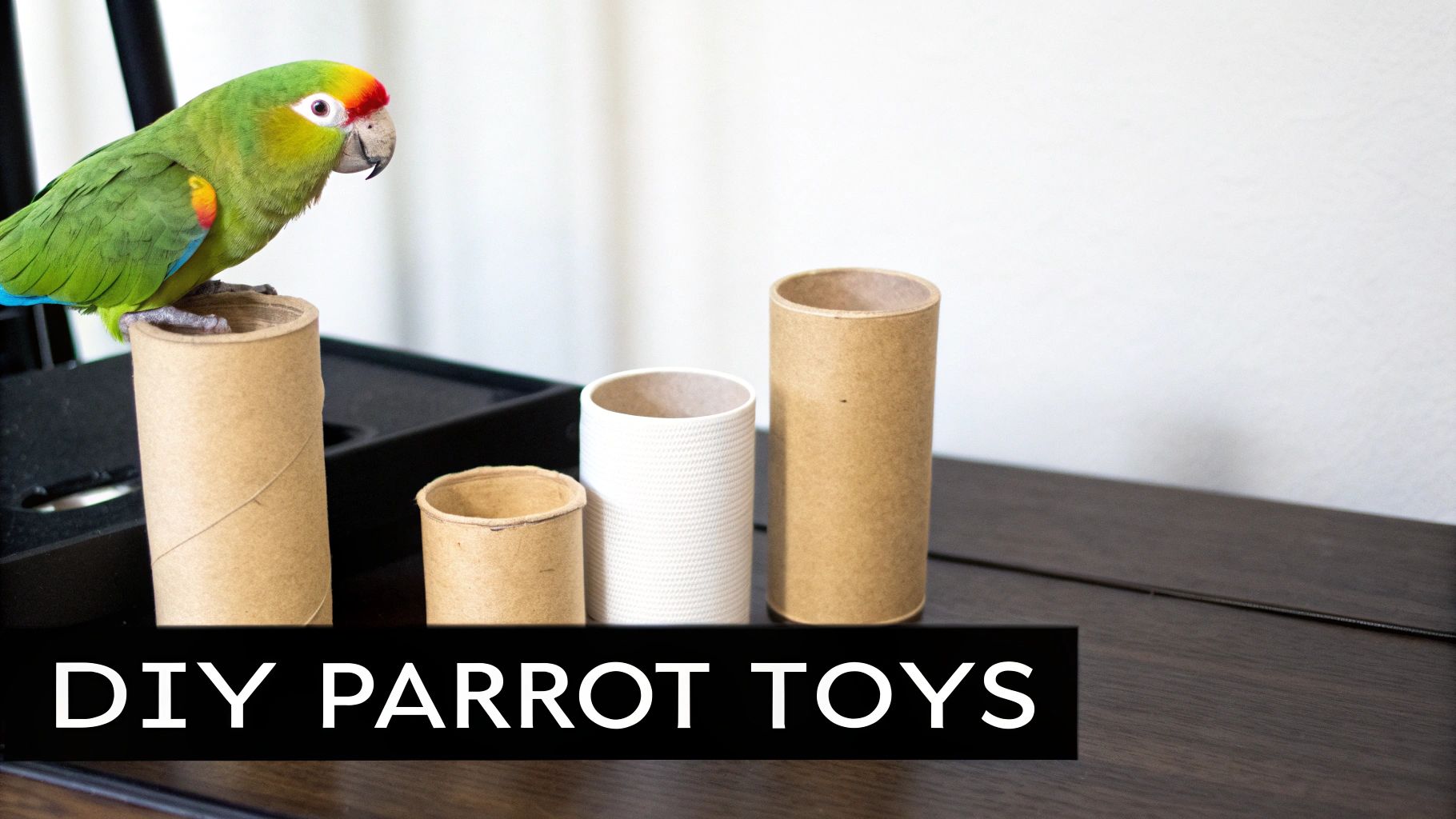
While a solid collection of professionally made bird toys for parrots is always the safest foundation for your bird’s enrichment, adding some homemade fun is a brilliant way to keep things fresh. Getting creative with DIY toys is a fantastic, budget-friendly way to supplement your parrot’s toy rotation and discover what they truly love to destroy.
You’d be surprised how many safe and engaging toy materials are probably sitting in your home right now. The real trick is knowing what’s safe and what’s a definite no-go. With a little know-how, simple household items can be transformed into brilliant shredding and foraging opportunities that satisfy your bird’s deepest instincts.
Simple and Safe DIY Ideas
You absolutely don't need to be a craft expert to make something your parrot will go nuts for. In fact, the simplest ideas are often the most effective because they tap directly into that primal parrot urge to explore and shred. For some extra guidance and creative inspiration, we've put together a huge amount of information in our comprehensive guide on how to make your own bird toys.
Here are a few easy, bird-safe ideas to get you started:
- Cardboard Creations: Plain, unprinted cardboard rolls from paper towels or toilet paper are gold! You can stuff them with shredded paper, natural vine balls, or a few favourite treats to create an instant foraging toy.
- Paper Pleasures: Untreated paper—like butcher paper or plain brown paper bags—can be scrunched, twisted into knots, or woven through the cage bars for some seriously satisfying shredding fun.
- Natural Treasures: Clean, untreated pinecones (just bake them at a low temperature to kill any bugs) or small, bird-safe branches from native Australian trees like gum or bottlebrush make for fantastic, natural chew toys.
Expert Advice: Always think like your parrot. Is there any part of a homemade toy that could be ingested and cause a blockage? Could their toe or beak get snagged in a loop or a small opening? Safety must always, always come before creativity.
Crucial Safety Warnings for DIY Toys
When you’re making your own toys, vigilance is everything. Many common household items are highly toxic to parrots and must be avoided at all costs—no exceptions.
Never Use These Materials:
- Glues, Tapes, or Adhesives: Most of these contain toxic chemicals that are dangerous if ingested.
- Treated Wood or MDF: These materials can contain arsenic, industrial glues, and other poisons. Stick to natural, untreated woods only.
- Shiny or Coated Paper: Things like magazines, wrapping paper, and receipts often contain toxic inks and chemical coatings.
- Human Food Items: Avoid stringing things like pasta or cereal. They can grow mould quickly or cause serious digestive issues for your bird.
Always stick to simple, natural, and untreated materials. By being mindful of these rules, you can ensure your DIY creations provide safe, stimulating fun that beautifully complements your bird's collection of durable, professionally crafted toys.
Answering Your Bird Toy Questions
Even the most seasoned parrot owner runs into questions now and then. Looking after a creature as smart as a parrot is a learning curve! Here are some of the most common queries we get from fellow Aussie parrot parents, with some practical advice to keep your feathered mate happy and engaged.
How Many Toys Should a Parrot Have in Its Cage?
A good rule of thumb is to have three to five different types of toys in the cage at any one time. Think variety! You might have one toy for shredding, a puzzle like our Natural Nuts and Bolts Foot Toy to get their brain working, and something sturdy for them to really chew on.
This mix gives them options without turning their cage into a cluttered obstacle course, which can actually cause stress and make it hard for them to move around. The real secret isn't just the number of toys you own, but how often you swap them out to keep things fresh and interesting.
What if My Parrot Is Terrified of a New Toy?
First off, don't worry—this is completely normal. It’s a survival instinct called neophobia (fear of new things), and it’s hardwired into them. Patience is absolutely key here.
Start by just placing the new toy on a table or shelf near the cage. Let your bird eyeball it from a safe distance for a few days. Then, start picking it up and playing with it yourself in front of them. Your calm interaction shows them it’s not a threat. Once they seem curious, move it a little closer to the cage, and eventually inside. Reward any brave little steps towards it with some praise or a favourite treat.
What Are the Best Toys for a Power Chewer?
Ah, the little destroyers! For a parrot whose life mission is to turn everything into sawdust, you've got to focus on durability.
Look for tough bird toys for parrots made from hard Australian native woods, bird-safe acrylics, or stainless steel parts. Foraging toys that make them work for a reward, like our Jingle Jangle Ball stuffed with treats, can also channel that destructive energy into problem-solving. They might cost a little more upfront, but they'll last so much longer and are far safer for your bird.
Are Toys with Bells and Noisemakers Safe?
This one comes down entirely to the design and quality of the bell. Cheap, jingle-style bells with those little open clappers are a definite no-go. A curious beak or a tiny toe can easily get caught in the slit, leading to a nasty injury.
Expert Safety Tip: Always look for welded-shut liberty bells or sturdy cowbells where the clapper is safely tucked inside. Another great option is toys made with stainless steel parts that clank together, like our Chains of Chews. This way, your parrot can make all the racket it wants without any risk.
Where to Go From Here?
Now that you've got the essentials of parrot toys down, why not keep the learning going? Building a fantastic life for your bird is all about understanding their world, piece by piece.
If this guide sparked your interest, we have plenty more to share. Dive into some of our other articles where we get into the nitty-gritty of perches, foraging, and keeping their cage a safe and happy home.
Keep Reading
- Your Parrot's Perfect Perch: Why Variety is Key
- Foraging: An Introduction to a Healthier & Happier Parrot
- Bird Cage Safety and Your Parrot
Disclaimer Summary: The information in this article is general in nature and may include external links or resources not created by Lou Lou Bells Bird Toys. Every bird is unique, so we encourage you to seek personalised advice from your own veterinarian or avian specialist. For full details, please read our complete disclaimer here.