
Making your own DIY bird toys is such a rewarding way to give your bird safe, budget-friendly enrichment that really hits the spot for their natural instincts. It lets you customise playtime to your bird's unique personality—whether they're a shredder, a forager, or a serious chewer—and turns their cage into a place of adventure.
Why Your Bird Needs More Than Just a Cage
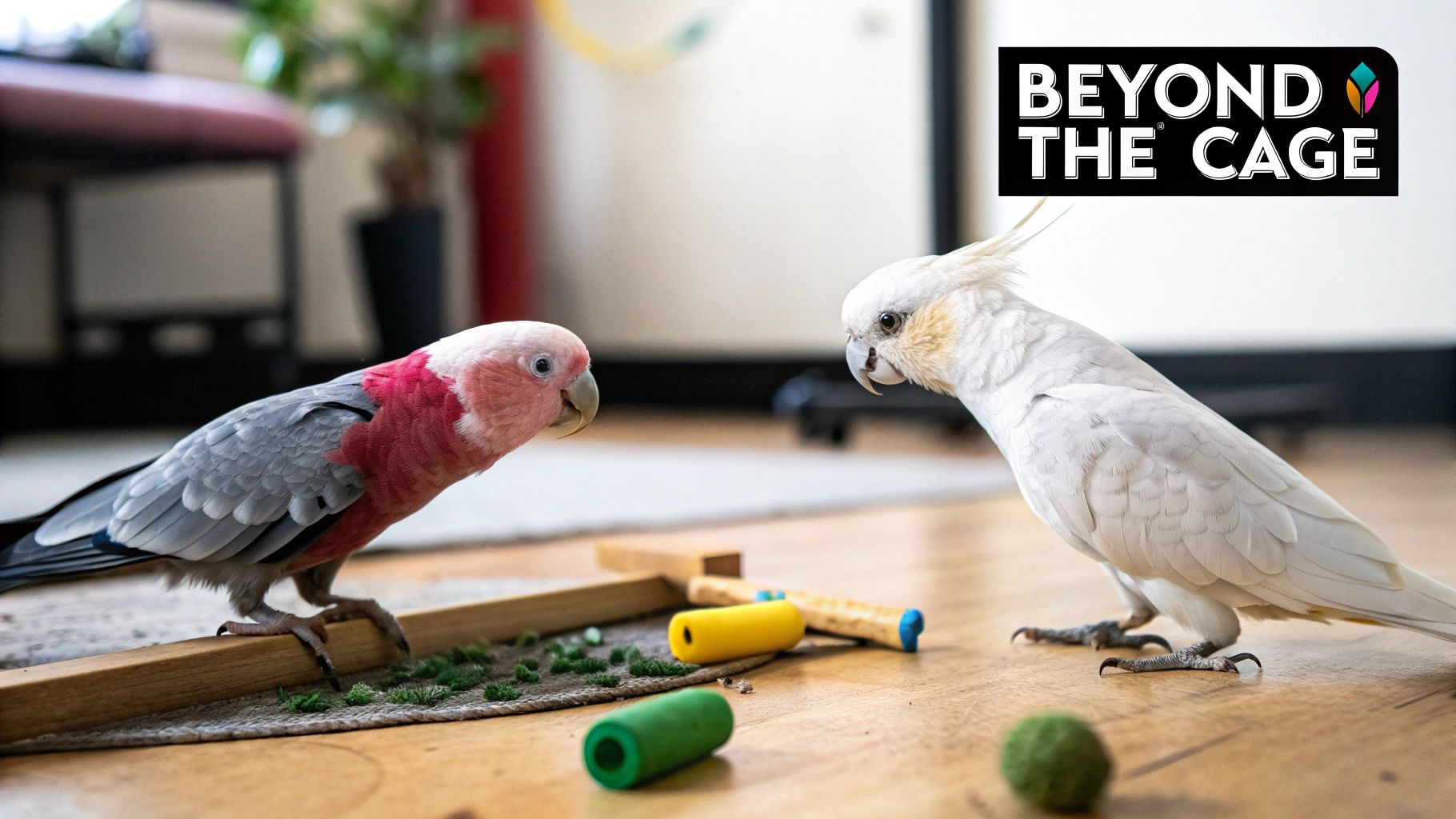
A cage keeps your bird safe, but it doesn't come close to fulfilling the needs of such an intelligent animal. Out in the wild, Australian native birds like Galahs, Lorikeets, and Cockatoos are busy all day long—foraging for food, hanging out with their flock, and messing around with things in their environment. These aren't just hobbies; they're absolutely essential for their mental and physical health.
When we bring these incredible creatures into our homes, it becomes our job to recreate those vital experiences. Without the right kind of stimulation, birds can quickly develop stress-related behaviours like excessive screaming, aggression, or even feather plucking. This is where enrichment comes in, and DIY bird toys are one of the best tools you can have.
Tapping into Natural Instincts
Crafting your own toys means you can cater directly to what your bird is wired to do. A simple shreddable toy made from cardboard and paper satisfies a cockatoo's powerful urge to destroy things, just like it might strip bark from a tree. A foraging box filled with safe bits and pieces encourages a clever Lorikeet to solve puzzles for its food.
This hands-on approach has some fantastic benefits:
- Mental Stimulation: Puzzles and foraging challenges keep their sharp minds active and prevent the boredom that creeps in with a predictable environment.
- Physical Health: Chewing on different textures, manipulating toys, and climbing around keeps their beaks healthy, strengthens their feet, and gives them a good workout.
- Behavioural Wellness: Giving them a safe outlet for all that destructive energy helps cut down on unwanted behaviours that pop up from boredom and stress.
The growing awareness around this has really changed how we look after our feathered friends. In Australia, the pet industry grew into a massive powerhouse, and toys are now seen as a crucial part of a bird's wellbeing. Vets are even reporting that birds with a regular rotation of toys show significantly less stress-related behaviours.
As someone who's spent years with birds, I’ve seen firsthand how a simple handmade toy can completely change a bird's day. Making a toy isn't just a project; it's a way of communicating. You're showing your bird you get what they need, and that deepens the trust and bond you share.
Ultimately, providing quality enrichment isn't just a nice-to-have; it's non-negotiable. Learning about animal enrichment in Australia helps us understand that it's all about offering a life filled with purpose, choice, and joy. Before we get into the "how-to," getting your head around this "why" is the first real step toward becoming a more intuitive and caring bird owner.
Your Guide to Bird-Safe Crafting Materials
Before you let your creativity fly and start making your own bird toys, the very first step—and the most important one—is gathering the right supplies. Building up a stash of bird-safe materials isn't just a suggestion; it's absolutely non-negotiable for your bird's health and safety.
Think of it like stocking a pantry for your bird's playtime. You wouldn't feed them something you weren't sure about, and that same level of care needs to apply to everything they chew, shred, and happily destroy. Let's look at what you can confidently use, focusing on things that are easy to get your hands on here in Australia.
The Good Stuff: Safe Woods and Fibres
Natural, untreated materials are always going to be your best friends in the world of DIY bird toys. Birds are instinctively drawn to the textures and challenges these materials provide, tapping into behaviours they'd use in the wild.
Here are some excellent, safe options to get you started:
- Untreated Woods: Pine is a fantastic, affordable softwood that's perfect for most birds. Native Australian woods like eucalyptus (gum) branches, bottlebrush, and banksia are also brilliant choices, provided they come from pesticide-free areas and are cleaned properly. Balsa wood is another top pick, especially for smaller beaks that live to shred.
- Natural Fibres: When it comes to ropes and strings, stick with 100% natural materials. Sisal, hemp, and jute are durable and totally safe for birds to chew on. They're perfect for stringing other toy parts together.
- Cardboard and Paper: Never underestimate the destructive joy of simple household items! Plain, unprinted cardboard rolls (from paper towels or toilet paper), plain paper cups, and brown paper bags are shreddable gold for your feathered friend.
A quick note on using branches from your own backyard: always be certain they haven't been exposed to pesticides, fertilisers, or wild bird droppings. A good scrub followed by a bake in the oven on a low temperature will sanitise them perfectly.
Upcycled Treasures from Around the House
You really don't need to spend a fortune at a craft store. So many items destined for the recycling bin can be given a second life as fantastic, enriching DIY bird toys.
Keep an eye out for these safe, repurposed items:
- Empty, clean egg cartons (the cardboard kind only, never polystyrene)
- Wooden popsicle sticks (just make sure they're clean with no sugary residue)
- Natural corks from wine bottles (check they're not the synthetic plastic type)
- Paper cupcake liners, especially the crinkly ones that make a great noise
- Hard, unsalted pasta shapes that can be threaded onto a string
Even certain nut shells can make great additions to a toy. If you're wondering about specific types, we've got a detailed breakdown of whether almond shells are safe for your bird over in our Beak-to-Beak questions section, which can help you make informed choices.
Expert Tip: When you're using any upcycled item, the golden rule is safety first. Always inspect it and remove any tape, staples, or glossy coatings. Simplicity is key—if you're ever in doubt about a material, it's always best to just leave it out.
The No-Go Zone: Materials to Avoid at All Costs
Knowing what to use is only half the battle; knowing what to avoid is just as critical. Many common materials can be toxic or pose serious physical dangers to your bird. Your "do not use" list should be crystal clear and absolute.
This is not a place for compromise, as these items can lead to illness, injury, or worse.
To make it easier, here's a quick cheat sheet comparing some common safe materials with their dangerous counterparts.
Bird-Safe vs Unsafe Materials Cheat Sheet
| Material Type | Safe Options (Examples) | UNSAFE Options to Avoid |
|---|---|---|
| Wood | Untreated pine, balsa, eucalyptus, bottlebrush, banksia. | Pressure-treated wood, MDF, particleboard, cedar, redwood, cherry, oak. |
| Fibres/String | Natural sisal, hemp, jute, unbleached cotton (in short lengths). | Nylon rope, synthetic twine, polyester thread, yarn, frayed fabric. |
| Metals | Stainless steel hardware (quick links, O-rings, bells with safe clappers). | Zinc, lead, copper, brass, galvanised metals (often found in cheap clips or chains). |
| Plastics | Hard, durable bird-safe plastics (like acrylic) that won't shatter. | Soft plastics that can be ingested, brittle plastics that create sharp edges. |
| Adhesives/Dyes | Vegetable-based food colouring for dyeing wood. | All commercial glues, paints, varnishes, and toxic inks from magazines or glossy paper. |
| Leather | Untreated, vegetable-tanned leather strips. | Any chemically treated, dyed, or tanned leather. |
Steering clear of these dangerous materials is the absolute foundation of safe toy-making. Always opt for stainless steel when you need metal parts—you can often find a good selection at hardware stores like Bunnings.
By building your DIY bird toys from a base of known, safe materials, you're making sure that playtime is always fun and never, ever a risk.
DIY Toy Projects for Every Beak and Brain
Alright, now that you've got a stash of safe and exciting materials, we can get to the fun part—actually making some fantastic DIY bird toys. Every bird has its own personality and way of playing, so I'll walk you through three different projects designed to suit everyone from the tiniest budgie to the most powerful macaw.
Each of these ideas is simple, affordable, and incredibly good at providing the mental and physical workout your bird needs. Remember, this isn't about creating a perfect masterpiece; it's about making something with love that lets your bird be a bird.
Before you start assembling, the process of finding and prepping your materials is just as important as the building itself. This simple workflow helps make sure every single toy you create is a safe one.
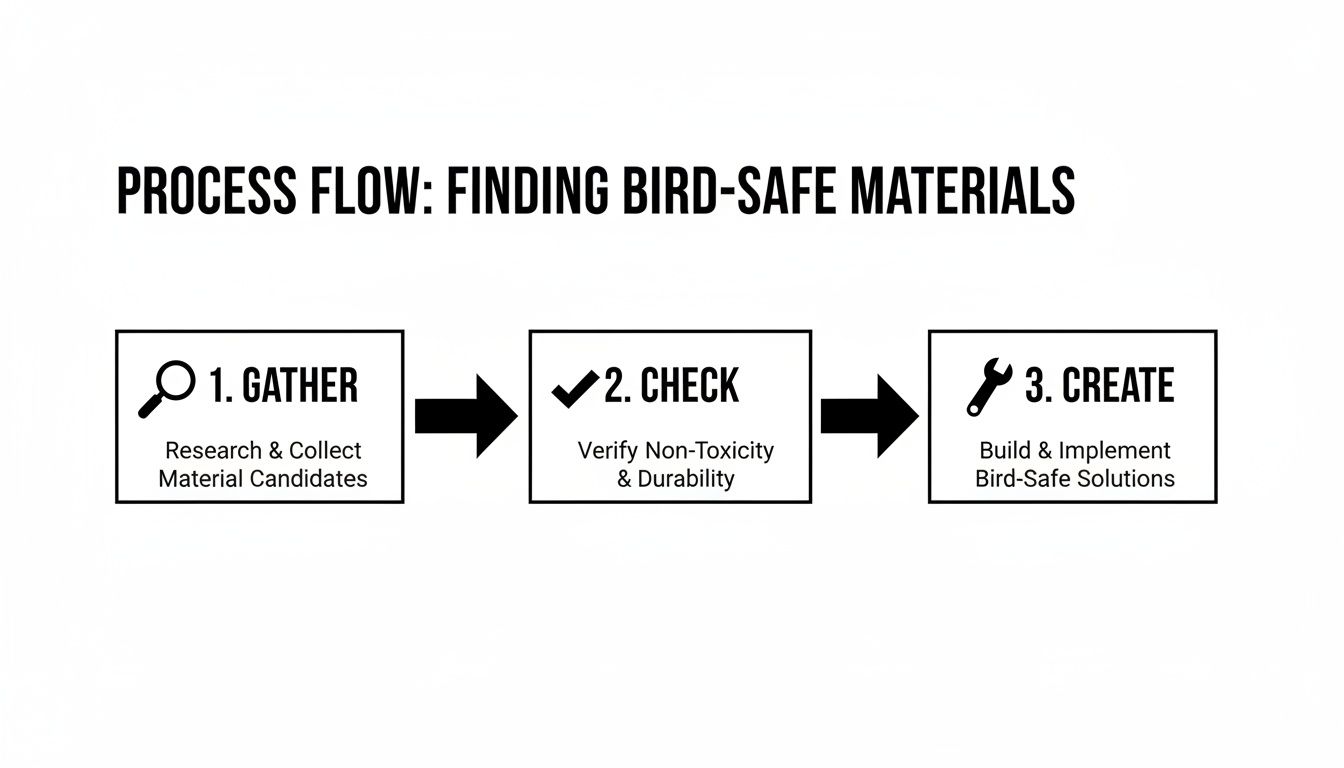
Following these three core steps—gathering your bits and pieces, checking them for safety, and then creating your toy—builds a reliable habit that puts your bird's wellbeing first, every time.
Simple Shredder Skewer for Small Birds
Small birds like budgies, cockatiels, and lovebirds have an almost insatiable urge to shred and destroy things. This simple skewer toy is the perfect outlet for all that energy, giving them layers of satisfying textures they can happily rip to shreds. It’s a brilliant beginner project that you can whip up in minutes.
What You'll Need:
- A bird-safe skewer (stainless steel is best, but a clean, blunt wooden one works too)
- Cardboard from a paper towel or toilet paper roll
- Colourful paper cupcake liners
- Untreated wooden beads
- Plain, unprinted paper or crinkle paper
- A pair of scissors
First up, cut the cardboard roll into smaller rings, about 2-3 cm wide. These will form the main body of your toy. Next, start threading your materials onto the skewer, alternating between different textures to keep things interesting for your bird.
A good pattern might be a wooden bead, then a cardboard ring, followed by a folded cupcake liner. Don't be afraid to stuff some crinkle paper inside the cardboard rings before you thread them on—this adds an extra layer of foraging fun, as your bird has to work to pull it all out.
Once your skewer is full, make sure to secure the end so the pieces can't just slide off. If you're using a stainless steel skewer with a quick link, you can simply attach it to the cage bars. For a wooden skewer, a thick knot tied with a piece of sisal rope at the end will do the trick.
Expert Insight: The beauty of shreddable toys is their disposability. A well-loved toy is a destroyed toy! Don't feel you need to build something that lasts forever. The act of destruction is the enrichment for many species.
Foraging Box Puzzle for Medium Birds
Medium-sized parrots like conures, quakers, and caiques are known for their clever minds and problem-solving skills. A foraging box puzzle challenges their intellect and encourages them to work for their treats, mimicking natural behaviours they'd exhibit in the Australian bush.
What You'll Need:
- A small, clean cardboard box (like a tea box or a small tissue box)
- Shredded paper or natural nesting material
- A mix of your bird's favourite dry treats (pellets, seeds, or chopped nuts)
- Various small, bird-safe items like wooden buttons, sola balls, or pieces of cork
Start by making sure the box is clean and totally free from any plastic liners or staples. If it's a closed box, cut a few holes in the sides—just big enough for your bird to poke their beak in, but not their whole head. This really adds to the challenge.
Next, fill the box about halfway with your shredded paper. Sprinkle a handful of your bird's favourite treats into the paper, mixing them around so they aren't all just sitting on top. Now you can add your other bird-safe items to create more texture and obstacles. The goal is to make your bird dig, sift, and explore to find the rewards.
Finally, close the box (if it has a lid) or simply place it in your bird's cage. You can either set it on the cage floor or punch a hole in the top and hang it with a piece of sisal rope. Honestly, watching your conure figure out how to toss paper aside to uncover a hidden sunflower seed is incredibly rewarding.
Tough Wooden Chewer for Large Birds
Large parrots like Macaws, Galahs, and Sulphur-crested Cockatoos have incredibly powerful beaks designed for cracking open tough nuts and shaping wood. A durable wooden chewer is absolutely essential for keeping their beaks conditioned and satisfying that deep instinct to chew. This toy is built to withstand some serious beak-power.
What You'll Need:
- Blocks of untreated pine or other bird-safe softwood
- A hand drill with a bit wide enough for your rope
- Thick, natural sisal or hemp rope (at least 1 cm in diameter)
- Large, untreated wooden beads
- Stainless steel quick link for hanging
Begin by drilling a hole right through the centre of each wooden block. Make sure to sand down any rough edges or splinters around the holes to make them perfectly safe. This is probably the most important step for ensuring the toy is free from potential hazards.
Next, cut a long piece of your thick sisal rope. Tie a large, secure knot at one end—make it bulky enough that the first wooden block won't be able to slip over it. Now you can start threading on your wooden blocks and large beads, creating a pattern. Tying a big knot between each piece is a great idea, as it keeps them separated and gives your bird more knots to chew and undo.
Once you've threaded all your pieces on, tie a strong loop at the top of the rope and attach your stainless steel quick link. This heavy-duty toy can be hung from the top of the cage and will provide a long-lasting and satisfying challenge for even the most enthusiastic chewer.
If you're looking for inspiration or perhaps a professionally crafted alternative, our own Flower Power and The Pinata toys offer a similar mix of tough, chewable materials for big beaks. They serve as great examples of how different textures can be combined for maximum engagement.
Keeping Playtime Safe: A Maintenance Checklist
Making a great toy is one thing, but keeping it safe for your bird is an ongoing job. Every single toy in the cage, whether it's something we’ve made or a DIY project you’ve put together, needs a regular once-over. A toy that was perfectly fine yesterday can easily become a hazard after a good chewing session.
Think of it as a quick, daily wellness check for your bird’s playthings. This little routine is your best defence against potential dangers before they turn into real problems. Spotting a frayed rope or a splintered bit of wood early is one of the most important things you can do to keep your feathered friend safe.
The Daily Toy Inspection
Just like you check their food and water, give their toys a quick look every single day. It seriously only takes a minute, but it can prevent some nasty injuries. You’re basically looking for any changes from all that enthusiastic wear and tear.
Here’s my mental checklist every time I look in the cage:
- Loose Threads and Frayed Ropes: Natural fibres like sisal are fantastic, but they do unravel when chewed. Those long, loose strands are a major entanglement risk, so snip off any frays as soon as you see them. If a rope is starting to look more like a stringy mess, it's time for it to go.
- Sharp Edges or Splinters: Wooden toys are made to be destroyed, but that means they can get sharp. Run your fingers over the wood to feel for any pointy bits or splinters that could hurt a beak or a foot. A quick once-over with sandpaper can smooth out those rough patches in no time.
- Broken or Small Parts: A toy that’s been taken apart with gusto can leave behind small pieces that are easy to swallow. Check that everything is still intact and that nothing has been chewed down to a size that could be ingested.
- Unsafe Fasteners: Make sure any stainless steel quick links are still screwed tight and haven't been worked loose. And please, steer clear of unsafe clips like key rings—they’re notorious for trapping beaks. For a secure connection you can trust, we always recommend our Stainless Steel Quick Link.
Toy Rotation and Cleaning Schedule
Let’s be honest, birds get bored. Just like us, they can get tired of seeing the same old things day in and day out. Rotating their toys doesn't just keep their environment interesting; it also stops any one toy from getting worn out too quickly and becoming dangerous.
A great tip I've picked up from avian vets across Australia is to have three to five sets of toys for each bird. Swapping a few toys in and out of the cage each week keeps your bird’s curiosity alive and can help prevent obsessive behaviours tied to a single, over-loved toy.
When a toy’s turn is up and it comes out of the cage, that’s the perfect time to give it a good clean. For hard stuff like wood or acrylic, a scrub with a bird-safe disinfectant (or just a simple vinegar and water mix) does the trick. Shred-able toys made of paper, cardboard, or soft wood are a different story—they’re much harder to clean properly once they get soiled.
Knowing When to Say Goodbye
Part of keeping things safe is knowing when a toy is past its prime. A well-loved toy is usually a destroyed toy, and that’s exactly what you want—it means your bird had a fantastic time with it!
But once a toy gets too frayed, splintered, or dirty to be properly sanitised, it’s time to toss it. Trying to get a few more days out of a worn-out shreddable toy, for instance, just isn’t worth the risk. By being vigilant with your daily checks and regular cleaning, you’re creating a space where your bird can play with confidence.
If you’re looking for toys built to handle some serious playtime, options like our Large Leather Delight or Double Trouble are designed to last a bit longer against those tougher beaks.
Creative Foraging Ideas to Stimulate Your Bird's Mind
One of the best things you can do for your bird is tap into their natural instinct to forage. Out in the wild, birds spend most of their day just looking for food. It’s not just about eating—it's a full-on mental and physical workout that keeps them sharp.
When we just pop a bowl of food in their cage, we take all that work away. Bringing that challenge back is an absolute game-changer for beating boredom and keeping them mentally healthy. You don't need fancy, expensive puzzles to start; some of the most effective foraging toys are the ones you can whip up in minutes using stuff you already have.
The whole point is to switch mealtime from a boring, passive event into a fun, interactive puzzle. This little shift gets them problem-solving, builds their confidence, and gives them a real sense of purpose.
Simple Foraging Puzzles You Can Make Today
Getting started with DIY foraging is surprisingly easy. The trick is to begin with simple wins that spark your bird’s curiosity. Once they get the hang of it, you can gradually make things a bit trickier.
Here are a few of my go-to ideas for beginners:
- Paper Cup Parcels: Grab a plain paper cup and drop a few treats or pellets inside. Then, stuff the rest of the cup with scrunched-up, plain paper or crinkle paper. To get the prize, they have to pull out all the filler first.
- Cardboard Creations: Find a clean piece of corrugated cardboard and poke some seeds or small treats into the little ridges. This encourages them to chew and shred the cardboard to get their food.
- Egg Carton Explorer: Take a clean, cardboard egg carton and hide a treat in a couple of the cups. Start with the lid open. As they get better at it, you can close the lid loosely, and eventually stuff the empty cups with paper for an extra layer of challenge.
These simple, shreddable puzzles are brilliant because the destruction is half the fun! If you're after more ideas to challenge a clever beak, our guide on foraging toys for birds is packed with extra inspiration.
The Importance of Foot Toys in Foraging
We often think of foraging as something done just with the beak, but a bird's feet are just as important. Foot toys are small, lightweight items a bird can hold, turn over, and toss around. They're vital for developing grip strength, coordination, and dexterity.
Foraging isn't just a beak-and-brain activity; it’s a full-body workout. Foot toys encourage birds to use their feet like a second pair of hands, just as they would in the wild to hold a piece of fruit or a seed pod while they eat. This tactile engagement is incredibly stimulating.
You can make simple foot toys by stringing a few wooden beads onto a short strip of veg-tanned leather, or even just by offering a natural cork or a small piece of balsa wood. These give your bird something to focus on and manipulate, which is a fantastic way to redirect stress-related behaviours.
This kind of enrichment is really taking off. In fact, foot toys are becoming a standout in Australia's bird toy scene. By getting birds to grip and forage like they would in the Aussie bush, these toys are making a huge difference in reducing boredom. Avian vets now recommend rotating three to five different foot toys weekly, a practice linked to a significant drop in vet visits for stress-related problems.
By mixing stationary foraging puzzles with moveable foot toys, you create a fantastic, well-rounded enrichment plan that keeps your bird physically active and mentally switched on.
Why Natural Wood Is a Bird's Best Friend
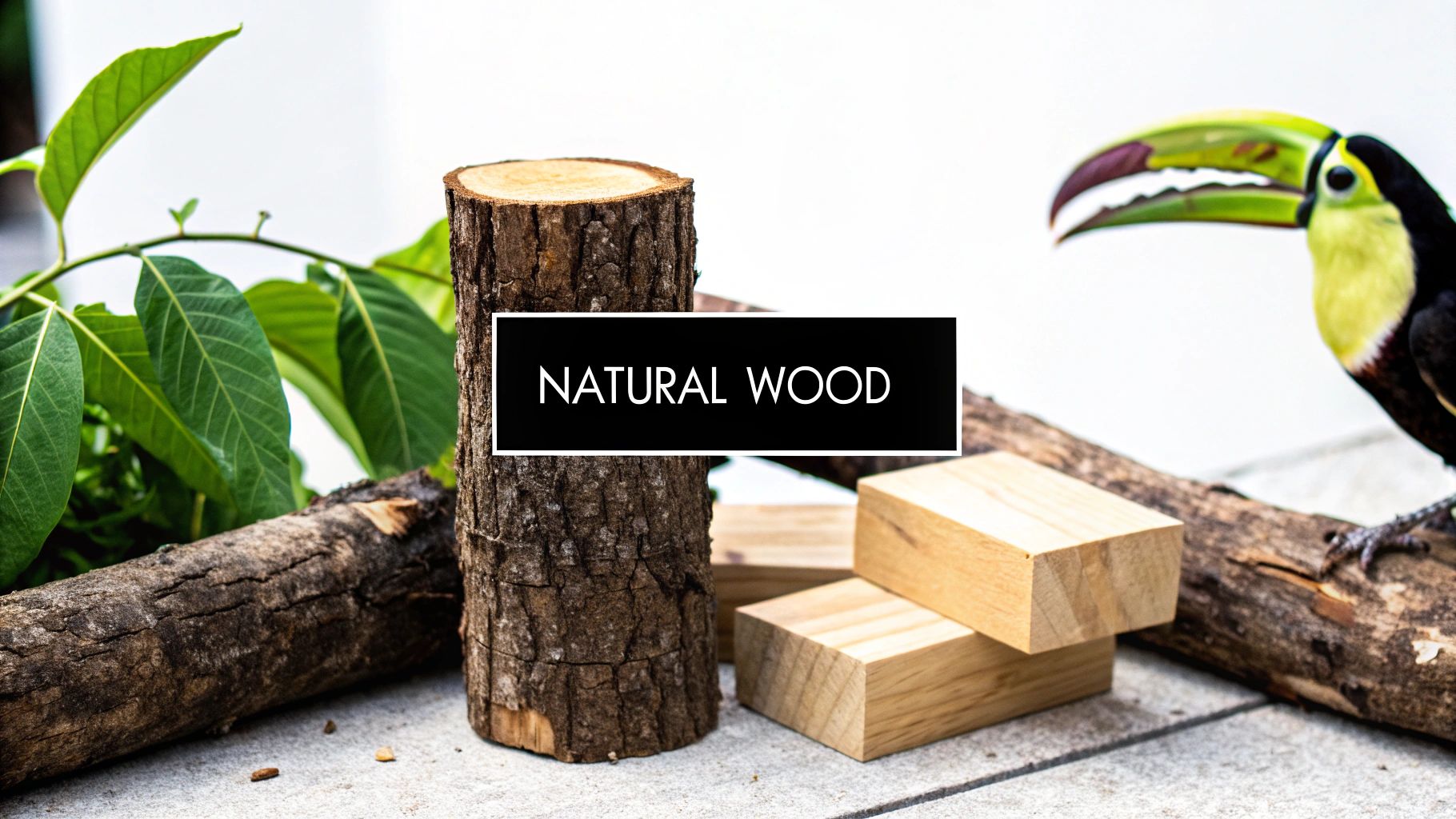
If there's one material that belongs in every bird's toy box, it's wood. It’s what parrots would naturally spend their days chewing on in the wild, and that instinct doesn't just disappear in our homes.
From soft, shreddable balsa that a budgie can get through, to a tough chunk of native gum for a cockatoo’s powerful beak, wood provides the perfect resistance for keeping beaks in top condition.
Chewing isn't just a hobby for your bird; it's a core part of their physical and mental health. In the Aussie bush, a parrot's beak is its all-purpose tool—used for finding food, carving out a nest, and exploring its environment. All that activity naturally keeps the beak filed and shaped, preventing painful overgrowth.
Having a good supply of wooden toys lets them carry out this essential behaviour in their cage, giving them a safe and satisfying outlet for those chewing and shredding instincts.
Sourcing and Preparing Natural Branches
One of the best and most enriching ways to use wood is to collect branches straight from the Aussie bush. It’s a great way to bring a bit of nature indoors, but you absolutely have to do it safely. Not all wood is safe, and wild branches can host bacteria, fungi, or even pesticides.
If you're collecting your own branches, here’s how to make sure they're safe for your feathered mate:
- Choose Wisely: Only collect from known safe, native trees like eucalyptus (gum), bottlebrush, or banksia. It's critical to be certain the area hasn't been sprayed with chemicals or pesticides.
- Give Them a Good Scrub: As soon as you get them home, give the branches a solid scrub with hot water and a brush. You want to get rid of any dirt, debris, or wild bird droppings.
- Bake to Sanitise: The final, most important step is to bake the branches in an oven at a low temperature—around 100-120°C is perfect—for about an hour. This kills off any nasty surprises, making them completely safe to chew.
Following these simple steps means you're providing fantastic, natural perches and chew toys without any hidden dangers. For a more detailed guide, check out our post on preparing natural bird perches.
It's no secret that wooden chew toys are a favourite across Australia, leading the market because they're safe and fantastic for beak conditioning. Studies have even shown that birds with access to chew toys exhibit more natural behaviours like preening and exploring. You can learn more about the competitive landscape of bird toys and their impact.
Matching Wood to Beak Strength
Not all woods are the same, and picking the right type for your bird's size and beak strength is crucial. Get it wrong, and the toy will either be ignored or destroyed in five minutes flat. A tough piece of ironbark that’s a great challenge for a macaw would just be frustrating for a little cockatiel.
Here's a quick breakdown to help you choose:
- Softwoods: Balsa, pine, and sola are brilliant for small birds or gentle chewers. They give that satisfying feeling of destruction without being too much of a workout.
- Medium-Hard Woods: Poplar, birch, and most native gum tree woods hit the sweet spot for medium-sized parrots like conures and Galahs. They offer a good challenge that lasts a while.
- Hardwoods: The really tough woods should be saved for the big guns—the powerful beaks of Macaws and large Cockatoos who can turn softer materials into sawdust in minutes.
By offering a mix of different wood textures in your DIY bird toys, you’re doing more than just keeping your bird busy. You’re supporting their health in the most natural way possible.
Got Questions About Homemade Bird Toys?
Once you start making your own bird toys, a few questions are bound to pop up. It's completely normal. To help you get creating with confidence, I've put together some straightforward answers to the queries we hear most from fellow Aussie bird lovers jumping into DIY enrichment.
How Often Should I Rotate My Bird's DIY Toys?
A great rule of thumb is to swap out two or three toys in your bird's cage every week. Birds are incredibly intelligent, and just like us, they get tired of seeing the same old things day in, day out.
Keeping their environment fresh and interesting is one of the best things you can do for them. This simple habit keeps boredom at bay, encourages them to explore new textures and puzzles, and can even help prevent possessive behaviours that sometimes crop up when a bird gets too attached to one particular toy.
What's a Safe Glue to Use for Bird Toys?
Honestly, the safest glue is no glue at all. Most adhesives, even ones that claim to be 'non-toxic', contain chemicals that you don't want your bird nibbling on. Your best and safest bet is always to design toys around knots, stainless steel hardware, or clever threading techniques.
If you find yourself in a situation where you absolutely must use an adhesive for a tiny part of a toy, a non-toxic children's PVA glue can be used—but very sparingly. It's crucial that you let it dry and cure completely for at least 24-48 hours in a well-ventilated space before that toy goes anywhere near your bird.
A bit of wisdom from avian specialists: always go for mechanical fastenings over chemical ones. A sturdy knot tied with natural sisal or a secure stainless steel link will always be safer and last longer than any type of glue.
Can I Use Coloured Paper or Cardboard in My Toys?
Plain, unprinted cardboard and paper are your safest and most reliable options here. While it's true some coloured craft papers use non-toxic, soy-based inks, it's often impossible to be 100% sure what you're getting from a store.
To take any guesswork and risk out of the equation, just stick to the plain stuff. If you're really keen to add a splash of colour, you can easily dye bird-safe materials like balsa wood or paper yourself using a bit of vegetable-based food colouring. That way, you know exactly what your feathered friend is shredding and chewing.
At Lou Lou Bells Bird Toys, we believe enrichment is essential. Explore our full range of safe, handcrafted toys designed to keep your Aussie bird happy and engaged. https://louloubellsbirdtoys.com.au
Keep Reading
Disclaimer Summary:
The information in this article is general in nature and may include external links or resources not created by Lou Lou Bells Bird Toys. Every bird is unique, so we encourage you to seek personalised advice from your own veterinarian or avian specialist. For full details, please read our complete disclaimer here.