
Natural bird perches are one of the most important things you can give your feathered friend. They aren't just cage accessories; they provide varied surfaces that exercise their feet, keep them mentally engaged, and mimic the branches they'd find in the wild.
Adding a mix of natural branches with different shapes, textures, and diameters is a simple change that makes a world of difference to your bird’s physical and mental wellbeing.
Why Natural Perches Are a Must-Have for Your Bird
Imagine being forced to wear the same stiff, perfectly flat shoes every single day of your life. Before long, your feet would ache. They’d become weak, sore, and you’d likely develop painful health problems.
This is exactly what life is like for a bird stuck on uniform, man-made dowel perches.
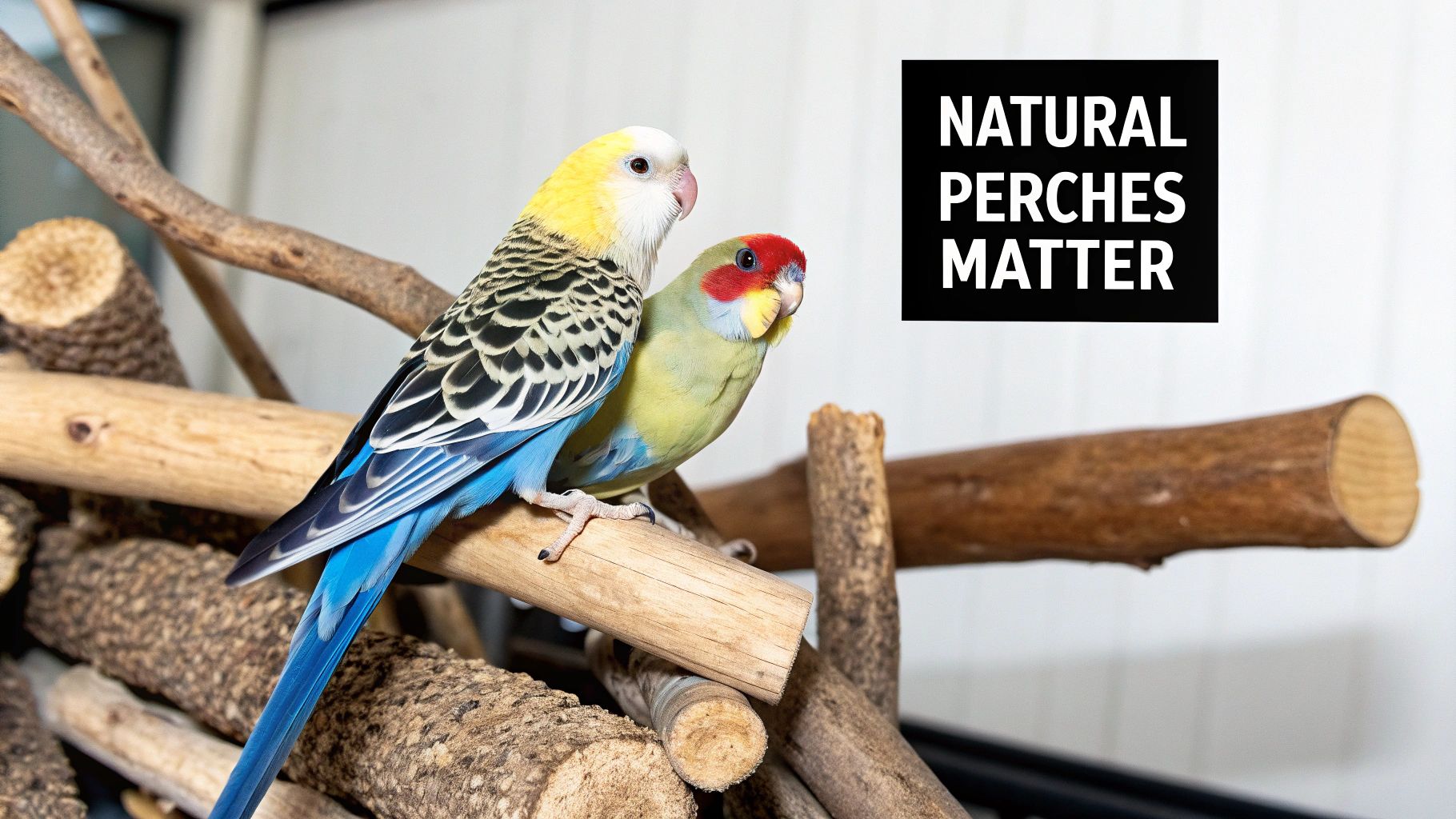
Natural bird perches, with all their irregular bumps, curves, and textures, are non-negotiable for responsible bird care in Australia. They’re fundamental tools for a healthy life.
Just think about the wild, where our native Galahs, Rosellas, and Lorikeets spend their days gripping countless types of branches on gum trees and banksias. This constant variation is nature's own personal trainer, keeping their feet strong and healthy.
The Foundation of Good Foot Health
Providing a variety of natural perches is the foundation of good avian care. This one simple act directly contributes to your bird's wellbeing in a few crucial ways.
- Helps Prevent Painful Foot Problems: The varied surfaces force a bird’s foot to grip in all sorts of different ways, exercising the muscles and tendons. This constant flexing is key to preventing serious and painful conditions like bumblefoot (pododermatitis) and arthritis, which are sadly common in birds kept only on smooth, uniform perches.
- Encourages Natural Behaviours: Birds use perches for so much more than just standing around. They chew on them to keep their beaks trim, rub against them for a good scratch, and use them as launch pads for flight and play.
- Reduces Stress and Fights Boredom: A stimulating environment is everything for a bird's mental health. A proper assortment of perches provides enrichment, encouraging climbing and exploration, which in turn reduces stress and can help stop destructive behaviours like feather-plucking. To learn more, it's worth exploring the different types of perches for your bird and their benefits.
Expert Advice: The goal is to create a dynamic 'movement map' inside the cage. A diverse perch setup encourages your bird to move, climb, and exercise just like it would in the wild. This is absolutely vital for both its physical and psychological health.
Despite these clear benefits, it's surprising how many pet birds in Australia are missing out. Research from Victoria revealed that only 55% of bird owners provide natural branch perches for their pets—a huge gap in mimicking a bird's natural habitat. This figure really highlights how important it is for owners to prioritise perch variety to ensure their feathered companions live healthier, happier lives.
Choosing the Best Types of Natural Perches
Stepping into the world of natural perches can feel like a lot to take in, but it's much simpler than it looks. Once you get a handle on the different materials, picking the perfect perches for your bird becomes second nature. And when it comes to your bird's health and happiness, not all woods are created equal.
The best choices are always untreated, bird-safe woods that offer a good mix of textures and hardness. This variety is what really matters—it encourages your bird to exercise different parts of its feet, keeping those muscles strong and preventing problems down the track.
Safe and Popular Perch Woods
A few types of wood have become firm favourites with Aussie bird owners, and for good reason. They're safe, tough, and pack a punch when it comes to health benefits.
- Manzanita: You'll spot this one easily. It's an extremely hard wood with a gnarled, smooth surface. Manzanita is incredibly durable, which makes it a fantastic long-term investment, especially if you have a bird with a powerful beak that loves to chew. Its naturally irregular shapes give your bird's feet a brilliant workout.
- Grapevine: This wood is on the softer side, with a wonderful twisty, viny shape. Smaller birds like budgies and cockatiels absolutely love gripping and chewing on it. Because it's softer, it’s gentle on their feet and makes a comfy spot for a rest.
Excellent Australian Native Options
Why not bring a bit of the Aussie bush into your bird’s cage? So many of our native trees make for fantastic, safe, and stimulating perches that your bird is already naturally adapted to.
- Eucalyptus (Gum Tree): A true Aussie classic. Gum tree branches are hard and built to last. The natural bark gives them an excellent texture for gripping and helps with beak conditioning, perfectly mimicking what birds like Galahs and Rosellas would find in the wild.
- Banksia: With its unique, knobbly texture from the old seed pods, Banksia offers a perching experience like no other. It’s a moderately hard wood that gives your bird an excellent grip and is perfect for preventing foot fatigue.
- Bottlebrush (Callistemon): The branches from the Bottlebrush tree are another fantastic native choice. They are generally a bit softer than Eucalyptus, offering a different feel that encourages your bird to use a whole new range of muscles in its feet.
To give you a clearer idea, here's a quick comparison of some of the best Aussie woods you can use.
Comparing Safe Australian Woods for Natural Bird Perches
| Wood Type | Hardness and Durability | Texture and Shape | Best Suited For |
|---|---|---|---|
| Eucalyptus (Gum) | Very Hard. Extremely durable, stands up well to heavy chewers. | Rough, flaky bark provides excellent grip. Naturally varied diameters. | All bird sizes, especially medium to large parrots like Galahs and Cockatoos. |
| Banksia | Medium-Hard. Good durability with a unique chewing experience. | Distinctive knobbly texture from seed pods, great for foot stimulation. | Small to medium birds like Cockatiels, Conures, and Rosellas. |
| Bottlebrush | Soft to Medium. Less durable than Eucalyptus but offers a gentle surface. | Smooth to slightly rough bark. Often has interesting twists and forks. | Small to medium birds; provides a comfortable resting perch. |
| Tea Tree (Melaleuca) | Medium-Hard. A solid, long-lasting option. | Papery, flaky bark that birds love to peel and shred, providing enrichment. | All bird sizes, offering both perching and shredding opportunities. |
| Willow | Soft. Easy to chew, making it great for beak maintenance but needs replacing more often. | Smooth bark with slender, bendy branches. Excellent for smaller birds. | Budgies, Finches, and other small birds that enjoy chewing softer woods. |
A well-rounded setup is all about mixing it up. You could have a main Eucalyptus perch for durability, a twisty Bottlebrush branch for variety, and maybe a special platform perch for snoozing. If you're looking for inspiration on how to combine these into a fun and functional setup, you can explore ideas for a complete bird perch stand.
Expert Advice: The key is variety in hardness. A mix of hard woods like Eucalyptus and softer woods like Bottlebrush or Willow ensures your bird’s feet are constantly adapting and exercising. This prevents the repetitive strain that comes from using perches of a single density.
Woods and Materials to Avoid
Just as important as knowing what to use is knowing what to stay away from. Some woods are flat-out toxic to birds, while others hide dangers you might not expect.
Absolutely avoid any branches from:
- Apricot, Cherry, Peach, or Plum trees (these contain cyanogenic glycosides)
- Oleander (highly toxic)
- Yew
- Rhubarb leaves
On top of this, never use branches from your garden or a local park unless you are 100% certain they haven't been sprayed with pesticides, herbicides, or other chemicals. These residues can be fatal to birds, even in tiny amounts. Branches collected near roads also pose an invisible risk from traffic pollution.
This is why it's always safest to get your natural perches from a reputable supplier. They can guarantee the wood is bird-safe, properly cleaned, and free from any nasty contaminants. That peace of mind is priceless when it comes to providing the best and safest home for your feathered friend.
Matching Perch Size and Placement to Your Bird
Picking the right natural bird perches is about so much more than just finding safe materials. It’s about getting the size spot-on and placing them with a bit of thought. A perch that’s too big or too small is like you wearing ill-fitting shoes all day—it's uncomfortable, awkward, and can cause real harm over time. The wrong size can lead to foot strain, stop your bird from gripping properly, and completely undo all the good you’re trying to do.
Just as crucial is where you put them. Good placement can transform a simple cage into a dynamic, stimulating environment. Think of it as creating a 'movement map' for your bird. You want to encourage them to climb, explore, and get a bit of a workout, which is absolutely vital for their physical and mental health.
Getting the Perch Diameter Just Right
There’s a golden rule for perch size, and it's simple but incredibly important: your bird's foot should wrap roughly two-thirds of the way around the perch. This ensures their front and back talons don’t touch or overlap, allowing for the perfect grip. This specific angle engages all the right muscles and tendons, giving their feet a proper workout just like they’d get in the wild.
This is where having a variety of natural materials really shines, as they offer the different textures and diameters needed for peak foot health.
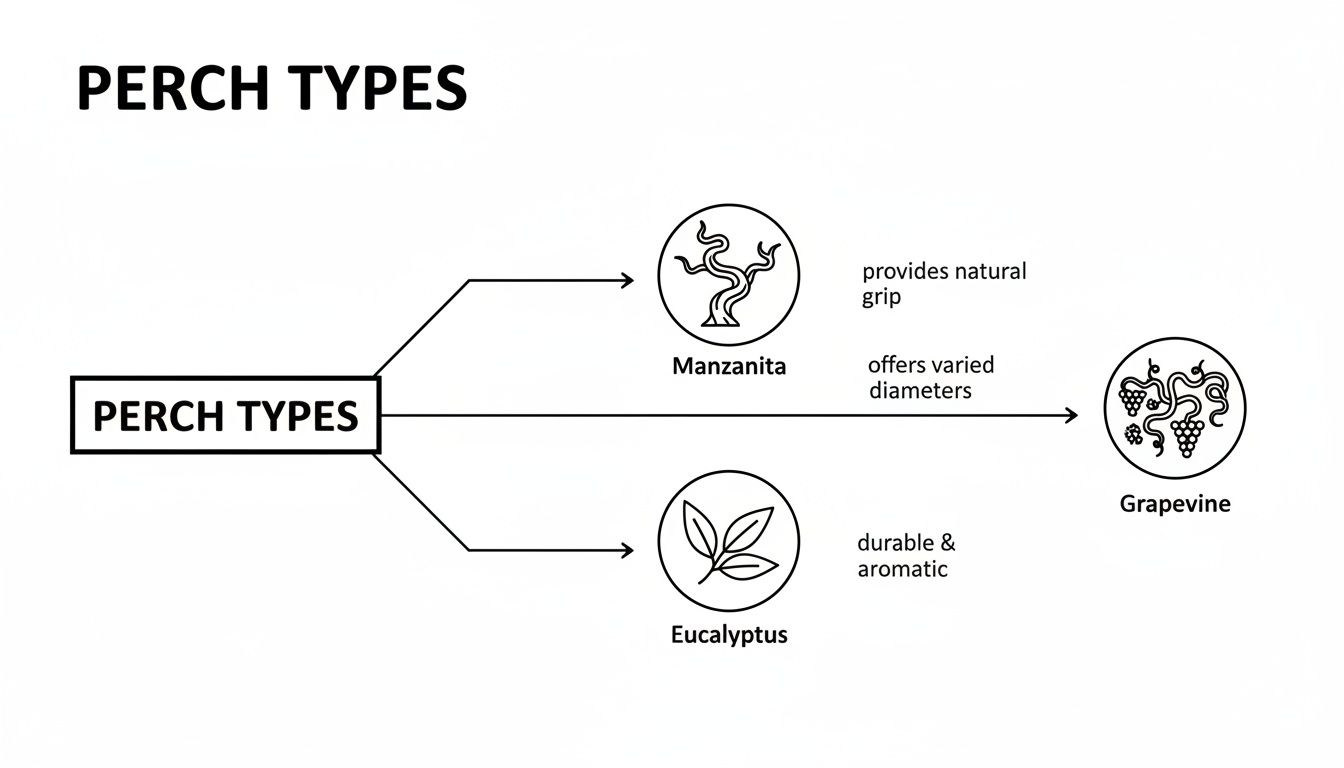
The variety you see here—from gnarled Manzanita to our native Eucalyptus—is exactly what your bird needs to flex and stretch its feet in different ways.
To make it a bit easier, here’s a general guide for some of our common Australian pets:
- Small Birds (Budgies, Finches, Lovebirds): Aim for diameters between 10mm and 20mm.
- Medium Birds (Cockatiels, Conures, Rosellas): Look for perches ranging from 20mm to 40mm.
- Large Birds (Galahs, Amazons, Cockatoos): Choose sturdy branches with a diameter of 40mm to 60mm.
- Extra-Large Birds (Macaws): You’ll need very robust perches, typically 50mm and larger.
This isn't just a random recommendation; it's grounded in avian anatomy. Over 60% of our nation's 800+ bird species are Passeriformes, or perching birds. Their feet are marvels of evolution, perfectly adapted for gripping the huge variety of branches in our native woodlands. By providing varied perch sizes, we're helping them mimic what comes naturally. You can read more about the amazing feet of our local birds and how they've evolved to thrive in the Australian bush.
Strategic Placement for an Active Bird
Once you’ve got the right sizes sorted, it’s time to think about placement. A well-designed cage layout is less about storage and more about encouraging activity. The goal is to make your bird move, think, and play.
Here are a few essential placement tips to get you started:
- The Sleeping Perch: Every bird has a favourite spot to roost. Place the most comfortable perch—often softer wood or a natural rope perch—high up in the cage where they feel safest. Most importantly, keep it away from food and water bowls to stop droppings from contaminating them.
- Activity and Foraging Perches: Position other perches near toys and foraging stations. For example, putting a knobbly Banksia perch next to a shredding toy will encourage your bird to move over and interact with it. A swinging perch can add an extra layer of fun and challenge their balance.
- Create Pathways: Arrange perches at different heights and angles to create a kind of jungle gym. This prompts your bird to climb, hop, and stretch to get from one point to another, giving them a full-body workout. Just make sure no perch is directly above another to avoid a mess.
Expert Advice: Don't overcrowd the cage. While variety is brilliant, your bird still needs enough open space to fully stretch its wings without hitting anything. A cluttered cage can be stressful and even dangerous. The best setups balance plenty of perching options with clear, open areas for movement, just like a treetop in the wild. This thoughtful layout transforms their cage from a simple box into a stimulating, enriching home.
Getting Your Perch Setup Just Right: Safe & Stimulating Spaces
Setting up a cage with beautiful natural perches is one of the best things you can do for your bird. But a great setup isn't just about throwing in a few cool-looking branches. It’s about creating a space that is both exciting and completely safe. Honestly, getting the installation and maintenance right is just as crucial as picking the perfect piece of wood.
The number one rule? Make sure every perch is rock-solid. A wobbly or unstable perch is a huge no-no. It's a serious hazard that can cause a nasty fall, leading to injuries to your bird's legs, wings, or even their chest. Always give them a good wiggle to double-check that the hardware is tight and the perch doesn't spin or shift when your bird lands on it.
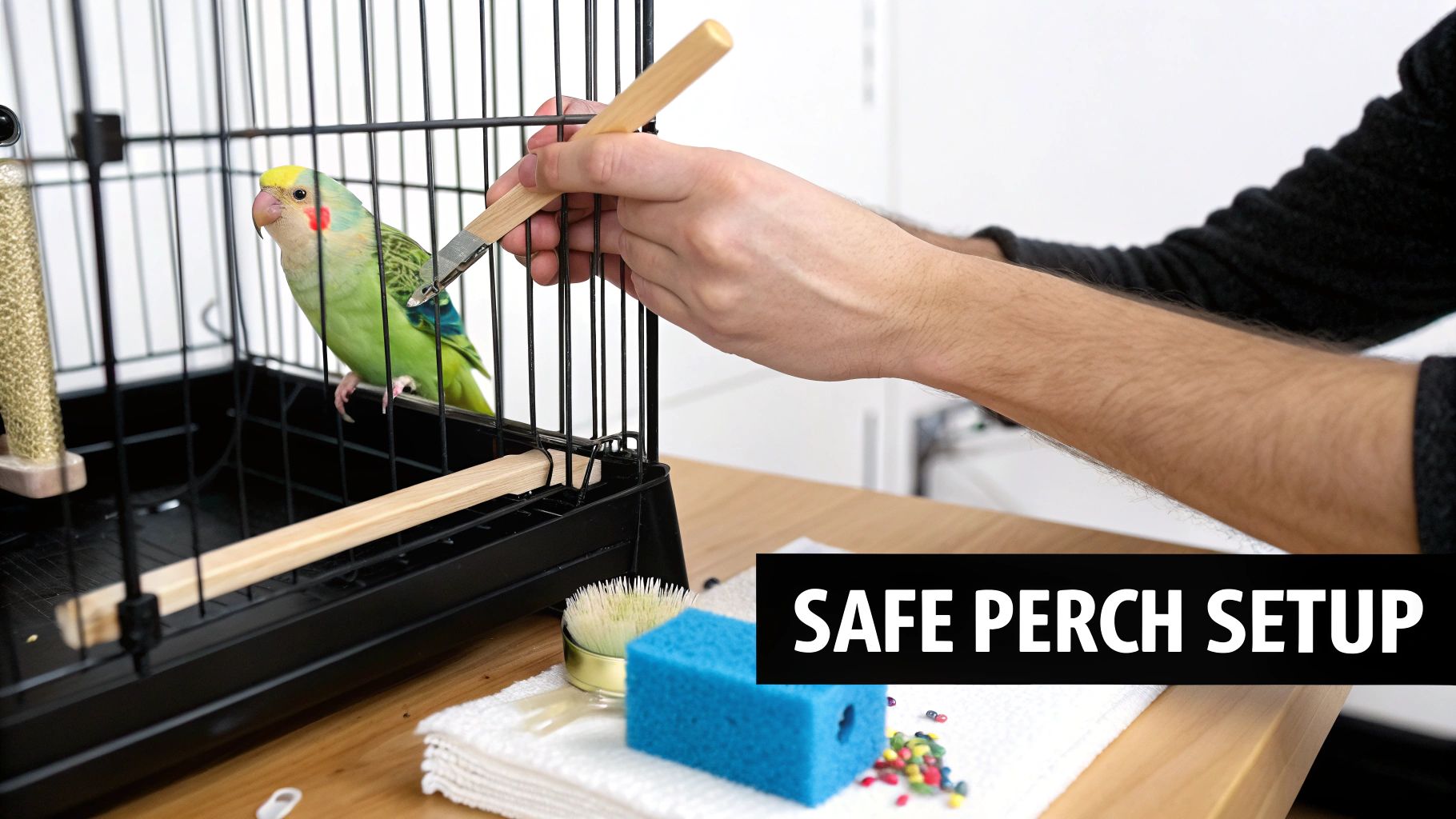
That stability gives them the confidence to move around, play, and explore their home, turning their cage from just a box into a secure and engaging playground.
Avoiding Hidden Dangers
True safety is often in the details you can't see. When you're kitting out your bird's home, you have to be on the lookout for invisible threats, especially when it comes to the hardware and where your branches came from.
One of the biggest risks is using the wrong hardware. Many nuts, bolts, and washers you'd find at a hardware store are coated in zinc or other heavy metals to stop them from rusting. While that's fine for your garden shed, these metals are highly toxic to birds. If your bird chews on them, it can lead to heavy metal poisoning, which is a serious and often fatal condition.
Expert Advice: Always, always use 100% stainless steel hardware for installing perches, toys, and anything else in the cage. It's the only material that is guaranteed to be non-toxic and completely bird-safe. It gives you total peace of mind.
Another sneaky hazard is grabbing an untreated branch from your own backyard. Even if you know the tree species is safe for birds, the wood could be contaminated with pesticides, herbicides, or even pollutants from nearby road traffic. These toxins can make your bird incredibly sick, so it's vital to only use branches from a trusted, reputable supplier or ones you've prepared yourself with meticulous care.
Cleaning and Maintenance Routines
A clean cage is a healthy cage. Natural wood, with all its nooks, crannies, and porous bark, needs a regular cleaning routine to stop nasty bacteria and mould from taking hold.
Here’s a simple but effective schedule to stick to:
- Daily Spot-Cleaning: Give any fresh droppings a quick wipe with a damp cloth or a bird-safe cleaning spray. This stops the mess from soaking into the wood.
- Weekly Wipe-Down: Give all the perches a more thorough wipe with a damp cloth to get rid of any dust and debris that's built up.
- Monthly Deep Clean: Take all the perches out of the cage for a proper scrub. Use hot water and a stiff brush to get into all the grooves. For a good disinfection, use a vet-approved, bird-safe solution like F10SC Veterinary Disinfectant—just make sure you follow the dilution instructions perfectly.
After a deep clean, rinse the perches really well to remove any cleaning residue. Let them dry completely, preferably in the sun, before putting them back in the cage. Never use harsh household chemicals like bleach; the fumes alone can be incredibly harmful.
Knowing When to Replace a Perch
Natural bird perches are meant to be chewed and worn down—they aren't going to last forever! Checking them regularly for wear and tear is a critical part of keeping your bird’s habitat safe.
It's time for a replacement if you spot any of these signs:
- Splintering: If a perch has been chewed so much that it's creating sharp splinters, it can injure your bird's feet or mouth.
- Excessive Smoothness: Over time, a favourite perch can get worn down and smooth. Once that happens, it's not providing the grip or foot-exercising texture your bird needs.
- Mould or Mildew: If you see any spots of mould, chuck the perch out immediately. It's not worth the risk.
- Structural Weakness: If the perch is cracked or feels weak and bendy, it’s no longer safe and needs to be replaced.
This drive to interact with their environment is hardwired into birds. In Australian horticulture, bird damage is a massive issue, with over 60 species, including rosellas and honeyeaters, known for perching on crop edges to raid fruit. By providing a rich and varied perch setup in their cage, including fun, dynamic options like a natural branch swing, you can channel that natural instinct in a positive way, preventing boredom and destructive behaviours. You can learn more about how perching behaviour influences native birds by reviewing the NSW Department of Primary Industries' findings on managing bird damage.
Making Your Own Perches Versus Buying Them
So, you're looking at natural branches for your bird's cage and wondering: should I make them myself or just buy them? It's a question nearly every Australian bird owner faces. Both options have their perks, and the best choice really boils down to how much time you have, your confidence in finding safe materials, and whether you value convenience.
For the hands-on bird lover, crafting your own perches can be incredibly rewarding. You get total control over the exact size, shape, and layout of your bird's playground. But this creative freedom comes with a huge responsibility: you have to guarantee absolute safety, from start to finish.
The Do-It-Yourself Approach
Going the DIY route is much more than just grabbing a branch from the backyard. It's a careful process of identifying, cleaning, and assembling everything safely to protect your feathered mate from hidden dangers.
Before you even pick up a branch, you must be 100% certain you know what tree it came from. So many common garden trees in Australia are toxic to birds, and a wrong guess just isn't worth the risk.
A safe DIY project looks something like this:
- Identify Safe Wood: Stick to what you know is safe. In Australia, that means natives like Eucalyptus (Gum), Banksia, Bottlebrush, or Tea Tree. If you have even a shadow of a doubt, leave it.
- Source Responsibly: Find your branches well away from roadsides where they can be coated in traffic pollution. Make sure the tree has never been sprayed with pesticides, herbicides, or fungicides.
- Clean It Thoroughly: Give the branch a really good scrub with hot water and a stiff brush to get rid of all the dirt, grime, and loose bark. A high-pressure hose can work wonders here.
- Disinfect Properly: To kill off any lingering nasties like bacteria, mould spores, or tiny insects, you need to disinfect the wood. A popular method is to bake the branches on a tray in the oven at around 120°C for 30-45 minutes. Keep a close eye on them to make sure they don't scorch.
- Use Safe Hardware: Once the branches are cool and bone-dry, attach them to the cage using only 100% stainless steel washers, nuts, and bolts. This is non-negotiable, as zinc-coated hardware can cause heavy metal poisoning.
The Convenience of Buying Pre-Made Perches
While making your own is fulfilling, buying perches from a specialist offers something priceless: peace of mind and convenience. For many people, especially new bird owners or those with hectic schedules, this is easily the safest and most practical choice.
The biggest benefit is guaranteed safety. A trusted supplier has already done all the hard work. They've sourced non-toxic woods, made sure they're free from chemical sprays, and prepared them to be completely cage-ready. You can trust that the perch your bird chews on is completely safe.
Expert Advice: Buying from a specialist also gives you access to fantastic perch materials that aren't native to Australia, like Manzanita or Java wood. You'd never be able to source these yourself, and they offer unique textures and incredible durability that will seriously enrich your bird's environment.
On top of that, professionally made perches come with the right bird-safe hardware already installed. This saves you time and eliminates the risk of accidentally using the wrong, toxic materials. A simple, ready-to-hang 30cm natural perch is a perfect example of how easy it can be to instantly upgrade your bird's cage with a high-quality, safe surface.
Ultimately, the decision is yours. You need to balance your enthusiasm for a hands-on project with the absolute need for safety. If you have the knowledge and patience to do it right, the DIY approach can be a brilliant way to customise your bird's home. If not, choosing a professionally prepared perch is a worry-free solution that gives your bird all the benefits of natural wood with none of the risks.
Common Questions About Natural Bird Perches
Diving into the world of natural bird perches can bring up a few questions. Getting straight, honest answers is the key to making good decisions for your bird's health and happiness. We've gathered some of the most common queries we hear from Aussie bird owners to help clear up the confusion and get you on the right track.
How Many Natural Perches Should I Have in My Bird's Cage?
You'll want at least three to four perches of different kinds in the cage. But the aim isn't just to cram it full; it's about creating a little treetop gym for your bird to explore and enjoy.
A good setup mixes up the materials, shapes, and thicknesses to get your bird moving. For a Galah, you might have a hard eucalyptus branch for serious chewing, a softer bottlebrush perch for comfort, and maybe an interactive toy like the Jingle Bells Bird Toy hanging nearby to spark some fun. This variety keeps their feet constantly adjusting and strengthening.
Are Sandpaper Perches Good for a Bird's Nails?
This is a really common myth, but the simple answer is no. We strongly recommend staying away from any sandpaper-covered perches. The idea of a self-trimming perch is tempting, but the reality is they're far too abrasive.
That rough surface can cause painful sores and cuts on the sensitive pads of your bird's feet. This can lead to a serious infection called bumblefoot (pododermatitis), which is awful for them. A much safer way to help with their nails is to use perches with natural, rough bark, like ironbark or certain gum branches, which provide texture without being harmful.
Can I Use Any Branch from My Australian Garden?
Using branches straight from your garden is a risky business. While many native Aussie trees like Gum, Banksia, and Lilly Pilly are generally safe, plenty of others are toxic. The golden rule is simple: if you have any doubt, don't use it.
It’s not just about identifying the tree. You also need to think about hidden dangers. Has your garden or a neighbour's been sprayed with pesticides or herbicides? Is it near a road where it could have soaked up traffic fumes? These things can be fatal to a bird. For peace of mind and guaranteed safety, it's always best to buy perches from a trusted supplier who knows what they’re doing.
Expert Advice: A well-thought-out cage setup is your best defence against boredom and destructive behaviours. Having plenty of perches, especially near fun stuff like the Coconutty Pinata, channels their natural chewing and foraging instincts in a positive way.
How Often Should I Clean or Replace Natural Perches?
Keeping perches clean is a must for a healthy cage. We suggest a quick wipe-down of any droppings daily and a proper scrub at least once a week. You should give them a full disinfection about once a month, or more often if they get really messy.
You need to replace a natural perch immediately if you see any signs of mould or mildew. It's also time for a new one if it's been chewed into sharp splinters, has a big crack, or has become too smooth from use. A worn-down perch doesn't offer the grip and foot exercise your bird needs. Adding something like the Shred-A-Box bird toy is a great way to give them something else to chew on and help your perches last longer.
What’s Next? Keep Learning and Exploring
Your journey to creating the perfect haven for your bird doesn’t end here. Far from it! Getting the perches right is a massive step, but the world of bird enrichment is always full of new ideas and discoveries. The best thing you can do for your feathered mate is to stay curious.
When you understand their deep-seated need for exercise, mental challenges, and a safe environment, you’re not just an owner—you’re a true companion.
A thoughtfully designed cage, brimming with a variety of natural perches and engaging toys, is more than just a box with bars; it’s a dynamic, stimulating home. It’s a place that encourages them to be birds—to forage, climb, chew, and explore. This isn't just for fun; it's absolutely vital for their physical and mental health.
To help you continue on this path, we've pulled together a few more articles from our blog. Think of them as the next chapter in your bird care journey, diving deeper into topics we've touched on today.
Keep Reading
- Perches for Birds - All You Need to Know!
- What is a Bird Perch Stand, and Why Does Your Bird Need One?
- DIY Bird Toys - The Good, The Bad, & The Ugly!
Disclaimer Summary:
The information in this article is general in nature and may include external links or resources not created by Lou Lou Bells Bird Toys. Every bird is unique, so we encourage you to seek personalised advice from your own veterinarian or avian specialist. For full details, please read our complete disclaimer here.