
For decades, the go-to advice for feeding a cockatoo was a simple bowl of seeds. We now know this is like trying to live on a diet of only fast food—it might be tasty and easy, but it’s dangerously lacking in the essential nutrients needed for a long, vibrant life.
As an expert in avian care, I can tell you that so many of the health issues avian vets in Australia see, from fatty liver disease to poor feather quality, can be traced straight back to a poor, seed-heavy diet.
Moving beyond this outdated idea is the single most important thing you can do for your bird’s wellbeing. A modern, vet-approved diet is built on a solid foundation of balanced nutrition, designed to support their high energy levels, incredible intelligence, and overall happiness. It’s about creating a meal plan that helps your cockatoo thrive, not just survive.
The Modern Cockatoo Food Pyramid
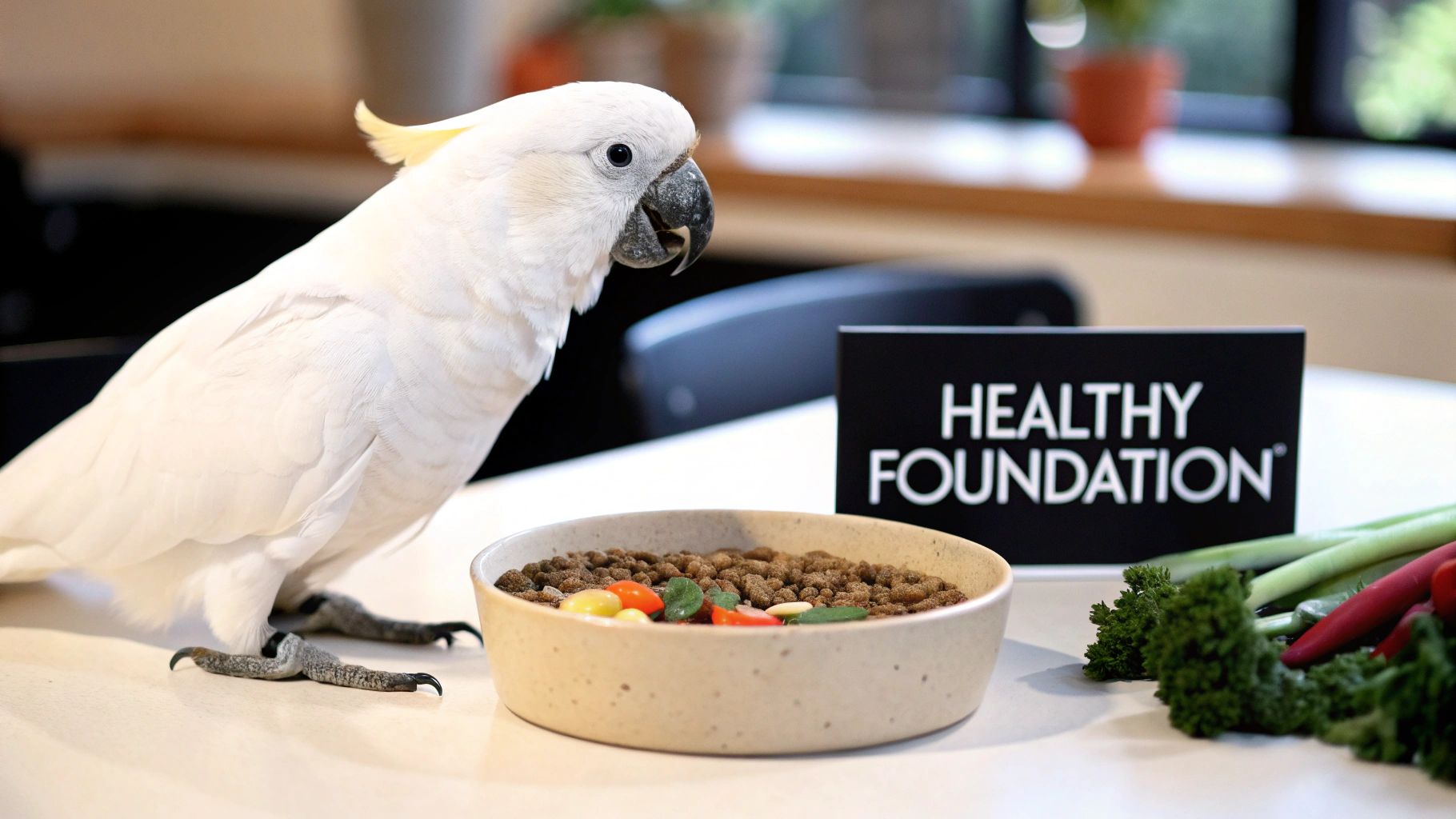
Think of your cockatoo's ideal diet as a pyramid. The largest, most important layer at the bottom isn't seed; it's high-quality formulated pellets. These are designed to provide complete and balanced nutrition in every bite, preventing the common problem where a clever 'too picks out their favourite fatty sunflower seeds and leaves the rest.
From there, we build up with variety, adding fresh foods that provide different textures, flavours, and nutrients. This approach not only fuels their body correctly but also engages their mind, mimicking the natural foraging behaviours they would perform in the wild across the Australian bush. For a comprehensive overview of general avian wellbeing, you can check out our bird care essential guide which covers more than just diet.
A varied diet does more than just nourish your cockatoo's body; it nourishes their mind. By providing a mix of pellets, vegetables, and safe native plants, you are encouraging natural foraging behaviours that prevent boredom and promote mental stimulation.
This visual shows the ideal balance for your cockatoo's diet, with pellets forming the base.
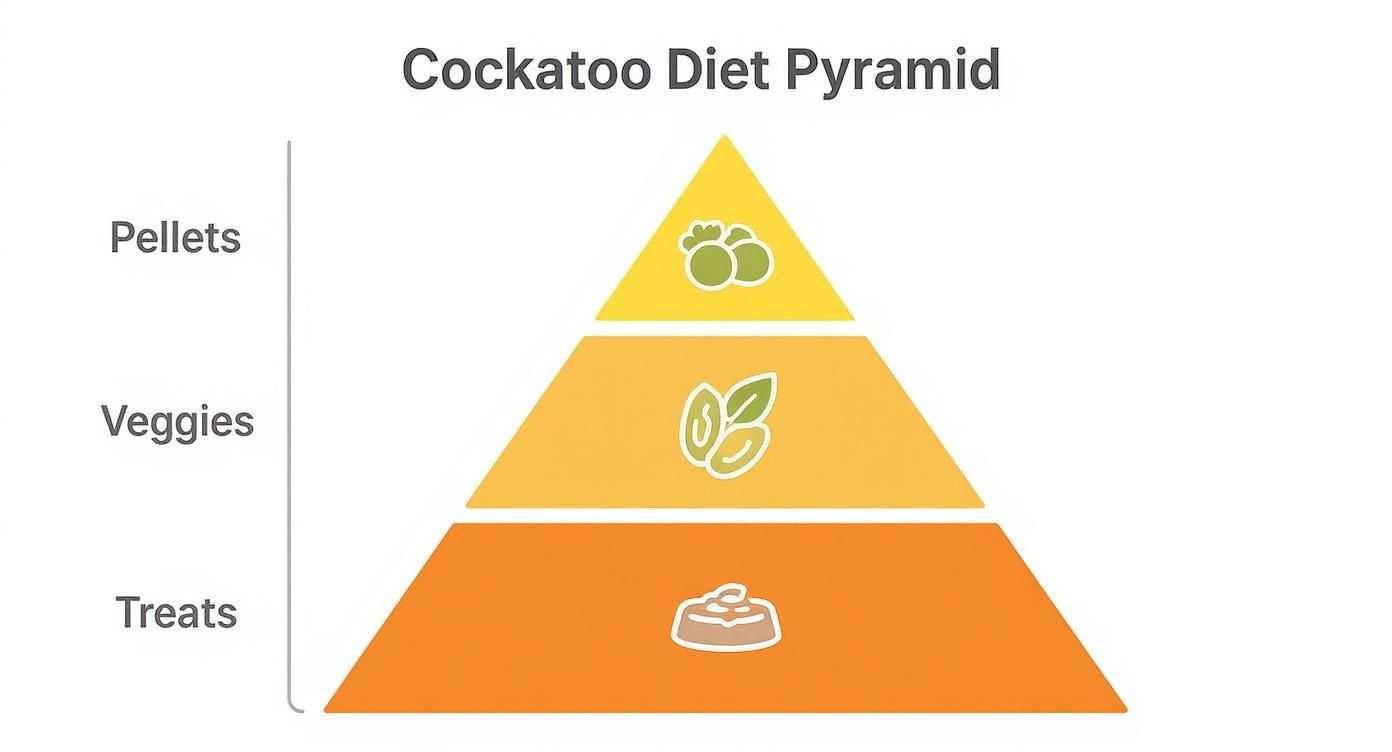
As the pyramid illustrates, the bulk of their food should be pellets, supplemented with a healthy portion of fresh vegetables, while treats like seeds and fruit should be offered sparingly.
Why Variety Is So Important
In their natural habitat in Australia, cockatoos spend a huge portion of their day foraging. They fly for kilometres, exploring different plants, cracking open gumnuts, and digging for roots. This constant activity keeps their bodies fit and their minds sharp.
When we keep these intelligent birds in our homes, we have a responsibility to replicate that experience. A bowl filled with just one type of food day after day leads to boredom, which can manifest in problem behaviours like screaming or feather plucking.
By offering a diverse range of cockatoo bird food, you’re providing:
- Nutritional Completeness: Different foods offer different vitamins and minerals.
- Mental Stimulation: New shapes, textures, and colours keep their brains active.
- Behavioural Enrichment: It encourages them to engage with their food, rather than just passively eating.
Getting this foundation right is the first step towards a complete nutritional overhaul that will support your cockatoo for years to come.
Decoding Pellets and Seeds for Your Cockatoo
For many Aussie bird owners, the great pellets versus seeds debate is a bit of a minefield. Walk into any pet store, and you're faced with aisles of colourful seed mixes, all marketed as the perfect meal for your cockatoo. But here's the honest truth from people who've seen the consequences: a seed-only diet is one of the biggest health risks for our companion parrots.
Think of a commercial seed mix like a kid's lolly bag. Your cockatoo, being a wickedly smart creature, will almost always pick out the tastiest bits—usually the fatty sunflower seeds—and flick the rest across the room. This selective feeding is the heart of the problem. It leads to a diet dangerously high in fat but critically low in essential vitamins and minerals, like calcium and Vitamin A.
Why Pellets Are the Cornerstone
This is where formulated pellets come in. They're the solution to that nutritional chaos. Each pellet is basically a complete, balanced meal packed into one tidy bite. Manufacturers mix grains, seeds, veggies, vitamins, and minerals into a sort of 'dough,' which is then cooked and shaped into easy-to-eat pieces.
This means your cockatoo gets consistent, balanced nutrition in every mouthful, stopping them from just loading up on their high-fat favourites. In Australia, you'll generally come across two main types of pellets:
- Extruded Pellets: These are cooked at high temperatures. The process makes them really digestible and kills off any potential nasties, giving them a good, long shelf life.
- Cold-Pressed Pellets: These are made at lower temperatures. The thinking here is that this gentle process helps preserve more of the natural nutrients in the ingredients.
Which one to choose? It often comes down to your bird's personal preference and what your avian vet recommends. The most important thing is simply choosing a high-quality pellet that’s right for your cockatoo's species and size.
Pellets vs Seeds: A Nutritional Snapshot
To really see the difference, it helps to put them side-by-side. A formulated pellet is engineered for complete health, while a seed mix is more of a high-fat snack.
| Nutrient/Feature | Formulated Pellets | Seed Mix |
|---|---|---|
| Nutritional Balance | Complete and balanced; all necessary vitamins & minerals included. | Unbalanced; high in fat, low in many essential nutrients. |
| Vitamin A | Fortified to correct levels. | Deficient; leads to respiratory and skin issues. |
| Calcium | Added to support bone health and egg-laying. | Critically low; can cause brittle bones and egg-binding. |
| Fat Content | Controlled and balanced for a healthy weight. | Very high, especially sunflower seeds, leading to obesity. |
| Selective Feeding | Impossible; every bite is nutritionally identical. | A major problem; birds pick out favourites and discard the rest. |
The takeaway is pretty clear. Pellets provide a reliable nutritional foundation that a seed mix simply can't match.
The Problem with a Seed-Heavy Diet
Sure, seeds are a natural part of a wild cockatoo's diet, but the mixes sold in shops are a world away from what they'd forage for in the bush. Commercial seed bags are often overloaded with fat, particularly from sunflower seeds.
It's become such an issue that research into wild cockatoos in Canberra found that even there, human-provided seed is causing problems. Sunflower seeds were the most common handout, but with a fat content over 50% and a lack of calcium and vitamins, they create serious nutritional gaps. You can read more about these findings and their impact on native birds to really understand the risks.
Expert Advice: Treat seeds like you would chocolate for a child. They're a high-value treat, perfect for training or as a very occasional reward, but they should never be the main meal. A diet built on seeds often leads to obesity, fatty liver disease, and, sadly, a much shorter life.
Transitioning a Stubborn Cockatoo from Seeds to Pellets
If your cockatoo has been munching on seeds for years, you might have what we affectionately call a "seed addict" on your hands. Switching them over isn't a race; it requires patience and a gentle, consistent plan. Changing their food abruptly can be dangerous, as a stubborn 'too might just refuse to eat altogether.
Here’s a step-by-step method that many Aussie bird owners have found works well:
- Start with Timed Meals: Instead of leaving a full bowl of seeds out all day, offer food for two 15-20 minute periods—once in the morning and once in the evening. This creates a bit of hunger and makes them more open to trying new things.
- Introduce Pellets Slowly: In a separate bowl, offer a small amount of pellets during their mealtimes. They'll probably ignore them at first, and that's perfectly fine. The goal is just to get them used to the sight of this new food.
- Mix Them In: Once they’re comfortable with pellets being in the cage, start mixing a tiny amount (around 10%) into their usual seed mix. Over several weeks, gradually increase the pellet percentage while dialling back the seeds.
- Make Pellets More Appealing: Try making the pellets a little more interesting. You can slightly moisten them with warm water or a drop of unsweetened apple juice to change the texture. Another trick is to crush them up and sprinkle the powder over a piece of their favourite soft veggie.
- Use Foraging to Your Advantage: Make them work for it! Hide the pellets inside easy-to-solve puzzles, like a shreddable foraging toy, or wrap a few in paper. This turns the new food into a fun game, which is far more tempting than just finding it in a boring old bowl. For a cockatoo, the reward of 'destroying' something to get a treat is often half the fun.
This whole process can take weeks, or even months. Just stay patient, keep a close eye on your bird’s droppings and weight, and never, ever hesitate to get your avian vet involved for guidance. Making this change is the single most powerful thing you can do to ensure a long, healthy, and happy life for your feathered mate.
Adding Fresh Foods to Your Cockatoo's Diet
While a high-quality pellet mix forms the nutritional bedrock of your cockatoo's diet, it’s the fresh food that really brings their meals to life. Think of it this way: pellets are the sensible, essential main course, but fresh veggies and native plants are the colourful, nutrient-packed sides that make the entire meal complete.
Bringing a variety of fresh foods into their routine is also one of the best things you can do for their mental health. It gives your clever bird a whole world of new textures, tastes, and shapes to get stuck into, much like the smorgasbord they’d find foraging in the Aussie bush. That variety is your secret weapon against boredom, encouraging the healthy, natural behaviours we all want to see.
The Best Vegetables for Your Cockatoo
When you're picking out veggies, think colour. A rainbow on their plate isn't just for show; different colours often mean different nutrients, so mixing it up helps cover all the bases. The goal is for fresh veg to make up about 15-30% of what they eat each day.
Some of the best choices you can grab from any local Australian supermarket include:
- Dark Leafy Greens: Things like kale, silverbeet, and spinach are vitamin powerhouses. Just offer them in moderation as part of a rotation, as they contain oxalic acid.
- Orange and Yellow Veggies: Sweet potato (cooked and cooled), pumpkin, carrots, and capsicum are fantastic sources of Vitamin A, which is crucial for a strong immune system and healthy eyes.
- Green Goodness: Broccoli, peas, green beans, and zucchini are always solid choices. Many cockatoos find the florets of broccoli especially fun to demolish.
- Spicy Flavours: Don't be afraid to offer a bit of a kick. Fresh chillies are a huge favourite for many cockatoos and are perfectly safe—birds don't have the same receptors for capsaicin that we do!
A Taste of Home: Native Australian Flora
For a truly special treat that connects your cockatoo to its wild heritage, you can offer parts of safe, native Australian plants. This is a brilliant form of enrichment, giving them familiar tastes and textures they're instinctively drawn to.
A critical word of warning: before you offer any native plant, you must be 100% certain it hasn't been sprayed with pesticides or herbicides. It also shouldn't be growing near a busy, polluted road. Only ever offer plants you can positively identify as bird-safe.
A few great native options are:
- Eucalyptus: Fresh leaves, branches, gumnuts, and blossoms are a classic cockatoo favourite.
- Grevillea and Bottlebrush (Callistemon): The flowers are a wonderful source of natural nectar and are usually devoured with enthusiasm.
- Banksia and Hakea: The flowers and tough seed pods can provide hours of entertainment and a serious beak workout.
Fruit: A Sugary Treat
While fruits do contain vitamins, they are packed with natural sugars (fructose). In the wild, fruit is a seasonal bonus, not an everyday staple. Too much sugar can lead to health problems, so it's best to offer fruit sparingly.
Treat fruit as a special reward, making up no more than 5% of their total diet. Small pieces of apple (seeds removed), berries, mango, and melon are all excellent options.
Preparing and Serving Fresh Food
How you prepare fresh food is just as important as what you choose. Always give all produce a thorough wash to get rid of any lingering pesticides or bacteria.
From there, you can get creative. Chop veggies into different sizes—some birds prefer a fine dice, while others love a big chunk they can hold and chew on. Instead of just dumping it all in a bowl, try weaving kale leaves through the cage bars. Or, you could skewer chunks of carrot and capsicum on a stainless steel fruit spear to transform mealtime into a fun challenge.
This simple change encourages them to work for their food, satisfying that deep-seated instinct to forage and explore.
Foods That Can Harm Your Cockatoo
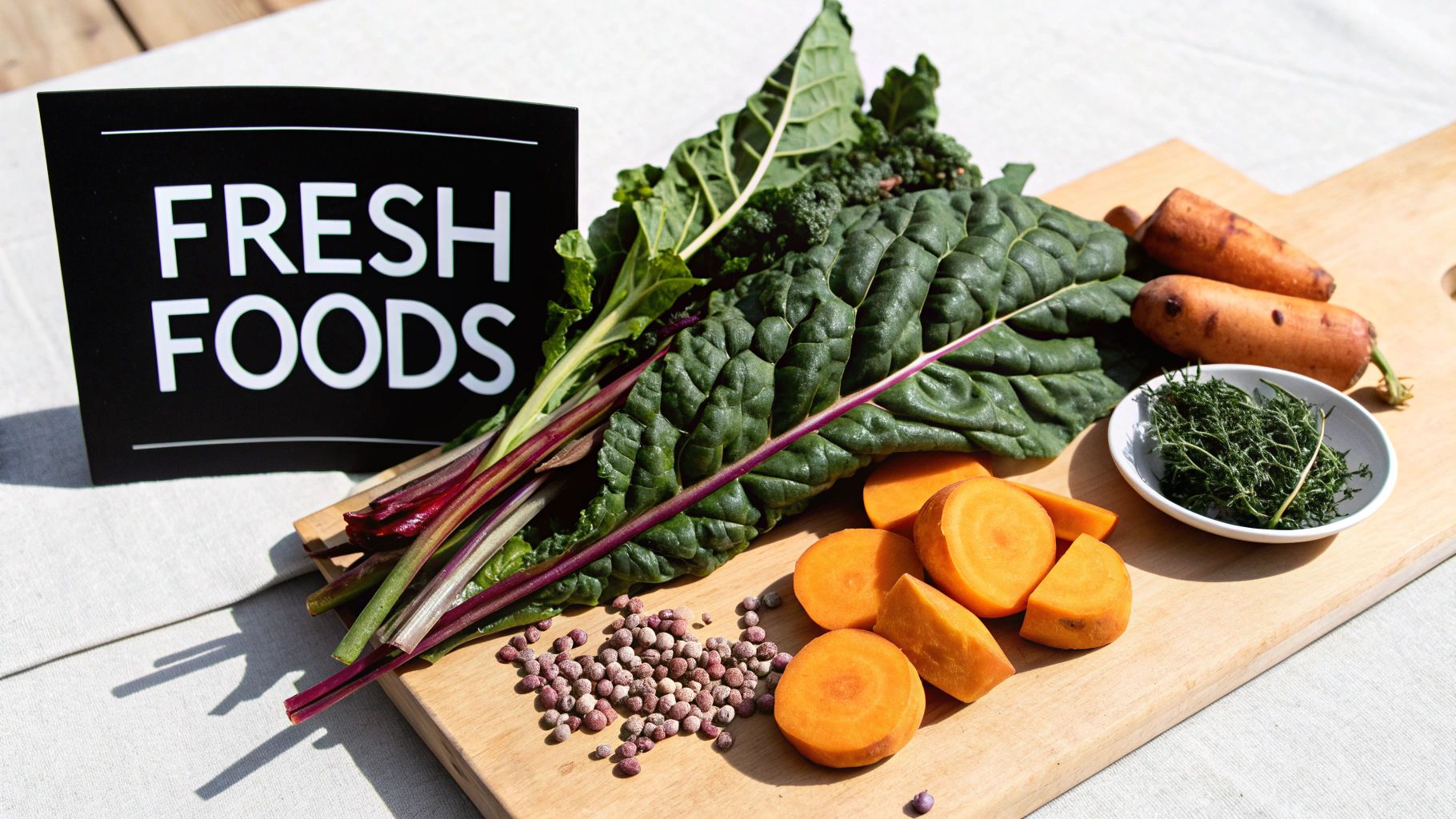
As any cockatoo owner knows, these birds are incredibly clever and curious. Their intelligence is a massive part of their charm, but it also means they’re likely to get their beak into anything and everything—including whatever is on your dinner plate. While sharing a meal can feel like a great bonding moment, it's absolutely vital to know that many common human foods aren't just unhealthy for cockatoos; they're downright dangerous.
A moment's distraction is all it takes for a curious 'too to snatch a potentially toxic morsel. Keeping your feathered mate safe means bird-proofing your kitchen and being constantly vigilant about what they can access.
The Absolute No-Go List
Some foods are immediate, high-alert toxins for all parrots. These should never be given to your cockatoo, and if you even suspect they’ve eaten any, you need to contact your avian vet straight away.
Think of this as your essential safety checklist:
- Avocado: Every single part of the avocado plant, fruit included, contains a toxin called persin. It's highly toxic to birds and can lead to respiratory distress and sudden death.
- Chocolate: This contains theobromine, a compound that is poison to birds. The darker and more bitter the chocolate, the more dangerous it is.
- Caffeine and Alcohol: A bird's nervous and cardiac systems are far more sensitive than ours. Even a tiny amount of coffee, tea, or any alcoholic beverage can be fatal.
- Onion and Garlic: Whether raw or cooked, these contain sulphur compounds that can rupture a bird's red blood cells, causing a serious condition called anaemia.
- Fruit Pits and Apple Seeds: The pits from stone fruits like cherries, apricots, and peaches, along with apple seeds, contain small amounts of cyanide. While one seed is unlikely to cause a problem, it’s just not worth the risk. Always remove them.
Hidden Dangers in Human Snacks
Beyond the obvious poisons, many of our everyday snacks pose a slower, but just as serious, threat. A cockatoo's body simply isn't built to handle the high levels of salt, fat, and sugar found in our processed foods.
These items might not trigger an immediate emergency, but feeding them over time can lead to severe health problems like obesity, fatty liver disease, heart conditions, and kidney failure.
Expert Advice: Think of your cockatoo's body like a high-performance engine; it needs clean, high-quality fuel. Processed snacks are like putting the wrong type of petrol in the tank—it might run for a little while, but eventually, the system will break down.
Be especially wary of these:
- Salty Foods: Chips, crackers, and pretzels contain way too much salt for a bird’s delicate kidneys to handle.
- Sugary Foods: Lollies, biscuits, and soft drinks can wreak havoc on their digestive system and lead directly to obesity.
- Fatty Foods: Things like fried foods, butter, and fatty meats can cause fatty tumours (lipomas) and put immense strain on their liver.
The Dangers of a Curious Beak
In the wild, a cockatoo’s instinct is to explore and sample its environment. This dietary flexibility is well-documented; for instance, the Sulphur-crested Cockatoo's natural diet of berries and roots has adapted to include agricultural crops, showing just how adaptable they are. You can explore cockatoo behaviour in more detail to understand how this innate curiosity drives them.
This instinct doesn't just switch off in a home environment. That's why providing safe and engaging enrichment is so critical.
When a cockatoo has plenty of stimulating foraging toys to investigate, they're far less likely to go looking for trouble by chewing on something they shouldn't. A good shreddable toy gives them a perfect outlet for that natural urge to chew, keeping their beak busy and their mind focused on a safe, rewarding activity. The best defence against accidental poisoning is a combination of bird-proofing your home and offering plenty of positive outlets for their boundless energy.
Enriching Mealtimes with Foraging Fun
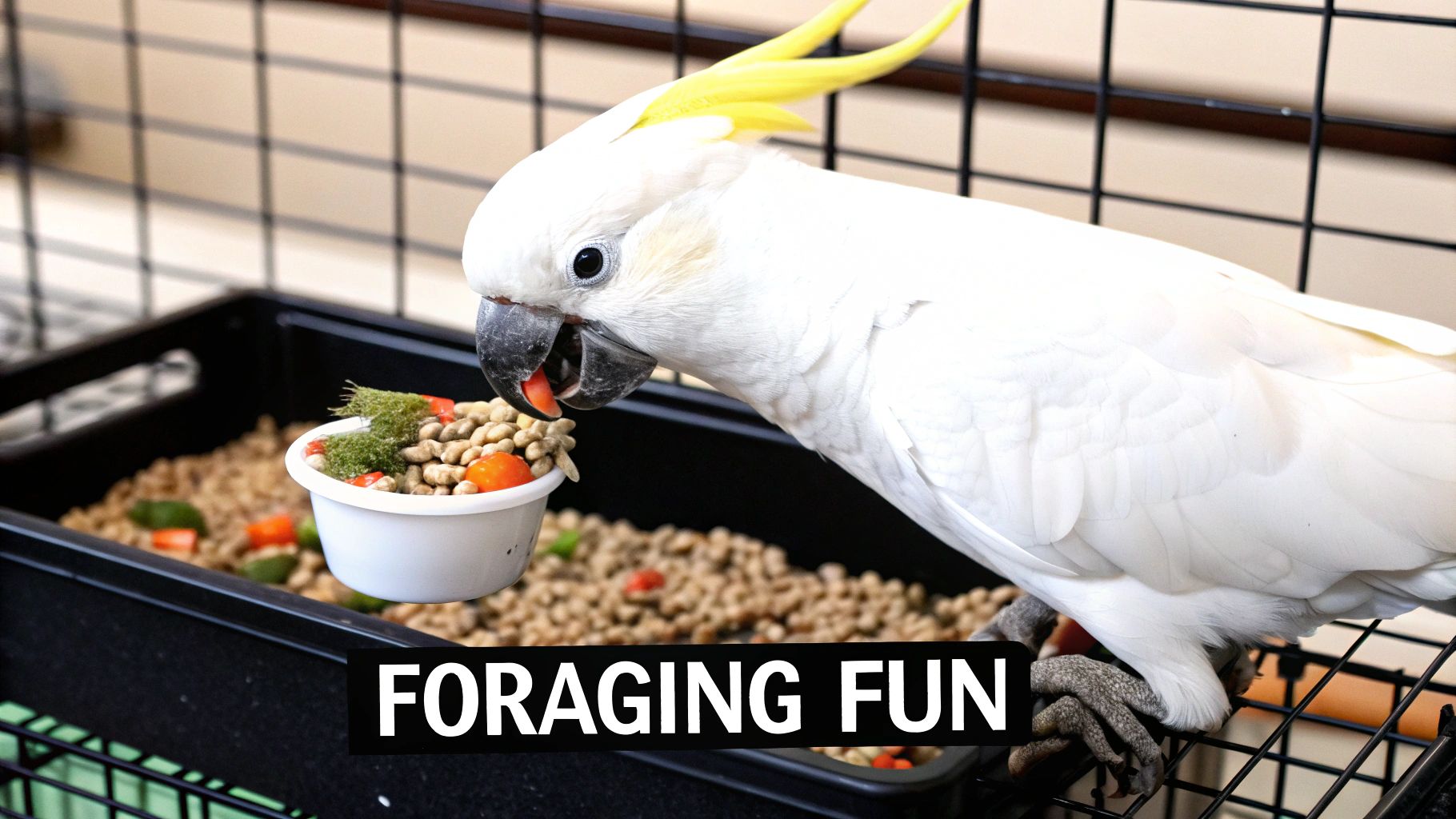
For a bird as smart as a cockatoo, just eating out of a bowl is a wasted opportunity. Think about it: in the wild, they’d spend up to 70% of their day on the hunt for food. This constant searching and problem-solving is called foraging, and it’s what keeps their minds sharp and their bodies fit.
When we take that away in our homes, boredom creeps in fast. This is the root cause of so many behavioural issues Australian bird owners face—the relentless screaming, the destructive chewing of furniture, and even feather plucking. Turning mealtime into a foraging game is one of the best things you can do to head off these problems.
The goal is simple: stop serving food and start creating challenges. By making your cockatoo work a little for their dinner, you’re tapping into their deepest natural instincts. It’s incredibly satisfying for them. And it doesn't have to be complicated or expensive; even small changes make a massive difference to their quality of life.
Simple Steps to Start Foraging
You can get started with things you probably already have lying around the house. The trick is to start easy, build their confidence, and then gradually introduce more complex puzzles.
A few simple ways to introduce the idea of foraging include:
- The Paper Parcel: Wrap a few pellets or a favourite nut in a small piece of paper and twist the ends shut. You might have to show them how to tear it open the first time, but once they realise there's a reward inside, that powerful beak will make short work of it.
- Cardboard Creations: An empty toilet paper roll can become an instant puzzle. Just stuff it with shredded paper, push some pellets or chopped veggies inside, and fold over the ends to keep the goodies contained.
- Scatter Feeding: Instead of piling all their food in one bowl, scatter it around the bottom of their cage (on a clean paper lining) or on a play stand. This encourages them to move, explore, and hunt for every last piece.
Using Toys to Enhance the Experience
Once your cockatoo has mastered these simple puzzles, you can bring in dedicated foraging toys. These are designed to be safe, durable, and offer a more lasting challenge. They are a fantastic investment in your bird’s mental health, turning the simple act of eating into an engaging, brain-teasing activity.
For example, hiding pellets inside a tough, reusable foraging toy forces them to slide parts, open little drawers, or turn wheels to get their reward. This kind of problem-solving is incredibly stimulating for a clever bird. A shreddable kabob toy is another brilliant option, perfect for stuffing with fresh kale or chunks of carrot. It satisfies their natural urge to chew and destroy, giving that powerful beak a healthy outlet.
Expert Advice: Rotate your foraging toys every few days. A cockatoo’s intelligence means they can solve puzzles quickly. Keeping the challenges fresh and new prevents them from getting bored with the same old game.
Creative Ways to Serve Fresh Food
Foraging isn't just for dry food. You can make their daily serve of fresh veggies far more exciting than just chopping them up and putting them in a dish. A little bit of creativity turns a simple meal into an interactive feast.
Try these ideas to make fresh food more engaging:
- Weave It In: Weave long leafy greens like silverbeet or kale through the bars of their cage. This makes them pull, tug, and tear at the leaves, just like they might strip foliage in the wild.
- Hang a Skewer: Load up a bird-safe stainless steel skewer with chunks of capsicum, broccoli, and sweet potato. Hanging it from the top of the cage adds a bit of swing and movement, making it more of a physical challenge.
- Stuff a Pinecone: Find a natural, untreated pinecone, give it a good wash, and bake it on low heat to sterilise it. Once it's cool, you can stuff all the little crevices with chopped veggies, seeds, or a bit of pellet mash.
By using these simple techniques, you transform every meal into a rewarding experience for your cockatoo. For more ideas and to find the right tools for the job, you can explore a great range of foraging toys for birds designed to keep Aussie parrots happy and busy.
Adjusting Diets For Different Cockatoo Species and Ages
You wouldn’t feed a Great Dane the same meal as a Chihuahua, right? The same logic applies to cockatoos. Australia is home to an incredible variety of cockatoo species, and a one-size-fits-all approach to their cockatoo bird food just won’t cut it. To prevent health problems and give them a long, happy life, you absolutely have to tailor their diet to their species, age, and how active they are.
Getting these details right is the secret to good, personalised care. What keeps a Galah trim and healthy might not be nearly enough for a big, boisterous Sulphur-crested Cockatoo.
Species Specific Considerations
Different cockatoo species evolved to eat different things in the wild, which gives us some big clues for how to feed them in our homes. Some are also naturally prone to certain health issues that a good diet can help manage.
Here are a few popular Aussie species and what they need:
- Galahs (Rose-breasted Cockatoos): These gorgeous pink-and-grey birds are infamous for developing fatty lumps called lipomas. They really do best on a lower-fat diet, which means high-fat seeds like sunflower seeds should be an extremely rare treat, not a daily staple.
- Sulphur-crested Cockatoos: As large, high-energy birds, they naturally need more calories than their smaller cousins. The catch is that they can also get overweight very easily in captivity, so their diet has to be balanced with lots of chances to fly and play.
- Major Mitchell's Cockatoos: These stunning birds are another species that can pile on the weight if you're not careful. Their diet should be managed with a strong focus on high-quality pellets and fresh veggies, going easy on the fruit and nuts.
Expert Avian Vet Insight: "One of the most common health threats we see in pet parrots is obesity. Regularly monitoring your bird’s weight and body condition is essential. You should be able to feel their keel bone, but it shouldn't feel sharp or prominent. If you're unsure, a check-up can provide peace of mind and a tailored feeding plan."
Feeding Through Different Life Stages
A cockatoo’s dietary needs change a lot over its long life. What a fast-growing baby needs is worlds away from the diet of a gentle senior bird.
The Growing Baby Bird
From the moment they fledge until they're a juvenile, a young cockatoo is in full-on growth mode. Their food has to support the development of strong bones, feathers, and muscles.
- Higher Protein and Fat: To fuel all that development, young, growing birds need a diet higher in protein and healthy fats. You can find many pellet formulas made just for this life stage.
- Abundant Calcium: Calcium is absolutely critical for forming strong bones. Make sure their diet is rich in it, both from their pellets and from dark leafy greens.
- Introduce Variety Early: This is the golden window to introduce a huge range of vegetables. Birds that try lots of different foods when they're young are much less likely to become fussy eaters later on. Stocking up on essential parrot supplies in Australia from the start sets you up for success.
The Senior Cockatoo
As your 'too enters their golden years (which can be 40+ years of age!), their metabolism slows down, and their needs shift again.
- Lower Calorie Intake: Senior birds are usually less active and more likely to gain weight. They might need a lower-calorie pellet to keep them from becoming obese.
- Support for Joint Health: Some older birds can benefit from supplements like glucosamine, but this should only be done under the guidance of an avian vet.
- Easier-to-Eat Foods: For birds dealing with arthritis or beak problems, softer foods can be a lifesaver. Mashing up some cooked sweet potato or lightly soaking their pellets can make mealtimes much more comfortable.
By adjusting their diet to match their species and where they are in life, you’re giving your cockatoo the personalised care they truly deserve.
Your Cockatoo Nutrition Questions, Answered
Feeding a cockatoo properly for the first time can feel a bit daunting. You’re bound to have questions. So, let’s clear up some of the most common ones that Aussie bird owners ask.
How Much Should I Actually Be Feeding My Cockatoo?
For a medium-sized cockatoo, like a Galah, a good starting point is about 1/4 cup of formulated pellets each day. If you have a larger bird like a Sulphur-crested Cockatoo, you’re looking at closer to 1/2 a cup. On top of that, you'll want to add about 1/4 to 1/2 a cup of fresh, chopped vegetables.
But think of this as a guideline, not a strict rule. Every bird is an individual. Their activity level, age, and even their mood can affect how much they need. The best way to know for sure is to keep an eye on your cockatoo's body condition and chat with your avian vet to fine-tune their portions.
So, Are Nuts and Seeds a Complete No-Go?
Not at all! But you absolutely must think of them as special treats. They’re the cockatoo equivalent of dessert, not the main course. A couple of unsalted almonds, walnuts, or some native nuts are brilliant rewards during a training session or tucked away inside a tough foraging puzzle.
As a rule of thumb, seeds and nuts should make up less than 10% of your cockatoo's total daily food. This is key to maintaining a healthy weight and avoiding issues like fatty liver disease.
Can I Give My Cockatoo Native Plants From the Garden?
Yes, and it’s a wonderful way to enrich their day and connect them to their wild instincts. Many cockatoos go absolutely nuts for the flowers and branches of plants like grevillea, bottlebrush, and eucalypts.
Before you offer anything from the garden, though, you need to be 100% certain of two things:
- You've Identified It Correctly: You must know exactly what the plant is and confirm that it’s safe for parrots. No guesswork allowed.
- It’s Clean and Chemical-Free: The plant must be free from any pesticides, herbicides, or other chemicals. It also shouldn't be growing right next to a busy, polluted road where it can absorb traffic fumes.
If you have any doubt at all, it’s always safest just to leave it out.
At Lou Lou Bells Bird Toys, we know a busy beak makes for a happy bird. Turn mealtime into a stimulating challenge with our range of safe, durable enrichment toys, designed and made right here in South Australia. Explore our bird toys collection.
Disclaimer Summary:
The information in this article is general in nature and may include external links or resources not created by Lou Lou Bells Bird Toys. Every bird is unique, so we encourage you to seek personalised advice from your own veterinarian or avian specialist. For full details, please read our complete disclaimer here.