
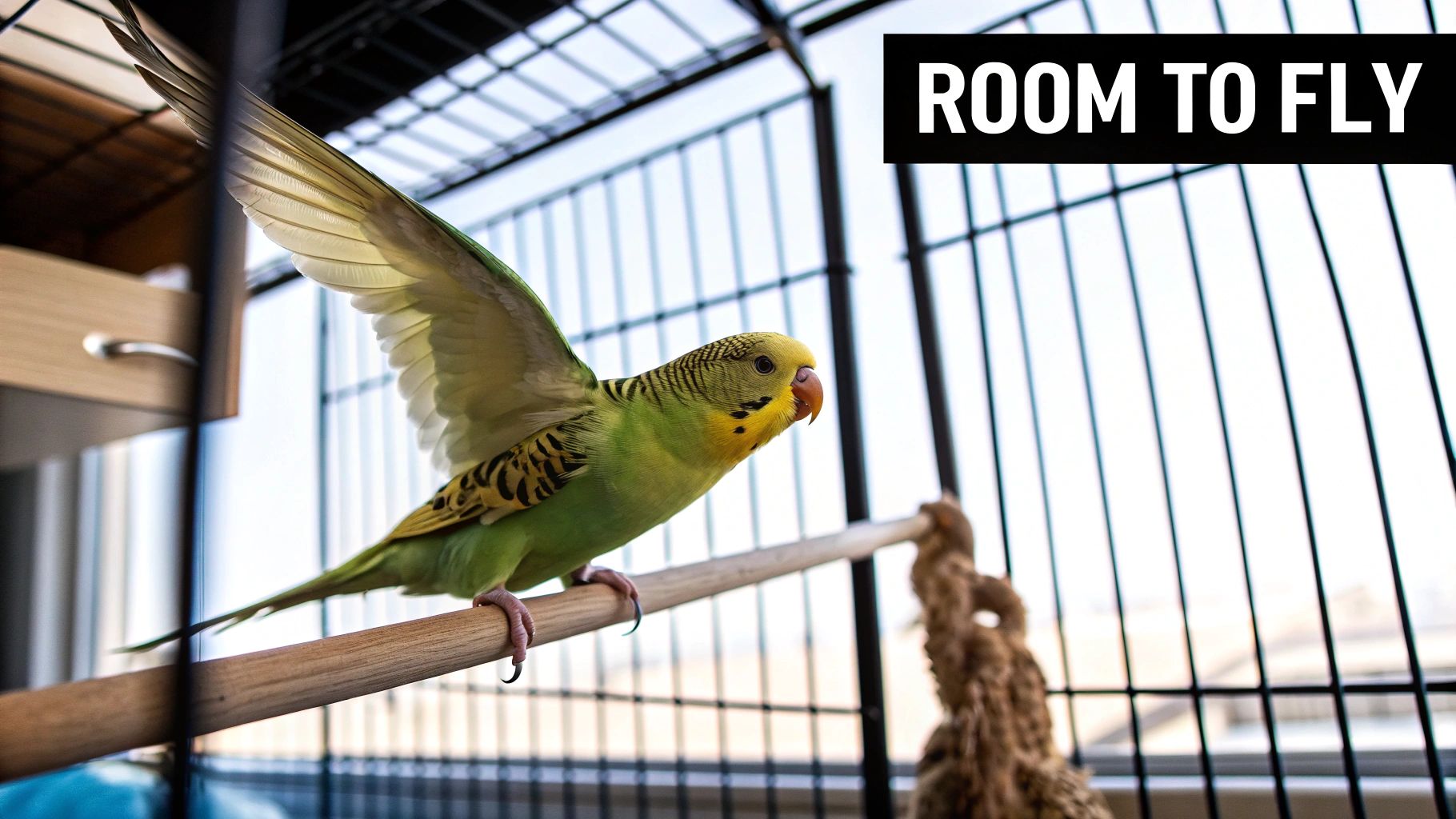
A bird flight cage isn't just a home; it's a personal gymnasium and sanctuary for your feathered friend. As a bird owner, I know that choosing the right cage is one of the most important decisions we make. It’s a special kind of enclosure designed with extra horizontal space to let birds do what comes most naturally to them—fly. This isn't just a nice-to-have; it's absolutely vital for their physical health and mental wellbeing.
Why a Flight Cage Is Your Bird's Best Home
Imagine trying to live your entire life in a single room, with only enough space to walk from your bed to the door. You could survive, sure, but you certainly wouldn't thrive. You wouldn't be able to run, stretch, or really exercise at all. For our avian mates, that's exactly what a standard, small birdcage is like.
A bird flight cage, on the other hand, is like giving them their own private park.
This extra room isn't a luxury; it's a basic requirement for a happy, healthy life. Flying is how birds build strong muscles, keep their hearts healthy, and stay mentally stimulated. Taking that away can lead to serious health issues, both inside and out.
The Critical Role of Horizontal Space
When people look at cages, they often make the mistake of prioritising height. But birds don't fly like helicopters, straight up and down. They fly across, from one point to another, which is why the length of a cage is so much more important than how tall it is.
Expert Advice: A well-designed flight cage provides a clear, unobstructed 'flight path' from one end to the other. This encourages natural movement and allows your bird to get the vigorous exercise it needs to stay healthy and happy. Avoid cluttering the middle of the cage with too many toys or perches.
As dedicated Aussie bird owners, we know our job is to provide the best care possible. This means looking beyond basic survival and focusing on enrichment and wellbeing. Investing in a proper bird flight cage is one of the most important things you can do. For a deeper dive into looking after your bird, check out our essential guide to caring for pet birds.
Meeting Australian Welfare Standards
Recognising just how crucial space is, Australian states have set guidelines to protect bird welfare. Authorities in New South Wales, for example, have put comprehensive minimum cage dimensions in place.
RSPCA Australia also recommends a cage's length should be at least three times the combined wingspan of the birds inside. This allows for at least two full wing beats between perches. This focus on horizontal space shows a real understanding of how birds are built and how they behave. You can review the specific NSW guidelines for caged bird environments on their education website.
Picking the Right Size Flight Cage for Your Bird
When it comes to your bird's wellbeing, choosing the right size flight cage is probably the most important decision you'll make. It’s more than just a home; it’s their whole world, their gym, and their safe space. For Aussie bird owners, getting this right is the key to ensuring your companion can live a full, active, and happy life.
The biggest mistake so many new owners make is thinking vertically. A tall, narrow cage might look impressive, but for flight, it’s practically useless. Birds fly horizontally, launching themselves from one end to the other. This means length is the single most important dimension of any bird flight cage.
Think of it as the difference between a rock-climbing wall and a running track. Both offer exercise, but only one allows for the powerful, natural movement a bird is built for.
Reach out to South Australian Bird Company; they have over 30 years of knowledge and experience when it comes to picking the right-size flight cage for your bird.
The Wingspan Rule: A Simple Calculation
To work out the best cage length, you need to start with your bird's wingspan. This single measurement is the key to giving them enough room for proper flight, not just a frustrated flutter from perch to perch.
Here’s a simple, stress-free way to measure it:
-
Wait for a Stretch: Coax your bird onto a flat surface or your hand and wait for them to have a good wing stretch.
-
Quick Snap: Use your phone to take a quick photo from above while their wings are fully extended.
-
Measure the Image: You can then use the photo to measure from one wingtip to the other.
As a solid rule of thumb, the minimum length of the cage should be at least three times your bird's full wingspan. This gives them enough room for a few powerful wing beats and the ability to turn around comfortably. Of course, more space is always better, but this formula gives you a welfare-focused baseline to start with.
Expert Advice: A proper flight path allows a bird to take off, build up momentum, and land safely. If the cage is too short, they can't get the physical or mental benefits of true flight, which can lead to stress and even muscle atrophy over time.
Meeting Australian Standards
Across Australia, animal welfare standards are thankfully catching up with our modern understanding of what birds really need. In Victoria, for instance, the government has set out a clear Code of Practice that outlines minimum housing requirements based on a bird's size.
It specifies that the minimum length and width of any cage must be at least twice the length of the largest bird inside, making sure they have adequate room to move. These regulations cover everything from tiny finches to our larger parrots, providing a legal and ethical framework for responsible ownership. You can explore the full details in Victoria's Code of Practice for the Housing of Caged Birds.
Understanding these standards helps you make a choice that puts your bird's health first. It's also part of being a responsible bird owner in Australia, where our commitment to animal welfare is a real point of pride. For more on sourcing the right gear, take a look at our guide to finding the best parrot supplies in Australia.
Quick Guide for Popular Aussie Birds
To make things a bit easier, we’ve put together a quick-reference table for some of Australia’s most beloved companion birds. Use this as a starting point, but always remember that these are the absolute minimums. If you can provide a larger flight cage, your feathered friend will absolutely thank you for it.
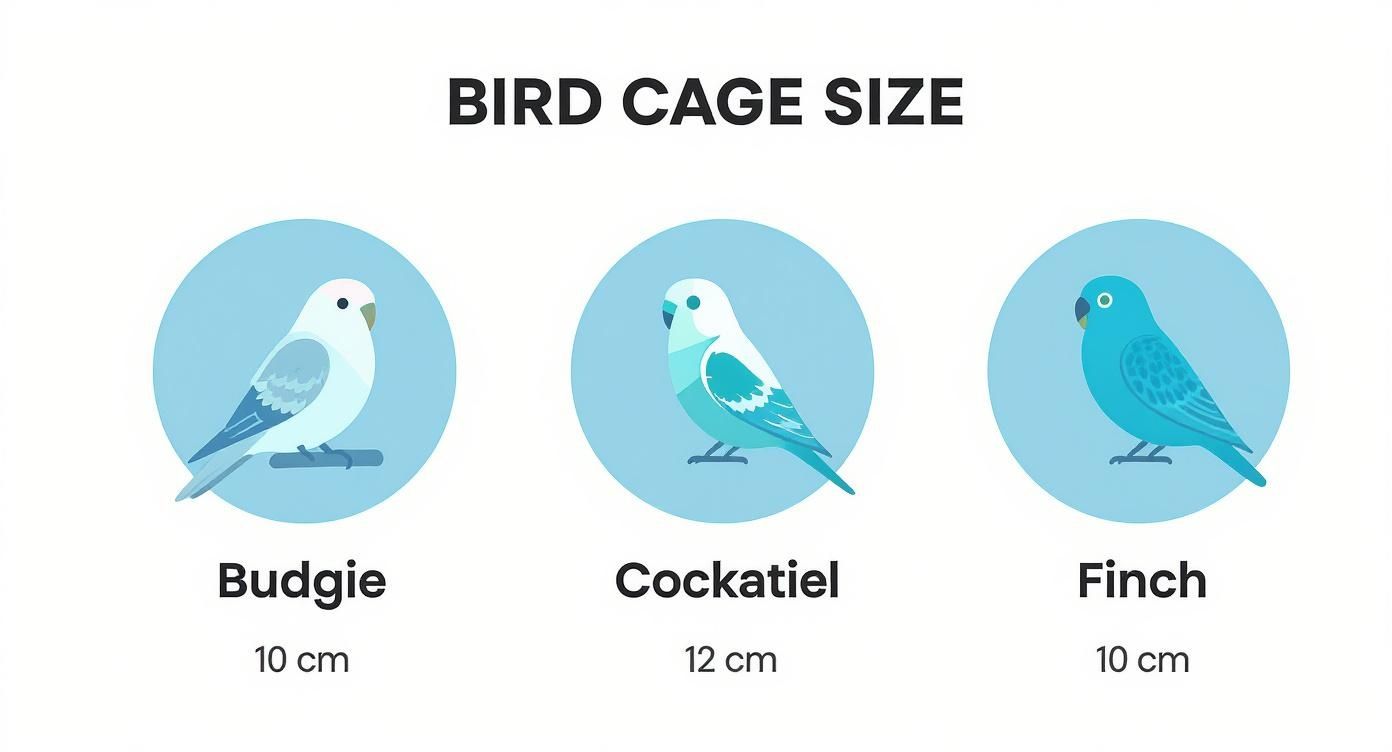
Minimum Flight Cage Size Recommendations for Popular Aussie Birds
| Bird Species | Minimum Length (cm) | Minimum Width/Depth (cm) | Ideal Bar Spacing (mm) |
|---|---|---|---|
| Finches & Canaries | 60 | 40 | 10 |
| Budgerigars | 75 | 45 | 12 |
| Lovebirds | 80 | 50 | 12 |
| Cockatiels | 90 | 60 | 15-18 |
| Conures (Small) | 100 | 60 | 15-20 |
Ultimately, choosing the right size is an act of love. It shows you understand and respect your bird's fundamental need to fly, ensuring they don't just survive in their environment but truly thrive.
Safe Materials for Your Bird's Cage
When you're choosing a flight cage, it's easy to get caught up in size and design, but the materials it's made from are just as crucial for your bird's health. The cage bars are, quite literally, your bird's world. They climb on them, rub against them, and most importantly, chew on them day in and day out. Getting this part right is one of the fundamentals of responsible bird care.
The hard truth is that some metals used in cheaper cages can be incredibly dangerous. Parrots, from curious Cockatiels to big-beaked Galahs, explore their world with their mouths. If a cage is coated in or built with toxic materials, this totally natural behaviour can lead to serious, sometimes tragic, health problems.
The Dangers of Heavy Metal Poisoning
One of the biggest risks hiding in poorly made cages is heavy metal poisoning, especially from zinc and lead. Unfortunately, these metals can pop up in galvanised wire, some types of powder coatings, and even in the welds or hardware of budget cages.
When a bird gnaws on or swallows flakes of these materials, the toxins slowly build up in their system. Australian avian vets warn this can cause severe neurological damage, kidney failure, and is often fatal if not diagnosed early. It's a silent threat many new owners simply don't know to look for.
Expert Advice from Australian Avian Vets: Always ask what a cage is made of before you buy. If the seller can't give you a straight answer and guarantee it's free from lead and zinc, just walk away. The risk of chronic heavy metal poisoning is far too high to take a chance.
Bird-Safe Cage Materials Explained
So, what should you be looking for? The best choices are always strong, completely non-toxic, and easy to keep clean. Here’s a quick rundown of the top materials for a bird flight cage.
-
Stainless Steel: This is the absolute gold standard. It’s totally non-toxic, tough as nails, won't rust or chip, and is a breeze to sterilise. Yes, it's the most expensive option upfront, but its safety and longevity make it a brilliant long-term investment in your bird's health. You can find fantastic stainless steel bird toys and accessories to go with a premium cage, giving you complete peace of mind.
-
High-Quality Powder-Coated Metal: This is a very common and safe choice, as long as the powder coating is applied properly and is certified free from zinc and lead. A good powder coat is baked onto the metal, creating a hard, smooth finish that's difficult for even the strongest beaks to chip off. Stick to reputable Australian suppliers who can vouch for the safety of their coatings.
-
Wrought Iron: This is a seriously heavy and durable material, which makes it a solid option for large, powerful parrots who could otherwise bend the bars of a flimsier cage. Just like with powder-coated cages, it's essential that any paint or finish is certified as bird-safe and non-toxic.
Essential Hardware and Safety Checks
Don't forget the small details, because they matter a lot. Our Aussie parrots are famously clever and can be real escape artists. A flimsy latch is just a fun puzzle for a determined Cockatoo.
Before you commit to a cage, give these parts a close look:
-
Locks and Latches: Make sure they're not simple hooks a bird could easily flip with its beak or tongue. Look for designs that are genuinely escape-proof.
-
Welds: Run your fingers over the joints where the bars connect. They should be smooth and solid, with no sharp points or gaps where a little toe could get snagged.
-
Doors: Check that the food and water bowl doors also have secure latches. Many birds have figured out that popping these open is a shortcut to freedom!
Taking a few minutes to check these things helps ensure your bird's home isn't just a cage, but a true sanctuary where they are both happy and safe.
Creating an Enriching Flight Cage Environment
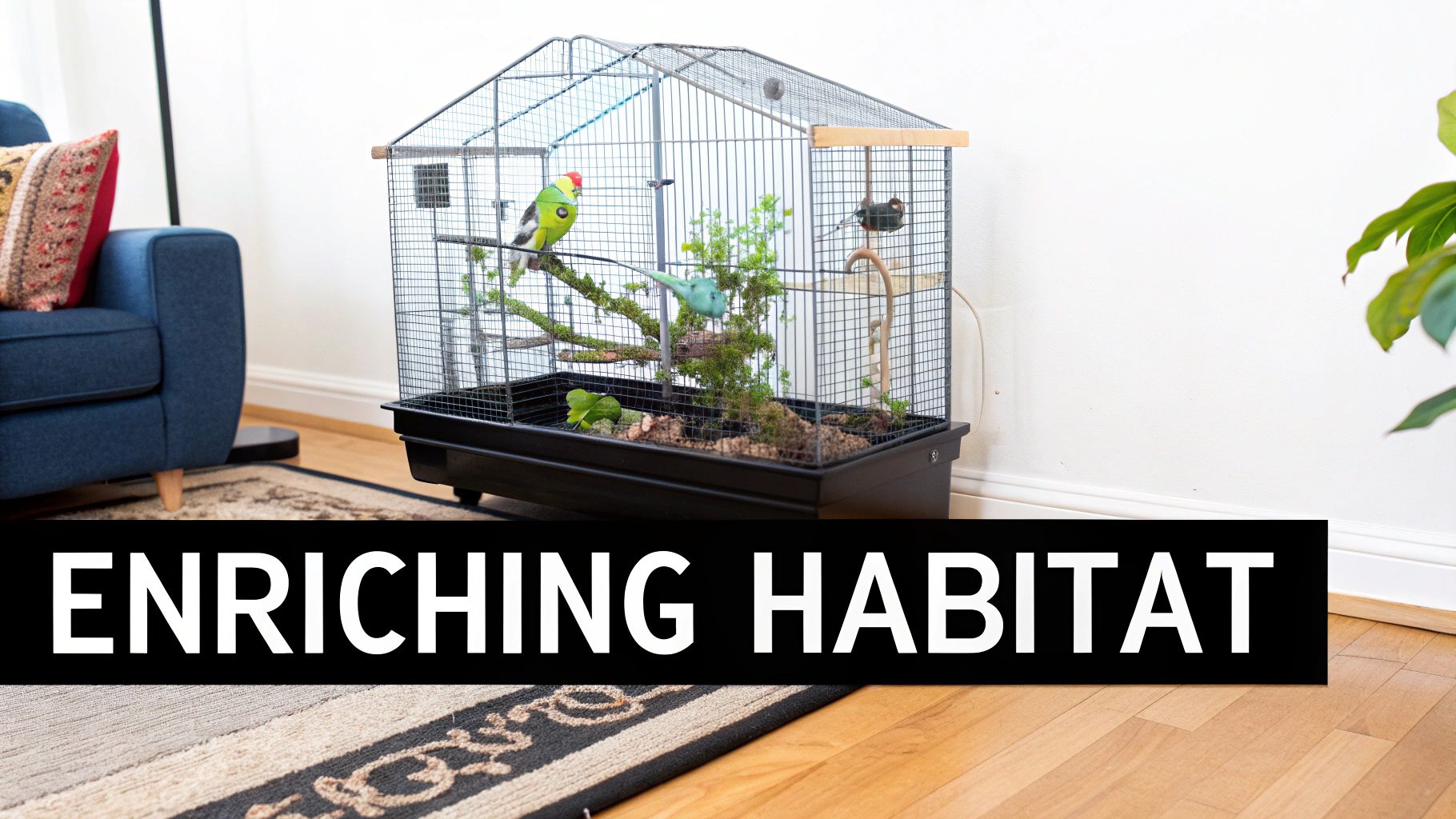
Once you've picked out the perfect flight cage, the real fun begins. An empty cage is just a box of wires; it’s what you put inside that turns it into a home. This is your chance to build a personal paradise for your feathered mate, one that keeps their body healthy and their sharp mind busy.
But before you even add the first perch, there's a crucial first step: deciding where the cage will live in your home. This choice has a huge impact on your bird's sense of security and wellbeing.
Finding the Perfect Spot in Your Home
A bird’s cage is their safe haven, so its location matters immensely. You're looking for that sweet spot between making them feel part of the family flock and giving them a sense of security. Plonking the cage in a high-traffic hallway or the middle of a loud room can be incredibly stressful for most birds.
Instead, try to find a corner in your main living area. This gives them a great view of the family's activities from a secure position, with solid walls on two sides offering a feeling of protection.
Here are a few golden rules for placement:
-
Avoid Draughts: Keep the cage well away from doors, windows, and air conditioning vents. Sudden chills and temperature swings can make birds unwell.
-
Steer Clear of Direct Sun: While birds love natural light, being stuck in an intense, direct sunbeam can lead to dangerous overheating. A spot with bright, indirect light is perfect.
-
Keep Away from the Kitchen: Cooking fumes, especially from non-stick cookware, are highly toxic to birds. The kitchen is one of the riskiest rooms in the house for them.
Designing the Interior for Flight and Fun
With the cage in its ideal spot, it’s time to get creative with the interior. The main goal is to provide plenty of enrichment without cluttering up that all-important horizontal flight path. Think of yourself as an interior designer for birds—every item should have a purpose.
A well-thought-out layout encourages natural behaviours and keeps your bird healthy from beak to tail.
Expert Advice: The layout of a bird flight cage should always prioritise movement. Place perches and toys around the perimeter of the cage to keep the central airspace open, allowing for an unobstructed flight lane from one end to the other.
This strategic placement ensures your bird gets the full benefit of the cage's length, letting them really stretch their wings and strengthen their muscles with every flight.
Perches: The Foundation of Good Foot Health
Perches are so much more than just a spot for your bird to sit; they are absolutely essential for foot health and exercise. Using perches of only one diameter is a recipe for foot problems like arthritis or bumblefoot. The key word here is variety.
In the wild, birds land on branches of countless different shapes, textures, and thicknesses. Trying to replicate this in their flight cage is one of the best things you can do for their long-term health.
-
Natural Branches: Native Australian branches like gum or bottlebrush are perfect. Their irregular shapes force your bird's feet to constantly adjust, giving them a fantastic workout.
-
Varying Diameters: Pop in a mix of thin, medium, and thick perches to work all the different muscles in their feet and legs.
-
Different Textures: Offer a combination of wood, rope, and even mineral perches. This provides different sensations underfoot and helps keep their nails naturally trim.
Arrange these perches at different heights near the ends of the cage, almost like staggered starting blocks. This encourages your bird to fly the full length of the cage to get from one point to another, maximising their daily exercise.
Placing Toys for Maximum Engagement
Toys are the final, crucial piece of the puzzle. They're your best defence against boredom, which is a major cause of stress-related behaviours like feather plucking. The goal is to get their natural foraging and problem-solving instincts firing.
When placing toys, be careful not to create an obstacle course. Don't hang a massive toy smack bang in the middle of the flight path. Instead, position toys in the corners or along the sides of the cage. This creates little "play stations" your bird can fly to.
Think about adding different types of toys to keep things interesting:
-
Foraging Toys: These are puzzles that hide treats, making your bird work for their food just like they would in the wild. Our range of stainless steel bird toys and accessories includes some fantastic foraging options.
-
Shreddable Toys: Birds have a deep, natural instinct to chew and destroy. Toys made from bird-safe materials like paper, cardboard, and yucca are perfect for satisfying this urge.
-
Noisemakers: A cheerful bell, like the ones from Lou Lou Bells Bird Toys, adds a bit of auditory fun and stimulation. Place these where they can be easily reached without getting in the way.
For more great ideas, you can explore a wide range of parrot cage accessories and learn how to use them. By thoughtfully placing a variety of perches and toys, you can turn a simple flight cage into a dynamic, engaging, and healthy home where your companion can truly thrive.
Understanding Australian Bird Housing Rules
Bringing a bird into your family in Australia involves more than just food, water, and a few good toys. You’re also stepping into a world of regulations that can feel like a bit of a maze at first.
These rules aren’t there to make life difficult; they exist to make sure every bird gets a high standard of care. But what many new owners don't realise is that the laws can change dramatically depending on where you live.
A rule that applies in Victoria might be completely different from one in New South Wales. On top of that, your local council in Queensland could have its own specific requirements. Staying informed isn't just about ticking boxes—it's about being a responsible, ethical bird keeper.
State and Territory Guidelines
Across Australia, different states have their own Codes of Practice for animal welfare, and these often include detailed specs for bird housing. They're based on a scientific understanding of what birds need and are designed to prevent cruelty.
For instance, as we’ve touched on, states like Victoria and NSW have clear, legally enforceable minimum dimensions for cages that change based on the bird’s size.
These regulations are the absolute baseline for care. Falling short can, in some cases, lead to penalties. It's so important to get familiar with your state's animal welfare laws to ensure your bird flight cage setup is fully compliant.
Why Local Council Rules Matter So Much
Beyond state-level laws, your local council often has the final say on what’s allowed on your property. This is where things can get really specific, especially when it comes to the number of birds you can keep and the size of their enclosures.
These local by-laws are often what catch well-meaning owners by surprise.
Queensland's approach is a perfect example of how much things can vary. The Moreton Bay Council has set out detailed enclosure requirements based on bird size, specifying minimum floor area for everything from tiny finches to large parrots. They also enforce the state's Biosecurity Act 2014, which means strict registration and record-keeping for anyone with 100 or more birds. You can dig into the details by reviewing the Moreton Bay Council's specific guidelines.
This really highlights why you should always check your local council’s website or just give them a call before you invest in a big setup.
Expert Advice: Before you buy a large flight cage or start building an aviary, get in touch with your local council. Ask them specifically about rules for animal enclosures, how many birds you can have, and any noise or biosecurity by-laws that might apply to your home.
When a Cage Becomes an Aviary
There's a point where a large flight cage setup crosses a line and is classified by councils as an aviary. This distinction is a huge deal because it often triggers a completely different set of rules.
An aviary is usually seen as a permanent structure, and that can mean you need council approval or even a building permit before you get started.
An aviary classification can depend on:
-
Size: Exceeding a certain number of square metres.
-
Permanence: Whether it’s fixed to the ground or built on a concrete slab.
-
Number of Birds: Housing a large flock can automatically class the structure as an aviary.
If your setup is officially deemed an aviary, you might need to submit plans, follow building codes, and make sure it's positioned a certain distance from your property line. It’s yet another reason why a quick chat with your local council is one of the smartest first moves you can make. Doing your homework now ensures your bird's magnificent home is a source of joy, not a regulatory headache.
Common Questions About Bird Flight Cages
Diving into the world of flight cages can bring up a lot of questions. As a responsible bird owner here in Australia, you want to get every detail right for your feathered mate's health and happiness. We've put together some of the most common queries we hear, with clear, experience-backed answers to help you feel confident in your choices.
How Often Should I Clean a Large Flight Cage?
Keeping a big flight cage clean isn't just a chore—it's non-negotiable for preventing illness. The secret is breaking it down into a consistent routine.
Think of it in terms of daily, weekly, and monthly jobs.
-
Daily Tasks: Every single day, you'll want to swap out the food and water bowls for fresh ones, give any soiled perches a quick wipe, and change the liner on the cage floor. This simple habit stops droppings and old food from building up.
-
Weekly Tasks: Once a week, set aside a bit more time for a proper deep clean. This means scrubbing the cage bars, the base, and all the accessories with a bird-safe disinfectant. Pull out all the toys and perches and give them a thorough clean before putting them back.
If you're in Australia's warmer, more humid spots—like up in Queensland or the NT—you might find you need to do a deep clean more often to stop mould and bacteria from getting a foothold. And it's simple maths: the bigger the cage and the more birds you have, the more on top of your cleaning you'll need to be.
Is a Flight Cage Suitable for a Single Bird?
Absolutely! It’s a common myth that flight cages are only for multiple birds. Honestly, giving a single companion bird a flight cage is one of the best things you can do for their wellbeing.
That generous space is crucial for the daily exercise a bird needs to ward off boredom and obesity, two of the biggest problems for solo birds. For a single bird, a large cage is a blank canvas for you to create a rich, stimulating world. You can fill it with all sorts of perches, foraging spots, and fun toys without ever blocking their essential flight path.
Expert Advice: A solo bird in a large flight cage has the freedom to fully express its natural behaviours—flying, climbing, and exploring. This autonomy is fundamental to its psychological health, reducing the risk of stress-related behaviours like feather plucking.
Think of it as giving your single mate their own private estate, where they have all the space and gear they need to live a full and active life.
Are Second-Hand Flight Cages a Safe Option?
A second-hand cage can look like a fantastic bargain, but it’s a path you need to walk with extreme caution. While you might save a few dollars upfront, you have to be incredibly thorough to make sure it's actually safe for your bird.
Before you even think about handing over cash, inspect the cage like a detective. Look for any hint of rust, flaking paint, or broken welds. Rust can hide nasty bacteria, and chipped paint or certain metals might contain lead or zinc, which can lead to heavy metal poisoning if your parrot has a good chew.
The biggest and most immediate risk, though, is disease. The cage must be sterilised from top to bottom with a veterinary-grade, bird-safe disinfectant to kill any viruses, bacteria, or parasites left by the last resident. If you have even the slightest doubt about the cage's history, what it's made of, or its structural integrity, investing in a new cage is always the safest bet for your bird's long-term health.
Where Can I Find a Quality Bird Flight Cage in Australia?
Finding a great quality flight cage in Australia is easier than you might think, with good options both in physical stores and online. Your best bet is often a specialist bird or avian store, as they’ll have the widest range and staff who can give you expert advice for your specific type of bird.
When you're shopping online, stick to reputable Aussie retailers that provide detailed product specs. You want to see clear information on the materials, exact dimensions, bar spacing, and real customer reviews. It's also really important to check their shipping policy—getting a big, heavy cage delivered safely across Australia requires a reliable courier.
Always go with businesses that are transparent about product safety and guarantee their cages are free from toxic nasties like zinc and lead. That way, you know you're investing in a home that will keep your companion safe, secure, and happy for years to come.
At Lou Lou Bells Bird Toys, we believe enrichment is just as important as a safe and spacious cage. Once your flight cage is set up, explore our huge range of handcrafted and carefully selected toys to create a stimulating environment your bird will love. From engaging foraging puzzles to delightful shreddable toys, we have everything you need to turn your cage into a true sanctuary. Discover the perfect additions for your feathered friend at louloubellsbirdtoys.com.au.
Disclaimer Summary:
The information in this article is general in nature and may include external links or resources not created by Lou Lou Bells Bird Toys. Every bird is unique, so we encourage you to seek personalised advice from your own veterinarian or avian specialist. For full details, please read our complete disclaimer here.