
Choosing a large parrot cage isn't just about ticking a box on a shopping list; it's the single most important investment you'll make in your bird's well-being. For these incredibly intelligent and active creatures, a cage that's too small isn't just an inconvenience—it's a life sentence. Let's reframe this decision for what it truly is: laying the foundation for your parrot's long-term happiness.
A Spacious Home Is a Happy Home
Think about it this way: imagine spending your entire life in a single, cramped room. For a parrot, whose wild cousins travel huge distances every day, a small cage is exactly that. It's a prison that snuffs out their most basic natural instincts. Here in Australia, where we share our homes with magnificent birds like Galahs, Macaws, and Amazons, giving them ample space is simply non-negotiable.
A good, large parrot cage isn't a luxury; it's a necessity that allows for behaviours critical to their health.
- Physical Exercise: A proper enclosure lets a parrot stretch its wings out fully without bumping the sides, climb like a tiny acrobat, and even take short flights. This is absolutely vital for keeping their muscles strong and preventing obesity.
- Mental Stimulation: More space means more room for enrichment. You can hang a proper variety of engaging parrot toys, set up tricky foraging puzzles, and create different 'zones' for playing, resting, and eating. This is how you prevent the soul-crushing boredom that leads to problems.
- Behavioural Health: A lack of space is one of the top causes of stress-related issues like feather plucking, constant screaming, and aggression. A large habitat gives a bird the security and freedom it needs to feel content and safe.
The Growing Need for Better Bird Housing in Australia
As more and more people discover the joy of keeping birds, the importance of proper housing has become crystal clear. Australia's pet population has recently climbed to 31.6 million across 7.7 million households, a big jump from 28.7 million in 2022. This surge has a direct impact on the demand for quality parrot supplies in Australia, as dedicated bird guardians look for enclosures that do more than just contain.
Avian vets will often recommend cages at least 1.2 metres wide for a single large parrot. The grim reality is that rescues report seeing feather plucking in 15-20% of cases where birds were kept in cages that were simply too small.
Expert Advice: "Think of a large cage as your bird's entire world. It's their bedroom, playground, gym, and dining room all in one. The more space and enrichment you provide within that world, the happier and healthier your companion will be."
At the end of the day, investing in the largest, safest cage you can possibly afford is the bedrock of a wonderful relationship with your parrot. It's a move that goes beyond simple containment and becomes a real commitment to providing a stimulating, secure, and joyful life for your feathered family member.
Getting the Cage Dimensions Right for Your Parrot
Picking a large parrot cage isn't just about finding the biggest one you can fit in your house. The nitty-gritty details—like the overall size, the gap between the bars, and even the cage's shape—are what really matter for your parrot's safety and happiness in the long run. Getting these things right from the start is the best way to prevent accidents and help your bird lead a healthy, active life.
Think of it like building a custom home. You wouldn't design a house with doorways so narrow you couldn't walk through, or hallways so wide they felt like a paddock. A parrot's cage needs to be just as thoughtfully matched to its size and natural instincts to be a proper sanctuary.
This chart highlights some key stats on parrot welfare here in Australia, showing just how important proper housing is as more people welcome birds into their homes.
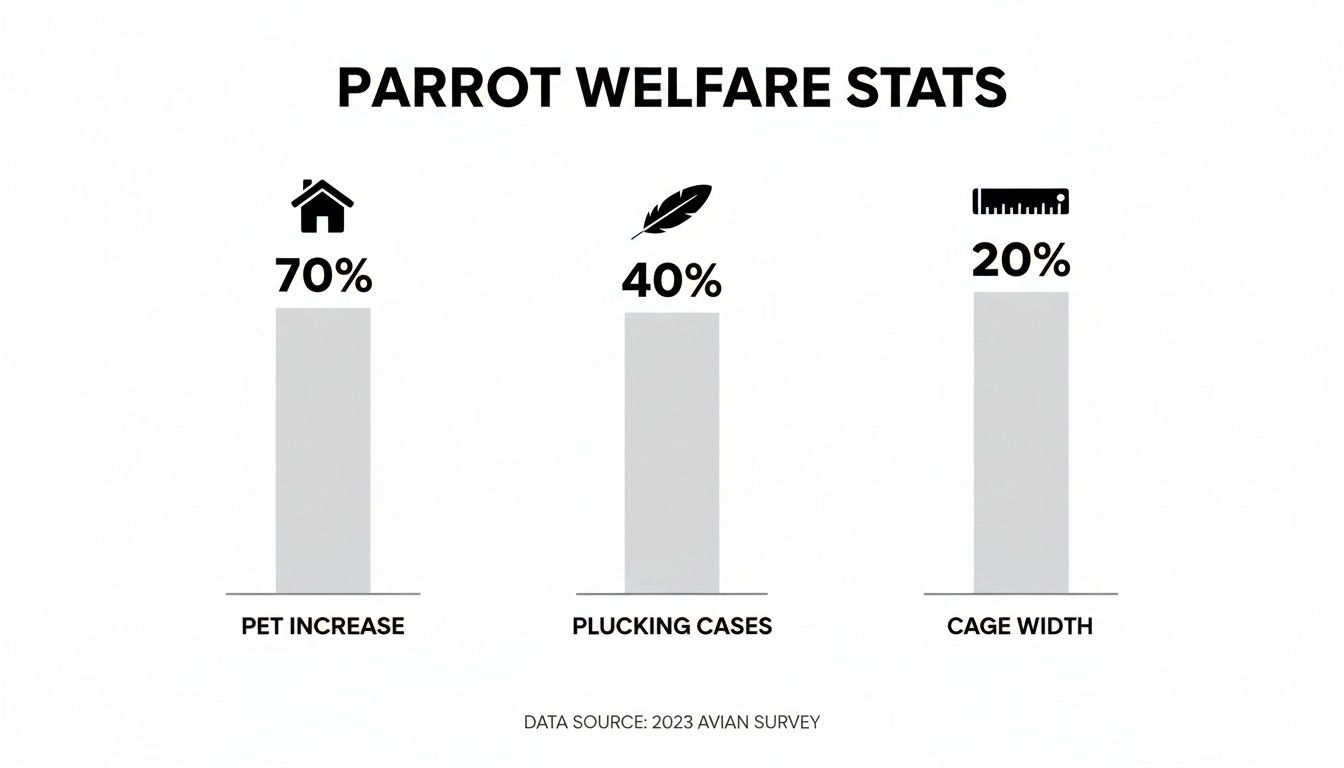
The data is pretty clear: as pet bird ownership grows, so does our responsibility to provide housing that prevents common welfare problems.
Cage Size: Why Width is King
When it comes to size, forget everything else for a moment and focus on the width. This is the single most important dimension. A parrot must be able to fully stretch out its wings and have a good flap without banging them against the sides of the cage. For their physical health, this is completely non-negotiable—it keeps their muscles strong and their spirits up.
A good rule of thumb from avian vets is that the cage should be at least 1.5 times your parrot's full wingspan in width, depth, and height. But honestly, that’s just the bare minimum. For smart, active birds, bigger is always, always better. More space means more room for toys, perches, and just moving around.
An undersized cage is a leading cause of behavioural issues like stress, aggression, and feather plucking. Giving your parrot plenty of space is one of the most proactive things you can do for their mental and physical wellbeing.
The Make-or-Break Importance of Bar Spacing
Bar spacing might just be the most critical safety feature on any parrot cage. It’s what keeps your curious bird safely inside. If the bars are too wide, a parrot can poke its head through and get stuck, which can lead to serious injury or worse. On the flip side, if the bars are too close together for a big bird, it can block their view and make climbing difficult.
Minimum Cage Size and Bar Spacing Guide for Popular Parrots
To help you get started, here's a quick reference table. It’s designed to help you match some of our popular Aussie parrots with the right cage dimensions and, most importantly, the correct bar spacing to keep them safe.
| Parrot Species (Example) | Minimum Cage Dimensions (Width x Depth x Height) | Ideal Bar Spacing (mm) | Cage Orientation |
|---|---|---|---|
| Large Macaws & Cockatoos | 120cm x 90cm x 150cm | 25 mm - 35 mm | Vertical (Aviary) |
| Galahs & African Greys | 90cm x 60cm x 120cm | 20 mm - 25 mm | Horizontal (Flight) |
| Large Conures & Small Cockatoos | 75cm x 50cm x 90cm | 15 mm - 20 mm | Horizontal (Flight) |
When you're checking a cage, always measure the empty space between the bars, not from the centre of one bar to the centre of the next. It’s a tiny detail, but it makes a massive difference in keeping your bird secure.
Matching Cage Shape to Your Bird's Style
Finally, think about the cage's orientation. Is it taller than it is wide, or the other way around? The best shape depends entirely on your parrot’s species and how they naturally move.
A "flight style" cage, which is longer and wider, is perfect for birds that are natural flyers, like Galahs or Eclectus parrots. This layout gives them room for short, horizontal flights—fantastic exercise for them. If this sounds right for your bird, you can find out more about the benefits of a bird flight cage.
On the other hand, a taller "aviary style" cage is a much better fit for enthusiastic climbers like Macaws. These birds absolutely love to scale the bars, and a tall cage gives them a vertical playground that feels a bit like climbing trees in the wild. By matching the cage to your bird, you’re setting them up to live a much fuller and more natural life.
How to Select Safe and Durable Cage Materials
A parrot’s beak is a serious piece of equipment, built for cracking open tough nuts and shredding wood. It’s no surprise, then, that it can make short work of a flimsy cage. Choosing the right material for your large parrot cage isn’t just about making a durable purchase; it’s one of the most critical safety decisions you’ll make. A weak cage can lead to escapes, while toxic materials can cause serious, even fatal, health problems.
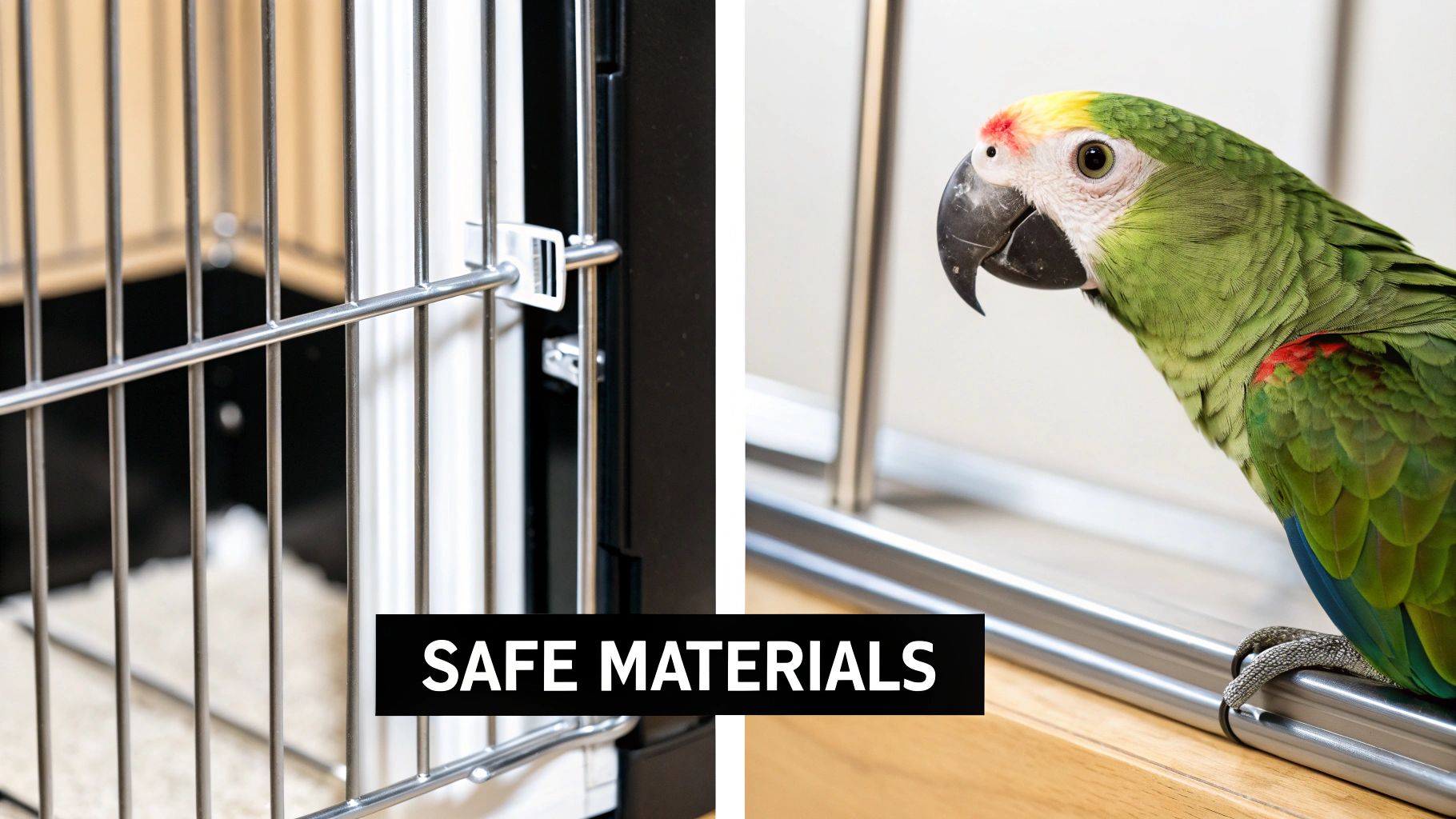
Here in Australia, you’ll mostly find two options: powder-coated steel and stainless steel. Knowing the pros and cons of each is key to investing in a secure, lifelong home for your bird.
Powder-Coated Steel Cages
Powder-coated steel cages are easily the most popular choice for bird owners, striking a great balance between durability and price. The process involves applying a dry powder to the steel, which is then heat-cured. This creates a hard, smooth finish that’s much tougher than regular paint.
The catch? The quality of that powder coating is everything. A high-quality, non-toxic coating can stand up to the daily abuse from a parrot’s beak and claws. With cheaper cages, though, you run the risk of the coating chipping. This can expose the metal underneath to rust or, even worse, let your parrot ingest flakes of the coating.
Stainless Steel: The Gold Standard
For big parrots with exceptionally powerful beaks—think Macaws and large Cockatoos—stainless steel is the undisputed king of cage materials. It does come with a higher price tag, but the benefits are in a league of their own.
- Ultimate Durability: Stainless steel is incredibly tough. It resists bending, breaking, and rusting, making it a true buy-it-for-life investment.
- Non-Porous Surface: The surface is completely smooth, making it a breeze to clean and disinfect. This prevents bacteria from getting a foothold and keeps the environment hygienic.
- Completely Non-Toxic: There's no coating to chip or flake off, so you can have total peace of mind that your parrot isn't ingesting anything harmful.
This focus on safety and longevity is becoming more common. Australia’s pet industry recently hit A$33 billion, with a whopping 73% of households owning pets. Avian vets often recommend stainless steel for large parrots, as a proper cage supports mental stimulation and can reduce vet visits by 22%. As a new generation of owners prioritises welfare, investing in a high-quality, safe enclosure from day one is a top concern, as detailed in this overview of Australia’s pet industry.
The Hidden Dangers: Zinc and Lead
No matter which material you choose, the biggest hidden threat to your parrot's health is heavy metal poisoning from toxins like zinc and lead. These metals are sometimes used in the manufacturing process (especially in galvanised wire or cheap solder) and can be lethal if your bird chews on them.
Never, ever purchase a cage that is galvanised after welding. This process can leave behind toxic drips of zinc that curious parrots are notorious for chewing on, leading to severe illness or death. Always buy from reputable Australian suppliers who guarantee their materials are 100% bird-safe.
How to Inspect a Cage Like an Expert
Before you commit to buying, it’s time to put on your inspector’s hat and give the cage a thorough once-over.
- Examine the Welds: Look for strong, clean welds where the bars meet. Any signs of weakness, obvious gaps, or sharp points are immediate red flags.
- Check the Finish: On a powder-coated cage, run your hand over the bars. The finish should feel smooth and even, with no chips, bubbles, or flakes.
- Test the Latches: A smart parrot will make quick work of a simple latch. Look for complex or "bird-proof" locking mechanisms that are easy for you to use but too tricky for a clever beak. A flimsy latch is just an escape waiting to happen.
- Feel for Sturdiness: Give the cage a gentle shake. It should feel solid and stable, not wobbly or rickety. A well-built cage won't feel flimsy.
By carefully considering the materials and inspecting the craftsmanship, you can be confident your large parrot cage is a safe, secure sanctuary that will last for years. That diligence protects your bird and gives you invaluable peace of mind.
Creating an Enriching Habitat Inside the Cage
An empty cage is just a box. A well-appointed one, though, is a whole world for your parrot—a place that nurtures their incredibly sharp mind. A large cage gives you a fantastic canvas to create a habitat that encourages natural behaviours and keeps boredom at bay. It's time to think like a parrot and design a space that's part playground, part gym, and part peaceful retreat.
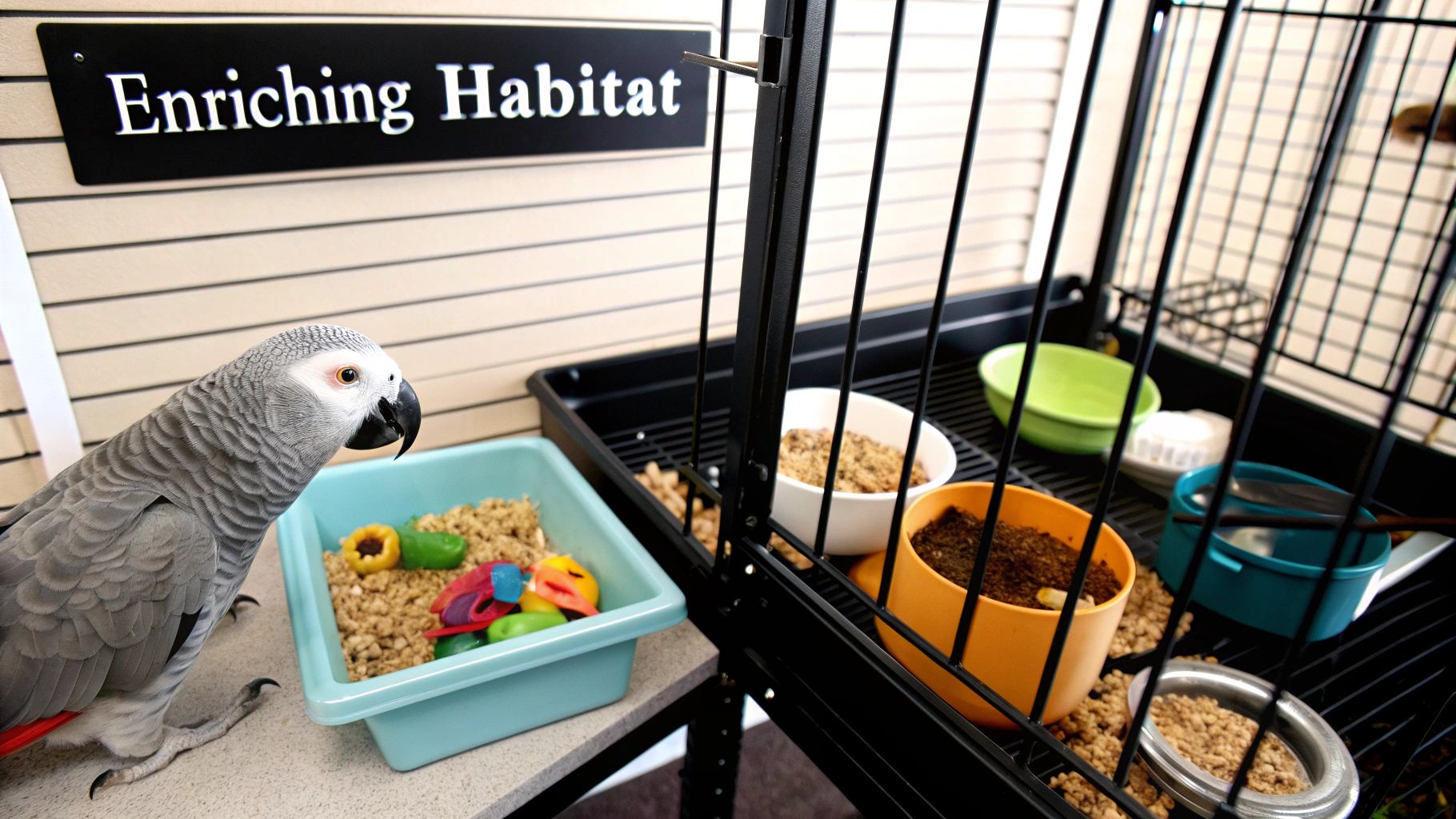
The first step is to ditch the standard dowel perches that often come with new cages. These uniform, perfectly round perches are terrible for your bird's feet and can lead to pressure sores and arthritis, a nasty condition known as bumblefoot.
Instead, fill the cage with a variety of perches of different materials, textures, and diameters.
- Natural Wood Perches: Native Aussie branches like bottlebrush or gum trees are perfect (just make sure they're pesticide-free!). Their irregular shapes give your parrot's feet a brilliant workout.
- Rope Perches: These are softer on the feet and can be bent into interesting shapes, creating fun new pathways through the cage.
- Platform Perches: A simple flat perch provides a comfy spot for your bird to rest its feet, just like a ledge in the wild.
By placing these strategically at different heights, you create a dynamic environment that gets your parrot climbing and exploring.
Designing a Functional and Engaging Layout
Once you've got the perches sorted, think about creating dedicated "zones" inside the cage. This isn't about just chucking things in; it's about thoughtful interior design for your bird. The layout should encourage movement and keep their brain ticking over.
A simple but crucial tip: position food and water bowls away from the highest perches to avoid them getting contaminated with droppings. Putting them on opposite sides of the cage also gets your parrot moving.
Expert Advice: "A well-designed cage layout is crucial for a parrot's wellbeing. Create distinct areas for different activities. An upper corner might be a quiet sleeping spot, while a lower section can be a dedicated foraging zone filled with shreddable toys. This separation helps a bird feel more secure and in control of its environment."
The Power of Enrichment and Toy Rotation
Enrichment is what truly turns a cage into a home. A mentally stimulated parrot is a happy parrot, and toys are the tools for the job. You’ll want a good mix of different types to satisfy all your bird's natural instincts.
- Shreddable Toys: Parrots have a deep-seated need to chew and destroy. Toys made from bird-safe materials like cardboard, yucca, or paper let them shred to their heart's content, which is a fantastic stress reliever.
- Foraging Puzzles: In the wild, parrots spend a huge chunk of their day looking for food. Foraging toys make your bird work for a treat, busting boredom and firing up their problem-solving skills.
- Durable Chew Toys: For those with powerful beaks, tough wooden toys are essential for keeping that beak in good condition. They provide a satisfying chew that actually lasts.
To keep things fresh, get into the habit of rotating their toys. Don't put everything in at once. Instead, keep a collection on hand and swap a few out every week. When a familiar toy reappears after a short break, it feels new and exciting all over again.
This simple strategy stops "toy burnout" and keeps your parrot constantly engaged. To get a better idea of what to include, check out this detailed guide on essential parrot cage accessories. By combining a thoughtful layout with a rich variety of engaging toys, you’ll transform that big cage from a simple box into a thriving, enriching habitat.
Positioning Your Cage for Safety and Social Wellbeing
So, you've picked out the perfect large parrot cage. That's a huge step! But the next decision is just as critical: where is it going to live? The spot you choose for your bird's home has a massive impact on whether they feel safe, part of the family, and mentally stimulated.
Finding the right location is all about striking a balance. Parrots are incredibly social flock animals, so sticking them in a spare room is a recipe for loneliness and boredom. They want to be where the action is! Placing their cage in a central hub of your home, like the living or family room, helps them feel like they're truly part of the flock. They thrive on the daily chatter and activity.
At the same time, they also need a quiet corner where they can retreat and rest without being disturbed. Think of it like finding a good seat at a café – you want to soak up the atmosphere, but you probably don't want to sit right next to the noisy coffee machine. Placing the cage against a solid wall in the corner of a busy room often gives them that perfect mix of social engagement and a secure hideaway.
Navigating Household Dangers
Your home is perfectly safe for you, but for a parrot with their sensitive systems, it can be a bit of a minefield. When you're picking a spot for the cage, you need to start thinking like a bird and spot the hazards that we humans often overlook.
The kitchen is, without a doubt, the most dangerous room in the house for a parrot.
- Toxic Fumes: Non-stick cookware (like Teflon) is a silent killer. When heated, it releases fumes that are completely colourless and odourless to us but are lethal to birds, causing a condition known as "Teflon toxicosis."
- Aerosol Sprays: Deodorants, air fresheners, cleaning products, and even scented candles can release tiny particles into the air that can severely damage a bird's delicate respiratory system.
- Open Flames & Hot Surfaces: The risk of serious burns from stovetops, ovens, hot pots, or even the kettle is incredibly high for a curious bird.
Expert Advice: A parrot's cage should never be kept in the kitchen. The invisible dangers are simply too great. The best place is always a living area, far away from cooking fumes and airborne chemicals.
Creating a Stable and Comfortable Environment
Beyond avoiding the obvious chemical threats, the physical environment right around the cage plays a huge role in your parrot's day-to-day comfort. Sudden temperature changes or constant drafts can cause a lot of stress and even lead to illness.
Always avoid placing the cage:
- In direct sunlight: A cage sitting in a sunny window can quickly turn into a greenhouse, and parrots can overheat easily. They absolutely need access to a shady spot to regulate their body temperature.
- Near drafts: Keep the cage away from spots directly in front of doors, open windows, or air conditioning vents. A constant chill is a fast track to getting sick.
While keeping your companion parrot indoors is the safest option, giving them some supervised time in a secure outdoor space can be incredibly enriching. If you're thinking about creating a safe spot for them to get some fresh air and sunshine, our guide to setting up an outdoor bird aviary is a great place to start.
Ultimately, the best spot for your parrot's cage is one that feels safe, keeps them involved with the family, and is environmentally stable. By taking the time to get the placement right, you're not just giving them a cage—you're creating a true sanctuary where they can really thrive.
Your Guide to Cage Cleaning and Maintenance
A big cage for your parrot is a fantastic space for them, but that doesn't mean it has to be a massive cleaning job for you. With a smart, consistent routine, keeping their home clean and healthy is actually pretty straightforward. Think of it as a small daily investment that pays off big time in your bird's health and happiness.
The trick is to break the job down into daily, weekly, and monthly tasks. This way, the grime never gets a chance to build up, and what seems like a huge task becomes just a few quick, easy steps.
Your Daily Cleaning Checklist
These are the non-negotiables. The little things you do every day to keep the cage environment healthy. They should only take a few minutes.
- Replace Liners: Swap out the paper or liner at the bottom of the cage. This is your first and best line of defence against bacteria.
- Clean Food and Water Bowls: Give the food and water dishes a thorough wash with hot, soapy water. Make sure they're completely dry before you refill them to stop any mould from growing.
- Wipe Spills: Do a quick spot-clean of any food spills or droppings on perches, toys, or bars.
The Weekly Refresh
Once a week, set aside a little more time for a slightly deeper clean. This is when you tackle the surfaces that don't need daily attention but are still crucial for overall hygiene.
- Wipe Down the Cage: Use a bird-safe cleaner (or just a simple mix of half white vinegar, half water) to wipe down the cage bars, frame, and base.
- Scrub the Tray: Pull out the bottom tray and give it a proper scrub to get rid of any stuck-on mess.
- Clean Perches: Scrape off any droppings from the perches and give them a good wipe-down.
Expert Advice: Consistency is your best friend here. A well-maintained cage is fundamental to preventing many common bird illnesses, like bacterial infections and respiratory issues. Your cleaning routine is every bit as important as what you feed your bird.
Monthly Deep Clean and Toy Rotation
Once a month, it's time for a full reset. This means taking everything out of the cage for a deep disinfection.
Soak all the toys, perches, and accessories in a bird-safe disinfectant. This is also the perfect time to rotate your parrot’s toys to keep their world interesting and stimulating. Swap out a few older ones for some new, engaging options, like a durable Wooden Parrot Toy for them to chew, or a fun Foraging Star to challenge their brain. Don't forget foot toys like the Happy Feet, which are brilliant for keeping them active.
Keeping a clean and spacious home is a massive part of being a responsible bird owner. RSPCA Australia data shows that over 10,000 birds enter shelters each year, and a staggering 40% of parrots are rehomed simply because their housing was inadequate. Providing a well-kept, large cage is vital for their welfare, as you can see from more Australian pet statistics on Dogster.com. By making cleaning a simple, regular habit, you ensure your parrot’s sanctuary remains a safe and healthy place for them to thrive.
Common Questions About Large Parrot Cages
Even after doing all the homework, pulling the trigger on a big parrot cage can bring up a few last-minute wobbles. You start thinking about the logistics of just getting it through the door, or you spot a second-hand bargain that seems too good to be true. And then there’s that nagging thought: can a cage actually be too big? These are all completely normal questions for Aussie bird owners.
Let's walk through them so you can make that final choice with total confidence.
How Do I Get a Massive Cage Inside My House?
The sheer size of a flat-packed parrot cage can be a bit of a shock when it arrives. Before you even think about adding one to your cart, go and grab a tape measure. Seriously. Measure every single doorway, hallway, and awkward corner on the path from your front door to where the cage will live. Don't forget to check if you have enough room to pivot in tight hallways!
Most of these big cages are a two-person job, so it’s a good idea to have a helper lined up before it even arrives. The golden rule here is to build the cage in the room where it will permanently live. This will save you the monumental headache of trying to wrestle a fully assembled, heavy cage through your home.
Also, it pays to check the delivery fine print with your Australian supplier. Many only offer kerbside delivery, which means those heavy boxes are your problem once they're off the truck.
Is Buying a Second-Hand Large Parrot Cage a Good Idea?
Spotting a used cage online can feel like you’ve hit the jackpot, but it comes with some serious risks you need to consider. A thorough, in-person inspection is absolutely non-negotiable before any money changes hands. Don't even think about buying one sight unseen.
Here’s your inspection checklist:
- Rust and Weakness: Get up close and scrutinise every single weld point. Look for any hint of rust or weakness, paying extra attention to the base and corners where moisture loves to hang out.
- Bent or Damaged Bars: Run your hands over the bars. Are they all straight and secure? A single bent bar can create a dangerous gap, turning into an escape route or an injury trap.
- Chipped Finishes: On powder-coated cages, look for any chips or flakes in the finish. If your parrot gets a hold of those flakes or chews on the exposed metal underneath, it could lead to toxic poisoning.
If you do decide to go down the pre-loved route, a deep and rigorous disinfection with a vet-approved, bird-safe cleaner is essential to kill off any lingering nasties. Honestly though, for guaranteed safety and your own peace of mind, a new cage is always the safest bet for your feathered mate.
Can a Parrot Cage Actually Be Too Big?
This is one of the biggest myths in the bird world. The short answer is no, a cage can't be too big. But—and this is a big but—a large cage can be poorly set up, which can make a bird feel anxious and exposed. The fix isn't a smaller cage; it's making better use of the generous space you've provided.
An enormous, empty cage can feel like standing in the middle of an open field—it’s intimidating. The trick is to fill that vertical and horizontal space with an enriching, secure environment. Think multiple perches at different heights and textures, climbing ropes, swings, shreddable toys, and foraging puzzles. This breaks up the vastness, creates safe little nooks, and transforms the cage from a box into an exciting world to explore.
Just remember, even in the biggest mansion of a cage, the bar spacing must still be the right size for your specific bird to prevent any chance of them getting their head stuck. A well-kitted-out large parrot cage is the ultimate playground for exercise and a happy, stimulated mind.
At Lou Lou Bells Bird Toys, we believe a safe, spacious, and interesting environment is the cornerstone of a happy life for your companion bird. Explore our huge range of handmade and carefully selected toys to turn your parrot's cage into a true sanctuary.
Shop for engaging parrot toys at Lou Lou Bells Bird Toys
Keep Reading
- The Ultimate Guide to Parrot Cage Accessories
- Why a Bird Flight Cage is a Game-Changer for Your Feathered Friend
- The Complete Checklist for Essential Parrot Supplies in Australia
Disclaimer Summary:
The information in this article is general in nature and may include external links or resources not created by Lou Lou Bells Bird Toys. Every bird is unique, so we encourage you to seek personalised advice from your own veterinarian or avian specialist. For full details, please read our complete disclaimer here.