
Picking the right home for your parrot is a massive decision, and for many Aussie bird owners, a corner parrot cage is the perfect fit. It's a clever design that gives your bird heaps of internal living space while taking up less floor space in your home — ideal for apartments or modern houses.
Why a Corner Cage is a Smart Choice
For a lot of bird keepers across Australia, space is a real issue. A corner parrot cage is designed to slot neatly into a room, turning a spot that’s often wasted into a safe and practical home for your feathered mate.
But this design is more than just a space-saver. It also offers a unique sense of security.
The two solid sides of a corner cage create a sheltered nook that feels more like a natural, protected spot. Unlike a standard cage that’s open on all four sides, this setup can help cut down on stress and anxiety, as your parrot feels less exposed to anything sneaking up from behind. That feeling of security is vital for a parrot’s wellbeing.
This shape also encourages your bird to move around more. The unique dimensions often give it more depth and width than a standard rectangular cage with the same footprint, meaning more room to climb, play, and have a good wing stretch. It’s a really efficient way to provide a roomy home without it taking over your living area.
Growing Popularity in Australian Homes
You can see the preference for these cages in recent trends. In Australia, the companion bird market has grown heaps, and corner parrot cages have become a go-to choice for owners who are conscious of their space.
Recent industry analysis shows that pet bird ownership has jumped by 28% since 2015, mostly driven by city living where homes are getting smaller. A 2023 survey by the Avian Society of Australia also found that 72% of people preferred corner designs because they work as both a secure home and an interactive play area.
Expert Tip: When you're setting up a corner cage, try to place it in a social part of your home, like the living room. This lets your parrot feel like part of the family flock, while the solid corner walls give them a safe place to retreat to. It's the best of both worlds: social time and security.
At the end of the day, choosing a corner cage is about setting up a core piece of your bird’s world. It’s a decision that affects not just their physical space but their mental comfort, too. By understanding these benefits, you'll be in a much better position to choose the best possible home from the huge range of parrot supplies in Australia, and make sure your companion can really thrive.
Matching the Cage to Your Parrot's Needs
Picking the right corner parrot cage isn't a one-size-fits-all deal. The perfect home for your bird depends entirely on who you’re sharing your life with—whether that’s a tiny Budgie or a magnificent Macaw. Getting this choice right from the start is absolutely vital for their safety, happiness, and overall well-being.
A cage that’s too small is a recipe for disaster. It can lead to serious behavioural problems like feather plucking, stress, and even aggression. More than that, it cramps their style, preventing them from doing the essential stretching and moving that keeps a parrot healthy.
On the flip side, getting the bar spacing wrong is a massive safety risk. A gap that’s too wide can lead to a smaller bird getting its head trapped or escaping, while one that’s too narrow can make it tough for a larger bird to climb or see out properly.
Getting the Size and Bar Spacing Right
The golden rule I always tell people is this: go for the biggest cage you can reasonably fit and afford. It’s that simple. Your parrot should be able to fully spread its wings and turn around without brushing against the sides.
Focus on the internal living space, not the fancy bits on the outside. Some cages have elaborate rooftops or wide seed guards that make the overall dimensions look impressive, but they don't add a single centimetre of usable room for your bird.
Let’s quickly break down the two most critical factors:
- Minimum Internal Dimensions: This is the actual living area inside the cage. For a corner model, you’ll want to measure the width, the depth (from the front panel straight back to the corner), and the internal height.
- Bar Spacing: This is just the gap between each bar. It’s a make-or-break detail.
To help you out, I've put together a quick reference guide for some of our most popular Aussie parrots.
Corner Cage Sizing Guide for Popular Aussie Parrots
This table gives you a solid starting point for the minimum cage dimensions and correct bar spacing for different types of parrots. Think of it as a baseline – if you can go bigger, your bird will thank you for it!
| Parrot Species | Minimum Internal Dimensions (W x D x H) | Recommended Bar Spacing |
|---|---|---|
| Budgies & Cockatiels | 60cm x 60cm x 75cm | 1.2cm or less |
| Conures & Lorikeets | 75cm x 75cm x 90cm | 1.5cm - 2cm |
| Galahs & Corellas | 90cm x 90cm x 120cm | 2cm - 2.5cm |
| Macaws & Large Cockatoos | 120cm x 120cm x 150cm | 2.5cm - 3.5cm |
Remember, these are the absolute minimums. More space is always better for their physical and mental health. For a more detailed look at sizing, especially for bigger birds, our guide on choosing a large parrot cage has even more practical advice.
The infographic below does a great job of showing why a corner cage is such a clever design.
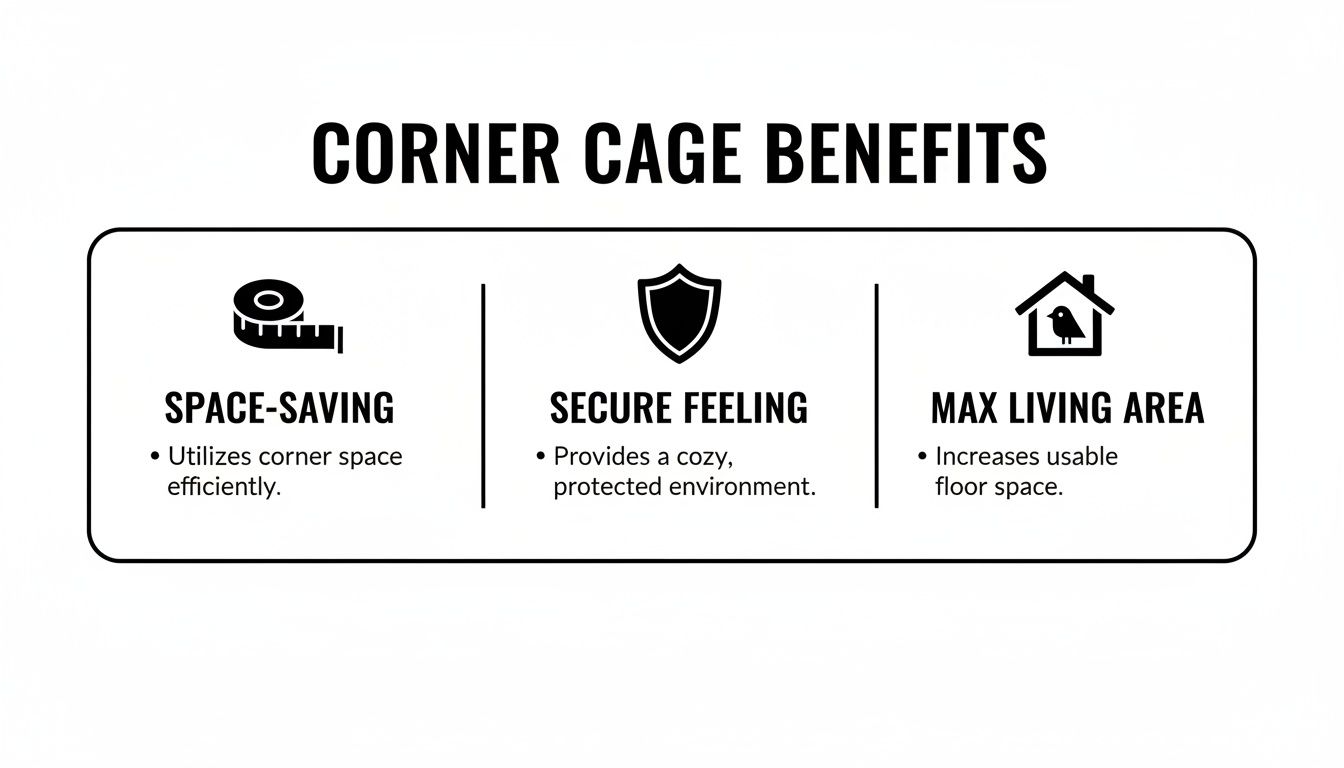
It really highlights how the unique shape makes the most of your room's layout, which is a win for both you and your parrot.
Material and Construction: Is It Beak-Proof?
The final piece of the puzzle is the cage’s build quality. A cheeky Galah has a very different kind of beak strength compared to a delicate Cockatiel. The cage must be tough enough to handle your parrot's beak without bending, snapping, or having its coating chipped away.
Expert Tip: For big birds with powerful beaks—think Sulphur-Crested Cockatoos or Macaws—a high-quality stainless steel cage or one with a thick, durable powder-coating is non-negotiable. I've seen cheaper, flimsy cages completely destroyed, leading to escapes and potential injuries.
Check for strong, clean welds and a frame that doesn’t wobble. You’re not just buying a cage; you're investing in a secure, long-lasting home that will keep your companion safe for many years to come.
Essential Safety and Construction Standards to Check
When you're bringing a parrot into your home, their cage is more than just a place to live—it's their fortress, their playground, and their safe space. Getting the safety and construction details right isn't just a nice-to-have; it's absolutely critical. You need to put on your inspector's hat and give any potential cage a thorough once-over, from the materials right down to the locks.
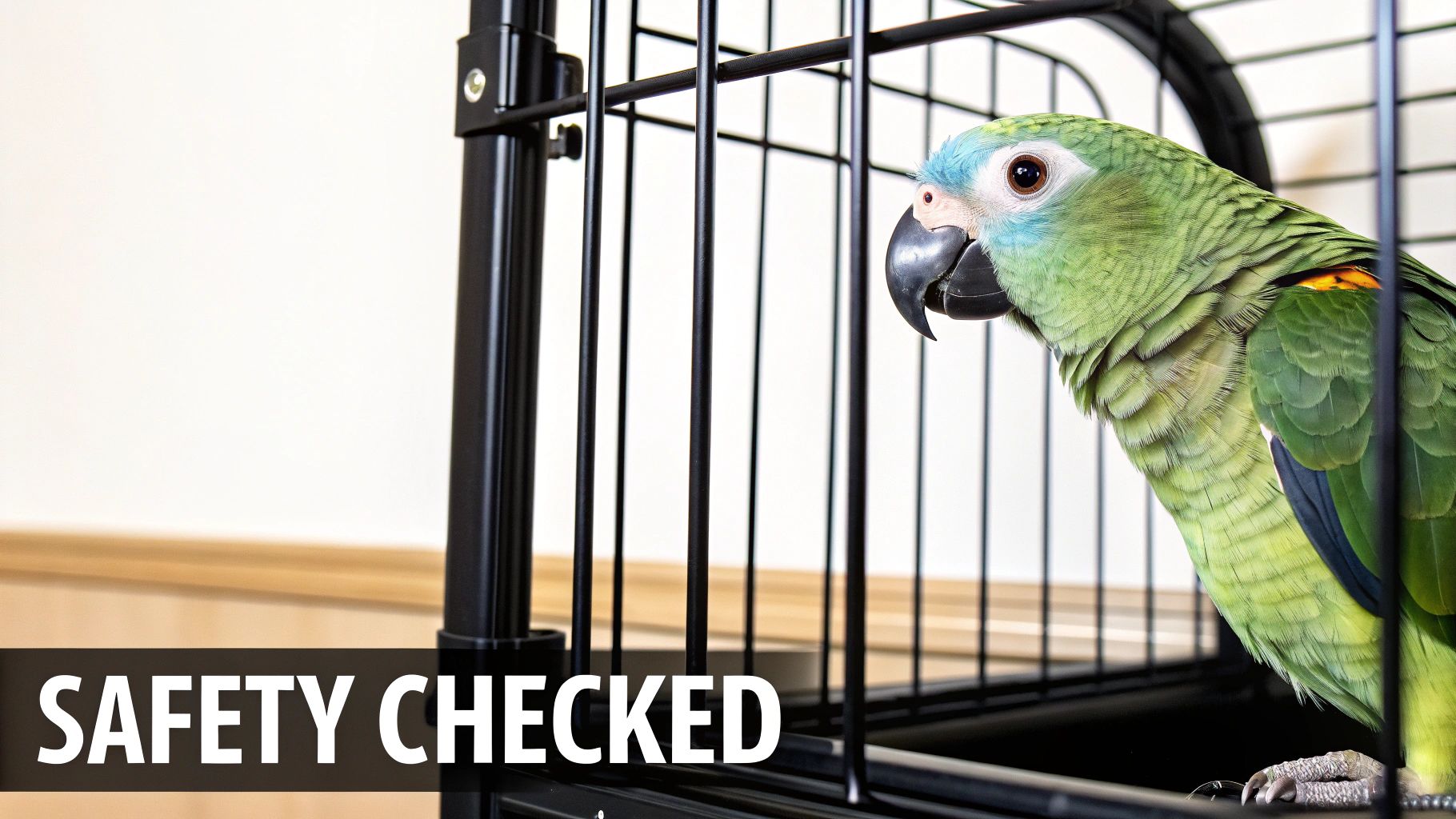
First up, let's talk materials. The absolute gold standard is high-grade stainless steel. It’s tough, non-toxic, and won't rust. That said, a well-made cage with a high-quality, non-toxic powder-coated finish is also a fantastic and far more common choice.
What you must steer clear of are materials that could poison your bird. Cheaper, poorly constructed cages or even some older second-hand models can contain zinc or lead. If your bird chews on these, it can lead to heavy metal poisoning. Always double-check that a cage is explicitly labelled as zinc-free and lead-free.
Inspecting the Bones of the Cage
A cage's real strength is in how it's put together. Don't be shy in the store—give a display model a gentle shake. A well-built frame won't feel flimsy or wobble.
Zoom in on the welds. They should be smooth and solid, with no rough spots. A shoddy weld is a weak point, and a powerful beak could potentially snap it, creating a dangerous sharp edge and an easy escape route.
Next, have a good look at the locks and latches. Parrots are ridiculously smart and can quickly become master escape artists. A simple slide-bolt latch is child's play for a clever cockatoo. Look for more complex, bird-proof locks, like those that need a simultaneous push-and-turn action to open.
Stability and Safe Design Features
The clever triangle shape of a corner parrot cage gives it a natural stability, which is a huge safety plus. It’s not just a feeling; data from RSPCA Australia shows that improper caging is a factor in 18% of annual bird welfare complaints, and cage stability is a major part of that. Because corner cages are tucked away and supported on two sides, they're much less likely to be knocked over—a very real danger with standard cages, especially if you have kids or other pets running around.
Beyond just staying upright, here are a few other critical features to check for:
- No sharp edges: Run your hands over everything—the bars, the joints, the feeder doors, and any decorative bits. You shouldn't feel anything that could cut your bird’s delicate feet or body.
- Secure food and water bowls: The bowls need to lock firmly in place. If they don't, your parrot will use them as a toy, tipping them over and making a huge mess.
- Good climbing bars: Horizontal bars are fantastic. They give your parrot a built-in ladder, encouraging them to climb and get some exercise.
Expert Advice From an Avian Specialist: "Before you even think about adding toys, check the cage itself for hazards. I've seen injuries from birds getting their leg bands caught on intricate scrollwork or poorly designed feeder doors. Simpler is often safer. A well-constructed cage is the foundation of your bird's entire environment."
At the end of the day, you're looking for a cage that's built to withstand an inquisitive, and often destructive, feathered toddler for years to come. Your diligence now will mean a safe, secure, and happy home for your bird.
If you're weighing up different styles of enclosures, it's also worth checking out the pros and cons of a bird flight cage to see how it stacks up.
Finding the Perfect Spot: Cage Placement Matters
Right, you’ve picked out the perfect corner cage. That’s a huge step, but don’t rush to assemble it just yet. Where you decide to put that cage is just as important for your bird’s happiness as the cage itself.
Get this part right, and you’ll have a parrot that feels secure and part of the family. Get it wrong, and you could end up with a stressed, isolated bird. It's all about finding that sweet spot between social connection and a feeling of safety.
Parrots are flock animals through and through. They want to be where the action is, which makes a social hub like the living room or family room a great choice. Placing their cage here means they can watch you, listen in on conversations, and feel included in the day-to-day happenings.
The key is to position it just off the main walking path. You don't want your bird to be in a constant state of alarm as people rush past.
Making a Safe and Comfortable Nook
This is where the corner cage design really shines. When you place it in a corner, you’re giving your bird two solid walls at its back. This simple act mimics the protection of a natural roost in the wild and can dramatically reduce that "fight or flight" instinct, since they don't have to watch their back.
As you scout out the perfect corner, keep these crucial factors in mind:
- Dodge the Draughts: Steer clear of doorways, open windows, and air conditioning vents. Sudden chills can make your bird sick, and in Australia, a cold winter draught can be just as risky as overheating.
- Watch the Sun: Natural light is fantastic, but parking a cage right in front of a north-facing window during an Aussie summer is a recipe for overheating. Make sure there’s always a shaded spot inside the cage where your bird can retreat.
- Kitchens are a No-Go: The kitchen is the most dangerous room in the house for a parrot. Fumes from non-stick cookware (like Teflon) are deadly, not to mention all the other hazards like hot stoves and cleaning chemicals.
Why Thoughtful Placement Matters for Behaviour
Talk to any avian behaviourist, and they’ll tell you a well-placed cage can significantly cut down on stress behaviours like screaming or feather plucking. A bird that feels both safe and socially connected is far more likely to be a happy, confident companion. They learn the household's rhythm and start to see themselves as a true member of the flock.
Here’s a tip I always give new bird owners: once you think you've found the spot, get down to your parrot’s level and look around. What do they see? Can they see the family? Is there a clear view of who's coming into the room? Is there a weird reflection from the TV? This simple check helps you spot potential stressors you might have otherwise missed.
Ultimately, finding the right place for the cage is about creating a secure home base. It’s a foundational step in building a trusting, happy life with your feathered friend.
Creating an Enriching Environment Inside the Cage
An empty cage is just a box; a well-appointed one is a home. Once you've picked out the perfect corner parrot cage, the real fun begins: turning it from a simple enclosure into a stimulating habitat that keeps your bird happy, healthy, and engaged.
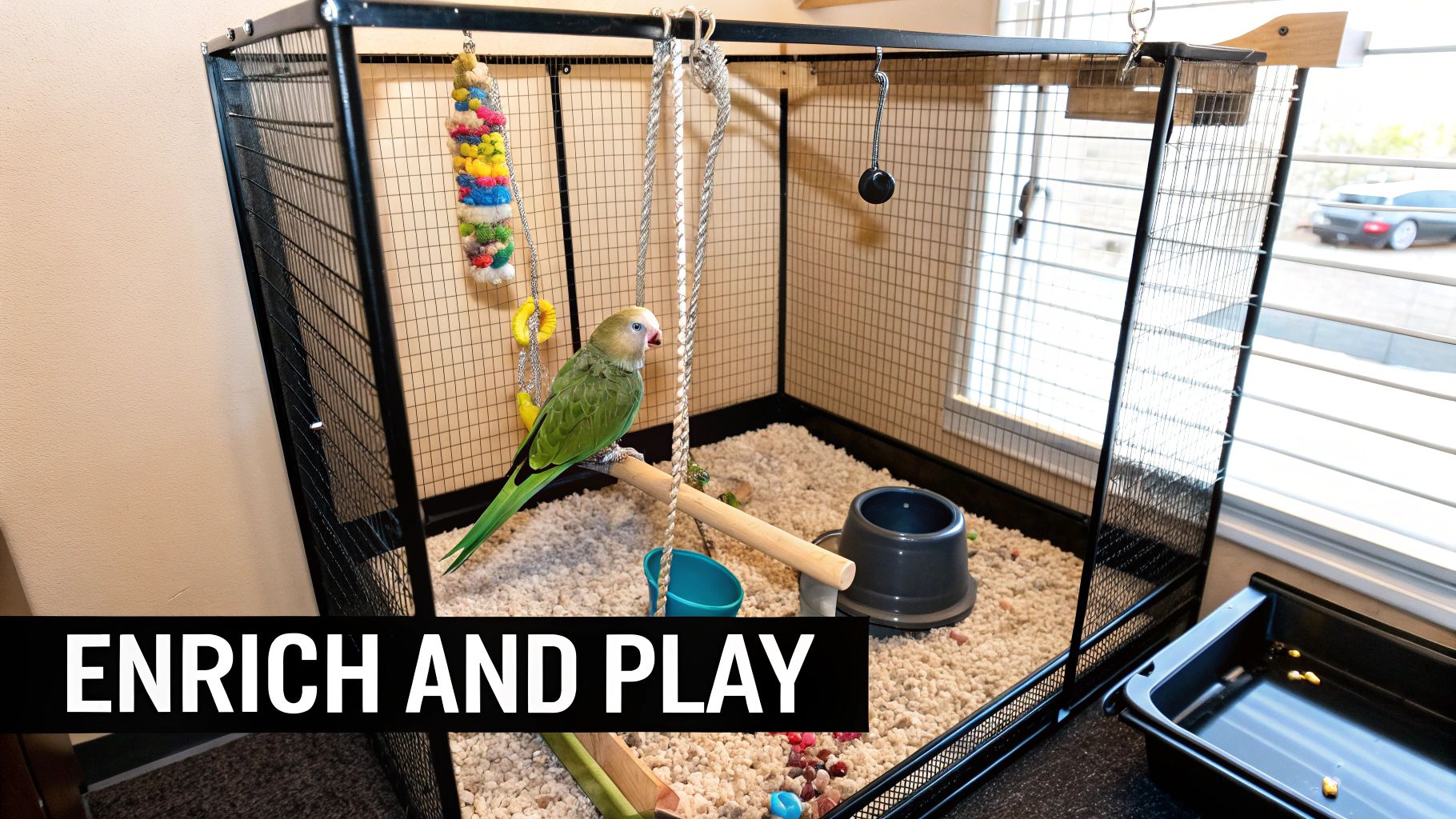
This is about so much more than just throwing in a few perches and a food bowl. It's about strategically creating different zones inside the cage to cater to all of your parrot's natural instincts—playing, foraging, shredding, and resting. The unique shape of a corner cage is a huge plus here, giving you the perfect canvas to design a multi-level playground that encourages movement.
Designing Activity Zones
Think of the cage layout a bit like you would a small apartment. You wouldn't put your bed in the middle of the kitchen, right? The same logic applies to your bird's home. Creating distinct areas makes the space far more functional and interesting for them.
-
The Foraging Zone: I like to set this up near the bottom of the cage. Parrots in the wild spend a huge chunk of their day searching for food on the ground. You can scatter food in a tray of bird-safe substrate or use clever foraging toys like the Little Forager to turn mealtimes into a mentally stimulating puzzle.
-
The Play and Shred Zone: The middle and upper sections are perfect for high-energy activities. This is the prime spot to hang sturdy swings, ladders, and a good mix of shreddable toys. Something like the Colour Bomb provides a brilliant outlet for a parrot's natural urge to chew and destroy, which is essential for preventing boredom and nasty behavioural issues.
-
The Rest and Preen Zone: The highest point in the cage, ideally tucked into the back corner, should be their designated chill-out spot. A comfortable, natural wood perch placed here gives your bird a secure place to sleep and preen, away from the hustle and bustle of the cage's main activity areas.
Expert Advice: Rotate your parrot's toys every week or two. This doesn't mean you need to constantly buy new things—just swap out a few at a time. This simple trick keeps the environment fresh and exciting, preventing your bird from getting bored with the same old stuff.
Leveraging the Corner Cage Shape
That deep corner in the cage is a fantastic, often underutilised space. Use it to hang larger, more complex toys or swings that might feel cluttered in a standard rectangular cage. For instance, a big rope boing or a dangling toy like the Busy Bee can be suspended from the top, really encouraging your bird to climb and use the full height of their home.
Placing perches of varying textures and diameters at different angles—connecting the front and back of the cage—will get your parrot moving between zones and promote essential exercise. For a complete rundown on outfitting your bird’s home, check out our detailed guide on essential parrot cage accessories.
This kind of strategic setup turns your bird's corner cage from a simple box into an interactive and dynamic playground, which is absolutely crucial for their physical and psychological wellbeing.
Your Corner Parrot Cage Questions Answered
Even after you’ve done your homework, a few questions can pop up when you're on the verge of choosing the perfect corner parrot cage. This final section tackles some of the most common queries we hear from Aussie bird owners, giving you quick, clear answers to help you feel completely confident in your choice.
Are Corner Cages Harder to Clean?
This is a common worry, but the answer is generally no.
Most modern, high-quality corner cages are designed with easy cleaning in mind. They usually have a slide-out grille and a deep debris tray that you can pull out from the front, just like you would with a standard rectangular cage.
The only bit that can be slightly trickier is wiping down the very back corner. A long-handled brush or a microfibre cloth on a stick makes reaching that spot a breeze. With a regular cleaning routine, a corner cage is no more effort to maintain than any other style.
Do They Provide Enough Space for Large Parrots?
Absolutely, as long as you choose the right size. A well-designed large corner parrot cage can offer a surprisingly expansive living area, often with more depth than a standard cage of a similar width. The key is to check the internal dimensions, not just the overall footprint.
For big birds like Macaws or Sulphur-Crested Cockatoos, that extra depth allows their long tail feathers to hang freely and provides more room for large toys and perches without everything feeling cramped.
Are Corner Cages More Expensive?
Sometimes, but not always. The price of any cage is influenced more by its size, materials, and brand than its actual shape. While some specialised corner models might carry a slightly higher price tag, you can often find options that are competitively priced with standard cages of similar quality and size.
Think of it as an investment in a space-saving design that maximises your bird’s living area. The market for these cages is growing fast in Australia, with the local bird accessories market expanding at a 6.5% CAGR. Corner cages now capture a significant 42% of this market, largely due to their popularity in compact city homes where space is tight. You can find more details on these market trends in this parrot cage market report.
Expert Insight: Remember, the best value isn't always the cheapest price. A slightly more expensive but well-built, safe, and appropriately sized cage will last for years and is a far better investment in your parrot's long-term health and happiness.
Ultimately, a corner parrot cage is a fantastic solution for many Australian homes, offering a brilliant blend of security, space, and practicality.
At Lou Lou Bells Bird Toys, we're passionate about providing safe, stimulating, and high-quality enrichment for your feathered family members. Explore our full collection of Australian-designed and handcrafted bird toys to create the ultimate playground in your parrot's new home.
Shop our range of parrot toys now
Keep Reading
- Parrot Cage Accessories You Actually Need
- What to Look for in a Large Parrot Cage
- The Ultimate Guide to Australian Parrot Supplies
Disclaimer Summary:
The information in this article is general in nature and may include external links or resources not created by Lou Lou Bells Bird Toys. Every bird is unique, so we encourage you to seek personalised advice from your own veterinarian or avian specialist. For full details, please read our complete disclaimer here.