
A bird cage seed catcher is a simple but brilliant accessory that wraps around the outside of your bird's cage. Its one job? To trap all the stray seeds, husks, and feathers that would otherwise end up all over your floor. Think of it as the first line of defence against the daily "seed storm."
Why Every Aussie Bird Owner Needs a Seed Catcher
If you share your home with a feathered friend, you know the scene well. A constant confetti of seed husks seems to find its way into every nook and cranny. While it’s a totally natural part of how birds eat, it doesn't have to mean your home is perpetually messy. This is where the humble bird cage seed catcher proves its worth, turning a daily frustration into a simple, manageable task.
And it’s a common frustration, too. Birds are a cherished part of many Australian families. A national survey by Animal Medicines Australia found that 9% of Australian households—that’s around 695,000 homes—keep birds. As more Aussies welcome birds into their lives, the need for practical solutions to common problems like mess just keeps growing. You can check out more of their fascinating insights on Australian pet ownership right from their survey.
The Core Benefits of a Seed Catcher
Beyond just keeping things tidy, a seed catcher contributes to a healthier, more harmonious home for both you and your bird. It’s honestly one of the most effective bird cage accessories you can own.
The main benefits are pretty clear:
- Drastically Reduced Cleaning Time: By catching the mess right at the source, you’ll spend a lot less time sweeping and vacuuming around the cage.
- Improved Hygiene: Keeping seeds and husks off the floor reduces the chance of attracting pests or developing mould in carpet fibres. No one wants that.
- Less Food Waste: You'd be surprised how much uneaten seed a good catcher can salvage, saving you a bit of money over time.
- A Healthier Environment: Containing dust and dander helps improve the air quality in your home, which is a bonus for everyone—especially anyone with allergies.
Ultimately, a seed catcher isn’t just about neatness. It’s about creating a more enjoyable and stress-free life with your beloved bird. It frees you up to focus more on interaction and fun, and less on the clean-up that always follows.
Comparing Different Types of Seed Catchers
Picking the right bird cage seed catcher can feel a bit like choosing the perfect accessory—it has to work well, be safe, and actually suit your cage setup. With a few options popular among Aussie bird owners, figuring out the pros and cons makes the decision a whole lot easier.
So, let's break down the most common types and see which one is the best fit for you and your feathered mate.
Still on the fence? This might help you decide if a seed catcher is the right move.
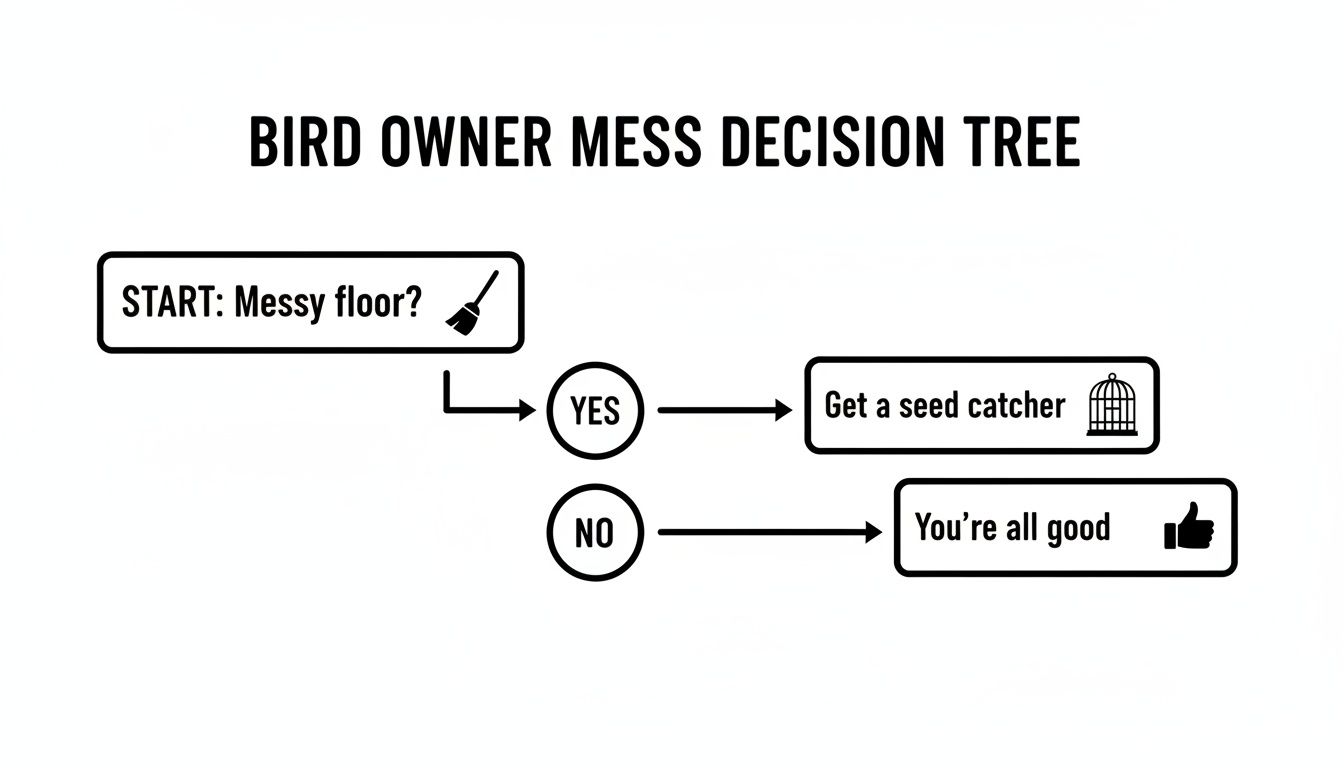
As you can see, the path to a cleaner floor really does start with a simple "yes" to solving the mess. This is exactly where a good seed catcher becomes one of your most essential bits of kit.
Flexible Mesh Skirts
These are probably the most common type you'll spot in Australia. A mesh skirt is basically a band of breathable, net-like fabric with elastic at both the top and bottom. It just stretches around the lower part of the cage, creating a soft barrier that catches those stray seed hulls and feathers.
They're great because they're affordable, a breeze to wash, and can fit all sorts of cage shapes—even the round or unusual ones. Plus, the mesh design means air circulation around the cage stays excellent.
The downside? A determined chewer, like some parrots, might make short work of the fabric. It’s really important to check it regularly for any loose threads that could get tangled around a bird's toes.
Solid Acrylic or Plastic Guards
If you’ve got a bird that's a bit more destructive or just a particularly enthusiastic eater, a solid guard might be a better bet. These are rigid panels, usually made from clear acrylic or hard plastic, that you attach to the outside of the cage bars.
They create a solid, see-through wall around the food and water dishes, doing a brilliant job of blocking seeds from being flung out.
Expert Advice: "When you're choosing any new accessory for your bird's cage, especially something plastic or acrylic, always double-check that it's made from non-toxic, bird-safe materials. Birds explore everything with their beaks, and making sure there are no harmful chemicals is absolutely vital for their health."
Wide-Base Tray Catchers
Another really effective design is the wide-base tray. Some cages come with a built-in seed skirt, where the base of the cage sticks out several centimetres beyond the bars, creating its own ledge. You can also find separate trays that sit underneath the cage to do the same job.
These trays are fantastic at catching any debris that falls straight down. They're also incredibly durable and super simple to just wipe clean.
The catch is that they’re most effective for mess that drops vertically and might not stop seeds that get flung outwards with real force. They can also take up a fair bit of floor space, which is something to keep in mind in smaller Aussie homes or apartments.
Choosing the right one really comes down to your bird’s habits, your cage’s design, and the space you've got to work with.
To help you weigh up the options at a glance, we've put together this simple comparison guide. It breaks down the key features of each type so you can see what might work best for your situation.
Bird Cage Seed Catcher Comparison Guide
| Catcher Type | Best For | Effectiveness | Cleaning Ease | Durability |
|---|---|---|---|---|
| Mesh Skirt | All-around mess control; round or odd-shaped cages. Good for small birds. | Moderate: Catches most light debris and hulls but not all flung seeds. | Easy: Machine washable, quick to dry. | Low: Can be chewed or torn by determined birds. |
| Solid Guard | Birds that fling seeds horizontally; parrots and destructive chewers. | High: Excellent at blocking seeds flung directly outwards. | Easy: Simple to wipe clean with a damp cloth. | High: Made from tough acrylic or plastic that resists chewing. |
| Wide-Base Tray | Catching dropped food and hulls that fall straight down. | Moderate: Very effective for vertical mess but won't stop flung debris. | Very Easy: Just wipe the tray clean. | Very High: Usually made of metal or hard plastic; built to last. |
Ultimately, each style has its place. Mesh skirts are a versatile and budget-friendly starting point, while solid guards offer targeted protection against the messiest eaters. Wide-base trays are a durable, no-fuss solution for containing the daily drop zone. Thinking about your bird’s specific brand of chaos will point you to the perfect choice.
The Surprising Benefits of Using a Seed Catcher
A good bird cage seed catcher does far more than just keep your floors tidy. While less time spent with the vacuum cleaner is a fantastic perk, the real advantages run much deeper, directly impacting your bird's health, your home's hygiene, and even your budget.
When you start to see it this way, a seed catcher stops being just another accessory. It becomes a crucial piece of equipment for responsible bird care, helping you create a healthier, cleaner, and less wasteful world for your feathered friend.
Boosting Hygiene in Your Home
When seeds, husks, and food scraps hit your floor, they don't just sit there waiting to be cleaned up. Especially in Australia's often humid climates, this mess can quickly become a breeding ground for mould and bacteria—unhealthy for both you and your bird.
A seed catcher simply contains the chaos, preventing it from getting trampled into carpets or forgotten in corners. This simple act of containment makes your cleaning routine far more effective and seriously cuts down the risk of nasty microorganisms setting up shop in your living space.
Improving Health and Air Quality
All that fluttering and foraging inside a cage kicks up more than just seeds. It creates a fine dust made of dander, feather particles, and dried food bits. This airborne debris can irritate the respiratory systems of both birds and humans, particularly if anyone in the family has allergies or asthma.
A seed catcher acts as a barrier, trapping a huge amount of this dust before it can circulate through the room. The result is better air quality right where it matters most, creating a healthier breathing environment for everyone.
In fact, avian vets and behaviourists often recommend them because a good catcher can retain 90-98% of debris. That’s been shown to slash bacterial risks by 60% in humid Aussie climates—a massive win for bird health.
Saving Money and Reducing Waste
Ever looked at the "husk hurricane" on the floor and noticed how much of it is perfectly good, uneaten seed? Birds can be picky—or just plain messy—often flinging seeds aside to get to their favourites.
By collecting this jettisoned food, a seed catcher allows you to salvage a surprising amount of quality, uneaten seed. Over weeks and months, this adds up, reducing food waste and saving you money on your bird supplies. It's a small but practical step toward more sustainable pet ownership.
Some bird owners find that pairing a seed catcher with other clever solutions, like a specially designed no-mess bird feeder, can almost entirely eliminate mess. This combination creates a super-efficient feeding station, ensuring your bird gets all the nutrition it needs without redecorating your floor.
How to Choose the Right Size for a Perfect Fit
An ill-fitting seed catcher isn't just a waste of money—it can be a real safety hazard for your bird. Getting the size spot-on is the single most important thing you can do to make sure it catches the mess without creating any risks. A perfect fit means no dangerous gaps, no baggy fabric, and a much cleaner floor.
Before you even think about clicking "add to cart," go find a flexible measuring tape. Taking a minute to measure your cage properly is the key to getting it right the first time.
Measuring for a Mesh Skirt Catcher
For those popular mesh skirts that stretch around the cage, the number you need is the circumference. That’s just the total distance all the way around the outside.
- Wrap your flexible tape measure around the part of the cage where the catcher will sit. This is usually the lower third, right where their food and water bowls are.
- Pull the tape so it’s snug against the bars, but not squeezing them, and make sure it follows the cage’s shape.
- Jot down the measurement in centimetres.
Most mesh skirts are made with elastic, so they can fit a range of sizes. But knowing your cage's exact circumference lets you choose a size where the elastic is taut and secure, not loose and saggy.
Measuring for Solid Guards
If you’re looking at a rigid acrylic or plastic guard, you’ll need to be a bit more precise. These usually just cover the front and sides where the food bowls are.
- Width: Measure the width of each panel of your cage you want to cover.
- Height: Decide how tall you want the guard to be. It needs to be high enough to block seeds being flicked out, but not so high that it blocks your bird’s view or makes it hard to get in and out.
Because these guards have no give, your measurements need to be exact. This makes sure they clip onto the bars securely without leaving any big, unsafe gaps. This is especially true if you're looking for something to fit a large parrot cage, where the dimensions are much bigger.
Expert Advice from an Avian Vet
"The biggest safety risk with any cage accessory is entrapment. Always check for gaps between the catcher and the cage where a head, wing, or foot could get stuck. For mesh skirts, inspect them daily for loose threads or holes that could snag a claw. A two-minute safety check can prevent a serious injury."
Making sure you have a snug, secure fit is non-negotiable. An incorrectly sized seed catcher simply won't do its job properly and could introduce new dangers into your bird's home. A few moments spent measuring carefully will ensure the new accessory is a helpful tool, not a hazard.
Getting It Set Up and Keeping It Clean
Fitting your new bird cage seed catcher only takes a few moments, but doing it right from the get-go makes all the difference. Once it’s on, a quick cleaning routine is all you need to keep your bird’s space hygienic and your home tidy.
Trust me, the small effort is worth it. Without one, a single cockatiel can flick out up to 200g of seed hulls every day. It's no surprise that mess is a top complaint for 70% of owners on Aussie bird forums.
A good seed catcher can slash your cleaning time by 40%. That’s a huge relief and adds to the positive impact our pets have on our lives, something 86% of owners agree with in a national survey. You can read more about how pets enrich our lives by checking out the full survey findings.
Step-by-Step Installation
Getting your seed catcher on correctly is a breeze, but the exact steps depend on the type you’ve chosen.
-
For Mesh Skirts: Just stretch the elasticated fabric around the bottom third of the cage so it sits snugly against the bars. You'll want to position it high enough to cover the area around your bird's food bowls, where most of the action happens.
-
For Solid Guards: These usually come with built-in clips or hooks that attach right onto the cage bars. Simply place the panels where the seed-flinging is worst and press the clips firmly onto the bars until they click securely into place.
Expert Advice
After you've fitted it, do a quick "snug test." Run your finger along the top and bottom edges. There shouldn't be any big gaps where a curious beak could get stuck, and the material should be taut enough that it won't sag and become an entanglement risk.
Creating an Easy Cleaning Schedule
A little bit of regular upkeep is all it takes to keep your seed catcher working perfectly and prevent any hygiene issues from cropping up. A simple, consistent routine quickly becomes second nature.
Here’s a schedule that’s easy to stick to:
- Daily Shake-Out: Once a day, gently shake the collected husks and bits of food from the catcher straight into the bin. It takes less than a minute.
- Weekly Wipe-Down: When you're doing your main cage clean for the week, give the catcher a proper wash. For solid guards, a quick wipe with a bird-safe cleaner is perfect. Mesh skirts can be hand-washed or popped in the machine on a gentle cycle.
- Regular Safety Check: During the weekly clean, give the catcher a quick once-over. Check for any wear and tear, and pay close attention to any loose threads on mesh skirts. This makes sure it stays completely safe for your feathered friend.
Safe and Clever DIY Seed Catcher Solutions
For the crafty and budget-conscious bird owner in Australia, making your own bird cage seed catcher can be a really satisfying little project. It lets you get the fit and style just right for your cage, often using bits and pieces you already have lying around the house. The golden rule, though, is to always put safety first.
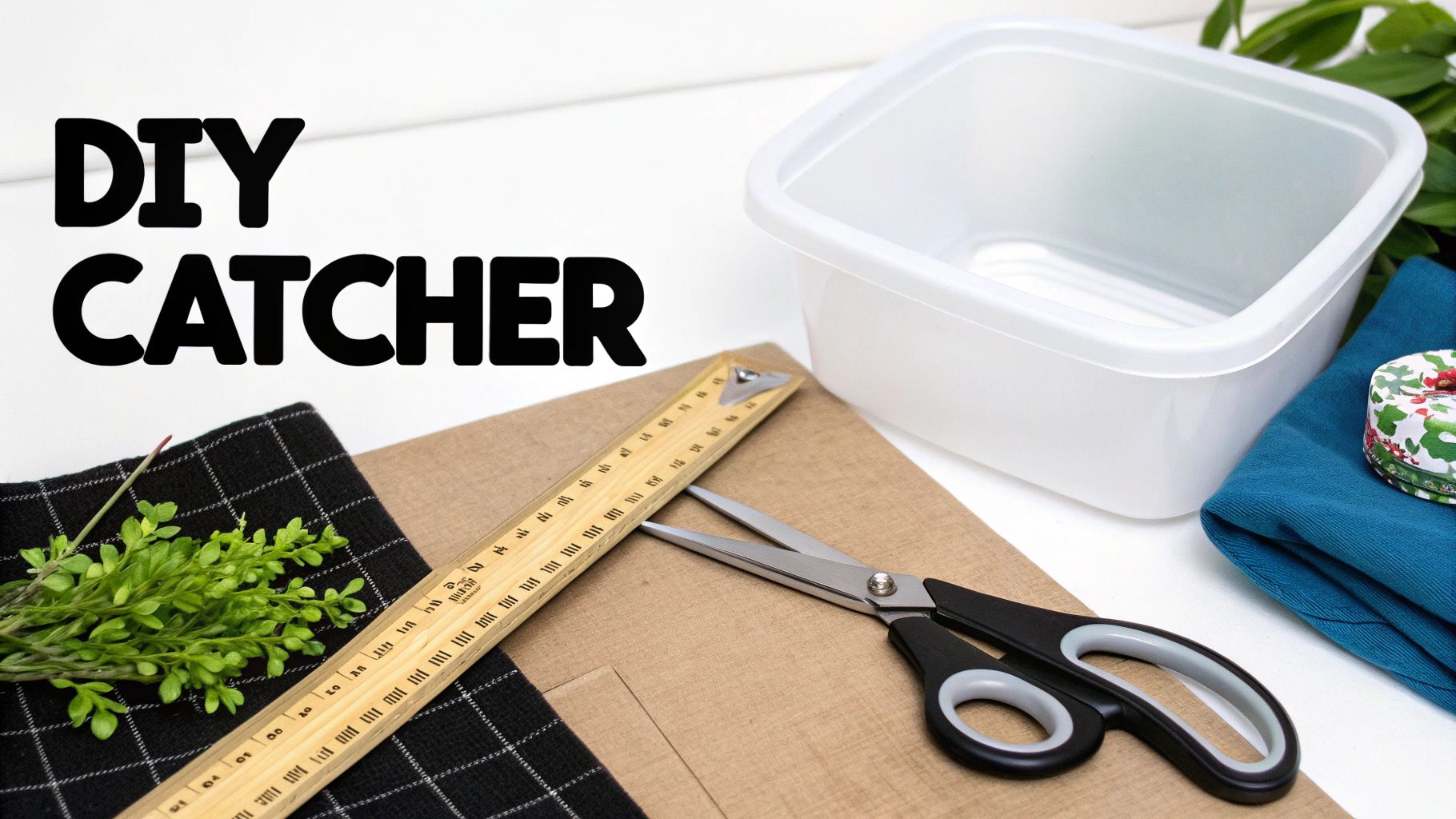
With a dash of creativity, you can whip up a functional solution in no time. These simple ideas use materials that are easy to find and keep your bird's wellbeing front and centre.
Simple and Effective DIY Ideas
Here are a few popular homemade options that get the job done:
- Custom Fabric Skirt: If you're handy with a sewing machine, a skirt made from bird-safe cotton or fleece is perfect. Just measure around your cage, add a channel for some elastic, and sew it into a loop. Easy as.
- Modified Plastic Tub: A shallow, wide plastic storage container that your cage can sit inside works a treat. Just make sure the plastic is sturdy and not the flimsy kind your bird could easily chew up and swallow.
- Temporary Cardboard Guard: For a quick fix in a pinch, you can cut up a cardboard box to create a barrier. It’s a great short-term solution but you'll need to replace it pretty often.
Expert Advice
No matter which DIY route you go down, daily checks are non-negotiable. Have a quick look every day for any signs of chewing, fraying, or general wear and tear. A homemade accessory must be removed straight away if it gets damaged to prevent any risk to your bird.
Materials to Absolutely Avoid
When you're making anything for your feathered mate, safety is everything. Steer clear of these materials, as they can be downright dangerous:
- Fabrics with Loose Loops: Things like terry cloth are a big no-no. They can easily snag a bird's toenail.
- Soft, Chewable Plastics: Flimsy plastics can be broken off into small pieces and swallowed.
- Treated or Painted Wood: Never use materials treated with chemicals, paints, or stains that could be toxic if nibbled on.
- Anything with Adhesives: Glues and tapes can be ingested and cause serious internal blockages.
A safe environment is also one that keeps your bird’s clever mind busy. Providing engaging puzzles, like the ones in our guide to foraging bird toys, helps stop boredom and the destructive habits that come with it—like chewing on cage accessories they shouldn't.
Frequently Asked Questions About Seed Catchers
Still got a few things you're wondering about bird cage seed catchers? No worries. We've put together the most common questions from Aussie bird owners just like you, with simple, straight-up answers to help you choose the right one.
Will a Seed Catcher Stop All the Mess?
Look, nothing stops a determined bird from flinging things with gusto, but a good-quality, well-fitted seed catcher is a game-changer. It can genuinely catch between 90-98% of the seed hulls, stray pellets, and little bits of food that usually end up on your floor.
It won't catch every single feather or the piece of carrot your galah launches across the room, but it absolutely slashes your daily clean-up time. The secret is getting the right type and size for your specific cage.
Are Mesh Seed Catchers Safe for My Budgie?
For the most part, yes, but you have to be vigilant. The main thing to watch for with mesh is loose threads or tiny holes where a little bird's claw could get snagged.
Always go for a high-quality, tightly woven mesh. And make it part of your routine to give it a quick once-over for any fraying or damage whenever you clean it. That way, it stays a safe and helpful accessory.
How Often Should I Clean My Seed Catcher?
For hygiene, you'll want to empty it out daily. This stops your bird from being tempted to snack on old, discarded hulls from the catcher, which isn't great for them.
Then, once a week, give it a proper clean with a bird-safe disinfectant, probably at the same time you're doing a full cage clean-out. This little routine prevents bacteria from building up and keeps your bird's home healthy.
A tidy cage is a fantastic start, but keeping their clever minds busy is just as vital. If you're looking for ideas, have a squiz at our awesome range of bird foraging toys, shreddable bird toys, and fun natural bird toys.
At Lou Lou Bells Bird Toys, we reckon a clean space and an enriched mind are the keys to a happy bird. Explore our full collection of safe, engaging toys designed right here in Australia to keep your feathered mate entertained. https://louloubellsbirdtoys.com.au
Keep Reading
Disclaimer Summary:
The information in this article is general in nature and may include external links or resources not created by Lou Lou Bells Bird Toys. Every bird is unique, so we encourage you to seek personalised advice from your own veterinarian or avian specialist. For full details, please read our complete disclaimer here.