
G'day, fellow Aussie bird lover! Setting up your bird's cage is about so much more than just four walls and a roof. It's about creating a rich, dynamic world that keeps them physically healthy and their clever minds sharp. The right bird cage accessories aren't just a bit of fun—they are an absolute necessity for a happy, thriving companion.
Why Enrichment Is Essential For Your Bird's Wellbeing
For much of the day, that cage is your feathered friend's entire world. Without proper stimulation, birds can quickly fall into boredom and stress, which can lead to serious behavioural problems like feather plucking or incessant screaming. By thoughtfully choosing the right accessories, you can transform a simple enclosure into a vibrant habitat that encourages all their natural instincts.
This guide is here to help you create a space where your bird doesn't just live, but truly flourishes. We'll dive into how to cater to the unique needs of different species we love in Aussie homes, from the zippy antics of a budgie to the complex problem-solving skills of a cockatoo.
Meeting Your Bird's Instinctual Needs
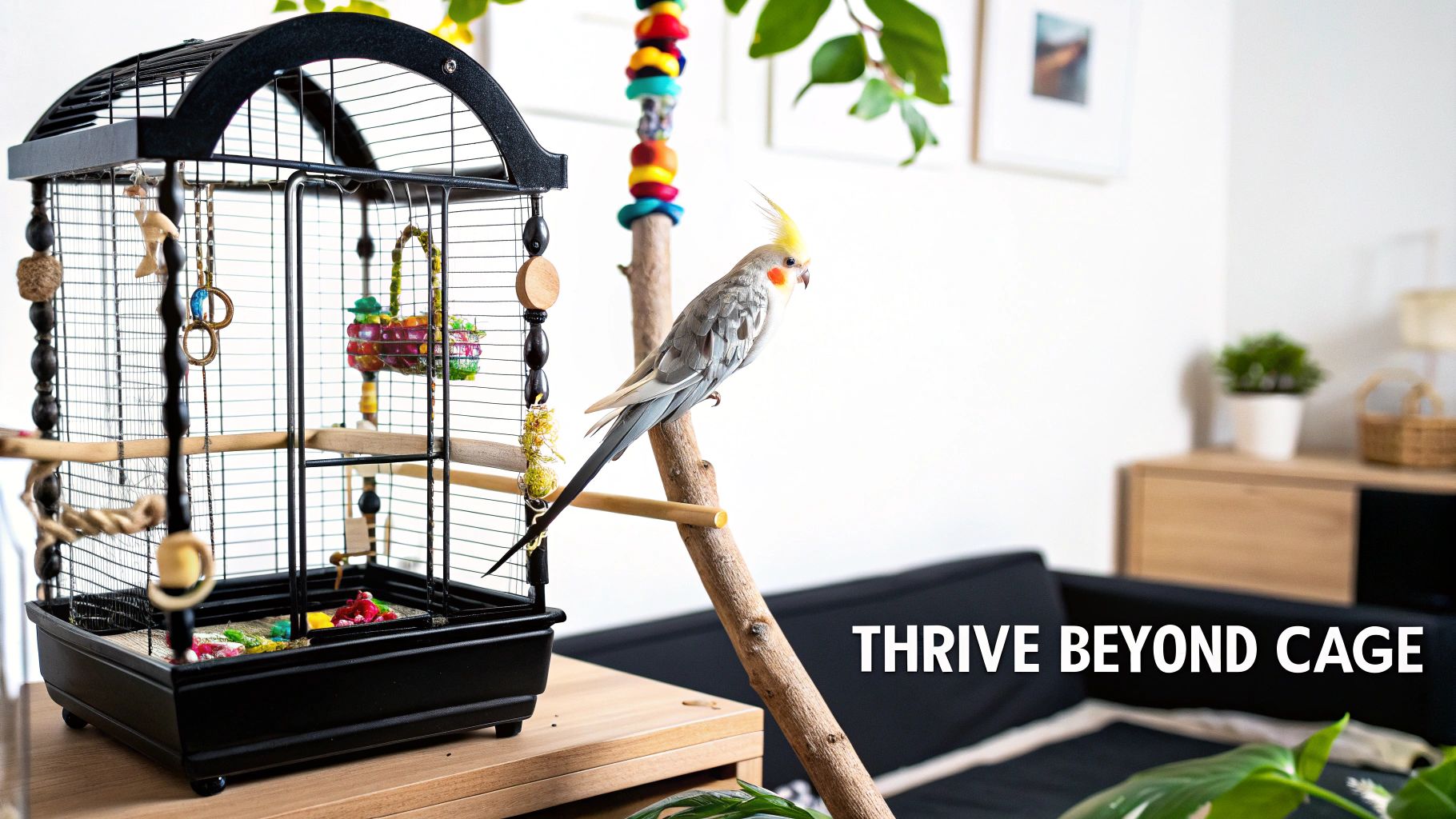
Out in the wild, birds spend their days foraging for food, climbing through branches, chewing on bark, and socialising with their flock. These activities are completely hardwired into their DNA. A bare cage strips them of these opportunities, which often leads to a frustrated and unhealthy pet. The real goal is to mimic their natural environment as closely as we can inside our homes.
Think about enriching their world in these key areas:
- Physical Activity: Perches with varied textures and diameters, along with swings and ladders, get your bird moving. This is vital for maintaining strong muscles and healthy feet.
- Mental Stimulation: This is where foraging and puzzle toys shine. They challenge your bird's intelligent mind, turning mealtime from a simple handout into an engaging, rewarding activity.
- Emotional Security: Providing safe, shreddable toys gives them a healthy outlet for those powerful chewing instincts and can massively reduce stress. Sourcing the right parrot supplies in Australia is your first step toward building this kind of enriching home.
The pet bird community here in Australia is booming, with our feathered mates now found in over 1.2 million households. This growth, especially in cities like Sydney and Melbourne, is dominated by budgies and cockatiels, making up 68% of pet birds. It also reflects a bigger trend: 42% of Aussie owners are now choosing eco-friendly accessories, like sustainable perches made from native Australian hardwoods.
Expert Advice: I always tell people to think of their bird's cage as having different 'rooms'. You should have distinct zones for eating, playing, sleeping, and exercising. This simple strategy encourages your bird to move around and engage with their environment in a much more natural and fulfilling way.
Building this ideal habitat is an ongoing, rewarding process. It's all about watching your bird, getting to know their unique personality, and providing the tools they need to live their very best life. Let's start building that world together.
The Foundation of a Happy and Healthy Cage
Before we get into the fun stuff, let's build your bird's home from the ground up, starting with the absolute non-negotiables. Think of this as more than just a shopping list. It’s about understanding the ‘why’ behind each item, so you can create a safe, functional, and enriching foundation for any feathered friend in your care.
Perches Are More Than Just a Place to Sit
If there’s one thing you need to get right, it’s perches. They are easily the most critical accessory you'll choose for your bird's cage. Out in the wild, birds land on branches of countless different shapes, textures, and thicknesses. This incredible variety naturally exercises their feet and keeps their grip strong.
A cage with only one or two uniform, dowel-style perches is the bird equivalent of us wearing the same pair of ill-fitting shoes every single day. This lack of variety is a leading cause of painful and serious foot conditions like bumblefoot (pododermatitis) and arthritis. The good news is, it's easy to prevent. You just need to create a diverse landscape for their feet.
- Go Natural: Get perches made from native, bird-safe Australian woods. Their irregular shapes, knots, and textures force your bird's feet to constantly adjust their grip, which is fantastic for promoting healthy circulation and muscle tone.
- Vary the Diameters: Make sure you offer a mix of thick and thin perches. A good rule of thumb is that the ideal perch allows your bird's toes to wrap about three-quarters of the way around, but having a range of sizes encourages them to stretch and change things up.
- Add Soft Options: Rope perches offer a softer, more flexible surface that's perfect for resting. You can also bend them into interesting shapes to create new pathways around the cage.
Providing this variety isn't just about decorating—it's a direct investment in your bird's long-term mobility and comfort. For a deeper dive into picking the perfect options, our complete guide to choosing a perch for birds has even more expert tips.
Smart and Safe Feeding Stations
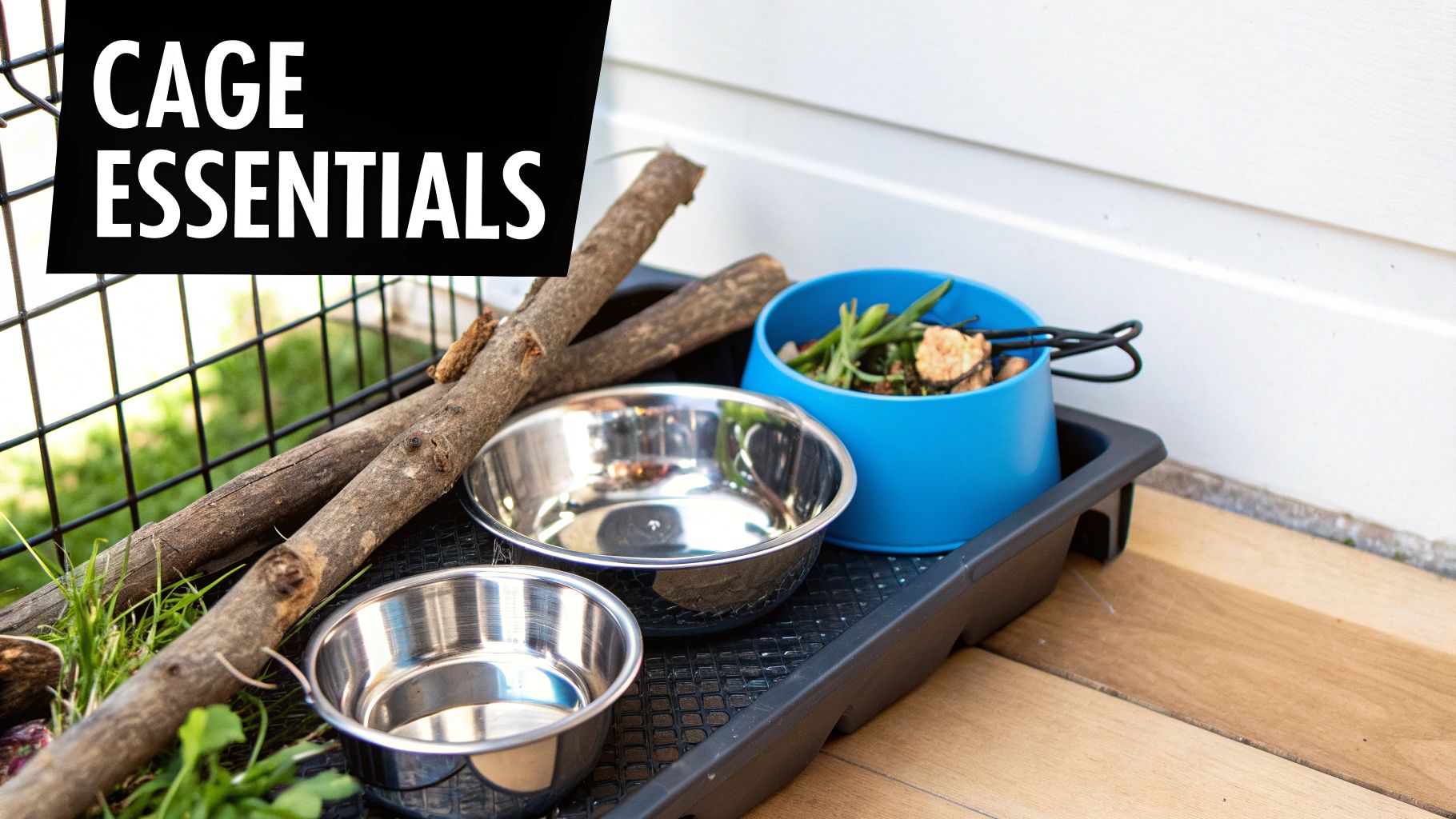
When it comes to food and water bowls, the material you choose matters immensely. Plastic bowls might be common and cheap, but they are a false economy. They’re porous and scratch easily, creating tiny crevices where dangerous bacteria can hide and multiply.
Stainless steel is the gold standard for bird feeders. It’s non-porous, incredibly durable, and you can sanitise it properly, making it the most hygienic choice by far.
Some birds, especially conures, can develop a cheeky habit of tipping their bowls. Sometimes it’s just playful, but it can also be a reaction to seeing their own reflection in a shiny steel bowl—they try to "dig" at the "other bird." If this becomes an issue, switching to a heavy, bolt-on ceramic crock usually solves the problem instantly.
Expert Advice: Placement is just as crucial as the bowl itself. Always position food and water dishes away from directly underneath perches to prevent contamination from droppings. A clean dining area is fundamental to your bird's health.
Turning Mealtime into an Adventure
A bowl full of food provides nutrition, but that's about it. It offers zero mental stimulation. Birds are born foragers; they are hardwired to search and work for their food.
A simple puzzle feeder or a shreddable toy stuffed with pellets turns a boring meal into an engaging challenge. This simple switch taps into their natural instincts, fights off boredom, and provides a fantastic outlet for their busy minds. Honestly, even hiding some food in a paper cup can make a huge difference.
Ladders and Swings for Daily Exercise
Finally, don’t underestimate ladders and swings. They are so much more than just playthings; they're essential tools for daily exercise and enrichment.
- Ladders and Ropes: These create vertical and horizontal pathways that encourage your bird to climb and explore. All that movement strengthens their leg and wing muscles and makes the entire cage a usable, interactive space.
- Swings: A swing provides a gentle, swaying motion that mimics a treetop branch moving in the breeze. It's a fantastic way for your bird to develop a keen sense of balance, and it doubles as a fun spot for both play and rest.
Together, these core accessories form the bedrock of a habitat that supports your bird’s physical and mental wellbeing, every single day.
Accessory Essentials for Common Australian Pet Birds
| Accessory Type | Best For Budgies & Cockatiels | Best For Lorikeets & Conures | Best For Galahs & Cockatoos |
|---|---|---|---|
| Perches | Natural wood (e.g., bottlebrush) with varied diameters (1-2cm), plus at least one rope perch. | Sturdy natural branches (e.g., gum tree) and platform perches. Need a mix of textures. | Thick, ultra-durable hardwood branches (e.g., ironbark) and concrete perches for beak/nail care. |
| Feeding Station | Small stainless steel or ceramic bowls that clamp securely to the cage bars. | Bolt-on stainless steel bowls are a must to prevent tipping. Wet food bowls need daily cleaning. | Heavy-duty, deep stainless steel or ceramic crocks that can withstand strong beaks. |
| Foraging Toys | Shredding toys made of paper and seagrass, small puzzle boxes, and foraging wheels. | Intermediate puzzles, shreddable toys with wooden blocks, and foraging trays on the cage floor. | Tough, reusable foraging toys made of acrylic or hardwood. Anything they can unscrew is a hit. |
| Movement | Fine-rung ladders, beaded swings, and boings (coiled rope perches). | Thicker rope swings, cargo nets for climbing, and multi-level wooden ladders. | Very robust wooden or thick rope swings, climbing nets made of durable material. |
This table should give you a solid starting point for kitting out your cage. Just remember to observe what your bird actually interacts with and adjust your setup to suit their unique personality.
Choosing Toys That Are Both Safe and Engaging
Toys are the vibrant heart of a bird’s cage. They’re what turns a simple enclosure into a stimulating playground, giving your bird the tools they need to flex their natural instincts, sharpen their mind, and burn off energy.
But with a mountain of options out there, how do you pick toys that are genuinely fun and completely safe for your feathered friend? It all starts with understanding the different jobs toys do.
The Main Categories of Bird Toys
Think of your bird’s toy box like a balanced diet—variety is everything. A good mix of toy types makes sure all their behavioural itches get scratched, which is the key to preventing boredom and encouraging them to move and think in different ways.
-
Foraging Toys: These are absolute game-changers for any parrot. Wild birds spend a huge chunk of their day just looking for food. Foraging toys bring that essential activity into their cage, turning mealtime into a puzzle that boosts their problem-solving skills and gives them a real sense of accomplishment. We dive deeper into this in our guide to the benefits of foraging toys for birds.
-
Shreddable Toys: Birds have a powerful, built-in need to chew things up. Shreddable toys made from materials like palm leaf, yucca, cardboard, and untreated paper offer a safe and satisfying outlet for this instinct. It’s fantastic for their beak health and works wonders for reducing stress.
-
Preening Toys: Got a bird that over-preens or plucks? These toys, often made with soft fibres, ropes, or leather strips, can be a lifesaver. They give your bird something appropriate to direct that preening energy towards, satisfying the urge without them causing self-harm.
-
Puzzle Toys: For the little Einsteins of the avian world, puzzle toys offer a serious mental workout. These often involve spinning parts, unscrewing nuts, or opening little drawers to get to a hidden treat. It’s the perfect way to keep those clever minds sharp and focused.
Identifying and Avoiding Hazardous Materials
A toy is only as good as what it's made of. Sadly, many toys on the market contain dangers that can pose a real threat to your bird’s health. Learning to spot these hazards is your bird’s best line of defence.
Keep a sharp eye out for these common dangers:
-
Toxic Metals: Any hardware containing zinc or lead is a huge no-go. These are incredibly toxic to birds and can lead to heavy metal poisoning, a serious and often fatal condition. Always, always choose toys with stainless steel hardware. It’s the only metal you can be sure is safe.
-
Harmful Paints and Dyes: Those brightly coloured toys might catch your eye, but if they aren’t made with bird-safe, food-grade vegetable dyes, they could be toxic. If the colour runs when you wet it or flakes off easily, that’s a massive red flag.
-
Flimsy or Brittle Plastics: Cheap plastics can shatter into sharp, dangerous shards when a strong beak gets to work on them. You’re much better off with durable, bird-safe acrylics or tough natural materials.
-
Unsafe Ropes and Fibres: Thick cotton ropes or other synthetic fibres can be risky. As a bird chews on them, long strands can fray. These can easily become an entanglement hazard or, if swallowed, cause a life-threatening crop impaction. Stick to natural, digestible fibres like sisal or seagrass.
Expert Advice: I always tell people to perform a "pinch test" on any metal hardware. If you can dent or mark it with a pair of pliers, it's likely made of a soft, unsafe metal like zinc. True stainless steel is incredibly hard and won't be easily damaged.
The Beauty of Natural Australian Materials
One of the simplest ways to guarantee safety is to stick with toys made from natural, unprocessed materials. Here in Australia, we’re lucky to have an abundance of bird-safe woods and botanicals that make for incredible, shreddable fun.
Look for toys crafted from materials like:
- Gum nuts
- Banksia pods
- Bottlebrush branches
- Yucca slices
- Palm leaf
These materials don't just satisfy that chewing instinct; they also offer a variety of textures and challenges to keep things interesting.
Designing a Smart Cage Layout for Better Living
Let's be honest, even the most amazing bird cage accessories are useless if they're just thrown into the cage without a second thought. A jumble of toys and perches creates chaos, not enrichment. It's time to stop thinking like you're just filling a box and start acting like a habitat designer, creating a space that actually encourages your bird to move and behave naturally.
A well-designed layout can transform a simple cage into a multi-level home with real purpose. By mapping out distinct 'zones' for different activities—sleeping, eating, playing, and exercising—you make your bird's world more predictable and far more engaging.
Creating Functional Zones in the Cage
Take a moment to think about your bird's daily routine. They need a quiet, high-up perch for a good night's sleep, a clean spot for their meals, and an exciting area packed with things to do. Separating these zones is a game-changer; it prevents food from getting messy and makes their life a whole lot more intuitive.
-
The Dining Zone: This area needs to be clean, easy to get to, and practical. Position food and water bowls away from the highest perches to avoid contamination from droppings. If your bird loves to splash around, placing a wider perch near the water bowl gives them a stable spot to drink and groom without slipping.
-
The Quiet Retreat: Every bird needs a safe space to unwind. This is almost always the highest point in the cage, since birds instinctively feel safer sleeping up high. Tuck a comfy rope or natural wood perch into a back corner, away from the cage door and any household traffic, to create a secure little sleeping nook.
-
The Play Zone: This is where all the action is! The play zone should be a bustling hub of activity, filled with a variety of toys to keep your bird's mind and beak busy. This is the perfect spot for their favourite shreddable toys, puzzles, and swings.
This infographic is a great visual guide to the core pillars of toy safety, something that should be at the front of your mind for any cage layout.
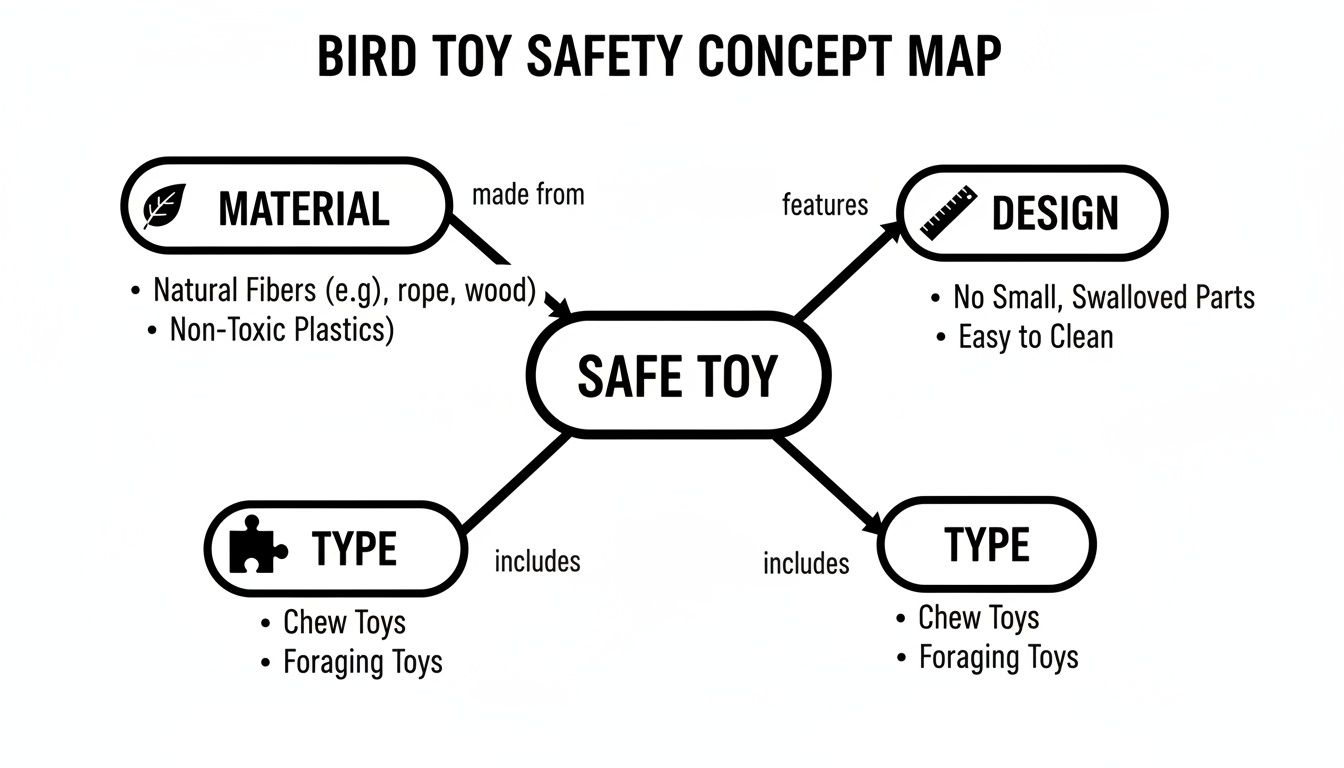
As you can see, safety isn't just about avoiding toxic materials. It’s also about choosing designs and toy types that are actually appropriate for your bird's specific size and beak strength.
Pro Tips for a Dynamic Layout
Once you've got your zones mapped out, it's time to fine-tune the details. A truly brilliant layout isn't just about separation; it's about creating flow. You want to build pathways that entice your bird to travel between zones, turning simple movement into a great form of exercise.
A fantastic way to achieve this is by creating an 'activity wall.' This is where you cluster a mix of ladders, climbing ropes like the Cosmic Ladder, and engaging toys like the Busy Bee all along one side of the cage. It instantly creates a vertical playground that becomes a central hub for climbing, playing, and exploring.
Expert Advice: One of the most powerful tools in your enrichment toolkit is 'accessory rotation.' Don't just set up the cage and leave it that way for months. Once a week, move a couple of toys to new spots or swap one out for a toy that's been in storage. This simple act keeps the environment fresh, sparks curiosity, and is incredibly effective at preventing boredom.
The Power of Accessory Rotation
Birds are incredibly clever, and they can get bored of a static environment faster than you'd think. A toy that was once fascinating can quickly become just part of the background scenery if it never moves. Rotating their accessories keeps their world feeling new and exciting.
Think of the cage as an ever-changing puzzle. One week, their favourite shreddable toy, maybe something like the Natural Pinata, might be right next to their food bowl. The next, it could be hanging from the activity wall, forcing them to figure out a new way to get to it and start shredding.
This doesn't mean you need to be constantly buying new toys. Just having two or three different sets of toys and rotating them weekly is more than enough to provide consistent mental stimulation. It’s a simple, cost-effective trick to keep your bird’s mind sharp and engaged.
Keeping Your Bird's Accessories Clean and Safe
A vibrant, well-stocked cage is a joy to see, but it’s only a happy place for your bird if it's clean and safe. Looking after your bird's environment is one of the most fundamental parts of good care, directly impacting their health and happiness day in, day out.
Let's break down a simple, effective cleaning schedule that doesn't feel like a massive chore. A consistent routine is your best friend here—it stops bacteria from building up and gives you the perfect chance to spot little safety hazards before they become big problems.
Your Practical Cleaning Schedule
I find it easiest to think of cleaning in three tiers: daily touch-ups, a weekly scrub, and a monthly deep clean. This approach keeps everything manageable and incredibly effective.
Daily Tasks (5-10 minutes):
- Wipe down surfaces: Grab a damp cloth and give any perches, toys, or surfaces soiled with droppings a quick wipe.
- Food and water bowls: This one’s non-negotiable. Wash food and water bowls thoroughly with hot, soapy water every single day. Rinse them well and dry them completely before refilling to stop nasty bacteria from growing.
- Change the liner: Swap out the paper at the bottom of the cage to get rid of the day's waste.
Weekly Scrub-Down (20-30 minutes):
This is your opportunity for a more thorough job. Pull all the accessories out of the cage so you can give them a proper scrub.
- Scrub the accessories: Use a stiff brush and a bird-safe cleaner to scrub perches, ladders, and any non-porous toys. For those stubborn, dried-on bits of food on feeders, soaking them in hot water first makes the job a whole lot easier.
- Wash the cage: While everything is out, wipe down all the bars and the base of the cage itself.
Monthly Deep Clean (About an hour):
Once a month, it's time for a full sanitisation. This usually means taking the cage outside (if you can) or into a bathroom for a good hose-down and a deep scrub with a veterinary-grade disinfectant.
Choosing Bird-Safe Cleaning Products
Most of your regular household cleaners are far too harsh for your bird's delicate respiratory system. Here in Australia, the gold standard for avian safety is a disinfectant like F10SC Veterinary Disinfectant. It’s brilliant at knocking out bacteria, viruses, and fungi without releasing any harmful fumes.
For day-to-day cleaning of less-soiled items, a simple 50/50 mix of white vinegar and water works a treat. Just remember to rinse everything thoroughly, no matter what cleaning product you use.
Expert Advice: When it comes to natural wood perches, try to avoid soaking them for long periods. It can cause them to crack as they dry out. A good scrub, a solid rinse, and letting them air dry completely in the sun is the best way to go. The sun is a fantastic natural sanitiser!
The All-Important Safety Inspection
Cleaning time is the perfect time to do a safety check. Make it a habit to give every accessory a quick once-over each time you take it out to wash. This simple step can prevent some truly awful accidents.
Keep an eye out for these specific hazards:
- Frayed Ropes: Check all your rope perches and toys for long, frayed strands. These are a major risk, as they can easily get tangled around a bird's toe or leg, sometimes with devastating results. Trim any loose threads right away, or toss the toy if it's past saving.
- Splintered Wood: Run your hands over any wooden perches and toys. If you feel sharp splinters, sand them down smoothly or just replace the item. A splinter in a bird's foot can lead to a nasty infection.
- Broken Parts: Give toys a good look for any small plastic bits that have cracked or broken off. These can quickly become a choking hazard if swallowed.
- Rusted Hardware: All metal parts on toys should be stainless steel. If you spot any rust, it’s a sign the metal is unsafe and could lead to heavy metal poisoning. Replace it immediately.
By building these simple checks into your routine, you can make sure the accessories you’ve carefully chosen remain a source of fun and enrichment, not a hidden danger. It's also vital to maintain a pest-free environment; you can learn more about tackling common issues in our guide on mite spray for birds.
Troubleshooting Common Accessory Problems
Even with the best intentions, you’re bound to run into a few hurdles with your bird cage accessories. Don't stress, it’s all part of the journey! Let's walk through some of the most common real-world problems I hear about from fellow Aussie bird owners and find some practical solutions to keep your bird safe and happy.
My Bird is Terrified of New Toys
It’s a classic story: you bring home a brilliant new toy, pop it in the cage, and your bird reacts like you’ve just introduced a monster. This fear of new things, or neophobia, is a totally natural survival instinct. The secret is a slow, gentle introduction.
Whatever you do, don't just hang a new accessory straight into their personal space. Instead, try placing it on a table near the cage for a few days so they can observe it from a safe distance. Once they seem calm, move it closer—maybe even hang it on the outside of the cage.
Only when they start showing genuine curiosity should you place it inside. Even then, put it in a low-traffic area, well away from their favourite sleeping perch or food bowls.
Help! My Bird Destroys Toys in Minutes
Is your Galah or Cockatoo turning expensive wooden toys into a pile of splinters in under an hour? While that can be a bit rough on the wallet, it's actually a sign of a happy, engaged bird. A demolished toy is a well-loved toy! That said, you can definitely manage this by redirecting that powerful chewing instinct.
- Offer More Shredding Options: Keep a steady supply of cheaper, easily shreddable materials on hand, like cardboard, yucca, and palm leaf. Toys like our Natural Pinata are perfect for satisfying this destructive urge without breaking the bank.
- Introduce Tougher Materials: Balance the shreddables with more durable toys made from native Australian hardwoods or bird-safe acrylic. These provide a longer-lasting challenge and give their beak a solid workout.
- Focus on Foraging: A bird busy solving a puzzle, like our Busy Bee foraging toy, spends more time thinking and less time on pure destruction. It channels that intense energy in a more constructive way.
Critical Safety Scenarios and How to React
Knowing how to spot and handle a safety issue is one of the most important skills a bird owner can have. Entanglement from frayed ropes or poorly designed toys is one of the most serious risks we face.
Expert Advice: If you ever find your bird entangled, the first thing to do is stay calm. Your panic will only make them more stressed. Gently cover your bird with a light towel to calm them and stop the struggling, then carefully work to untangle the thread. If it's wrapped tightly, use nail clippers or small scissors to cut the fibre, being extremely careful not to snip your bird.
The best solution is prevention. Get into the habit of inspecting all rope and fabric accessories regularly. Trim any frayed ends immediately and don't hesitate to throw out toys that are becoming unravelled.
Be particularly wary of cheap, imported toys from unknown brands. They often use unsafe materials or have designs with gaps that can easily trap a head or a toe. It’s always better to stick to reputable Australian suppliers who prioritise safety and use quality hardware, like the stainless steel fixtures on our Cosmic Ladder. Nothing is more important than your bird's safety.
Keep Reading
Disclaimer Summary:
The information in this article is general in nature and may include external links or resources not created by Lou Lou Bells Bird Toys. Every bird is unique, so we encourage you to seek personalised advice from your own veterinarian or avian specialist. For full details, please read our complete disclaimer here.