
When you think of a perch for birds, it’s easy to picture a simple stick in a cage. But for your bird, it’s so much more than that. It is their entire world. For our feathered friends here in Australia, from the tiniest budgies to the grandest cockatoos, their perches are their lounge room, playground, dining table, and bedroom all rolled into one.
Why a Good Bird Perch Is Essential
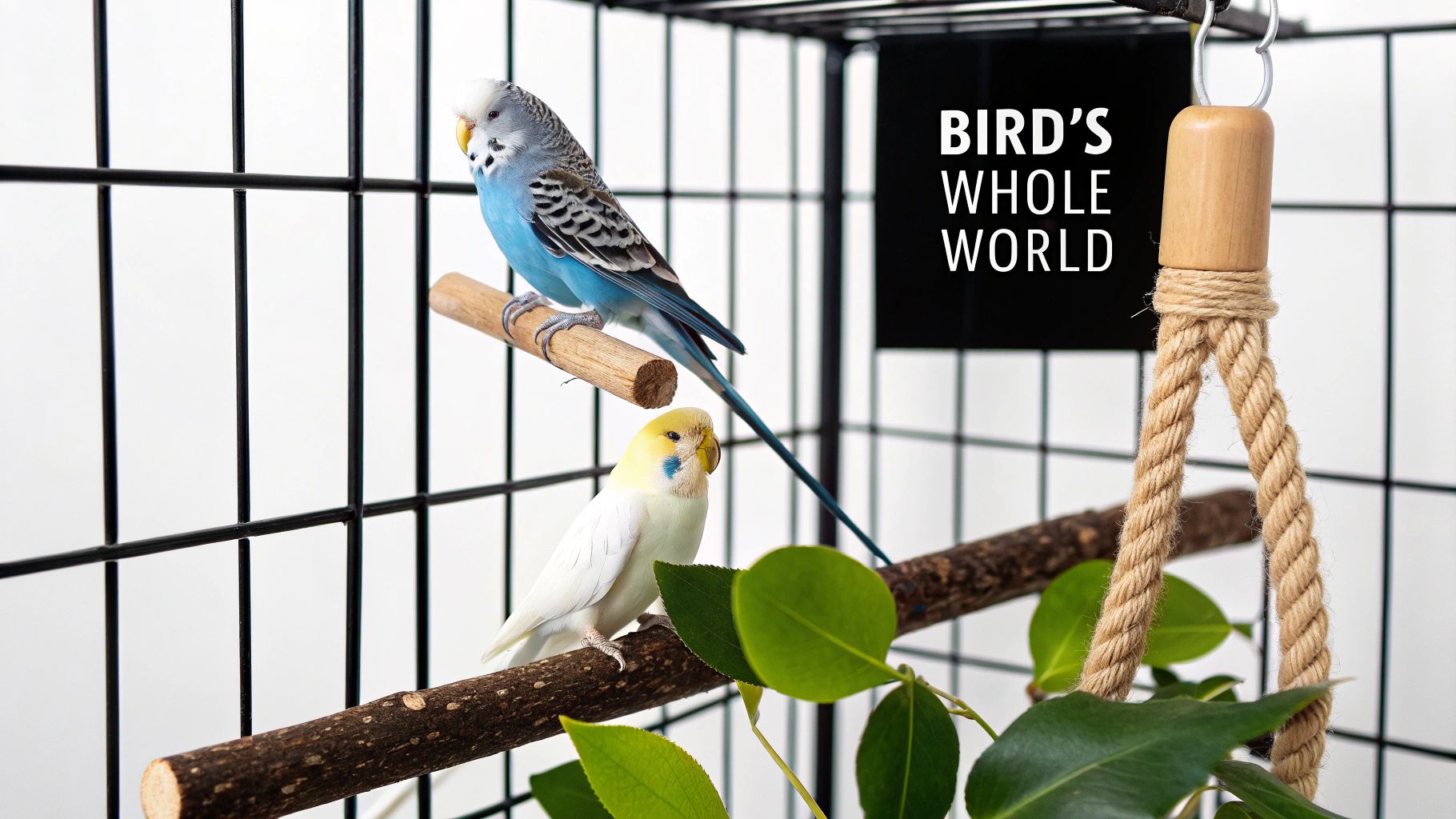
Imagine if you had to spend your whole life standing on a single, perfectly smooth, hard floor. Your feet would ache, your muscles would get weak, and you'd crave the feeling of different textures. That’s exactly what many pet birds go through when they’re only given the standard, uniform dowel perch that usually comes with a new cage.
A bird’s feet are incredible pieces of engineering, designed to grip, climb, and balance on all sorts of surfaces. The Aussie bush isn't filled with perfectly round, smooth branches; it's a world of lumpy, bumpy, and irregular shapes, textures, and thicknesses. Bringing that kind of variety into their cage is probably the most important thing you can do for your bird’s long-term health and happiness.
The Foundation of Foot Health
It all starts with their feet. Proper perching is the absolute foundation of good foot health. When a bird stands on the same smooth dowel all day, every day, their foot gets locked into one position. This puts constant, unchanging pressure on the exact same spots, which can lead to serious and painful problems like pododermatitis, better known as bumblefoot. This is a nasty condition that involves inflammation, sores, and even infections on the soles of a bird's feet, often caused by having the wrong kind of perches.
Expert Advice: Any avian vet will tell you that a diverse range of perches isn't a luxury; it's a medical necessity. Mixing up the diameter and material of the perches forces your bird's feet to constantly change their grip. This exercises all the different muscles and tendons, and it's the best preventative care you can give against arthritis and pressure sores.
More Than Just a Place to Stand
Beyond keeping their feet healthy, a well-thought-out perch setup is a cornerstone of a bird's mental wellbeing. It turns their cage from a simple box into an enriching, stimulating environment that lets them behave like a bird.
A cage that’s thoughtfully kitted out with multiple perches encourages a few key things:
- Movement and Exercise: Creating pathways with different types of perches, like a sturdy Natural Perch, gets them climbing and exploring.
- Mental Stimulation: Your bird will naturally pick different perches for different activities—maybe a soft rope perch for a preening session, a high branch for sleeping, or one near a fun Foraging Toy for playtime.
- A Sense of Security: Having perching options at different heights lets a bird choose where they feel safest and most comfortable.
By moving beyond that basic dowel, you’re not just giving them a place to sit. You’re building a dynamic home that respects your bird's natural instincts, keeps them physically active, and genuinely supports their overall quality of life.
The Best Perch Materials for Your Bird's Feet
When it comes to perches, the sheer number of options can feel a bit overwhelming. But figuring out the best materials is one of the most important things you’ll do for your bird’s long-term health and happiness.
For us here in Australia, the best place to start is always by looking at what nature intended.
The Gold Standard: Native Australian Woods
Hands down, the absolute best choice for a perch is natural wood from bird-safe, native Australian trees. You just can't beat them.
Branches from trees like Eucalyptus (Gum Trees), Banksia, Bottle Brush, and Lilly Pilly are perfect. Their naturally varied shapes, textures, and thicknesses are exactly what your bird's feet evolved to grip. The bark and texture also help keep their nails filed down and give them a great spot to rub and clean their beak.
Rope Perches: Comfort with a Word of Caution
Rope perches are another great addition to just about any cage. Usually made from sisal or cotton, they offer a softer, more comfortable surface than hard wood. Lots of birds absolutely love them for a good preen, a little nap, or just to give their feet a rest after a busy day of climbing.
But, and this is a big but, rope perches come with a critical safety warning. You must check them every single day for any signs of fraying. Birds, particularly the keen chewers, can swallow loose threads, which can cause a life-threatening blockage called crop impaction.
Expert Tip: Keep a pair of scissors handy and snip off any loose strands you find on your rope perches. If a perch gets too frayed to manage, it’s time to toss it. This quick daily check is non-negotiable for your bird’s safety.
When you choose them carefully and keep an eye on them, rope perches are fantastic. A quality sisal perch, for instance, provides a firm but forgiving surface that birds find really comfortable and engaging. Sisal is a tough, natural fibre that stands up well to beaks and gives fantastic grip.
Other Perch Material Options
While natural wood and rope should be the foundation of your setup, a few other materials can be used sparingly to add extra variety and function. Each one has a specific job and should be used with that purpose in mind.
-
Cement or Conditioning Perches: These are designed to help keep nails and beaks trim. But their abrasive surface can be pretty rough on the delicate skin on a bird's feet. They should never be the main perch or the highest perch in the cage. Use just one as a secondary perch, maybe near a food bowl where your bird will only stand on it for short bursts.
-
Heated Perches: For birds living in the cooler parts of Australia, a thermostatically controlled heated perch can offer some gentle, welcome warmth. They're especially good for older birds, birds who are unwell, or those who have plucked their feathers. Just make sure it’s from a reputable brand and that your bird has plenty of non-heated perches to move to if they get too warm.
-
Acrylic or Plastic Perches: Sure, they're dead easy to clean, but plastic perches do next to nothing for foot exercise. Their uniform shape and often slippery surface just aren't ideal. They're okay for short-term use, like in a travel carrier, but they really don't belong in the main cage.
Bird Perch Material Comparison Guide
To make it a bit easier to decide, here’s a quick-glance table comparing the pros and cons of the most common perch materials you'll come across.
| Material Type | Primary Benefit | Potential Risks | Best Suited For |
|---|---|---|---|
| Native Wood | Mimics natural environment, excellent foot exercise, promotes nail health. | Can be harder to clean, must be sourced from non-toxic, pesticide-free trees. | Core component of any cage setup for all bird species. |
| Rope (Sisal/Cotton) | Soft and comfortable, provides a different texture for grip. | Fraying can lead to ingestion and crop impaction if not monitored. | A comfortable resting spot, especially good for birds with sensitive feet. |
| Cement/Conditioning | Helps maintain beak and nail length naturally. | Abrasive surface can cause foot irritation or sores with overuse. | Limited, strategic placement near food/water stations. |
| Stainless Steel | Extremely durable and easy to sterilise. Often used in swings or platform perches. | Can be cold and slippery; lacks the texture needed for good foot exercise. | Part of a durable toy or swing; not a primary standing perch. |
Ultimately, by building a foundation of native Australian wood perches and then adding in other materials like sisal rope for specific benefits, you create a rich, textured world for your bird. This variety isn't just for fun—it's the absolute key to preventing foot problems and encouraging the natural behaviours that keep your companion happy and healthy.
Finding the Perfect Perch Size and Shape
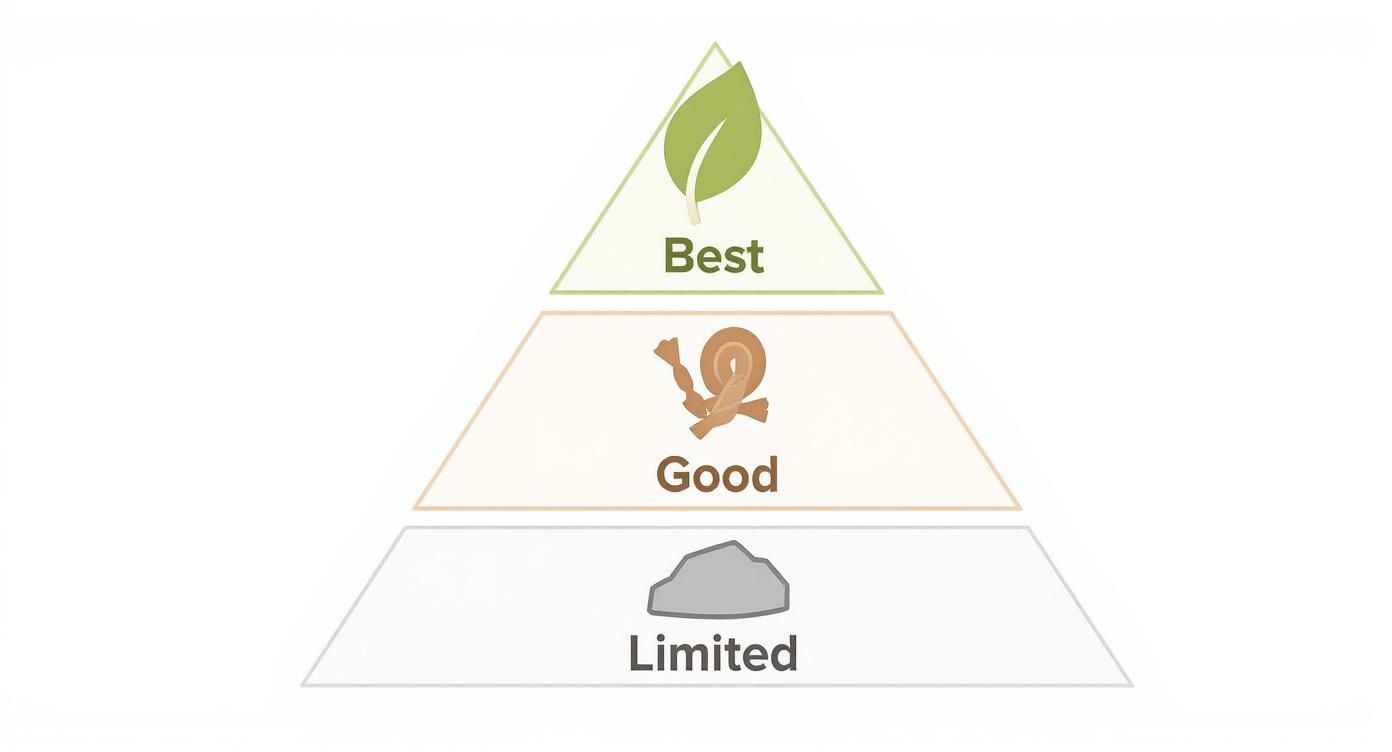
When it comes to perches, the material is only half the story. The size and shape are just as critical for your bird's health and comfort. A perch that's too wide or too skinny can cause serious foot fatigue, painful pressure sores, and even lead to long-term joint problems like arthritis.
Getting the dimensions right is a simple but essential step in setting up a healthy, happy home for your feathered friend.
The 2/3 Grip Rule
The most important rule of thumb to remember is the '2/3 grip rule'.
When your bird stands on a perch, its foot should wrap around roughly two-thirds of the circumference. This means their front toes and back toes shouldn’t be touching or overlapping. This specific grip gives them stability without straining the foot, keeping it in a comfortable and natural position.
Why Variety is Everything
While the '2/3 grip rule' is a fantastic starting point, the real secret to perfect foot health is variety. A cage filled with perches of the exact same diameter—even if it’s the ‘correct’ one—will still cause problems over time. It forces your bird to hold its foot in the exact same static position all day long.
Providing a mix of different perch sizes and irregular shapes encourages your bird to constantly adjust its grip. This is brilliant exercise for all the tiny muscles and tendons in its feet and legs, and it's the single best defence against common foot health issues.
Expert Advice: Think of your bird's cage as a jungle gym. You want branches that are thick, thin, knobbly, and smooth. This variety not only keeps their feet in top condition but also provides mental stimulation as they navigate their environment.
Matching Perch Size to Your Bird
Finding the right range of diameters for your specific bird is key. Here in Australia, we have a wonderful variety of companion birds, and their needs differ.
Here are some general guidelines for popular Aussie pets:
- Small Birds (Budgies, Finches, Lovebirds): Aim for a range of perches between 10mm and 20mm in diameter.
- Medium Birds (Cockatiels, Conures, Lorikeets): Look for diameters from 15mm to 30mm.
- Large Birds (Galahs, Corellas, Eclectus Parrots): A good range would be between 25mm and 50mm.
- Extra-Large Birds (Sulphur-Crested Cockatoos, Macaws): You'll need very sturdy perches from 50mm up to 75mm or more.
These are just starting points. Offering a mix within these ranges, like a sturdy 25cm natural perch, ensures there are plenty of options for every activity, from resting to playing.
Don't Forget About Perch Length
The length of the perch is another important piece of the puzzle. It needs to be long enough for your bird to comfortably turn around without its tail feathers getting bent or broken against the cage bars.
As a general rule, the perch should be at least as wide as your bird's wingspan. This allows them to stretch their wings fully without hitting anything and gives them enough space to sidestep along the perch. For birds with particularly long tails, like Indian Ringnecks or Princess Parrots, make sure there’s plenty of clearance at the back. Getting the length right contributes to both their comfort and the pristine condition of their beautiful plumage.
Creating a Stimulating Cage with Smart Perch Placement
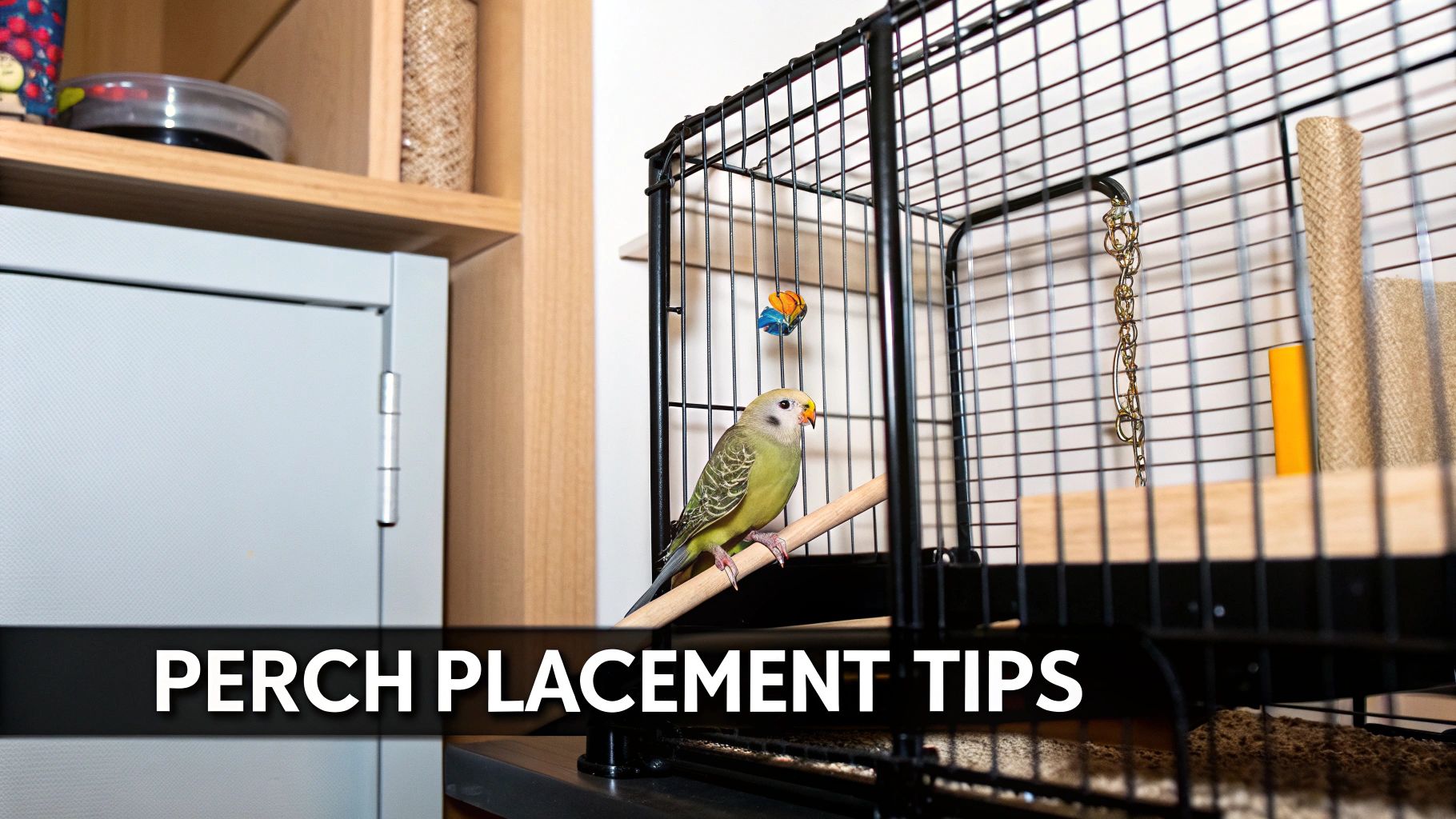
So, you’ve picked out a fantastic variety of perches. But the job isn't quite done yet. Where you place each perch is just as important as its material or size. Smart, strategic placement can turn a simple cage into a dynamic little world that encourages natural behaviours, gets your bird moving, and gives them a sense of security.
Think of yourself as an interior designer for your bird. The goal is to create different 'zones' inside the cage for specific activities like sleeping, eating, and playing.
The Hierarchy of Perches
Out in the wild, birds instinctively seek out the highest point to roost for the night. It’s the safest spot, well away from predators. You'll want to replicate this in the cage by placing the most comfortable perch—like a soft rope or a favourite natural branch—in the highest position available. This will become their go-to sleeping spot.
Expert Advice: Never place perches directly above food and water bowls. A bird’s droppings will inevitably fall straight into their food, creating a serious hygiene hazard that can lead to bacterial infections. A little bit of planning here prevents a lot of potential health problems down the track.
Encouraging Activity and Play
To get your bird moving, use perches to create pathways that connect different activity zones. Position an interesting perch near a fun foraging toy to encourage them to interact with it. Place another one near a ladder or swing to create a smooth transition from one play station to the next. This kind of setup motivates your bird to climb, hop, and explore, giving them essential physical exercise. You’re not just scattering toys around; you’re building an integrated playground.
Creating Perch Highways for Accessibility
For birds that are less mobile, elderly, or have their wings clipped, navigating a big cage can be a real challenge. You can help them out by creating 'perch highways'—a series of interconnected perches that act as a ramp or a bridge, allowing them to safely get to every part of their cage. These pathways ensure that every bird, no matter their flight ability, can easily reach their favourite toys, food bowls, and resting spots.
Expanding Their World Beyond the Cage
A stimulating environment shouldn't end at the cage door. Supervised out-of-cage time is absolutely vital, and having dedicated perches outside the cage can make this time safer and more structured.
Consider these options to enrich their playtime:
- Play Stands: A dedicated play gym with multiple perches, ladders, and toy hooks provides a fantastic, centralised activity hub.
- Window Perches: Most birds love to look outside. A secure window perch (with a bird-safe window, of course!) offers endless entertainment as they watch the world go by.
- Tabletop Perches: A small, portable perch stand is perfect for letting your bird hang out with you in different rooms, making them feel like a true part of the flock.
By strategically placing perches both inside and outside the cage, you create a world that is not only safe but also full of opportunities for exercise, mental stimulation, and exploration.
Learning from Australian Birds in the Wild
To really get what our pet birds need from their perches, all we have to do is look outside. Wild Australian birds are the best teachers, showing us that a perch is so much more than just a stick to stand on. It's a tool, a stage, and a vital piece of their world.
Think of a kookaburra perched high on a gum branch. It’s not just resting—it's using that vantage point as a lookout, scanning the ground for its next meal. Watch a flock of Galahs, and you’ll see them using branches as a social club. These behaviours are hardwired into our pet birds, too. When you offer a variety of perches, you’re honouring their wild instincts and giving them a way to express those fundamental behaviours. A high, sturdy perch becomes their safe observation deck, while a lower, textured branch might be the perfect spot to get stuck into a favourite shredding toy.
Perches as Tools for Rebuilding Ecosystems
The importance of a good perch goes far beyond our homes and right into the heart of Australian conservation. In areas cleared for farming or development, the loss of trees means a loss of perching spots, which has a devastating knock-on effect for the whole ecosystem. Without places to land, birds can’t rest, survey their surroundings, or deposit the seeds from the native fruits they’ve eaten.
A published study in the Australian Capital Territory found that installing artificial perches in cleared paddocks dramatically boosted bird activity and seed dispersal. Over just one year, these perches attracted more than 30 native bird species and helped collect over 1,200 seeds from 25 native plant species.
This real-world science drives home just how fundamental perches are. In the same way an artificial perch helps rebuild a forest, a well-chosen natural branch helps build your bird’s world inside their cage.
A Practical Guide to Perch Cleaning and Safety
A good perch is a clean perch. Because they're the main landing spot in the cage, perches are prime real estate for droppings to build up, which can quickly turn into a breeding ground for nasty bacteria or mould. Getting into a simple, consistent cleaning routine is one of the best things you can do for your bird’s health.
A quick spot-clean every day is a must to wipe away any fresh droppings.
Your Weekly Deep Clean Routine
Once a week, it’s time to pull all the perches out for a proper scrub.
- Natural Wood Perches: Use a stiff brush and a bird-safe disinfectant—a diluted F10 solution or a simple mix of white vinegar and water works well. Scrub them down, rinse them thoroughly, and then let them air dry completely in the sun before they go back in the cage.
- Rope Perches: These can be hand-washed using a mild, bird-safe soap and water. The most important part here is to rinse them meticulously until the water runs completely clear. Hang them to dry until they are bone dry.
- Non-Porous Perches (Acrylic, Stainless Steel): These are the easiest of the lot. A quick wash with soap and water or a bird-safe disinfectant, followed by a good rinse and dry, and they’re good to go.
Regular Safety Inspections
Cleaning time is the perfect opportunity to give every perch a quick safety check.
Expert Advice: Think of your perch inspection as a mini safety audit for your bird's home. It’s a proactive habit that can prevent a foot or leg injury before it ever happens. Look for any signs of serious wear and tear, and don't think twice about replacing anything that looks a bit dodgy.
While you're cleaning, keep an eye out for these specific problems:
- Wooden Perches: Check for any splintering, deep cracks that could trap toes, or any signs of mould.
- Rope Perches: Look very closely for any frayed strands. It’s incredibly easy for a bird to get a toe, leg, or even its neck tangled in loose threads. Snip off any minor frays you find right away, but if the whole perch is starting to unravel, it’s time for it to go. A tough platform perch is a great, durable option to have in the rotation and is super easy to inspect.
Common Questions About Bird Perches Answered
Even when you've done your homework, some specific questions always seem to pop up. Let's tackle some of the most common queries we hear from Aussie bird owners.
Can I Use Branches from My Garden as Perches?
Absolutely! Using branches from your own backyard is a fantastic, free way to add natural variety to your bird’s cage. Many native Australian trees like Eucalyptus and Banksia make for brilliant perches.
But you have to be careful. First, you must positively identify the tree to be 100% sure it’s non-toxic and hasn't been sprayed with any pesticides.
Before it goes anywhere near the cage, give it a really good scrub with a bird-safe disinfectant. To finish the job, bake it in the oven on a low heat (around 120°C) for an hour or so. This crucial step zaps any hidden nasties like pests or mould.
How Many Perches Should My Bird Have?
A good rule of thumb is to aim for at least three to four perches in the main cage. The real key here isn’t the number, but the variety – think different materials, shapes, and diameters. This encourages your bird to move around and exercise their feet without making the cage feel cluttered. Make sure there’s still plenty of open space for your bird to have a good wing stretch.
Are Smooth Dowel Perches Really That Bad?
While they aren’t going to cause harm overnight, those standard, perfectly smooth dowel perches that come with most cages can lead to serious health issues down the track. The problem is their uniform shape. The unvaried pressure is a major culprit behind painful conditions like pododermatritis (bumblefoot) and arthritis. If your cage came with a dowel, think of it as just one small part of a much more diverse and interesting collection.
At Lou Lou Bells Bird Toys, we're passionate about providing safe, stimulating, and high-quality perches that help your companion thrive. Explore our extensive range of natural wood perches, comfortable rope options, and engaging toys to build the perfect habitat for your bird today.
Keep Reading
- Parrot Cage Accessories You Actually Need
- What is Bird Enrichment?
- Foraging for Beginners
Disclaimer Summary:
The information in this article is general in nature and may include external links or resources not created by Lou Lou Bells Bird Toys. Every bird is unique, so we encourage you to seek personalised advice from your own veterinarian or avian specialist. For full details, please read our complete disclaimer here.