
Tired of the constant mess of scattered seeds and husks under your bird feeder? It’s a common story: you put out food to attract beautiful native birds, but end up with a chaotic feeding station that’s more of a chore than a joy. A no-mess bird feeder is designed to fix exactly that, catching stray seeds and hulls to keep your garden tidy. Think of it as the secret to a cleaner, healthier, and far more inviting space for your feathered visitors.
The Secret to a Cleaner Backyard Bird Haven
For so many of us in Australia, watching native birds flock to the garden is one of life's simple pleasures. But that joy often comes with a frustrating side-effect: a constant, ugly mess of discarded seed hulls, sprouting weeds, and a carpet of wasted feed.
This spillage doesn't just look untidy. It can also attract unwanted pests like rodents and create an unhealthy environment for the very birds you’re trying to help.
You've set up a beautiful feeder, hoping to see colourful rosellas or cheerful finches. Instead, you find yourself sweeping piles of husks off the patio every weekend and pulling up mystery plants from the lawn. It’s a familiar battle for garden lovers, where the fight against spilt seed can easily overshadow the simple delight of birdwatching.
Why a Tidy Feeder Matters More Than You Think
Keeping your feeding station clean is about more than just appearances. The growing popularity of the no-mess bird feeder across Australia is really about a shift towards sustainability, convenience, and being more ecologically responsible.
These feeders are a hit because they cut down on ground-level seed fallout. This not only reduces food waste but also lowers the risk of attracting invasive species. In some urban areas, local councils even encourage feeder designs that minimise mess to maintain hygiene and protect native wildlife from diseases that can spread through contaminated, spilt seed. You can see how this is becoming a bigger trend in the global bird feeder market report.
Making the switch isn’t just about solving a problem—it’s about making the whole experience better. By keeping the mess contained, these feeders help you:
- Save money by making sure more seed is actually eaten instead of being wasted on the ground.
- Protect native birds by stopping mould and bacteria from growing in decaying seed piles.
- Spend more time enjoying the birds and less time on cleanup chores.
Ultimately, a no-mess solution brings back the simple pleasure of feeding the birds, creating a cleaner, safer haven for both you and your feathered friends.
How No Mess Feeders Actually Work
So, what really makes a no mess bird feeder different from a standard one?
Think of a traditional feeder like a kid’s messy lunchbox – seeds get flicked everywhere as birds rummage around for their favourite bits. The result is a chaotic spill zone underneath. A no-mess feeder, on the other hand, is engineered more like a clever self-serve kiosk, carefully dispensing food and containing the inevitable waste.
It all comes down to smart mechanics. These feeders aren’t just fancy containers; they’re thoughtfully designed systems where every part has a job to do in keeping things clean. From the way seeds are offered to how the empty husks are collected, it’s all geared towards stopping that ground-level chaos before it starts.
This diagram shows the classic problems that traditional feeders cause—issues that no-mess designs are built to solve.
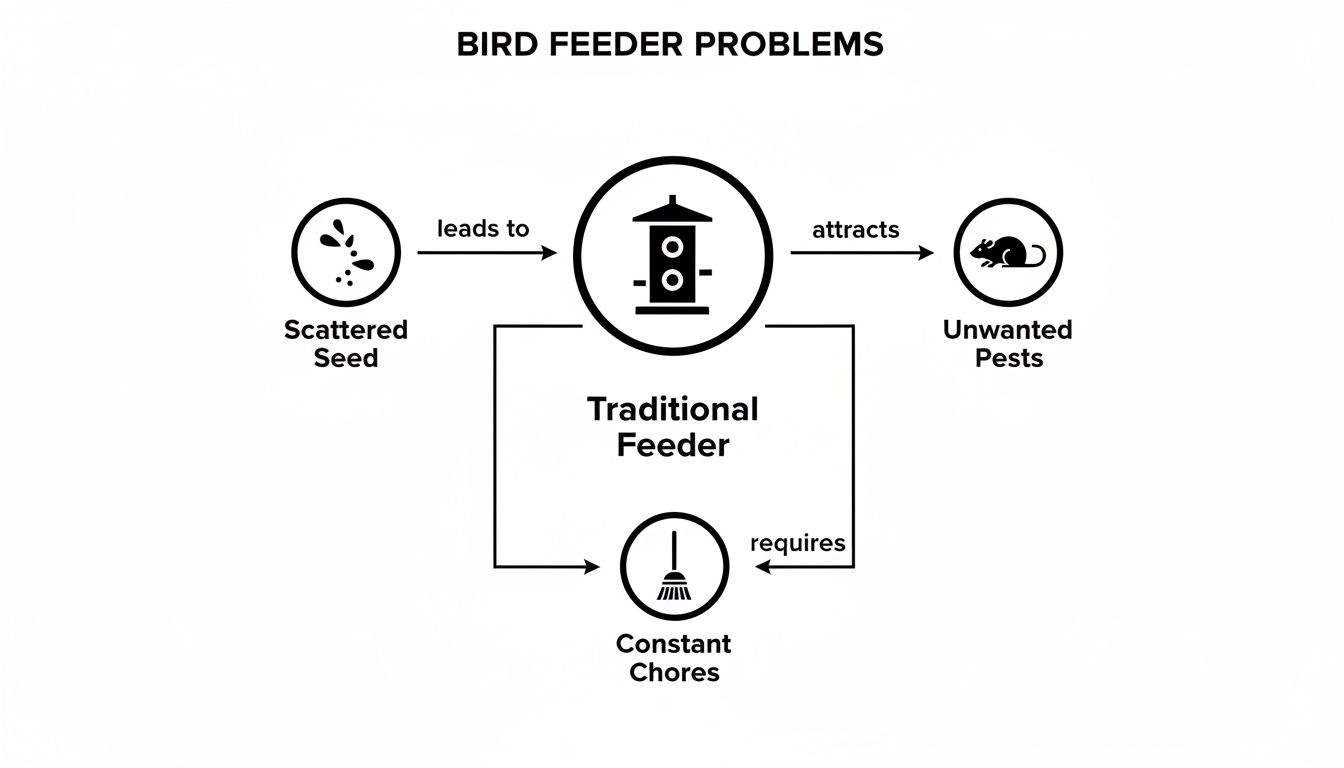
As you can see, scattered seed is the real culprit here. It’s what attracts pests and creates those endless cleaning chores. The engineering behind a no-mess feeder tackles this problem head-on.
The Core Mechanics of Clean Feeding
The real magic of these feeders comes down to a few key design principles. They’re all about controlling access to the food and then managing the by-products of a bird's meal—the empty shells and husks.
Here are the main features that make them so effective, and you'll find at least one of these in almost any good no-mess design.
- Integrated Seed-Catching Trays: This is probably the simplest yet most effective feature. A tray or reservoir sits at the base of the feeder to catch anything that falls, whether it's stray seeds, empty hulls, or dropped pieces. This stops the debris from ever hitting your lawn or patio.
- Precise, Gravity-Fed Ports: Instead of a wide-open trough where birds can rake through the seed, these feeders use small, specialised ports. A bird can only pull out one or two seeds at a time, which dramatically cuts down on their ability to scatter the feed.
- Husk and Hull Reservoirs: The more advanced models go a step further by actually separating the waste. As birds drop empty husks, they fall into a dedicated compartment, which keeps the fresh seed clean and makes disposal incredibly simple for you.
To make it clearer, here's a quick breakdown of those common features and the specific problems they solve.
Key Features of No Mess Feeders and Their Purpose
| Feature | How It Reduces Mess | Ideal For |
|---|---|---|
| Seed-Catching Tray | Physically blocks dropped seeds and hulls from reaching the ground. | Patios, balconies, and lawns where you want zero ground mess. |
| Small Feeding Ports | Prevents birds from flicking or raking through seed mixes to find their favourites. | Small birds like finches and sparrows who eat one seed at a time. |
| Waste Hull Collector | Separates empty husks from fresh seed, keeping the feeder cleaner for longer. | Anyone wanting to reduce the frequency of cleaning out the entire feeder. |
| Weight-Activated Perch | Closes feeding ports when a heavy bird or squirrel lands on it. | Yards with issues from squirrels, possums, or large bully birds. |
Ultimately, combining a few of these features gives you a feeder that not only saves seed but also saves you a ton of cleaning effort.
Deterrents and Smart Design Details
Beyond just catching seeds, many no-mess designs also include features to manage the birds themselves. After all, bird behaviour is a huge part of the mess equation.
Expert Advice: The perch design on a feeder makes a huge difference to bird behaviour. Shorter perches discourage larger, more aggressive birds from hogging the feeder and scattering seed, giving smaller native species like finches a fair go.
Protective cages are another common feature, especially useful in Australian backyards where larger birds like Sulphur-crested Cockatoos might bully smaller visitors away. These cages have openings big enough for finches and honeyeaters but too small for the big guys, ensuring your intended visitors can eat in peace.
Every little detail, right down to the angle of the feeding port, is designed to create a cleaner, more efficient, and more harmonious feeding station for everyone.
Choosing the Perfect Feeder for Your Feathered Friends
Picking the right no-mess bird feeder is about more than just keeping your garden tidy. It’s about creating the perfect dining spot for the specific birds you want to see, whether that's wild Galahs and finches in your backyard or your own companion parrots in a big aviary. The feeder you choose really does matter.
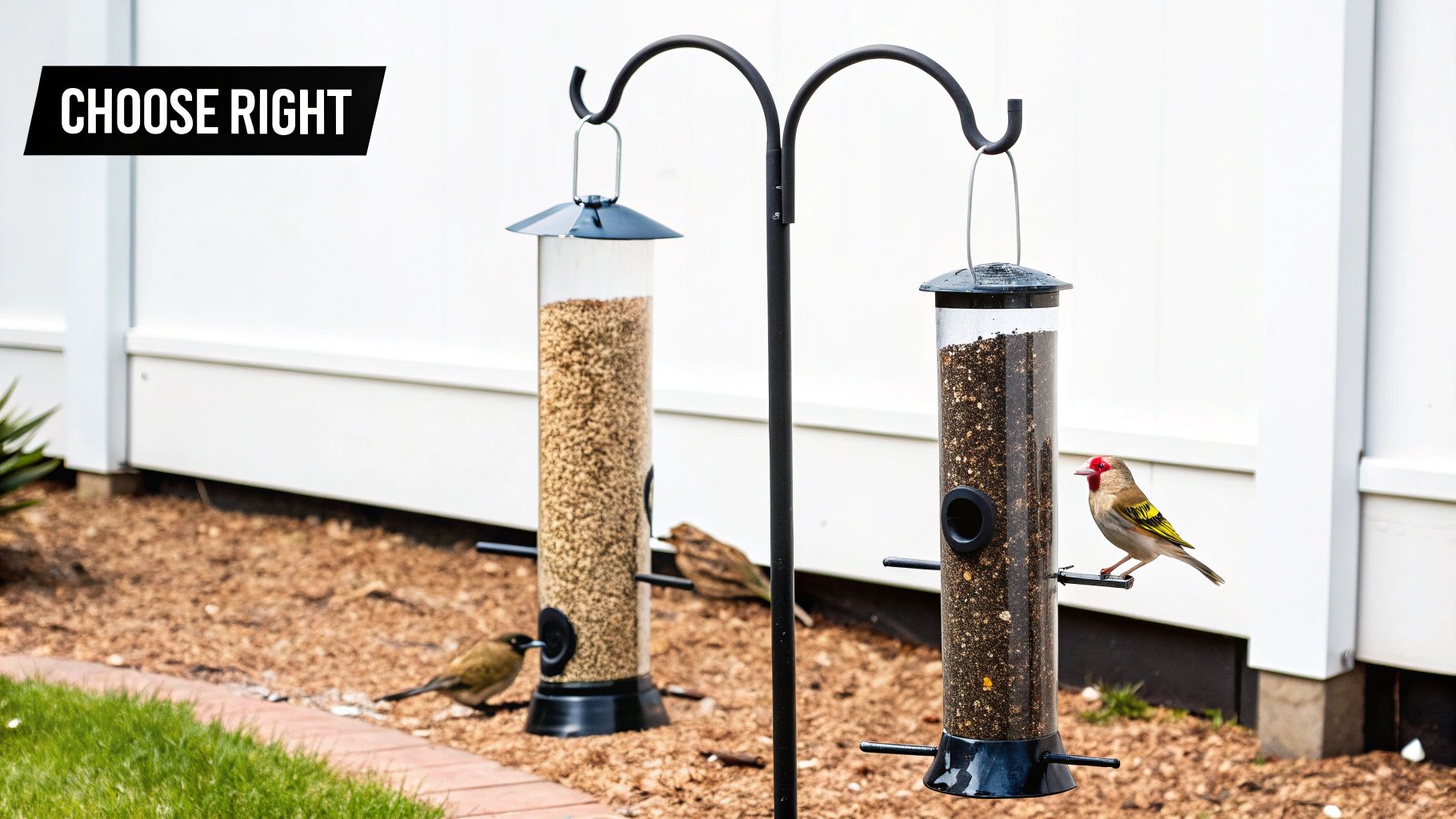
The first thing to think about is the material. In the tough Australian climate, you need something that lasts. A sturdy, weather-resistant metal feeder might give you the best longevity against sun and rain. On the other hand, options made from recycled plastics are often easier to pull apart and clean properly—a massive factor in keeping your birds healthy.
Matching the Feeder to the Bird
The size and style of a feeder will directly influence which birds show up for a feed. You wouldn’t put a tiny finch feeder out for a flock of cockatoos and expect it to last five minutes!
Think about these points:
- Feeder Size & Capacity: A bigger feeder is handy because you won’t have to refill it as often. But for companion birds in an aviary, a smaller feeder can be a great part of a daily enrichment routine, encouraging you to interact with them and keep an eye on how much they’re eating.
- Perch Design: Short perches are perfect for smaller birds like finches, as they stop larger, rowdier birds from hogging all the food. For bigger parrots like Galahs, you'll need longer, sturdier perches that can take their weight.
- Feeding Port Size: The openings have to suit both the seed type and the bird’s beak. Small ports are great for smaller seeds because they stop birds from raking everything out onto the ground. Chunkier parrot mixes, of course, need larger ports.
Expert Advice: Just watch the birds you want to attract. Take note of their size, how they eat, and how they behave around each other. This will give you all the clues you need to pick a feeder they can use comfortably and safely.
Backyard bird feeding is incredibly popular here. In fact, a 2018 study found that feeding wild birds is a common activity in Australian homes. The demand for eco-friendly and no-mess designs has grown as more people seek responsible feeding habits. You can find out more about the growing bird feeder market.
Special Considerations for Aviaries
If you have companion parrots, a feeder is so much more than a food bowl; it's a tool for enrichment. When you're picking a feeder for an aviary, safety and stimulation are everything. Make sure it's made from non-toxic, bird-safe materials that can’t be easily chewed to bits and swallowed.
Putting a no-mess feeder into a well-designed aviary can slash your cleaning time and help create a healthier space for your birds. To get more ideas on creating the ideal setup, check out our guide on designing the perfect outdoor bird aviary. A tidy aviary is a happy aviary, giving you more time to focus on engaging enrichment, like stimulating foraging toys that bring out their natural behaviours.
Smart Placement and Maintenance for a Tidy Feeding Station
Picking out a great no-mess bird feeder is a brilliant first step, but where you put it and how you look after it are just as important for keeping things tidy. Even the best feeder design can't stop every single dropped seed, so smart placement is your next line of defence against mess.
Think about the weather. Tucking your feeder into a spot sheltered from strong winds will make a massive difference, stopping seeds from getting blown all over your patio or into the garden beds. It also helps to position it over a paved area or even a patch of dense ground cover like clover. A little bit of spillage is much easier to sweep up from a hard surface than to pick out of a perfect lawn.
A Simple Cleaning Routine for Healthy Birds
Regular cleaning is an absolute must-have for the health and safety of your feathered visitors. A grubby feeder can quickly become a breeding ground for mould and nasty bacteria, which can spread diseases among our precious native birdlife. All it takes is a simple, consistent routine to keep things safe and clean.
Follow these steps every one to two weeks, and your feeder will be pristine:
- Disassemble the Feeder: Pull your feeder completely apart. Most modern no-mess designs are made to be taken apart easily.
- Scrub All Parts: Use a stiff brush and a bird-safe cleaning solution to scrub every surface. A diluted mix of one part white vinegar to nine parts water works a treat. Pay extra attention to the feeding ports and any little crevices.
- Rinse Thoroughly: This part is critical. Wash away every trace of the cleaning solution with fresh water, as any residue could be harmful to the birds.
- Dry Completely: Let all the parts air dry properly in the sun before you put them back together and refill. A totally dry feeder stops seed from clumping up and prevents mould from getting a foothold.
It's a small investment of your time that ensures your feeding station stays a healthy, welcoming spot. For a deeper dive into bird safety and wellbeing, our essential guide to caring for pet birds has comprehensive advice that’s just as useful for wild birds as it is for companion parrots.
Deterring Unwanted Visitors Humanely
Sometimes, the mess isn't from the little birds at all, but from larger, more boisterous guests. In Australia, that could be anything from a possum on a night-time raid to bossy birds like Sulphur-crested Cockatoos, who can empty and scatter a feeder's contents in minutes.
Expert Advice: To keep possums at bay, hang your feeder at least 1.5 metres away from any fences, branches, or other structures they could use as a launchpad. A baffle—that's a dome or cone-shaped barrier you can put on the pole above or below the feeder—is also incredibly effective.
When it comes to dealing with bigger birds, a caged feeder or one with weight-activated perches is your best bet. These designs close up under a heavy bird's weight, making sure that smaller native species get their fair share without being bullied away. The result? A much more harmonious—and tidier—feeding environment for everyone.
Not quite ready to fork out for a brand-new no mess bird feeder? No worries at all. With a bit of classic Aussie ingenuity, you can easily give your current feeder an upgrade and cut down on the daily cleanup. These hacks are cheap, cheerful, and perfectly safe for your feathered mates.
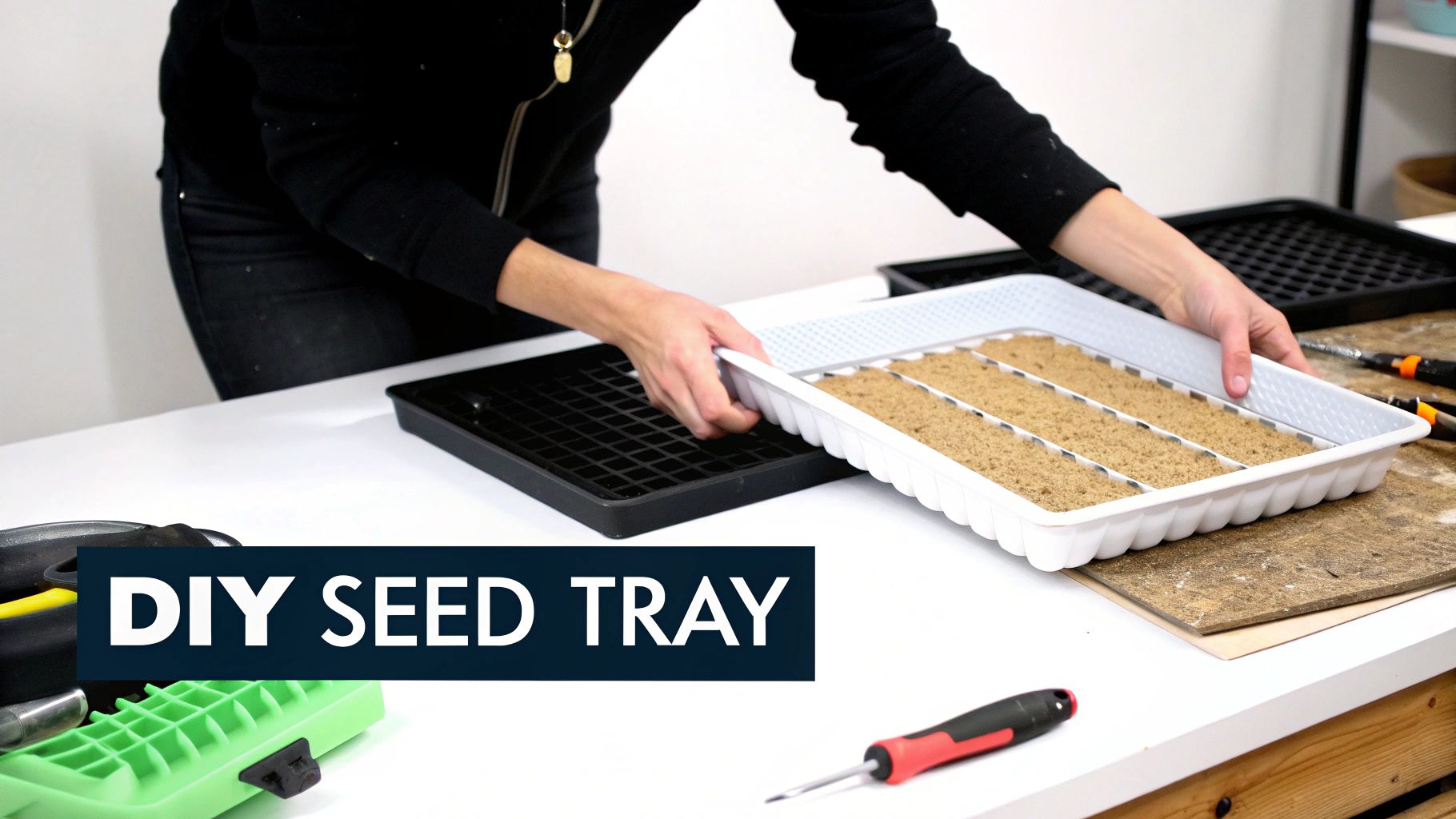
You'd be surprised what you can put together with stuff you already have lying around or can grab from the local hardware store. The main goal here is simple: catch the mess before it ever hits the ground.
Create a Wide Seed-Catching Tray
This is probably the most effective trick in the book. A wide tray fixed underneath your feeder is like a safety net, catching all the stray seeds and empty husks that birds inevitably flick around.
It's dead easy to make one yourself:
- Find a Base: An old plant pot saucer, a shallow plastic container lid, or even a sturdy pizza pan will do the trick.
- Drill Drainage Holes: This is crucial. Drill a few small holes in the base so rainwater can drain out. You don't want the leftover seed turning into a mouldy, soggy mess.
- Attach It Securely: Use hooks, chains, or wire to hang the tray a few centimetres below the feeder. If your feeder is on a pole, you can get pole-mounted brackets that will hold the tray firmly in place.
By catching this spillage, you’re not just keeping your lawn clean. You’re also giving ground-feeding birds like doves or Willie Wagtails a safe spot to snack on the leftovers.
Craft a Simple Seed Guard
Got birds that love to dig through the mix and send seeds flying everywhere? A simple guard can stop that behaviour in its tracks. All you need is a piece of flexible but sturdy wire mesh or even some clear plastic sheeting from a craft shop.
Just cut the material into a strip and form it into a ring or collar that fits around the feeding ports, sticking outwards. This little barrier makes it much harder for birds to sweep seeds out with their beaks, forcing them to be a bit more thoughtful and a lot less messy.
It's a great way to introduce a small challenge, a bit like how parrots interact with foraging toys for birds to get their food. These small tweaks can transform your current setup, proving you don't need a big budget to run a cleaner, tidier bird cafe.
Why a No Mess Feeder Is Your Smartest Investment
Choosing a no-mess bird feeder isn’t just a simple garden upgrade; it’s one of the smartest moves you can make for your time, your wallet, and your local ecosystem. The perks go way beyond just having a tidier lawn or balcony. This one change can transform your entire bird feeding experience from a constant chore into pure, uninterrupted joy.
Ultimately, it’s about spending more time marvelling at the beautiful birds in your garden and less time sweeping up after them. You get to reclaim your weekends for relaxing, not raking up sprouted seeds and cleaning away mountains of empty husks.
The True Value of a Cleaner Feeding Station
The benefits ripple outwards, creating a healthier environment for the birds and for you. When you stop seed from hitting the ground, you’re not just saving money on birdseed—you’re also promoting better bird health by preventing the build-up of mould and bacteria where they feed.
This responsible approach also supports your local ecosystem by discouraging pests like rodents that are drawn to spilt seed. It’s a move that aligns with what more and more Australian households are looking for: sustainable, eco-friendly products for their homes and gardens. In fact, recent bird feeder market research shows the demand for clever, waste-reducing designs is steadily on the rise.
Investing in a no mess feeder is an investment in efficiency. You ensure that nearly every dollar you spend on seed goes towards nourishing the birds, not feeding pests or creating weeds.
A cleaner feeding station just makes for a more harmonious backyard. You’re providing a reliable food source for native birds without the unwanted side effects. Whether you're choosing from the wide range of parrot supplies in Australia for a companion bird or setting up for wild visitors, a quality no-mess feeder is the cornerstone of a successful and sustainable setup.
Embracing this cleaner, more joyful approach to bird feeding is a decision you won't regret. It lets you focus on what truly matters: connecting with nature and enjoying the vibrant life it brings right to your doorstep.
Got a Question About No Mess Bird Feeders?
Even after seeing all the benefits, you might still be wondering how a no mess bird feeder actually holds up in a real Aussie backyard. It's a fair question. Let's tackle some of the most common queries we get from fellow bird lovers.
Will It Really Stop All the Mess?
Look, no feeder is ever going to be 100% foolproof. Birds are just naturally messy eaters! But a good quality no-mess design gets you incredibly close, often cutting down the spillage by a massive 80-90%.
Its whole job is to catch the husks, shells, and dropped seeds that would otherwise end up all over your deck or lawn. You’ll see a huge difference compared to a traditional feeder—things will stay so much tidier.
Are These Feeders Safe for Our Native Parrots?
Absolutely, as long as you pick the right one for the job. If you’re hoping to attract bigger natives like Galahs or Cockatoos, you'll need a feeder made from tough, non-toxic materials. Look for sturdy perches and feeding ports big enough for them to use comfortably.
Many of our customers find that pairing a feeder with our Foraging Toys for Australian Parrots is a fantastic way to keep their birds safely engaged, especially in an aviary setting.
The biggest safety factor, though? That comes down to you. Keeping the feeder clean is non-negotiable for preventing the spread of disease.
Expert Advice: If you're trying to attract smaller native birds, a caged feeder can be a lifesaver. It gives them a safe space to eat without being chased off by bigger, bossier birds.
How Often Should I Be Cleaning It?
This one’s really important. Consistent cleaning is vital for keeping your feathered visitors healthy. We recommend giving your feeder a proper clean-out every one to two weeks.
Take it completely apart and give all the pieces a good scrub with a bird-safe cleaner or a simple diluted vinegar solution. Rinse it thoroughly and let it air dry completely before you even think about refilling it. It’s a simple routine that stops nasty mould and bacteria from building up.
Keeping a bird's whole environment clean and stimulating also means providing other safe options, like our range of Natural Shredding and Preening Toys.
Can a No Mess Feeder Actually Save Me Money?
You bet it can. When you stop a huge chunk of seed from being chucked on the ground, you make sure more of it actually gets eaten.
This means your pricey seed mix lasts a lot longer, cutting down on how often you need to restock. Over time, that really adds up. It’s a smart buy that often pays for itself, freeing up a bit of cash for other fun things like Activity Centre and Play Gyms.
Keep Reading
- A Guide to Outdoor Bird Aviaries in Australia
- The Ultimate Guide to Foraging Toys for Birds
- The Essential Guide to Caring For Pet Birds
Disclaimer Summary: The information in this article is general in nature and may include external links or resources not created by Lou Lou Bells Bird Toys. Every bird is unique, so we encourage you to seek personalised advice from your own veterinarian or avian specialist. For full details, please read our complete disclaimer here.