
When you're figuring out the best food for your parrot, you’re essentially aiming for a balanced diet built around high-quality formulated pellets, topped up with fresh vegetables and just a small amount of healthy treats. The old-school, all-seed diet is a dangerous path that leads to malnutrition and serious long-term health issues for our companion parrots here in Australia. An expert avian vet would advise that moving your bird onto a pellet-based diet is the single most important thing you can do for their long-term health.
Building Your Parrot's Perfect Plate
Staring at a wall of colourful bird food bags can feel completely overwhelming. It’s a common scene. Many loving parrot owners across Australia are still working off outdated advice, often leaning on those seed-heavy diets that, while popular in the past, can cause real health problems down the road. It's time to cut through the noise.
This guide is about building a diet that helps your parrot truly thrive, not just get by. Think of yourself as a personal nutritionist for your feathered friend, putting together a plan that fuels their energy, sharpens their intelligence, and keeps their colours vibrant.
The Modern Approach to Parrot Nutrition
The foundation of a healthy, modern parrot diet isn't about finding one "perfect" food. Instead, it’s about a varied, balanced approach built on a few key pillars.
- Formulated Pellets: These should be the main event, making up the bulk of the diet. They deliver complete and balanced nutrition in every single bite.
- Fresh Vegetables: A daily serving of finely chopped veggies (often called "chop") adds essential vitamins, minerals, and a healthy dose of mental stimulation.
- Limited Healthy Treats: Seeds, nuts, and fruits are best used sparingly, as high-value rewards for training or tucked into foraging toys.
This simple graphic shows you exactly how that hierarchy works. Pellets form the solid base, supported by a healthy serving of vegetables, with treats used only sparingly.
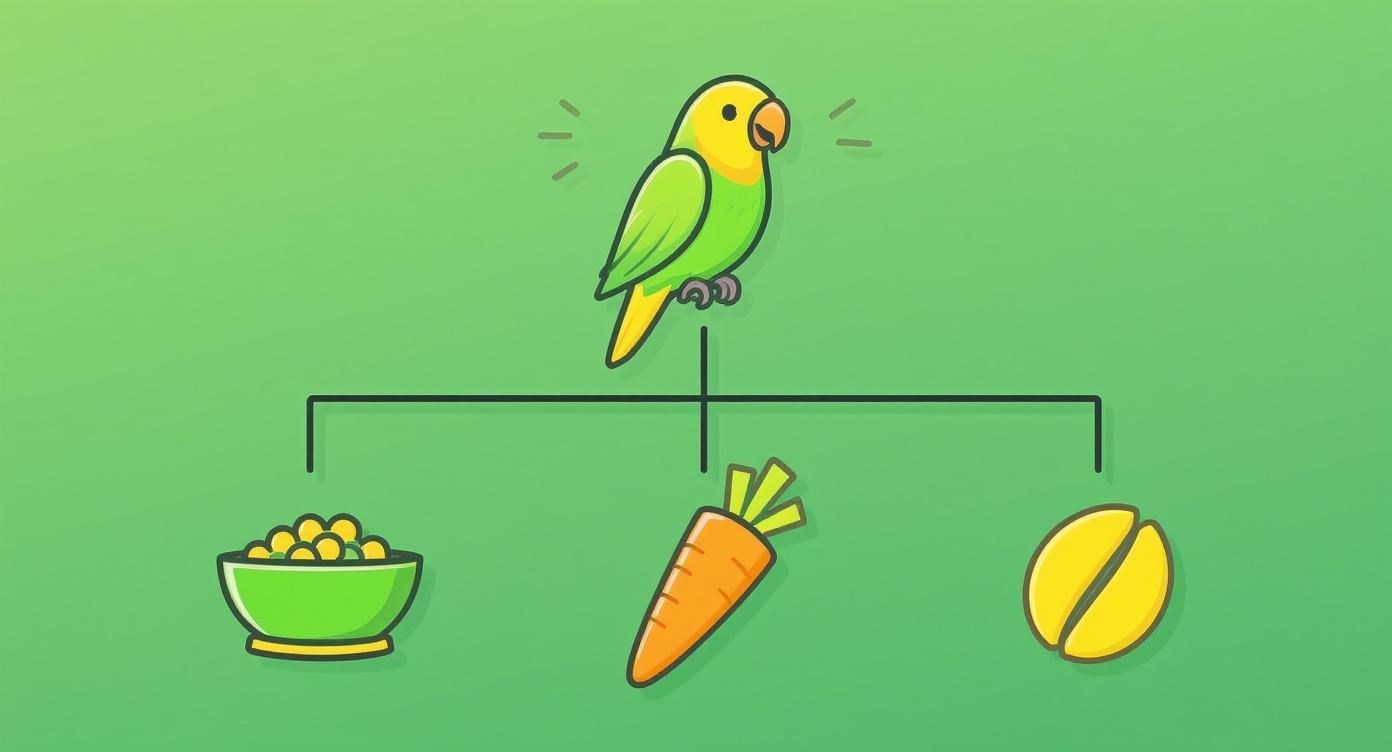
This visual really drives home the point: a thriving parrot's diet is like a pyramid, with pellets as the non-negotiable foundation, not just an optional extra. Moving beyond these basics, understanding what your parrot eats is the first step toward better health. For a deeper dive, you can learn more about what parrots eat in our detailed guide.
Australian Owners Are Demanding Better
This shift toward better nutrition isn't just a niche trend; it reflects a much broader change in how we view and care for our pets. Here in Australia, the pet food market has seen huge growth, and it's being driven by owners who want healthier, more natural options for their animal companions.
This includes a clear move towards high-quality, ethically sourced parrot foods, with many of us actively seeking out formulas packed with functional ingredients designed for optimal health. It's all about moving beyond the myths and building a solid foundation for a long, colourful, and happy life with your bird.
Why Pellets Are the Foundation of a Healthy Diet
Let's talk about the single biggest improvement you can make to your parrot’s diet and long-term health: formulated pellets.
If you’ve ever seen a child meticulously pick out all the lollies from a party mix and leave the nuts behind, you already understand how a parrot tackles a seed-based diet. They will almost always go for the tastiest, fattiest seeds first and ignore the rest.
This is a classic case of selective feeding, and it’s precisely why an all-seed diet is a recipe for disaster. Over time, this habit creates serious nutritional gaps—especially in Vitamin A, calcium, and quality protein—while paving the way for obesity and fatty liver disease.
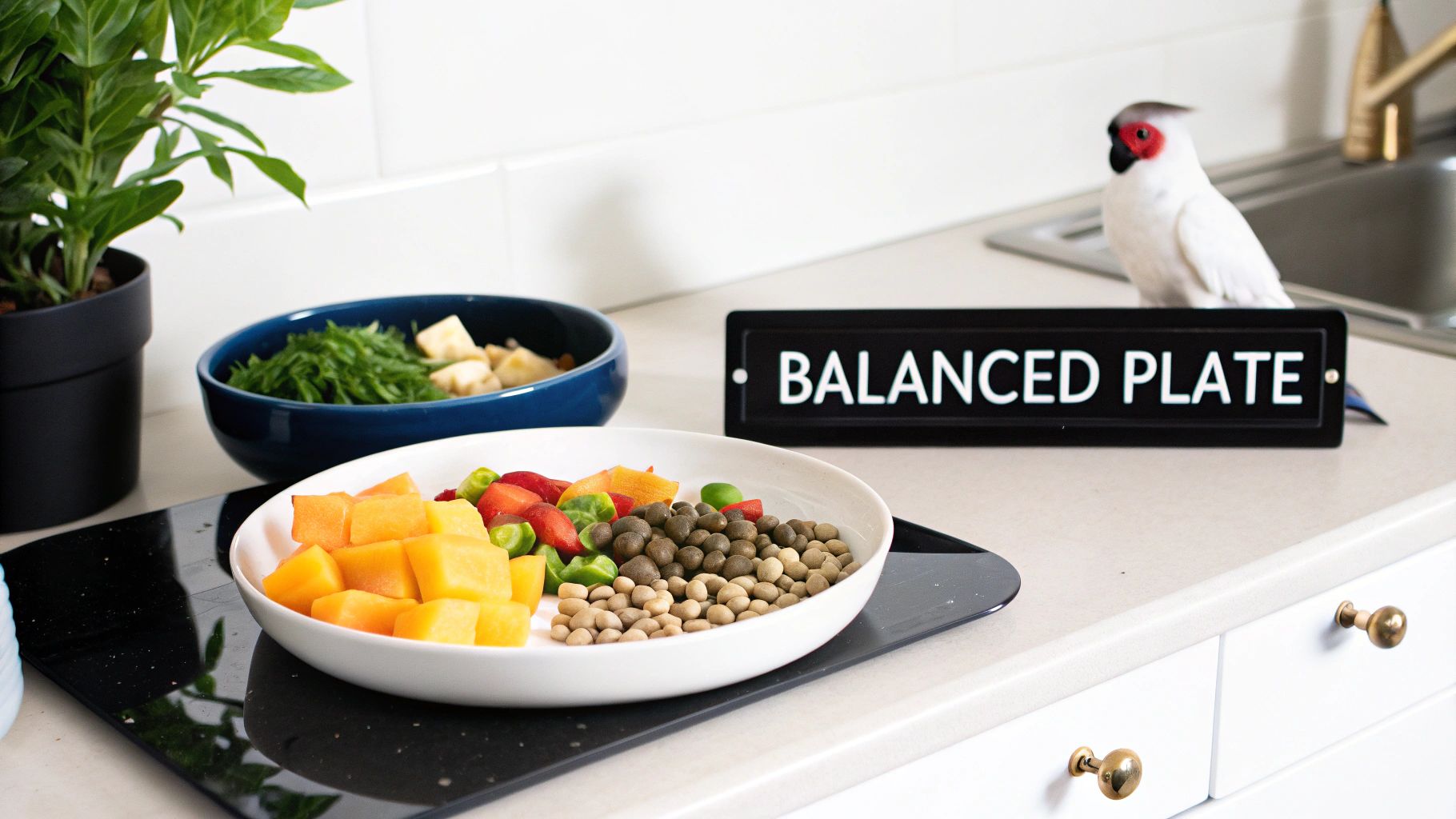
Formulated pellets are the modern, vet-recommended answer to this problem. Each pellet is a complete, bite-sized nutritional package, designed by avian experts to contain the perfect balance of vitamins, minerals, and other essentials. When pellets make up the core of their diet, selective feeding simply isn't an option.
Decoding the Ingredient List
When you’re standing in an Australian pet store trying to compare different bags of parrot food, the ingredient list is your best friend. Look for high-quality pellets that list whole grains like corn, wheat, or oats first. Healthy protein sources like soy meal, along with added vitamins and minerals, are also great signs.
Steer clear of brands that load their pellets with artificial colours, flavours, or extra sugars like sucrose or corn syrup. These might make the food look more appealing to us, but they offer zero nutritional benefit and can even make your bird a fussier eater in the long run. Natural preservatives, such as mixed tocopherols (a form of Vitamin E), are a much better indicator of a quality product.
According to avian health experts, a diet where 60-80% of the daily intake comes from a high-quality formulated pellet is the gold standard for most companion parrot species. The remaining portion should consist of fresh vegetables and a very small amount of healthy treats.
Choosing the Right Pellet for Your Parrot
Not all pellets are made the same, and what works for one bird might not suit another. In Australia, you’ll mainly find two types on the shelves for your feathered friend.
- Extruded Pellets: These are cooked at high temperatures, a process that makes them easier to digest and kills off any potential bacteria. They often come in fun, colourful shapes which can be a great way to tempt a picky bird and add a bit of enrichment to their bowl.
- Cold-Pressed Pellets: Made with less heat, this method helps preserve more of the natural goodness from the raw ingredients. These pellets usually look more uniform and natural.
Beyond how they’re made, pellets are also designed for different needs. You'll find options for various size categories, from tiny crumbles perfect for a budgie to hefty chunks for a Macaw. There are also high-potency formulas for birds with specific health requirements, like those who are breeding or recovering from an illness.
Getting the size right is crucial. A pellet that’s too big can be intimidating for a small bird, while one that’s too small might not feel satisfying for a large parrot to crunch. If you're unsure, starting with a formula designed for your bird's species or size is always a safe bet.
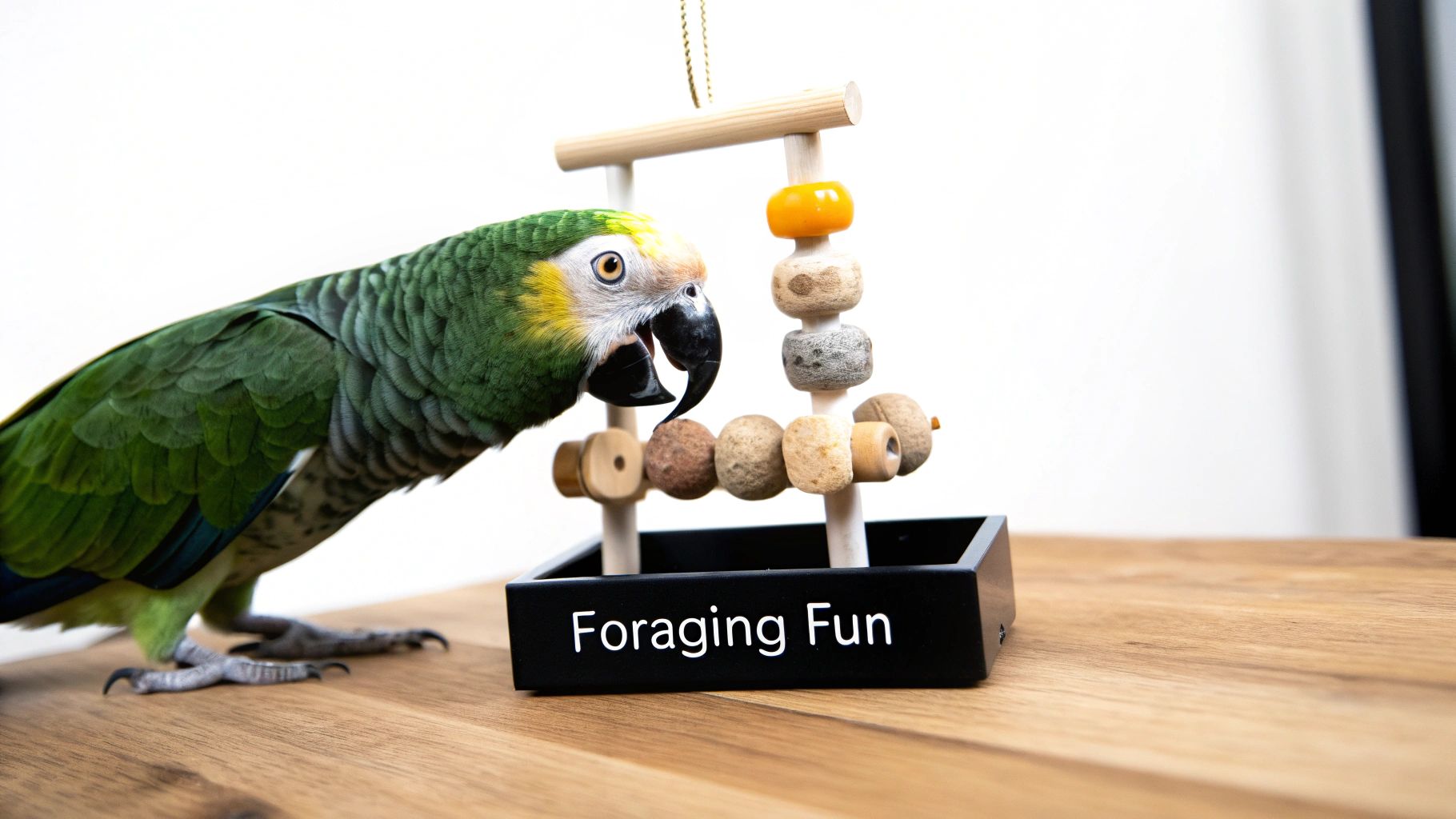
You can also make pellets more exciting by turning mealtime into a game. Hiding their daily food in a simple foraging toy, like the Foraging Ball, encourages their natural instincts. Making their main food source a fun challenge inside a durable toy like the Gator Foraging Toy or the Foraging Wheel is a fantastic way to boost their mental stimulation at the same time.
Moving Beyond Pellets with Fresh Foods and Treats
While a high-quality pellet diet is the cornerstone of good nutrition, it's not the whole story. Think about it – would you be happy eating the same nutritionally balanced but boring meal every single day? You’d be healthy, sure, but you'd also be incredibly bored. That's where fresh foods come in to make a parrot's diet truly thrive.
Adding a daily scoop of fresh vegetables, what many of us call ‘chop’, brings a wonderful mix of textures, colours, and flavours into their bowl. This isn't just about boosting their intake of natural vitamins and antioxidants; it's also crucial mental stimulation that turns a simple meal into an exciting, enriching part of their day.
Crafting the Perfect Parrot Chop
Making chop sounds more complicated than it is. The idea is to create a finely diced mix of parrot-safe veggies that you can whip up in a big batch and freeze in daily portions. It’s a huge time-saver and means you always have something healthy ready to go.
Try to include a rainbow of colours to cover a wide range of nutrients. Think dark leafy greens, vibrant orange vegetables, and deep reds. A good chop should be almost entirely vegetable-based, as fruits are much higher in sugar and are best offered as a special treat.
Great Vegetables to Include (Readily available in Australia):
- Leafy Greens: Kale, spinach (in moderation), bok choy, and silverbeet.
- Orange and Yellow Veggies: Carrots, sweet potato (lightly steamed is best), pumpkin, and capsicum.
- Green Veggies: Broccoli, peas, green beans, zucchini, and celery.
- Other Goodies: Chilli, corn on the cob (sparingly), and beetroot.
Just give everything a thorough wash, chop it into a size that suits your bird, mix it all up, and you’ve got a fantastic, nutrient-packed addition to their daily pellets.
Redefining the Role of Seeds and Treats
For decades, seed mixes were mistakenly seen as the main meal for parrots. We now know that a diet high in fat and low in essential nutrients is one of the biggest causes of health problems in our companion birds. It's time to completely rethink how we use seeds and other treats.
Instead of a meal, think of seeds and nuts as high-value currency. They make the perfect reward during a training session or the ultimate treasure to stuff inside a foraging toy. This approach satisfies their natural drive to crack into these tasty morsels without wrecking their overall diet.
Expert Tip: A solid rule of thumb is that all treats—including seeds, nuts, and fruit—should make up no more than 10% of your parrot's total daily food intake. This keeps their core nutrition on track, coming from pellets and fresh veggies.
This small shift in thinking can make a massive difference, turning a potential dietary problem into a powerful tool for enrichment and building your bond.
Quick Guide to Safe and Unsafe Parrot Foods
Knowing what not to feed your parrot is just as critical as knowing what's good for them. Lots of common human foods are incredibly dangerous for birds, so always double-check before sharing your snack.
This little table is a handy starting point, but it's by no means a complete list.
| Safe Foods Your Parrot Will Love | Toxic Foods to Avoid at All Costs |
|---|---|
| Carrots, broccoli, kale | Avocado |
| Capsicum, sweet potato | Chocolate, caffeine, alcohol |
| Apples (no seeds), berries | Onion, garlic |
| Cooked pasta, brown rice | Xylitol (artificial sweetener) |
| Sunflower seeds (as treats) | Fruit pits and apple seeds |
Some foods fall into a grey area. Grapes, for instance, are a common question. It’s important to know the right way to offer them to be safe. Our detailed guide answers the question of whether birds can eat grapes safely and gives you practical advice.
When in doubt, always play it safe and check with your avian vet before introducing anything new.
The growing awareness around pet health is a positive trend. The Australian pet food market, valued at USD 2.64 billion, is projected to climb to an estimated USD 4.41 billion by 2032. While dogs and cats hold the largest share, this growth is driven by owners seeking premium, health-focused diets for all their pets, including birds. You can discover more insights about this expanding market and its trends. This shift shows that providing the best parrot bird food is becoming a priority for dedicated owners across the country.
Creating a Daily Parrot Feeding Routine
Alright, so you’ve got a handle on the key bits and pieces of a balanced diet. Now for the fun part: putting it all into practice. Knowing what parrot bird food to offer is one thing, but figuring out how much and when is where the real magic happens. This is your best defence against common health problems like obesity, which is a massive concern for our companion birds here in Australia.
Just like people, no two parrots are the same. A young, boisterous Galah is going to burn through far more energy than an older, more chilled-out Cockatiel. Building a daily routine isn't about being super rigid; it's about creating a reliable framework that you can tweak as you get to know your bird’s unique needs.
Portion Control for Popular Aussie Parrots
Overfeeding is probably the most common mistake loving owners make. While the guidelines on pellet packaging are a decent starting point, that's all they are—a starting point. Your bird's activity level, age, and metabolism all have a say in what they really need.
Here’s a rough guide for daily portions, focusing just on the pellet part of their diet. Remember to add a tablespoon or two of fresh chop on top of this.
- Budgies & Cockatiels: Roughly 1.5 to 2 level tablespoons of pellets per day.
- Conures & Lorikeets: Approximately 2 to 3 tablespoons of pellets.
- Galahs & Corellas: Around 3 to 4 tablespoons of pellets.
- Large Cockatoos & Macaws: Can range from 1/2 to 1 cup of pellets, depending on their size and how much they fly about.
The goal is simple: give them enough to eat their fill during mealtimes without a mountain of leftovers. Watch what's left in the bowl and check their body condition, then adjust these amounts as needed.
Scheduled Meals vs Free Feeding
So, should you keep the food bowl topped up all day, or serve distinct meals? Most avian vets strongly recommend scheduled meals, and for good reason.
Offering food twice a day—once in the morning and once in the early evening—taps into their natural foraging instincts. This simple change helps stop them from eating out of boredom, cuts down on food waste, and—most importantly—gives you a crystal-clear window into how much they’re actually eating. A sudden drop in appetite is often the very first sign of illness, and that’s something you could easily miss with a constantly full bowl.
Expert Avian Vet Tip: "Scheduled mealtimes are a powerful health monitoring tool. When you know your bird's normal intake, any deviation becomes an immediate red flag, allowing for early veterinary intervention. It also encourages a healthier relationship with food and prevents the development of fussy eating habits."
How to Monitor Your Parrot's Body Condition
The best way to know if their diet is on track is by getting hands-on. Don't just rely on the scales; learn how to feel their keel bone.
This is the prominent bone that runs right down the centre of their chest. In a parrot at a healthy weight, you should be able to feel the bone clearly, but it shouldn't feel sharp or stick out. The pectoral muscles on either side should feel firm and rounded, a bit like a plump chicken breast.
If the keel bone feels sharp with hardly any muscle flanking it, your bird might be underweight. On the flip side, if you can barely feel the bone through a thick layer of fat, your bird is likely overweight. Learning this simple check lets you catch weight changes early and adjust their parrot bird food portions long before it spirals into a serious health issue.
Turning Mealtime into an Enriching Game
Think about a wild parrot's day. It's a constant quest for food, a full-time job of searching, climbing, and problem-solving. Now, think about your bird's day. It’s often just a short walk to a bowl that’s always full. While that's convenient for us, it robs them of one of their most powerful natural instincts: foraging.
Let's bring that instinct back home. Foraging is the key to a happy, mentally sharp bird. It turns a boring meal into an exciting puzzle that engages their mind and body. You’re not just giving them food; you’re giving them a purpose.
Making them work for their food in a fun, rewarding way can slash boredom, help prevent behavioural issues like feather plucking, and give their incredible intelligence a healthy outlet. The easiest way to start is by using their daily pellets as the prize in the game.
Getting Started with Foraging
You don't need a huge budget or complicated setups to get started. In fact, you can begin today with simple DIY ideas that cost nothing at all. The trick is to start easy and slowly ramp up the difficulty as your bird figures out the game.
- Scatter Feeding: Forget the bowl. Just scatter your parrot's pellets on a clean, flat surface like a tray or the bottom of their cage (as long as it’s clean and safe). This simple change gets them moving and searching.
- Paper Puzzles: Loosely wrap a few pellets in a small piece of paper. You could also stuff them inside a clean cardboard tube (like a toilet paper roll with the ends folded in). This introduces the idea that they need to manipulate an object to get their reward.
- Basic Tray Foraging: Grab a shallow tray and fill it with bird-safe materials like shredded paper, foot toys, or large, smooth stones. Sprinkle their daily food among the items for them to discover.
These first steps teach your bird the rules of this new "game" without causing any frustration. It sets them up for success when you introduce more advanced challenges later on.
Levelling Up with Foraging Toys
Once your parrot has the hang of the basics, it’s time to bring in commercial foraging toys. These are designed to be tough and come in a whole range of difficulty levels, offering endless ways to keep your bird stimulated.
Expert Insight: When you first introduce a new toy, show your bird how it works. Let them see you hide a high-value treat inside, and make it super easy for them to get it out the first couple of times. This builds their confidence and teaches them that a little effort leads to a tasty reward, so they're less likely to just give up.
When you're choosing toys, think about your bird's size and personality. A beginner might do well with a simple toy where they just have to pull a drawer, but a puzzle-pro might need a multi-step challenge to stay interested. To help you decide, check out our complete guide to foraging toys for birds, which breaks down the different options for every skill level.
It’s great to see a real shift in the Australian pet industry towards better parrot care, with more high-quality food and enrichment items available than ever. In fact, pet specialty stores now hold around 43.1% of the bird food market share, making it much easier for owners to find premium, species-specific options. This trend shows a growing understanding of how vital both quality nutrition and mental engagement are for our birds. You can learn more about Australia's bird food market trends. This commitment from owners and retailers is fantastic news for the well-being of our feathered mates.
How to Transition a Stubborn Parrot to Pellets
Got a parrot that clamps its beak shut at the mere sight of anything that isn't a seed? You're definitely not alone. Parrots are clever creatures of habit, and convincing them to try a new food can feel like a serious battle of wills.
This is your patient, step-by-step game plan for winning that transition war, gently and safely.
The number one rule? This process must be gradual. Never, ever starve a parrot into eating pellets; their fast metabolism makes this incredibly dangerous. The real keys are patience, consistency, and a little bit of creative thinking. Your persistence now will pay off massively for their long-term health.
Proven Methods for a Gentle Switch
Every bird is an individual, so what works for one might not work for another. It’s a good idea to try a few different approaches to see what finally clicks with your feathered friend. The goal here is to make pellets seem like a normal, non-threatening part of their world.
Here are a few proven, gentle methods to get you started:
- The Gradual Mix: This is the most common and often most successful method. Start by adding a tiny amount of pellets (around 10%) to their old seed mix. Every few days, slightly decrease the amount of seed and increase the pellets until the bowl is mostly, and eventually all, pellets.
- Scheduled Meals: Offer the new food first thing in the morning when they are at their hungriest. Leave the pellets in for an hour, then swap them out for their regular seed mix for a limited time. This teaches them to try the new food when it's available.
- The Pretend Game: Parrots are flock animals and often want what you're having. Sit with your parrot and pretend to eat the pellets yourself (don't actually eat them!). Make enthusiastic sounds. Your bird's natural curiosity might just convince them that this new stuff is a desirable treat.
Creative Tricks for the Extra Stubborn Bird
If the standard methods just aren't cutting it, it's time to get a bit more creative. Sometimes, simply changing the form or presentation of the pellets is all it takes to spark their interest.
An excellent technique is to grind the pellets into a powder and sprinkle it over their favourite moist foods, like a small piece of fruit or some steamed sweet potato. This gets them used to the taste in a familiar and enjoyable context.
Another fantastic trick is to bake the ground-up pellets into a healthy "birdie bread" or mash. Mixing the new taste with familiar ingredients they already love, like pumpkin puree or grated carrot, can be the bridge you need to get them to accept the new diet. It makes the foreign food seem much less intimidating.
Monitoring Health During the Transition
Making a major dietary change requires careful monitoring to ensure your parrot stays healthy throughout the process. This part is absolutely non-negotiable for a safe transition.
You must weigh your bird every morning before their first meal using a gram scale. A weight loss of more than 10% of their body weight is a red flag that requires an immediate call to your avian vet.
Also, keep a close eye on their droppings. While some changes in colour and consistency are normal as their diet shifts, you should still see a good volume of droppings. This is the clearest proof you have that they are actually eating enough.
Your Parrot Nutrition Questions Answered
When you're trying to get your parrot's diet just right, a lot of questions pop up. It’s completely normal! As a dedicated owner, you want to feel confident you're making the best choices for your feathered mate. Here, we tackle some of the most common queries we hear from parrot owners across Australia, giving you clear, straightforward answers.
Is Organic Parrot Food Really Better?
Opting for organic parrot food simply means you’re choosing ingredients grown without synthetic pesticides or chemicals. For birds that are particularly sensitive, or for owners who just prefer an all-natural approach, it definitely provides extra peace of mind.
Of course, a top-notch conventional pellet and thoroughly washed fresh veggies offer fantastic nutrition. But if going organic fits your budget and your values, it's an excellent choice. It’s all part of a growing trend in Australia towards premium, thoughtfully sourced pet care.
Can I Make My Own Parrot Food at Home?
While mixing up a fresh ‘chop’ of vegetables, grains, and legumes is a brilliant way to supplement your bird's diet, trying to create a complete homemade meal to replace pellets is incredibly tricky and not recommended. Formulated pellets are crafted by avian nutritionists to contain a precise balance of every single vitamin and mineral your parrot needs.
Without the guidance of an avian vet, homemade diets almost always lead to serious nutritional deficiencies over time, which can really compromise your bird’s health. It’s much safer to stick to using your homemade mixes as a healthy, enriching addition to their main diet, not the whole meal. For more specific advice, especially for bigger birds, have a look at our detailed guide on cockatoo bird food.
What if My Parrot Refuses to Eat Vegetables?
First off, don't give up! It’s one of the most common hurdles for parrot owners. Parrots can be notoriously fussy eaters, but the key is persistence and creativity. Keep offering veggies in new and interesting ways to spark their natural curiosity.
Expert Tip: A great trick is to eat a piece of the vegetable in front of your bird with lots of enthusiasm. Seeing you, their flock leader, enjoying it signals that the food is not only safe but also desirable. It’s often all the encouragement they need!
Try switching up the presentation. You could shred the veggies, lightly steam them to alter the texture, clip leafy greens to the cage bars to create a ‘curtain’ they can nibble on, or even weave pieces into foraging toys. Sometimes, all it takes is turning mealtime into a bit of a game to convince a stubborn beak to try something new and healthy.
Keep Reading
Disclaimer Summary:
The information in this article is general in nature and may include external links or resources not created by Lou Lou Bells Bird Toys. Every bird is unique, so we encourage you to seek personalised advice from your own veterinarian or avian specialist. For full details, please read our complete disclaimer here.