
It’s a classic Australian scene: a wild, noisy flock of white birds takes over a local park, their calls echoing through the gums. But are you looking at corellas or cockatoos?
For a lot of people, the terms are interchangeable. The truth is a little more specific. While all corellas are technically a type of cockatoo, not all cockatoos are corellas. Think of it like this: all squares are rectangles, but not all rectangles are squares. This small distinction is the key to identifying the boisterous white birds in your backyard and understanding what makes them tick.
Decoding Australia's Favourite White Birds
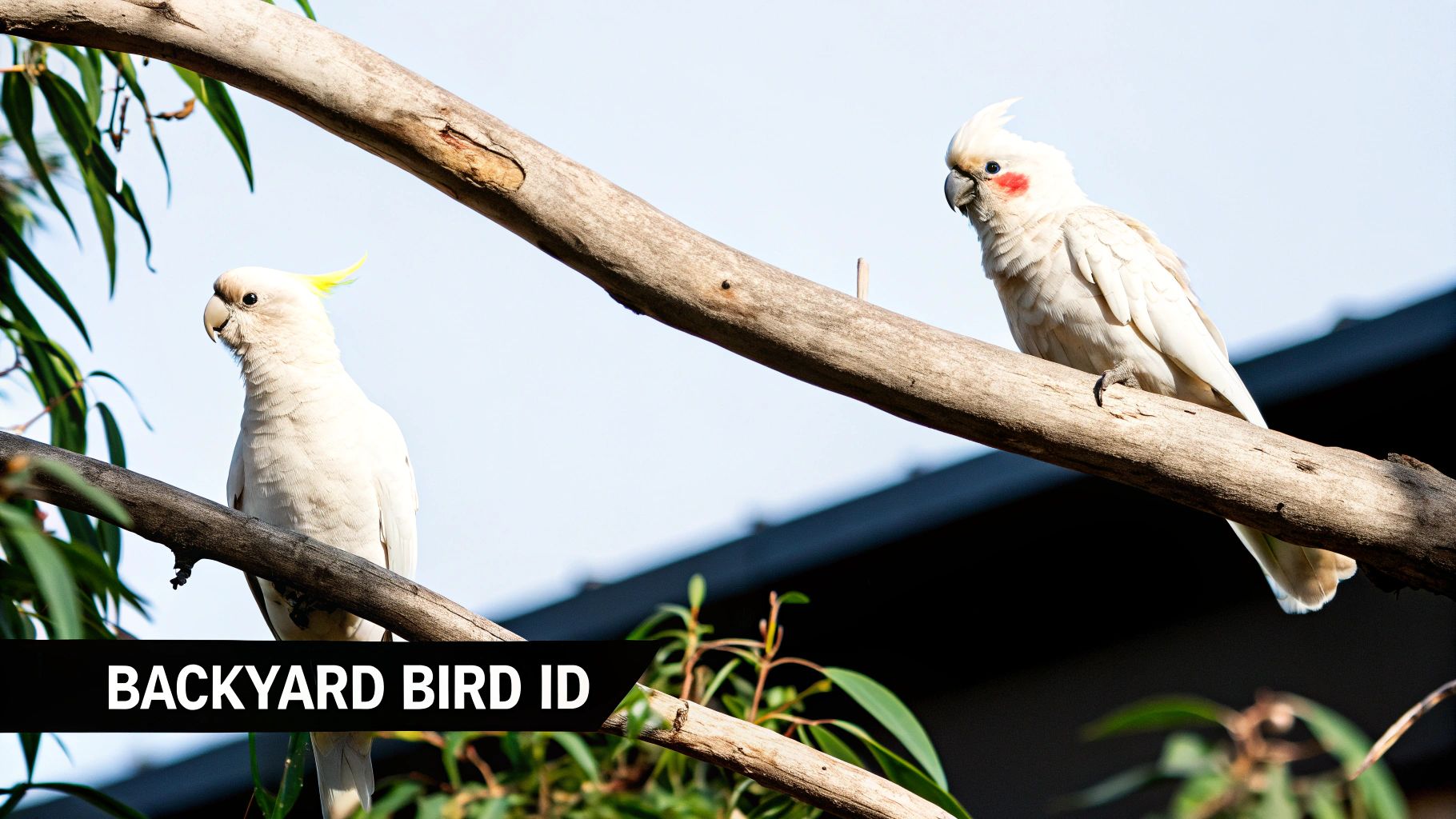
So, how do you tell them apart? Corellas are generally smaller, have shorter crests, and sport a patch of bare, bluish skin around their eyes. The larger cockatoos, like the iconic Sulphur-crested, are famous for their big, colourful crests and chunkier bodies.
To get a real feel for the family, we’ll focus on four of the most common species you'll see around Australia:
- Little Corella: The cheekiest of the bunch. Highly adaptable and often seen in huge, chattering flocks in urban and rural areas across Australia.
- Long-billed Corella: Easy to spot with its impressively long upper beak, perfect for digging up roots and bulbs in Aussie parks.
- Sulphur-crested Cockatoo: The quintessential big white parrot with that unmistakable, vibrant yellow crest.
- Galah: Okay, not white, but this pink-and-grey beauty is a cockatoo through and through and often hangs out with corella flocks.
Corella vs Cockatoo: At a Glance
Here’s a quick cheat sheet to help you tell who’s who next time a flock descends on your lawn.
| Feature | Corellas (General) | Cockatoos (General) |
|---|---|---|
| Size | Smaller, more compact (35-40 cm) | Larger, stockier birds (45-55 cm) |
| Crest | Small, often lying flat against the head | Large, expressive, and often brightly coloured |
| Eye Ring | A prominent bare, bluish skin patch around the eye | The area around the eye is typically feathered |
| Beak | Often longer and finer, especially the Long-billed | Shorter, broader, and more powerful for cracking nuts |
| Common Noise | Chattering, yapping, or high-pitched calls | Loud, guttural screeches and ear-splitting squawks |
Expert Advice: One of the quickest ways to tell them apart is to look at the face. If you see that distinct blue "tear drop" or patch of bare skin around the eye, you're almost certainly looking at a corella. It's their most reliable identifying feature.
Getting to know these birds is about more than just identification. They are incredibly intelligent, which means they need plenty of mental stimulation and can become destructive if they get bored. Their eating habits can also be a challenge—their messy foraging can clog gutters and create a constant clean-up job. If you’re struggling with seed scatter, looking into no-mess bird feeders can be a real game-changer for keeping their space (and yours) tidy.
By understanding their differences, we can better appreciate and live alongside these incredible native Australian parrots.
Where Do They Sit on the Cockatoo Family Tree?
To really get your head around the corella vs cockatoo question, you have to look at their family ties. Both birds belong to the scientific family Cacatuidae, which is the exclusive club for all 21 species of cockatoo found across Australasia. So, scientifically speaking, every corella is technically a type of cockatoo.
So what's the difference? Corellas are grouped into their own specific branch of the family, a subgenus called Licmetis. This isn't just a stuffy scientific label; it marks a distinct evolutionary path that has shaped them into the birds we see today—perfectly suited to the unique demands of the Australian landscape.
What Makes a Corella a Corella?
Evolution has shaped corellas into lean, resourceful survivors. You can see it in their physical traits, which are all direct adaptations to how they live.
- Compact Frame: Their smaller, more agile bodies are built for efficiency. It allows them to thrive everywhere from arid inland regions to suburban parks.
- Subtle Crest: Unlike the massive, flashy headgear of a Sulphur-crested Cockatoo, a corella’s crest is small and understated. It’s less about a big display and more about practicality.
- The Bare Eye-Patch: That signature patch of bare, bluish skin around the eye is a dead giveaway. While its exact purpose is still debated among experts, it’s a distinct feature of the Licmetis group.
These aren't random features. They’re the result of a lifestyle spent foraging on the ground, digging for roots, and living in huge, highly social flocks. It’s also why they need toys that encourage these natural ground-foraging behaviours to keep their minds sharp and bodies active. A good foraging toy can mimic these challenges safely at home.
Where You'll Find Them in Australia
While both groups are common, where they live tells different stories about their success across the country. The Galah is practically everywhere, a familiar sight from coast to coast. The Sulphur-crested Cockatoo is another common character, found all along the northern and eastern regions of Australia.
Corellas, on the other hand, tend to stick to more specific territories. The Western Corella, for example, is found only in a small pocket of south-west Western Australia. The Long-billed Corella is mainly a resident of the south-east, though it’s been slowly expanding its range.
Expert Advice: The Little Corella is the ultimate opportunist. Originally an inland bird, it has masterfully expanded its range right across the continent, becoming a common—and very loud—resident in many Australian cities and towns. Their success is a testament to their intelligence and adaptability.
This difference in distribution is backed up by population numbers. Research in Victoria, for instance, shows just how much more abundant Galahs and Sulphur-crested Cockatoos are compared to their corella cousins. The study found Galahs had the highest density at 13.6 birds per unit area, with Sulphur-crested Cockatoos at 7.7. In contrast, Little and Long-billed Corellas showed much lower densities of 2.9 and 5.2 birds per unit area respectively. You can dig into the full findings on cockatoo populations from the Arthur Rylah Institute for Environmental Research.
When you’re trying to figure out who’s who in your backyard, it helps to know the main players in the corella vs cockatoo line-up. Four species really dominate the Australian landscape, and each has its own look, sound, and set of habits.
Let's break down how to tell them apart like a pro.
The Sulphur-crested Cockatoo: The Unmistakable Icon
The Sulphur-crested Cockatoo (Cacatua galerita) is probably the most recognisable parrot in Australia. They’re big, bold, and incredibly loud.
- Appearance: This is a large, solid white bird, usually measuring 45-55 cm. Their signature feature is that brilliant yellow crest, which they can raise or lower to show everything from excitement to alarm. They sport a powerful, dark grey-black beak built for cracking the toughest nuts.
- Vocalisations: Their call is a genuinely ear-splitting screech that can carry for kilometres. It’s a harsh, guttural sound you just can’t ignore, especially when a whole flock decides to announce the sunrise.
- Behaviour: Highly intelligent and endlessly curious, Sulphur-crested Cockatoos are famous for their problem-solving skills and, at times, their destructive habits. They can easily rip apart timber decking, window frames, and anything else they can get their beak on. To keep them from renovating your house, they need extremely durable toys that can withstand serious chewing power, like a well-made stainless steel toy.
The Little Corella: The Cheeky Opportunist
The Little Corella (Cacatua sanguinea) is smaller and a bit more subtle, but just as clever. You’ll often find them in massive, noisy flocks across Australia.
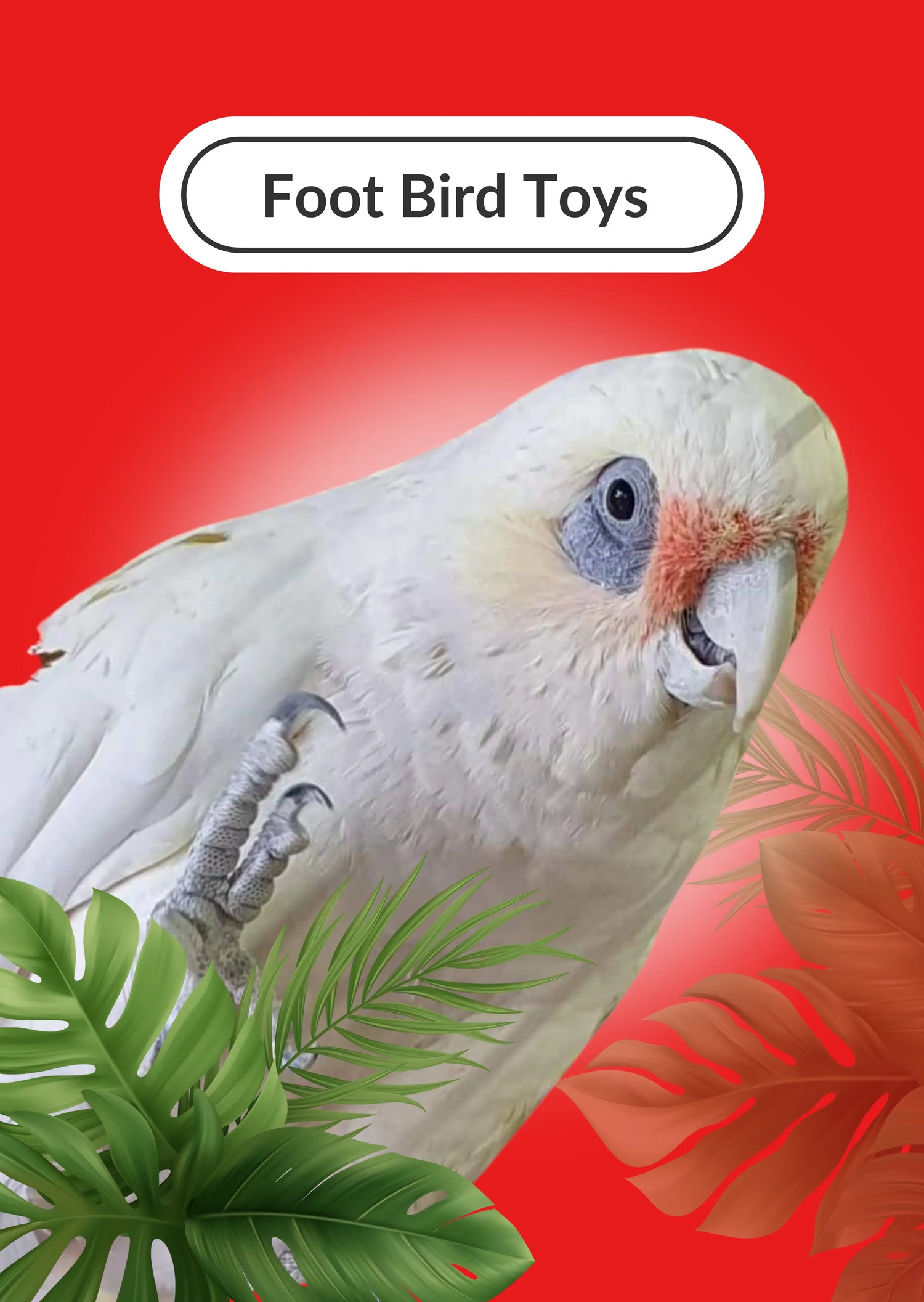
- Appearance: These are compact white birds, around 35-40 cm long. The dead giveaway is the patch of bare, blueish skin around their eye. They have a short white crest that usually sits flat against their head and a pale, bone-coloured beak.
- Vocalisations: Forget the deep screech of a big cockatoo. Little Corellas have a high-pitched, yapping chatter. A large flock sounds like a constant, rolling conversation full of sharp cries and chuckles.
- Behaviour: Little Corellas are well-known for their playful antics. It's common to see them rolling on the grass, hanging upside down from powerlines, or putting on impressive aerobatic displays. They are masters of ground-foraging, often digging for roots and seeds in lawns and ovals.
Expert Advice: One of the most common signs of corella activity, particularly in urban areas like Melbourne, is gutters clogged with the remnants of cypress cones. They fly to a roof for safety, systematically pull the cones apart to get the seeds, and drop the woody debris straight into the gutter, causing significant blockages.
The Long-billed Corella: The Specialist Digger
The Long-billed Corella (Cacatua tenuirostris) looks a lot like its smaller cousin, but one very obvious difference points to its specialised lifestyle.
- Appearance: Their standout feature is that exceptionally long, slender upper part of their beak. This bird also has more obvious red-pink markings on its face and throat than the Little Corella. The blue eye-ring is there too, cementing its corella identity.
- Vocalisations: Their calls are similar to the Little Corella's but can have a more warbling or quavering quality, often described as a "kurr-ur-rup" sound.
- Behaviour: That incredible beak isn’t just for looks; it’s a purpose-built digging tool. Long-billed Corellas are experts at excavating onion grass, corms, and other roots from the ground, leaving behind neat little holes in lawns and parks. This natural drive makes them perfect candidates for engaging with complex foraging toys that challenge their minds and mimic this digging instinct.
The Galah: The Pink and Grey Socialite
While it isn't white, the Galah (Eolophus roseicapilla) is a true cockatoo and is often seen hanging out with corella flocks, which can add to the identification confusion.
- Appearance: Galahs are unmistakable with their bright pink face and chest, grey back and wings, and a light pink, mobile crest. They are a medium-sized cockatoo, roughly the same size as a corella.
- Vocalisations: Their call is a cheerful, high-pitched "chi-chi" screech, which is generally less grating on the ears than the calls of the larger white cockatoos.
- Behaviour: Galahs are incredibly social and playful birds, known for their acrobatic flights and boisterous group behaviour. They spend a lot of time foraging on the ground for seeds and are a common sight across almost all of Australia.
To make spotting these birds even easier, here's a quick side-by-side comparison of the key features.
Detailed Species Identification Chart
| Attribute | Little Corella | Long-billed Corella | Sulphur-crested Cockatoo | Galah |
|---|---|---|---|---|
| Size | 35-40 cm | 38-41 cm | 45-55 cm (Large) | 35 cm (Medium) |
| Main Colours | White | White with pink-red face/throat | White with yellow crest | Pink and grey |
| Beak | Short, bone-coloured | Very long upper mandible | Short, strong, dark grey-black | Short, pale bone-coloured |
| Eye-ring | Prominent blue skin | Prominent blue skin | Faint whitish-blue skin | Prominent reddish/grey skin |
| Crest | Small, white (often flat) | Small, white (often flat) | Large, bright yellow, expressive | Small, light pink, mobile |
| Call | High-pitched chatter, yapping | Warbling, quavering "kurr-ur-rup" | Extremely loud, harsh screech | High-pitched "chi-chi" screech |
| Key Behaviour | Playful, acrobatic, ground-foraging | Ground-digging for roots | Chewing wood, problem-solving | Very social, ground-foraging |
By paying attention to these key differences in size, colour, beak shape, and sound, you'll quickly become an expert at identifying the beautiful and intelligent cockatoos that share our Australian landscape.
Choosing the Right Companion Bird
Thinking about bringing a corella or a large cockatoo into your life is a massive commitment, one that can easily last for decades. This isn't just about looks; it's a decision that demands a really honest look at their hugely different personalities. The question isn't "which bird is better?" but "which bird's specific needs can I truly meet for its entire life?"
A common mistake is thinking of a corella as just a 'mini' cockatoo, and therefore an easier option. While they are smaller, corellas are fiercely intelligent, mischievous birds with boundless energy that needs an outlet. They are natural-born problem solvers, which means if you don't give them puzzles to figure out, they will gleefully turn your home into one giant, often destructive, puzzle.
On the other hand, a big cockatoo like the Sulphur-crested is known for its incredible emotional depth and an almost overwhelming need for social connection. These birds form profound bonds with their people and can become incredibly distressed—leading to screaming or destructive habits—if they feel neglected. Their intelligence is matched only by their sensitivity.
This handy decision tree can give you a quick visual start on the key differences.
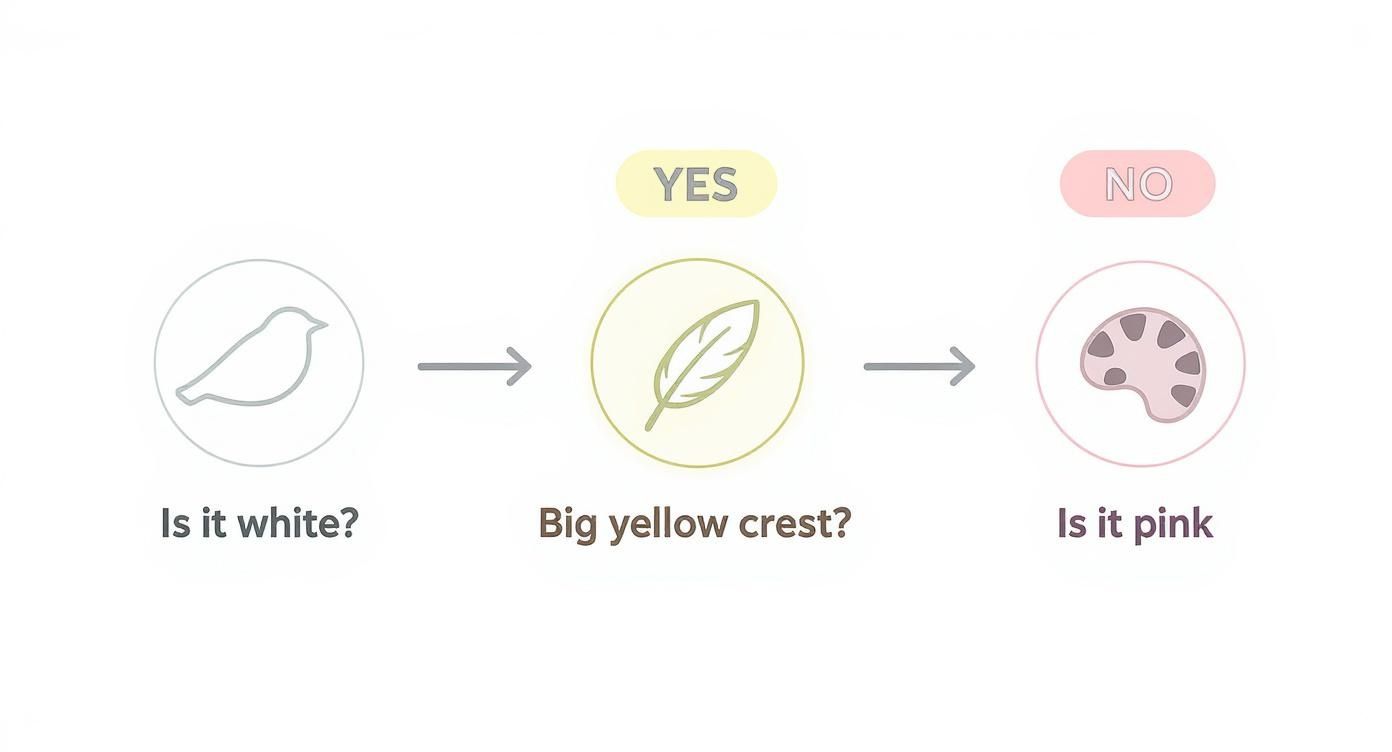
This visual guide is just the first step, simplifying identification so you can start to understand the very different care each bird demands.
Temperament and Social Needs
The kind of social life each bird needs is a critical point of difference. Corellas are flock animals, through and through. Their instinct is to be part of a noisy, busy group, which in your home translates to a need for tons of interaction, play, and mental challenges to keep their clever minds occupied.
A large cockatoo, while also social, often pours all that energy into a very deep, one-on-one bond. This can be amazingly rewarding, but it also means they can become prone to jealousy and possessiveness. They don't just want to be in the room with you; they demand to be a central part of your daily life.
Expert Advice: An avian vet in Australia often advises: "A bored cockatoo is a destructive cockatoo. Without sufficient mental stimulation and social interaction, these birds can develop serious stress-related behaviours like chronic screaming or feather-plucking. Enrichment isn't a luxury; it is a fundamental part of their healthcare."
Noise: A Demanding Reality
Let's get one thing straight: no cockatoo is a quiet pet. But the type of noise they make is worlds apart. The corella's call is a high-pitched chatter or yap, which can be relentless when a flock gets going. It's a sound built for constant communication within a group.
The Sulphur-crested Cockatoo’s screech is on another level entirely. It is a deafening, raw scream designed to carry across vast Australian landscapes. Inside a house, this call can be physically painful, and it’s something your neighbours will definitely notice. You can't train this out of them; it's a core part of who they are.
Matching Toys to Personalities
Enrichment is completely non-negotiable for keeping these intelligent birds happy and healthy. The trick is providing the right kind of stimulation.
-
For the powerful Sulphur-crested Cockatoo: Their beak is a formidable tool built for one thing: destruction. They need extremely durable toys that can stand up to serious chewing pressure. Think big blocks of tough native wood, thick ropes, and sturdy foraging devices where they really have to work for a treat. A toy a smaller bird might enjoy for weeks could last a large cockatoo just a few minutes.
-
For the clever Corella: While they're also strong chewers, corellas thrive on complexity. They excel with intricate puzzle toys that demand manipulation and problem-solving. Anything they can take apart, unscrew, or manoeuvre to find a hidden reward is perfect for satisfying their curious and methodical minds. Making sure you have the right parrot supplies in Australia is crucial for their wellbeing.
Ultimately, choosing between these birds requires a deep and honest chat with yourself. Are you ready for the relentless energy and clever antics of a corella, or the profound emotional demands and ear-splitting volume of a large cockatoo? Answering that question honestly is the most important first step you can take.
Essential Care for a Healthy Bird
Providing the right care is what ensures your corella or cockatoo lives a long, happy, and healthy life. This goes far beyond just chucking a bowl of seed in the cage; it’s about creating an environment that caters to their physical health and their incredibly active, intelligent minds.
Whether you're weighing up a corella vs cockatoo as a potential pet, their basic needs for housing, diet, and health are quite similar. The main difference? Scale. A cockatoo needs everything bigger and tougher.

Creating the Perfect Home Environment
A cage isn't just a box; it's your bird's personal space, their bedroom, and their safe haven. It must be large enough for them to fully stretch their wings, climb, and play without feeling cramped. For a cockatoo, this means a very large, robust cage. A corella can manage with something slightly smaller, but it still needs to be spacious.
A few key things to look for in a cage:
- Bar Spacing: The bars have to be close enough together that your bird can't get its head stuck. A corella needs narrower spacing than a big Sulphur-crested Cockatoo. Simple as that.
- Durability: Both birds have immensely powerful beaks. The cage must be made from strong, non-toxic material (like powder-coated steel) that can withstand a serious chewing. Flimsy cages are a safety hazard waiting to happen.
- Outdoor Aviary: If you have the space, a secure outdoor aviary is a fantastic addition. It gives them safe access to fresh air and natural sunlight, which is vital for Vitamin D3, but it must be completely predator-proof.
Beyond the Seed Bowl: Diet
A diet of only seeds is one of the most common causes of health problems in pet parrots in Australia. It’s the bird equivalent of a human living on junk food—high in fat, low in essential vitamins. A balanced diet is non-negotiable.
A high-quality formulated pellet should be the foundation of their diet, making up around 60-70% of what they eat. You then supplement this with a variety of fresh foods.
Expert Advice: Offer a daily "chop" made of finely diced fresh vegetables like kale, broccoli, capsicum, and carrot. You can also include safe Australian natives like bottlebrush flowers or grevillea, but always make sure they are pesticide-free.
Never, ever feed your bird avocado, chocolate, alcohol, caffeine, or onion. These are highly toxic. For a more detailed look at what a healthy avian diet involves, you can check out this essential guide to caring for pet birds.
Health and Enrichment
Regular check-ups with a qualified avian vet are an absolute must. These specialists can spot early signs of illness and give you expert advice on everything from diet to behaviour. A common and devastating illness in Australian parrots is Psittacine Beak and Feather Disease (PBFD), a contagious virus that regular vet visits can help screen for.
Mental health is just as important as physical health. A bored parrot is a stressed parrot, and that stress can show up as destructive chewing, constant screaming, or feather-plucking. Enrichment is the answer.
These intelligent birds need a constant supply of stimulating toys to keep their minds busy. Durable foraging toys that make them work for their food are brilliant for mimicking natural behaviours. For the birds with exceptionally destructive beaks, investing in tough, long-lasting stainless steel toys is a great way to provide safe and satisfying enrichment they can’t destroy in five minutes.
Living Alongside Wild Flocks in Australia
For a lot of Aussies, the whole corella vs cockatoo debate isn't about choosing a pet. It’s about the clever, chaotic, and sometimes downright destructive neighbours that turn up in our parks and backyards. These birds hold a strange place in our culture—they're celebrated as intelligent native icons, but they're also managed as pests that can wreck property, chew through power lines, and devastate crops.
It’s a complicated relationship, to say the least.
All native birds, including every last corella and cockatoo, are protected by law right across Australia. Harming them or messing with their nests is strictly illegal. That said, state wildlife authorities do grant permits to manage nuisance flocks when they cause serious economic or environmental damage, which is a nod to just how challenging they can be in both city and rural life.
The Great Expansion of the Little Corella
The Little Corella's story is one of incredible adaptation. Originally an inland species, their successful march across the continent shows just how smart and resourceful they are. The Little Corella is now the most widespread of Australia's three corella species, and its population has boomed in recent decades thanks to changes in land use and more reliable water sources. The Australian Museum has some fascinating details on how their range has exploded since the 1970s.
This expansion has, of course, put them in direct conflict with people, especially in cities. Their love for chewing means that timber decks, window frames, and outdoor furniture are all fair game.
Expert Advice: Whatever you do, never feed wild cockatoos or corellas. It might seem like a kind gesture, but it encourages them to depend on humans, can make them aggressive when you don't offer food, and supports artificially huge flocks that the local environment just can't handle. The end result is often even more property damage.
Coexisting with Your Feathered Neighbours
Living peacefully alongside these wild flocks is all about being proactive, not just getting frustrated after the fact. The goal is to make your property less inviting without hurting the birds.
- Protect Your Timber: Corellas and galahs find soft timbers like cedar and pine completely irresistible. You can deter them by installing physical barriers like netting. Another effective trick is to run parallel wires (0.5mm thickness or greater) about 5-10 cm out from the surface, which stops them from getting a solid foothold to start chewing.
- Secure Your Wiring: Those powerful beaks can slice through electrical wiring like it's nothing. Make sure any exposed cables around your home are properly shielded with tough conduit.
- Manage Water Sources: An uncovered water tank or a big ornamental pond can be a magnet for enormous flocks. Think about covering water features with netting to make them less accessible.
If you have pet parrots at home, it's absolutely crucial their living space is secure from wild visitors. A well-designed outdoor bird aviary not only enriches your own bird's life but also shields them from diseases that can be carried by wild birds. At the end of the day, understanding and respecting their natural behaviours is the first step toward a more harmonious backyard.
Your Corella and Cockatoo Questions Answered
We get a lot of great questions about the differences between corellas and cockatoos. To help clear things up, this final section answers some of the most common queries we receive, offering straightforward advice for anyone living with or alongside these incredible Australian birds.
Which Is Louder: a Corella or a Cockatoo?
Honestly, comparing them is like asking if a foghorn is louder than a siren. Both are famous for being incredibly loud birds, just in different ways. A Sulphur-crested Cockatoo’s screech is designed to carry over vast distances and can be absolutely deafening up close, making it one of the most powerful sounds in the Australian bush.
Corellas are also extremely noisy, but their calls are often described as higher-pitched yapping or chattering. While a single large cockatoo can feel more intense inside a home, a big flock of corellas gathering at dawn or dusk creates an overwhelming wave of community noise that can dominate an entire neighbourhood.
Are Corellas More Destructive Than Cockatoos?
All cockatoos, including corellas, are natural-born chewers. If they don't have a proper outlet for this behaviour, they will absolutely find one. The main difference really comes down to the scale and context of the destruction.
In the wild, large flocks of corellas are notorious for causing widespread damage to crops, trees, and even building materials like timber decking and window frames. In a home environment, though, a large cockatoo like a Sulphur-crest has a more powerful beak capable of splintering furniture, door frames, or cages with frightening ease.
Expert Advice: The key here is prevention, not punishment. Both birds require constant supervision when out of their cage and a steady rotation of appropriate toys. Give your corella intricate puzzle toys to keep their clever mind busy, and offer your cockatoo extremely durable chew toys to satisfy their powerful beak.
Is It Legal to Keep a Wild Cockatoo in Australia?
Absolutely not. It is completely illegal to take any native bird from the wild to keep as a pet in Australia. All cockatoos and corellas are protected species under both state and federal laws.
If you want to own one of these birds, you must purchase a captive-bred individual from a licensed and reputable breeder. These laws are in place to protect Australia's precious native wildlife from the devastating impacts of illegal trapping and trade. If you come across an injured native bird, the best thing you can do is contact your local wildlife rescue organisation or an avian veterinarian for help.
Which Species Makes a Better Pet?
There's no simple answer, because neither is objectively "better"—they're just different. The right choice depends entirely on an owner’s lifestyle, experience level, and how much commitment they're truly ready for.
Corellas are often seen as slightly less demanding than the very large cockatoos, but don't be mistaken: they are still highly intelligent, noisy birds that need a huge amount of social interaction and mental stimulation.
Large cockatoos like the Sulphur-crested are famous for forming incredibly strong, lifelong bonds, but they're also known for their extreme volume and an almost constant need for attention. The "better" pet is the one whose unique needs and personality are the best match for what you can realistically provide for the next 50+ years.
At Lou Lou Bells Bird Toys, we understand that a happy bird is an engaged bird. We design and handcraft a huge range of safe, durable, and stimulating toys right here in South Australia to keep your feathered friend's mind and beak busy. Explore our collection and find the perfect toy for your bird's personality today.
Disclaimer Summary:
The information in this article is general in nature and may include external links or resources not created by Lou Lou Bells Bird Toys. Every bird is unique, so we encourage you to seek personalised advice from your own veterinarian or avian specialist. For full details, please read our complete disclaimer here.