
Let's be honest, high-quality cockatoo bird toys aren't a luxury—they're an absolute necessity. These incredibly intelligent Aussie natives need constant mental work to be happy. The right toys give them a proper outlet for their natural instincts, stopping serious behavioural problems before they even have a chance to start.
Why the Right Toys Are More Than Just Play
Seeing a bored cockatoo is genuinely heartbreaking. That quiet, listless bird just sitting in a corner of its cage? That’s often a big red flag for stress and a mind that’s not getting nearly enough to do.
Cockatoos are ridiculously smart, with brainpower often compared to a human toddler's. Out in the Aussie bush, they spend their days foraging, peeling bark off trees, and figuring out all sorts of environmental puzzles. When we bring these amazing birds into our homes, it's our job to try and replicate that rich, challenging world.
Without it, those powerful minds and even more powerful beaks will find another job to do—and it's usually not one we like. This is exactly why a great selection of cockatoo bird toys is so essential.
The Real Link Between a Busy Beak and a Happy Bird
A lack of stimulation is one of the biggest triggers for common behavioural issues in pet cockatoos. Problems like non-stop screaming, feather plucking, and aggression often boil down to simple boredom and frustration. A bird with nothing to do will invent something to do.
Providing a variety of engaging toys helps channel all that energy in a positive direction. It’s not just about keeping them busy; it’s about fulfilling their deep-seated biological and mental needs. Think of toys as the "job" your cockatoo needs to stay sane and balanced.
- Taps into their Wild Side: Foraging and shreddable toys let them act on instincts they'd use in the wild, like hunting for food and tearing things apart.
- Keeps Them Active: Toys like swings and ladders get them moving, which is fantastic for keeping your bird physically fit. A simple addition like the Natural Rope Ladder can make a huge difference.
- Good for the Beak: Chewable toys made from safe, natural woods are non-negotiable for keeping their constantly growing beaks in great shape.
What the Experts Say About Beating Boredom
Talk to any Australian avian behaviourist, and they'll tell you a toy-rich environment is the foundation of good preventative care. An under-stimulated cockatoo is an unhappy one, and their happiness is directly tied to their health.
"Toys are not treats; they are necessities. For a cockatoo, a bare cage is the equivalent of solitary confinement. Enrichment through play is the single most effective tool we have to prevent psychological distress and the behavioural issues that stem from it."
At the end of the day, investing in a good toy collection is an investment in your bird’s long-term wellbeing. A simple wooden block toy, like the Balsa & Vine Ball Block, can offer hours of satisfying chewing. At the same time, a more complex shreddable toy like the Paper Party Piñata lets them get that destructive urge out of their system in a healthy way. The whole point is to build a stimulating world that feeds their intelligence and keeps them happy, healthy, and part of the family.
Choosing Safe and Durable Cockatoo Toys
Bringing a new toy home for your cockatoo should be exciting, not a source of worry. But with those powerful beaks and an endless curiosity, making sure every toy is both safe and tough isn't just a good idea—it's a massive part of being a responsible bird owner. The aim is always to provide fantastic enrichment that can handle a serious chewing session without falling apart or becoming a hazard.
When you're navigating the world of cockatoo bird toys, you quickly learn to become a bit of a materials expert. Here in Australia, we're incredibly lucky to have access to some brilliant, bird-safe native woods. Think untreated timbers like eucalyptus, bottlebrush, and banksia. These are fantastic choices because they're natural for our Aussie birds and give them a really satisfying crunch.
Beyond the wood, always look for toys put together with stainless steel hardware. Unlike zinc or lead, which can be toxic if your bird ingests even tiny amounts, stainless steel is a safe and seriously robust option for links, bells, and clasps. Natural fibres like sisal, hemp, or vegetable-tanned leather are also great for preening and shredding, tapping right into those strong, natural instincts.
Materials to Always Avoid
Just as important as knowing what to look for is having a crystal-clear 'do not buy' list. Some materials, especially in cheaper or poorly made toys, can be downright dangerous for a cockatoo.
- Toxic Metals: Steer clear of any toys with bits made from lead, zinc, or brass. These can cause heavy metal poisoning, a severe and sometimes fatal condition.
- Soft Plastics: Small plastic parts can be snapped off in an instant and swallowed, leading to crop impaction or other internal injuries.
- Treated Woods: Never give your bird a toy made from pressure-treated or painted wood. The chemicals used are often toxic.
- Harmful Dyes: Only toys coloured with non-toxic, food-grade dyes are safe. If you get it wet and the colour runs, that's a huge red flag.
- Cotton Ropes: While they look harmless, cotton ropes can be risky. When chewed, the long fibres can unravel and cause crop impaction or get tangled around toes, cutting off circulation.
This simple flowchart really nails the crucial link between providing toys and keeping your bird happy, helping you steer them away from common stress behaviours like plucking or screaming.
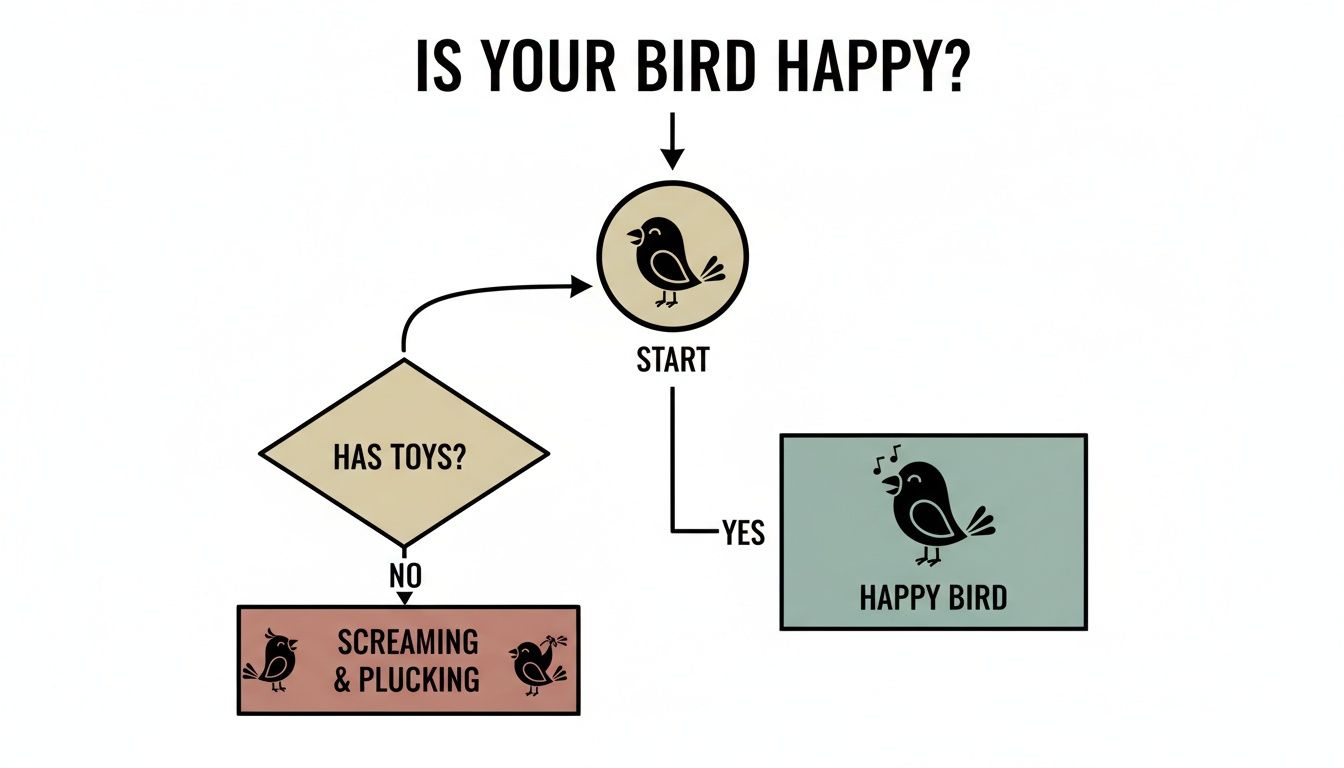
It’s clear that enrichment isn’t just an optional extra; it's the direct path to a well-adjusted, happy companion.
To make things even clearer, here’s a quick-reference table to help you spot safe materials at a glance.
Cockatoo Toy Material Safety Checklist
| Material Type | Safe Options (✅) | Unsafe Options to Avoid (❌) |
|---|---|---|
| Wood | Untreated native timbers (eucalyptus, banksia), balsa, pine. | Pressure-treated wood, painted/varnished wood, MDF, particleboard. |
| Metal | Stainless steel for all hardware (links, chains, bells). | Zinc, lead, brass, copper, twist ties, weak clips. |
| Fibres/Ropes | Sisal, hemp, jute, seagrass, vegetable-tanned leather. | Cotton rope, nylon rope, synthetic threads, yarns. |
| Plastics | Hard, durable acrylics or other bird-safe plastics. | Soft plastics, brittle plastics, small plastic beads. |
| Colours | Food-grade, non-toxic dyes. | Any dyes that run when wet, unknown paints or stains. |
Keep this checklist in mind when you're shopping, and you'll be well on your way to picking winners every time.
Your Toy Safety Checklist
Before you hand any toy over to your cockatoo—whether it’s brand new or just coming back into rotation—give it a quick safety inspection. It only takes a minute and could save you an emergency trip to the avian vet.
- Check for Small Parts: Can anything be easily chewed off and swallowed? Think weak clasps, small plastic bits, or bells where the little clapper can be pulled out.
- Inspect for Loose Threads: Have a good look for any frayed ropes or fabrics that could snag a toe or be ingested. Trim them off, or if the toy is too worn, it's time to chuck it.
- Test for Strength: Give the toy a good squeeze and a decent pull. Does it feel flimsy? If it feels like it could break apart easily under your hands, it stands no chance against a cockatoo’s beak.
- Sniff for Chemicals: A strong chemical or glue smell is a definite warning sign. Safe toys should just smell like what they're made of—wood, paper, and so on.
An Australian avian vet advises, "Perform weekly 'toy health checks' just as you would observe your bird. Look for sharp edges on chewed wood, cracked plastic, or rusted metal parts. A toy that was safe yesterday might be a hazard today after a vigorous play session."
Aussie bird owners are getting much savvier about safety. A 2023 survey by the Australian Veterinary Association found that 67% of cockatoo owners in New South Wales and Victoria now prioritise toys that are certified safe under Australian standards. This shift is showing up in what people are buying, too, with foraging toys seeing a 35% sales spike since 2022. It just goes to show that understanding what makes the best toys for parrots is key to making smart choices for your feathered mate.
The Essential Types of Cockatoo Toys Explained
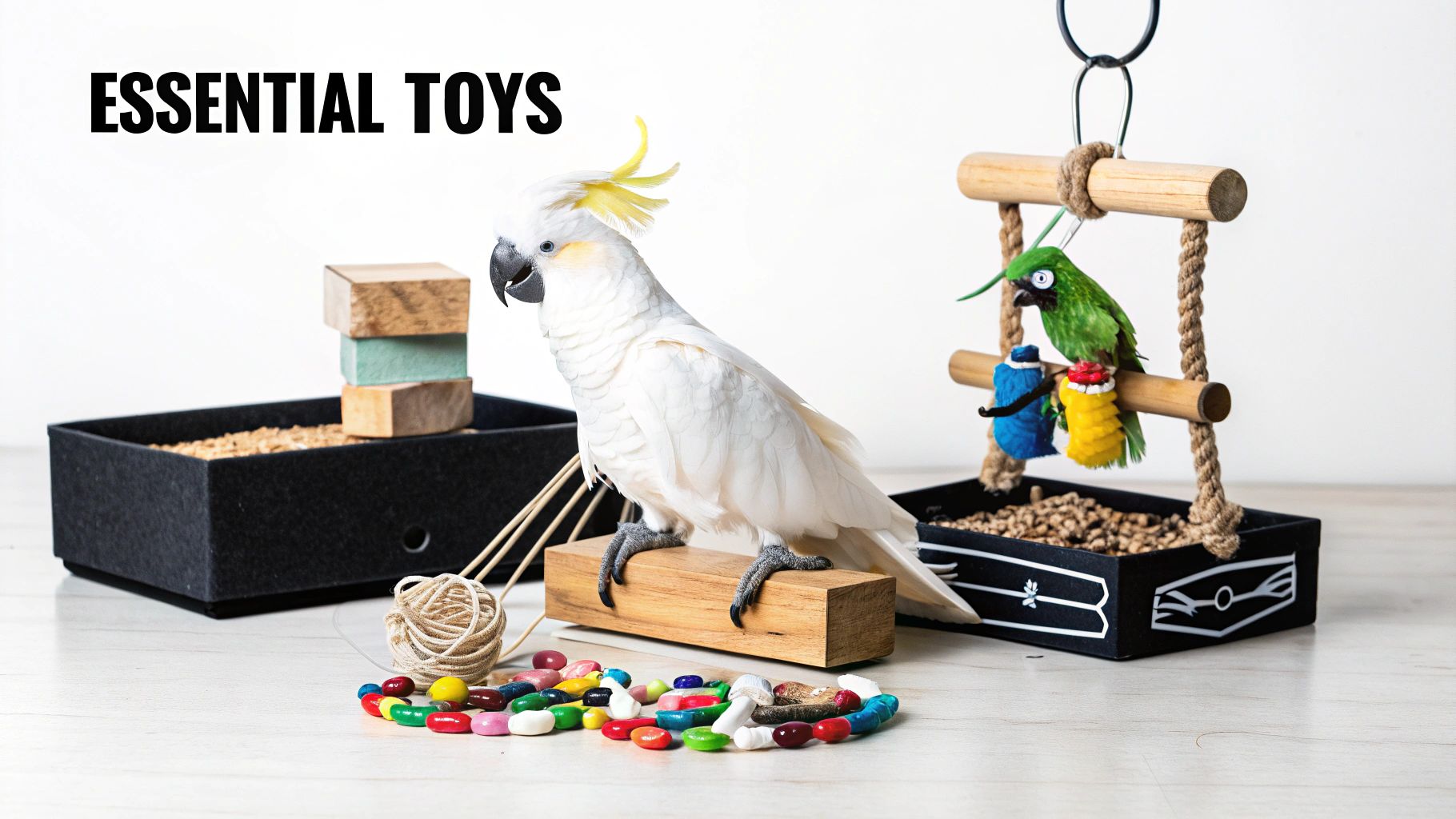
Building a well-rounded 'toy library' for your cockatoo is one of the most rewarding parts of being a bird owner. This isn't just about chucking a few things in the cage; it’s about understanding what makes your bird tick and catering to their natural instincts. A good collection should challenge their mind, satisfy those destructive urges, and keep them physically active.
Think of it this way: you wouldn't want to just do puzzles all day, every day. You need a mix of work, exercise, and hobbies to feel balanced. It's the exact same for a cockatoo. Only giving them chew blocks is like locking them in a room with a single Sudoku book. They need variety to cover all the bases of their complex, intelligent personalities.
Shredding Toys for Destructive Delight
In the wild, cockatoos spend hours stripping bark and tearing up foliage. This isn't just for a bit of fun—it's a core instinct wired deep into their brains. Shredding toys, made from things like cardboard, paper, palm leaves, and yucca, give them a safe and deeply satisfying way to let this urge out.
If you don't give them something appropriate to destroy, they'll happily turn that powerful beak onto your furniture, door frames, or anything else they can get a hold of. These toys are your first line of defence against household chaos and a fantastic boredom buster. A brilliant starting point is the Paper Party Piñata, which is practically begging to be ripped to shreds.
Across Australia, a huge 72% of cockatoo owners report using shredding toys, and it's easy to see why. Sales for these items shot up by 44% after a Bird Vet Australia study linked them to 30% less aggression in galahs and corellas. That really drives home how crucial they are for a happy, well-behaved bird.
Foraging Toys to Challenge Their Brains
For a cockatoo, foraging is their day job. It’s the constant hunt for food, a mental puzzle that keeps their mind sharp and engaged. Foraging toys bring this natural challenge into your home by hiding treats inside a device your bird has to figure out.
These toys can be as simple as a cardboard box filled with shredded paper and nuts, or as complex as an acrylic puzzle with multiple steps. They are arguably the most important type of toy you can provide because they directly fight boredom and help prevent serious behavioural problems like feather plucking.
Expert Tip: Always start with easy foraging toys to build your cockatoo's confidence. Once they get the hang of it, you can slowly introduce trickier puzzles to keep them challenged and stop them from getting bored.
Getting your bird into foraging is a genuine game-changer. If you want to dive deeper, we've put together a complete guide to foraging toys for birds that covers everything you need to know.
Chew Toys for Beak Maintenance
A cockatoo’s beak never, ever stops growing. Because of this, they have a deep biological need to chew. Durable chew toys made from bird-safe woods like pine, eucalyptus, or banksia are absolutely essential for keeping their beaks in great shape.
All that chewing helps prevent the beak from becoming overgrown and keeps it properly shaped. These toys need to be tough enough to handle a serious chewing session but soft enough that they won't cause any damage. The Balsa & Vine Ball Block is a perfect example, offering a satisfying texture that cockatoos just love to get their beaks into.
Foot Toys for Dexterity and Play
Not every toy needs to hang from the cage bars. Foot toys are small, lightweight items a cockatoo can hold in its foot to chew, manipulate, and toss around. They are brilliant for improving balance, coordination, and foot strength.
You can think of them as the bird equivalent of stress balls or fidget spinners. They can be simple vine balls, small wooden blocks, or tough plastic rings. Keeping a box of foot toys on hand is perfect for playtime outside the cage, encouraging them to play independently and interact with you.
Acrobatic Toys for Physical Fitness
Finally, let's get them moving! Acrobatic toys like swings, ladders, and boings are all about encouraging physical activity. All that climbing, swinging, and balancing is a fantastic workout that helps maintain muscle tone and overall fitness.
These toys turn the cage into a personal jungle gym, preventing a sedentary lifestyle and the health problems that can come with it. A sturdy, natural option like the Natural Rope Ladder gives your 'too a great way to navigate their world, promoting both a healthy body and a sharp mind.
By building a toy box that covers these five key areas, you’re creating a rich, engaging world that satisfies every part of your cockatoo's intelligent and active nature.
Creating a Toy Rotation and Enrichment Plan
Even the most incredible cockatoo bird toys will eventually lose their shine if they're left in the cage 24/7. Think about it: if someone gave you your favourite movie but you had to watch only that movie every single day for a month, you'd get bored pretty fast. It's exactly the same for your cockatoo. That’s where the simple but brilliant idea of a toy rotation comes into play.
A toy rotation is one of the most effective tricks up any bird owner's sleeve. It's a straightforward way to stop boredom in its tracks and keep your bird's mind buzzing. The whole idea is to have more toys on hand than are actually in the cage at one time. By regularly swapping them out, you make old toys feel brand new again, creating a constantly fresh and exciting environment without having to constantly buy new things.
Building Your Rotation Schedule
So, how do you put this into practice? First, you'll need to create a "toy library"—just a storage box or a dedicated shelf where you keep all the toys not currently on duty. As a general guide, try to keep just three to five toys in the cage at any given time, depending on how big the cage is. This gives them options without creating so much clutter that it gets in the way of moving around.
Once you’re set up, it's pretty simple:
- Schedule a Swap: Plan to rotate one or two toys out every week. This introduces just enough novelty to keep things interesting without being overwhelming.
- Clean and Inspect: Every time you take a toy out, give it a good clean with a bird-safe disinfectant. This is also the perfect moment to inspect it for any damage—look for sharp edges, fraying threads, or broken pieces.
- Repair or Retire: If a toy has minor damage that can be fixed (like a rope that just needs a trim), sort it out. If it’s broken beyond safe repair, it’s time to say goodbye and toss it.
- Bring in a "New" Toy: Grab a different toy from your library and put it in the cage. Chances are, your cockatoo will greet it like an old friend they haven't seen in ages.
More Than Just Toys: An Enrichment Plan
A truly happy and fulfilled cockatoo needs more than just a cage full of great toys. A complete enrichment plan pulls together lots of different activities that stimulate their brain, body, and social instincts. Toys are a huge piece of the puzzle, but they work best when they're part of a bigger picture.
An Australian avian behaviourist explains, "Enrichment is a holistic approach. It’s the combination of foraging challenges, physical exercise, training sessions, and social interaction that prevents the onset of boredom-related behaviours. Toy rotation is a cornerstone of this, ensuring the environment remains dynamic and interesting."
The goal is to map out a weekly schedule with a healthy mix of activities. It doesn’t have to be super rigid, but having a general plan makes sure all your bird's needs are consistently being met. For a deeper dive into creating the perfect setup, check out our guide on essential parrot cage accessories to round out your strategy.
Example Weekly Enrichment Schedule
Here’s a glimpse of what a balanced week could look like for your feathered friend:
- Monday: Foraging Fun. Pop some healthy treats into a new foraging toy.
- Tuesday: Training Time. A quick 10-minute session to work on a fun trick like "step up" or "wave."
- Wednesday: Toy Swap Day. Introduce a "new" shreddable or chew toy from the library.
- Thursday: Outdoor Time. Supervised time outside in a safe aviary or on a harness for some fresh air and natural sunlight.
- Friday: Play Gym Session. An hour of freedom on a play gym outside the cage.
- Saturday: Social Hour. Spend some quality time just talking, singing, or preening with your bird.
- Sunday: DIY Day. Introduce a simple homemade toy made from bird-safe cardboard or paper.
By creating a structured yet flexible plan, you're giving your cockatoo the consistent mental and physical stimulation they need. And that’s really the secret to preventing boredom and building a happy, strong bond.
Safe and Creative DIY Cockatoo Toy Ideas
Keeping your cockatoo entertained doesn't have to cost a fortune. With a bit of imagination and a sharp eye for safety, you can transform everyday household items into fantastic cockatoo bird toys. This is a great way to save money, but more importantly, it lets you create a never-ending stream of new challenges and shreddable goodies for your clever bird.
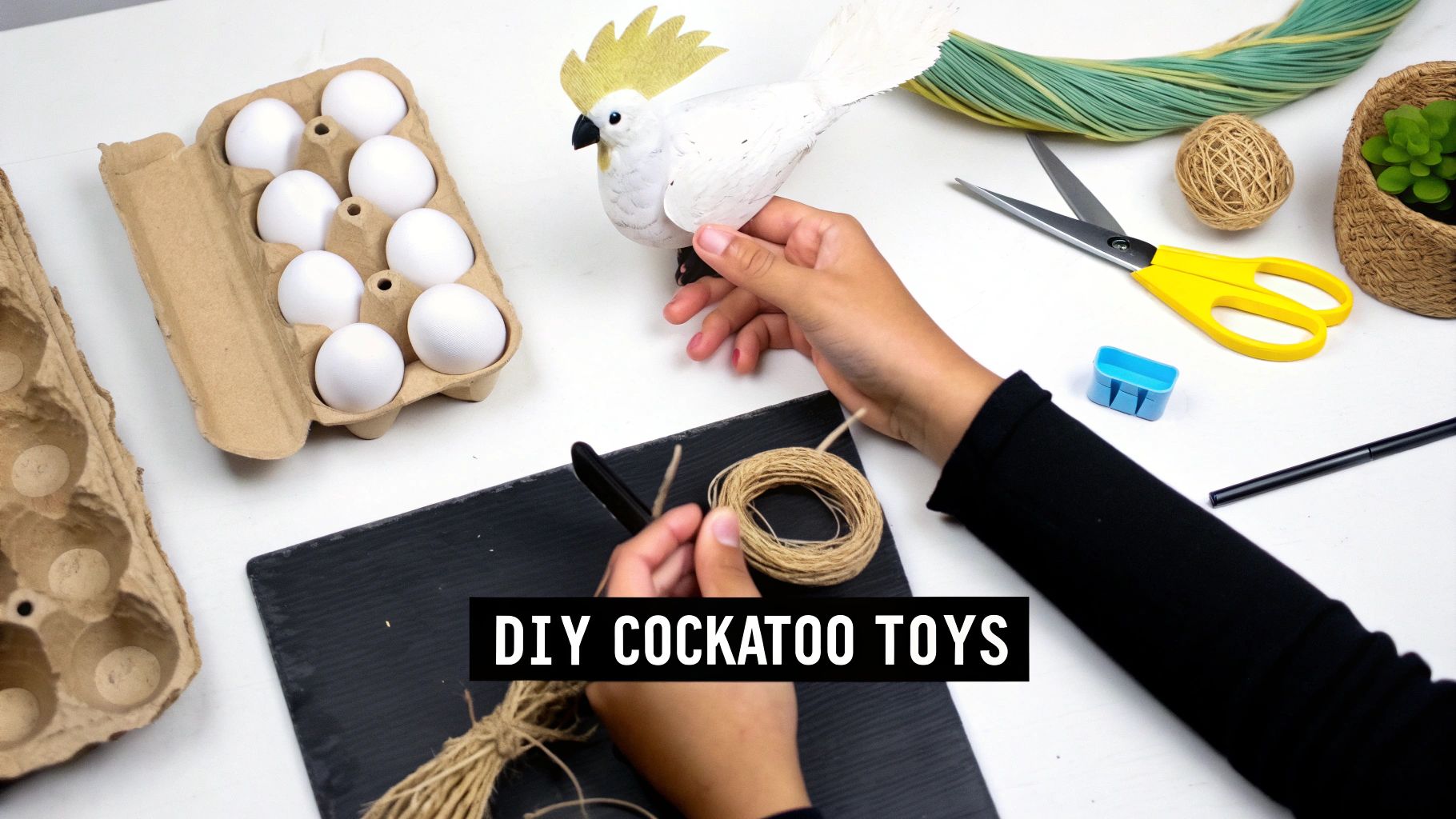
The real trick to great DIY toy-making is to start seeing your home through your cockatoo's eyes. Things you'd normally throw out—like cardboard egg cartons, toilet paper rolls, and plain paper—are the perfect building blocks for amazing fun. The idea is to give them a safe outlet for those powerful natural instincts to chew, shred, and forage.
Getting Started with Simple Shredders
One of the easiest—and most loved—DIY toys is a simple shreddable one. Cockatoos absolutely live for tearing things to bits, and giving them a safe way to do it is a must.
Grab a plain, unused cardboard egg carton to start. You can stuff each little cup with shredded paper, a small piece of balsa wood, or a bird-safe nut. Feel free to bring in some treasures from the garden, like clean, dry eucalyptus leaves or gumnuts, to add different textures and smells.
Expert Tip: Always make sure any natural items you forage, like branches or nuts, come from a source free of pesticides. They need to be thoroughly cleaned and dried before you hand them over. Never use anything that looks mouldy or is starting to rot.
For another lightning-fast option, take a few cardboard toilet paper rolls (make sure any glue residue is gone). Flatten them out and snip slits along the sides with scissors. You can then fan them out to make a cool "firework" shape or even weave a few together for a more complex shredding ball.
Crafting Basic Foraging Puzzles
It’s just as easy to create simple foraging toys that get your cockatoo’s brain working. These puzzles tap into their problem-solving skills and make getting a treat far more satisfying.
A super simple idea is the "paper parcel." Just take a sheet of plain, untreated paper (butcher's paper is perfect) and pop a favourite treat, like a piece of almond, in the middle. Scrunch the paper up into a tight ball and give the ends a good twist. Your cockatoo will have a brilliant time ripping through the layers to find their prize. By the way, if you're curious about different nuts, you can learn more about things like whether your bird can have almond nut shells in our other guides.
To step up the challenge slightly, try making a "foraging box." Find a small, plain cardboard box with no tape, staples, or plastic bits. Fill it with a mix of safe materials like shredded paper, cardboard chunks, and vine balls. Hide a few high-value treats inside and let your bird dig, toss, and shred their way to their reward.
Safety First: A DIY Non-Negotiable
When you're making your own toys, safety is everything. That cockatoo beak is incredibly powerful, so every single part of your creation has to be non-toxic and free from any potential dangers.
Here’s a quick checklist for your materials before you get started:
- Cardboard: Stick to plain, unprinted cardboard. Steer clear of anything with glossy coatings, heavy dyes, glue, or tape.
- Paper: Only use plain, untreated paper like butcher's or packing paper. Never use receipts, magazines, or newspapers—the inks can be toxic.
- Rope: If you need to string things together, use natural fibres only. Sisal, hemp, or jute are great choices. Absolutely no cotton or nylon ropes, as they can cause crop impaction or get tangled around toes.
- Wood: Go for untreated, bird-safe wood offcuts. Native Australian woods like eucalyptus and bottlebrush are fantastic options.
Here's a quick reference table for common household items you can safely repurpose.
Safe DIY Toy Material Guide
| Household Item | Safe Usage for Toys | Important Safety Note |
|---|---|---|
| Cardboard Tubes | Stuff with shredded paper or treats for foraging. | Ensure no glue residue remains. Avoid plastic-lined or heavily printed tubes. |
| Paper Egg Cartons | Use as a base for hiding treats or shreddable materials. | Must be clean, unused, and made from plain paper pulp. No foam cartons. |
| Plain Paper | Scrunch into balls or shred for filler. | Use unprinted, untreated paper like butcher's paper. Avoid receipts or glossy paper. |
| Natural Twine | Use to string together other toy parts. | Stick to sisal, jute, or hemp. Never use cotton as the fibres can cause impaction. |
| Clean Gumnuts | Add for texture and chewing interest. | Forage from pesticide-free areas and wash/dry thoroughly before use. |
| Ice Cube Trays | Fill with water and bird-safe fruit for a frozen treat. | Use hard plastic trays that can't be easily chewed into small pieces. |
| Untreated Wood Offcuts | Provide as simple chew blocks. | Only use bird-safe woods like pine, balsa, or native eucalyptus. Never treated wood. |
Keeping these simple safety rules in mind means you can get creative and confidently give your cockatoo an endless supply of enriching, homemade fun.
How to Introduce New Toys to a Cautious Cockatoo
Cockatoos are incredibly smart, but they’re also creatures of habit with a healthy suspicion of anything new. This wariness has a name — neophobia — and it’s a perfectly normal survival instinct. So when you bring home an exciting new toy, don’t be surprised if your cockatoo sees a terrifying predator instead of a fun new plaything.
Trying to force a new toy on a nervous bird is a recipe for stress. It can create a negative association that’s incredibly hard to undo. The real secret to a successful introduction is patience, observation, and building trust. It’s all about showing them, on their own terms, that this new object is a friend, not a foe.
Taking It Slow and Steady
The golden rule is simple: never put a brand-new toy directly into the cage. Your cockatoo’s cage is their safe space, their sanctuary, and dropping a strange object in there can feel like an invasion. A much better approach is to start by placing the toy on the floor, a good distance away from the cage where your bird can see it without feeling cornered.
Just leave it there for a few days. This gives your bird time to get used to its presence from a safe distance, letting them observe it and realise it poses no danger. You’re simply making the new object a normal part of the scenery.
After a few days have passed, you can start interacting with the toy yourself.
- Play with it: Pick the toy up, tap it, and act like it’s the most fascinating thing in the world. Your cockatoo is always watching you for social cues, and if you show them it's safe and fun, their natural curiosity will often take over.
- Move it closer: Bit by bit, move the toy a little closer to the cage each day. Pay close attention to your bird's body language. If you spot signs of stress—like pinning eyes, a fully raised crest, or leaning away—you’ve moved too fast. Just back it up a bit and give them more time.
Expert Advice: Use positive reinforcement to build a bridge between your bird and the new toy. Place a high-value treat, like a sliver of almond or a sunflower seed, on or near the toy. This helps your cockatoo associate the once-scary object with something they absolutely love.
Overcoming Toy Rejection
Sometimes, even with the most patient introduction, a cockatoo will just flat-out reject a toy. Don’t take it personally! It might not be the toy itself, but something as simple as its size, colour, or where you’ve placed it.
If a toy is being ignored, try moving it. A toy that seemed intimidating hanging at the top of the cage might be far more approachable as a foot toy on the floor. You could also try modifying it slightly by adding familiar things, like a piece of their favourite wood or a strip of vegetable-tanned leather they already enjoy chewing.
Ultimately, providing a variety of safe, engaging cockatoo bird toys is one of the most important things you can do for their long-term health. Veterinary data from the Australian College of Veterinary Scientists shows that toy-enriched environments can extend a cockatoo's lifespan by 12-15 years on average. This vital link between enrichment and longevity is why a majority of Aussie bird owners choose safe, non-toxic materials. This patient, trust-building approach ensures your investment in their happiness truly pays off.
Got Questions About Cockatoo Toys? We've Got Answers
Even with the best intentions, looking after a bird as clever as a cockatoo brings up plenty of questions. Here are a few common ones we hear from Aussie bird owners, with some straightforward answers to help you out.
How Do I Clean My Cockatoo's Toys Safely?
Keeping your cockatoo bird toys clean is non-negotiable for a healthy bird. For a quick, everyday clean, a good scrub with hot water and a little bit of mild, unscented dish soap does the trick. Just make sure you rinse every last bubble off.
For a more serious disinfection, a bird-safe cleaner like F10SC Veterinary Disinfectant is the go-to for many Aussie bird owners. If you prefer a natural route, a 50/50 mix of white vinegar and water works well too. Whatever you use, rinse it thoroughly and let the toys dry completely before they go back in the cage.
How Many Toys Should Be In The Cage At Once?
It’s all about finding that sweet spot. A cage jammed with toys can feel more like an obstacle course, but an empty one is a recipe for boredom. A good rule of thumb is to have three to five different types of toys in the cage at any given time.
You could try a mix like this:
- One or two shreddable or chew toys they can really get stuck into, like the Paper Party Piñata.
- One foraging toy to keep their brain ticking over.
- One toy for acrobatics, like a swing or a sturdy Natural Rope Ladder.
This gives them plenty of options without creating clutter, leaving enough space to flap, stretch, and just be a bird.
What Toys Are Best For a Feather-Plucking Cockatoo?
Feather plucking is a tough one, often stemming from boredom or stress. The best toys are those that demand your cockatoo's full attention and satisfy that powerful urge to destroy something. Intricate foraging puzzles are brilliant because they make your bird work for its food, shifting its focus away from its feathers.
Shreddable toys are just as important. Giving them something incredibly satisfying to rip apart, like a Balsa & Vine Ball Block, provides a healthy outlet for all that preening and beak energy. The aim is to keep their mind and beak so busy that plucking isn't even on their radar.
An avian specialist might put it this way: "For a plucking bird, enrichment isn't just a toy; it's a treatment. The more time they spend manipulating, shredding, and solving puzzles, the less time they have to engage in destructive self-soothing behaviours."
Are Mirrors and Bells Safe for Cockatoos?
This is a hot topic, but the consensus among most modern avian experts is to steer clear of both mirrors and jingle-style bells. Mirrors can cause serious behavioural problems. A cockatoo might see its reflection as a mate, which can lead to hormonal frustration, aggression, and obsessive behaviour.
Those small, cheap bells are a physical hazard. A cockatoo's beak is powerful enough to crack one open, and the little metal clapper inside can be swallowed, leading to heavy metal poisoning or an internal injury. If you really want a bell, make sure it’s a heavy-duty, stainless steel one with a clapper that’s impossible to get out.
Keep Reading
- The Best Toys For Parrots
- A Guide To Foraging Toys For Birds
- Parrot Cage Accessories A Guide For Bird Owners
Disclaimer Summary:
The information in this article is general in nature and may include external links or resources not created by Lou Lou Bells Bird Toys. Every bird is unique, so we encourage you to seek personalised advice from your own veterinarian or avian specialist. For full details, please read our complete disclaimer here.