
Think of bird cage toys not as optional extras, but as essential tools for your feathered friend's health. For a bird, their cage can either be a safe home or a boring prison—and the difference, more often than not, comes down to enrichment. The right toys are what make a happy, healthy companion.
Why Your Bird Needs More Than Just a Cage
Imagine living your entire life in one room with nothing to do. It’s a bleak thought, but it's the reality for many companion birds in Australia who don't have proper stimulation.
Out in the wild, birds spend their days flying, searching for food, socialising, and building nests. These aren't just hobbies; they're core behaviours that keep their minds sharp and their bodies strong. Bird cage toys are the tools that let them act on these natural instincts inside our homes.
A good variety of engaging activities taps directly into a bird's intelligence, turning a static box into a stimulating playground. Without this crucial enrichment, birds can quickly develop serious behavioural and physical problems.
The Dangers of an Empty Cage
An under-stimulated bird is a stressed bird. That stress often shows up in ways that are heartbreaking for owners and genuinely bad for the bird's well-being. Common issues include:
- Feather Plucking: This is a self-destructive behaviour often linked directly to boredom, anxiety, or stress.
- Destructive Chewing: When a bird doesn’t have the right things to chew, they’ll turn to their perches, food bowls, or even the cage bars. This can cause damage and potential injury.
- Screaming and Aggression: A bored bird might become excessively vocal or aggressive as a way to demand attention or just let out pent-up frustration.
- Lethargy and Depression: Just like people, birds can suffer from depression. They might become inactive, lose their appetite, and show little interest in their surroundings.
Sadly, this isn't a rare problem. In Australia, where birds are cherished pets in many households, a significant welfare gap can exist. Some research has shown that a percentage of owners don't provide any toys or manipulable objects at all. This lack of stimulation is a likely contributor to destructive behaviours seen in some pet birds.
As a South Australian-based creator of bird toys, we see the transformative power of enrichment firsthand. Engaging toys aren't just about preventing bad habits; they're about promoting good health. Chewing and shredding help keep beaks in top condition, foraging puzzles challenge their problem-solving skills, and swings encourage physical exercise.
By offering a range of bird cage accessories, you give them an outlet for all that natural energy, helping them lead a fulfilled and joyful life.
Matching the Right Toy to Your Bird
Picking out a new bird toy isn't like grabbing a colourful trinket off a shelf. It’s about understanding who your bird is—their species, their size, and even their quirky little personality. A toy a tiny Finch would spend hours exploring could be ignored by a clever Conure, and that delicate shreddable toy your Budgie adores? A big Macaw could have it in pieces in minutes, creating a real safety hazard.
Think of it like choosing a hobby for a person. You wouldn’t give a set of golf clubs to someone who loves painting. You need to consider your bird's natural instincts, their energy levels, and what truly sparks their interest. A bird with a powerful urge to chew needs something tough and satisfying to get their beak into, while a curious, brainy bird will get a real kick out of a foraging puzzle that makes them think.
Understanding Beak Strength and Size
The number one rule of toy shopping is this: respect the beak. A bird’s beak is an incredibly powerful tool, built for cracking open tough nuts and tearing apart wood. Giving a big parrot a toy made for a small bird is asking for trouble.
For example, a Cockatoo can snap the plastic parts of a Budgie toy without a second thought, leaving sharp edges or creating small pieces they could swallow. On the flip side, a tiny Finch can’t even get started on a big, chunky wooden block designed for an Amazon. Safety has to come first, and that means matching the toy to the bird’s size is non-negotiable.
This flowchart shows how getting enrichment right leads to a happy, well-adjusted bird, while a lack of it can spiral into destructive or anxious behaviours.
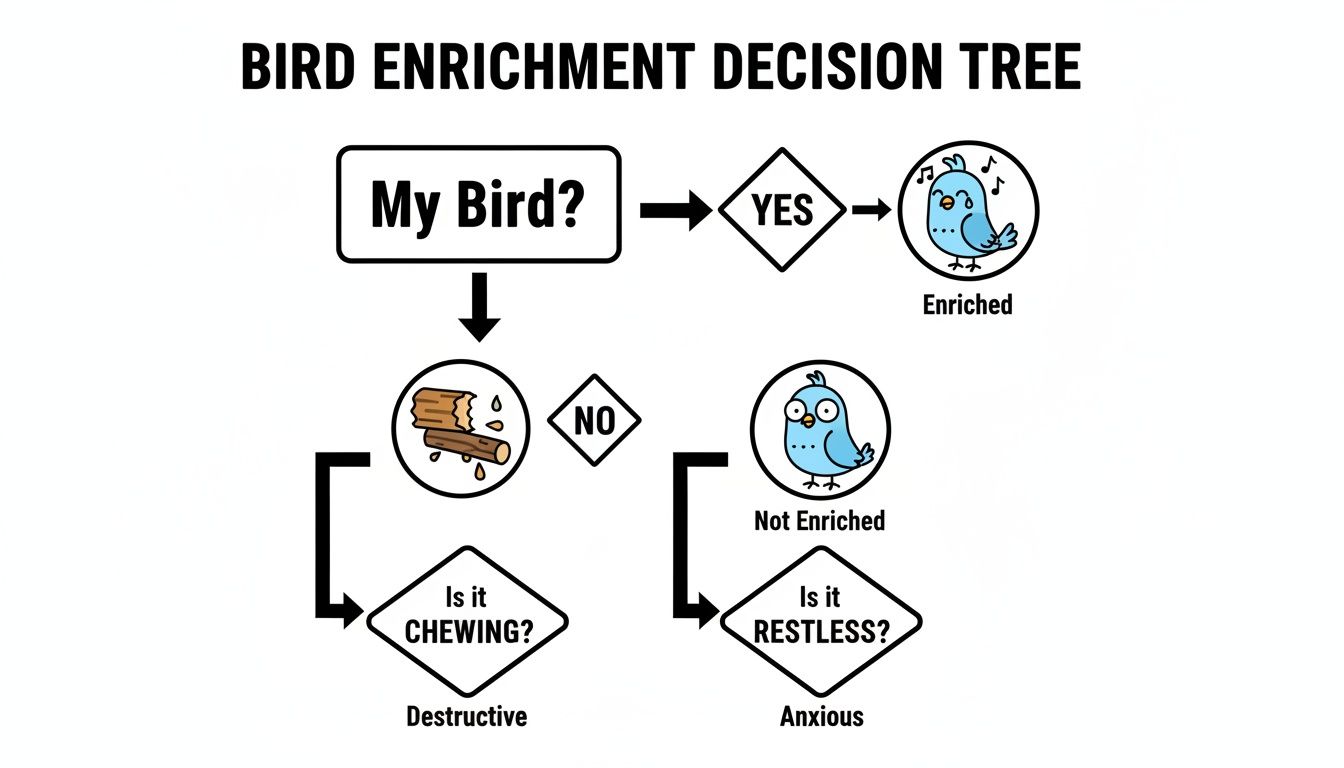
The key takeaway here is that enrichment isn't just a "nice-to-have." It's a direct line to your bird's mental and physical health, helping to head off common problems before they even start.
Matching Toys to Instinctive Behaviours
Beyond just size, think about what your bird loves to do. Different species are hardwired with different urges, and play is how they satisfy them. Getting this right will help you build a toy collection that’s both fun and fulfilling.
- Chewers: Birds like Macaws, Galahs, and Amazons have a deep, instinctual need to chew. It's how they keep their beaks in good shape. They need tough, durable toys made from safe, untreated hardwoods and thick ropes that can stand up to some serious work.
- Shredders: Many smaller birds, including Cockatiels, Budgies, and Lovebirds, are shredding fanatics. They get immense satisfaction from tearing apart softer things like yucca, mahogany pods, paper, and vine balls. This mimics natural behaviours like preening and nest-building.
- Foragers: In the wild, almost all birds spend a huge chunk of their day looking for food. Foraging toys tap right into this powerful instinct, making your bird solve a puzzle to get their reward. It’s fantastic mental exercise for clever species like African Greys, Conures, and Caiques.
- Climbers and Acrobats: Some birds, like Lorikeets and Caiques, are natural-born gymnasts. Swings, ladders, and boings give them the perfect outlet for all that physical energy, helping them stay fit and active inside their cage.
A quick tip from experience: watch your bird. If they’re constantly trying to shred the newspaper lining their cage, it’s a massive hint they need more shreddable toys. If they’re trying to dismantle the bars, they’re probably telling you they need something much tougher to chew on.
Here’s a quick guide to get you started on matching toys to some common feathered friends.
Toy Selector Guide by Bird Species
Picking the right toy can feel overwhelming, but breaking it down by species makes it much simpler. This table gives you a starting point for matching popular companion birds with toys that are safe, engaging, and perfectly suited to their beak strength and natural instincts.
| Bird Species (Examples) | Beak Strength | Recommended Toy Types | Safe Materials |
|---|---|---|---|
| Budgies, Finches, Canaries | Low | Shred, Foot Toys, Swings, Foraging (easy) | Balsa wood, paper, vine balls, acrylic, thin leather |
| Cockatiels, Lovebirds, Conures | Low to Medium | Shred, Chew (softwood), Foraging, Foot Toys | Yucca, mahogany pods, soft pine, seagrass, palm leaf |
| Galahs, Corellas, Caiques | Medium to High | Chew, Foraging (intermediate), Shred, Swings | Hardwoods (e.g., gum), thick leather, acrylic puzzles |
| African Greys, Amazons | High | Foraging (complex), Chew, Shred, Foot Toys | Untreated hardwoods, thick ropes, sturdy acrylic |
| Macaws, Cockatoos | Very High | Chew (durable), Foraging (tough), Heavy-duty Swings | Dense hardwoods, stainless steel, heavy-duty acrylic |
Remember, this is just a guide. Your bird is an individual and might surprise you with their preferences, so don’t be afraid to experiment with different safe options.
By making confident, informed choices, you turn every new toy into an opportunity for joy, not a potential risk. This thoughtful approach transforms their cage from just a box with bars into a safe, stimulating home where they can truly thrive. If you're looking for more guidance, our article on selecting the best toys for parrots dives even deeper into their specific needs.
Understanding the Different Types of Bird Toys
Stepping into the world of bird toys can feel a bit like walking into a hardware store for the first time—so many options, each with a very specific job. You wouldn't use a hammer to turn a screw, and the same logic applies here. A shreddable toy fulfils a completely different need than a foraging puzzle.
Building a well-rounded toy box for your bird means giving them healthy outlets for all their natural instincts. It’s about creating a little world for them that provides the physical exercise, mental challenges, and deep satisfaction they need to truly thrive. Getting a handle on these different toy types is the first step to a happier, healthier bird.
Foraging Toys: The Brain Trainers
Out in the wild, birds spend a massive chunk of their day just looking for food. It’s not just about survival; this constant search keeps their minds sharp and their bodies moving. Foraging toys bring that natural challenge into their cage, turning a simple meal into an engaging puzzle.
Instead of just scooping food from a bowl, your bird has to work for it—pulling levers, sliding open drawers, or chewing through layers to get to the good stuff. This taps directly into their instincts and is one of the best ways to beat boredom, especially for clever parrots.
Foraging is about so much more than just a fun meal:
- Keeps Their Mind Ticking: It fires up their problem-solving skills and keeps them occupied.
- Stops Boredom in its Tracks: A busy forager is far less likely to start screaming or plucking feathers.
- Gets Them Moving: It encourages them to move all around their cage, which is great for their physical health.
- Puts the Brakes on Fast Eaters: It stops them from gobbling their food down, which can be better for digestion.
Expert Tip: Start with easy foraging toys to build up your bird’s confidence. Once they’ve mastered one, you can introduce trickier puzzles to keep them on their toes. The goal is to stimulate, not frustrate.
Shredding and Chewing Toys: The Instinct Satisfiers
For most parrots, the drive to chew and shred is wired deep into their DNA. In their natural habitat, they use their beaks for everything from carving out nests to ripping into bark to find insects. Giving them safe things to destroy isn't a luxury—it's an absolute must for their wellbeing.
Shreddable toys, made from things like palm leaf, paper, and yucca, are perfect for birds who love to meticulously pull things apart. It’s an incredibly satisfying activity that mimics preening and nesting behaviours, keeping birds like Cockatiels and Budgies happily occupied.
Chew toys, on the other hand, are built tougher, often from untreated native Australian woods. These are essential for birds with serious beak power, like Macaws and Galahs. Chewing is a fantastic jaw workout and helps keep their beaks in great shape by preventing overgrowth. A solid option like our Wattle Wonder Hanging Toy is built to withstand a serious chewing session.
Preening and Comfort Toys: The Soothers
Preening toys are the softies of the toy world. They’re designed to feel a bit like other feathers and tap into a bird's natural instinct to groom. You’ll often find them made with soft materials like shredded paper, sisal rope, or gentle leather strips that a bird can nibble and preen.
These toys also serve a crucial emotional purpose, especially for single birds. They can become a source of real comfort, helping to soothe stress and anxiety. For birds that are prone to feather-plucking, a good preening toy can redirect that behaviour onto something safe and appropriate.
Foot Toys: The Dexterity Builders
Just as the name suggests, foot toys are small, lightweight items a bird can grab, throw, and fiddle with using their feet and beak. It’s not uncommon to see a parrot lying on its back, happily juggling a foot toy like a toddler with a rattle. Our Gumnut Cluster Foot Toy is a brilliant example of a natural, easy-to-grasp option.
These little toys are fantastic for building coordination and dexterity. They get your bird using their feet in ways they otherwise might not inside a cage, strengthening their grip and keeping them nimble. They're also perfect for keeping your bird busy when they're out of the cage and spending time with you.
Swings and Acrobatic Toys: The Playground Equipment
What’s a home without a playground? Swings, boings, ladders, and climbing nets are the gym equipment of the avian world. They are all about encouraging movement, helping to build muscle, improve balance, and keep your bird at a healthy weight.
Even something as simple as balancing on a swing gives their legs and core a gentle, constant workout. Acrobatic toys like our colourful Rainbow Twist Rope Perch give them fun ways to climb and explore their space. These active toys are absolutely vital for burning off that classic parrot energy and keeping them physically fit. By mixing and matching all these different toy types, you create a dynamic and enriching home that caters to every part of your bird's personality.
How to Spot Safe Toys and Avoid Hidden Dangers
When it comes to your bird, the wrong toy isn't just a bit of a let-down—it can be downright deadly. One of the most important hats you'll wear as a bird owner is that of a safety inspector. Your bird uses its beak to explore everything, so you have to be absolutely sure that anything within reach is safe for them to chew, shred, and play with.
Imagine the peace of mind you get from knowing every single item in your bird's cage is there for enrichment, not as a potential hazard. To get there, you need to learn how to spot the good materials from the bad and understand where the hidden dangers often lurk. By choosing toys from reputable, safety-conscious Australian makers, you're making a direct investment in your bird's long-term health and happiness.
The Anatomy of a Safe Bird Toy
A genuinely safe bird toy is designed from the ground up with your bird's wellbeing as the top priority. It all starts with non-toxic, natural materials that let them satisfy their instincts without being exposed to harmful stuff. When you're sizing up a new toy, these are the green flags you want to look for.
Safe Toy Checklist:
- Untreated Natural Woods: Keep an eye out for native Australian hardwoods like gum, bottlebrush, or banksia. Softwoods like untreated pine are also fantastic. These are perfect for chewing and keeping that beak in top condition.
- Stainless Steel Hardware: This one is a non-negotiable. All metal parts—links, clips, bells, you name it—must be stainless steel. It's the only metal you can trust to be free from toxic heavy metals like zinc and lead.
- Natural Fibres: Ropes made from sisal, jute, or cotton (always in short, non-looping strands to prevent entanglement) are great for preening and climbing.
- Vegetable-Tanned Leather: If a toy has leather components, make sure they're vegetable-tanned. The chrome tanning process leaves behind nasty chemicals that are incredibly dangerous if your bird ingests them.
Knowing what's safe is so important. Unfortunately, some Australian bird owners may unknowingly create unsafe setups for their pets. According to Agriculture Victoria, a concerning number of owners may use harmful items like sandpaper perch covers, highlighting why education on safe materials is so critical.
Red Flags Every Bird Owner Must Recognise
Just as important as knowing what’s safe is knowing what to steer clear of. A lot of commercially available bird cage toys, especially the cheap imports, are packed with hidden dangers that can lead to serious injury or illness. Training your eye to spot these red flags is a skill every bird owner needs.
The most dangerous toys are often the ones that look harmless. A simple jingle bell with the wrong clapper, a frayed rope, or a shiny, cheap metal clip can all pose a significant threat to your bird's life.
Common Toy Hazards to Avoid:
- Zinc and Lead Toxicity: That cheap, shiny metal hardware you see everywhere is often zinc-plated. When a bird chews on it, this can lead to heavy metal poisoning, which is a serious and often fatal condition. Always, always insist on stainless steel.
- Crop Impaction: Synthetic fibres from nylon ropes, the fluffy fabric from those "happy huts," or even long cotton threads can be ingested. This can cause a deadly blockage in your bird's crop, which is their food storage pouch.
- Dangerous Bells: The classic jingle-style bells with the slit openings are a major hazard. A bird can easily get its beak or a toe caught in the opening. Worse, the small clapper inside can often be pulled out and swallowed. Only use "cowbell" or "liberty bell" style bells that have a safe, securely attached clapper.
- Small, Loose Parts: Any toy that can be easily broken down into small, swallowable pieces is a choking hazard. This is exactly why matching the size of the toy to your bird's beak strength is so critical. Even a seemingly safe item like an almond shell can pose a risk if not prepared correctly—something you can learn more about in our guide to using almond shells in bird toys.
Creating a Stimulating Habitat with Toy Rotation
Just filling your bird’s cage with toys is a great first step, but it’s not the whole story when it comes to keeping them happy long-term. Parrots are wickedly smart. A toy that was the most exciting thing in the world last week can quickly become just another boring bit of furniture.
This is where toy rotation becomes your best friend. It’s the secret to turning a static cage into a dynamic, interesting world that keeps your bird guessing. The logic behind it is simple: a toy that’s been hidden away for a while feels brand new and exciting when it makes a comeback.
This strategy is especially important when you look at the life of a typical Aussie companion bird. Many pet birds are left on their own for several hours a day, and a large number are kept without another bird for company. For these birds, a fresh and interesting set of toys isn't a luxury—it's absolutely essential for their mental health.
Becoming an Avian Interior Designer
Where you put the toys is just as important as what toys you choose. Think of yourself as an "avian interior designer"—your job is to encourage movement, spark curiosity, and make your bird's home as fun as possible. A well-placed toy doesn't just sit there; it encourages your bird to be active.
Try setting up the cage with different 'zones' for different activities.
- Foraging Zone: Place complex puzzle toys like our Foraging Flower Pot away from the main food dish. This simple trick encourages your bird to move across the cage, getting a bit of exercise while their brain gets a workout.
- Playground Zone: Position swings and climbing toys like the Wiggle Jiggle Ladder towards the middle of the cage. This gives them plenty of space to swing, hang upside down, and do their acrobatics without crashing into everything else.
- Destruction Zone: Put shreddable and chewable toys near a comfy, sturdy perch where your bird feels safe and secure. This gives them a designated spot to get their natural chewing instincts out of their system.
By arranging toys like this, you create pathways and encourage your bird to use the entire cage, not just their one favourite corner.
Your Simple Toy Rotation Schedule
Keeping a toy rotation going doesn’t have to be complicated. Consistency is the goal, not a complex spreadsheet. Having two or three "sets" of toys on hand makes it incredibly easy and ensures there's always something new to look forward to.
The key is to keep the "off-duty" toys completely out of sight. When you take a toy out, store it somewhere your bird can't see it. This makes sure that when it reappears, it genuinely feels like a new and exciting discovery.
Here's a straightforward weekly plan to get you started:
- Select 3-5 Toys: For the week ahead, pick a good mix of toys—something for foraging, something to shred, something to chew, and maybe a swing.
- Strategic Placement: Arrange this set in the cage using the "interior designer" ideas we just talked about.
- End of Week Swap: At the end of the week, take all the toys out. Give them a good clean and store them away.
- Introduce the Next Set: Bring out your next clean set of 3-5 toys and place them in different spots inside the cage.
This simple cycle stops toys from getting stale and guarantees your bird has an interesting, stimulating environment that keeps them happy, healthy, and engaged.
Keeping Toys Clean and Knowing When to Say Goodbye
A clean cage is a healthy cage, and that rule extends to every single toy inside it. Let's be honest, bird toys get a tough life—they're chewed, climbed on, and often covered in yesterday's lunch, making them a potential hotspot for nasty bacteria.
Keeping their toys clean isn't just about appearances; it's a vital part of protecting your bird's health. For daily tidying, a quick wipe-down with a damp cloth to get rid of food bits will do the trick. But at least once a week, or whenever they get really grubby, a deeper clean is in order.
Safe Cleaning Protocols for Every Toy
Different materials need different approaches, but one rule is non-negotiable: never use common household cleaners like bleach or all-purpose sprays. Their fumes and leftover residues are highly toxic to birds.
- Wood and Natural Toys: These materials are porous, so they love to soak up moisture. To clean them, give them a gentle scrub with a 50/50 mix of white vinegar and water, then rinse thoroughly. The best part? Let them dry completely in the sun—it’s a fantastic natural disinfectant.
- Acrylic and Metal Toys: These non-porous toys are much easier. You can wash them in hot, soapy water with a bird-safe dish soap. For a really deep sanitisation, a vet-grade disinfectant like an F10 solution (widely available in Australia) is an excellent choice. Just be sure to follow the dilution instructions and rinse well.
Expert Advice: Whatever you do, don't soak wooden toys for ages. It can make the wood swell, crack, or even grow mould, turning a fun toy into a serious health hazard.
When to Retire a Toy
Even the toughest bird cage toys don't last forever. A huge part of keeping your bird safe is knowing when a beloved toy has become a potential danger. The best time to check is during your weekly cage clean—just give every toy a quick once-over.
Look for these clear signs that it’s time to say goodbye:
- Splintered or Cracked Wood: Sharp splinters can badly injure your bird’s mouth, feet, or crop.
- Frayed Ropes or Fabrics: Long, frayed strands are a serious risk. They can get tangled around a leg or, if swallowed, cause a crop impaction. Trim them short, but if the fraying is getting out of hand, it's time to bin the toy.
- Broken or Sharp Plastic: Any cracks in acrylic toys can create razor-sharp edges that you don't want anywhere near your bird.
- Rusted Metal: While stainless steel is fine, other metals can rust. Rust is dangerous if your bird ingests it.
By staying on top of this, you make sure your bird's playground stays a source of joy and enrichment, not risk.
Your Top Bird Toy Questions Answered
Even the most experienced bird owners have questions pop up from time to time. It’s all part of giving our feathered mates the best care possible. To help you feel confident, I've put together answers to some of the most common questions we hear from fellow Aussie bird lovers.
How Many Toys Should Be in My Bird's Cage?
There's no magic number, but a good rule of thumb for a standard cage (think Cockatiel or Conure size) is three to five toys at any one time. This gives them plenty of choice without turning their home into a cluttered obstacle course.
The real key is variety, not just quantity. Try to have a mix of toy types available—maybe one for shredding, a puzzle for foraging, a swing to get them moving, and a foot toy they can toss around. The most important trick? Rotate them weekly. It keeps things fresh and stops your bird from getting bored with the same old things.
My Bird Is Scared of New Toys. How Do I Introduce Them?
Ah, the suspicious side-eye at a new toy! This is completely normal. It’s a natural survival instinct called neophobia (a fear of new things), and you just need a bit of patience to overcome it. The worst thing you can do is force it on them.
Start slow. Place the new toy on the floor near the cage for a couple of days so they can get used to seeing it from a safe distance. Then, try hanging it on the outside of the cage. Once they seem relaxed about it, you can move it inside, but pop it in a corner away from their favourite perch or food bowl. A great tip is to play with the toy yourself—show your bird how much fun it is. Your enthusiasm is the best signal that it's safe and interesting.
Are Homemade Bird Toys Safe?
DIY toys can be a fantastic, wallet-friendly way to keep your bird entertained, but only if you are 100% certain every single component is bird-safe. You need to be really careful here.
Stick to things like untreated pine, natural ropes (sisal or jute are good choices), and plain, ink-free cardboard. You absolutely must avoid treated woods like MDF or plywood, any kind of glue, synthetic fibres that can fray and cause impaction, and any metal bits that aren't stainless steel. When in doubt, it’s always better to be safe and grab a toy from a trusted Australian supplier who guarantees their materials are safe and sound.
What Are the Best Toys for a Power Chewer?
For the big beaks—your Macaws, Galahs, and Cockatoos who can turn a block of wood into sawdust in minutes—you need toys built for some serious punishment. Look for options made from tough, untreated Australian hardwoods, thick natural ropes, and heavy-duty stainless steel hardware.
Even these demolition experts still need softer, shreddable toys to satisfy that preening instinct, but their main chew toys should be able to withstand a proper workout. Foraging toys made from hard acrylic or thick metal are also a brilliant way to give them a mental challenge that lasts longer than five minutes.
At Lou Lou Bells Bird Toys, we handcraft and select the highest quality, safest toys to keep your feathered companion happy and healthy. Explore our full range of enrichment options at louloubellsbirdtoys.com.au.
Keep Reading
Disclaimer Summary:
The information in this article is general in nature and may include external links or resources not created by Lou Lou Bells Bird Toys. Every bird is unique, so we encourage you to seek personalised advice from your own veterinarian or avian specialist. For full details, please read our complete disclaimer here.