
The secret to a happy, vibrant bird isn’t just about having a bigger cage—it’s about what you fill it with. For Australian bird owners, creating a stimulating environment packed with engaging toys for bird cages is the single most important step you can take for your feathered friend's happiness. It's how we prevent boredom and encourage the natural, healthy behaviours that let their personalities shine.
Why Your Bird Needs More Than Just a Cage
Imagine living in the same room your entire life with nothing new to see or do. That’s the reality for many companion birds in Australia whose cages are missing proper enrichment. It’s a far cry from their life in the wild, where parrots spend their days foraging for food, chewing on branches, socialising, and flying huge distances.
A bare cage strips them of these vital instincts. This can lead to serious behavioural issues like feather plucking, constant screaming, and even aggression. Providing a good variety of toys for bird cages isn't just about fun; it’s a fundamental part of their welfare and the key to unlocking a healthy, well-adjusted companion.
The Science of a Stimulated Mind
We talk a lot about 'enrichment', but what does it actually mean? It’s simply the process of creating a stimulating environment that promotes both physical and psychological well-being. For a bird, this means giving them opportunities to act like, well, a bird!
When a Galah shreds a wooden block or a budgie has to figure out a puzzle toy to get a seed, they’re doing more than just playing. They’re fulfilling a deep-seated biological need to work, chew, and think.
Expert Advice: An enriched environment is crucial for preventing boredom, which is a major source of stress for intelligent animals like parrots. A stressed bird is more susceptible to illness and behavioural problems. This makes a well-stocked cage an essential part of proactive avian care.
This mental stimulation has a direct link to their physical health, too. Chewing toys help keep their beaks in good shape, while climbing on ladders and swings provides essential exercise, strengthening their muscles and preventing obesity. You can learn more about these foundational topics in our essential guide to caring for pet birds.
What Happens When Birds Get Bored
Without enough to do, a bird’s incredible intelligence can turn inward, leading to destructive and heartbreaking habits. It's important to remember that a listless, quiet bird isn't always a content one; it might be a profoundly bored one.
This lack of engagement can show up in several ways:
- Feather Plucking: A common stress response where birds pull out their own feathers, sometimes causing severe damage to their skin.
- Repetitive Behaviours: Constant pacing, head-bobbing, or swaying can be signs of psychological distress from an under-stimulating world.
- Excessive Screaming: While all birds are vocal, constant, ear-piercing screaming is often a cry for attention or a sign of deep frustration.
- Aggression: A bored bird may become nippy or aggressive towards its human caregivers or even its cage mates.
By thoughtfully choosing and rotating a variety of toys for bird cages, you are actively preventing these issues. You’re not just buying a toy; you're investing in your bird’s long-term happiness and well-being.
Understanding the Core Types of Bird Toys
Thinking about toys for your bird’s cage is a bit like packing a kid's lunchbox. You wouldn't just throw in a bag of lollies and call it a day, would you? Of course not. You'd want a balanced mix of things. It's the exact same principle for your bird—their toy box needs variety to keep them mentally sharp and physically healthy.
Out in the Australian bush, wild birds have a full-time job. They're constantly busy finding food, building nests, and interacting with their flock. Our companion birds still have all those natural instincts, but without the right outlets, that energy can turn into boredom or stress. A cage filled with only one type of toy is a huge missed opportunity for real enrichment. A good mix ensures you're catering to all their innate behaviours.
This is where understanding their needs comes in. A happy, fulfilled bird requires a stimulating environment built on a few key pillars.
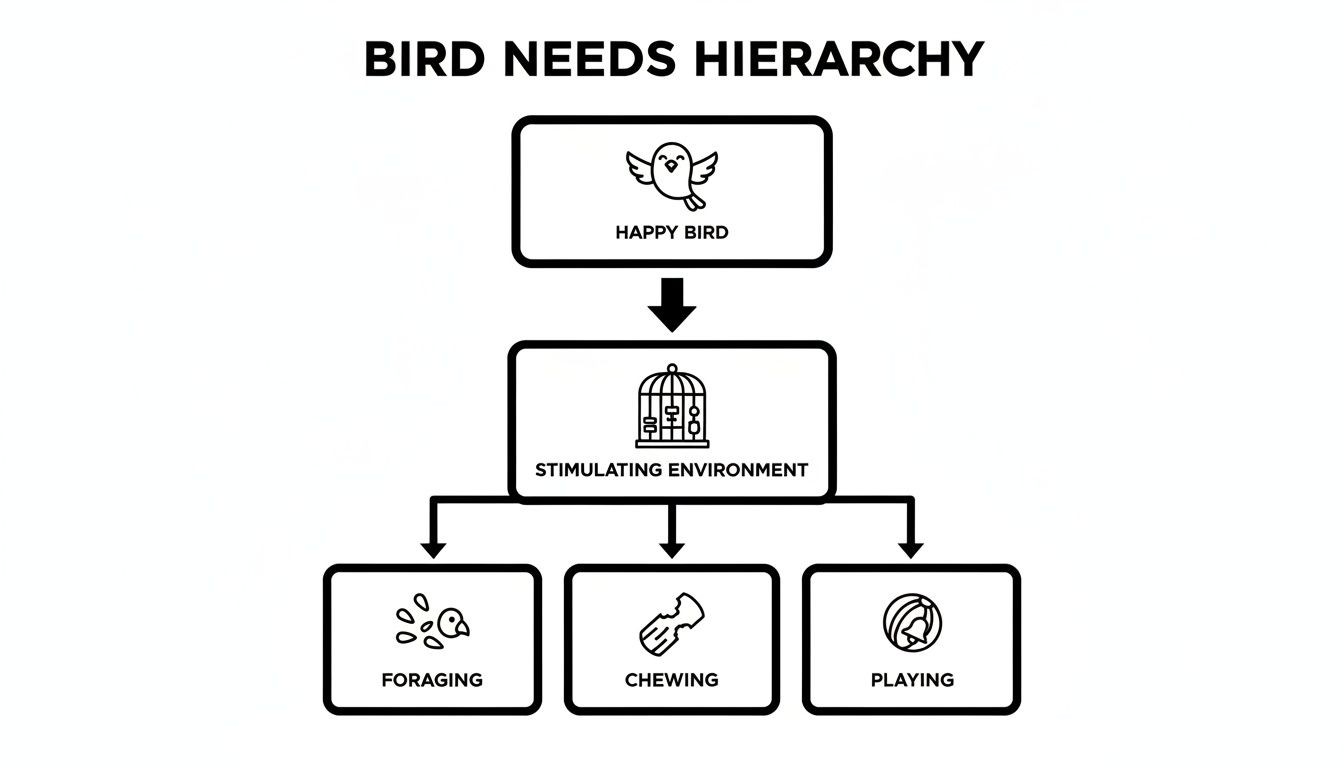
As you can see, a truly stimulating world for your bird rests on their ability to forage, chew, and play. These aren’t just fun extras; they’re fundamental to their wellbeing.
Matching Toy Types to Your Bird's Needs
To make it easier, here’s a quick guide to help you match different toy types to the natural behaviours you want to encourage. Think of it as a starting point for building a well-rounded toy collection.
| Toy Type | Primary Purpose | Encourages Natural Behaviour | Ideal for Birds Like... |
|---|---|---|---|
| Chew & Shred | Destruction & Beak Maintenance | Nesting, trimming beaks, releasing energy | All parrots, especially Cockatoos & Galahs |
| Foraging | Mental Stimulation | Searching for food, problem-solving | Budgies, Cockatiels, Conures, all intelligent birds |
| Foot Toys | Dexterity & Coordination | Holding, manipulating, and exploring objects | Cockatoos, Eclectus, and any bird that likes to hold things |
| Swings & Perches | Exercise & Comfort | Balancing, climbing, resting | All species, from Finches to Macaws |
This table should give you a clear idea of how each category serves a different, vital purpose in your bird's daily life.
Chew and Shred Toys
Let's be honest: parrots are built to destroy things. It's their most fundamental instinct. In the wild, their beaks are constantly at work, whether they're breaking into nuts, carving out a nest hollow, or just keeping that beak in top condition. Chew and shreddable toys give them a perfect, safe outlet for that powerful drive.
These toys are meant to be destroyed. We call this "productive destruction," and it's a brilliant concept. When your cockatiel rips apart a balsa wood toy or your galah tears into a chunk of native pine, they're not just making a mess. They're engaging in a deeply satisfying activity that keeps their mind busy and, importantly, stops them from chewing on the cage bars or your favourite piece of furniture.
Look for materials like these in great chew toys:
- Soft Woods: Balsa, yucca, and pine are fantastic for smaller beaks like budgies and cockatiels.
- Hard Woods: For the big chewers, native Australian woods like gum nuts and banksia pods are brilliant.
- Natural Fibres: Things like coconut husks, seagrass, and palm leaves offer fantastic textures for shredding.
Foraging Toys
Did you know that wild parrots can spend up to 80% of their day just looking for food? Then we bring them home and put all their food in a bowl, taking away their main job in about two minutes flat. Foraging toys are the answer. They bring that natural puzzle back into your bird’s life, turning mealtime into an engaging and rewarding challenge.
These toys make your bird think, fiddle with parts, and work to get their reward. It sounds simple, but this one change can make a massive difference, cutting down on boredom and preventing problem behaviours. There's a whole world of foraging toys out there, from simple puzzles to complex gadgets. If you're just getting started, our guide on foraging toys for birds is the perfect place to begin.
Expert Advice: Making your bird work for its food isn't mean—it's one of the kindest things you can do. You’re feeding their brain and their belly at the same time, satisfying instinct and intellect all at once.
Foot Toys
Foot toys are exactly what they sound like: small, lightweight items a bird can pick up, hold, and fiddle with using their feet. They might seem basic, but they are incredibly important for developing dexterity, coordination, and strength.
For naturally hands-on (or should we say feet-on?) birds like cockatoos and lorikeets, foot toys are a fantastic way to burn off energy. They might toss a little wiffle ball around, chew on a vine ring, or spend ages carefully dismantling a small wooden star. They're simple, effective, and fantastic for their physical health.
Preening and Comfort Toys
Preening is how birds meticulously clean and arrange their feathers—it's a crucial part of their daily grooming. Preening and comfort toys give them a safe way to satisfy this instinct, which is especially helpful for birds who might be prone to over-preening or feather plucking.
These toys are usually made from soft, shreddable materials like sisal rope, veggie-tanned leather strips, or certain fabrics. When your bird "preens" the toy's fibres, it fulfils that grooming urge without them having to damage their own beautiful feathers. For a nervous bird or a young one settling in, a soft comfort toy can also become a 'cage buddy', giving them a sense of security when you’re not around.
Choosing Safe Materials for Your Feathered Friend
When it comes to picking out toys for your bird’s cage, nothing matters more than safety. Absolutely nothing. Your bird is going to spend hours, days, and weeks chewing, shredding, and playing with these items, so knowing what makes a toy safe isn’t just a good idea—it’s non-negotiable.
It’s easy to get drawn in by bright colours and fun shapes, but we need to look deeper. Think of it like doing the groceries for your family. You don’t just grab the most colourful box; you read the label and choose fresh, wholesome ingredients. It’s the exact same principle for your bird. We want natural, untreated materials that are harmless if they shred them to bits or even swallow a tiny piece.
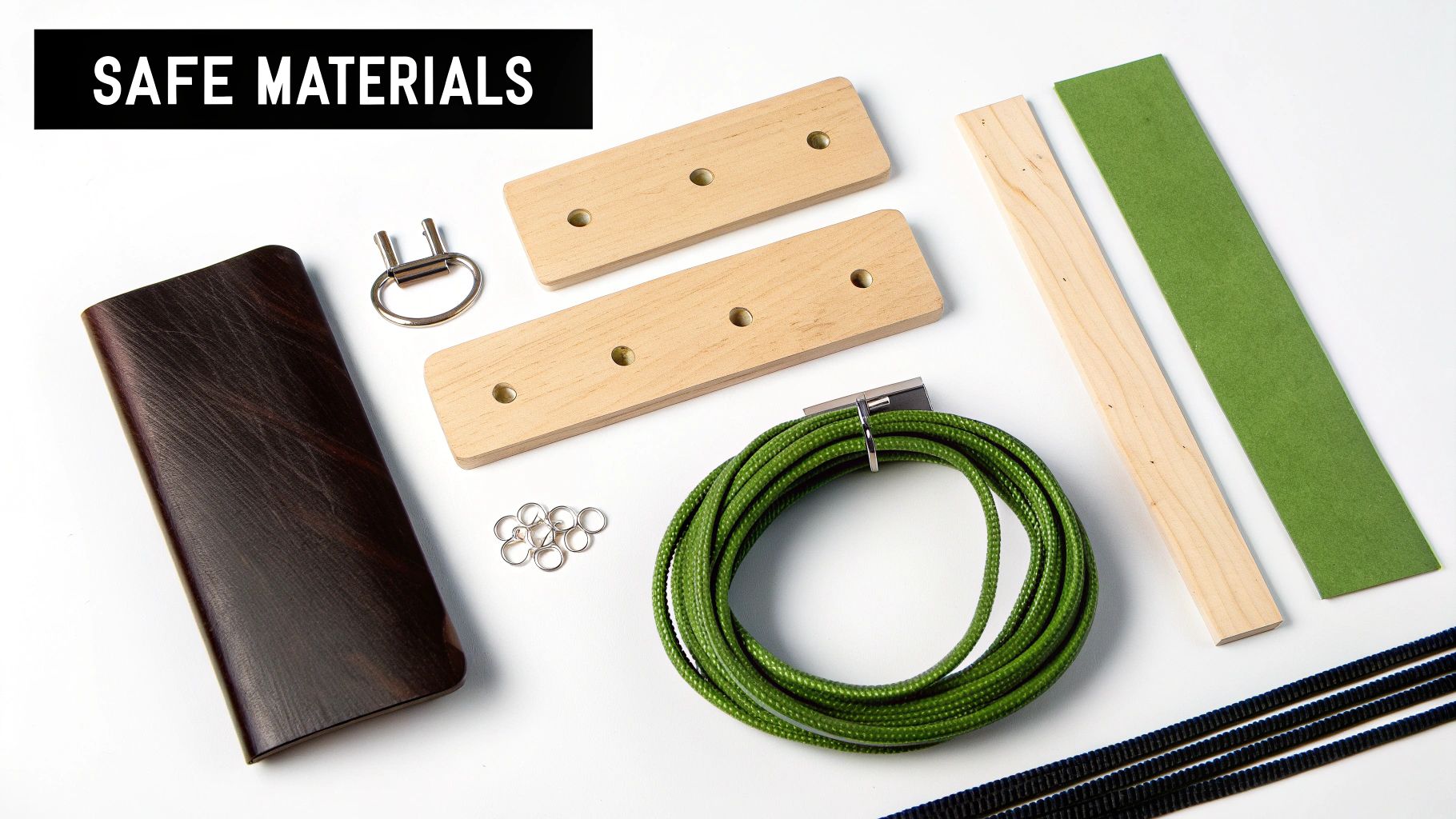
Bird-Safe Materials You Can Trust
So, what should you be looking for? Often, the best materials are the ones your parrot might encounter in its natural environment. Sticking to these trusted options gives them a safe, instinctive way to satisfy that deep-seated urge to chew and explore, without you having to worry.
Here are some of the best bird-safe materials out there:
- Untreated Natural Woods: Native Aussie woods like eucalyptus, bottlebrush, and banksia are fantastic. Softer woods like pine and balsa are also brilliant, especially for smaller birds with less powerful beaks. The key is to make sure the wood is 100% untreated and hasn’t been anywhere near pesticides.
- Vegetable-Tanned Leather: This is the only type of leather you should see in a bird toy. It gets its colour from natural plant tannins, not harsh chemicals, making it a safe choice for them to chew and tug on.
- Natural Fibres: Things like sisal, seagrass, jute, and coconut fibre are perfect for shreddable and preening toys. They offer all sorts of interesting textures that keep birds busy and engaged.
- Stainless Steel Hardware: When it comes to any metal bits—bells, chains, or quick links—stainless steel is the gold standard. It’s tough, it won’t rust, and it’s non-toxic. It is hands-down the safest metal for bird toys.
Expert Advice: When you hand your bird a well-made toy crafted from natural materials, you're not just giving them something fun to do. You're providing a safe channel for their hardwired instincts, which is absolutely vital for heading off boredom and stress-related habits.
Hazardous Materials to Avoid at All Costs
Just as vital as knowing what’s safe is being able to spot what's dangerous. Unfortunately, a lot of the cheap, mass-produced toys out there are made with materials that can be toxic or pose a serious physical risk. A huge part of being a great bird owner is learning to spot these red flags from a mile away.
Always give new toys a thorough inspection and steer clear of anything containing these unsafe parts:
- Toxic Metals: Zinc and lead are incredibly toxic to birds and can lead to heavy metal poisoning, which is often fatal. Any galvanised metal is a huge no-no, as the zinc coating is dangerous if chewed.
- Unsafe Ropes and Fibres: Cotton rope might seem soft and harmless, but it's a major hazard. As a bird chews, the fine threads can unravel and cause crop impaction if swallowed. They can also wrap around a toe or leg, cutting off circulation with devastating results.
- Dangerous Plastics: Soft, brittle plastics are a problem because they can easily be shattered into sharp, ingestible pieces. Only hard, durable plastics like acrylic are generally considered safe enough for strong beaks.
- Toxic Glues and Dyes: Check that any colours come from non-toxic, food-grade dyes and that the toy is assembled without toxic adhesives. If it smells strongly of chemicals, don't buy it.
Getting your head around the potential dangers is a massive part of giving your companion the best care possible. If you want to dive a bit deeper, our detailed article offers more advice on choosing the safest and most engaging toys for parrots.
By making smart, informed choices about the toys you bring home, you’re creating a safe, enriching space where your bird can play, thrive, and live a long, happy life.
Mastering Toy Placement and Rotation
Having a great stash of toys for bird cages is a brilliant start, but how you arrange them can be the difference between a stimulating playground and a cluttered obstacle course. A fantastic toy in the wrong spot is a wasted opportunity. The goal here is to create a dynamic living space that actually encourages your bird to move, explore, and play.
Just tossing toys into the cage at random often ends in chaos. It can make it hard for your bird to fly or even move around comfortably, especially in the more compact cages common in Australian apartments. Instead of promoting activity, a poorly arranged cage can lead to stress and frustration. The secret is to be a bit more thoughtful.
By being strategic about where things go, you can transform your bird's cage from a simple container into an engaging, multi-level home. It just takes a little thinking about how your bird naturally moves and uses its space, turning every corner into a chance for enrichment.
The Art of Cage Zoning
A simple but incredibly effective strategy is something we call 'Cage Zoning'. Think of it like designing a room in your house—you have different areas for different activities. You can apply the same logic to your bird’s cage to get them exploring every single inch of it.
- The Foraging Zone: Put puzzle and foraging toys near the bottom of the cage. This taps into their natural instinct to look for food on the ground and gets them moving away from their usual high-up perches.
- The Play Zone: This is the middle section, perfect for hanging shreddable and chew toys. It’s a great area for high-energy play, giving them plenty of space to hang upside down, swing, and happily tear things to bits.
- The Relaxation Zone: Swings and comfy perches belong up high. Birds naturally feel safer in higher places, so this gives them a secure spot to rest, preen, and watch what's going on around them.
This method pretty much guarantees your bird has to climb, fly, and move between the zones, giving them gentle but consistent exercise all day. It stops them from just sitting in one spot and getting bored.
The Power of Regular Rotation
Imagine eating the same meal for breakfast, lunch, and dinner. Every single day. You'd get bored pretty quickly, right? Well, your bird feels the same way about its toys. A toy that’s always there just becomes part of the furniture, losing all its appeal and enrichment value.
Rotating toys for bird cages every week or two is one of the most powerful things you can do to beat boredom. It keeps their world fresh, exciting, and mentally challenging. When you bring back a toy they haven't seen for a few weeks, it's like they're discovering it for the first time all over again.
Expert Advice: Don't swap out all the toys at once, as this can be pretty stressful for some birds. Aim to change just one or two toys each week. And always leave a familiar favourite or a comforting 'buddy' toy in the cage to keep things feeling secure.
Introducing New Toys to a Cautious Bird
Some birds, especially species like cockatiels and conures, can be naturally suspicious of new things. This fear of new objects, called neophobia, is completely normal. Forcing a new toy right into their personal space is a sure way to cause a lot of stress.
A gentle introduction is the only way to go. Start by placing the new toy on the floor outside the cage for a few days. Let your bird watch it from a safe distance. Next, you can try hanging it on the outside of the cage. Once they seem comfortable and even a bit curious, you can move it inside, but place it away from their main perches or food bowls. Patience is everything; let them explore it on their own terms.
This careful approach builds trust and helps your bird learn that new things are exciting, not scary. These enrichment strategies really do work; in fact, avian experts have shown how a well-managed environment can reduce stress-related behaviours. You can learn more about how the Australian pet industry supports these practices by looking into the latest pet supplies retail insights. By mastering placement and rotation, you're not just decorating a cage—you're cultivating a thriving, joyful world for your feathered companion.
Matching Toys to Beak Size and Strength
As any Aussie bird owner knows, not all beaks are created equal. A toy that’s too tough for your budgie can lead to frustration and even beak damage. Flip that around, and giving a soft balsa toy to a Sulphur-crested Cockatoo is like handing them a paper serviette—it’ll be gone in a flash, and you’re left worrying if they swallowed the pieces.
The key is matching the toy’s durability to your bird’s species and, just as importantly, their individual personality. The perfect toy offers what we call ‘productive destruction’. It’s a satisfying challenge that works their mind and body without being impossible to beat or so easy it’s over in seconds. Finding that sweet spot is what turns a simple object into a brilliant enrichment tool.
For the Little Beaks: Budgies, Cockatiels and Lovebirds
Small parrots like budgies, cockatiels, and lovebirds have beaks built for cracking tiny seeds and shredding soft plant bits. They just don't have the brute force of their larger cousins, and their toys need to respect that. They get the most joy from softer, more delicate materials that are easy to get a grip on and destroy.
Think of it this way: you wouldn't give a toddler a solid steel block to play with. You’d give them something they can actually interact with and feel a sense of achievement. It’s exactly the same for your little birds.
- Soft Woods: Balsa, yucca, and cork are brilliant choices. They’re soft enough for small beaks to shred to their heart's content without any strain.
- Natural Fibres: Shredded paper, palm leaves, and seagrass rope offer fantastic textures for preening and happily tearing things apart.
- Vine Components: Lightweight wicker balls and vine rings are easy for them to hold, toss around, and chew.
For these little livewires, take a look at our range of toys for small birds, designed specifically to offer that perfect level of challenge.
For the Mid-Sized Powerhouses: Galahs and Conures
Medium-sized parrots like Galahs, Corellas, and Conures sit in a really interesting spot. They pack a surprising amount of power in their beaks but still love the simple satisfaction of shredding softer things. The trick is to give them a mix of destructible goodies and tougher, more durable toys to keep them happy.
Variety is everything here. A Galah will get a huge amount of satisfaction from methodically demolishing a pine block, but they also need something tougher to work on over a few days. This mix stops them from getting bored with toys that are too easy or giving up on ones that are too hard.
A balanced toy box for a medium-sized bird is all about catering to their different moods. Some days, they'll want to carefully dismantle a tough wooden block; other days, they just want the sheer joy of shredding something soft to pieces.
For the Heavy-Duty Chewers: Macaws and Cockatoos
When you move up to large parrots like Macaws and Cockatoos, you’re dealing with a whole different level of power. These are beaks that can snap branches and crack the hardest nuts in nature. Their toys have to be incredibly robust and well-made to stand up to that kind of force. A flimsy toy isn’t just a waste of money—it's a genuine safety hazard.
For these birds, durability must be your top priority:
- Hardwoods: Tough, dense native Australian woods are fantastic. Think gum nuts and banksia pods.
- Acrylic and Metal: Hard acrylic foraging toys and parts made from 100% stainless steel are non-negotiable for providing a safe, long-lasting challenge.
- Thick Veggie-Tanned Leather: Hearty strips and knots of vegetable-tanned leather can withstand some serious chewing and pulling.
Our range of toys for large parrots is built with this incredible power front of mind. As the Australian pet market grows, with an expected 822 pet retail businesses by 2025, the demand for safe, durable options is climbing. Avian behaviourists agree that the right toys are proven to significantly cut anxiety in parrots. You can discover more insights from Statista on these trends.
Your Guide to Toy Maintenance and Safety Checks
Even the most brilliant toys for bird cages can become a hazard if they’re not looked after. A fantastic toy is only safe for as long as it’s in good nick, which makes regular checks and cleaning a non-negotiable part of being a responsible bird owner. The best way to stay on top of it is to build these checks into your weekly routine so you can spot potential problems before they cause any harm.
Think of it as a quick safety audit for your bird’s playground. This simple habit will give you peace of mind and is a massive part of looking after your companion's long-term health and wellbeing.
Bird-Safe Cleaning Techniques
A grubby toy can quickly become a breeding ground for bacteria and mould, and that’s a serious health risk. How you clean a toy really depends on what it’s made of.
- Wood and Natural Fibres: These materials are porous, so they should never be soaked. Instead, grab a stiff brush to scrub off any gunk, then wipe them down with a cloth dampened with a bird-safe disinfectant like a diluted vinegar solution. Let them dry completely in the sun before they go back in the cage. This is the perfect method for gently maintaining toys like our Natural Banksia Pod & Wood Toy.
- Acrylic and Metal: Non-porous toys are much easier to deal with. You can wash them in hot, soapy water (using a gentle, bird-safe soap) or even run them through the dishwasher for a proper sterilisation. Just make sure every bit of soap residue is rinsed off before drying. This is the best approach for durable items like our Stainless Steel Bell Tower.
Spotting Hidden Dangers During Inspections
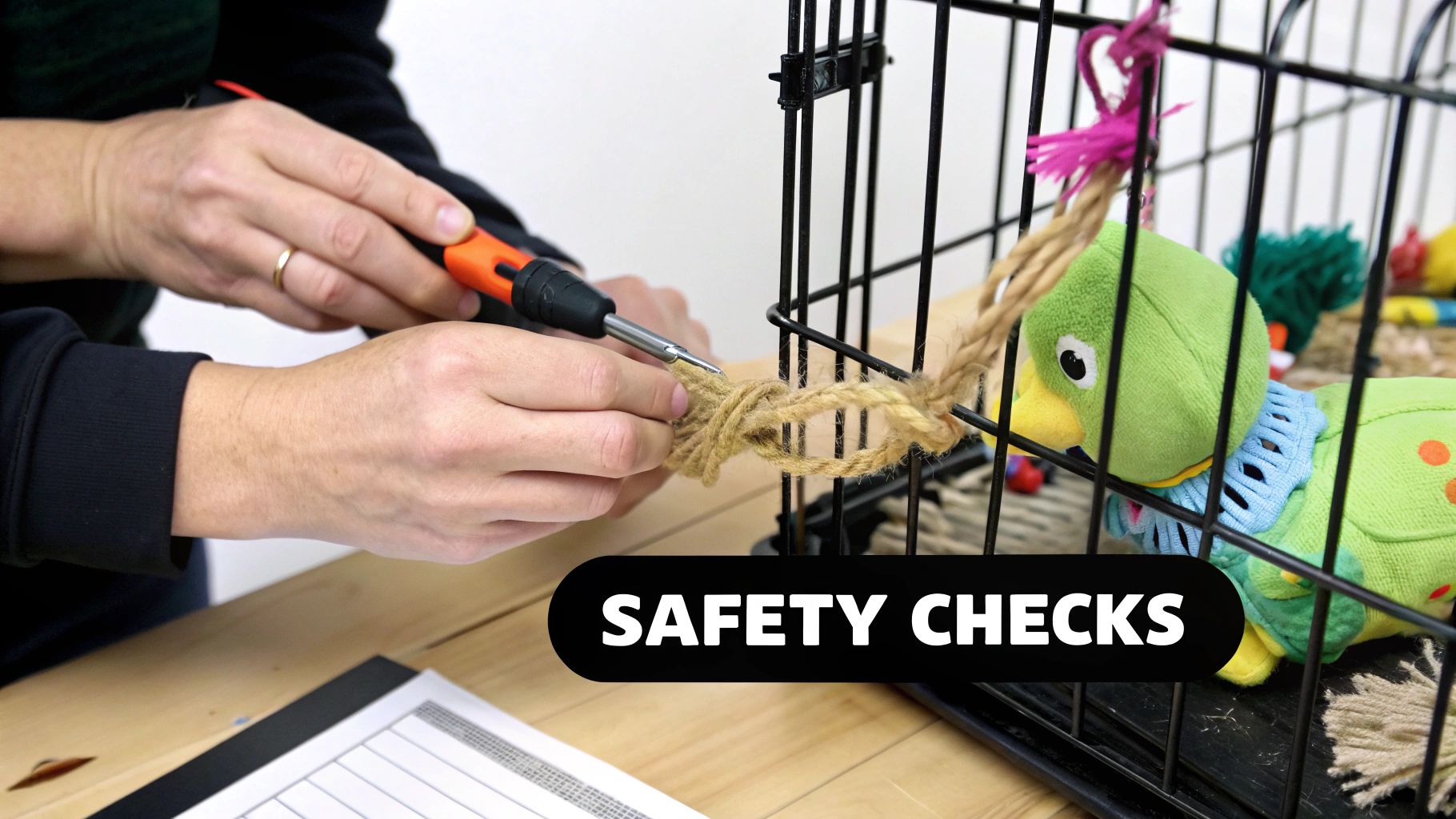
When you’re doing your weekly cage clean, take a few extra minutes to give every single toy a thorough once-over. This is your chance to spot wear and tear that could turn a beloved plaything into a real danger.
Expert Advice: Don't just glance at the toys. Pick each one up, feel it, and look at it from all angles. Dangers often hide in plain sight, and a hands-on check is the only way to find them.
Your safety checklist should include looking for:
- Frayed Ropes and Fibres: Long, loose threads from sisal or other natural fibres are a serious entanglement risk. They can easily wrap around a toe, leg, or even the neck. Trim any frays short, or just toss the toy if it’s getting too stringy.
- Sharp Edges: As your bird chews on wooden or acrylic toys, they can create sharp splinters or pointy bits. Run your fingers over the surface to feel for anything that could cut a tongue or foot. You can sand down any rough spots, but if it's too damaged, it's time to replace it. Our Balsa and Vine Ball Box is designed for safe shredding, but it still needs checking.
- Worn or Broken Metal Parts: Check all the quick links, chains, and bells. Make sure the links are screwed tightly shut and that there are no signs of rust (if not stainless steel) or metal fatigue that could cause a part to snap off and be swallowed.
Knowing when to say goodbye to a favourite toy is tough, but your bird’s safety has to come first, always. A proactive maintenance routine is the simplest way to make sure their home remains a safe and enriching haven.
More Than Just a Cage: Building a Thriving Home
Giving your bird a truly enriching life isn't a one-and-done task; it's an ongoing journey of love, observation, and learning. We've walked through the essentials of avian enrichment, from the importance of variety and safety to the art of toy placement and matching toys for bird cages to your bird's unique personality. Putting these ideas into practice is how you build a happier, healthier, and more engaged companion.
Your commitment to enrichment is genuinely the greatest gift you can give your feathered friend. The time you spend choosing safe materials, rotating toys to spark new interest, and respecting their natural drive to chew and destroy—that’s what builds a deep foundation of trust and wellbeing. It’s how their cage stops being just an enclosure and becomes a stimulating, joyful home where their personality can truly shine.
Keep watching your bird. Learn what they love, what they ignore, and adapt their environment as they grow and change. Exploring different bird cage accessories and enrichment styles will keep your bond strong and their mind sharp for years to come. We hope you feel confident and inspired to keep learning and providing the best possible care for your companion.
Keep Reading
Disclaimer Summary:
The information in this article is general in nature and may include external links or resources not created by Lou Lou Bells Bird Toys. Every bird is unique, so we encourage you to seek personalised advice from your own veterinarian or avian specialist. For full details, please read our complete disclaimer here.