
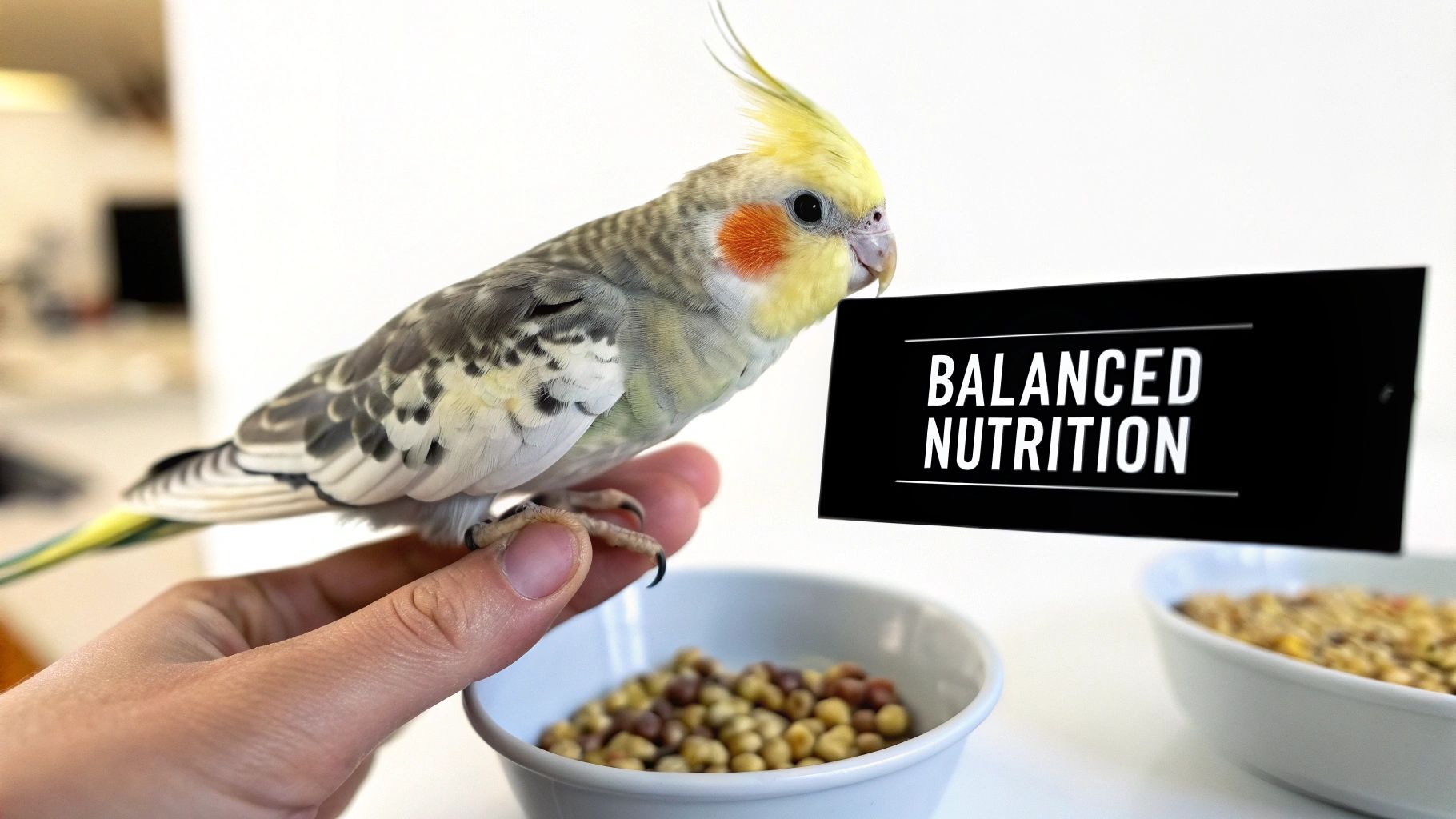
If you've ever found yourself wondering whether your cockatiel is truly getting everything they need from a bowl of seeds, you're onto something. Many owners in Australia share that concern. The simple truth is that pellets offer a complete and balanced diet in every single bite, taking the guesswork out of feeding and putting a stop to the picky eating that’s so common with seed mixes.
This one change can be the foundation for your bird’s long-term health and energy.
Why Pellets Are a Game-Changer for Cockatiel Health
For a long time, seed was the standard for pet birds. We now know that an all-seed diet is a bit like letting a child live on lollies and chips. They’ll happily pick out their favourites and leave the rest, but they miss out on the nutrients they actually need to thrive.
This habit, known as selective feeding, is a huge problem for cockatiels. They’ll often go for the tastiest, highest-fat seeds (like sunflower seeds) and toss everything else aside. Over time, this leads directly to health issues caused by a poor diet.
The Problem with Selective Feeding
When a cockatiel cherry-picks its favourite seeds, it creates a wildly unbalanced diet that can cause serious health problems down the track.
Pellets are designed to fix this. Each pellet is made to contain a consistent, complete blend of vitamins, minerals, proteins, and fats. Your bird can't just eat the "good bits" and ignore the rest.
Because every bite is nutritionally identical, pellets ensure your cockatiel receives a complete diet, preventing the dangerous imbalances caused by picking and choosing from a seed mix. This simple change is one of the most impactful things you can do for your bird's health.
To help you see the difference, here’s a quick comparison.
Seed Diet vs Pellet Diet at a Glance
| Feature | All-Seed Diet | Pellet-Based Diet |
|---|---|---|
| Nutritional Balance | Incomplete. High in fat, low in essential vitamins (A, D, calcium). | Formulated to be complete and balanced in every bite. |
| Selective Feeding | Very common. Birds pick out tasty, high-fat seeds, ignoring others. | Impossible. Every pellet contains the same balanced nutrition. |
| Common Health Risks | Obesity, fatty liver disease, vitamin deficiencies, poor feather quality. | Promotes healthy weight, strong bones, and robust immune function. |
| Dietary Control | Difficult to manage. Hard to know what the bird is actually eating. | Easy to control portions and ensure consistent nutrient intake. |
This table makes it clear why vets and avian experts now recommend a diet built around pellets, not seeds.
Visible Benefits of a Pellet Diet
The shift to pellets is gaining traction all across Australia, and for very good reason. For instance, some studies have shown that a shocking 72% of seed-fed cockatiels suffer from obesity, compared to just 18% on pellet diets. On top of that, research suggests that pellets fortified with antioxidants can extend a cockatiel's lifespan by up to 25%—from an average of 12-15 years to 18 years or even more.
Making the switch brings real, tangible benefits you can see with your own eyes:
- Brighter Plumage: Good nutrition is the secret to healthy feathers, leading to more vibrant and glossy colours.
- Stronger Immunity: A balanced diet builds a tough immune system, making your cockatiel less likely to get sick.
- Increased Energy Levels: With the right fuel in the tank, your bird will be more active, playful, and engaged.
- Longer, Healthier Life: By preventing chronic health issues linked to poor nutrition, you’re setting your companion up for a much longer and happier life.
This dietary foundation is a key part of our bird care essential guide to caring for pet birds, which shows just how critical good nutrition really is.
How to Choose the Right Cockatiel Pellets
Stepping into the bird food aisle can feel a bit much. With shelves stacked high with different brands, shapes, and formulas, picking the right pellets for your cockatiel can seem like a puzzle. But once you know what you’re looking for, you can read those labels like a pro and feel good about your choice.
The whole point is to find a pellet that gives your bird complete, balanced nutrition, made specifically for a cockatiel’s needs. That means zeroing in on a few key things on the back of the bag.
Decoding the Nutritional Label
All the important information is right there on the nutritional panel. For a healthy adult cockatiel, you’ll want to find a formula that contains:
- Protein: Somewhere around 12-15% is the sweet spot. This supports everything from muscle health and feather production to their daily energy levels.
- Fat: Look for a fat content between 5-7%. This gives them the energy they need without tipping the scales towards obesity or fatty liver disease, which are real risks.
- Calcium: This is a non-negotiable, especially for hens. It’s vital for strong bones and healthy egg-laying. A good pellet will have calcium properly balanced with phosphorus.
- Vitamin A: This is a big one. It’s often missing in seed-heavy diets and is crucial for a strong immune system, good vision, and healthy respiratory function.
These numbers aren't just guesses; they’re backed by solid research. Cockatiels make up a significant portion of caged birds in Australian homes, and pellets formulated with 12-15% protein have been shown to slash common health problems like calcium deficiency. It’s a shift that shows bird owners are really starting to prioritise complete diets. You can learn more about these bird food market trends to see the bigger picture.
Pellet Types and Sizes
Beyond the numbers, the actual form of the pellet matters. You’ll generally find two main types on the shelf:
- Extruded Pellets: These are cooked at high temperatures, which often makes them easier for your bird to digest and kills off any potential nasties. They’re the most common type you’ll find in Australia.
- Cold-Pressed Pellets: As the name suggests, these are processed at lower temperatures. The idea is to keep more of the natural nutrients from the raw ingredients intact.
The size of the pellet is just as important. Cockatiels have small, delicate beaks, so they need something they can easily hold and crunch. Look for “small” or “mini” sized pellets, often labelled for cockatiels, budgies, or small parrots. If the pellet is too big, your bird will struggle with it. If it’s too small, they might just swallow it whole without getting that satisfying crunch.
Finding the right pellet takes a little bit of label-reading and watching how your bird responds, but it’s one of the most important things you can do to set your cockatiel up for a long, healthy, and happy life.
A Step-by-Step Guide to Transitioning Your Cockatiel
Getting a cockatiel who’s grown up on seeds to try something new can feel like an uphill battle. These little birds are creatures of habit, and what seems like stubbornness is often just caution. But with a good plan and a healthy dose of patience, you can gently guide them towards a healthier, pellet-based diet.
The key is to go slow. Never, ever starve your bird into eating pellets. This approach is dangerous, stressful, and can cause serious health problems. Think of it less as a diet change and more as a gradual introduction to new and interesting food.
Laying the Foundation for Success
Before you even tear open a bag of pellets, a quick health check is a smart first move. A visit to your local avian vet in Australia can give you a baseline weight for your bird, which is crucial for monitoring their health during the switch. A healthy, well-nourished bird will handle the change much better.
Once you get the all-clear, it’s time to pick a transition method. Every bird is an individual, so what works for one might not click with another. Be prepared to try a couple of different approaches until you find what suits your cockatiel.
Here's a simple way to think about choosing the right pellets before you begin.
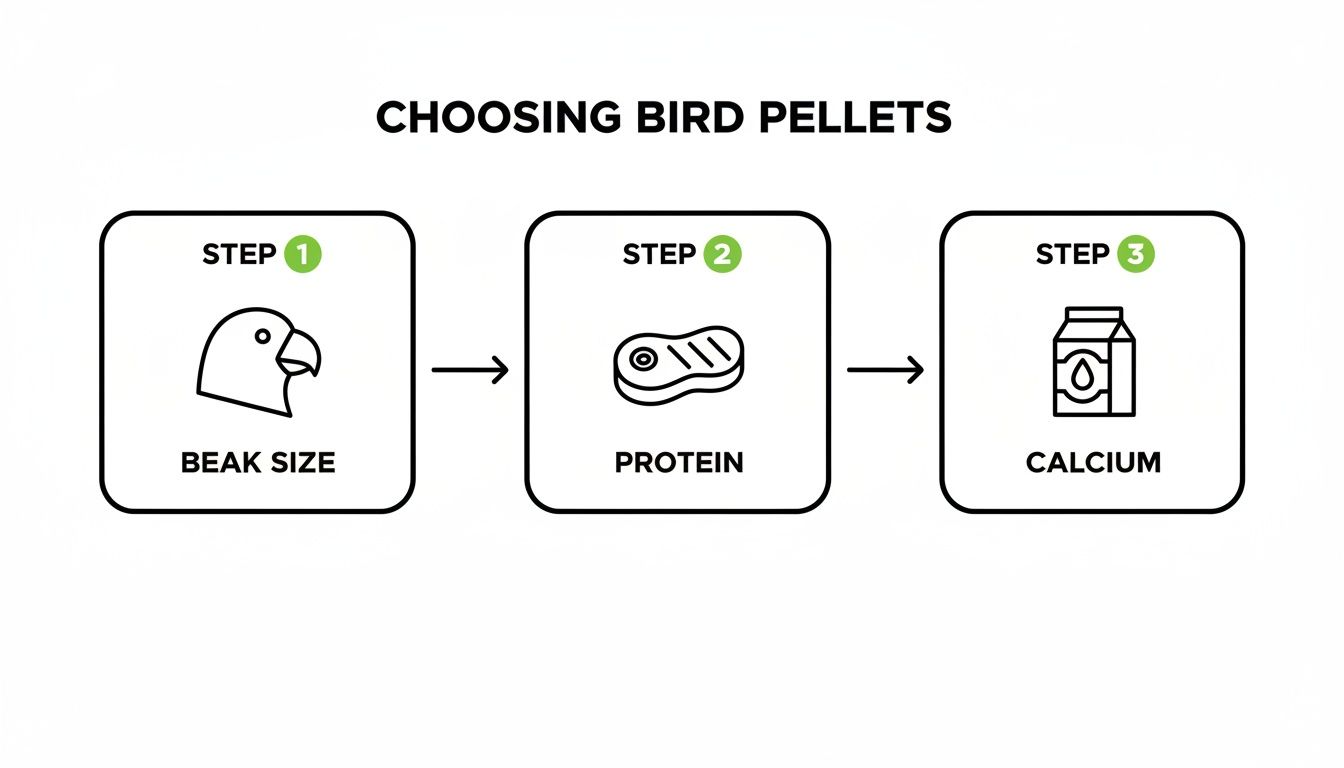
This visual guide breaks it down into three core ideas: making sure the pellet size fits your bird's beak, and that the protein and calcium levels are on target.
Proven Transition Methods
Here are a few trusted techniques to get your cockatiel curious about their new food.
-
The Gradual Mix Method: This is the slowest and often the safest way to go. Start by mixing a tiny amount of pellets—about 10%—into their usual seed mix. Each week, slightly increase the amount of pellets while reducing the seeds. Over several weeks or even months, your bird will slowly get used to the new taste and texture without feeling pressured.
-
The Two-Bowl Technique: Pop two separate food bowls in the cage. One has their familiar seeds, and the other holds the new pellets. This gives your bird a choice and lets them investigate the pellets on their own terms. Often, their natural curiosity will get the better of them.
-
Scheduled Feeding Times: Instead of leaving food out all day, offer their food bowl for two distinct meal periods—once in the morning and once in the evening, for about an hour each time. A bird that's a little bit hungry is often more willing to try something new.
Expert Tip: Try eating with your bird! Sit near their cage and pretend to eat some of the pellets yourself (don't actually eat them, of course). Make enthusiastic "yum" sounds. Cockatiels are flock animals, and seeing their favourite human "eating" something can signal that it's safe and worth trying.
Monitoring Your Bird’s Health
Throughout this entire process, you need to be a careful observer. Your bird’s health is the absolute top priority.
- Daily Weight Checks: Weigh your cockatiel every morning on a gram scale before they've had breakfast. A weight loss of more than 10% of their body weight is a red flag. If you see this, stop the transition and call your avian vet straight away.
- Dropping Watch: Keep an eye on their droppings. The colour and consistency will naturally change as their diet shifts, but you should still see plenty of them. A big decrease in the number of droppings means they aren't eating enough.
Patience is your best friend here. Some cockatiels take to pellets in a week, while others might take months. Celebrate the small wins, like seeing them pick up and nibble a pellet, and don't get discouraged by setbacks. You're making a fantastic change for their long-term health.
Troubleshooting Common Problems During the Diet Switch
Even with the best-laid plans, hitting a few bumps when switching your cockatiel from seeds to pellets is completely normal. Don't feel discouraged if you meet a bit of resistance – you're asking your bird to change a habit they've known their whole life.
Frustrating behaviours like flinging food or giving the new pellets the cold shoulder are usually just signs of confusion, not a personal protest. The trick is to stay patient and know how to read the signs.
Common Issues and Practical Solutions
If your cockatiel is making the switch a little tricky, don't throw in the towel. These are some of the most common hurdles owners face, along with some simple ways to get back on track.
- Outright Pellet Refusal: It's not uncommon for a bird to completely ignore the new food. A great way to ease them into it is by grinding the pellets into a fine powder and sprinkling it over their old seed mix. This gets them used to the taste and smell without the confronting texture of a whole new food.
- Cherry-Picking Seeds: Got a clever cockatiel who meticulously picks out every last seed while leaving the pellets untouched? You might need to adjust your ratios more gradually. Another effective trick is to switch to scheduled feeding times, which encourages them to try the new food when they're naturally a bit hungrier.
- Food Flinging: Birds often toss pellets out of the bowl when they're unsure or protesting the change. It's frustrating, but it's a form of communication. Sometimes, just moving the pellet bowl to a new spot in the cage is enough to spark fresh interest. You can also make pellets more exciting by putting them in simple foraging toys, like this Beginner Foraging Box, turning mealtime into a fun puzzle.
Avian Vet Tip: If texture seems to be the issue, try lightly misting the pellets with a bit of water. This softens them up and changes how they feel in your bird's beak, which can sometimes make all the difference. Just remember to never leave moistened food out for more than an hour or two, as it can grow bacteria quickly.
When to Call Your Avian Vet
While most transition troubles are behavioural bumps in the road, some signs are red flags that need a professional eye. Your bird’s health is always the top priority, and your avian vet is the best person to have on your team.
Get in touch with your vet straight away if you notice any of these signs:
- Significant Weight Loss: A drop of more than 10% of their body weight is a serious concern that needs immediate attention.
- Lethargy: If your usually chirpy and active bird becomes quiet, fluffed up, or starts sleeping much more than usual.
- Changes in Droppings: A big reduction in the number of droppings is a clear signal that they aren't eating enough.
- Any Signs of Illness: Ruffled feathers, a complete lack of appetite, or any other behaviour that just doesn't seem right for your bird.
Your vet can check for any underlying health issues and help create a tailored plan to get your cockatiel safely onto their new, healthier diet. It’s always better to be safe than sorry.
Make Pellets Fun with Foraging and Enrichment
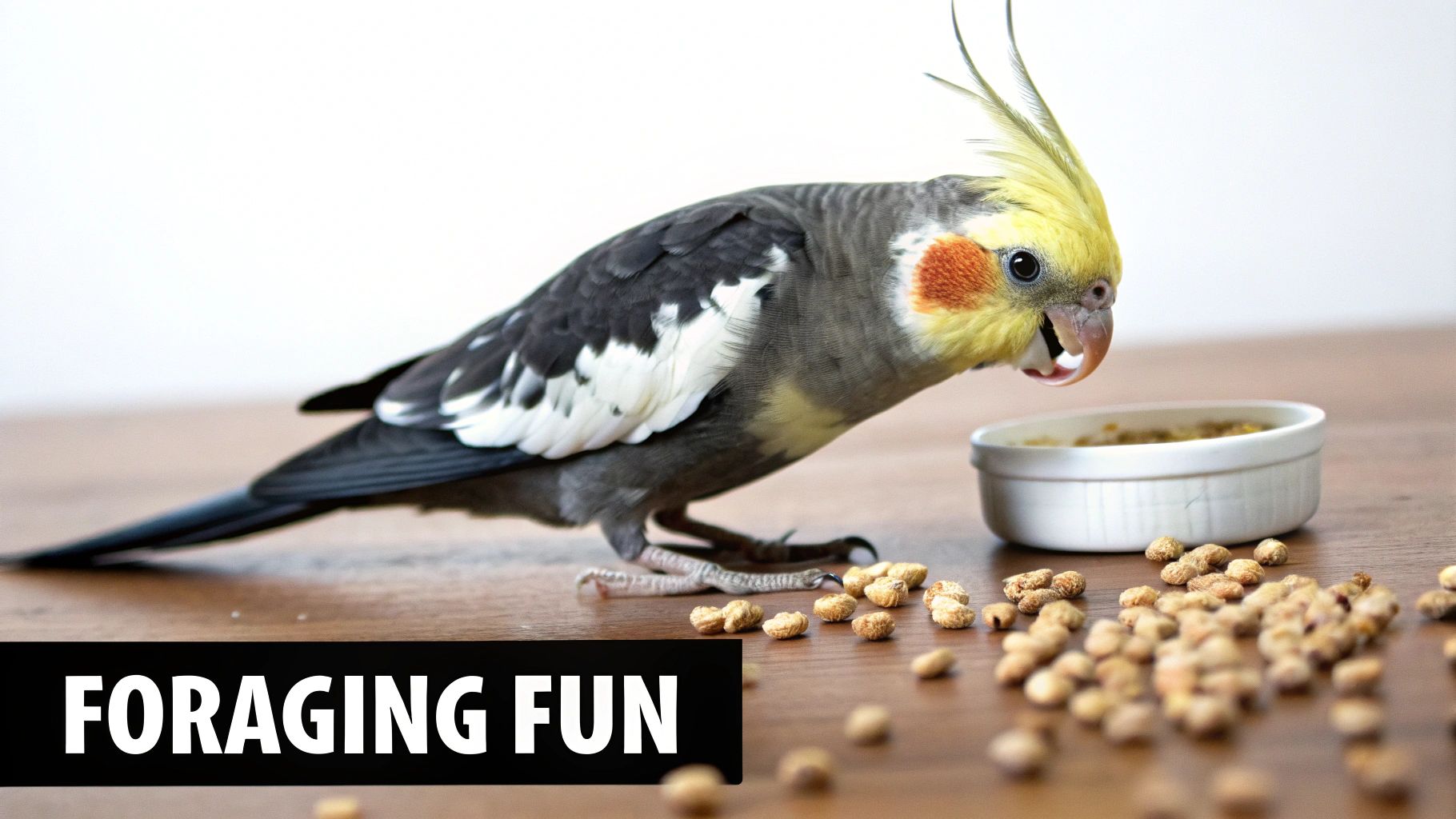
For a clever little bird like a cockatiel, mealtime should be more than just eating from a bowl. Out in the wild, they’d spend a huge chunk of their day just looking for food. We can tap into this natural drive—called foraging—to make new pellets for your cockatiel feel like an exciting treasure hunt, not a chore.
Let's face it, a simple bowl of brown pellets can look pretty dull to a bird used to the colours and textures of a seed mix. By turning feeding time into a game, you get their brain working, encourage them to move, and make those pellets a whole lot more appealing. This mental workout is a powerful tool when you're trying to switch their diet.
Turning Mealtime into Playtime
You don't need a fancy setup to get started. The aim is just to make your cockatiel work a little for their food. That small challenge is rewarding for them and makes the food itself seem more valuable.
Here are a few simple but brilliant ideas to try:
- Scatter Feeding: Don't just dump the pellets in their bowl. Scatter a few on a clean, flat surface in their cage or on a play stand. It gets them moving and searching.
- Mix It Up: Pop a small amount of pellets into a shallow dish with some bird-safe, shredded paper or foot toys. They'll have to rummage through the fun stuff to find their dinner.
- Hide and Seek: Place a few pellets inside a wiffle ball or a loosely crumpled piece of paper. The puzzle of getting to the food is often incredibly motivating.
Choosing the Right Foraging Toys
Once your cockatiel gets the hang of simple foraging, you can bring in toys designed to make them think. Foraging toys are fantastic for enrichment and are perfect for holding their daily pellet ration. Just be sure to start with beginner-level toys to build their confidence and avoid frustration.
Foraging isn’t just about food; it's about providing an outlet for natural behaviours like shredding, climbing, and problem-solving. This kind of enrichment is vital for their mental wellbeing.
Presenting pellets in different toys supports these instincts. In fact, some South Australian avian behaviourists have found that enriched environments can boost a cockatiel’s activity levels by as much as 50%. Pellets play a key role in this, as they have helped cut vitamin A deficiency—a top concern for vets—by 55%.
Foraging toys are a brilliant way to introduce this activity. You could try something engaging like the Foraging Ball with Bell or a toy they can really get their beak into, like the Natural Foraging Kabob. Even a simple puzzle like the Forage Wheel Bird Toy can provide hours of stimulation.
Our complete guide to foraging toys for birds has even more ideas to help you get started. By making mealtime an adventure, you're not just feeding your bird; you're nurturing their mind and spirit.
Building a Complete and Balanced Diet
While high-quality pellets for cockatiels are the perfect foundation for a healthy life, they shouldn't be the only thing on the menu. Just like us, our birds enjoy and benefit from a bit of variety. The real trick is adding the right things in the right amounts to build a diet that’s truly complete.
Many Australian avian vets suggest a simple guideline known as the 70/30 rule. It’s pretty straightforward: your cockatiel’s daily food intake should be about 70% pellets, with the other 30% made up of fresh, bird-safe vegetables, a tiny amount of fruit, and some healthy grains.
This approach ensures they get all the balanced nutrition from their pellets while also enjoying the different textures, flavours, and nutrients that fresh foods bring to the table.
Creating a Nutritious Chop
One of the easiest ways to offer this variety is by making a "chop"—a finely diced mix of fresh vegetables that you can prepare in batches and freeze. This makes daily feeding quick, simple, and mess-free. For a deeper dive into what makes a balanced meal, you can explore our detailed guide on parrot and bird food.
To get you started, here’s a quick list of some great additions to your 'tiel's diet, and a few dangerous foods you should always keep away from them.
Safe and Healthy Foods for Your Cockatiel
This table offers a quick-reference list of safe vegetables, fruits, and grains to supplement a pellet-based diet, along with a list of toxic foods to avoid.
| Safe Vegetables | Safe Fruits (In Moderation) | Foods to Avoid |
|---|---|---|
| Broccoli, kale, spinach | Apple (no seeds), berries | Avocado, chocolate, onion |
| Capsicum (all colours) | Mango, pear (no seeds) | Garlic, caffeine, alcohol |
| Carrots (grated) | Banana | Fruit pits/seeds, rhubarb |
| Sweet potato (cooked) | Grapes | Xylitol (sweetener) |
Remember, variety is the spice of life, and offering a colourful chop is a great way to keep things interesting for your feathered friend.
A varied diet does more than just provide nutrients; it also offers mental stimulation. The different colours, shapes, and textures of a fresh chop can make mealtime more engaging and prevent boredom, contributing to your cockatiel's overall wellbeing.
Always introduce new foods one at a time so you can watch your bird's reaction, and be sure to remove any uneaten fresh food after a few hours to stop it from spoiling. This balanced approach is the key to keeping your cockatiel healthy, happy, and genuinely interested in their meals.
Your Questions About Cockatiel Pellets Answered
Making the switch to pellets is a fantastic move for your cockatiel's health, but it’s completely normal to have a few questions pop up along the way. To make things a bit clearer, we’ve put together answers to some of the most common queries we hear from cockatiel owners right across Australia.
How Many Pellets Should My Cockatiel Eat Daily?
A good rule of thumb for an adult cockatiel is about 1.5 to 2 tablespoons of pellets each day. But honestly, think of this as a starting point, not a strict rule.
Every bird is different. A super active, flighty cockatiel might need a bit more fuel in the tank, while a more chilled-out, sedentary bird will naturally need less. The best way to know for sure is to keep an eye on your bird's weight and overall body condition. If you're not sure what to look for, a quick chat with your avian vet will give you peace of mind.
Are Coloured Pellets Safe for My Bird?
This is a question we get all the time. The short answer is yes, coloured pellets from reputable brands are perfectly safe. They use food-grade, bird-safe dyes that won't harm your feathered friend. For some fussy eaters, the bright colours can actually make the food look more interesting and tempt them into trying something new.
That said, some owners and vets prefer to stick with pellets that have no artificial colours or flavours, working on the principle that "natural is best." Ultimately, the choice is yours. As long as you’re buying from a trusted brand, both coloured and natural options are a solid, healthy choice.
What If My Bird Refuses to Eat Pellets?
Hitting a wall of absolute refusal can feel frustrating, but don't throw in the towel just yet. First things first, get your bird checked by a vet to rule out any underlying health issues that might be affecting their appetite.
If they get a clean bill of health, it might just be a case of personal preference. Try offering a few different brands, or pellets of a different shape or size—you’d be surprised what a difference it can make.
Another great trick is to turn feeding time into a game. Hide pellets in foraging toys or grind them up and sprinkle them over a tiny, high-value treat to get them interested. For more tips on using treats the right way, have a look at our article on whether millet is a good option for birds. The most important thing is patience; some birds just need a little more time to accept that pellets are actually food.
Keep Reading
Disclaimer Summary:
The information in this article is general in nature and may include external links or resources not created by Lou Lou Bells Bird Toys. Every bird is unique, so we encourage you to seek personalised advice from your own veterinarian or avian specialist. For full details, please read our complete disclaimer here.