
Ever tried to imagine living your whole life in a tiny room? That’s what an undersized cage feels like to a smart, energetic parrot. A parrot cage big enough for your bird isn't some luxury item; it's the single most important investment you'll ever make in their long-term health and happiness.
As avian specialists, we see firsthand how a properly sized environment can transform a bird's life. This guide is designed to give you the expert advice needed to make the best choice for your feathered companion.
Why a Bigger Cage Is Your Parrot's Best Friend
It helps to think of your parrot's cage not as a box, but as their personal sanctuary. It’s their bedroom, their playground, and their dining room, all rolled into one. Just like you’d rather have a spacious home than a cramped studio apartment, your bird needs room to truly thrive.
A large cage gives them the freedom to act like a parrot. In Australia, providing enough space is simply the foundation of responsible ownership. It allows for all those crucial movements: fully stretching and flapping their wings without smacking the bars, climbing between different levels, and foraging for treats you’ve hidden. These aren’t just fun activities; they’re essential for keeping stress at bay and heading off common behavioural problems before they start.
The Link Between Space and Wellbeing
When a parrot is stuck in a space that’s too small, frustration and boredom don’t take long to set in. This is often the root cause of destructive behaviours that are heartbreaking for owners to see.
- Feather Plucking: A classic sign of stress or boredom, where a bird pulls out its own feathers.
- Screaming: Excessive, constant noise can be a desperate cry for more space and mental stimulation.
- Bar Biting: This repetitive, obsessive habit often points to a serious lack of enrichment.
A spacious environment directly tackles these issues head-on by giving them the mental and physical outlet they need. It provides a proper canvas to create a stimulating world filled with a variety of perches, engaging toys, and fun foraging challenges.
Expert Advice: A parrot's environment is everything. A cage that allows for flight, play, and exploration is not just housing; it is a fundamental component of preventative healthcare for their mind and body.
This idea is really taking hold with Australian bird owners. The demand for large parrot cages has jumped by over 45% since 2020, particularly in states like South Australia and New South Wales where companion parrot ownership is on the rise. Avian experts will tell you that inadequate cage sizing is a factor in nearly 40% of behavioural issues they see in rescue birds, making a big parrot cage absolutely essential.
How to Match Cage Size to Your Parrot Species
Everyone knows the golden rule: "bigger is always better." But when it comes to choosing a large parrot cage, it’s not just about getting the biggest box you can find. It’s about finding a home that’s perfectly proportioned for your bird’s size, species, and energy levels.
Think of it like buying a pair of shoes. You wouldn’t grab a pair five sizes too big just because they’re spacious—you’d be tripping all over the place. A cage needs to be a functional, safe space that truly fits your feathered friend, whether you have a zippy Conure or a majestic Galah.
The Three Pillars of a Perfectly Sized Cage
When you’re looking at cages, zero in on three internal dimensions. Getting these right is the difference between a simple box and a proper home.
-
Width for Wing Span: This one is non-negotiable. Your parrot must be able to fully stretch out its wings and flap them without bashing against the sides. It’s a simple, natural movement that’s crucial for muscle health and blowing off a bit of steam.
-
Depth for Movement: Good depth gives your bird room to move around, climb, and play between the front and back of the cage. It creates more usable floor space for things like foraging toys and stops the cage from feeling like a narrow hallway.
-
Height for Exploration: Parrots are born climbers. A tall cage gives them vertical real estate for perches at different levels, swings, and ladders. This encourages them to exercise and satisfies that deep-seated instinct to check things out from up high, letting you set up different zones for resting, playing, and eating.
This data really highlights the link between more people owning parrots and the demand for the right gear. But it also shows a tough reality: when care is inadequate, a huge number of problems pop up.
Why Bar Spacing is a Critical Safety Feature
Beyond the overall size, there’s a small detail that can have massive consequences: bar spacing. This is simply the gap between the cage bars, and it’s something you absolutely cannot afford to get wrong. It’s all about the size of your parrot's head.
Expert Advice: If the bars are too far apart, a curious bird can easily poke its head through and get stuck, which can lead to serious injury or even strangulation. On the other hand, bars that are too close together for a big bird make climbing a nightmare and can even cause foot or beak injuries.
A cage built for a big Macaw might have bar spacing of 2.5 cm or more, which is a death trap for a smaller bird like a Cockatiel or Conure. For these little guys, you need a maximum spacing of around 1.5 cm. Always match the bar spacing to your bird, not just the cage dimensions. Most good Australian suppliers and vets will have species-specific charts to guide you.
Minimum Cage Dimensions for Common Australian Parrots
To help pull all this together, here’s a quick-reference guide for some of our most popular parrots.
Remember, these are the minimums. If your bird spends a lot of time in its cage, or you're looking at a bird flight cage to give them more room to move, always go bigger.
| Parrot Species | Minimum Internal Dimensions (cm) | Maximum Bar Spacing (cm) |
|---|---|---|
| Budgerigar / Lovebird | 60W x 45D x 60H | 1.25 |
| Cockatiel / Conure | 75W x 60D x 90H | 1.5 |
| Galah / Corella | 100W x 75D x 120H | 2.0 |
| Amazon / African Grey | 100W x 80D x 150H | 2.5 |
| Sulphur-Crested Cockatoo | 120W x 90D x 180H | 2.5 |
| Blue & Gold Macaw | 150W x 100D x 180H | 3.0 |
Nailing the right size is the very first step in creating a safe, stimulating, and happy home for your parrot. It’s the foundation for a long and healthy life together.
Choosing Safe and Durable Cage Materials
A parrot’s beak is an incredible tool, perfectly designed for cracking nuts, shredding wood, and, if you’re not careful, taking apart a flimsy cage bolt by bolt. Once you’ve figured out the right size, the next critical step is to inspect a parrot cage big enough for your bird with an expert eye. You need to focus on the quality of its materials and construction. This isn't just about whether it will last; it’s about your bird's long-term health and safety.
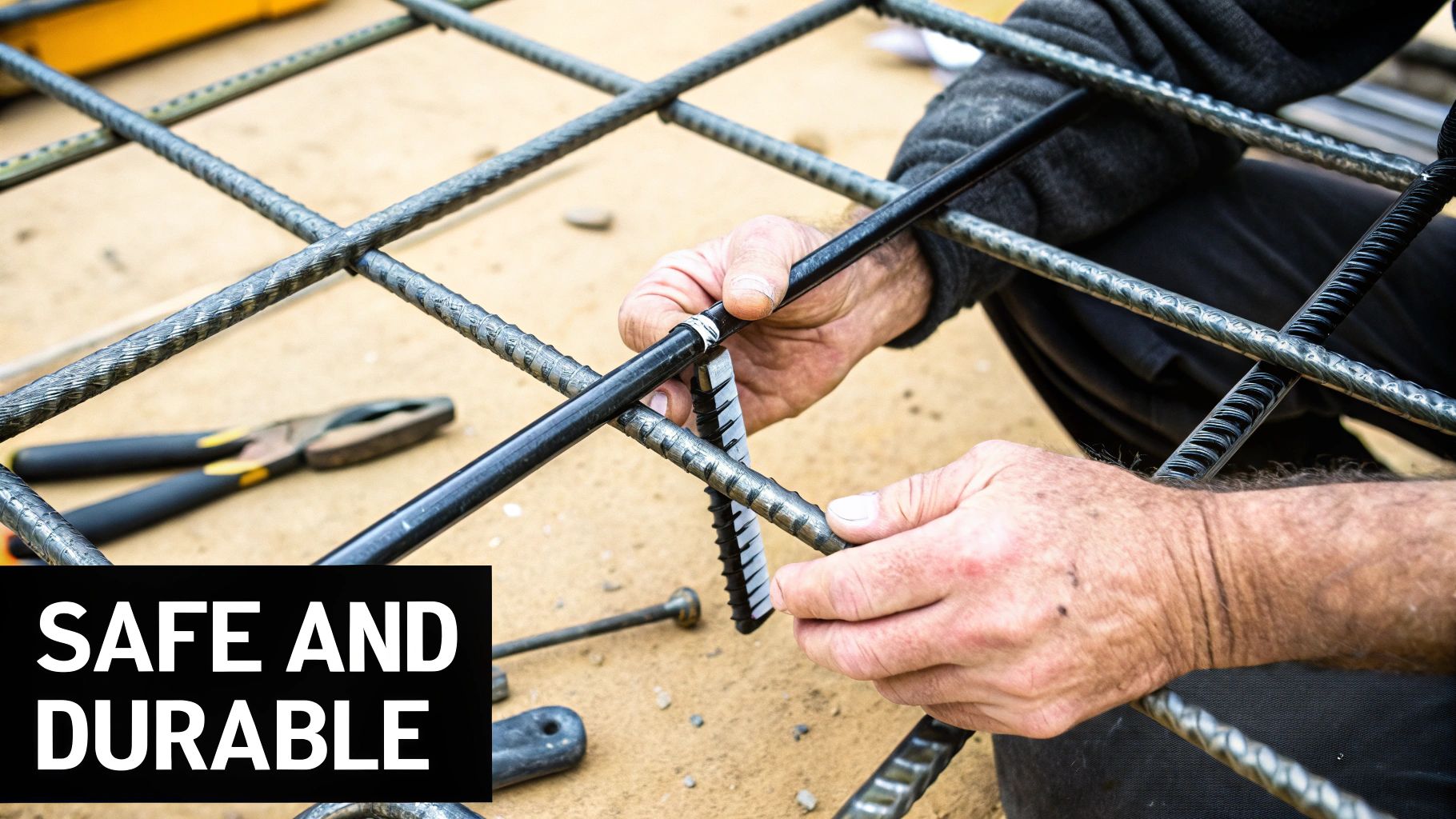
Think of the cage itself as the foundation of your bird's home. It has to be strong enough to withstand daily beak-pressure tests and, most importantly, be completely non-toxic. Parrots, especially the larger ones, will inevitably chew on everything—including the bars of their cage. If those bars are made from or coated with something harmful, it can lead to devastating health problems down the track.
Safe Materials: The Gold Standard
When it comes to your bird’s safety and the cage’s longevity, not all metals are created equal. You have to be discerning, as your parrot’s life literally depends on it.
-
Stainless Steel: This is the undisputed champion of cage materials. It's incredibly durable, non-porous (which makes it a dream to clean and disinfect), and won't rust. Ever. While it’s the most expensive option upfront, a high-quality stainless steel cage is a lifetime investment in your parrot's well-being.
-
Powder-Coated Metal: This is a more budget-friendly yet perfectly safe alternative. The process involves electrostatically applying a non-toxic, pigment-based powder to the metal, which is then cured under intense heat. This creates a hard, durable finish that is far tougher and safer than simple paint, which can be chipped off and swallowed. Just make sure the powder coating is certified bird-safe and contains no zinc or lead.
This focus on safety and durability is becoming the standard here in Australia. In fact, data shows that extra-large parrot cages now make up 35% of sales to breeders and aviary operators, who all demand robust housing. High-quality materials are a key reason our stainless-steel options have earned 95% positive reviews from Australian sanctuaries, who understandably prioritise safety above everything else. You can explore more data on market trends and material preferences to see how the industry is shifting.
The Hidden Dangers: What to Avoid
Some materials, often found in cheaper cages, pose a severe risk of heavy metal poisoning—a condition that is frequently fatal for birds.
Expert Advice: Heavy metal toxicity, particularly from zinc and lead, is a serious and completely preventable danger. Chronic exposure from chewing on unsafe cage bars or toys can lead to neurological damage, organ failure, and death. Always choose materials guaranteed to be free of these toxins.
You must rigorously avoid any cages that are galvanised (coated in zinc) or have parts made from lead or brass (which contains zinc). Old, rusted, or chipped painted cages should be thrown out immediately. The rust itself can be harmful, and the paint on older models might contain lead.
Construction Quality Checklist
Beyond the raw material, the overall build quality is just as crucial. Before you make a purchase, run through this quick mental checklist:
- Welds: Are the joints smooth and solid? Poorly done "spot welds" can leave sharp points or create weak spots that a strong beak can easily snap.
- Latches: Are the door locks genuinely parrot-proof? Intelligent birds like Cockatoos and Macaws are notorious escape artists and can figure out simple slide-bolts in minutes. Look for complex latches that need a few different actions to open.
- Finish: Run your hand over the bars and frame. Everything should feel smooth, with no sharp edges, burrs, or points that could cut or injure your bird's feet or body.
Choosing a cage made from safe, durable materials with high-quality construction isn’t just a recommendation; it's a non-negotiable part of being a responsible parrot owner. It ensures their home is a secure sanctuary, not a source of hidden dangers.
Setting Up the Perfect Environment
You’ve found the perfect parrot cage big enough for your companion. Great! But the job’s not done. The next, equally crucial step is figuring out where that cage is going to live. Cage placement is about more than just finding a spare corner; it transforms a simple box of wires into the heart of your bird's world. This single decision shapes your parrot’s sense of security, their social life, and ultimately, their happiness.
Think of it like choosing the right neighbourhood for your feathered friend within your home. You want a spot that feels connected and lively but also safe and calm. The best location is usually a social hub where the family gathers, like a corner of the living room. Parrots are flock animals, after all. Being part of the daily household chatter helps them feel included and keeps loneliness at bay.
Of course, being in the centre of the action comes with its own set of potential hazards. It’s vital to pick a spot that protects them from the unique dangers found in an Australian home.
Finding the Sweet Spot in Your Home
Finding that perfect balance between social inclusion and safety is everything. Your parrot's cage should be their sanctuary, not a source of stress. Here are the absolute non-negotiables for cage placement:
- Away from the Kitchen: The kitchen is, without a doubt, the most dangerous room in the house for a parrot. Fumes from non-stick cookware (like Teflon), aerosols, and even self-cleaning ovens can be toxic and tragically fatal.
- No Direct Drafts: Position the cage well away from open windows, doors, and air conditioning vents. A constant draft is a fast track to respiratory illnesses for a bird.
- Avoid Startling Noises: Sudden, loud blasts from a nearby television or stereo can be incredibly frightening. A location with consistent, gentle background noise is a much better choice.
Expert Advice: Place the cage against at least one solid wall. This one simple move provides a massive sense of security, mimicking the safety of a natural roost where their back is protected from predators. A cage plopped in the middle of a room can leave a bird feeling constantly exposed and anxious.
Preparing the Cage for Move-In Day
Before your parrot even lays eyes on their new digs, a little prep work will make the transition smooth and stress-free. An empty, cavernous cage can look pretty intimidating to a bird, so your job is to make it feel welcoming right from the start.
First things first, give the new cage a thorough clean. Even brand-new cages can have dust or residue left over from the manufacturing process. Use a bird-safe disinfectant, which you can find at most Australian pet suppliers, and rinse every single surface meticulously before letting it air dry completely.
Next, it’s time to furnish the space. Start by adding a few familiar items from their old cage—a favourite perch or toy can provide a huge sense of comfort. Add a couple of sturdy new perches of varying diameters to get them started. Finally, place one or two simple, inviting toys inside, like a soft Shreddable Bird Toy or a colourful Foraging Toy. This initial setup makes the new parrot cage big on comfort, turning an unfamiliar space into an exciting new home.
Transforming Your Cage into an Enrichment Zone
An empty cage is just a box. An enriched cage, on the other hand, is a dynamic playground that keeps your parrot’s mind buzzing. This is where the real magic of a parrot cage big enough for your bird happens. Kitting out the space is about more than just filling it up—it's about creating a thriving little world that encourages health, happiness, and all those natural behaviours we love to see.
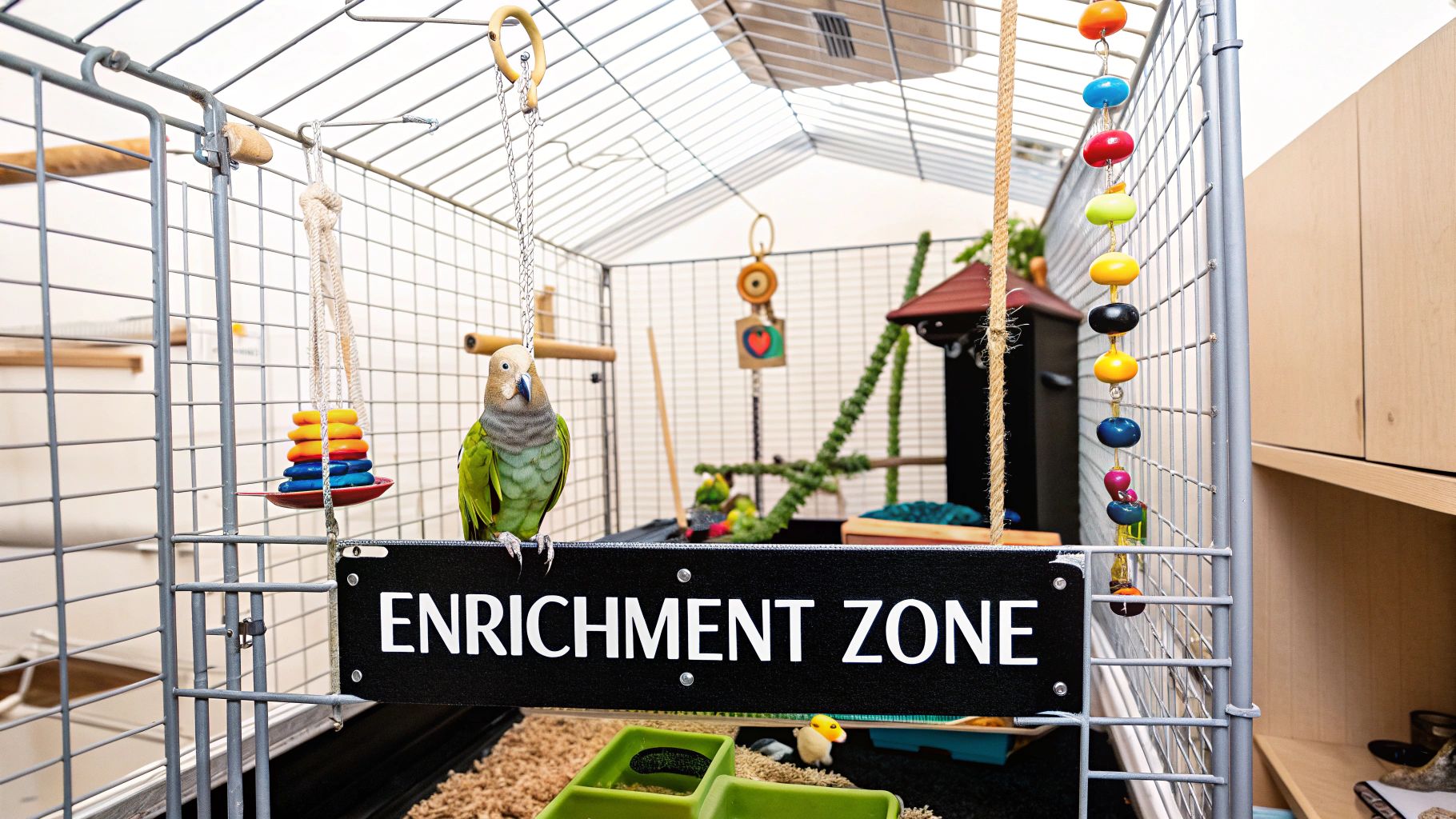
Think of that extra space in a large cage as your canvas. Your job is to layer it with chances for physical exercise and mental puzzles, turning it from a simple enclosure into your parrot's personal activity centre.
Building a Foundation with Perches
First things first: perches. These are so much more than just sticks for your bird to sit on; they are the highways, rest stops, and exercise equipment of their world. A classic mistake is providing just one or two dowel perches of the same diameter. This is a fast track to foot problems like arthritis or bumblefoot.
Variety is everything for healthy feet. You need to create a "perchscape" that encourages your parrot to constantly change its grip, exercising all the tiny muscles and tendons in its feet and legs.
- Varying Diameters: Get a mix of thick and thin perches in there. The ideal perch lets your bird's foot wrap around about two-thirds of the way.
- Different Textures: Combine natural wood branches (eucalyptus is fantastic and easy to find in Australia) with rope perches and even specially designed conditioning perches.
- Strategic Placement: Pop them at different heights and angles to get your bird climbing and moving. Just make sure no perch is directly above a food or water bowl—you don't want droppings ruining their dinner.
Imagine the cage layout as a three-dimensional jungle gym. A perch should lead to a toy, which leads to another perch, which leads to a food bowl. It’s all about encouraging constant movement.
The Importance of Strategic Feeding Stations
Where you put the food and water bowls is just as important as the perches. It’s tempting to group them all in one convenient spot near the bottom, but that’s a huge missed opportunity for enrichment.
Try separating the food and water bowls and placing them at opposite ends of the cage. This forces your bird to travel and get some exercise to get what it needs. This simple setup mimics the natural foraging they’d be doing out in the wild.
Expert Advice: An enriched environment is one that makes a parrot work for its rewards. By strategically placing resources and challenges, you encourage problem-solving and physical activity, which are essential for preventing boredom and related behavioural issues.
This approach is becoming more popular across Australia as owners realise the powerful link between a bird's environment and its wellbeing. Data shows that 55% of conure and Amazon owners in Victoria and Queensland upgraded to bigger cages after 2021. This correlated with a 65% drop in feather-plucking incidents, highlighting how a well-used large space can directly boost a bird's mental health.
Filling the Space with Purposeful Play
Now for the fun part: toys! A big parrot cage gives you the room to offer a rotating selection of toys that appeal to every one of your bird's instincts. A well-rounded toy box should include items from a few key categories. For a deeper look, check out our guide on essential parrot cage accessories.
-
Foraging Toys: These are puzzle-style toys where you hide treats, encouraging your bird to think, fiddle, and work for its food. This is probably the most important type of enrichment, as it taps directly into their powerful foraging drive.
-
Shreddable Toys: Parrots have a deep-seated need to chew and destroy things. Giving them safe, shreddable items made from cardboard, yucca, or soft pine satisfies this instinct and keeps their beak busy. It’s a fantastic outlet for this completely natural behaviour.
-
Preening and Comfort Toys: Softer toys made from rope or leather can satisfy a bird's need to preen. These can provide comfort and are great for birds who might be prone to over-preening their own feathers.
-
Swings and Active Toys: Swings, ladders, and boings encourage balance, exercise, and active play. Placing a swing or bungee high up in the cage gives them a great vantage point and a fun way to move about.
By thoughtfully combining these elements, you transform a simple cage into a rich, engaging world. This is how you unlock the full potential of your parrot cage big investment, ensuring it becomes a true sanctuary that nurtures your bird's body and mind.
Keeping Your Large Cage Clean and Maintained
Owning a parrot cage big enough for your bird doesn't have to mean a bigger cleaning headache. Honestly, with a smart and consistent routine, looking after a large cage can be surprisingly simple. The trick is to break the job down into daily, weekly, and monthly tasks.
This isn’t just about looks. A clean cage is absolutely vital for your parrot’s health, stopping nasty bacteria and mould from building up. A simple schedule takes the stress out of it and keeps their home a healthy sanctuary.
Your Simple Cleaning Schedule
The key to managing a large cage is consistency. By spreading the tasks out, you stop the mess from becoming a massive job, which makes everything quicker and easier.
Daily Tasks (5-10 Minutes):
- Wipe Down Surfaces: Give any grubby perches, toys, and bars a quick wipe with a damp cloth.
- Change Food and Water: This is non-negotiable. Wash and refill their food and water bowls to stop bacteria from growing.
- Replace Liner: Swap out the paper at the bottom of the cage to get rid of the day’s droppings and tossed food.
Weekly Duties (20-30 Minutes):
- Scrub the Tray: Pull out the cage tray and grate and give them a thorough scrub with a bird-safe cleaner.
- Wash Perches and Toys: Take everything out. Scrub all perches and toys with hot, soapy water (using a bird-safe soap), rinse them really well, and let them dry completely before putting them back. This is also the perfect time to rotate their toys to keep things fresh and interesting. Our Natural Bird Toys are easy to clean and fantastic for enrichment.
- Wipe Down Bars: Give all the cage bars a good wipe-down to remove any stuck-on food or droppings.
The Monthly Deep Clean
Once a month, it’s time for a total reset. This is your chance to give the entire cage a top-to-bottom scrub. If your cage has wheels, roll it outside or into a bathroom where you can hose it down. Take apart what you can and scrub every nook and cranny with a bird-safe disinfectant.
Make sure you rinse absolutely everything to get rid of any residue before you put it all back together. For extra tips on keeping your bird's space pest-free, you might find our guide on dealing with common parasites useful for creating a truly clean environment.
Bird-Safe Cleaning in Australia
It's so important to only use products that won't harm your parrot. Steer clear of harsh chemicals like bleach, ammonia, or strong-smelling household cleaners—their fumes can be toxic.
Expert Advice: The best bird-safe cleaner is often one you can make yourself. A simple mix of one part white vinegar to two parts water works brilliantly for regular cleaning. For a vet-grade disinfectant, look for F10SC, a product widely recommended by avian vets across Australia.
Routine Maintenance Checks
Finally, use your cleaning time to do a quick safety inspection. Run your hands along the bars to check for rust, sharp bits, or peeling powder-coating. Check the strength of all the welds and make sure the door latches are secure and working properly.
Catching wear and tear early ensures your parrot’s big cage stays a safe and secure home for years to come.
Got Questions About Big Parrot Cages?
Choosing a massive new cage for your parrot is a big step, and it’s totally normal to have a few questions buzzing around your head. As Aussie parrot care specialists, we’ve heard just about all of them. Here are some of the most common ones we get, with straight-up answers from our experience.
How on Earth Do I Move a Cage That Heavy?
This is easily one of the first things people ask, and for good reason! Thankfully, most quality large parrot cages are designed with this exact problem in mind. The majority sold here in Australia come with sturdy castor wheels, so you can just roll them around for cleaning or a change of scenery.
Before you commit, though, double-check two things: that the wheels are tough enough for the cage’s weight, and that they have a proper locking mechanism. You absolutely need locking wheels—it's a critical safety feature to stop the cage from rolling away unexpectedly.
If you’re looking at a super-heavy model or one without wheels, a little trick is to use furniture sliders. Just pop them under the legs. They work like a charm on hard floors and let you slide the cage with minimal effort, saving your back in the process.
My Parrot Looks Terrified of Its New Cage. What Should I Do?
Deep breath—this is a completely normal reaction. Parrots are naturally wary of big, new things in their space, and a giant cage can feel pretty intimidating at first. The secret to a smooth move is all about patience and making it a positive experience.
Start by placing the new cage right next to the old one for a few days. This lets your bird get used to the look and feel of it from the safety of their current home.
Next, you want to turn that new cage into the most exciting place in the room.
- Scatter their absolute favourite treats inside.
- Pop in a familiar, much-loved item to make it feel a bit more like home.
- Leave the door wide open and let your parrot explore on their own schedule.
Whatever you do, don't force them in. A successful, stress-free move can take a few days or even a couple of weeks. Just let your bird set the pace.
Can a Parrot Cage Actually Be Too Big?
It's a great question. While your parrot can never have too much internal space to fly, climb, and play, the bar spacing can definitely be too wide. This is probably the single most important safety check when you’re sizing up.
Expert Advice: A cage built for a big Macaw will have gaps between the bars that are dangerously wide for a smaller bird like a Conure or Cockatiel. A little bird can easily get its head stuck, which can lead to serious injury or worse.
The goal is always to get the biggest cage you can possibly fit in your home, but only after you’ve confirmed the bar spacing is 100% safe for your particular type of parrot. You’re aiming for a home that’s big enough for flight, not one with gaps big enough for an escape attempt or an accident.
What's Next?
Getting the cage right is a massive step, but it's just one piece of the puzzle in creating a happy, thriving life for your feathered friend. The journey into great parrot care is always evolving, and it's one of the most rewarding things you can do.
If you're wondering what to tackle next, our guide on essential parrot supplies in Australia is the perfect place to start. It will help you fill that perfectly chosen cage with everything your bird needs to feel right at home.
Keep Reading
- What Are The Best Parrot Toys?
- How To Get Your Bird To Play With Toys
- DIY Bird Toys
Disclaimer Summary: The information in this article is general in nature and may include external links or resources not created by Lou Lou Bells Bird Toys. Every bird is unique, so we encourage you to seek personalised advice from your own veterinarian or avian specialist. For full details, please read our complete disclaimer here.