
When you bring a bird into your home, you're not just giving them a place to live—you're building their entire world. The bits and pieces you put inside that cage are far more than just decorations; they're the essential tools your bird needs to stay happy, healthy, and mentally sharp.
A bare cage can quickly lead to a bored, stressed bird, which is when problems like feather plucking can start. The right setup, however, turns a simple cage into a vibrant, enriching space that encourages all the things your bird would naturally do in the wild.
Building a Thriving Home for Your Feathered Friend
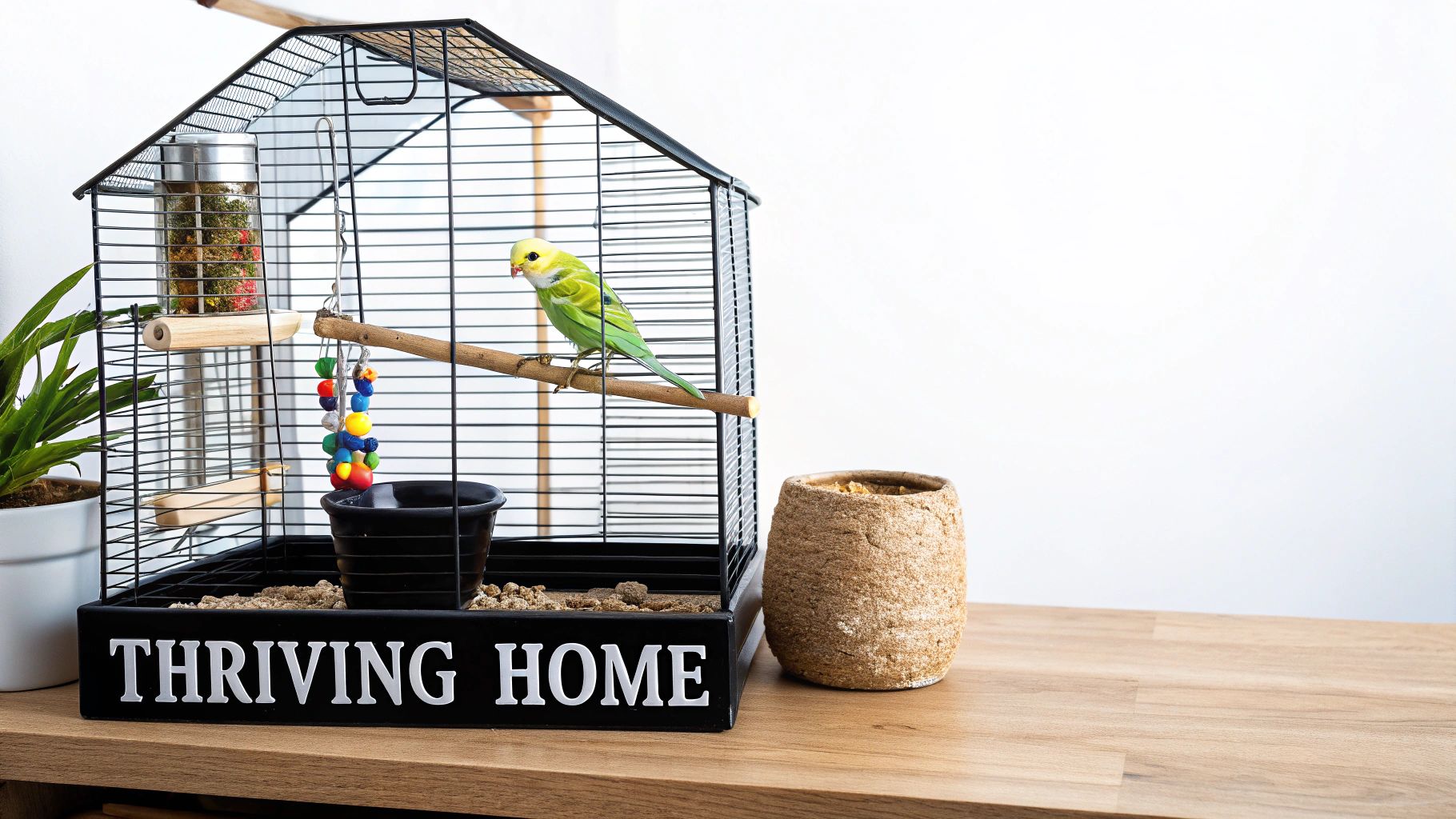
Welcome to the ultimate guide for Australian bird owners! Think of setting up a bird cage as a bit like being an interior designer, where every single item has a real purpose. From giving them a good workout to keeping their clever minds busy, the right accessories can make a massive difference to your pet's quality of life.
In the wild, birds don't sit still. Their days are filled with flying, foraging for food, playing, and socialising. By thoughtfully choosing and arranging accessories, you can help replicate these natural activities, giving them all the stimulation they need to thrive.
Core Elements of an Enriched Cage
Throughout this guide, we'll walk through the key types of accessories that are the absolute foundation of a happy bird's home. These aren't just optional extras; they're fundamental for your bird's wellbeing.
- Perches: Your bird will spend most of their time on these, so getting them right is vital for foot health and comfort.
- Toys: From things they can shred to bits to puzzles that make them think, toys are critical for mental engagement.
- Foraging Tools: These turn mealtime from a simple snack into a fun challenge, tapping into their natural instinct to search for food.
Expert Advice: An avian specialist from the Australian Veterinary Association points out, "An enriched environment is non-negotiable for companion birds. A variety of textures, challenges, and comforts within the cage directly contributes to a bird's psychological stability and physical fitness, reducing the likelihood of many common health issues."
Choosing high-quality items that are right for your specific bird is crucial. A toy that's perfect for a little budgie could be a serious hazard for a powerful galah. We’ll get into all the details of how to make safe, effective choices for your feathered friend, ensuring their cage is a true sanctuary.
The Foundation of a Healthy Bird Cage
Imagine if you had to wear the same pair of shoes every single day. Walking, running, standing around—everything in the same footwear. It wouldn’t take long for your feet to get sore, cramped, and seriously unhealthy. That's exactly what life is like for a bird stuck with a single, uniform perch.
The absolute foundation of a healthy and happy cage setup starts with the surfaces your bird lives on. Offering a variety of perches is one of the most powerful things you can do for your bird’s physical wellbeing. When you provide different diameters, textures, and shapes, you’re forcing them to constantly adjust their grip.
This variation is critical. It exercises all the tiny muscles and tendons in their feet, stops pressure sores from forming, and helps prevent nasty conditions like bumblefoot, which is unfortunately common in Australian companion birds.
More Than Just a Place to Stand
The best perch setup is a mix-and-match of different materials, creating a functional landscape inside the cage. Don’t just think of them as sticks—think of them as specialised furniture, where each piece serves a unique purpose in your bird's daily life.
Your bird’s perch collection should include:
- Natural Wood Perches: Native Australian woods like eucalyptus or bottlebrush are perfect. Their irregular shapes, knots, and textures are exactly what their feet are designed for, mimicking wild branches and providing the best possible exercise.
- Grooming Perches: These have a rough, textured surface designed to help keep nails and beaks naturally trimmed. Use them sparingly, though. They should never be the main sleeping perch, as the abrasive surface can irritate the delicate skin on the bottom of their feet.
- Rope Perches: Soft, bendy, and comfortable. These offer a great resting spot and can be twisted into fun curves, adding another layer of variety to their environment. Just make sure they're made from bird-safe, natural fibres.
When you're arranging the cage, place perches at different heights to encourage climbing and movement. Our detailed guide on choosing the right perch for birds has even more in-depth advice on getting the selection and placement just right.
Your Bird's Personal Gym
Beyond the stationary perches, you've got dynamic accessories like swings and ladders. These are your bird’s personal gym equipment. They aren’t just furniture; they’re tools that transform the cage into a playground, promoting both physical fitness and mental sharpness.
Swings are fantastic for building balance and core strength. The simple act of stabilising themselves on a moving surface is a brilliant workout. Ladders are just as important, encouraging climbing—a natural behaviour that strengthens leg muscles and provides excellent exercise. Position them strategically to create fun little pathways between perches and feeding stations, turning simple movement into an engaging challenge.
An avian specialist from a leading Sydney clinic notes, "We often see birds with atrophy-related health issues stemming from a lack of physical challenges in their cage. Incorporating swings and ladders isn't just for fun; it's preventative medicine that supports a bird's musculoskeletal and cardiovascular health."
Choosing the Right Size and Material
Of course, the safety and effectiveness of all these accessories come down to choosing the right ones for your particular bird. A perch that’s too wide or too narrow for your bird’s grip can cause just as many problems as having only one dowel perch. As a rule of thumb, your bird’s foot should wrap around about two-thirds of the perch's circumference.
For materials, always go for bird-safe options. Untreated natural woods, 100% natural fibres like cotton or sisal for ropes, and durable, non-toxic plastics for ladders are non-negotiable. And if you have a larger parrot with a powerful beak, like a Macaw or a galah, make sure any wooden parts are tough enough to handle some serious chewing.
By carefully selecting these fundamental cage accessories, you’re not just filling space—you’re laying the groundwork for a safe, healthy, and wonderfully enriching world for your feathered companion.
Turning Mealtime into a Mental Workout
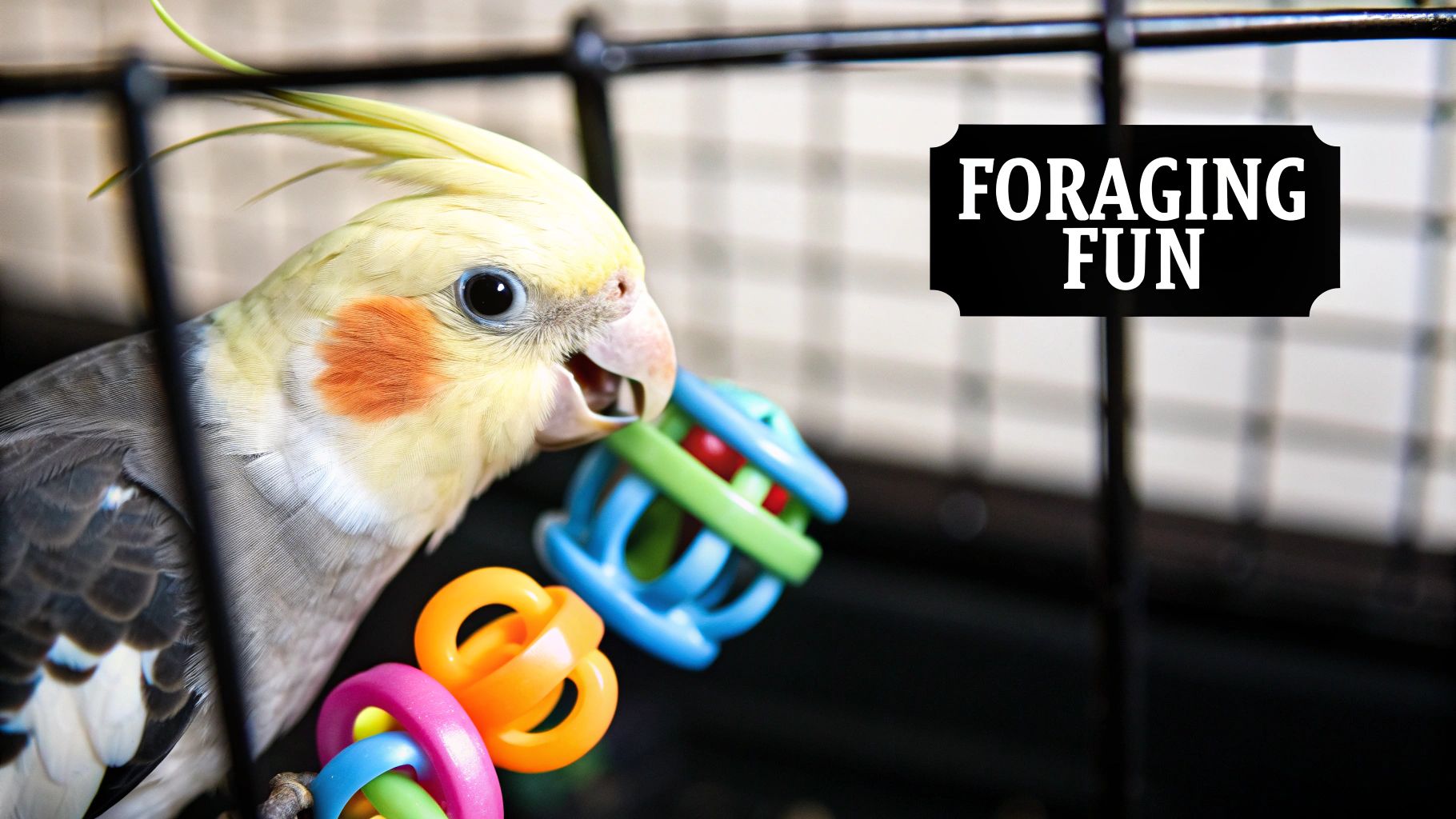
Out in the wild, a bird's entire day revolves around the hunt for food. It’s a full-time job of searching, problem-solving, and figuring things out. A simple food bowl, while clean and convenient for us, essentially serves dinner on a silver platter, stripping away one of their most fundamental instincts.
This is exactly where foraging comes in. It’s the simple act of making your bird work for its food, turning a boring meal into an exciting mental puzzle. Making this one change is probably the most powerful thing you can do to tackle boredom and curb stress behaviours like feather plucking or screaming.
Foraging accessories are designed to tap directly into this instinct. They come in all shapes and sizes, from dead-simple puzzles for beginners to complex contraptions that will test the smartest parrot. By adding foraging to their routine, you’re not just feeding them—you’re enriching their lives and satisfying their incredibly curious minds.
Getting Started with Foraging
When you first introduce a bird to foraging, you want it to be a positive, rewarding experience. If it’s too hard right off the bat, they’ll likely just give up. The trick is to build their confidence with some easy wins.
Here's a simple way to get them going:
- Start Obvious: Pop a high-value treat, like a sunflower seed or a bit of almond, into a very basic foraging toy where they can clearly see it and get to it without much effort. You want them to immediately grasp the idea that a little work equals a tasty reward.
- Gradual Progression: Once they’ve got the hang of that, slowly level up the difficulty. Maybe you introduce a toy that needs them to pull out a small drawer or lift a lid.
- Mix it Up: Don't just hide food. You can stuff toys with things they love to shred, like crinkle paper or yucca pieces, and tuck a few treats inside. This adds another layer to the puzzle and satisfies their urge to chew and destroy at the same time.
Expert Advice: Pay close attention to your bird's body language. If they look frustrated or just walk away, the toy might be a bit too advanced for now. Just step back to an easier puzzle to keep things fun and encouraging.
For a deeper dive into different strategies, you can check out our complete guide on introducing foraging toys for birds.
Essential Foraging Toys for Every Bird
Having a good variety of foraging toys is key to keeping the challenge fresh and interesting. For medium to large parrots like Conures, Amazons, African Greys, and Macaws, the need for this kind of stimulation is especially high. Many Australian owners of large parrots spend a significant portion of their budget on keeping up with their bird's powerful beak and clever mind.
Here are a few great options to get you started:
- For Beginners: The Foraging Toy for Pet Birds is a perfect first puzzle. Its straightforward design lets birds see the treats, encouraging them to get interactive and figure out how to get their prize.
- For Small Birds: Budgies and cockatiels will have a blast with the Foraging Toy for Small Birds. It’s sized perfectly for smaller beaks and feet, giving them a challenge that's stimulating but not overwhelming.
- For the Shredders: The Foraging Shredder Box is an absolute winner for birds that live to rip and tear. You can stuff it with treats and paper, hitting two natural instincts—foraging and shredding—in one go.
Choosing the Right Food and Water Bowls
Even with a big focus on foraging, your bird still needs standard bowls for fresh water and their daily base diet. When you’re choosing these essential cage bird accessories, the material you pick makes a huge difference.
Plastic bowls might be cheap, but they scratch easily, creating tiny grooves where bacteria can hide and multiply. For both hygiene and durability, stainless steel is the top choice recommended by avian vets across Australia. It's non-porous, tough as nails, easy to properly sanitise, and won't leach nasty chemicals into your bird’s food or water. Spending a little extra on quality stainless steel bowls is a simple but critical step in looking after your bird's health for the long haul.
Selecting the Right Accessories for Your Bird
Choosing accessories for your bird’s cage isn’t just about making it look nice. Think of it less like decorating a room and more like outfitting a workshop—every item needs a purpose. That purpose is to keep your bird safe, busy, and mentally sharp.
What’s a fantastic toy for a tiny budgie could be a serious choking hazard for a galah, whose beak is built for serious demolition. Every single choice has to be weighed against your bird’s species, size, and even their individual personality. A shy bird might be terrified of a big, noisy toy, while a bold one would get bored of a simple accessory in five minutes flat. It’s all about finding that sweet spot.
Matching Accessories to Your Bird
The best place to start is by watching your bird. Understanding their natural instincts is everything. Are they a shredder who loves to tear things apart? A chewer who needs to get their beak into something solid? Maybe they're a climber, or a little genius who loves solving puzzles.
Observing what they naturally do gives you a massive clue about what they'll actually enjoy. A cockatiel, for example, might happily spend hours meticulously shredding a soft toy made of natural fibres. An Eclectus parrot, on the other hand, will likely gravitate towards a chunky wooden block they can really sink their beak into. When you shop with their instincts in mind, you’re setting them up for success.
Expert Advice: An avian vet from Melbourne often tells her clients, "Don't just buy what looks fun to you. Consider your bird's beak strength first and foremost. A toy should be destructible enough to be satisfying but durable enough that it doesn't break into small, ingestible pieces on the first day."
That’s a golden rule right there. The aim isn't to find something indestructible; it’s to provide fulfilling engagement. A toy that a bird can slowly but surely destroy gives them a huge sense of accomplishment.
Accessory Guide for Popular Australian Pet Birds
To give you a head start, let’s look at the specific needs of some of Australia's favourite companion birds. Each species has its own quirks and requirements when it comes to cage accessories.
This table breaks down what works best for a few common species, from the types of perches their feet will thank you for to the kinds of toys that will keep their minds ticking over.
| Bird Species | Recommended Perch Types | Ideal Toy Types | Foraging Difficulty | Key Safety Considerations |
|---|---|---|---|---|
| Budgerigar | Natural thin branches (e.g., gum tree), rope perches, varied plastic perches. | Small bells, ladders, swings, shreddable toys made of paper or yucca. | Beginner | Avoid small, loose parts that can be swallowed. Ensure any bells have secure clappers. |
| Cockatiel | Natural branches, grooming perches, soft rope perches. | Shredding toys, foraging puzzles, foot toys, swings. | Beginner to Intermediate | Prone to night frights, so avoid cluttering the cage which can cause injury. |
| Galah | Thick, sturdy native branches, durable grooming perches. | Large wooden blocks, tough foraging toys, durable shreddables. | Intermediate to Advanced | Immense beak strength requires very durable materials. Avoid soft plastics or thin metals. |
| Conure | Varied natural wood, rope perches, platform perches. | Puzzle toys, shreddables, noisy bell toys, swings. | Intermediate | Highly intelligent and can get bored easily. Require constant stimulation and toy rotation. |
Remember, this is a starting point. Your bird's individual personality is the final piece of the puzzle, so always pay attention to what they love (and what they ignore!).
Safe and Unsafe Materials
This part is non-negotiable. Knowing which materials are safe and which are toxic is one of the most critical responsibilities of a bird owner. Your bird is going to chew, lick, and rub against everything in its cage, so you have to be absolutely certain nothing in there can harm them.
Safe Materials to Look For:
- Wood: Untreated native Australian woods are fantastic. Think Eucalyptus, Bottlebrush, and Banksia. Steer clear of treated pine at all costs.
- Metal: Stainless steel is the gold standard for cages, food bowls, and toy hardware. Zinc and lead are toxic and should be avoided like the plague.
- Fibres: 100% natural fibres like cotton (used carefully and checked for long frays), sisal, jute, and seagrass are perfect for shredding and preening toys.
Take cockatiels, for instance. They are one of Australia's favourite companion parrots, and many local businesses now create toys specifically designed for a 'tiel's beak strength and play style. You can explore more about these market trends and their impact on local makers.
On the flip side, plenty of common materials are downright dangerous.
Toxic Materials to Avoid at All Costs:
- Plastics: Soft, cheap plastics that can be broken off and swallowed.
- Metals: Zinc, lead, and copper are extremely toxic to birds.
- Fabrics: Synthetic fibres like nylon and polyester can cause crop impaction if ingested.
- Woods: Stay away from cherry, cedar, and oak. Any wood that has been treated, painted, or stained is also a no-go.
By zeroing in on your specific bird's needs and being obsessive about material safety, you can create a cage environment that isn't just a bunch of fun—it's a genuinely safe and healthy home.
Designing Your Bird's Ultimate Playground
Having a great stash of cage accessories is a fantastic start, but how you arrange them inside the cage is just as important. Think of yourself as an interior designer for your bird's home. The goal is to create a space that encourages movement, exploration, and natural behaviours, turning a simple cage into a dynamic, engaging environment.
A well-designed cage isn't just a random jumble of toys and perches; it’s a thoughtfully planned space with distinct zones. By creating separate areas for different activities, you nudge your bird to move around and stay active all day long.
Creating Zones for a Happier Bird
Just like we have a kitchen, a living room, and a bedroom, birds appreciate having specific areas for certain activities. A good layout prevents them from becoming little couch potatoes, sitting in one spot all day. It’s all about encouraging them to travel with purpose.
- The Dining Zone: Place food and water bowls away from the main sleeping perch. This simple move ensures they have to climb, hop, or even fly to get a meal, which is a brilliant form of natural exercise.
- The Play Zone: This should be the most exciting part of the cage, filled with a mix of shreddable toys, puzzles, and swings. Position it in an area with good visibility so they feel secure while they're playing.
- The Rest Zone: Every bird needs a quiet corner to retreat to. Place their favourite sleeping perch high up in the cage, away from the daily hustle and bustle, to give them a sense of safety and security.
For birds who get supervised time outside their cage, a dedicated spot like a play gym can be a game-changer for enrichment. Our guide on the benefits of a bird play gym has some great ideas for extending their playground beyond the cage walls.
The Art of Toy Rotation
Ever noticed how a child gets bored with a new toy after a few days? Birds are just as clever and can quickly lose interest in their environment if nothing ever changes. This is why a toy rotation schedule is one of the most effective tricks for keeping their minds sharp.
Expert Advice: Don't swap everything out at once. A complete cage makeover can be stressful for a lot of birds. Instead, aim to change out two or three toys every week or two from a 'toy library' you keep in storage. This keeps things feeling fresh and exciting without being overwhelming.
This simple routine ensures there's always something new to investigate, which helps prevent boredom and the behavioural problems that often come with it.
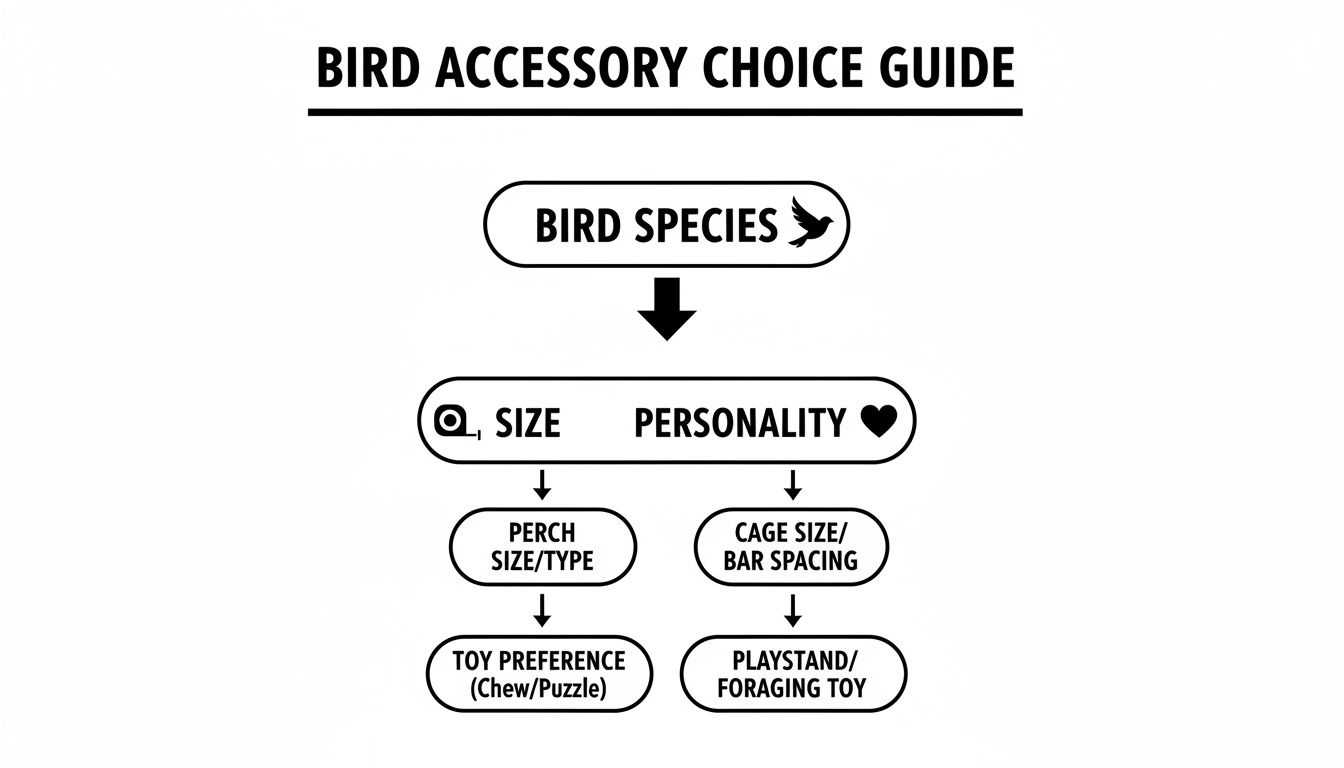
This flowchart neatly sums up the thinking process for choosing accessories. It all starts with your bird's species, reinforcing that every decision—from the type of toy to where you hang it—should be tailored to your specific bird's needs, size, and personality.
Cage Layout Do's and Don'ts
Finally, a few practical rules of thumb can make all the difference between a functional playground and a stressful, cluttered mess.
- DO ensure there are clear flight paths across the cage. Your bird should be able to move easily from one side to the other without having to navigate an obstacle course.
- DON'T place perches directly over food and water bowls. This is a simple but crucial hygiene rule to stop droppings from contaminating their food and water.
- DO provide different levels. Use ladders and varied perch heights to create a multi-level environment that encourages climbing and exploring.
- DON'T over-clutter the cage. While enrichment is key, too many accessories can shrink their usable space and cause anxiety. It's all about quality and strategic placement, not just quantity.
Keeping Your Bird's Accessories Safe and Clean
A clean cage is really the bedrock of a healthy, happy bird. Think of it like our own homes – your bird's space needs regular tidying up to stop nasty bacteria from building up and to keep them safe. Juggling all the different cage bird accessories might feel like a big job, but if you break it down into a simple schedule, it becomes completely manageable.
The best way to tackle it is with a multi-layered approach. Some things need a quick look every day, while others are perfectly fine with a weekly or monthly clean. This system keeps their world hygienic without you needing to pull everything apart for a deep clean every single day. A solid routine is your best defence against common health problems.
Your Cleaning Schedule
Sticking to a schedule helps you stay on top of things so nothing gets missed. It’s all about building good habits that protect your bird’s wellbeing for the long haul.
Daily Tasks (5-10 minutes):
- Food and Water Bowls: These need a thorough wash with hot, soapy water every single day, followed by a complete rinse. Bacteria can grow surprisingly fast in leftover food and old water.
- Spot Clean: Do a quick wipe-down of any droppings you see on perches, toys, and the cage floor. Using something simple like a bird cage seed catcher can make this daily tidy-up much faster by keeping the mess contained.
Weekly Tasks (20-30 minutes):
- Full Cage Wipe-Down: Grab a bird-safe disinfectant and give the cage bars, base, and any non-porous accessories (like plastic or stainless steel toys) a proper wipe.
- Perch Scrub: Wooden perches need a good scrub to get rid of any built-up grime. A stiff brush and a bird-safe cleaning solution will do the trick.
Expert Advice: When you're choosing a cleaner, always go for a vet-approved, bird-safe disinfectant. A lot of household cleaners, even the "natural" ones, release fumes that can be toxic to a bird's incredibly sensitive respiratory system. Here in Australia, F10SC Veterinary Disinfectant is a widely trusted and recommended choice.
Inspecting for Wear and Tear
Cleaning time is also the perfect moment for a quick safety check. Birds are tough on their belongings – they chew, climb, and play hard, which naturally leads to wear and tear. A quick inspection can prevent a serious accident before it happens.
Keep an eye out for:
- Frayed Ropes: Long threads hanging off rope perches or cotton toys are a serious entanglement hazard. Trim any frays short straight away, or just get rid of the toy if it's looking too shabby.
- Splintered Wood: Wooden toys that have been chewed heavily can develop sharp splinters. You can sand them down if it's a minor issue, but if the toy is becoming hazardous, it’s time to remove it.
- Broken Parts: Check for any cracked plastic pieces or broken metal links that could potentially injure your bird.
Regularly inspecting and cleaning your bird’s accessories isn't just another chore; it’s a vital part of being a responsible bird owner. This simple, proactive approach makes sure their playground stays a safe, healthy, and fun place for them to be.
Common Questions on Bird Accessories Answered
When you're setting up a cage, a million questions can pop into your head. It's totally normal. To help you build the best and safest home for your bird, we've gathered some of the most common queries we hear from Aussie bird owners and answered them with practical, down-to-earth advice.
How Often Should I Change My Bird's Toys?
To stop your bird from getting bored and to keep their mind sharp, it’s a good idea to swap a few toys out every one to two weeks. The key is not to change everything at once. A complete cage makeover can be really stressful for some birds, making them feel like they've landed in a totally new and scary place.
A better way to think about it is having a "toy library" stashed away. Just pull out two or three different items and swap them with ones currently in the cage. This keeps their space feeling fresh and interesting without the shock. Always watch how your bird reacts to a new toy and introduce it gently so they feel secure.
Can I Use Natural Branches from My Garden in Australia?
It’s tempting to grab a branch from the backyard, but you have to be incredibly careful. Lots of native plants are actually toxic to birds. Some safe Australian options include Eucalyptus, Bottlebrush, and Grevillea, but only if you know for certain they've come from an area free of pesticides, herbicides, and fumes from traffic.
Before you even think about putting a branch in the cage, it must be thoroughly scrubbed clean. After that, bake it in an oven on a low heat to sanitise it completely, which kills off any lingering bacteria or insects. If you have the slightest doubt about what kind of tree it is or whether it's safe, your best bet is always to buy prepared natural wood perches from a trusted Australian supplier.
What Are the First Accessories I Should Buy for a New Budgie?
When you bring a new budgie home, it's all about starting with the basics. You don't want to overwhelm them while they're still finding their feet. A solid starter kit should include:
- At least three perches with different textures and diameters to keep their feet healthy.
- A simple swing that’s the right size for a small bird.
- A cuttlebone or a mineral block for beak conditioning and extra calcium.
- A couple of small, shreddable toys made from safe stuff like paper or yucca.
- Good quality stainless steel bowls for food and water.
Once your budgie has settled in and is feeling confident in their new home, you can start introducing more complex cage bird accessories, like foraging puzzles and more intricate toys.
Keep Reading
- How to Choose the Right Perch For Birds
- The Ultimate Guide to Foraging Toys For Birds
- The Benefits of a Bird Play Gym
Disclaimer Summary:
The information in this article is general in nature and may include external links or resources not created by Lou Lou Bells Bird Toys. Every bird is unique, so we encourage you to seek personalised advice from your own veterinarian or avian specialist. For full details, please read our complete disclaimer here.