
When you look at a parrot toy, what do you see? A simple plaything? For your bird, it’s so much more than that. The right bird toys for parrots are essential tools—they’re a direct line to their wild instincts, giving them challenges that keep boredom at bay and help them live a happy, healthy life. Choosing the right enrichment isn't just a purchase; it's a real investment in your bird’s happiness.
Why Parrot Enrichment Is More Than Just Play
Ever stop and wonder what your parrot would be doing if they were in the wild? From the dense forests where Eclectus parrots forage to the open woodlands that are home to our native Galahs, a wild parrot's day is packed. It’s a constant whirlwind of solving problems, socialising with the flock, and searching for the next meal.
That busy, bustling lifestyle is hardwired right into their DNA. When we bring these incredibly intelligent creatures into our homes, that deep-seated need for activity and mental work doesn't just switch off. Without a healthy outlet, all that pent-up energy can bubble over and lead to some of the common behavioural issues many Australian parrot owners know all too well.
The Dangers of an Understimulated Bird
An unoccupied parrot is often a stressed parrot. When they don't have enough engaging things to do, that frustration can show up in some pretty destructive ways, turning a cheerful companion into an anxious one. Without proper enrichment, you might see problems like:
- Feather Plucking: A repetitive, self-destructive habit often tied directly to anxiety or sheer boredom.
- Excessive Screaming: Birds will often resort to loud, persistent calls to get attention or just vent their frustration.
- Destructive Chewing: This can go way beyond their toys, extending to cage bars, your furniture, or other household items.
- Cage Aggression: A bird might become territorial and aggressive when their environment feels stale and uninteresting.
As an avian behaviour consultant, I often explain to clients that a toy isn't a luxury—it's a necessity. Providing a rotating selection of shreddable, foraging, and puzzle toys is one of the most effective strategies for preventing and managing behavioural problems. It gives them a 'job' to do, which is crucial for their psychological health.
The Role of Toys in a Parrot's World
This is where bird toys for parrots come into their own. They aren’t just cage decorations; they are the building blocks of a healthy, stimulating environment. Providing the right parrot supplies in Australia is all about recreating the challenges and activities they’d find in their natural habitat.
Foraging toys mimic the hunt for food, while shreddable toys satisfy that powerful, natural urge to chew and destroy—something they do in the wild for nest-building and maintenance.
The growing demand for high-quality enrichment shows that bird owners are really starting to get it. The global bird toy market, particularly in the Asia Pacific region which includes Australia, was valued at USD 1.42 billion and is set to grow significantly. This boom is driven by dedicated owners looking for better ways to meet the complex needs of their feathered family members.
Understanding the Essential Types of Parrot Toys
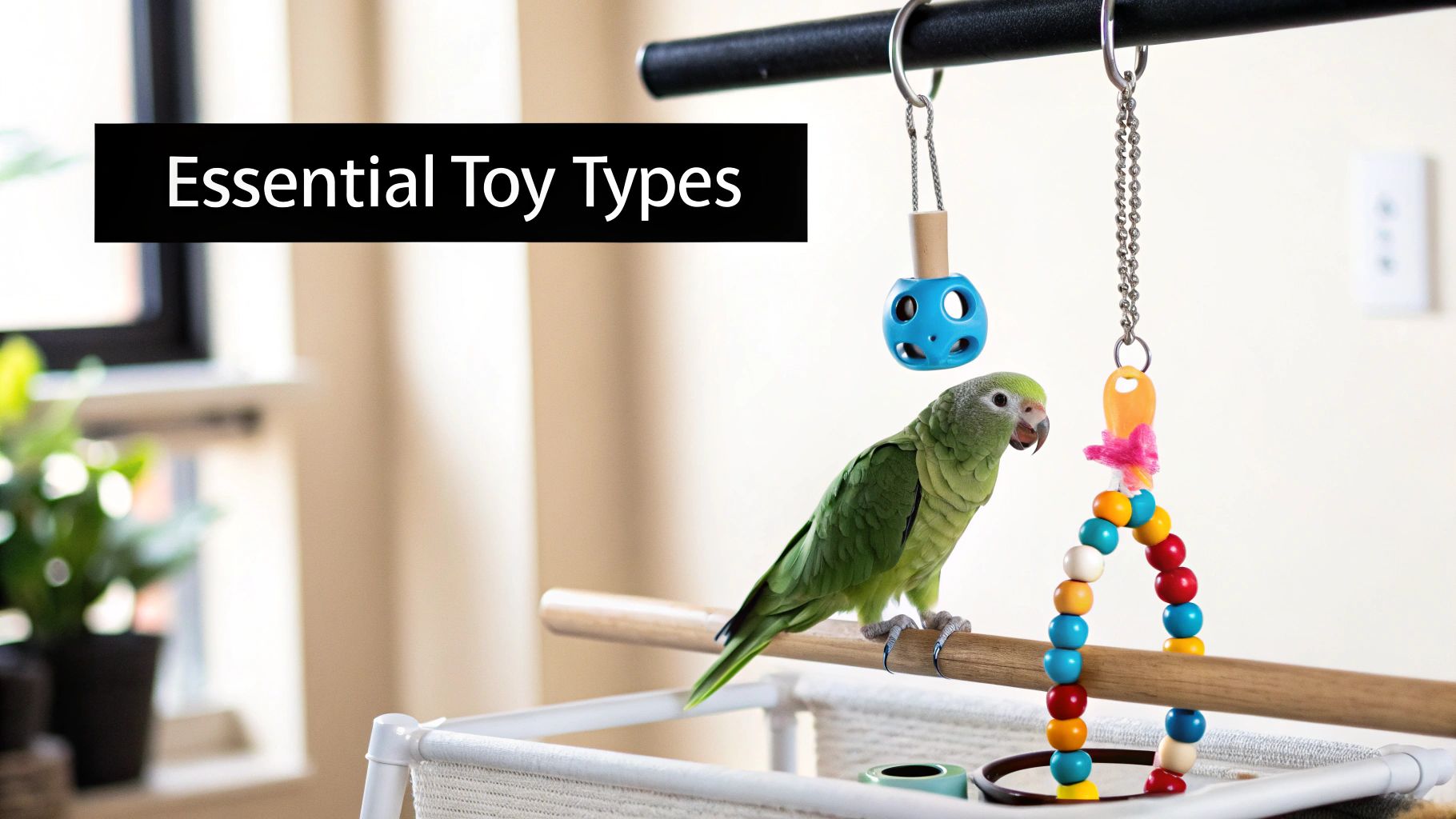
Stepping into the world of bird toys can feel a bit overwhelming at first. With all the different shapes, colours, and textures, how do you figure out what your parrot actually needs? It helps to think of it like a balanced diet—each type of toy serves a different, vital purpose for your bird's wellbeing.
Not all toys are created equal in a parrot's eyes. What fascinates a Galah might be completely ignored by a Budgie, but every single parrot benefits from having a variety of toys that cater to their natural instincts. Getting your head around these core categories is the first step to creating a truly engaging home for your feathered mate.
The Satisfying Crunch of Shredding and Chewing Toys
Parrots have a deep, powerful urge to chew and destroy things. In the wild, this behaviour is used for everything from hollowing out a nesting spot to keeping their beaks in top shape. Giving them a safe outlet for this instinct isn't just a good idea—it’s absolutely essential for a happy pet parrot.
Think of shreddable and chewing toys as your parrot's personal renovation project. They're a safe, productive way to satisfy that destructive drive.
- Shreddable Toys: These are made from softer materials like palm leaf, seagrass, cardboard, or paper. They're perfect for smaller birds or parrots who enjoy the meticulous process of destruction, offering immense sensory satisfaction as they rip and tear.
- Chewable Toys: Often made from bird-safe woods like pine, balsa, or native Australian timbers, these toys are designed for beaks that mean business. They provide a tougher challenge, helping to exercise jaw muscles and prevent beak overgrowth.
Giving a parrot a block of soft pine to demolish is far better than discovering they've turned their attention to your windowsill or a favourite piece of furniture. It channels their energy exactly where it needs to go.
Foraging Toys and the Thrill of the Hunt
In nature, a parrot spends a huge chunk of its day just working for food. This is the act of foraging, and it's a critical mental workout. Simply dumping food in a bowl takes this fundamental challenge right out of their daily life.
Foraging toys are basically puzzle boxes for birds. They require your parrot to think, manipulate, and problem-solve to get to their reward, whether it’s a favourite nut, seed, or pellet. This process is incredibly rewarding and helps to build their confidence and smarts.
Expert Tip: Start with simple foraging toys to avoid frustration. As your bird gets the hang of it, you can introduce more complex puzzles to keep them challenged. The goal is to stimulate their mind, not discourage them.
Engaging their brain this way is one of the most effective methods to combat boredom. If you're looking for inspiration, you can learn more about how to introduce your flock to the wonders of foraging toys for birds and see the difference it can make.
Keeping Feet and Minds Busy with Foot Toys
Foot toys are the avian version of fidget spinners. These are small, lightweight toys designed to be held, manipulated, and tossed around by your parrot's feet. They might seem simple, but they play a massive role in developing dexterity, coordination, and fine motor skills.
For birds like Cockatoos and Galahs, who are known for their love of holding and investigating objects, foot toys are an absolute must. They provide a fantastic outlet for birds when they're out of their cage, giving them something to focus on and stopping them from seeking out less-desirable "toys" like your keys or the TV remote.
Essential Toys for Movement and Comfort
Beyond destruction and puzzles, a parrot's environment needs toys that encourage physical activity and provide comfort. These are just as crucial for their overall health.
- Swings and Boings: These toys are fantastic for promoting balance and exercise. A swinging perch encourages your bird to use different muscle groups in their feet and legs, which helps prevent foot-related health issues like pressure sores.
- Perches of Varying Textures: A cage should never have just one type of perch. Offering different materials and diameters—from natural branches to rope perches—is absolutely essential for foot health.
- Preening and Comfort Toys: Soft toys made from fleece or untampered natural fibres can satisfy a parrot's preening instinct. They offer a sense of security and can be particularly comforting for single birds, mimicking the feeling of being part of a flock.
Choosing Safe Materials for Your Parrot
A parrot’s beak is an incredible tool. It’s strong enough to crack the toughest nut, yet gentle enough to preen a single feather. Because of that power, one of the most important jobs we have as parrot owners is choosing toys made from safe materials.
It can feel a bit overwhelming trying to figure out which woods, metals, and plastics are okay. But once you know the basics, you'll be able to spot a safe toy from a mile away.
Think of it this way: your parrot explores the world with its beak, just like a toddler uses their hands. Everything gets a nibble, a chew, or a test to see if it can be pulled apart. That’s why every single piece of a toy has to be non-toxic. It's simply not negotiable for their health.
Bird-Safe Woods and Natural Materials
Wood is a brilliant material for parrot toys. It hits that deep, instinctual need to gnaw and destroy things. But not all woods are created equal. The golden rule is to stick with untreated, natural timbers.
Safe choices usually fall into two camps:
- Softwoods: Pine, balsa, and yucca are perfect for small to medium birds. They offer a satisfying crunch and are easy to shred, letting your bird safely get that destructive urge out of its system.
- Hardwoods: For the real power-chewers like Cockatoos and Macaws, you need something tougher. Here in Australia, woods like bird-safe eucalyptus, bottlebrush, and grevillea are fantastic choices. Just make sure they're sourced from areas free of pesticides.
- Natural Fibres: Don't forget materials like seagrass, coconut husk, palm leaf, and corn husks. They're perfect for shredding and preening toys and offer interesting textures that keep birds busy.
It’s also vital that any natural material is clean and chemical-free. For example, some people wonder about adding things like almond shells. To learn more about specific natural parts, you can read our detailed guide on the safety of almond shells in parrot toys.
Understanding Safe Metals and Plastics
The bits and pieces holding a toy together are just as important as the parts meant for chewing. A lot of cheap, imported toys use metals that can be toxic over time.
When it comes to metal hardware on bird toys, there is only one truly safe choice: stainless steel. It's tough, doesn't rust, and won't leach heavy metals. Be wary of any shiny silver hardware that isn't clearly labelled as stainless steel—it's likely zinc-plated and dangerous.
Zinc and lead are extremely poisonous to parrots. They can build up in their system and lead to serious illness or even death. This is why you must avoid things like split-key rings, jingle bells, and any cheap, unidentified metal clips.
Plastics need just as much care.
- Safe Plastics: Hard, durable acrylics are great for puzzle and foraging toys. They're strong enough to stand up to a powerful beak without shattering into sharp, dangerous fragments.
- Unsafe Plastics: Steer clear of soft, brittle plastics. They can be easily chewed up and swallowed, and those small pieces can cause crop impaction or other internal injuries.
Parrot Toy Material Safety Guide
To make it easier, here’s a quick-reference table to help you tell the good from the bad at a glance.
| Material Type | Safe Options (Recommended) | Unsafe Options (Avoid) |
|---|---|---|
| Wood | Untreated pine, balsa, eucalyptus, bottlebrush, yucca, grevillea | Treated wood, cherry, oak, cedar, plywood (glues) |
| Metal | Stainless steel only (for links, bells, clips, and skewers) | Zinc, lead, brass, copper, galvanised metal, cheap clips |
| Plastic | Hard acrylics, durable bird-safe plastics (e.g., for foraging toys) | Soft, brittle plastics that can be easily ingested |
| Rope/Fibre | Sisal, jute, seagrass, coconut fibre, paper rope, vegetable-tanned leather | Cotton rope (risk of impaction), synthetic fibres, treated leather |
| Other | Coconut husk, palm leaf, corn husks, loofah, safe nuts-in-shell | Glues, adhesives, scented items, toxic paints or dyes |
Keeping this guide in mind when you're shopping will give you the confidence to pick out toys that are fun, engaging, and most importantly, completely safe for your bird.
Materials to Avoid at All Costs
A safe cage environment is as much about what you leave out as what you put in. Some materials are an immediate danger and have no place near your parrot.
To keep your bird safe, NEVER use toys containing:
- Treated Leather: The chemicals used for tanning can be toxic. Only vegetable-tanned leather is acceptable.
- Toxic Woods: Avoid woods like cherry, oak, and cedar, as they contain compounds that are harmful to parrots.
- Cotton Ropes (unsupervised): While they’re common, cotton fibres can be swallowed and cause crop impaction. If you do use them, keep them short and trim any long, frayed strands regularly.
- Glues and Adhesives: Toys should be held together with safe hardware or threaded, never with toxic glues.
- Scented Items: A parrot’s respiratory system is incredibly fragile. Artificial scents can be very harmful.
By getting familiar with this list of safe and unsafe materials, you're setting yourself up to make the best choices for your feathered friend. You'll ensure their playtime is always fun and, above all, completely safe.
Matching Toys to Your Parrot's Species
A toy that’s a delightful challenge for a tiny budgie could be dismantled and swallowed in seconds by a macaw. That's not just a mess; it's a serious safety hazard. Every parrot species, from the smallest parrotlet to the largest cockatoo, has unique needs based on their size, beak strength, and natural behaviours.
Choosing the right bird toys for parrots isn't about what looks prettiest on the shelf. It’s about matching the toy to the bird standing in front of you. This is the key to providing enrichment that actually enriches their life, keeping them safe, stimulated, and happy.
This infographic breaks down the safe material categories you should always have in mind when shopping for your specific bird.
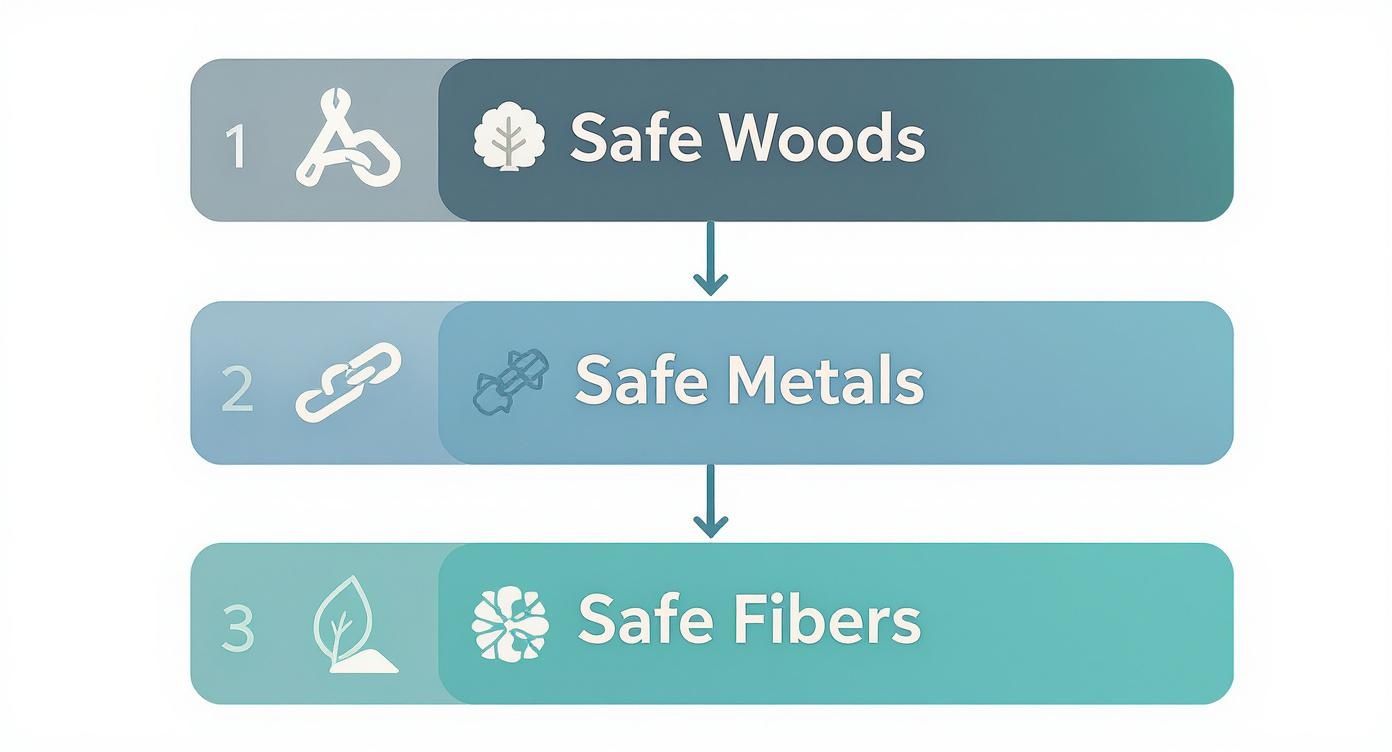
As you can see, great enrichment is built from a foundation of appropriate woods, metals, and natural fibres. These are the building blocks for any good toy collection, no matter the size of your bird.
Toys for Small Australian Parrots
This group includes some of Australia's most beloved companions, like Budgerigars, Cockatiels, and Lovebirds. Their beaks might be delicate, but they are still driven by that powerful instinct to shred, pick apart, and explore. The goal here is to find materials that offer satisfying destruction without requiring a huge amount of force.
For these little dynamos, think small and intricate.
- Shreddable Delights: Toys made from sola, yucca, balsa wood, seagrass, and shredded paper are perfect. They can get their beaks into these materials with ease, satisfying that deep urge to rip and tear. Our Jingle Jangle Shredder is a fantastic example, designed specifically for gentle beaks.
- Lightweight Foot Toys: Small plastic beads, vine balls, and little wooden blocks are ideal for them to hold, manipulate, and toss around.
- Foraging for Beginners: Simple foraging toys that require them to pull paper out or push aside small parts to find a treat are excellent for keeping their minds ticking over.
One of the most common mistakes is giving small birds toys that are just too tough. If they can't make a dent, they'll lose interest fast. The aim is to give them a sense of accomplishment, which builds confidence and keeps them engaged.
Toys for Medium-Sized Parrots
This category is home to many iconic Australian parrots, including Galahs, Corellas, and Conures. They represent a big step up in both beak strength and intelligence. Their toys need to be more robust, offering a solid blend of chewable durability and shreddable fun.
These clever birds need a much bigger challenge.
- Soft to Medium Woods: Pine blocks, vine wood, and tougher natural materials like coconut husk provide a brilliant chewing workout for their beaks.
- Interactive Puzzles: These birds are more than smart enough for complex foraging toys. Devices that require turning, sliding, or even unscrewing parts will keep their sharp minds busy for hours.
- Combination Toys: Toys that mix different textures—like wood, vegetable-tanned leather strips, and rope—are always a huge hit. They offer a whole variety of sensory experiences in one package.
Toys for Large and Extra-Large Parrots
When we talk about Sulphur-crested Cockatoos, Eclectus Parrots, and Macaws, we're talking about serious power. These birds have beaks designed by nature to crack the hardest nuts. Their toys must be exceptionally durable to stand up to that force without being destroyed in five minutes flat.
For these feathered powerhouses, think big and tough.
- Hardwood Blocks: This is non-negotiable. Large, chunky blocks of hardwood, including native Australian woods and gum nuts, are essential for beak conditioning and exercising their powerful jaws. Our Natural Banksia Pod & Wood Toy is built to withstand exactly this kind of attention.
- Durable Foraging Devices: Look for foraging toys made from tough acrylic or stainless steel. These can be filled with food or wooden blocks, requiring significant effort to get the prize out.
- Heavy-Duty Swings and Perches: Their play is often very athletic. Sturdy swings and boings made with thick-gauge stainless steel hardware are crucial for safe, active fun.
Choosing a toy based on your bird's species-specific needs transforms it from a simple object into a vital tool for their wellbeing. It guarantees safety, prevents boredom, and honours the unique natural instincts of your feathered companion.
How to Rotate and Place Toys for Maximum Engagement
It’s tempting to think that filling your parrot’s cage with a mountain of toys is the best way to show you care. But in reality, it often has the opposite effect.
Imagine living in a room where nothing ever moves—the same furniture, same pictures on the wall, day in and day out. Eventually, you’d just stop noticing any of it. That’s exactly what happens to a parrot in a static cage. They tune it all out.
Smart toy rotation and clever placement are what turn a boring box into a dynamic, engaging world. By regularly mixing things up, you keep their environment feeling fresh, exciting, and full of new puzzles to solve. This simple strategy is one of the most powerful tools you have to fight boredom and keep your bird healthy, both in body and mind.
Creating a Simple Toy Rotation Schedule
The real secret to keeping a toy interesting is novelty. A toy that’s been tucked away in a cupboard for a week can feel brand new all over again when it reappears. You don’t need dozens of toys in the cage at once; in fact, a cluttered cage can be overwhelming and even restrict your bird’s ability to move around comfortably. A more thoughtful, curated approach is far better.
Setting up a practical rotation system is easy:
- Group Your Toys: Sort your parrot’s toy collection into three or four groups. Try to make each group a balanced one, with a mix of different types—something to shred, something to chew, a foraging challenge, and a foot toy.
- Weekly Swap-Out: Once a week, pick a day to take out one group of toys and replace it with the next one in the rotation. This ensures there’s always something different to spark their curiosity.
- Inspect and Clean: Before you put the used toys away, give them a good clean and a thorough once-over. Check for any signs of dangerous wear and tear, and toss out anything that’s become unsafe.
Expert Advice: Parrots are naturally wary of new things—a trait known as neophobia. When introducing a "new" toy from your rotation, don't just hang it straight in their cage. Leave it sitting on a table outside the cage for a day or two. This lets them check it out from a safe distance before it moves into their personal space.
The Art of Strategic Toy Placement
Where you hang a toy is just as important as which toy you choose. Poor placement encourages a bird to sit in one spot all day, while smart placement gets them climbing, stretching, and exploring. The goal is to set up an environment that promotes movement, not one where everything they need is conveniently clustered in one corner.
Think of the cage as a playground or a jungle gym. You want to create pathways and activity stations that encourage your bird to travel from one side to the other.
- Encourage Foraging Journeys: Don't hang foraging toys right next to the main food bowl. Place them on the opposite side of the cage. This simple change mimics their natural instinct to travel for food, forcing them to climb and move to earn their reward.
- Create Active Pathways: Use swings, boings, and ladders to form bridges between different perches. This creates a kind of aerial obstacle course that helps build strength and agility as they navigate their home.
- Utilise All Levels: Avoid hanging everything from the roof of the cage. Place some toys near the bottom and others in the middle to encourage top-to-bottom exploration. A well-designed habitat, including an out-of-cage bird play gym, provides different activity zones at various heights.
By combining a consistent rotation schedule with thoughtful placement, you’re giving your parrot the tools to stay active, curious, and mentally sharp. You’re not just handing them playthings; you’re designing an enriching world that truly caters to their intelligent and inquisitive nature.
A Guide to Toy Maintenance and DIY Fun
Once you've put together a great collection of bird toys for parrots, the job isn’t quite done. Keeping those toys safe and interesting is an ongoing task—and a non-negotiable part of being a responsible bird owner. Proper maintenance makes sure playtime is always safe, while getting a bit creative with homemade toys is a brilliant, budget-friendly way to keep your parrot’s world exciting.
Keeping toys clean is absolutely crucial. Without it, you’re inviting harmful bacteria and fungi to grow, which is the last thing you want near your bird. A simple, consistent cleaning routine will protect your parrot’s health and make their favourite playthings last much longer.
Keeping Toys Clean and Safe
Getting into the habit of a quick daily spot-check is a game-changer. Just wipe off any droppings or bits of food stuck to toys to stop contamination in its tracks. A more thorough clean should happen weekly, or whenever a toy starts looking a bit grubby.
For a proper deep clean:
- Soak and Scrub: Use a bird-safe disinfectant from an Australian pet supplier, or even a simple mix of white vinegar and water.
- Rinse Thoroughly: This step is key. After scrubbing, rinse every nook and cranny of the toy with fresh water to get rid of any cleaning residue.
- Dry Completely: Toys must be bone-dry before they go back in the cage, otherwise you risk mould. Our durable Natural Banksia Pod & Wood Toy can be easily wiped down, but more porous items will need plenty of time to air-dry.
Expert Advice: Regular safety checks are just as important as cleaning. Look for frayed ropes that could tangle a foot, splintered wood with sharp edges, or any cracked plastic parts. If a toy can't be safely fixed, it's time to let it go.
Fun and Safe DIY Parrot Toys
Making your own toys is a fantastic way to offer some variety without spending a fortune. The golden rule is to use only materials you know are 100% bird-safe.
More and more Aussie bird owners are getting creative at home, which lines up with a bigger trend in the pet supplies market. Here in Australia, there’s a growing demand for pet toys that really engage an animal, driven by a better understanding of their enrichment needs. This shift strongly favours interactive options that encourage natural behaviours, a topic covered in this Australian toys market report.
It's easy to tap into this trend yourself with a few simple ideas.
Simple ideas for homemade fun:
- Cardboard Creations: Empty paper towel rolls or clean, ink-free cardboard boxes are perfect for stuffing with shredded paper and hiding a few treats inside.
- Natural Treasures: Head outside and collect some safe, untreated gum nuts, banksia pods, or branches from native trees like eucalyptus. String them together with a bit of sisal rope for a brilliant, natural chew toy.
- Paper Pleasers: Weave strips of plain paper through the cage bars or tie them onto a toy base like our Jingle Jangle Shredder. Parrots just love the satisfying sound and feel of ripping paper to shreds.
With a little bit of creativity, you can provide your feathered friend with endless, safe entertainment.
Got Questions About Parrot Toys? We’ve Got Answers.
As dedicated parrot owners here in Australia, we get asked a lot of great questions by people who just want to do the right thing by their birds. Here are some of the most common queries that come our way, with straightforward advice to help you build a safe, fun world for your feathered mate.
How Many Toys Should a Parrot Have in Their Cage?
This is a brilliant question, and the answer isn't a magic number. It’s more about variety and space than just cramming as much as possible into the cage. A cage that’s too crowded can actually stop your parrot from moving freely and even make them feel a bit overwhelmed.
A good rule of thumb is to have three to five different types of toys in the cage at any one time. Think about covering the main bases:
- Something tough to chew, like a native hardwood block.
- A fun shreddable toy they can gleefully destroy.
- A foraging puzzle to get their brain working.
- A comfy swing or boing for a bit of exercise and a place to hang out.
The real trick is to rotate these toys every week or so. This simple act keeps their environment feeling fresh, interesting, and new, which is a massive win for their mental health.
How Often Should I Replace My Parrot's Toys?
Honestly, it all comes down to how much of a demolition expert your bird is. For a big chewer like a Sulphur-crested Cockatoo, a wooden toy might only last a couple of days. That’s not a waste—that’s a success! It means the toy did its job perfectly.
The most important rule is to replace a toy the moment it looks unsafe. That means frayed ropes that could tangle a foot, sharp splinters on a wooden toy, or cracked plastic pieces. A destroyed toy is a sign of a happy bird; an unsafe toy is a ticking time bomb.
Give all your bird toys for parrots a quick once-over every day. Anything that looks risky should be removed immediately. Softer, shreddable toys will naturally disappear faster than a tough acrylic foraging toy, and that’s just part of the normal parrot lifecycle.
Are Bells Safe for Parrots?
This is a big point of confusion for so many owners. The short answer is: it depends entirely on how the bell is made.
Those cheap, jingle-style bells with a little clapper rattling around inside are incredibly dangerous. A determined beak can easily rip the bell open or snap off the clapper, which can be swallowed. This can lead to heavy metal poisoning or serious internal injuries. The open bottom on these bells is also a well-known trap for beaks and toes.
On the other hand, heavy-duty tubular bells that are welded shut and made from stainless steel are a much, much safer choice. Always look for toys with solid, tamper-proof bells and steer clear of the flimsy ones often found on cheap imported toys. When it comes to your bird, safety always has to be the number one priority.
At Lou Lou Bells Bird Toys, we handcraft and source Australia's best and biggest range of enrichment toys. Every single item is designed with safety and fun in mind. Have a look through our collection to find the perfect thing for your feathered friend, from our popular Jingle Jangle Shredder to the long-lasting Natural Banksia Pod & Wood Toy, and give your bird the stimulation they need to thrive.
Disclaimer Summary:
The information in this article is general in nature and may include external links or resources not created by Lou Lou Bells Bird Toys. Every bird is unique, so we encourage you to seek personalised advice from your own veterinarian or avian specialist. For full details, please read our complete disclaimer here.